All a Reader Needs

image

Jane Austin was very sparse in her descriptions of people and places. Miss Taylor, the governess in the opening of Emma, is never physically described at all: Austin seemed to be satisfied with whatever look and taste the reader believed a governess should have. The description of a businessman as “short, round, with a row of straining buttons” is all that is needed to give the reader a detailed image even if the reader is the one to provide most of the detail. In the first scene of Colm Toibin’s new book, Nora Webster, Nora, a recent widow, is confronted by a neighbourly visiter, May Lacey, who just wants to console. Toidin writes,

“May Lacey, wisps of thin grey hair appearing from under her hat, her scarf still around her neck, sat opposite Nora in the back room and began to talk.”

This is all the description Toibin gives to a character important enough to have a name, but it is all a reader needs. To me the image is clear: many layers of clothes (it is 60’s Ireland after-all), short, chubby, anxious to please, with a disheveled look no matter how hard she tries to tidy herself up. Of course, other readers will concoct a different picture; there will be as many different images of May Lacey as there are readers of the book.

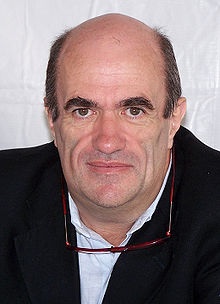
image         Colm Toibin

So it won’t surprise you to hear that I was shocked to read Gerald Windsor in his review of Nora Webster in the SMH of September 26 when he referred to Toibin’s previous work, The Testament of Mary, as “a disastrous biblical fantasy, so thinly imagined it’s hard to believe Toibin wrote it.” I sat up straight in my chair when I read that, not just from indignation at such pointed criticism of one of my literary idols but Windsor seemed not to understand what Toibin was doing.

There is possibly no more iconic female character in the Western literary tradition as the Virgin Mary, not just to Christians but to ex-Christians as well; and I don’t mean just in her physical appearance. The place, the biblical lands, atmosphere, attire, emotions and almost everything else to do with the Bible is incredibly personal to anyone who has had anything to do with it, from reading and studying it assiduously to simply watching Ben Hur all those years ago, even if those impressions are historically wrong.

The Virgin Mary is just one of dozens of characters emblazoned on our collective imagination.

The reader is one half of the equation that leads to the creation of a work of fiction; and the reader not only brings his/er history, experience, belief system and the social and personal sense of him/er self to the work but also colours its meaning. Toibin, and all creative artists, I believe, allows us consumers to provide our own detail and our own meaning to what the writer writes.

This applies to all creative endeavour. The manuscript in the bottom of the bed-linen drawer or the painting behind the broom cupboard are not pieces of art until they are consumed and allowed to effect the consumer, even is small ways: a snigger, a smile or a wince; but also is dramatic ways: a sense of understanding, immense pleasure or outright disgust. Art has to cause something to happen in us.

All a reader needs is for a writer to allow us to use our history, internal and external, to bring meaning, our meaning, to what has been written; it need only be a phrase or an adjective. We can do the rest.

Veronica Comes Undone: write a review!

Book 1 in the Veronicability trilogy.

Since publication as an ebook on August 24, sales began with a bang but leveled off to a more even and realistic frequency. For those of you who do not know about this, Veronica Comes Undone is my first finished piece of long prose that I finanlly had the courage to publish. It’s not literary fiction (can you tell from the title?) but is more in the romance-contemporary fiction genre, if there is such a thing. Book Ii is underway but was difficult to get back to after the hype and euphoria of the publishing-online event that moved so fast after if pressed “send” – I sold the first copy within 30 minutes – that it’s been difficult to get back into the writing mode. As a suppliment to the publication I started a blog – michaelkfreundt.wordpress.com – where I write about reading and writing, things I do a lot.

Anyway, if and when, you get down to reading it – go to smashwords.com or Kobo, Kindle,  Barnes & Noble etc – you can download it in several formats – it would be great if you could write a review. It doesn’t have to be long; there’s one review already on the smashwords.com site which is only a few lines, but I’m happy to say, the reader ‘got it’ and the review is short but succinct. Oh to find the book on smashwords.com make sure you unblock ‘adult content’, you’ll soon see why.  Happy reading.

“Have you met any single mums?”


Have you met any single mums?

This question was asked of me by a woman, a stranger, who happened to be sitting on my terrace with a few other strangers – I don’t remember the event. She asked this question immediately after I answered her question about what am I writing now. “I’m writing about a  thirty five year old single mum with a very unusual occupation who lives in Newtown,” I said, and so, she asked her question.
I said something like “Not specifically but I’ve known a lot of single mums in my time.” I think I then got up, poured more drinks, handed around more nuts, and smiled inanely while festering inside was the conversation that should’ve happened: something like this …
“I’m not writing a documentary.”
“No, but don’t you think you should write about what you know?”
“I’m writing fiction, not a biography of a single mum.”
“No, I get that, but readers like a ring of truth.”
“Do they?”
“Well yes, don’t they?”
“Only if they read non-fiction. I’m writing fiction. I’m making it up.”
“But don’t you want people to believe you?”
“Of course, that’s part of the deal. When you read fiction you agree to believe it: you know it’s made up but you suspend your disbelief in order to enjoy the story; it’is a sideline of our imagination.”
“But I want to know that the writer can be trusted to tell me a believable story. I don’t know, I just want to trust the writer.”
“But by buying a book of fiction you already know it’s made up, you accept it as fiction. A fiction writer starts way out in front in the believability stakes. Even a moderately good writer knows not to blow a lead like that.”
“But he would blow it if he didn’t know what he’s writing about.”
“If I was writing a manual on how to be a good single mum or a study on the lives of single mums living in Sydney then, yes, I agree that I would need to meet and talk to a lot of single mums, but I’m not writing a book like that.”
“Isn’t the life of a single mum very different from yours?”
“Not really.”
“What?”
“I think the pressures are the same, I don’t live alone, I have other people to consider and I have other people I’m responsible for, and I believe that, basically, men and women respond to life in the same range of reactions, but one thing I don’t think readers want is to read the familiar; they want to read the unusual.”
“Yes, but, the unusual within believable bounds.”
“How many witches and warlocks did JK Rowling interview; how many vampires did Stephenie Meyer interview; and how many men-tuned-into-bugs did Kafka interview?”
“But they’re fantasy novels.”
“Did you believe the Harry Potter stories?”
“No, they’re fantasy.”
“I mean IN the story: did you feel excited, on-the-edge of your seat.”
“Sometimes.”
“Well there you are, you believed it. You’re heart wouldn’t race if you didn’t believe it.”
“Single mums aren’t fantasy.”
“Let me tell you a story. Astronauts never get bowel cancer because before they climb into their high-tech suits, for rehearsal or for the real thing, they have to have an enema. Now if I wrote a story about an astronaut who gets bowel cancer would you believe me or would you throw the book against the wall because I didn’t know what I was writing about?”
“I don’t know; it would be the way it was told.”
“Do you believe that astronauts could get bowel cancer?”
“Well, I didn’t know that, that, enema thing that astronauts do?”
“What, don’t you believe they have to have enemas?”
“No, it’s not that. They do I suppose; sounds feasible.”
“Good because I just made it up. I don’t know anything about astronauts and enemas; but you were willing to believe it. You were willing to believe made up stuff.”
“… I just don’t think that a sixth two year old gay man living in Bali should he writing about a thirty five year old single mum living in Newtown.”
“…..more nuts?”

Colm Toibin’s The Testament of Mary.

I have been a fan of the writer, Colm Toibin for some years now; his novels, journalism, and essays delight and inspire.

Colm Toibin

Colm Toibin’s new novel, Nora Webster, comes out in October. His previous piece is a very short (96 pages) work called The Testament of Mary which made the short-list of last year’s Man-Booker Prize (his second nomination). My review appeared in Anne Summers Reports, Number 4 in September 2013. I include it below in anticipation of the release of Nora Webster, which, no doubt I’ll be telling you about in due course.

On Colm Toibin’s website, http://www.colmtoibin.com/, you will find a sample. His short story House for Sale, http://www.colmtoibin.com/content/house-sale, is an excerpt from, or perhaps an experiment for, the work that has become Nora Webster.

More importantly, I urge you all to subscribe to Anne Summers Reports – it’s free!

It’s a magazine that counters the common trend for today’s journalists to force on us their opinions: ASR doesn’t opine, it is “Sane / Factual / Relevant” and presents politics, culture, and society in an entertaining and forthright manner produced by a clever and passionate team.

Here’s the link, http://annesummers.com.au/asr/

 The Testament of Mary

Cólm Tóibín, Scribner, New York, 2012, 96 pp.

“History will judge us kindly,” Churchill told Roosevelt and Stalin in 1943, “because I shall write it.”

Nothing much had changed, apparently, since the death of Christ. That is exactly the attitude the gospel writers had: the story was for them to tell, in a manner and level of truthfulness of their choosing. We can augur that that may not have been their intention but they believed they were instructed to tell The Story, to spread the word; it was their duty to save people from their own beliefs.

This idea is paramount in Cólm Tóibín’s latest book, The Testament of Mary. Mary’s house, where she lived out her last years, many believe, is in modern-day Turkey, near Ephesus.

Mary's House Ephesus

It is a simple and single-roomed stone dwelling surrounded by olive trees obviously tended to religiously over the years, but its solidness and forthright aura matches exactly the character of the woman at the heart of Tóibín’s text. She is old, knows death is soon upon her, but stoic in her defiance of the two gospel writers who warily tend to her needs.

They feed and protect her but want her to say what she cannot: “I cannot say more than I can say”. And she smiles as she knows that this disturbs them. They want “foolish anecdotes or sharp, simple patterns of what happened to us”. She is dependent on the men and resolute in her refusal “to say anything that is not true”.

One of the men, who used to comfort her, is ready now “to scowl impatiently when the story I tell him does not stretch to whatever limits he has ordained”. What strikes the reader about the opening, the set-up, of Tóibín’s story is its two-pronged relevance to the intellectual life of today’s world: its attitude to the church, and its attitude towards women.

It is hard to ignore the anti-church sentiment behind Tóibín’s text. If the religion is the retelling of the story, tenuous over the centuries that may be, it is the marketing of the retelling that is the reason for the men who hover around Mary. They torment Mary in her final years by wanting stories from her lips that they can use to enrich such marketing. This is what the church does: it markets the story.

The novella is an internal monologue and it’s easy to picture Mary on her stone stoop watching the two men tend to her, with their ulterior motives, while she thinks these thoughts.

What Tóibín does is put a vibrant worry-worm, a woman, both terrified and terrifying, into the foundation of the Church. These two men of the Church want her to tell them stories, to tell them miracles and “to stretch the limits” to meet their demands. What they fear is her refusal to give them stories they can use, for it is miracles they need.

So they feed and protect her, waiting for her to change her mind. The men write their story nevertheless, writing “things that neither he nor I saw” and “I know that he has given shape to what I went through and he witnessed, and that he has made sure that these words will matter, that they will be listened to”. They are writers, and good ones.

With the current problems the church is facing it is easy to see where Tóibín is going. Over the centuries the church has developed dogma to aid its cause, such as the development and the inclusion into doctrine of the Holy Spirit, which began one hundred years after the death of Christ.

But after 2000 years, how far has the church veered from the truth as Tóibín’s Mary saw it?

She was there, on the hill that day amid the male-instigated violence, the waiting, the blood-letting and the boredom, surrounded by cruel life and lingering death, afraid but also revered by those men who “could not look a woman in the eye”. She was, after all, the mother.

Mary, in Tóibín’s monologue, tells of a man with an eagle in a cage and a bag of rabbits that the man eagerly feeds one by one to the caged bird, who eats just little bits of each because it isn’t really hungry, but what else is a bird of prey to do when prey is thrust beneath its beak? This is what she saw that day, but it is not what the two gospel writers want to hear. They cannot use this story, it doesn’t advance their cause.

Mary’s retelling of the Wedding at Cana, of the raising of Lazarus, words and miracles; some she witnessed, most she heard second-, third-hand. But then she sees him … she meets his gaze as he lumbers with his cross on the way to the Hill, and it is as an infant that she remembers him. The thought as she nursed him was that here was someone who will look after her when she is old, who will tend to her ailing body and then her grave. No mother dreams of seeing her child die, nor of watching nails the length of her hand being thudded through his flesh and bone into the raw wood beneath. But she was a small woman and standing in a crowd only gave her limited view of what was going on. She relied on what others told her, and what others, via others, said, like his followers through the ages.

The first theatrical production of this text at the Dublin Theatre Festival in 2011 caused no great ripples in the local Christian community, but this revised and expanded version is harsh on the church. Mary sees it in its infancy: followers all behaved as if this was planned, part of a great deliverance… And within this group of men (fools, twitchers, malcontents, stammerers) there was a set of hierarchies, men who spoke and were listened to, or whose presence created silence, or who sat at the top of the table, who demanded food from the women who scampered in and out like hunched and obedient animals.

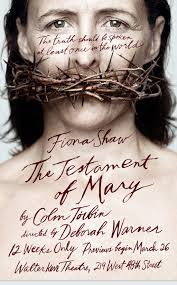
Tóibín prepared a longer revision for the Broadway production which opened in April 2013 with Fiona Shaw as Mary.

Poster for the Broadway production 2013

To read Tóibín’s version of the crucifixion, Mary’s escape and the resurrection through her eyes, ears and dreams is to understand what a writer can do; it is to appreciate the power of the word on a page. Mary’s minders know this too. Tóibín has told a story set in the first century but it’s really about us now. It’ll be on the fiction shelves in your local bookshop but, like all fiction, it’s about truth, not of plot, but of ideas.

The same production was presented at the Barbican in London in May 2014.

Don’t be Afraid of Virginia Woolf.

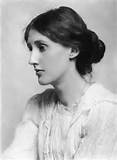
Virginia Woolf, 1902

Virginia Woolf, 1902

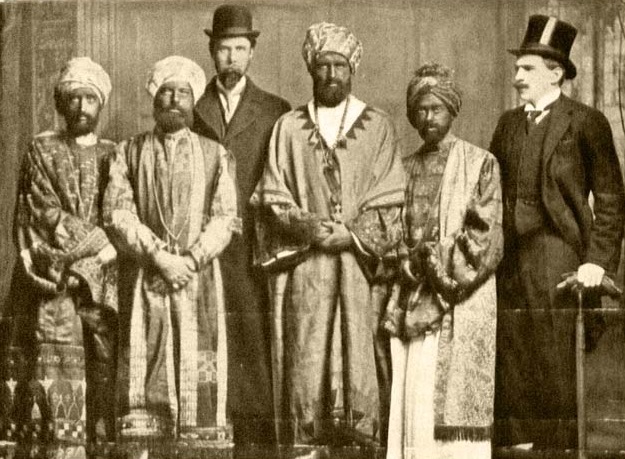
On 7 February 1910 a telegram was received from Sir Charles Hardinge, the Permanent Under-Secretary of Foreign Affairs, by the Commander-in-Chief of the Home Fleet and the captain of the H.M.S. Dreadnought, the flagship of the British Navy, then lying off Portland, Dorset. It informed him that Prince Makalin of Abyssinia and his party were arriving in the afternoon and were to receive every attention. When they arrived by private train carriage they were received with an honour guard and taken ceremoniously on board. The chatter of the dusky-skinned entourage was completely unintelligible although one of the party, Prince Mendax, wearing a sky-blue silk robe, beard, jewels and a turban, constantly murmured “Bunga bunga” which their interpreter explained was Abyssinian for “Isn’t it lovely?” They refused all refreshments which the interpreter again explained was due to their religious beliefs as they could not be served food or drink with the naked hand. Gloves were not available.

A few days later the officers and crew of the Dreadnought were amazed and dismayed to learn, via the Daily Mirror, that it was all a monumental practical joke and the Royal navy was pilloried and laughed at for weeks in the national press and at every dinner table in the land. It has become known as the Dreadnought Hoax and was reported all over the world.

One of the hoaxers, Prince “Bunga Bunga” Mendex, was, in reality, a young girl who was quoted as saying “I found I could laugh like a man easily enough but it was difficult to disguise the speaking voice. As a matter of fact the only really trying time I had was when I had to shake hands with my first cousin, who is an officer on the Dreadnought, and who saluted me as I went on deck. I thought I should burst out laughing, but, happily I managed to preserve my Oriental stolidity of countenance.”

This young lady was the 28 year old Miss Adeline Stephen, who two years later married and became Mrs Woolf. We know her better as Virginia.

The Dreadnought hoaxers. Virginia Woolf far left. 1910

The Dreadnought hoaxers, 1910.

Virginia Woolf, far left.

Apart from being a practical joker, Virginia Woolf was a very beautiful woman. This is certainly not how we think of her today but all the people who wrote about her, and there were many, used adjectives, especially those that knew her well, like, beautiful, mischievous, intelligent, talkative, and inquisitive. She would say things like, “You said you went for a walk, but what made you go for a walk?” When out walking herself with a friend she would see a farmer tossing hay and say, “Look at that farmer pitching hay. What do you think he had for breakfast?” It was this inquisitiveness that made her attend to everything you said to her; and attend with real interest. When you talked to Virginia you always felt that you were intently listened to, and, once literary fame came into the picture, you didn’t even mind that she was mining you for information, words and reasons for human behaviour; in fact, you were flattered that such a famous and beautiful woman was hanging on your every word; gazing into your eyes and eagerly waiting for your next pronouncement. Of course under such scrutiny, if you simply said ‘I don’t know’ you could be sure that she would lose interest immediately and seek someone else’s company. She had a habit of forcing you to search your brain for the right words, because nothing less than the right words were always expected.

She was tall, with a thin face, slender hands and always wore shapeless clothes of indeterminate colours: fashion was of no concern to her.

She was born Adeline Virginia Stephen in 1882 but almost immediately was called Virginia despite the confusion of initials with her elder sister, Vanessa. She came from a good family of landowners and was well but home educated. She was the third child of her father’s second wife and an incident with her half-brother, George Duckworth, was to have a profound effect on her.

“I still shiver with shame,” she wrote many years after the incident, “at the memory of my half brother standing me on a ledge, aged about six or so, exploring my private parts.” Then, many years later, when her father lay dying from cancer three floors below, George would fling himself on her bed, kissing and hugging her, aged in her early 20s, to console her, he later said. Quentin Bell, her biographer and nephew, would write, “in sexual matters she was from this time terrified back into a posture of frozen and defensive panic.”  She briefly considered accepting Lytton Strachey’s proposal of marriage knowing that he was homosexual so she thought a simple brother-sister sort of marriage may be preferable to one that included the ‘horror of sex’. She wanted to be married, since being a spinster was considered a failure and finally accepted the proposal of Leonard Woolf and they were married on August 10 1912 after an engagement that, her sister wrote, was “an exhausting and bewildering thing even to the bystanders.” Virginia said to him “I feel no physical attraction to you, … and yet your caring for me as you do almost overwhelms me. It is so real and so strange.” They were planning a honeymoon in Iceland (how metaphoric) but settled for a Mediterranean one instead. Michael Holroyd wrote,

“There seemed some unfathomable inhibition that made male lust, even when compounded with love, if not horrific, quite incomprehensible to her. The physical act of intercourse was not even funny: it was cold. Leonard regretfully accepted the facts and soon brought the word in line with the deed by persuading her that they should not have children. It was a sensible decision for, though she could never contemplate her sister’s fruitfulness without envy, children with their wetness and noise would surely have killed off the novels in her: and it was novel-writing that she cared for most.”
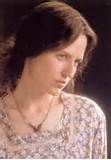
Nicole Kidman as Virginia Woolf, The Hours, 2002

Nicole Kidman as Virginia Woolf in The Hours, 2002.

In 2002 the film The Hours was released with much fanfare and a stellar cast. It was written by David Hare and based on the Michael Cunningham Pulitzer Prize winning book of the same name, which in turn used Woolf’s novel Mrs Dalloway (1925) as the core of the film about, not only Virginia Woolf and the writing of the book, but also its effect on two women. one in the 1950s and one in the 1980s. Readers can find Mrs Dalloway curious, annoying and tedious but when you read you must not let the words wash over you as one lets light from a fire without looking into the flames; into the beauty at its core.

Her novel of 1928, Orlando, is dedicated to Vita Sackville-West, Woolf’s friend, neighbour and sometime lover and tells the story, over a period of 300 years, of the romantic adventures of a man called Orlando, who suddenly, miraculously, half way through the book becomes a woman. This is revealed in the film as Orlando with his long, straight, reddish blond hair gazes at himself standing naked in front of a full length mirror and seeing the reflection of a long, straight, reddish blond haired naked woman staring back saying, “Same person, different body.”
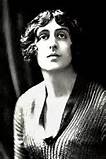
Vita Sackville West

Vita Sackville-West, the inspiration for Orlando (1928).

Virginia confessed her affair with Vita to her sister Vanessa and in a letter to Vita describes the moment.
“I told Nessa the story of our passion in a chemist’s shop the other day. ‘But do you really like going to bed with women’ she said – taking her change. ‘And how’d you do it?’ and so she bought her pills to take abroad, talking as loud as a parrot.”
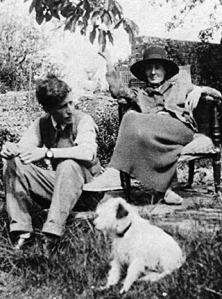
Leonard and Virginnia Woolf photographed by Vita Sackville-West, 1926

Leonard and Virginia Woolf photographed by Vita Sackville-West.

Uncharacteristically a lot happens in Orlando but It’s not plot that interests Virginia Woolf ( “facts are a very inferior form of fiction”) but the feelings, nuanced emotions that precede the action, or arise because of it; she was more interested in, not the ‘What’, but the ‘Why’, and, more importantly, how one would describe that ‘Why’.  Nowhere is this more evident than in her novel (most call it her masterpiece) To the Lighthouse (1927). The very title is full of expectation and when the possibility is revealed to little six year old James he is transfixed, incapacitated with the joy of it. This is the opening, including the title which is really part of the first sentence.

“To the Lighthouse
“Yes, of course, if it’s fine tomorrow,” said Mrs Ramsay. “But you’ll have to be up with the lark,” she added.
“To her son these words conveyed an extraordinary joy, as if it were settled, the expedition were bound to take place, and the wonder to which he had looked forward, for years and years it seemed, was, after a night’s darkness and a day’s sail, within touch. Since he belonged, even at the age of six, to that great clan which cannot keep this feeling separate from that, but must let future prospects, with their joys and sorrows, cloud what is actually at hand, since to such people even in earliest childhood any turn in the wheel of sensation has the power to crystallise and transfix the moment upon which its gloom or radiance rests, James Ramsay, sitting on the floor cutting out pictures from the illustrated catalogue of the Army and Navy stores, endowed the picture of a refrigerator, as his mother spoke, with heavenly bliss. It was fringed with joy.”

And what is illustrative, most of all, of her genius, and her deep and all-consuming curiosity of human intention and behaviour, and her determination to create art, is that by the last page the lighthouse itself disappears into a mist and we, the readers, along with the remaining onlookers in the house, can only assume that they have arrived.

Someone once said that Leonardo de Vinci fought tooth and nail to acquire a particular block of marble, also much coveted by Michelangelo because he knew that inside there was a statue of David and all he had to do was chip away the extraneous rock to reveal the body within. If Virginia Woolf were present it would be the act of chipping the marble and the chips of marble lying on the floor that would attract her interest and not the finished, polished figure.

Janet Vaughan (a medical scientist and friend) had this to say about Virginia Woolf and ‘genius’.
“Well, it’s a sixth sense. It’s somebody who jumps a gap which other people would need a very, very solid bridge to walk across. She didn’t do it as a scientist might, she did it by interpreting what she saw and what people might be thinking and how they interacted with one another. But she had this quality of jumping gaps.”

And similarly Vita Sackville-West describes it thus: “I always thought her genius led her by short cuts to some essential point which everybody else had missed. She did not walk there: she sprang.”

But it’s the adjectives ‘mischievous, witty, warm and humorous’ that are most intriguing. She loved to tease and teased most those she was most fond of; and those teased seemed to love it and certainly were not offended by it since the teasing was done with such warmth.

In the early 20s Virginia Woolf used the name of writer Berta Ruck (albeit mis-spelt) on a minor character, and a subsequent tombstone, in her novel Jacob’s Room (1920). Angus Davidson, friend, literary critic, and manager for a time of their publishing house, The Hogarth Press, said this was done unwittingly. This is hard to believe as the name Berta Ruck is quite distinctive and her name and the names of her novels were emblazoned on the tops of London buses. However Ms Ruck was a writer of a very different genre than Virginia’s. She wrote romantic stories and almost seventy novels (Khaki and Kisses, Love on Second Thoughts, etc) where beautiful young women were treated dismissively by fathers, brothers and men in general but who fell in love with one of them and lived happily ever after. One can imagine Virginia Woolf thinking this scenario extremely unlikely and with a name like Berta Ruck, and the married name of Mrs Onions, perfectly ripe for mischief. Ms Ruck, however, did not see the humour in the incident and with urgings from her indignant husband, wrote to Woolf in sorrow and indignation threatening legal action. Virginia wrote back rather sarcastically, “I am more pleased than I can say that you survived my burial. Never will I attempt such a thing again. To think that you have bought my book.” It took Ms Ruck eight years to discover the slight so Woolf could hardly have taken her seriously. However they ‘made up’ via correspondence and almost a year later Ms Ruck got her own back by becoming the success at a party by singing a very risqué song, “Never Allow a Sailor an Inch Above Your Knee.” Virginia was reported as being “filled with amazement and delight.” All animosity was forgiven.

Unfortunately, the memory of her is clouded by her diaries which record her mental suffering and her depression even though her husband, and editor, went to great pains to explain; “…diaries give a distorted and one-sided view of the writer, because, as Virginia Woolf herself remarks, one gets into the habit of recording one particular kind of mood – irritation or misery say – and of not writing one’s diary when one is feeling the opposite. The portrait in therefore from the start unbalanced.”

Her bouts of illness sprung from the effort of writing, and in particular the exhaustion from finishing a particular work. Her headaches would begin and if left unchecked, she would lose coherence of speech, and her brain would race with images and noises (birds crying out in Greek) and delusions (King Edward VII, among the azaleas, swearing in the most foulest language). Complete rest and quiet would eventually restore her normal life but her recovery would be ridden with doubt and worry about the worth of her just-completed work. Praise and encouragement were oxygen to her.  So eventually with Leonard’s care and concern, her own courage, immense courage, she would roll up her sleeves and begin to write again, knowing that creation was hard, completion fearful, and a bout of madness inevitable.
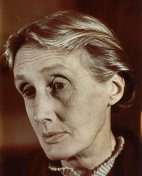
Portrait of Virginia Woolf, 1939 by Gisele Freund.

Portrait of Virginia Woolf, 1939, by Gisele Freund,

two years before her death.

And then this: her final piece of writing; a short letter to her husband, written on the day she died.

“Dearest, I feel certain that I am going mad again. I feel we can’t go through another of those terrible times. And I shan’t recover this time. I begin to hear voices, and I can’t concentrate. So I am doing what seems the best thing to do. You have given me the greatest possible happiness. You have been in every way all that anyone could be. I don’t think two people could have been happier ’til this terrible disease came. I can’t fight any longer. I know that I am spoiling your life, that without me you could work. And you will I know. You see I can’t even write this properly. I can’t read. What I want to say is I owe all the happiness of my life to you. You have been entirely patient with me and incredibly good. I want to say that — everybody knows it. If anybody could have saved me it would have been you. Everything has gone from me but the certainty of your goodness. I can’t go on spoiling your life any longer. I don’t think two people could have been happier than we have been. V.”

She then put on a hat, a coat, grabbed a walking stick and headed to the river. There she put down her stick, took off her hat, put rocks in her pockets and disappeared into the water. When Leonard found the letter, he, along with the house keeper, Mrs Meyer, searched the house, the grounds, and the surrounding countryside and when they found her stick and hat assumed the worst. Three weeks later her gruesome body was found by children as it bumped against the bank of the river many miles downstream. She was 59.

Remember Virginia Woolf as a beautiful and intelligent woman, a prankster, a great and innovative writer, the creator of the outrageous Orlando, and the cheeky biographer of Flush, Elizabeth Barrett Browning’s little cocker spaniel; she was a curious and inquisitive human being, a tease, a lover, and a writer who launched modernism on the literary world. And remember that when her little nephews, nieces, and their friends were preparing for a party who was number one on their invitation list?

“V-i-r-g-i-n-i-a!” they would shriek with delight, because Aunt Virginia always made them laugh.
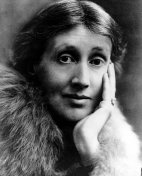
Virginia Woolf, 1927

Virginia Woolf, 1927, aged 45.
Veronica Comes Undone. How did this happen?

Veronica

Most of my writing has been scripts: TV scripts for Prisoner and Country Practice all those years ago, and play scripts. All my long prose pieces never got to the ‘long’ bit, they fizzled out for some, many, reasons.

About 12 months ago I was trawling through the web looking for ebooks and came across smashwords.com and the words, “Publish your novel here.” What?

I’d heard about e-publishing, self-publishing, and thought I would find out about it one day. Well, it found me.

The difficulty of getting first, an agent, and then a publisher interested enough to read something has always been dawnting, debilitatingly so.

But here was a publishing path free of all that.

I had had an idea bouncing around in my head for some time of a single-mum 30 something freelance psychologist who used sexual techniques in her work. I had filed it away under the title “Right Up Her Alley”. This was a common saying of my mother’s: “I knew that Susan would make a good bank clerk, money’s always been right up her alley”, meaning that the person fitted the job. The humour and sexual connotation wouldn’t’ve occurred to her.

As I began writing, and the ‘thing’ took shape, that title became more and more inappropriate. I wanted a title that was unique and I’d always liked present tense titles (I wrote a play once called Leonard Stays in Bed). I decided on Veronica Comes Undone but because it became obvious very quickly that this was going to be a work in 3 volumes I decided on an arching title of Veronicability (the art of being Veronica).

It was a move away from the literary attempts I’d been making, but one look at this and any ebook site soon tells you that popular fiction seems to be ‘the go’. Besides I took the idea of writing a popular ‘straight’ romance as a bit of a challenge; as indeed it was. However I had two very willing friendly women, Julie Hasler-Reilly and Helen O’Connor who were living nearby and were more than willing to frankly answer my intimate and gynealogical questions, should such questions arise.

The formatting was difficult as the form of the text had to fit smashwords strict criteria but they had a Guide in ebook form to help and it was written in a very user friendly fashion. The preparation of the text and the production and design of the cover image took forever but finally, last Monday, August 24, 2014, about 20 months from the word ‘go’, I clicked ‘send’. Within seconds a message came up saying my book had been received and it was ’28th’ in the queue.

Within 16 minutes it was on the smashwords front page. I immediately posted a message on facebook telling the world – well 248 people – that my book had gone ‘live’ and within 32 minutes of clicking ‘send’ I had a sale.

The feeling was a combination of relief, elation, expectation, awe, and satisfaction that not only had I finished something but it was ‘out there’ for all the world to see: the place where all artistic endeavours should end up.

Now back to Veronicability II: Veronica Spreads it Around.

Poetry tip from John Williams (not the musician but the novelist)

John Williams is the late American writer (1922-1994) of the novel ‘Stoner’ billed as “the best novel you’ve never read.” How true. I came across this novel by accident, read it, loved it to bits, and I’ve been raving about Williams ever since. Again by accident and with a little help from Paul Hasler, I came across his fourth, most successful, and last novel, ‘Augustus’ an epistolary novel of the first Roman emperor and nephew of Julius Caesar. It couldn’t be more different from Stoner, an autobiographic novel about a poor farm boy who goes to university and never leaves. This may sound boring but it certainly isn’t; it’s the most fascinating book I’ve ever read.
Anyway, early in Augustus I came across the following quote about writing (poetry) quoted from the mouth of Horace,

“But the point is this: the end that I discover at last is not the end that I conceived at first. For every solution entails new choices, and every choice made poses new problems to which solutions must be found, and so on and on. Deep in his heart, the poet is always surprised at where his poem has gone.” I know this surprise.

Great stuff. Williams other two books ‘Nothing but the Night’ and ‘Butcher’s Crossing’ are yet to be found, but I’ll find them.

Artistic Endeavour

Artistic Endeavour
The creation of any piece of art, poem, play, statue, novel, design, etc, is a process in three parts: idea, realization, consumption. In terms of the novel, the first two are the domain of the writer, the third, the reader.
For the work of art to be efficacious all three must be fulfilled, especially the third. That manuscript in the bottom draw is not a work of art until someone reads it and is affected by it; the watercolor behind the wardrobe is not a work of art until someone sees it and is affected by it, no matter how little the effect is: a smile, a feeling of calm, even an annoyance. There must be artistic input and emotional output.
The writer writes what he writes. The page is not a mirror (Colm Toibin), you cannot see the writer on the page, you see the writer’s imagination on the page. The writer has exercised his imagination and fulfilled the first two requirements: idea and execution. The writer has used whatever tools at his disposal to create the text: story, characters, point of view, tone, etc. How you, the reader, interpret the text is solely in your hands. The writer cannot, and should not, tell you how to interpret what he’s written. Of course the writer wants you to be excited by the exciting bits, and to be titilated by the titilating bits but the meaning and your reaction to that meaning is yours, and yours alone.
The writer does not know what psychological and emotional history the reader brings to a book. The writer does not need to know that. The writer does not care if you are invigorated, inspired, aroused, or horrified: as long as something is going on in your head: a change, an understanding, a revelation, a realization. Something.
If you feel nothing, really feel nothing, then the artistic endeavor is a failure; don’t finish it, don’t recommend it to a friend, don’t buy the sequel.

When I describe a galley kitchen, I don’t describe it in detail; what is on the left, what is on the right, the oven on the wall or next to the sink. I don’t describe it in detail because I want the reader to bring his own history to play and fill in the detail. Describing a man as ‘tall, with many chins, a gaping shirt and straining buttons’ says more about the character than a page of physical description and personal behavior. Jane Austen knew this.

All a writer wants from a reader is to read well. A good time – TV off, kids in bed, and a good place – comfortable chair, good light. And the reading has to be active, not passive. The best way to describe what I mean is with an analogy: read a text the way you actively listen to music. Do not let the music wash over you, passively, unless this is your intent, to fall asleep; listen ‘into’ the music. Follow the guitar for a while, then the vocals; find the violin and follow it; trace the melody across all the instruments, find its shape, marvel at its colors. And so with reading. It’s an active task, not a passive one.

An artistic endeavor is a work of art when it challenges itself. Language is not perfect. Writing is the transference of ideas and images from one brain to another via little black marks on a whitish page. It isn’t as perfect as a photograph. Showing a photograph of Portifino is far more accurate a transference of images and feelings than writing about it. When a writer understands this and tries to stretch the limitations, add to the palette, broaden the techniques, build on the work of others, and expand his own boundaries; and it is appreciated, then this is a work of art. Ulysses is a work of art because it attempts to do all these things. It is difficult to read now, especially the final monologue and even more difficult to understand; but other factors also come into play. Obscurity in art was popular at the time of Joyce’s creation, more so then than now. But this stretching of the limitations was what Joyce was trying to do; it’s what Virginia Woolfe was also trying to do, and so was Conrad, Wilkie Collins, Christina Stead, Steinbeck, Marques, Llossa, Patrick White, and it is what contempory writers are trying to do now; well, the really good ones anyway.

These days reading is for enjoyment, in fact it really always has been.