
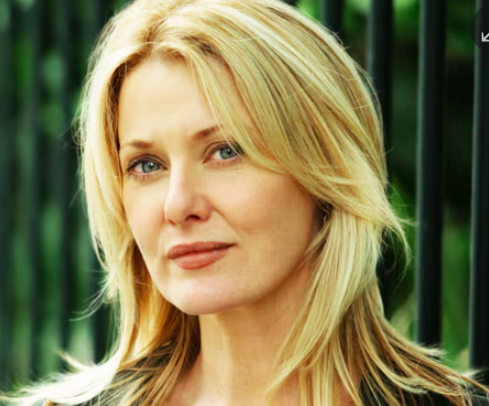
Yes, Wifedom (2023) is about George Orwell’s largely forgotten wife, Eileen O’Shaughnessy, and the important, yet unacknowledged role, she played in his life and work, but it is more than that. It is an excoriating assessment of the general neglect of women who are gathered by artistic men for their own personal and artistic betterment.
A high-wire act is not awe-inspiring if you can see the wires. Invisible and unacknowledged, a wife is the practical and often intellectual wiring that allows the act to soar; and for it to be truly astonishing, the wires, and the wife need to be erased both at the time, and then over time.
Her portrayal of George Orwell – real name, Eric Blair – reveals him to have been cantankerous, needy, useless at any manual work, generally ill and egocentric without anything, except his writing, to be egocentric about. A sexual predator and a misogynist: he treated women as mere service providers. Also, Funda doesn’t hide her mild contempt for Orwell’s many biographers, all men, for erasing Eileen O’Shaughnessy from their books just as Orwell did from his work, like some male club of matedom keeping it all in house, slaps on the back and “Well done old chap!” But remember, in the mid twentieth century, patriarchy was still the dominate force.
Funda has come under some criticism for ‘trashing’ a famous writer’s reputation, but as she explains in the text, a ‘good’ book can be written by a ‘bad’ man. Understanding more about him, his wife and marriage doesn’t lessen her admiration for Orwell’s work – she may not now love the man but she still loves his writing.
I read Funda’s first book, Stasiland (2002) and loved it for telling compelling untold stories of life behind the Berlin Wall. I read All That I Am (2011), her first novel, and remember nothing about it. Here, Funda, has audaciously combined biography, memoir, polemic, social commentary and imagined conversations: fiction – it’s a heady mix and a great one – to create a truely memorable world of a forgotten woman who contributed much to the artistic output and fame of her husband. Her life with Orwell was one of poverty, struggle, sacrifice and determination but with an unwavering belief in his art and the ultimate success of it.
She followed him to Spain where he wanted to fight against Franco. He didn’t do much; she did a lot; she worked for the political organisation he was fighting for. After Franco’s victory she, her colleagues, and Orwell were in danger. She narrowly escaped imprisonment – when some of her colleagues did not – and, along with her own, saved his life. In his Homage to Catalonia (1938), his account of his experiences in the Spanish civil war, which she edited and typed, she is never mentioned.
He needed her but she didn’t deserve him.
So women are said to have the same human rights as men, but our lesser amounts of time and money and status and safety tell us we do not.
Animal Farm (1945) and 1984 (1949) are now classics, his most famous works, and rightly so, but both had great input from the writer’s wife, not only as editor, typist, and researcher, but also as a contributor and sounding board, sometimes in bed, for his ideas, slip-ups, and decisions.
Funda reprints Eileen’s letters to friends where you can hear her whimsical tone, sense of humour and self-deprecation which are characteristics of the ensemble of characters in Animal Farm. You can ‘hear’ Eileen’s influence.
The golden age of feminist literature may be over but here’s one that should, and probably will, be added to that lexicon. It’s a great and uplifting read. Highly recommended.
Here is a fascinating interview with Funda by Sarah Ferguson on the 7:30 Report from July 2023.
 Michael K Freundt