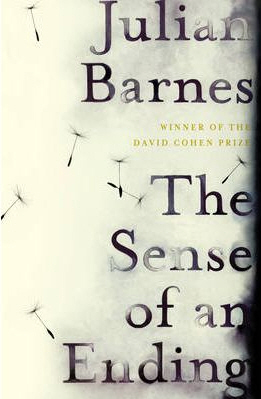

This book from 2011 has been sitting on my bookshelf for some years, winking at me. I have never been sure if I had read it, so I did. In a book world dominated by thick tomes, a novella like this can be a god-send. Claire Keegan, Foster (2010) and Small Things Like These (2021), an Irish writer, has been lately championing the novella as a legitimate art form.
This is a story about memory: what we remember and what we think we remember. Tony Webster, the first person narrator, is in his latter years and he tells us about his school days when he was nerdish, oh-so clever and amusing and, with his two mates Chris and Alex, a little ahead of the pack – so they liked to think. This gives Barnes a delicious excuse for self-deprecating witticisms about his youthful behaviour as seen from the distance of his much older self.
A new boy arrives, Adrian Finn, quite a bit ahead of them in intelligence and maturity, but who attaches himself to the three friends, which surprises everyone especially the trio themselves. Flattered though they were.
Later at university, hoping that his life will soon begin, he meets the enigmatic Veronica and does all the right things, as prescribed by his conservative and very British culture, which, in reality, is nothing much, just waiting for things to happen. They don’t. However, Veronica does invite him to meet her parents, and brother Jack for a weekend. Jack, in an aside, says, ‘I suppose he’ll do.’ And that seems the belief of Veronica as well. And still nothing happens. But Veronica’s mother, quite likes him, and he quite likes her. You get the impression that she is attracted to her daughters ‘young men’.
Finally Veronica ‘comes across’ but only after they break up.
Life continues, he and his friends drift apart, he finishes university, ages, gets married, has a child, gets divorced but keeps a close relationship with his ex-wife Margaret. He then hears from Adrain Finn via a short letter that he and Veronica are now a couple. Tony is furious.
Part One concludes with the news that Adrian Finn has killed himself, diagonally slashing his wrists (apparently that is the best way to do it) in a hot bath, and left a letter explaining that his suicide was planned and philosophically justified and so no one needs to be upset. He also leaves an apologetic letter for the paramedics and hospital staff that had to deal with his corpse. Adrian Finn; first class honours, first class suicide.
Part Two opens with the elderly Tony receiving a certified package in the mail: he has inherited £500 … and a diary, but there is no diary in the the package. Astoundingly, the deceased is Sarah, Veronica’s mother, who in her accompanying letter tells Tony that Adrian, before his death, was quite happy.
This entertaining, intriguing, and very well written novel takes us through Tony’s attempts to winnow through his memory and re-engage with people he hasn’t seen in decades to answer so many bewildering unanswered questions. Why did Adrian kill himself? Why did Sarah have Adrian’s diary? Why did she leave it to Tony? (Why was it her’s in the first place?) And why won’t Veronica, still enigmatic as ever, tell him what he wants to know? What did he miss all those years ago? AND, where is the diary? Was he so stupid, so unengaged? Did his mistakes then as a young man have anything to do with his mistakes as an older one? Maybe. He was alone then; he’s alone now.
I’m sure that any reader over 50 will see themselves, to some degree, in this book. I loved it even if Barnes throws up some very unflattering mirrors at me.
And last night I watched the 2017 movie version with a stellar British cast: Jim Broadbent, Charlotte Rampling, Harriet Walker, Emily Mortimer, Michelle Dockery, and Billy Howle.
You can buy the book in various formats here.
And here is a short video with Julian Barnes on The Musings of a Novelist.
 Michael K Freundt