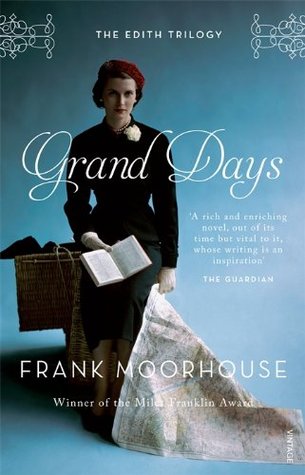

Grand Days by Frank Moorhouse

frank-moorhouse-pic
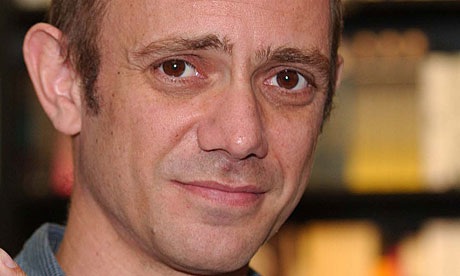
The Australian writer Frank Moorhouse

Here’s a little anecdote …

Frank Moorhouse and his girlfriend were lying naked in their back garden drinking wine and soaking up sunshine when the writer threw aside the book he’d been reading and exclaimed: ‘My God. Oh my God. Copyright is the key to all understanding. If you understand copyright theory, you understand the whole way the world works. It’s all there.’ 

It’s just a vignette. But in its composition and tone, it’s also a story which takes us to the heart of Moorhouse and his work. There’s the eye for sensual detail. The juxtaposition of the intimate and the abstract. The continuum between the big picture and the everyday. The intellectual energy at play amidst other pleasures. And, of course, there’s the delicious irony of a man lying next to his naked lover, inflamed with passion by legal prose.

         ‘Our man at cultural studies cliff face’, by Professor Catharine (2004): in Gleeson, Lumby and Bennett: Frank Moorhouse: a celebration, Canberra: National Library of Australia.

Nowhere is the above more illustrative than in this following scene, from page 198 of Grand Days (Volume 1 of The Edith Trilogy, The Vintage edition, 2011).

The Australian protagonist, Edith Campbell Berry, an administrative assistant with the League of Nations in 1920s Geneva, is in Paris with friends at a jazz club. She is enthralled by the music, especially scat singing which she perceives as a new kind of language with staggering potential; she’s a little drunk. She is also fascinated with one of the black musicians, Jerome in a bowler hat, who comes, invited, to the table and explains about scat singing. A little time later, on her way back from the Lady’s, Edith stumbles across the musician’s room and enters, discovering Jerome, alone. She offers him her hand which he takes and guides her onto his knee. Then this sentence…

Time and movement then become slippery, as she gracefully slid, seeing for the first time his caramel and cream shoes and without thinking too much at all about things, it seemed his warm dark hands were on her exposed and very alive breasts, which she felt she had delivered up to him; all seemed to happen in flowing fixed steps, something like a waltz, except they were not moving from where they were adhered together in this strange way, and without any guidance at all and in no time at all, and with no impediment, with no thought at all, warm, fleshy and flowing, it was finishing, and she took her lips, tongue, and gentle teeth away, opened her eyes and looked across the room to an open instrument case.

Here the mundane, ‘cream and caramel shoes’, ‘no thought at all’, and ‘an open instrument case’, juxtaposed with the sensual, ‘dark hands’, ‘breasts’, and ‘lips, tongue, and gentle teeth’ create something perversely human; although once the penny drops and you realise what she has just done the sensual flavours the mundane and ‘an open instrument case’ takes on a brand-new meaning entirely.

That quote is an apt example of free indirect discourse which has become the characteristic of literary modernism ever since Joyce knowingly used it, and understood it as a style, in his 1916 autobiographical work, The Portrait of the Artist as a Young Man. There are also examples of it in the works of Goethe and Jane Austin but it was Joyce who used it in such an obvious and effective way, as a literary tool, that it was subsequently taken up and experimented with by his contemporaries such as Virginia Woolf (To the Lighthouse, 1927), and now it is so widely used that it’s hardly noticeable anymore. Free indirect discourse, or experienced speech, or, as The New Yorker literary critic and academic, James Woods, calls it, close writing, allows the author two very useful authorial tools. Firstly, it gives the writer freedom to flit from character to character to give their different view of the scene, character, action, etc. A vivid modern example of this is Edward St Aubyn’s The Patrick Melrose novels (2012) where St Aubyn describes the (autobiographical) sexual abuse of his 4-year-old protagonist by his father from the boy’s and the man’s point of view. It’s as if the unnamed, god-like, all-knowing, third-person narrator flits from the mind of one character to the mind of the other. Secondly it allows the writer to use the language and tone of the character, the times, and circumstance to colour the narrative prose itself. Joyce’s opening to “A Portrait …” uses baby language – moocow, little tuckoo – not as dialogue for his baby protagonist, Stephen, but in the prose itself making it very clear, and without the necessity of saying it, that the boy is very young. By the end of the first chapter the narrative language is that of an intelligent, sensitive, and inquisitive school-boy which is what Stephen is at that time in the story.

If you read the Moorhouse sentence again – go on! Re-read it! – remembering that Edith is quite drunk, it is in language and tone (defensive) that she might have used if she was asked to explain what happened; the narrator’s prose is using the language of the circumstance, the situation, and the character.

Pre-Joyce, this rarely happened: the unnamed, god-like, all-knowing, third-person narrator was usually sage-like, mature, and distanced in time and character from the people and all the elements of the story. Dickens is a solid example of this.

Edith Campbell Berry is a sophisticated and complex creation, which was an entirely intuitive process, says Moorhouse, and her genesis began with his mother. Moorhouse has always been interested in social and personal politics, citing the liberation movements, both social and sexual, of the 60s and early 70s as having a transformative effect on him; and literary works such as James Baldwin’s Giovanni’s Room (1956) he found enlightening and greatly affected his understanding of his own sexuality. Edith is aware of her multiple histories, ambiguities, desires and even chaos in her personal life which is separate and guarded from her professional life which she is immensely proud and protective of. She is an idealist and believes “the League had the task of making the manners of the world.” Her personal life in Geneva is founded on her early meeting, on the train from Paris to Geneva as she travelled to take up her post, of Ambrose Westwood, a British diplomat who too works for the League and, with Edith’s knowledge and support, investigates his own predilections for cross-dressing – she loans him her best evening gown forcing her to wear her second-best on their first tryst to The Molly Club – and homosexuality, while remaining Edith’s lover and confidant. Moorhouse admits there is some of him in the character of Ambrose Westwood. Her exploration of her own desires is stimulated by his, but she is constantly aware of, and ruminates at length, on her perceived reputation at the League (Is she a ‘vamp’?) finding it imperative that both her personal and professional lives are kept separate, and rightly so: a consistent theme in Moorhouse’s work. However, while making little effort to curtail her exploits with Ambrose into the secret and steamier side of Geneva’s social life, she is in constant threat of being exposed. This tension propels the narrative where both fictional and real characters and events are mingled to create a fascinating picture of the personal, the political, and the professional in the early years of the League of Nations.

At every turn, Moorhouse suggests, the answer to the question of how to live lies in learning to live with ambiguity and resisting the impulse to bury the contradictions of being human behind reductive, authoritarian codes.

It’s a fascinating read and once you get to know Edith Campbell Berry you are even pleased with the novel’s length – it’s big – as are the two to follow – because you just want more of her, as do many of the characters in the books.

Dark Palace is next, followed by Cold Light. A lot to look forward to.

The ebook edition of Grand Days is available here through ibooks for $US10.99.


Nutshell by Ian McEwan

Ian McEwan
British novelist, Ian McEwan

McEwan’s first published work, First Love, Last Rites, appeared in 1975; another short story collection, In Between the Sheets, appeared in 1978 then two short novels, The Cement Garden (1978) and The Comfort of Strangers (1981). My then he was known as “Ian Macabre” for the subject matter in his work. An early story is about a love affair between a writer and her pet ape told from the ape’s point of view; another concerns a disgruntled husband who discovers a technique of body manipulation that results in the person disappearing into himself; he tries this on his wife during sex.

His work settled down a little but there is always something dark at the centre of his stories. His three most accomplished works belong to this latter period; Enduring Love (1997) which concerns a science writer being stalked by a disturbed man: both of whom witness a horrendous accident involving a hot-air balloon; one of the most suspenseful and superbly written opening chapters you can ever hope to read, rendered rather ho-hum by the 2004 film starring Daniel Craig; Atonement (2001) in which a young girl witnesses her sister having sex but misconstrues it as an assault and ruins her sister’s and lover’s lives, which the young girl, as a grown-up novelist, atones for by writing about it but with a happy ending. This was superbly adapted as a film in 2007 with Keira Knightly and James McAvoy. And Saturday (2005), a day in the life of a neurosurgeon who is confronted on the street by a man, who, as recognised by the surgeon, has a neurological disorder; the mentally ill man then menacingly invades the surgeon’s home.

He won the Booker Prize for a slim volume called Amsterdam in 1998, about a pact between two male friends who re-connect at the funeral of a shared lover, and he was nominated again for On Chesil Beach (2007) which begins with the wedding night of an extremely sexually naïve couple. I was so embarrassed for them, McEwan’s writing was truly effective, that I shut the book at page 6 and have never opened it since.

His 2014 novel, The Children Act, confronts a modern dilemma involving personal faith and medical intervention. You can read my blog on this here.

Nutshell, is another slim work, –  nothing wrong with that – which begins with a superb, but short, opening line – I’ll leave it for you to discover. It is basically about the planning and execution of the murder of a poet, John, by his estranged wife, Trudy, and her lover, his younger brother, Claude. The identity of the narrator of this murderous pact by two unpleasant but intriguing people is the crux here: John and Trudy’s unborn foetus. Generally a reader can accept all of what a writer conjures, and this is the main ask a writer makes; however this foetus prefers a Sancerre, preferably from Chavignol, over a grassy Sauvignon Blanc from New Zealand; loves the radio; tends to use Latin and French in lieu of English when the urge arises; insists on words like ‘youngly’; is intimate with the physics of sound and the work of 20th century composers; clearly au fait with the intricacies of human sexual behaviour and romantic attachment; has a fine understanding of poetics, and has studied the psychological preferences of murderers, all garnered it seems from BBC Radio podcasts favoured by his mother. But if you have made your narrator a foetus then it is de rigueur to make him an intelligent one; no use boring your readers with goo goo and gar gar. Although how much suspension of disbelief is too much?

It feels like a short story s-t-r-e-t-c-h-e-d into a novella: too much about the self-absorbed (and observed) narrator and not enough about the protagonists. But then how is he to know? It’s a dilemma McEwan side-steps. However, if you accept without question what the writer throws at you it’s an entertaining and amusing read.

The title comes from Shakespeare’s Hamlet, and the continued illusion to that work – the main players, the victim, John Cairncross, A.S. Cairncross is famous for a 1936 book entitled The Problem of Hamlet, the mother, Ger(Trudy) and the usurper, (Claude)ius, (get it?) – still doesn’t raise it above a minor work. Let’s hang out for the next one.

You can find all editions, including the ebook, here.

Black Water by Louise Doughty

louise-doughty-pic
British writer, Louise Doughty.

In Indonesia in 1965, fifty-one years ago, a coup against President Sukarno was crushed by the military leadership of Suharto and the blame fell on the Communist Party (PKI) which led to mass killings of suspected Communist members, sympathizers, and their families. Nowhere was the massacre more severe than in Bali: in the weeks surrounding Christmas 1965 it has been estimated that 80,000 people were killed; around 5% of the island’s population. Village people could not opt out: if you did not name someone as a Communist, you, yourself were suspected of being one. Even if you were merely fighting for land reform or education for women and girls, these communist-tainted ideologies were enough to condemn you. Villagers who huddled with their terrified, but relieved, families after naming a neighbour, then had to listen to screams as those neighbours were dragged from their beds and hacked to death with machetes; no-one could expect the relatively swift and painless bullet from a gun: too expensive. Villages only had long-handled sickle-like knives they used for cutting grass for their pigs; those and other methods that were easy at hand.

“We shoved wood in their anus until they died. We crushed their necks with wood. We hung them. We strangled them with wire. We cut off their heads. We ran them over with cars. We were allowed to do it. And the proof is, we murdered people and were never punished”.

— Adi Zulkadry, death squad leader quoted in the Oscar nominated documentay The Act of Killing

Old scores, family feuds, village rivalries that had been simmering for decades, generations, suddenly had an outlet for settlement. Any Bali villager today over the age of 60 must have memories of that time; and their families, being spared, must have had a hand in it. So the logic goes.

There have been various books, (including Christopher Koch’s The Year of Living Dangerously), and films and documentaries (40 Years of silence: An Indonesian Tragedy, 2009, The Act of Killing, 2012) that were based on this ‘tragedy’.

“1965 is an event that has and continues to influence many Indonesians and as such, we chose to dedicate a proportion of the program to enriching our understanding about this, through themes of reconciliation and remembrance. We hoped that these panel sessions would enable conversations to take place that continue Indonesia on its journey of healing, particularly for those whose lives were so severely affected.” Janet deNeefe, Founder and Director, Ubud Writers and Readers Festival.

The Ubud Festival has presented many written and visual works based on the killings at various festivals but it was the 2015 festival that the police stepped in and forced the organisers to cancel various sessions; the 50th anniversary too remindful, too dangerous, too raw to allow talk and debate about such a controversial event – “the massacre of up to 500,000 or more alleged Communists between 1965 and 1968 by the Suharto regime.”
“Unfortunately, whilst we pride ourselves in bringing topical issues to the forefront of national and international dialogue, we had to consider the festival’s program in its entirety and the many other important issues which will be explored through it, including human rights, activism and censorship,’ DeNeefe said.

Indonesian President, Joko Widodo, last year refused to apologise to the victims of 1965, even though he had made an election promise to confront Indonesia’s past cases of human rights violations. The event is not taught in schools; it is being erased from the country’s history.

It was this event of 1965 that inspired British writer Louise Doughty, a regular visitor to the Ubud Festival to write Black Water, her ninth novel, which was published by Faber & Faber earlier this year.

Ironically many writers choose fiction to highlight real events.

“Novels arise from the shortcomings of history”.  So said Georg Philipp Friedrich Freiherr von Hardenberg, born 2 May 1772 and known by his pen name, Novalis. The facts of history are usually dry and un-engaging, so to engage readers writers use the novelist’s art of researching the facts by talking to the participants, then imagining the detail; the personal detail that can grab a reader’s attention, put them in the character’s shoes and inspire them to dig further, light their own imagination and spur them on to seek more answers: the truth can inspire fiction in the writer and then that fiction can inspire truth in the reader.

Black Water tells the personal fictive story of a mixed race (Dutch, Malay) man, an intelligence operative, called, by his English name, John Harper. The book is divided into three parts: the first set in 1998 when Harper is on ‘forced leave’ in Bali (why?) and embarks on a love-affair; part 2 is his early mixed race life in the Dutch East Indies, Holland, the US, and then Indonesia from 1942 to 1965, the year of ‘the tragedy’ which marked the making of Suharto; and finally, back to 1998 where the personal and the historical co-mingle; where we discover what really happened to John Harper.

Doughty is often described as a thriller-writer but in supplying the personal facts to colour the historical truth Doughty doesn’t describe the horrific violence but ‘imagines’ what could happen: dense prose of the atrocities that could befall you if you were in the wrong place at the wrong time; like most village victims. This and rather flippant drops of dryness, along with little glimpses into the future undermine any suspense as if such novelistic techniques were too commercial; or maybe it’s her attempt to dislodge the ‘thriller’ epithet. Consequently, the reader is distanced from the actual threat to Harper’s life rendering his fear as mere paranoia until well towards the end where the narrative takes on a page-turning haste that would’ve served the text better had it arrived earlier. It’s really a small point but important from a reader’s point of view. However, Doughty’s side-stepping of horrific descriptions of torture and murder may just be her novelistic skill at work: preparing us, blind-siding us, for the tense and terrifying climax. But Doughty at her best is when she is charting the geography of the heart especially of lonely, damaged people as they fumble for some support, trust, and commitment even if talk of such things are rarely on their lips.

Doughty, a British writer of Romany descent was born in 1963. She spent most of her twenties in casual teaching and temporary secretarial jobs, the latter supplying material for her first novel Crazy Paving (1995). She has been nominated and won many awards as well as being a judge for some of the prizes she has, in the past, won.

Black Water is the first book I have read that is set in the place where I live. I was interested in Doughty’s book to give colour, weight, and detail to the events of 1965 that have only filtered through to me via the Ubud Writers and Readers Festival. Literature in Indonesia is not an important pastime, especially in Bali where free time is usually taken up with duties to the banjar (village council) and the temple. But this is changing although Indonesia’s most famous novelist, Pramoedya Ananta Toer, via his Baru Quartet, publishing in English by Penguin, is not known in Indonesia: the book in the Indonesian language is banned because of its anti-authority themes. Indonesia is a country that is crawling out from under its past but it’s a slow and bumpy ride. Black Water should help to it along a bit.

You can find the book here.

2017 to-read pile

2017-to-read-pile

My 2017 to-read pile is becoming increasingly Eiffel-like.

Currently I’m reading Louise Doughty’s Black Water: it’s the first book I’ve read that is set in the place where I live but also spanning several decades and continents. Doughty, a British writer has made several visits to this place and the Ubud Reader’s and Writer’s Festival.

You’re be hearing about Black Water very soon. You can find a copy here. Read it with me.


The Spy by Paulo Coelho; translated from the Portuguese by Zoë Perry

paulo-coelho-pic
Brazilian writer, Paulo Coelho, apparently the most translated author in history.

Reading a Paulo Coelho work has always been on my ‘to read’ list but I have never got around to it until now; the result of many birthday gifts recently arriving in my house. It is an episcopal novel being an ‘invention’ of her last written confession given to her lawyer, also a former lover, as she is lead away to be shot by firing squad on open ground just outside the army barracks of Caserne de Vincennes on the eastern skirts of Paris in 1917. She was 41.

Margaretha Geertruida “Margreet”  Zelle was a Dutch girl fostered to relatives when she was 15, when her mother died. She became aware very early that her attractiveness and sexuality were going to be her salvation… they really became her downfall. At 19 she answered an ad in a Dutch newspaper for a bride to Rudolf MacLeod, an army officer, and not a very nice man, in the Dutch East Indies (now Indonesia) where she lived for several years until boredom, caprice, led her, penniless, to Paris. She had been enthralled by Javanese dance and excited everyone by performing it in Paris, in a gallery not far from “that dreadful metal tower”. Her version was more to do with strip-tease, which is as remote from Javanese dance as elephants are from ants; but of course, no one knew that; and, besides, orientalism and exoticism were all the rage in Europe at the time. Of course, she needed a name, Mrs. Margreet MacLeod just would not do. She chose a name from the Malay patois of Java (now called Indonesian) for the sun, Mata Hari, literally ‘the eye of the day’. There are many businesses in Indonesia today that bare this name and none of them has anything to do with Mrs. Margreet MacLeod.

If my tone is flippant, so is the book’s.

Coelho obviously assumes that Mata Hari was a victim of her own independence which ran against the male-dominated society of the time and in giving her a voice gives vent to her own redemption. However, what is most obvious is not her independence or originality but her stupidity. If she believed her looks and sex would get her somewhere why marry an unknown man, 21 years her senior via a newspaper ad?

It is a pity that the weight of this work is so feeble.

She certainly had ingenuity and a self-awareness that she used to get what she wanted, but what she wanted was usually men and their nationality was of no interest to her. In this sense, she was indeed a victim but also naïve and foolish given she was ‘working’ in Europe while Europe was at war with itself; her neutral nationality, Dutch, was very flimsy protection indeed, and in her later years her mature feminine body was no longer ripe for dance so it was her reputation alone that got her into the beds of Frenchmen and Germans alike.

matahari-dancer-pic
She always left her bra on.

However, there was little supportive evidence that she was actually a double agent and she may indeed have been innocent as she professed but she was never good at justifying her past, remembering her motives, or men’s names. She could never remember the name of that “unknown” Russian composer who wrote the music for The Right of Spring  which starred “that idiot” Nijinsky. Her own testimony did most of the damage. The jury took 45 minutes to convict her.

The fault of this book lies with Coelho’s choice to tell the story via her words alone. A letter may contain other characters, dialogue, and description but it is all through one person’s eyes. We know of no other person’s real feelings, love, compassion, support, or faithfulness for this woman. We only know her own version which is really Coelho’s version. It is as if he memorised her Wikipedia entry and tried to colourise it.

“When we don’t know where life is taking us, we are never lost.” That should be on her gravestone.

So I’ve now read a Paulo Coelho book. Pity it was the wrong one.

How to be a Good Veronica by Michael K Freundt

veronica-cover-pic-4

This is the re-publication of Veronica Comes Undone which was originally on the US publishing site, Smashwords, which had impossible tax issues; which is why I re-published it on an Australian site, Tablo, where tax issues have been taken care of. Thank you Tablo. If you have Veronica Comes Undone, this, How to be a Good Veronica is the same book.

Veronica Comes Undone, if it hasn’t already, will soon be eliminated from ibooks.

How to be a Good Veronica can be found here.

The Beautiful Screaming of Pigs by Damon Galgut

image
The South African writer, Damon Galgut

Don’t worry if you are woefully unread in South African literature, so is the South African writer Damon Galgut.

“Local writers are trying to escape a rigid set of moral gestures, if I can put it like that, which have imposed repetition upon us. Perhaps cliché is nothing more than the weight of the past pinning down your mind. In this sense, imaginative freedom is a way of finding the future, though it isn’t so easy to do.”

In other words, Galgut is looking out from South Africa not looking at it. However, there is a tone to his work that can easily be linked to his country, his continent: a tone that is built on the black and the white, the long distances, the heat, the poverty, the seemingly political ineptitude and the sense of people struggling to live a life they want but never seem to get. Most, but not all, of his male protagonists are slight in stature, indecisive, confused, loners with an ambiguous sexuality. Patrick Winter, the first-person narrator in Galgut’s 1991 novel, The Beautiful Screaming of Pigs is one such protagonist. He is also mentally fragile since his compulsory two-year stint in the military where he became not only horrified by death and boredom but he attained a sense of hatred and terror at things like the insistent regularity of bathroom tiles and the rigid diagonals of sunlight. He takes Valium twice a day.

He travels to Namibia by car with his mother to see her black boyfriend who is politically activated in the first free elections in Namibia, formally South West Africa, where Patrick did his mandatory South African national service one year earlier and, now on this trip, he constantly wonders if the locals he meets may have been the same people that he shot at; that shot at him. It’s a story about a child and his mother; she, extroverted, thrives to belong “but her glamorous strivings were hollow’’; he, introverted, convoluted, his “patterns ran inward, spiralling endlessly towards a centre that didn’t exist.” They, tragically for both of them, belong together.

This book fell out of print but it was Galgut’s shortlisting for the 2008 Man-Booker prize with his novel The Good Doctor (2003), and subsequent fame, that gave him the opportunity to refine the text for the inevitable re-print. He was never quite satisfied with the original text: ‘discordant’ he called it.

“I woke to the sound of a pig being killed. I sat up rigidly in bed, not moving till the noise suddenly stopped. Then I got up and dressed and went outside. I had forgotten this about the farm. Its calendar runs on slaughter.”

This is typical of Galgut’s prose: stark statement of fact, short clear sentences without any mention of what the narrator feels; but the arrangement of such words, sentences, creates its own feeling, supplied significantly by the reader. Galgut draws the scene, we colour it in.

I once heard an ordinary female tourist talk about the end of her wonderful and surprising holiday on a foreign isle and her inevitable return: “Home I go,” she said, “to crawl back under my rock.” For all Patrick and his mother’s yearnings and plans this is what will happen.

“I sat down on a swing and rocked myself to and fro. In a little while, I knew, I would walk back up the road to the hotel, and we would pack our bags and go, and our usual lives would resume.”

The promise of travel and the lure of a foreign place is rarely fulfilled, it takes courage to stay out from under that rock; and Galgut by writing about this makes us aware just how rare and courageous it is.

You can find this book here.

The Good People by Hannah Kent

Hannah Kent lic
The Australian Writer Hannah Kent

It is not all that long ago, 1994, that Frank Moorhouse’s Grand Days was disqualified from the Miles Franklin Award (Australia’s most prestigious literary prize because it was not Australian enough (he won the prize for its sequel Dark Palace (2000), which contains one scene set in Australia); apparently Australian literary sentiment has grown up since then, thank god – although the real problem lies from the rules of eligibility for the Prize . Here now is an Australian author, Hannah Kent, whose debut novel, Burial Rites (2013) was set in Iceland and now her second, The Good People, is set in Ireland: and still not a gum tree in sight. The only thing Australian about this book is its author; but that’s all that is needed, and rightly so, to herald Kent as a new, rising, and shining voice in Australian literature.

Kent paints time, place, and character through dialogue. The time is 1825 in rural, south-west Ireland where the Catholic Church is as powerful as ever but also where old Irish superstition and language is still rife and useful. All of this is established through how the characters talk: here a man comes to seek council from Nance Roche about his troubling dreams. Nance Roche is a wise woman who lives alone in a windowless, mud hut near the wood and who is said to have ‘the knowledge’.


‘Faith, what does it matter? I’d best be on my way.’

‘Sure, Peter, Go on home.’

He helped Nance to her feet and waited as she used the tongs to pluck a coal from the fire, dipping it, hissing, in her water bucket to cool. She dried the dead ember on her skirt, spat on the ground and passed it to him. ‘You’ll see no púca tonight. God save you on the road.’

Peter put it into his pocket with a curt nod. ‘Bless you, Nance Roche. You’re a good living woman, no matter what the new priest says.’

Here archaic English (“Faith, what does it matter?”), old Irish (púca means ghost) and Catholic salutation (”God save you on the road.”) all create the world of this novel: illustrative, complex, colourful, informative, and believable. The last because of Kent’s success at creating verisimilitude: the appearance of truth. You do not need to look up the meaning of púca; nor do you need to research the veracity of the use of the word ‘faith’ as an exultation in nineteenth century south-west rural Ireland; nor that the possession of a cool coal from the hearth of a bean feasa living in a mud-hut will soothe one’s dreams. As quickly as you read the lines the reader accepts this created truth because of the trust we readers place in the creator of such truth; when the real truth is that we are sitting in our reading chair scanning and finding shared meaning from little dark marks on a pale background. All hail our imagination and those that tickle it!

Kent has done her publisher proud: produced a novel with all the qualities of her first that prompted her global success and her publisher’s trust in her in the first place (it’s rumoured her earnings from rights, foreign publishers and the like, was $1 million); mid-nineteenth century far-western Europe in a valley of poverty, crime, women, faith, and fear, but with such differences that make it fresh and new, in tone, theme, crime, spine, and ending.

This is a story of three women: a new and bitter widow, Nora; a servant girl, Mary; and a feared and revered loner, Nance Roach; unwedded, unbedded, and therefore considered unworldly, but ironically, powerful despite the “fear of any woman who was not tethered to man or hearth.” In a society of family and neighbourily trust, tension and anger can boil quickly if livelihood is threatened: if cow’s milk is without butter, if a hen’s egg is yolk-less, or if a man falls suddenly dead, the inhabitants clutch at reasons, causes – be it four crows seen huddled together at a crossroads; lights seen bobbing on a fairy mound; or a cretinous child thrust on a widow who has no means to support it.

This is what happens to Nora whose motherless and afflicted grandchild is suddenly handed to her but who firmly believes it is the mischievous fairies, The Good People, who have taken her Micheál and left her one of their own. Her attempts to return the fairy to its own kind and see the safe return of her grandson is what propels the narrative to its tragic finale.

The belief systems, be it Christian or fairydom, give meaning to these ignorant people; the world is mysterious and explanations are needed for everything that ties them down, keeps them safe, or lifts them up. They need these causes of things to be certainties to allow them to get on with their poor and mundane lives; to keep planting their potatoes, milking their skinny cows, and harvesting turf to heat their hovels because their only other choice is to take to the road: the worst of outcomes.

Some readers have found the book depressing; yes, the story is sad, but the writing is evocative and succeeds is creating a vanished world, surreal almost, for the reader to get lost in so when the world of this valley is pushed into a civilized courtroom the reader too is confronted by the complexities and necessities of belief, survival, and what is true, good, and right.

I urge you to read this book. You can find it here.

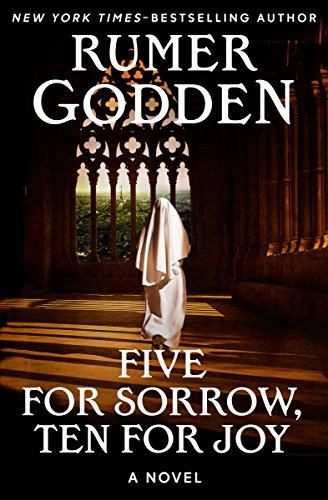
Five for Sorrow, Ten for Joy by Rumer Godden

rumer-godden-pic
British writer Margaret Rumer Godden (1907 – 1998) 

This is a story of drugs, prostitution, murder, and nuns.

Of all the writers of the 20th Century the British writer Rumer Godden (1907 – 1998) best known for her 1939 novel Black Narcissus filmed in 1947 by Michael Powell and starring Deborah Kerr wrote the most searchingly and movingly about women’s servitude to the Catholic Church.

Although born in England she spent most of her life in India, growing up in Narayanganj, colonial India (now in Bangladesh), later in Calcutta where she founded and ran a dance school for children for over 20 years and where her writing began, but then in Kashmir in India’s north west. She returned to England in 1945 to concentrate on her writing. She did not convert to Catholicism until 1968 but was always interested in the mystical and emotional balance between the Catholic Church and the practical world of secular existence. She lived, from 1968 to 1973, with her second husband, in Lamb House, Rye: also inhabited at various times by writers Henry James (Portrait of a Lady, The Turn of the Screw) and E. F. Benson (Mapp and Lucia).

She wrote 27 novels, 11 works of non-fiction, 4 volumes of poetry, and 28 books for children. She was made Officer of the Order of the British Empire (OBE) in 1993 and her last novel, Cromartie vs. the God Shiva (1997), was published the year before she died.

Five for Sorrow Ten for Joy (1979) her 20th novel, and set in France, tells the story of Lise (just one of her names), a notorious ‘madam’ with a facial wound and known to the press as La Balafrée (The Scarface), and Patrice, her lover, her jailer, her protector, her pimp. But it begins with her journey, after her release from prison, to a nunnery: a place she can’t wait to get to. Along the way Godden weaves narratives in various tenses and voices to colour Lise’s story and her past; how a painter might use colours to give depth to a picture. But what she doesn’t disclose is why she was in prison in the first place. She saves that for later.

It’s easy to call her work melodramatic, which is probably why 9 of her works have been filmed, but her writing skills belie the degrading element of that classification.

What obviously fascinated Godden was how belief, not necessarily the subject of that belief, can completely take over a person and compel her to sacrifice herself to a god and even live a life outside of how that same god commanded them to live (“Be fruitful and multiply”, Genesis 1: 28). Lise’s obedience is not to her god but to her order, which protects her from the world, but also, and more importantly, from men. A man ruined her life so she seeks the protection of women, which, ironically, is in the service of a paternalistic church.

Parallel to Lise’s story is that of Vivi and Lucette. The former, a 14 year old whore eager to get away from the arms of the nuns and into the arms of handsome Luigi; but once that happens and she has a babe forced into her own arms she rebels and hates Luigi, his family, and his child: she denies all wifely and motherly instincts prescribed to women but which are also the instincts that are shunned by nuns; one woman is damned, others are exulted.

Lucette is a lost child who is released from prison on the same day as Lise but who sees Lise’s desire to run into the care of the nunnery as nothing but out of the frying pan and into the fire.

“They tell me that often the worst criminals make the best nuns.”

Spiritual and mystical beliefs by women to a masculine god tussle with what other women think being a woman is all about. This is what makes Godden’s work so interesting.

You can find a full list of authors and titles, including 13 by Rumer Godden – and not all about nuns – at www.openroadmedia.com or follow @OpenRoadMedia on facebook or twitter.

Dear followers

I’m a little bit paranoid about grammar, typos, and spelling mistakes. I proof read my writing (all writing even my sms and emails) many times and often stretch friendships by asking friends to help (I wish I could afford to pay them); but no matter how hard I try some slip through. Nothing undermines a writer’s authority more than these pesky little do-dahs. If you see any in my posts Please Tell Me!

We all have to be vigilant. I usually use British English and spelling; these aside, please email me or comment on my post if you notice anything amiss.

Thanks.

Happy reading!

Michael.