About grief: good grief.

Featured image


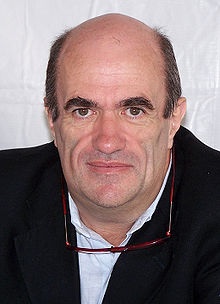
Hidden away under the heading, “Essays,” on Cólm Tóibín’s website (colmtoibin.com*) is a short story, ‘House for Sale’ written in 2000 and first published in the Dublin Review. The writing is stark, bald, and intriguingly formal. It is very different from ‘The Master’, his 2004 novel about Henry James and his second time on the Man-Booker Prize short list. The short story is simple: a recent widow decides to sell a summer house. It opens with the grieving widow visited by an inquisitive neighbour, “May Lacey, wisps of thin grey hair appearing from under her hat, her scarf still around her neck.” May Lacey in her attempt to console but not knowing how chatters away about herself and her daughter who has recently left Ireland for New York. This sounds familiar; and you realize that this is the germ of an idea that became Tóibín’s 2009 novel, “Brooklyn”, about Ellis Lacey, May’s daughter, and her immigration to New York. (The film, co-written by Tóibín and Nick Hornby, is due for release in 2015)

The story seems like a Tóibín experiment; an experiment with language. How far can you pare back a text but still make the story engaging? is the question he seems to be asking himself; and the answer? A lot.

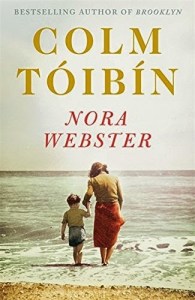
‘House for Sale’ is not a short story at all; it is Chapter One of Tóibín’s latest novel, ‘Nora Webster’ (Scribner; and the Penguin audio book is read by Fiona Shaw).

Featured image

After the rich Jamesian prose of ‘The Master’, and the narrative-based ‘Brooklyn’, Tóibín has returned to that idea from 2000 and has obviously decided that his little experiment was a success. In fact he takes it further.

“Nora was surprised to see that while Fiona was trying to smile, there were tears in her eyes. She had not cried at Maurice’s funeral, just remained silent, staying close to her sister and her aunts, but Nora could sense what she felt all the more because she did nothing to show it. Nora did not know what she should say to her now. She sipped her coffee. The boys did not move or speak.”

There is a formality of language, a sparseness and simplicity of words: simple sentences; “She sipped her coffee. The boys did not move or speak.”

He combines this sparsity with detail, internal detail, “…Nora could sense what she felt all the more because she did nothing to show it.” This is where the plot is: internally.

“When Nora saw Nancy Brophy walking towards the house, she moved away from the window. She could not think why Nancy would want to call on her. She imagined leaving Nancy to knock and wait and listen, and then knock again before walking down the steps, turning to check the windows for a sign of life. She could feel the sheer relief that would come over her entire spirit if she had the courage to make this happen.”

This language is simple but authoritative; authoritative because Tóibín doesn’t use contractions: no “can’t”, no “they’re”, no “couldn’t”, but “can not”, “they are”, and “could not”. This grammatical formality creates this authoritative, formal tone and the lack of adjectives, only two in the above quote, and short stark sentences give his authority a sense of knowingness. These simple, blunt revelations about internal feelings and motives makes the action sharp and intriguing even if the external plot is everyday and unsensational.

There is only one difference from the short story ‘House for Sale’ and Chapter
One of ‘Nora Webster’: in the latter Nora’s eldest son has become a stutterer.

Nora’s two young boys, Donal, and Conor, stayed with her aunt, Josie, while their father, Maurice, was dying. When Josie comes to visit, the boys are distant and Josie won’t stop talking. That same evening Donal, the stutterer, has a nightmare. Nora wonders that something must have happened when the boys were staying with their aunt. She goes alone to visit the aunt to ask. This simple act of motherly concern is full of expectancy. The reader is interested not just in what might be found out but how Nora will ask the question. It sets the scene for a dramatic family revelation and possible confrontation. Nora doesn’t know either what she will say; she asks rather bluntly but Josie’s reply is also blunt. Nothing staggering happens: our expectations of drama are thwarted. The boys missed their mother. Conor started to wet the bed and Donal started stuttering. Understandable given the circumstances: a dying father, an absent mother and in the care of a distant lonely aunt. This creation of internal intrigue in the everyday is one of Tóibín’s greatest gifts to storytelling, although Tóibín himself denies the label ‘storyteller’. The reader cares about what happens, and wonders what might. These characters are cared about, wondered over; and this with Tóibín describing nothing about anyone’s appearance; and if he does describe someone it is brief and trivial: in fact May Lacey, the minor character, in chapter one is the only character described at all, and then only in terms of wispy hair from under a hat and an unwound scarf.

This stark, description-less prose of character and place is an acknowledgement to the contribution of the reader to fulfil such an artistic endeavour as this: us readers supply the detail. The lonely unmarried aunt looks like our lonely unmarried aunt; a television lounge of a hotel looks like the television lounge you went into once when you were a child. Students of Reader Theory will take heart at this.
Nora Webster is selfish, snobby, and aloof but you love her for her courage and her eventual belief in herself; you admire her for realizing that the death of her beloved husband, Maurice, has changed her for the better. She blossoms without dishonouring the love of her life or his memory. This is grief, good grief, and although this is fiction, Tóibín has taught us something true. It could be argued that this is a great book as many others have said; a book that may finally give him the Man-Booker; a prize he so richly deserves and has been so close to, three times.

Now, Tóibín, after three books about women, ‘Brooklyn’, ‘The Testament of Mary’, and ‘Nora Webster’ is writing a book about a man.

-oOo-

*Be careful when you spell Cólm Tóibín; if you leave out the first ‘i’ you’ll discover Cólm Tobin, a very different person whose comical homepage recognizes he’s one letter away from fame.

Veronicability II: Veronica Spreads It Around. A work in progress

shop-fitting in progress

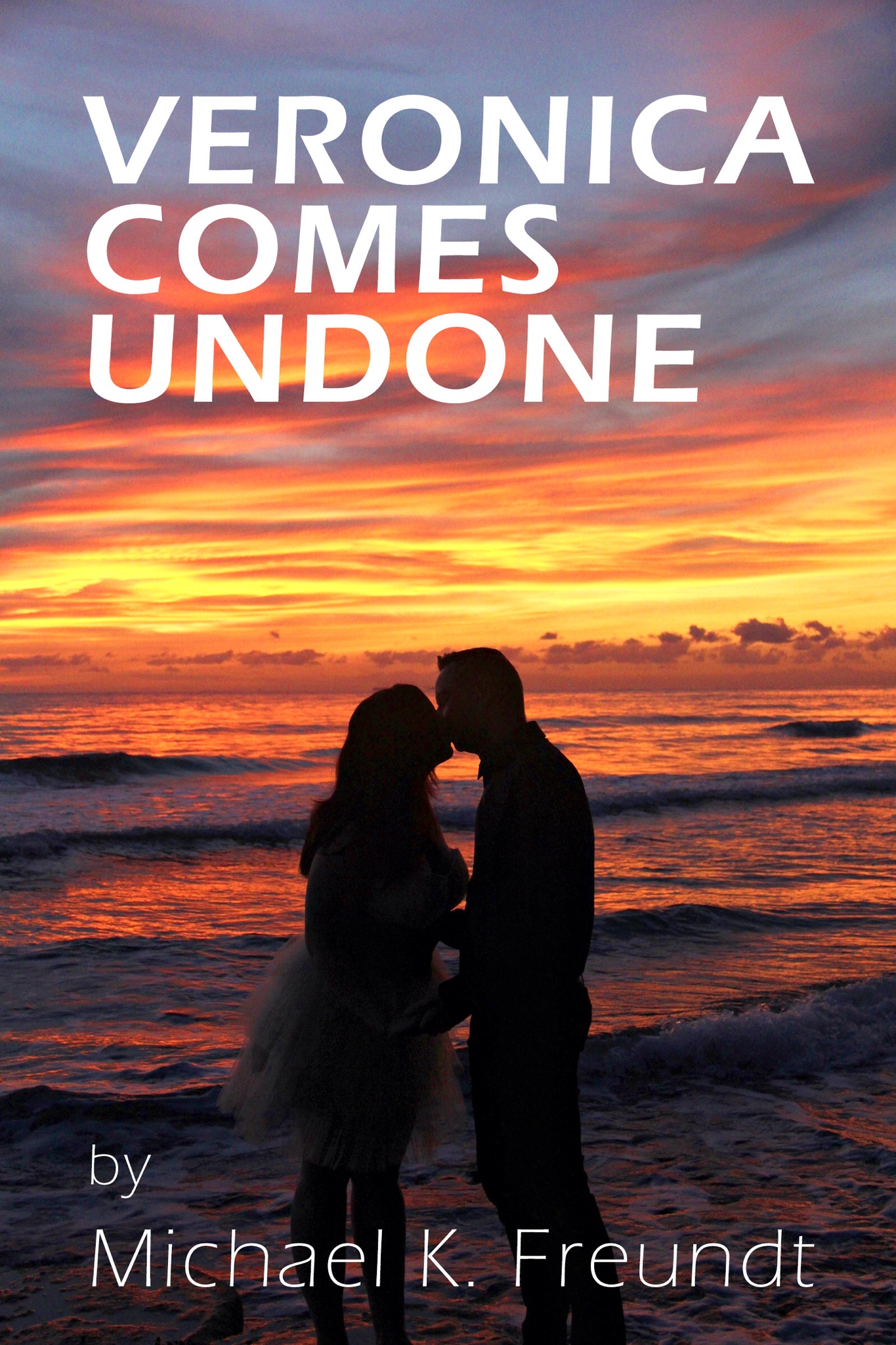
In light of my post yesterday concerning point-of-view (POV) here is a new scene from the sequel to Veronica Comes Undone, Veronica Spreads It Around that I’ve been working on today.

Let me set it up for you.

Veronica is determined to get back custody of her son Jack from her ex-husband, David, Jack’s father. To do this she has planned to give up her freelance psychology consultancy and open a ‘legitimate’ business: a business the family court will find acceptable. The scene is the shop she is renovating into a small hospitality business that she has big and unique plans for. She is sitting at a table in the corner of the space surrounded by workmen, dust and noise doing the accounts.

I’m writing ‘close’ (third person subjective; see yesterday’s post for details) but as the scene hots up (sexually I mean) I found myself slipping, briefly, into the second person POV; as if the narrator is talking directly to Veronica. This wasn’t planned and I don’t know examples of this in my reading history. It felt right though. I might leave it in.

Also note the change from past tense to present. I’m writing in the past tense but all of Veronica’s scenes with men are written in the present. It’s more immediate, more alive.

It wasn’t midday yet but the numbers began to swim and shake on the computer screen. She knew transferring all her accounts onto a spreadsheet was sound sense but she also knew she had to concentrate and input the information accurately: one little slip and all her formatting would produce false results. Her coffee latte was cold. Why did she always do that: forget about it and waste the last third? She propped her elbows on the table where she sat in the corner of the space and rested her face in the palms of her hands letting her fingertips massage her closed and prickly eyes.
She attended to the noises. A moment ago all sound had morphed into one: a white noise she ignored. Now she heard the whine of a tile-cutter; the traffic outside in the busy street; a car-horn; a rhythmic hammering somewhere; and Vera’s buzz-saw voice talking on her mobile berating a dodgy supplier.
She opened her eyes and took in the scene. The sign writer, Paco, was putting a border around the enormous plate glass window. A workman, young, skinny, goofy-looking, cleaned paint-rollers in a tray of turpentine. Another man angled tiles into a cutter that spat out dust and a piercing and ever modulating drone. Two men were installing the large hood over the stove in the long kitchen, and a burly man in overalls stood at a portable workbench cutting glass panels.
She had noticed him before. He was tall but stocky. He had reddish-sandy hair that stuck out from under his hard-hat; a neat, very neat but short, beard and wore overalls over a plaid shirt, with the sleeves rolled up his sandy arms. His hair was messy but his beard was tailored, tended, clipped. He obviously had spent some time in front of a mirror. She decided the messy hair was deliberate. This man looked after himself. She liked that. She wondered about the beard. A beard. This beard; how it would feel on her finger tips as she touched his cheek; moved through the growth to the soft lobes of his ears and the wispy sandy hair. She had kissed a bearded man once, a long time ago but it was black, thick and his moustache had hung down over his top lip. She had felt it. It was not unpleasant; but this beard was short. She wondered how it might feel brushing her cheek; fussy? prickly? ticklish? She wondered how it would feel against her thighs, against her …

He’s staring at her. How long has he been doing that? Not as long as she’s been staring at him. She looks away, but, hey; it’s all a bit late for coyness. She smirks and looks up again and meets his gaze.

He puts down his tool and walks towards her. She is aware of intense embarrassment, her hot cheeks, but she holds his stare as he approaches. He sits down. His eyes are brown.
“I was always taught not to stare at people,” he says in a soft voice tempered with a faint grin, “but that’s for children; for grown-ups it’s something completely different.” Veronica opens her mouth to speak but hesitates: she knows she’s been caught out; she knows she was staring; she knows her cheeks are red; and she knows that he knows all this. “Sorry Bill…”
“Bob. Robert.” His grin widens, warms.
She returns his smile, mimics it, which is really all she can do. “Robert. Sorry. I was day dreaming.”
“Really? So you weren’t staring at me?”
“ … I was staring, yes.”
“I know you were.” He waits. She still isn’t sure why. What is he expecting? She only thinks she knows.
“You remind me of someone, ” she says.
“I see. Do I look like him?”
“No.” She could’ve said yes.
“So, what’s to remind?”
She wishes she had said yes. “The way … the way you hold yourself.”
“Really! That’s very perspicacious of you.”
She’s impressed by his use of this word – he’s a shop-fitter! – and wonders now if her understanding of it is correct and instantly, to cover a whiff of intimidation, she counters dryly with, “Actually it’s your beard.”
“I see. So he had a beard like mine.”
“No. It was long.”
“Do you like it long?”
“I don’t know. His is the only one I know. I was just wondering…”
“Would you like to touch it?”
“Bob,” she reprimands.
“Oh, have I crossed the line, have I?” and his eyebrows jump; “and it’s Robert.”
“It’s not that, Robert. It’s …” Yes it is! You want him to cross the line. You want him to lean over and put his cheek against yours. You want to feel his hairy cheek against your skin. You want to lick it! And if the truth has air you want him to put his tongue in your mouth; and a few other places you could name. But instead you say, “It’s very light in here.”
“Oooo,” he says with dancing eyes, “You’d like some place darker?”
“Bob.” She says abruptly. “Robert, it’s the middle of the day in the middle of a workplace.”
His smile fades. “I see. It’s the old ‘lady boss’ and ‘tradesman’ divide.”
She worries that she may have offended him. She’s worried that she may have turned him off; so she counters, and with a smile says cunningly, “That’s not a negative.”
He stares at her and she holds it. He stands up, puts his hand in his pocket and pulls out a business card, gives it to her, and says “Call me when you finish.”

He walked back to his workbench.

Close Writing

James Wood is an English literary critic, essayist and novelist. He is Professor of the Practice of Literary Criticism at Harvard University and a critic for  The New Yorker magazine.
James Wood is an English literary critic, essayist and novelist. He is Professor of the Practice of Literary Criticism at Harvard University and a critic for The New Yorker magazine.

When I discovered a way to bypass the agent/publisher mechanism, with all its frustrations, time-walls and disappointments, and make my work available directly to readers a great weight lifted from my head and allowed the creative juices air again: I was very excited. However I could see that the books that were self-published on smashwords.com were mainly popular fiction and not the literary fiction I usually read and aspire to write. I searched my bank of ideas and resurrected the idea that eventually became Veronica Comes Undone.
See my blog post Veronica Comes Undone: How did this happen? August 29 2014.

Available at https://www.smashwords.com/books/view/470135

I started writing immediately, with that warm feeling of creativity gaining momentum and urging me along; using the third person point of view (POV) which is the usual form for popular fiction. I was well into the piece, about 30,000 words, when I realised that I was actually using third person subjective: I was writing in the third person but from a specific character’s close POV, that of my protagonist, Veronica, and no-one else’s.
The third person POV allows you to be omniscient, to know everything; the past, present, and future of the world and everything in it; everybody, everyone’s desires, secrets, and obsessions; in short to be god-like with the capacity to tell the story from multiple POV’s jumping from character to character; as if the god-like narrator is sitting on the characters’ shoulders experiencing the same story from everyone’s POV (Jane Austen, Tolstoy, St Aubyn).

First person POV only allows the narrator access to the first person; the protagonist is the narrator (I said, we went). It’s only from inside the narrator’s head that you see, feel, and are told the story.
Third person subjective is indeed using the third person (he said, they did, she went) but not jumping from the shoulder of character to character, but staying on the shoulder of only one: in my case, Veronica’s. Initially I worried that this was limiting: too much like the first person, that I was cutting myself off from a richer narrative, other character’s thoughts and motives but I had 30,000 words in my wake and it felt right; it was working.
I soon realised that third person subjective, as well as first person, has an up-side: you do not have to explain the motivations of others. People’s actions to us and others in our own sphere of perception can be confusing, annoying, or down-right maddening but they can also be surprising, alarming and devastating, and it is not possible, in the first person, to explain why these other characters do what they do. This is great fiction fodder.
Formally and academically this third person subjective is called free indirect discourse which can also be defined as the practice of embedding a character’s speech or thoughts into an otherwise third-person narrative. It’s almost like the narrative is coming from two brains: the narrator’s and the character’s.
James Woods, literary critic for the New Yorker, and Professor of the Practice of Literary Criticism at Harvard, in his book How Fiction Works (Woods J,2008 Jonathan Cape) calls it ‘close writing’. I like this term. It expresses exactly what it feels like, what it reads like.
Here’s an example;

As he walked towards her she noticed nothing but his hair: it bounced and shone like a Pantene commercial. How does he get it to do that?
The first sentence is the narrator’s; the second is the character’s: something she didn’t say but only thought as if the narrator, sitting on her shoulder, heard her think this.

If close writing gets too close it can slip into the first person.

As he walked towards her she noticed nothing but his hair: it bounced and shone like a Pantene commercial. How does he get it to do that? I’d kill for hair like that. And before she knew it they were shaking hands and she was smiling far too much.

And the last sentence is back to the third person again.

By the way, writing in the second person (you said, your wife, take yours) is rare. However Elliot Perlman in his masterpiece Seven Types of Ambiguity opens in the second person;

He nearly called you again last night. Can you imagine that, after all this time? He can.

This is rather intriguing and troubling as it appears the narrator is talking to an unknown character or, even more disconcerting, to you, the reader.

However second person POV is used more commonly in advertising (Apple – “Think different”; even though this is grammatically incorrect), and song lyrics (“You don’t know what you’ve got till it’s gone.” Big Yellow Taxi by Joni Mitchell).

For a light hearted take on ‘close writing’ follow the link to the essay, The Art of Close Writing by Jonathan Russell Clark, a literary critic and fiction writer who writes the essay ‘close’ and not in the first person, as you might expect.
http://www.themillions.com/2014/08/the-art-of-close-writing.html

For a more detailed discussion of close writing try
http://litreactor.com/columns/the-benefits-of-free-indirect-discourse

Edward St Aubyn and the Patrick Melrose Novels

Edward St Audyn. He has known horrific suffering. Sexually abused from childhood by his father, he later endured serious drug addiction and a breakdown. When a student at Oxford, he famously turned up for his finals with a biro charged not, alas, with ink, but heroin. Understandably he received the lowest possible pass a student could get.

“My mother’s death is the best thing that ever happened to me since, well, since my father’s death.” So says Patrick Melrose in At Last the 5th and last book in the Patrick Melrose series by Edward St Aubyn.

It took the author well into adulthood to finally confess to his mother, long after his father had died, that the man had sexually abused him as a child. He said something like ‘my father, your husband, sexually abused me.’ She looked at him and said ‘Me too’ denying him the sympathy we was looking for. St Aubyn’s creation, the father, David Melrose, a brilliant, disappointed but monstrous man also tried to teach his son to swim by throwing him into the swimming pool expecting the child’s innate sense of survival to force him to get to the edge and save his own life. He also attempted, while drunk, to circumcise the infant on the kitchen table much to the horror of the staff. If you’re a little confused as to whom I talking about: the character or the author, don’t worry as this series is robustly autobiographical which St Aubyn isn‘t shy in talking about.
At 54 Edward St Aubyn, an English novelist of meagre aristocracy is the darling of the literary world at the moment and at the Adelaide Writers Week in March 2013 he discussed his choice of fiction rather than memoir to Michael Cathcart (Books and Arts Daily, Radio National).
“I preferred the distancing effects that are available in a novel, the unity of setting something on one day in one place is very artificial; couldn’t be done in a memoir; the creation of a lot of characters who presents the reader with this arena of points of view; the margin for invention, conflation; all the powers of art and also because the books that have influenced me and that I’ve enjoyed most have been novels and not memoirs. I always wanted to write a novel; I always felt that novels were where it was at for me. Patrick is an alter-ego; the writer is an aspect of a person, the narrator is an aspect of the writer, the alter-ego is an aspect of the narration, so there’s a telescopic effect which isn’t available in memoir. The first person who is narrating is assumed to be the author. All of those gaps collapse in the case of the memoir. And I’m not making a confession. I was interested in creating something that was entertaining even if it dealt with very troubling material.”
Book 1, Never Mind, is set in Provence on one afternoon and evening when the sexual abuse by David Melrose of his 6 year old son Patrick begins. Book 2, Bad News, is a harrowing but often funny two days in New York where Patrick, now a heroin, alcohol and ‘ice’ addicted adult flies to pick up his father’s ashes while scoring on the down-and-out streets of the city. Some Hope, book 3, has Patrick now drug free at a party in the country where he tries to find his place in a world he no longer thinks is worth joining. Mother’s Milk, the Booker Prize short-listed 4th novel deals with Patrick and his loss of the family home in Provence which gave him solace from his neglectful family while dealing with his mother’s slow slip into dementia. At Last, book 5, is set around the funeral of his mother where Patrick, finally free of his parents, may find some peace and so can avoid repeating the horrid mistakes of his forebears, especially since he now has two sons of his own.

Jack Davenport as Patrick Melrose, with his ageing mother,  played by the late Margaret Tyzack, in her final role in the  2011 production of Mother’s Milk, directed by Gerry Fox, who co-wrote the script with St Aubyn.
Jack Davenport as Patrick Melrose, with his ageing mother, played by the late Margaret Tyzack, in her final role in the 2011 production of Mother’s Milk, directed by Gerry Fox, who co-wrote the script with St Aubyn.

St Aubyn uses the third-person subjective voice, which James Woods, literary critic for the New Yorker, calls ‘close writing’. It’s as if the narrator is sitting on the shoulder of the protagonist, or, in fact, sitting inside the head of the protagonist and writes not only what he sees but what he feels and wishes. This gives the reader a sense of belonging to that character; a taste of compassion and understanding. St Aubyn take’s this technique further and has the narrator jumping from character to character seeing the narrow Melrose world, the people in it and what they are doing to each other from a single point of view; but in fact from many single points of view; and when this narrator, and therefore the reader, is in the head of David Melrose, this sadistic tyrant, this disappointed, angry and parsimonious father, this treacherous and violent husband the reader can’t help but feel some degree of compassion and understanding, tempered, of course, by the man’s vile and hateful actions. While at every turn a smile and a chuckle is never far away thanks to St Aubyn’s dry English wit and snobby asides.
The St Aubyn family came to England from France with William the Conqueror and, according to the Doomsday Book, has sat with wealth and privilege on a piece of English soil since 1087; “so there’s a lot of … continuity,” says St Aubyn. He has the voice you would expect: measured and slow in its lower register, with elongated vowels that just stop short of camp. He will undeniably join the likes of Wilde in that club of quotable writers;

“People never remember happiness with the care that they lavish on preserving every detail of their suffering.”

“Surely: the adverb of a man without an argument.”

“Looking after children can be a subtle way of giving up… They become the whole ones, the well ones, the postponement of happiness, the ones who won’t drink too much, give up, get divorced, become mentally ill. The part of oneself that’s fighting against decay and depression is transferred to guarding them from decay and depression. In the meantime one decays and gets depressed.”

“It seems people spend the majority of their lives believing they’re dying, with the only consolation being that at one point they get to be right.”

“…life is just the history of what we give our attention to; the rest is packaging.”

… and my favourite, “Never use the conditional when talking about money.”

St Aubyn isn’t much interested in plot but his characters and their battered senses provide the action and the twists and turns are due to how well, or not, they all deal with each other. The Patrick Melrose novels are sharp, witty, and short. Highly recommended.

All a Reader Needs

image

Jane Austin was very sparse in her descriptions of people and places. Miss Taylor, the governess in the opening of Emma, is never physically described at all: Austin seemed to be satisfied with whatever look and taste the reader believed a governess should have. The description of a businessman as “short, round, with a row of straining buttons” is all that is needed to give the reader a detailed image even if the reader is the one to provide most of the detail. In the first scene of Colm Toibin’s new book, Nora Webster, Nora, a recent widow, is confronted by a neighbourly visiter, May Lacey, who just wants to console. Toidin writes,

“May Lacey, wisps of thin grey hair appearing from under her hat, her scarf still around her neck, sat opposite Nora in the back room and began to talk.”

This is all the description Toibin gives to a character important enough to have a name, but it is all a reader needs. To me the image is clear: many layers of clothes (it is 60’s Ireland after-all), short, chubby, anxious to please, with a disheveled look no matter how hard she tries to tidy herself up. Of course, other readers will concoct a different picture; there will be as many different images of May Lacey as there are readers of the book.

image         Colm Toibin

So it won’t surprise you to hear that I was shocked to read Gerald Windsor in his review of Nora Webster in the SMH of September 26 when he referred to Toibin’s previous work, The Testament of Mary, as “a disastrous biblical fantasy, so thinly imagined it’s hard to believe Toibin wrote it.” I sat up straight in my chair when I read that, not just from indignation at such pointed criticism of one of my literary idols but Windsor seemed not to understand what Toibin was doing.

There is possibly no more iconic female character in the Western literary tradition as the Virgin Mary, not just to Christians but to ex-Christians as well; and I don’t mean just in her physical appearance. The place, the biblical lands, atmosphere, attire, emotions and almost everything else to do with the Bible is incredibly personal to anyone who has had anything to do with it, from reading and studying it assiduously to simply watching Ben Hur all those years ago, even if those impressions are historically wrong.

The Virgin Mary is just one of dozens of characters emblazoned on our collective imagination.

The reader is one half of the equation that leads to the creation of a work of fiction; and the reader not only brings his/er history, experience, belief system and the social and personal sense of him/er self to the work but also colours its meaning. Toibin, and all creative artists, I believe, allows us consumers to provide our own detail and our own meaning to what the writer writes.

This applies to all creative endeavour. The manuscript in the bottom of the bed-linen drawer or the painting behind the broom cupboard are not pieces of art until they are consumed and allowed to effect the consumer, even is small ways: a snigger, a smile or a wince; but also is dramatic ways: a sense of understanding, immense pleasure or outright disgust. Art has to cause something to happen in us.

All a reader needs is for a writer to allow us to use our history, internal and external, to bring meaning, our meaning, to what has been written; it need only be a phrase or an adjective. We can do the rest.

Veronica Comes Undone: write a review!

Book 1 in the Veronicability trilogy.

Since publication as an ebook on August 24, sales began with a bang but leveled off to a more even and realistic frequency. For those of you who do not know about this, Veronica Comes Undone is my first finished piece of long prose that I finanlly had the courage to publish. It’s not literary fiction (can you tell from the title?) but is more in the romance-contemporary fiction genre, if there is such a thing. Book Ii is underway but was difficult to get back to after the hype and euphoria of the publishing-online event that moved so fast after if pressed “send” – I sold the first copy within 30 minutes – that it’s been difficult to get back into the writing mode. As a suppliment to the publication I started a blog – michaelkfreundt.wordpress.com – where I write about reading and writing, things I do a lot.

Anyway, if and when, you get down to reading it – go to smashwords.com or Kobo, Kindle,  Barnes & Noble etc – you can download it in several formats – it would be great if you could write a review. It doesn’t have to be long; there’s one review already on the smashwords.com site which is only a few lines, but I’m happy to say, the reader ‘got it’ and the review is short but succinct. Oh to find the book on smashwords.com make sure you unblock ‘adult content’, you’ll soon see why.  Happy reading.

“Have you met any single mums?”


Have you met any single mums?

This question was asked of me by a woman, a stranger, who happened to be sitting on my terrace with a few other strangers – I don’t remember the event. She asked this question immediately after I answered her question about what am I writing now. “I’m writing about a  thirty five year old single mum with a very unusual occupation who lives in Newtown,” I said, and so, she asked her question.
I said something like “Not specifically but I’ve known a lot of single mums in my time.” I think I then got up, poured more drinks, handed around more nuts, and smiled inanely while festering inside was the conversation that should’ve happened: something like this …
“I’m not writing a documentary.”
“No, but don’t you think you should write about what you know?”
“I’m writing fiction, not a biography of a single mum.”
“No, I get that, but readers like a ring of truth.”
“Do they?”
“Well yes, don’t they?”
“Only if they read non-fiction. I’m writing fiction. I’m making it up.”
“But don’t you want people to believe you?”
“Of course, that’s part of the deal. When you read fiction you agree to believe it: you know it’s made up but you suspend your disbelief in order to enjoy the story; it’is a sideline of our imagination.”
“But I want to know that the writer can be trusted to tell me a believable story. I don’t know, I just want to trust the writer.”
“But by buying a book of fiction you already know it’s made up, you accept it as fiction. A fiction writer starts way out in front in the believability stakes. Even a moderately good writer knows not to blow a lead like that.”
“But he would blow it if he didn’t know what he’s writing about.”
“If I was writing a manual on how to be a good single mum or a study on the lives of single mums living in Sydney then, yes, I agree that I would need to meet and talk to a lot of single mums, but I’m not writing a book like that.”
“Isn’t the life of a single mum very different from yours?”
“Not really.”
“What?”
“I think the pressures are the same, I don’t live alone, I have other people to consider and I have other people I’m responsible for, and I believe that, basically, men and women respond to life in the same range of reactions, but one thing I don’t think readers want is to read the familiar; they want to read the unusual.”
“Yes, but, the unusual within believable bounds.”
“How many witches and warlocks did JK Rowling interview; how many vampires did Stephenie Meyer interview; and how many men-tuned-into-bugs did Kafka interview?”
“But they’re fantasy novels.”
“Did you believe the Harry Potter stories?”
“No, they’re fantasy.”
“I mean IN the story: did you feel excited, on-the-edge of your seat.”
“Sometimes.”
“Well there you are, you believed it. You’re heart wouldn’t race if you didn’t believe it.”
“Single mums aren’t fantasy.”
“Let me tell you a story. Astronauts never get bowel cancer because before they climb into their high-tech suits, for rehearsal or for the real thing, they have to have an enema. Now if I wrote a story about an astronaut who gets bowel cancer would you believe me or would you throw the book against the wall because I didn’t know what I was writing about?”
“I don’t know; it would be the way it was told.”
“Do you believe that astronauts could get bowel cancer?”
“Well, I didn’t know that, that, enema thing that astronauts do?”
“What, don’t you believe they have to have enemas?”
“No, it’s not that. They do I suppose; sounds feasible.”
“Good because I just made it up. I don’t know anything about astronauts and enemas; but you were willing to believe it. You were willing to believe made up stuff.”
“… I just don’t think that a sixth two year old gay man living in Bali should he writing about a thirty five year old single mum living in Newtown.”
“…..more nuts?”

Colm Toibin’s The Testament of Mary.

I have been a fan of the writer, Colm Toibin for some years now; his novels, journalism, and essays delight and inspire.

Colm Toibin

Colm Toibin’s new novel, Nora Webster, comes out in October. His previous piece is a very short (96 pages) work called The Testament of Mary which made the short-list of last year’s Man-Booker Prize (his second nomination). My review appeared in Anne Summers Reports, Number 4 in September 2013. I include it below in anticipation of the release of Nora Webster, which, no doubt I’ll be telling you about in due course.

On Colm Toibin’s website, http://www.colmtoibin.com/, you will find a sample. His short story House for Sale, http://www.colmtoibin.com/content/house-sale, is an excerpt from, or perhaps an experiment for, the work that has become Nora Webster.

More importantly, I urge you all to subscribe to Anne Summers Reports – it’s free!

It’s a magazine that counters the common trend for today’s journalists to force on us their opinions: ASR doesn’t opine, it is “Sane / Factual / Relevant” and presents politics, culture, and society in an entertaining and forthright manner produced by a clever and passionate team.

Here’s the link, http://annesummers.com.au/asr/

 The Testament of Mary

Cólm Tóibín, Scribner, New York, 2012, 96 pp.

“History will judge us kindly,” Churchill told Roosevelt and Stalin in 1943, “because I shall write it.”

Nothing much had changed, apparently, since the death of Christ. That is exactly the attitude the gospel writers had: the story was for them to tell, in a manner and level of truthfulness of their choosing. We can augur that that may not have been their intention but they believed they were instructed to tell The Story, to spread the word; it was their duty to save people from their own beliefs.

This idea is paramount in Cólm Tóibín’s latest book, The Testament of Mary. Mary’s house, where she lived out her last years, many believe, is in modern-day Turkey, near Ephesus.

Mary's House Ephesus

It is a simple and single-roomed stone dwelling surrounded by olive trees obviously tended to religiously over the years, but its solidness and forthright aura matches exactly the character of the woman at the heart of Tóibín’s text. She is old, knows death is soon upon her, but stoic in her defiance of the two gospel writers who warily tend to her needs.

They feed and protect her but want her to say what she cannot: “I cannot say more than I can say”. And she smiles as she knows that this disturbs them. They want “foolish anecdotes or sharp, simple patterns of what happened to us”. She is dependent on the men and resolute in her refusal “to say anything that is not true”.

One of the men, who used to comfort her, is ready now “to scowl impatiently when the story I tell him does not stretch to whatever limits he has ordained”. What strikes the reader about the opening, the set-up, of Tóibín’s story is its two-pronged relevance to the intellectual life of today’s world: its attitude to the church, and its attitude towards women.

It is hard to ignore the anti-church sentiment behind Tóibín’s text. If the religion is the retelling of the story, tenuous over the centuries that may be, it is the marketing of the retelling that is the reason for the men who hover around Mary. They torment Mary in her final years by wanting stories from her lips that they can use to enrich such marketing. This is what the church does: it markets the story.

The novella is an internal monologue and it’s easy to picture Mary on her stone stoop watching the two men tend to her, with their ulterior motives, while she thinks these thoughts.

What Tóibín does is put a vibrant worry-worm, a woman, both terrified and terrifying, into the foundation of the Church. These two men of the Church want her to tell them stories, to tell them miracles and “to stretch the limits” to meet their demands. What they fear is her refusal to give them stories they can use, for it is miracles they need.

So they feed and protect her, waiting for her to change her mind. The men write their story nevertheless, writing “things that neither he nor I saw” and “I know that he has given shape to what I went through and he witnessed, and that he has made sure that these words will matter, that they will be listened to”. They are writers, and good ones.

With the current problems the church is facing it is easy to see where Tóibín is going. Over the centuries the church has developed dogma to aid its cause, such as the development and the inclusion into doctrine of the Holy Spirit, which began one hundred years after the death of Christ.

But after 2000 years, how far has the church veered from the truth as Tóibín’s Mary saw it?

She was there, on the hill that day amid the male-instigated violence, the waiting, the blood-letting and the boredom, surrounded by cruel life and lingering death, afraid but also revered by those men who “could not look a woman in the eye”. She was, after all, the mother.

Mary, in Tóibín’s monologue, tells of a man with an eagle in a cage and a bag of rabbits that the man eagerly feeds one by one to the caged bird, who eats just little bits of each because it isn’t really hungry, but what else is a bird of prey to do when prey is thrust beneath its beak? This is what she saw that day, but it is not what the two gospel writers want to hear. They cannot use this story, it doesn’t advance their cause.

Mary’s retelling of the Wedding at Cana, of the raising of Lazarus, words and miracles; some she witnessed, most she heard second-, third-hand. But then she sees him … she meets his gaze as he lumbers with his cross on the way to the Hill, and it is as an infant that she remembers him. The thought as she nursed him was that here was someone who will look after her when she is old, who will tend to her ailing body and then her grave. No mother dreams of seeing her child die, nor of watching nails the length of her hand being thudded through his flesh and bone into the raw wood beneath. But she was a small woman and standing in a crowd only gave her limited view of what was going on. She relied on what others told her, and what others, via others, said, like his followers through the ages.

The first theatrical production of this text at the Dublin Theatre Festival in 2011 caused no great ripples in the local Christian community, but this revised and expanded version is harsh on the church. Mary sees it in its infancy: followers all behaved as if this was planned, part of a great deliverance… And within this group of men (fools, twitchers, malcontents, stammerers) there was a set of hierarchies, men who spoke and were listened to, or whose presence created silence, or who sat at the top of the table, who demanded food from the women who scampered in and out like hunched and obedient animals.

Tóibín prepared a longer revision for the Broadway production which opened in April 2013 with Fiona Shaw as Mary.

Poster for the Broadway production 2013

To read Tóibín’s version of the crucifixion, Mary’s escape and the resurrection through her eyes, ears and dreams is to understand what a writer can do; it is to appreciate the power of the word on a page. Mary’s minders know this too. Tóibín has told a story set in the first century but it’s really about us now. It’ll be on the fiction shelves in your local bookshop but, like all fiction, it’s about truth, not of plot, but of ideas.

The same production was presented at the Barbican in London in May 2014.