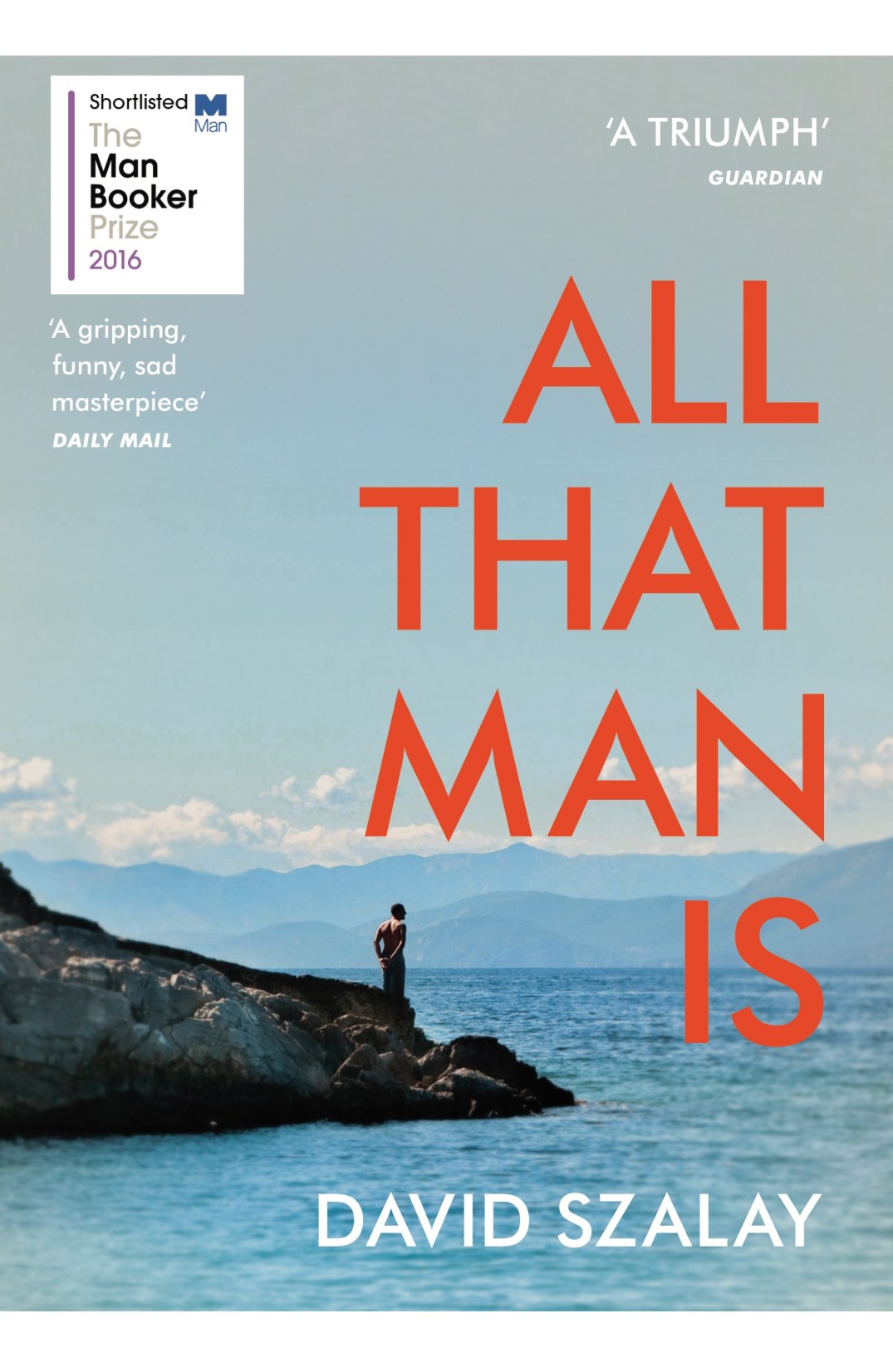
Since Szalay has won this year’s Booker with his latest novel Flesh, I saw I had this 2016 Booker shortlisted novel on my bookshelf and hadn’t read it. So I did, before I reach for the new one. His title makes you think he is referring to mankind. However, a more apt title would be All That Men Are. And my response? Not much. I mean the men, not the book. The book is great! This is not a novel but nine unrelated short stories about nine different men. Their only connection is that they “are facing the same question” so says the blurb on the back. Several of these men are rudderless, inarticulate but all of them need a good shaking while you scream, ‘Get over yourselves!’ Most are losers, some are manipulators, two of them are waiting or wanting to die. One, a Hungarian called Balázs is all muscle and ‘I don’t know’s and his understanding of ambition revolves around how long it might be until his next cigarette. What is remarkable about this book is that Szalay, a master of language, manages to make these men’s stories fascinating. Can’t wait to get my hands on Flesh! And the more I read about it, it seems to concern the 10th man that didn’t make it into this 2016 book. I’m not going to let his choice of characters deter me, and neither should you; he writes about people like us: unremarkable, but with compassion and skill that is surprising and utterly enjoyable.
This book began as an early attempt by the British poet to write a memoir about a holiday in Germany in 1929. It was unpublishable because of its libellous and pornographic content according to the law at the time. Many books were banned then, including Ulysses by James Joyce, The Well of Loneliness by Radcliffe Hall and paintings by D.H. Lawrence. During a particularly lean period in the early sixties, Spender, by then an established, but poor, writer, sold the first draft manuscript and promptly forgot about it. Fast forward to 1985 when a friend told him about the manuscript he had read in the rare books section of the University of Texas. Spender wrote for a xerox copy (remember Xerox?) and re-wrote it between 1985 and 1987 turning it into “a complex of memory, fiction and hindsight”. He changed his own name to Paul Schoner and faintly disguised W. H. Auden and Christopher Isherwood as Simon Wilmot and William Bradshaw respectively. It is, what we now call today, auto-fiction. It is also one of a rare group of autobiographies that is written in the third person. Another example of this is James Joyce’s Portrait of the Artist as a Young Man. The Temple, its original title, was finally published in 1988. Germany between the wars had a reputation of being very liberal, emphasising personal freedom. Nothing at all was happening in England. Young Englishmen went to Spain for politics and to Germany for sex. The story is indeed an account of Paul Schoder’s holiday in Hamburg 1929 – 1931, the people he meets, the cafes and bars he frequents, the senses he explores, and the danger he foretells: the rise of the extreme right in the form of the Nazi Party. Only a few understand the danger; most are complacent, believing that their first parliamentary democracy, The Weimar Republic, will withstand the threat – it will pass. The parallel to our parliamentary democracy today and the rise of the Right, almost 100 years later, will not be lost on you. Part of the attraction for the young Englishman is the German youth who idolise the human body, praising it, showing it, using it, hence the title, The Temple; ironically from a biblical quote. It is full of ideas, conversations about ideas and characters and events that portray these ideas or are in contrast to them. I loved this book, and will undoubtedly read it again. There is so much to be gained from it, not just as a reader but as a writer: his use of the nameless, but god-like, narrator and his unjudgemental descriptions of feelings and experiences that are heightened, exaggerated, and sometimes invented in order to make a point, explore an idea; these are all part of the writer’s varied and colourful palette. Highly recommended.
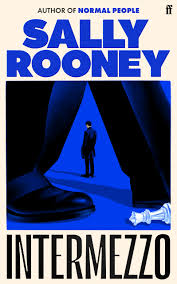
A few hundred pages into the novel I was struck by the narrative format; actually Rooney employs two narrative formats.
This is the story of two brothers and their bumpy relationship following the death of their father.
Peter, 32 is a lawyer and Ivan, 22 is, well, nothing much but a wiz at chess but scraping a living from his checkered passion is not easy.
Peter has two girlfriends; Ivan has one. Peter seems happy but Ivan is happy. I feel sorry for Peter but I love Ivan.
Sally Rooney is quite a literary phenomenon. Most of the action goes on in her character’s heads. She is a digger of truth about what goes on in the human mind which is often at odds with the way people behave. Especially men. So eager is she to explore our mental shenanigans, she sometimes overdoes it a bit. That’s a minor criticism.
But back to the double narrative styles: for the chapters about Peter the narrative is almost stream-of-consciousness. Short sentences. Shorter phrases. Even just one word followed by a full stop. They all tumble over each other. It pretty much reflects Peter’s state of mind: full. His two girlfriends, his high pressured job, what to do about his under-achieving brother, and did he love his father. Enough? Ivan’s chapters are more conservative, the third person narrator is more conventional: long sentences, precise grammar, at a slower pace. This is Ivan. He’s a simple soul not much concerned with material matters but he knows love when he feels it. Although I’m not a fan of stream-of-consciousness narration it works here; it works for Peter. Another grammatical technique binds the narratives together. The dialogue, there’s a lot, isn’t punctuated. A modern trend. But it is easy to follow. When you listen to an audio book – another modern trend – the punctuation is not read yet it is always clear who says what to whom.
I am almost to the end so I cannot tell you what happens. It’s a great read. I’m loving it. If you haven’t already give it a go.
Yes, Wifedom (2023) is about George Orwell’s largely forgotten wife, Eileen O’Shaughnessy, and the important, yet unacknowledged role, she played in his life and work, but it is more than that. It is an excoriating assessment of the general neglect of women who are gathered by artistic men for their own personal and artistic betterment.
A high-wire act is not awe-inspiring if you can see the wires. Invisible and unacknowledged, a wife is the practical and often intellectual wiring that allows the act to soar; and for it to be truly astonishing, the wires, and the wife need to be erased both at the time, and then over time.
Her portrayal of George Orwell – real name, Eric Blair – reveals him to have been cantankerous, needy, useless at any manual work, generally ill and egocentric without anything, except his writing, to be egocentric about. A sexual predator and a misogynist: he treated women as mere service providers. Also, Funda doesn’t hide her mild contempt for Orwell’s many biographers, all men, for erasing Eileen O’Shaughnessy from their books just as Orwell did from his work, like some male club of matedom keeping it all in house, slaps on the back and “Well done old chap!” But remember, in the mid twentieth century, patriarchy was still the dominate force.
Funda has come under some criticism for ‘trashing’ a famous writer’s reputation, but as she explains in the text, a ‘good’ book can be written by a ‘bad’ man. Understanding more about him, his wife and marriage doesn’t lessen her admiration for Orwell’s work – she may not now love the man but she still loves his writing.
I read Funda’s first book, Stasiland (2002) and loved it for telling compelling untold stories of life behind the Berlin Wall. I read All That I Am (2011), her first novel, and remember nothing about it. Here, Funda, has audaciously combined biography, memoir, polemic, social commentary and imagined conversations: fiction – it’s a heady mix and a great one – to create a truely memorable world of a forgotten woman who contributed much to the artistic output and fame of her husband. Her life with Orwell was one of poverty, struggle, sacrifice and determination but with an unwavering belief in his art and the ultimate success of it.
She followed him to Spain where he wanted to fight against Franco. He didn’t do much; she did a lot; she worked for the political organisation he was fighting for. After Franco’s victory she, her colleagues, and Orwell were in danger. She narrowly escaped imprisonment – when some of her colleagues did not – and, along with her own, saved his life. In his Homage to Catalonia (1938), his account of his experiences in the Spanish civil war, which she edited and typed, she is never mentioned.
He needed her but she didn’t deserve him.
So women are said to have the same human rights as men, but our lesser amounts of time and money and status and safety tell us we do not.
Animal Farm (1945) and 1984 (1949) are now classics, his most famous works, and rightly so, but both had great input from the writer’s wife, not only as editor, typist, and researcher, but also as a contributor and sounding board, sometimes in bed, for his ideas, slip-ups, and decisions.
Funda reprints Eileen’s letters to friends where you can hear her whimsical tone, sense of humour and self-deprecation which are characteristics of the ensemble of characters in Animal Farm. You can ‘hear’ Eileen’s influence.
The golden age of feminist literature may be over but here’s one that should, and probably will, be added to that lexicon. It’s a great and uplifting read. Highly recommended.
Here is a fascinating interview with Funda by Sarah Ferguson on the 7:30 Report from July 2023.
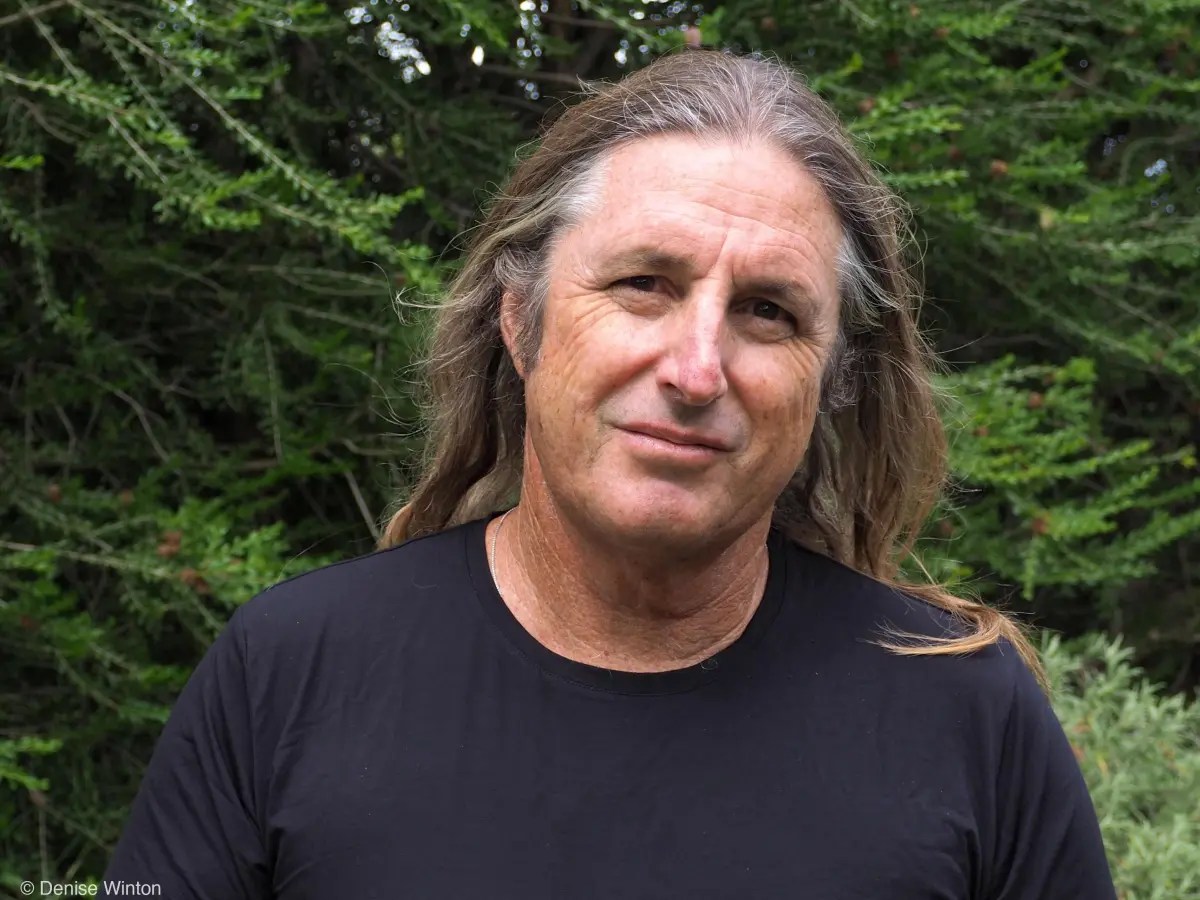
I can clearly understand that once Winton heard the untethered voice of the teenager, Jaxie Clackton, in his head there was nothing he could do but tell his story. Write it down. Rudyard Kipling said “When your Daemon is in charge, do not try to think consciously. Drift, wait, and obey.” Here, Winton’s Daemon is Jaxie Clackton.
The plight of the boy, a victim of his brutal drunken sole-parent father is known by everyone but no-one intervenes, not the neighbours, not the social workers, not the police. The opening is confronting; violence always is. Everyone expects him to retaliate one day. As it turns out, he doesn’t need too. A freak accident does the trick. It’s obvious to the boy that he’ll be blamed. Jaxie is no ordinary lad, he is undereducated but street-smart, resilient, cautious and in love. He steals a car and disappears into the Australian bush on the way to the only person who understands him: Lee, his pretty 15-year-old shaven-headed cousin with eyes of different hues.
Jaxie tells his story. If course language offends you don’t pick this one up.
As Jaxie’s supplies run low he needs to make some difficult choices. Again, fate comes to his aid. He discovers Fintan MacGillis, an old dero living in a dilapidated hut surviving on goats, guilt, and a meagre veggie patch. Although it seems these two have nothing in common there is a lot, deep down, they share. Otherness mainly. Fintan, a defrocked priest, has been ousted, but thinly supported, by the Church. His crime seems obvious but is never confirmed. Jaxie is wary and suspicious but they form a bumpy relationship which lasts until Jaxie discovers another crime.
The Shepherd’s Hut (2018) is a story about friendship, trust, survival, and redemption and Jackson Clackton’s voice and character will stay with you for quite some time. If you know Winton’s work you’ll relish this. I loved reading this book.
I’m all set now for Winton’s latest, Juice. It came out in October 2024.
Here is a very brief description by Winton of his creation, Jaxie Clackton.
This is a book about memory and how, as we age, we grow to understand our former imprecise and naive selves as we try to make sense of the world around us.
The narrator, an environmental activist, wife, mother, and atheist leaves her life and family behind to live in a remote religious community of nuns in the Monaro region of Southern NSW where she grew up. It’s a penny-watching community, understandably, viewed with suspicion by the locals, especially women, but where a local man helps out with the more physically demanding chores. Once the narrator is settled and eventually pleased with the decision she had made her life and that of the community is visited by three challenging occurrences: the return from overseas of the remains of a long lost, and murdered, nun from the community, a high-profile nun who was once the narrator’s schoolmate but an outsider due to poverty and public violence, and a mouse plague. All three interruptions spark questions about death, choices, what is sacred, commitment, parents, especially mothers, the truth about childhood events, forgiveness, and prayer.
‘I shovelled the compost and spread it, shovelled and spread, preparing the soil and waiting for things to make sense. Tried to attend, very softly and quietly, which is the closest I can get to prayer.’
Prayer isn’t an email to god seeking answers or gifts; it’s a form of meditation where the pray-er tries to make sense of what they believe.
Although the narrator is an unbeliever she joins in with the daily religious observances and finds solace in the routine and order they give her life. In fact the easy reading of it has a meditative effect, a consequence I particularly welcomed.
The book is also a testament to the emotional strength of simple clear and uncluttered language especially since it made the short list of this year’s Booker Prize. The format is similar to a diary, anecdotal, episodic, where daily actions are recorded juxtaposed with daily memories in an attempt to ‘work them through.’
I don’t think this book would appeal to young people as the attraction here is thoughtful consideration of a past life in order to come to an understanding of the kind of person you are and to forgive yourself for missteps in thinking and actions which were not entirely your fault.
Here is a short but succinct video of Charlotte Wood talking about this book.
This book is the best of what fiction can do: it takes you out of your time, your place, your beliefs, your expectations, and your complacency. Its appearance of truth, verisimilitude, is so strong it’s hard not to feel that this is memoir – how does he do that? – yet Tan Twan Eng, the Malaysian / British author, was born in Penang 30 years after the action, 1941-46.
The novel is written in two parts. The first and longer is a slow burn of friendship, self-awareness, family, and discovery. The second is a rollercoaster ride as WWII decimates the contented and almost healed world of the protagonist, Phillip Hutton, the Chinese / British son of a wealthy English businessman whose completely English family seemed complete before he came along.
Phillip’s Chinese mother was his father’s second wife. Although the youngest, he feels he is in the middle: in the middle of everything, being pulled this way and that, fielding heavy demands on him from every angle: the Malay locals, his Chinese forebears, his English father, and, most importantly, his Japanese instructor in the ancient Japanese martial art of aikijutsu, testing his loyalty, his responsibilities, his obligations, and his sense of self. Phillip gathers all these strands of himself into one comprehensive knot and so is able to finally understand himself and his place in the world, or so he believes. Then the war arrives in December 1941 and everything unravels. But young Phillip discovers that all those strands of his life that he thought were fighting him, pulling him, were actually teaching him; he does the unthinkable, then recants, then … no, no spoilers here.
For anyone interested in the mysterious art of writing fiction don’t bother with all those vlogs on YouTube giving free writing advice from ‘experts’ most of which look like they’re just out of high school; you’ll find out more about writing fiction by reading this book, but read it like a writer: search for the ‘way’ and ‘how’ he writes and understand how he makes it so real.
The Gift of Rain (2007) was Tan Twan Eng’s debut novel, and it was long listed for the Booker Prize as was his most recent, The House of Doors (2023). I’m now searching for his second, The Garden of Evening Mists (2011), also a prize winner – it won the Man Asian Literay Prize – and which has been adapted for big screen by HBO. Highly recommended.
Here Tan Twan Eng talks about the perils of being a new writer.
Listen to Tan Twan Eng’s advice to new writers here.
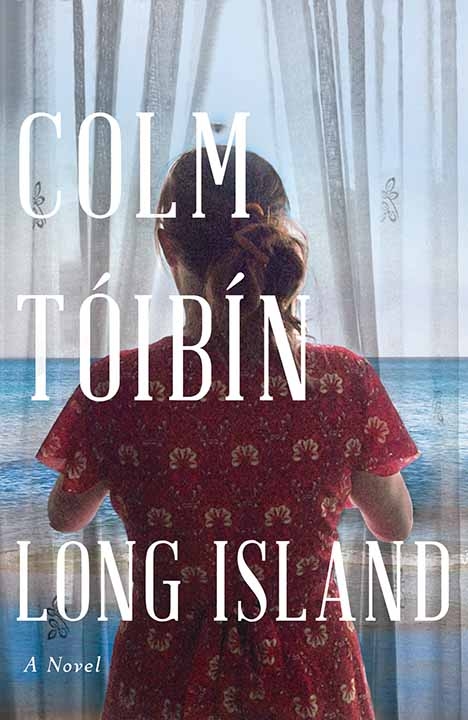
Irish writer Colm Tóibín, Laureate for Irish Fiction 2022-2024. This is his eleventh novel.
As a Tóibín fan it was like coming home to a cosy room as I settled in to page one and his simple very clear narrator’s voice with its always formal tone elicited by mainly short sentences with no contractions. It’s been twenty years or so of novelistic time since the happy ending of his novel Brooklyn (2009) when Eilis Lacey, from Enniscorthy (Tóibín’s home town in County Wexford, NE Ireland) returned to Brooklyn to continue her role as the recent wife of Italian, Tony Fiorello and to raise a family on Long Island.
Tóibín wastes no time and opens the narrative with the plot point that propels the story: a stranger arrives at Eilis’s front door with a piece of harsh news and his even harsher promise to make things worse. She lives in an enclave of the Fiorello family including her parents-in-law and Tony’s married brothers and she has forged a place in that family that she thought was secure but it’s her reaction to the news, and the only action she feels she can take, that causes her to doubt everything she has done in the past. This is despite her in-laws offering to solve the problem for her. Her stubborn Irish decision is played against the Italian pragmatic approach which she finds untenable. She refuses their help.
This is a common novelistic format: begin with an explosive event and then fill in the backstory along with the repercussions of the bomb. The reader is hooked from page one.
Brooklyn is an immigrant tale and the choices an immigrant must make, personified in the story as two men, one Irish and one an immigrant, like herself, forging an American life. She returns to Ireland to find if she has made the right choice; a little foolhardy since she has already married the Italian-American, something she does not tell anyone including her mother. She returns to America, her choice forced upon her because of her previous decisions. So, there has always been a doubt lurking in the dark, in the back of her mind and this doubt is brought to the fore in this new novel of a much older Eilis Lacey, a married American, secure, and with two teenage children.
She returns again to Ireland on the pretext of her mother’s forthcoming 80th birthday. Her twenty year ago Irish lover is still unmarried, but plans are underway to fix that. Can the way forward get more bumpy? Yes. Her children arrive! How does Eilis navigate her return to the family and ‘her Irish home’? She makes mistakes but will she learn from them? Meanwhile Tony, her foolish but devastated husband waits longingly for her to return to ‘her American home’. Once an immigrant, always an immigrant?
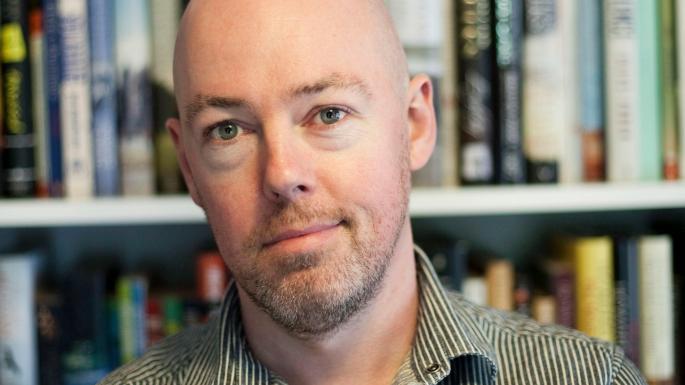
Irish writer, John Boyne whose work has been translated into 59 languages making him the most translated Irish writer of all time.
Evan Keogh is a minor character in the first novella of Boyne’s Elements Quartet, Water (2023) where, like, Earth, it is told in the first person; this time by Evan and his life after he fled the little island off the Irish coast forever, but left with the smell of its earth still under his fingernails.
He has an innate talent for football but no interest in it. He wants to be a painter. His upbringing was hell. An isolated backward place with a brutal and hateful father, a silent and down-trodden mother, and a best friend who betrays him. No wonder he ran away. He has vowed never to return to that island, he knows he is attractive, he is at ease with his sexuality (but always falls for the wrong people), and very ambitious. However, life doesn’t pan out as expected.
It opens in the days before a notorious rape trial. The narrative is two pronged: before and after. Evan, now a famous and wealthy soccer player is accused of accessory to rape; his straight mate, Robbie, accused of the crime itself. As the poor boy sits and waits for the trail to begin we learn about his life in London and how he ended up is such a threatening situation. Then comes the trial itself when we hear the testimony of the rape victim, an intelligent girl called Lauren. But we don’t hear about the testimony of Evan and Robbie; there’s a novelistic reason for that.
What impresses me about Boyne’s writing is it is so clear: the situation, the characters, how they feel, and his narrative choices that keep important plot events dangling before your wished discovery, just out of reach, until you are aching for them.
The scenes of sex and violence are vivid but Boyne’s words lead the reader to imagine them; he doesn’t actually describe them in detail. In other words, there’s more going on in the reader’s head than on the page. That’s good writing in my book, so don’t be fearful of what you might read.
Evan’s final decision is a very satisfying one, but will it finally rid him of that sour smell of his home island’s earth?
The next installment of The Elements Quartet is Fire, scheduled for release in November 2024.
Australian writer Amanda Lohrey. The Labyrinth won the 2021 Miles Franklin Award, the 2021 Voss Literary Prize, and the 2021 Prime Minister’s Literary Award for Fiction.
I came to Lohrey’s novel, The Labyrinth (2020) with a little trepidation. I hadn’t read her fiction before but knew her from book reviews in (I think) TheMonthly. I don’t remember much about them as there was very little information about the books or writers, which is why I found her reviews extremely annoying: heavy writerly syntax and nothing much else.
A visiting friend had left The Labyrinth with me. It sat on my coffee table for a few days when I finally picked it up. I put a lot of faith in page 1 and this page 1 did not disappoint, in fact it galvanised me to continue.
It’s a familiar narrative trope epitomised by the 1949 novel, Shane by Jack Shaefer which was filmed in 1953 and its success launched the plot as an iconic narrative; it was originally published in 1946 in three parts in Argosy magazine, and originally titled Rider from Nowhere: a stranger arrives in an isolated place and changes the local’s lives forever. Such a well-used storyline has morphed into more sophisticated versions over the decades – including, it’s the stranger who changes – but the bones of it are just that. John Boyne’s latest novella Water (2024), the first of a quartet, has a similar spine. Boyne’s protagonist is escaping her past; Lohrey’s, Erica, has followed hers: her son is imprisoned in a local gaol and she’s bought a dilapidated cottage to be near him even though he’s quite antagonistic towards her. As a mother she feels she has no choice; she’s all he has, she says… in fact, he’s all she has.
The first-person narrative allows Lohrey to tantalisingly release little bits of information from Erica’s back story which keeps the reader’s attention and interest. It also doesn’t allow any close writing of any other characters leaving them as intriguing observations and keeping the focus solely on the protagonist, her thoughts and fears; that’s the beauty of the first person.
While she waits for her fortnightly visits to her son, Daniel, Erica embarks on a project inspired by her late father, and plans to build a labyrinth in a flat piece of land between her cottage and the sand dunes. A labyrinth is a single continuous path but of an intricate and mathematical design that promises you will achieve the goal of getting to the centre if only you keep moving forward. A maze, on the other hand, has many turns and dead-ends so reaching the centre may never happen. A labyrinth is inspirational; a maze is a game.
An itinerant Albanian, Junka, possibly an illegal immigrant, is a wonderful novelistic creation. He is camping near the beach and happens to be a stone mason and seeks to keep Erica on track to build her labyrinth. Make what you will of the symbolism, if you think it’s relevant, but the narrative is engaging and the characters interesting even though the plot is soft and the ending a little undercooked.
Here, listen to Lohrey talk about the book and what inspired her to write it.
You can purchase the book and other Lohrey writing here.









 Michael K Freundt