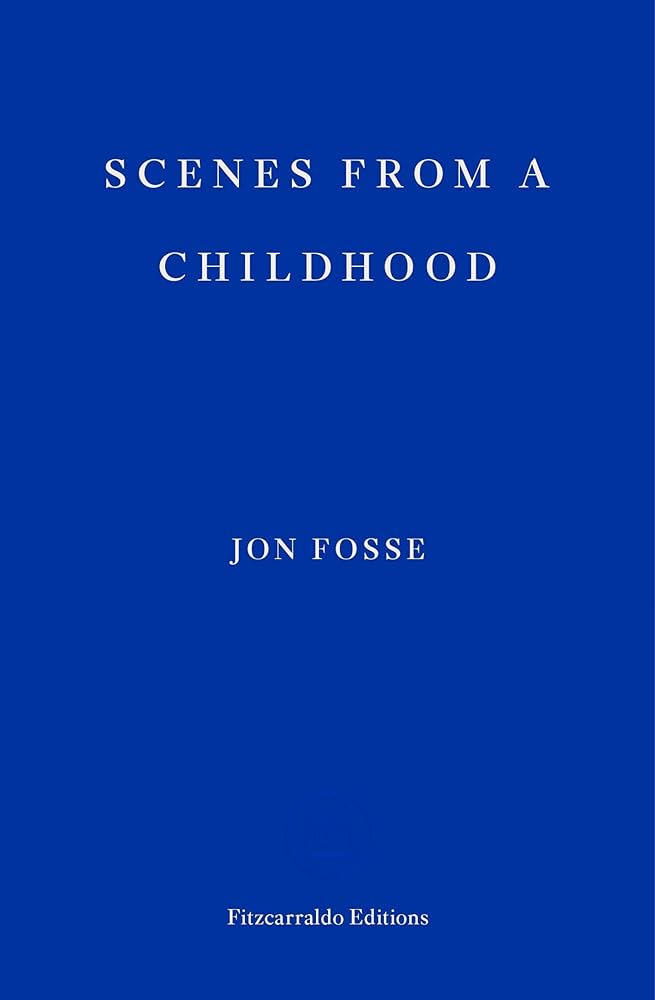
Scenes from a Childhood (1994) by Jon Fosse is a collection of short stories, vaguely connected. He has had works published since 1983, established himself in the theatre as the most -performed living European playwright but after 30 something plays returned to fiction because it gave him more freedom. But has since continued to write for the theatre.
He is known for ‘slow fiction’ characterised by simple language and the minutiae of existence. (An online fiction writing guru argues that if you think your prose is becoming boring, don’t speed up, slow down) Scenes from a Childhood is the title of one of the five sections and its just that. Some are very short, just a line, others are longer, but they give the impression of flicking through a photo album.
The shortest is called The Axe:
One day Father yells at him and he goes out to the woodshed, he gets the biggest axe, he carries it into the living room and puts it down next to his father’s chair and asks his father to kill him. As one night expect, this only makes his father angrier.
And Then My Dog Will Come Back to Me is a much longer story, section four. A man is so incensed that a neighbour of his has shot his dog that he plans a murder. Here the prose, first person, present tense, is made up of short sharp sentences in something close to stream of consciousness that is almost breathless to read. You are forced to read as fast as the man’s thoughts come and go. Punctuation is minimal. Dialogue is incorporated into the prose only delineated by line length. But very clear. This forced rushing has the affect of creating tension, suspense even, as his thinking becomes more and more erratic, confused but determined. Will he go through with it? Does he understand the consequences? Will his plans be thwarted? No spoilers here.
It could’ve been written with no punctuation at all like his novel Septology (2022), considered for the International Booker Prize, is reported to be, all 824 pages of it. Let’s be clear here, no matter how long a sentence is, a paragraph, a page, a chapter, a book, there are of course many sentences in the true meaning of the word, just no full stops. If the writer has left them out, us readers put them in. Don’t be afraid of ‘no punctuation’. When we read prose aloud we don’t ‘read’ the punctuation yet it is clear to the listener when one sentence finishes and another begins. So it can be for the reader.
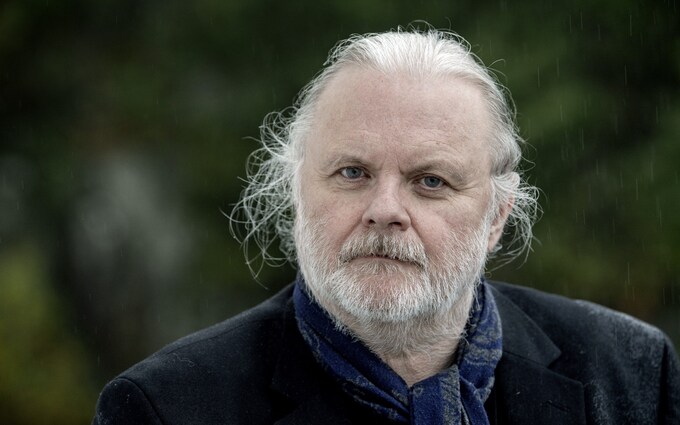
Fosse is a fascinating man. He writes in Nynorsk, a Norwegian dialect from the west coast around Bergen where he was born in 1959. He lives most of the time in the Grotten, an honorary residence in the grounds of the Norwegian Royal Palace, in recognition of his contribution to the arts and literature. Once an atheist, now a catholic, since 2012, it is implied in a recent article by Chis Power in this week’s The Guardian that Fosse was so bewilded by the fiction writing process, “I wrote and I didn’t understand where it was coming from. How do I manage it? It’s coming from somewhere else,” … maybe it came from God. He tells of a mystical – religious? – experience in his youth and used it as the basis for the latest Fitzcarraldo Edition of the novella The Shining released in October this year.
You can buy the ebook or paperback here.
Here is a short video of Fosse talking about writing prose and here a longer France24 news excerpt when Fosse won the Nobel.
 Michael K Freundt