
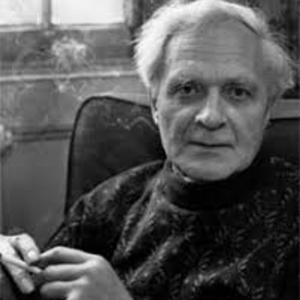
This book began as an early attempt by the British poet to write a memoir about a holiday in Germany in 1929. It was unpublishable because of its libellous and pornographic content according to the law at the time. Many books were banned then, including Ulysses by James Joyce, The Well of Loneliness by Radcliffe Hall and paintings by D.H. Lawrence. During a particularly lean period in the early sixties, Spender, by then an established, but poor, writer, sold the first draft manuscript and promptly forgot about it. Fast forward to 1985 when a friend told him about the manuscript he had read in the rare books section of the University of Texas. Spender wrote for a xerox copy (remember Xerox?) and re-wrote it between 1985 and 1987 turning it into “a complex of memory, fiction and hindsight”. He changed his own name to Paul Schoner and faintly disguised W. H. Auden and Christopher Isherwood as Simon Wilmot and William Bradshaw respectively. It is, what we now call today, auto-fiction. It is also one of a rare group of autobiographies that is written in the third person. Another example of this is James Joyce’s Portrait of the Artist as a Young Man. The Temple, its original title, was finally published in 1988. Germany between the wars had a reputation of being very liberal, emphasising personal freedom. Nothing at all was happening in England. Young Englishmen went to Spain for politics and to Germany for sex. The story is indeed an account of Paul Schoder’s holiday in Hamburg 1929 – 1931, the people he meets, the cafes and bars he frequents, the senses he explores, and the danger he foretells: the rise of the extreme right in the form of the Nazi Party. Only a few understand the danger; most are complacent, believing that their first parliamentary democracy, The Weimar Republic, will withstand the threat – it will pass. The parallel to our parliamentary democracy today and the rise of the Right, almost 100 years later, will not be lost on you. Part of the attraction for the young Englishman is the German youth who idolise the human body, praising it, showing it, using it, hence the title, The Temple; ironically from a biblical quote. It is full of ideas, conversations about ideas and characters and events that portray these ideas or are in contrast to them. I loved this book, and will undoubtedly read it again. There is so much to be gained from it, not just as a reader but as a writer: his use of the nameless, but god-like, narrator and his unjudgemental descriptions of feelings and experiences that are heightened, exaggerated, and sometimes invented in order to make a point, explore an idea; these are all part of the writer’s varied and colourful palette. Highly recommended.
 Michael K Freundt