This is a book about memory and how, as we age, we grow to understand our former imprecise and naive selves as we try to make sense of the world around us.
The narrator, an environmental activist, wife, mother, and atheist leaves her life and family behind to live in a remote religious community of nuns in the Monaro region of Southern NSW where she grew up. It’s a penny-watching community, understandably, viewed with suspicion by the locals, especially women, but where a local man helps out with the more physically demanding chores. Once the narrator is settled and eventually pleased with the decision she had made her life and that of the community is visited by three challenging occurrences: the return from overseas of the remains of a long lost, and murdered, nun from the community, a high-profile nun who was once the narrator’s schoolmate but an outsider due to poverty and public violence, and a mouse plague. All three interruptions spark questions about death, choices, what is sacred, commitment, parents, especially mothers, the truth about childhood events, forgiveness, and prayer.
‘I shovelled the compost and spread it, shovelled and spread, preparing the soil and waiting for things to make sense. Tried to attend, very softly and quietly, which is the closest I can get to prayer.’
Prayer isn’t an email to god seeking answers or gifts; it’s a form of meditation where the pray-er tries to make sense of what they believe.
Although the narrator is an unbeliever she joins in with the daily religious observances and finds solace in the routine and order they give her life. In fact the easy reading of it has a meditative effect, a consequence I particularly welcomed.
The book is also a testament to the emotional strength of simple clear and uncluttered language especially since it made the short list of this year’s Booker Prize. The format is similar to a diary, anecdotal, episodic, where daily actions are recorded juxtaposed with daily memories in an attempt to ‘work them through.’
I don’t think this book would appeal to young people as the attraction here is thoughtful consideration of a past life in order to come to an understanding of the kind of person you are and to forgive yourself for missteps in thinking and actions which were not entirely your fault.
Here is a short but succinct video of Charlotte Wood talking about this book.
This book is the best of what fiction can do: it takes you out of your time, your place, your beliefs, your expectations, and your complacency. Its appearance of truth, verisimilitude, is so strong it’s hard not to feel that this is memoir – how does he do that? – yet Tan Twan Eng, the Malaysian / British author, was born in Penang 30 years after the action, 1941-46.
The novel is written in two parts. The first and longer is a slow burn of friendship, self-awareness, family, and discovery. The second is a rollercoaster ride as WWII decimates the contented and almost healed world of the protagonist, Phillip Hutton, the Chinese / British son of a wealthy English businessman whose completely English family seemed complete before he came along.
Phillip’s Chinese mother was his father’s second wife. Although the youngest, he feels he is in the middle: in the middle of everything, being pulled this way and that, fielding heavy demands on him from every angle: the Malay locals, his Chinese forebears, his English father, and, most importantly, his Japanese instructor in the ancient Japanese martial art of aikijutsu, testing his loyalty, his responsibilities, his obligations, and his sense of self. Phillip gathers all these strands of himself into one comprehensive knot and so is able to finally understand himself and his place in the world, or so he believes. Then the war arrives in December 1941 and everything unravels. But young Phillip discovers that all those strands of his life that he thought were fighting him, pulling him, were actually teaching him; he does the unthinkable, then recants, then … no, no spoilers here.
For anyone interested in the mysterious art of writing fiction don’t bother with all those vlogs on YouTube giving free writing advice from ‘experts’ most of which look like they’re just out of high school; you’ll find out more about writing fiction by reading this book, but read it like a writer: search for the ‘way’ and ‘how’ he writes and understand how he makes it so real.
The Gift of Rain (2007) was Tan Twan Eng’s debut novel, and it was long listed for the Booker Prize as was his most recent, The House of Doors (2023). I’m now searching for his second, The Garden of Evening Mists (2011), also a prize winner – it won the Man Asian Literay Prize – and which has been adapted for big screen by HBO. Highly recommended.
Here Tan Twan Eng talks about the perils of being a new writer.
Listen to Tan Twan Eng’s advice to new writers here.
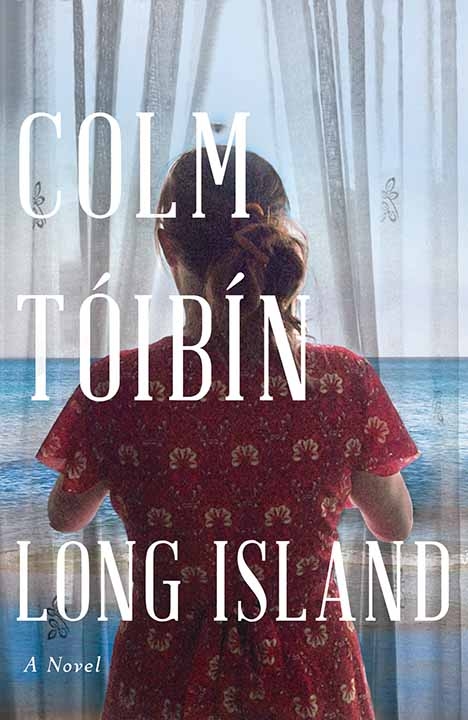
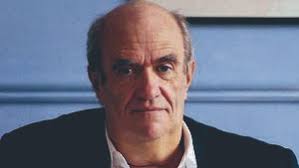
Irish writer Colm Tóibín, Laureate for Irish Fiction 2022-2024. This is his eleventh novel.
As a Tóibín fan it was like coming home to a cosy room as I settled in to page one and his simple very clear narrator’s voice with its always formal tone elicited by mainly short sentences with no contractions. It’s been twenty years or so of novelistic time since the happy ending of his novel Brooklyn (2009) when Eilis Lacey, from Enniscorthy (Tóibín’s home town in County Wexford, NE Ireland) returned to Brooklyn to continue her role as the recent wife of Italian, Tony Fiorello and to raise a family on Long Island.
Tóibín wastes no time and opens the narrative with the plot point that propels the story: a stranger arrives at Eilis’s front door with a piece of harsh news and his even harsher promise to make things worse. She lives in an enclave of the Fiorello family including her parents-in-law and Tony’s married brothers and she has forged a place in that family that she thought was secure but it’s her reaction to the news, and the only action she feels she can take, that causes her to doubt everything she has done in the past. This is despite her in-laws offering to solve the problem for her. Her stubborn Irish decision is played against the Italian pragmatic approach which she finds untenable. She refuses their help.
This is a common novelistic format: begin with an explosive event and then fill in the backstory along with the repercussions of the bomb. The reader is hooked from page one.
Brooklyn is an immigrant tale and the choices an immigrant must make, personified in the story as two men, one Irish and one an immigrant, like herself, forging an American life. She returns to Ireland to find if she has made the right choice; a little foolhardy since she has already married the Italian-American, something she does not tell anyone including her mother. She returns to America, her choice forced upon her because of her previous decisions. So, there has always been a doubt lurking in the dark, in the back of her mind and this doubt is brought to the fore in this new novel of a much older Eilis Lacey, a married American, secure, and with two teenage children.
She returns again to Ireland on the pretext of her mother’s forthcoming 80th birthday. Her twenty year ago Irish lover is still unmarried, but plans are underway to fix that. Can the way forward get more bumpy? Yes. Her children arrive! How does Eilis navigate her return to the family and ‘her Irish home’? She makes mistakes but will she learn from them? Meanwhile Tony, her foolish but devastated husband waits longingly for her to return to ‘her American home’. Once an immigrant, always an immigrant?
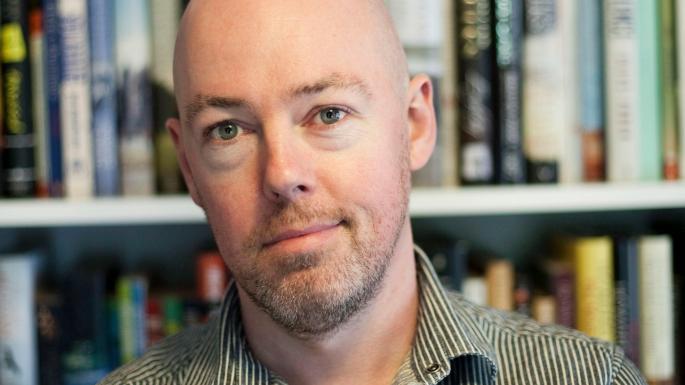
Irish writer, John Boyne whose work has been translated into 59 languages making him the most translated Irish writer of all time.
Evan Keogh is a minor character in the first novella of Boyne’s Elements Quartet, Water (2023) where, like, Earth, it is told in the first person; this time by Evan and his life after he fled the little island off the Irish coast forever, but left with the smell of its earth still under his fingernails.
He has an innate talent for football but no interest in it. He wants to be a painter. His upbringing was hell. An isolated backward place with a brutal and hateful father, a silent and down-trodden mother, and a best friend who betrays him. No wonder he ran away. He has vowed never to return to that island, he knows he is attractive, he is at ease with his sexuality (but always falls for the wrong people), and very ambitious. However, life doesn’t pan out as expected.
It opens in the days before a notorious rape trial. The narrative is two pronged: before and after. Evan, now a famous and wealthy soccer player is accused of accessory to rape; his straight mate, Robbie, accused of the crime itself. As the poor boy sits and waits for the trail to begin we learn about his life in London and how he ended up is such a threatening situation. Then comes the trial itself when we hear the testimony of the rape victim, an intelligent girl called Lauren. But we don’t hear about the testimony of Evan and Robbie; there’s a novelistic reason for that.
What impresses me about Boyne’s writing is it is so clear: the situation, the characters, how they feel, and his narrative choices that keep important plot events dangling before your wished discovery, just out of reach, until you are aching for them.
The scenes of sex and violence are vivid but Boyne’s words lead the reader to imagine them; he doesn’t actually describe them in detail. In other words, there’s more going on in the reader’s head than on the page. That’s good writing in my book, so don’t be fearful of what you might read.
Evan’s final decision is a very satisfying one, but will it finally rid him of that sour smell of his home island’s earth?
The next installment of The Elements Quartet is Fire, scheduled for release in November 2024.
Australian writer Amanda Lohrey. The Labyrinth won the 2021 Miles Franklin Award, the 2021 Voss Literary Prize, and the 2021 Prime Minister’s Literary Award for Fiction.
I came to Lohrey’s novel, The Labyrinth (2020) with a little trepidation. I hadn’t read her fiction before but knew her from book reviews in (I think) TheMonthly. I don’t remember much about them as there was very little information about the books or writers, which is why I found her reviews extremely annoying: heavy writerly syntax and nothing much else.
A visiting friend had left The Labyrinth with me. It sat on my coffee table for a few days when I finally picked it up. I put a lot of faith in page 1 and this page 1 did not disappoint, in fact it galvanised me to continue.
It’s a familiar narrative trope epitomised by the 1949 novel, Shane by Jack Shaefer which was filmed in 1953 and its success launched the plot as an iconic narrative; it was originally published in 1946 in three parts in Argosy magazine, and originally titled Rider from Nowhere: a stranger arrives in an isolated place and changes the local’s lives forever. Such a well-used storyline has morphed into more sophisticated versions over the decades – including, it’s the stranger who changes – but the bones of it are just that. John Boyne’s latest novella Water (2024), the first of a quartet, has a similar spine. Boyne’s protagonist is escaping her past; Lohrey’s, Erica, has followed hers: her son is imprisoned in a local gaol and she’s bought a dilapidated cottage to be near him even though he’s quite antagonistic towards her. As a mother she feels she has no choice; she’s all he has, she says… in fact, he’s all she has.
The first-person narrative allows Lohrey to tantalisingly release little bits of information from Erica’s back story which keeps the reader’s attention and interest. It also doesn’t allow any close writing of any other characters leaving them as intriguing observations and keeping the focus solely on the protagonist, her thoughts and fears; that’s the beauty of the first person.
While she waits for her fortnightly visits to her son, Daniel, Erica embarks on a project inspired by her late father, and plans to build a labyrinth in a flat piece of land between her cottage and the sand dunes. A labyrinth is a single continuous path but of an intricate and mathematical design that promises you will achieve the goal of getting to the centre if only you keep moving forward. A maze, on the other hand, has many turns and dead-ends so reaching the centre may never happen. A labyrinth is inspirational; a maze is a game.
An itinerant Albanian, Junka, possibly an illegal immigrant, is a wonderful novelistic creation. He is camping near the beach and happens to be a stone mason and seeks to keep Erica on track to build her labyrinth. Make what you will of the symbolism, if you think it’s relevant, but the narrative is engaging and the characters interesting even though the plot is soft and the ending a little undercooked.
Here, listen to Lohrey talk about the book and what inspired her to write it.
You can purchase the book and other Lohrey writing here.
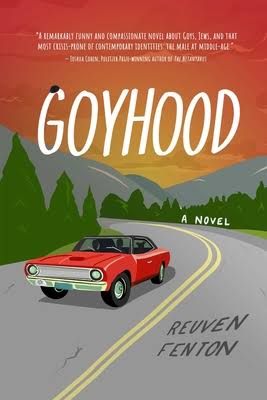
Reuven Fenton graduated from the School of Journalism at Columbia University. He has been “covering murder and scandal for the New York Post” since 2007 and is the author of Stolen Years: Stories of the Wrongfully Imprisoned (2015).
This is his debut novel.
Fenton has a playful knack with descriptions – They heard the potato potato potato of a motor … – and original similes – the mouthpiece smelt like apricots decomposing in the sun … … his thoughts scattered like feathers in a chicken coop … she hugged like a bear and kissed like a lamprey.
It proves to me that this writer is a real writer in the same way that a miraculous French onion soup is proof it’s made by a real chef.
So, to the book. Meyer, Marty, Belkin doesn’t know how to book a plane ticket, pack a suitcase, the name of any popular tv shows – nor the name of that yellow faced cartoon family who’s mom has a blue beehive as tall as she is – or who his insurance agent is. All he knows is the minutiae of Jewish law and where to read it.
His father-in-law insisted he do nothing but marry his daughter, Sarah, study the Talmud – the central text of Judaism and the primary source of Jewish religious law – be supported by him, and, oh, and her Dad threw in a house for good measure.
If you can think of the most disparate person to a dough-faced single minded Talmudist who buys new clothes that match the ones he came in with you’ve got his twin brother – although younger by 43 seconds – David, who is now a millionaire-ette thanks to the e-cigarette; this latest get-rich-quick scheme worked; many before didn’t and like all get-rich-quickers he tries anything and buys everything.
Goyhood is a road trip back to New York after finding out, at their mother’s funeral in Moab, Utah and via her suicide note, that she wasn’t Jewish after all. (This isn’t a spoiler; it’s all over the publicity – it’s the set-up) As you can imagine this is an existential crisis for Meyer – Sarah may not remarry him! – not so for David: it’s liberation, exemplified by hiring “the most powerful Charger on the market” calling it Daisy and taking to the road, and dragging his brother along.
Goyhood…having already picked up a stray dog, Popeye, in New Orleans, David reunites with a female acquaintance, Charlayne, which he rather unbelievably invites to share his cheap hotel bed when he’s already sharing it with Meyer. I worried here that Fenton had lost control of the road-trip narrative with an episode that appeared rudderless, novelistically speaking. However, he regains it again when Sarah, Meyer’s wife, rejoins the story, not in person but via a phone call. She is an interesting character and not only her husband’s Judaic anchor but she’s also set up to be the novel’s major plot hurdle. By that I mean, if Meyer can win her back, after divulging the truth of his non-Jewish ancestry – his goyhood – the novel must surely end. Does it? I’m not saying – no spoilers here.
Yes, it’s a road-trip narrative but it didn’t pan out as I expected: Fenton is more interested in how this brief exposure to the real world effects his religious commitment and there’s a few fascinating U-Oh! moments concerning Sarah! Now, that’s interesting.
I’m not religious although raised so but 1960s Australian wheat-farm Lutheranism is a far cry from present day scholastic New York Jewishness. I loved the humour in this book – that dry as oats deadpan kind that comes at things from around a corner – but readers with a Jewish string or two to their life will get far more out of it, I’m sure. The outcome is certainly not predictable as is Meyer’s fate and it’s very satisfying.
Goyhood is being released on May 28th 2024. You can pre-order the hardcover or Kindle editions here.
Dutch novelist and poet, Louis Couperus (1863-1923)
Colonialism in the 17th century depended upon the European Doctrine of Empire which was for some time heading in the direction of normalising (i.e., sanctioned by God) the formal extinctions of native people and governance and enslavement of those that remained.
Nowhere was this doctrine more monstrously carried out than in the Banda Islands in 1621 where forty four Bandanese elders were beheaded and quartered, by Japanese swordsman especially imported for the task, and their bodies were displayed on stakes. At a meeting seven days after the massacre Jan Coen, the Dutch commander, announced “all towns and fortified places of Banda had, by God’s grace been taken, erased, burned down and about 1200 people caught.” Coen’s sole plan: the destruction of the Bandanese world was achieved in the space of 10 weeks.
All this was done in the name of the Christian god because of a nut.
This massacre, and many others, as well as land appropriation of thousands of islands, subjugation and enslavement of the Indigenous people for the sole purpose of controlling the extraordinary valuable spice trade – profits of 3000% were common – were carried out by a private company: Verenigde Oostindische Compagnie (VOC) – the Dutch East India Company. Governing over ten thousand islands and over 50 million people for over a century and a half destroyed this private company but it was too big to fail; it was nationalised into the Dutch Government in 1800.
One hundred years later Louis Couperus’s most famous novel, The Hidden Force, was published. It depicts the height of white supremacy (with three centuries of experience) with a subjugated population who bowed and scurried on their haunches keeping their brown heads below the level of white ones. Couperus’s band of Dutch and Eurasian characters assumed these times would never change (in less than 50 years the Dutch would be gone) but the Dutch were proud of their system of colonialism and thanked God for giving them the right to set an example of what civilised people believed and how they lived.
The protagonist is a District Commissioner in East Java, Otto Van Oudijck (van ow dyk) who, like the Government, believes he is a good colonial, says he loves his subjects, and is proud of what he has achieved in his career and sees a clear path to the Governor General’s thrown. Van Oudijk, his second wife, their children and friends are vividly created; their luxurious life, long office hours for the men, social manipulation, indolence, petty jealousies and sexual intrigue for the women are intriguingly explored. But everyone is on edge. There appears to be a hidden force. Mysterious stones crash through open windows and land at the feet of Mrs van Owdijk as she’s again about to enjoy her step-son, Theo; anonymous letters litter Van Oudijk’s desk accusing his wife of incest and inappropriate relations with a beautiful local boy – he doesn’t believe a word of them, though they unsettle him; white ants and cockroaches destroy a piano; mould renders a new silk dress unwearable; the local royals smile and kow-tow but their eyes say something very different; unholy noises and human cries litter the darkness; animals scurry up the walls and cry out mournfully; and then there’s the climate, the endless heat in the dry and the relentless rain in the wet; the white faces begin to be unsettled by the brown ones whose smiles are no longer trusted, and then one night with rhythmic banging coming from above the ceiling the Commissioner’s bed is covered in filth . Escalating unease encroaches on the Dutch community who dream of ‘home’ and wonder if they will ever see it again.
Louis Couperus, a towering figure in Dutch literature, has written an enthralling and personified denunciation of colonialism. His message is that all oppressed peoples will ultimately destroy the right of their confident and self-righteous oppressors to control them. It might take three and a half centuries, but in the end the subjugated will triumph. Fiction can take you to extraordinary places, to almost unbelievable times and show you the highs and incredible lows of the human condition; it can also show you truth. This is historical fiction at its best.
This translation, by Paul Vincent, can be purchased in various editions here.
The Dutch edition can be purchased in various editions, including a Kindle edition for free, here.
Irish writer, John Boyne whose work has been translated into 59 languages making him the most translated Irish writer of all time.
This is my second reading of this book. Back in 2017 I read it for the first time and fell in love with Boyne’s work. Here is my blog from that first reading: it’s still apt and relevant.
Many years ago, on a small plane trip – the plane was small, not the trip – as we were about to land in a provincial Queensland town, I continued to assiduously read my book. I was laughing so much, trying not to, but not succeeding, that my eyes were streaming, my nose running, and my face felt hot and red; the flight attendant broke the rules, unbuckled, and hurried to my seat to ask if I needed medical assistance. I just held up the book; I was unable to speak. She understood. Maybe she’d read it too. It was the hit of the season. The hysterical section was the Nativity Scene from A Prayer for Owen Meany (1989) by John Irving. The next time I laughed out loud, many decades later (yes, decades), was with this book, and the (highly illegal) Dinner Party Scene, from early on in The Heart’s Invisible Furies (2017) by John Boyne. Ironically Boyne has dedicated this book to Irving.
Making people laugh via the written word, and only the written word, is an extremely difficult and hazardous task. You can’t under play it or over sell it, and you certainly can’t ‘back-explain’ it; it’s all to do with tone, and tone is like a law of physics: it only happens when the universal conditions are absolutely right. It’s as if you need to foster a certain psychological state of mind, and write the episode with as much truthfulness and sincerity as you possibly can – don’t elaborate – just tell it, and if the tone is right, it will be hysterical. If it isn’t you can’t go back and make it right, edit it funny, you have to delete it all and start again. A plane will only fly if all the necessary preparations and current circumstances, weather, wind, mechanical health, operational skill, and power source, are perfect.
The dinner party – and it’s impossible to explain why it’s illegal, you’ll just have to read it to find out – is on page 92, but the preparation for it, and the other laugh-out-loud bits, preparation for the tone, I mean, in true Irving-esque fashion, begins right from the first killer sentence; and by the way, the opening sentence of Owen Meany has to be the killer-opening-sentence in all literature. There was a time when I knew it by heart and it became my dinner-party piece for some time after. I can’t sing, tell a joke, or play the piano, you see.
Boyne considers Irving a mentor, and Irving should be chest-thumpingly proud.
It’s impossible for Boyne to escape the moniker of “author of The Boy in the Striped Pyjamas” which he understands only too well, and he’s certain it will appear on his grave stone, so internationally popular was the book and film; but it changed his life making writing full time not only a possibility but a happy necessity.
Boyne was born in 1972. Ireland brought him up but the Church brought him down. He still suffers from its cruelty and hypocrisy. He’s not alone. His anger is present in this book but, much to his credit, he’s fashioned it into a cutting humour without lessening the truth of his understandable hatred.
The Heart’s Invisible Furies explains the life of Cyril Avery, although not a real Avery, from his pre-birth to two months before his death; from 1945 to 2015; and it is also the story of Ireland over that time; from a society dominated, straightjacketed, and suffocated by the Catholic Church, under the guise of strengthening morality, to one that legalises same-sex marriage. It’s a hell of a journey.
It’s full of surprising events, fashion, villains, extremely bad behaviour, political unrest, beauty, deception, selfishness, redemption, tears – yours as well as the character’s, death, forgiveness, love, birth in the midst of murder, politicians behaving badly, coincidences, literature, weddings, doctors behaving courageously, dreams – both fulfilled and dashed, sentiment, laughter, bigotry, violence, and even the ludicrous; in fact the entire palette that paints our lives that all conspires to prove that age-old adage, nobody’s perfect. And all these elements are wound around a cast of characters you won’t easily forget, and nor would you want to.
Boyne skilfully uses many literary devices to tantalise and seduce his readers: he drops in an outcome before explaining how it happened; he triggers the reader’s memory before the character’s; and, best of the lot, dramatic irony: when the reader knows more that the characters do.
I love this book and I’ve recommended it to others, who too have loved it. I’m preparing a space on my bookshelf, between Jane Bowles and Peter Carey. You can get the book, in various formats, here.
Irish writer, Paul Lynch, winner of the 2023 Booker Prize.
In July 2023 I was house sitting for a family member and the first thing I noticed was there were no books in the house. Then one afternoon while searching for an iron I found, on the bottom shelf of the linen closet, a pile of five books, four Agatha Christie novels, and one novel by an unknown writer. What caught my attention was one of the endorsements on the front cover of this unknown title was by my all-time favourite novelist, the Irishman Colm Tóibín. Being a fan of, and I thought knowledgeable about, Irish literature I was embarrassed not to know the novel, Red Sky at Morning (2013) nor the author, Paul Lynch. I read several pages, at first wary of the poetic language but awed by the ease of understanding, the tension of, and immediate involvement in, the story. I planned to steal it, but didn’t, wished now I had, and will next time I’m in that house.
The plot is simple: a dystopian society on the edge of collapse and a deeply moving story of a mother’s fight to hold her family together. That’s on the back cover so I’m not spoiling it for you.
The language is sometimes poetic:
How the dark gathers without sound the cherry trees. It gathers the last of the leaves and the leaves do not resist the dark but accept the dark in whisper. Tired now, the day almost behind her, all that still that
And the size and design of the font is surprising clear and easy on the eye: it is very neat and black. Recently some publishers have been printing in grey, to save money I assume, which I find annoying.
But what most readers will be talking about is the punctuation, or lack of it. In this book, Lynch does not punctuate dialogue. This renders each page a justified, on left and right, slab of text. It can, on first glance, look daunting.
She lifts two mugs and peers inside them, squeaks her finger around the rim. Dad, look at these mugs, why don’t you use the dishwasher, you really need to wear your glasses when washing up. Simon does not lift his eyes from the newspaper. I’m wearing my glasses right now, he says. But you need to wear them while washing up, these mugs are ringed with tea. You can blame the useless cleaning lady …
If you realise that you do not understand what you have just read, read the line again, read the paragraph again. Listen to your own reading voice. I had to do this initially. Just like turning to Dickens or Woolf, you need to get used to the different tone, the different syntax, and in this case, the different sentence structure. There’s a reason for this difference: Lynch’s fictional world is different; it’s falling apart. But, go with it. When you listen to an audio book the reader doesn’t ‘read’ the punctuation yet the listener understands perfectly who says what. Read like a listener and you will be rewarded.
Lynch burst onto the literary scene in triumph (more personal embarrassment – why didn’t I know?) when his first novel, that one I found next to the iron among the pile of Agatha Christies, was the prize of a six-publisher auction in London, and it won him acclaim abroad, especially in France where it was a finalist for France’s Best Foreign Book Award: Prix du Meilleur Livre Étranger. He’s written three novels since. Prophet Song is his fifth.
It’s a unique book and a remarkable feat of imagination worth getting stuck into.
Here is a succinct Q&A video by Paul Lynch, on the Booker short list, before the announcement of the prize winner.
WARNING: This novel contains graphic descriptions of sexual activity and language that some readers may find offensive.
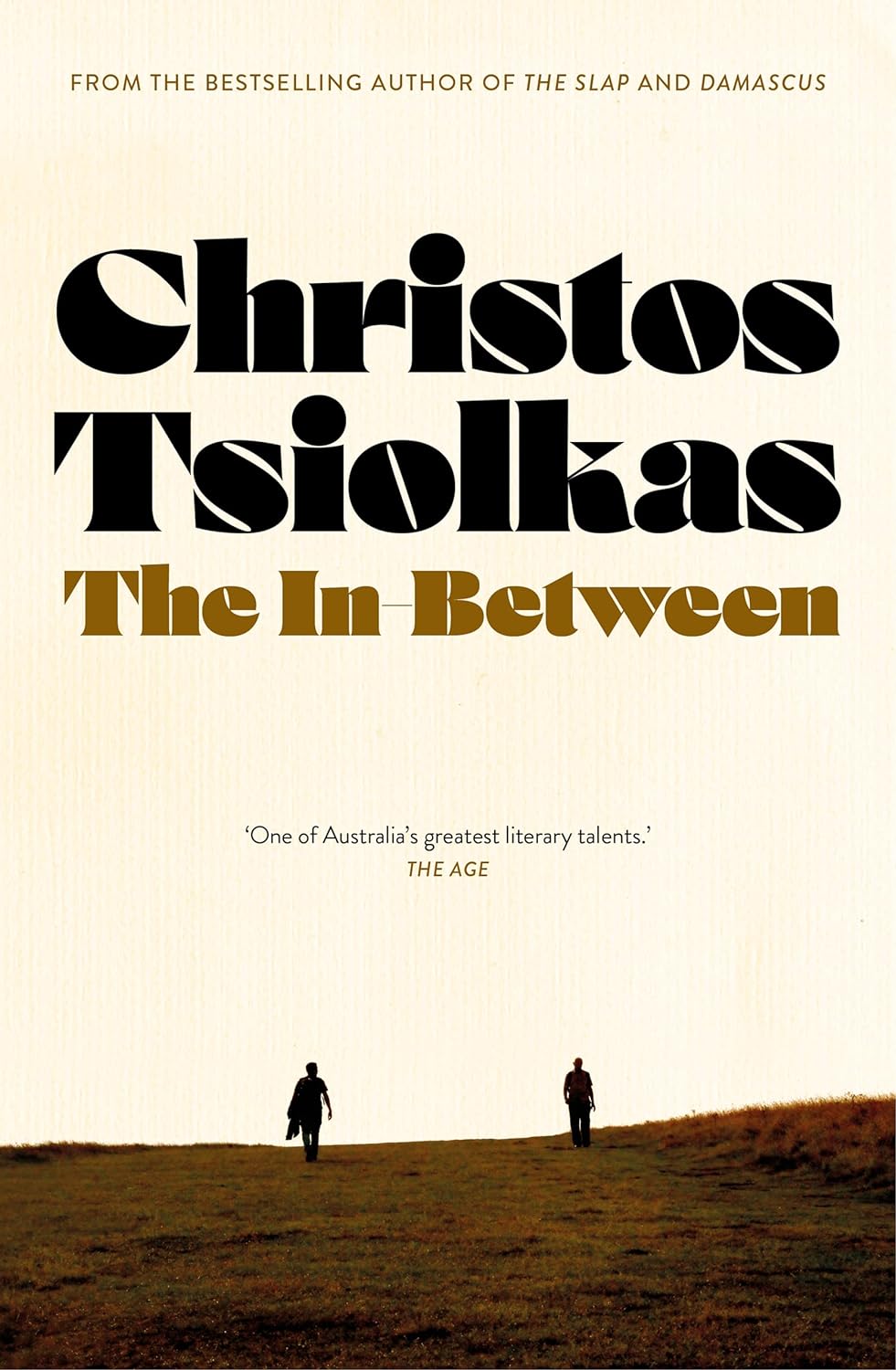
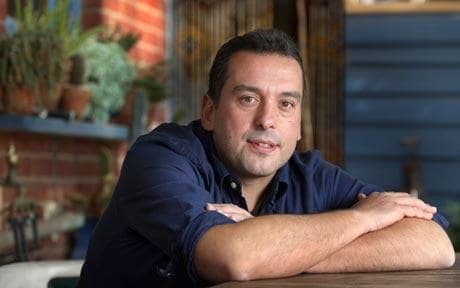
This book is a triumph and has returned Tsiolkas to my high esteem after Damascus (2019) and 7 1/2 (2021) which left me rather underwhelmed. Two men in their fifties, both with pasts tainted by regrets, mistakes, and betrayal, find each other on a dating app. Perry, an academic and translator, and Ivan, a landscape designer with his own business, are both attractive men although their handsomeness has begun to fade. They embark on their first date with a lot of trepidation and too much aftershave. The description of their restaurant meal is made dramatic and insightful by Tsiolkas’ attention to both men’s explicit thoughts that accompany each gesture, look, and their possible implications. There is also a wonderful dinner party scene where Tsiolkas’ narrator digs deep into each character’s actions and reactions. It’s a masterful piece of writing juggling four very different characters each with exposed, and hidden, motivations, what they say and don’t say.
The story is told in the third person but from alternating, chapter to chapter, points of view. However, imbedded in the structure is a device I have not seen before: Tsiolkas takes passing strangers, near-by onlookers, and places them under the narrator’s attention and we see our two would-be heros as others see them, how the world sees them: two ageing homosexuals behaving normally and affectionately in the world. This device has another purpose which affords an unusual but satisfying ending … but enough said; no spoilers here.
Tsoilkas has never shied away from graphic sexual descriptions as is evident in his early work, particularly Loaded (1995) and Dead Europe (2005) but since his record breaking success The Slap (2008) thrust him into the global literary mainstream with television adaptations both in Australia and the US the sexual lives of his characters have usually been implied rather than described. This return to such syntax is welcomed because he is so good at it mainly because there is no judgement or shame in what is vividly described.
Both men have pasts that they are trying to recover from and which they may or may not reveal to the other. They both try very hard to make this new relationship work – falling in love in your fifties is very different from your heady twenties; it takes work – even though Ivan’s family, a bitter ex-wife, but a caring daughter and granddaughter, and their own tensions get in the way. Perry has his own demons, mainly in the shape of a married French ex-lover he met in Europe and how this closeted man made him see himself and the world.
Minor characters, Ivan’s family and a charming rent-boy, and Perry’s relationship with his ex-lover’s daughter are treated with the same descriptive detail that add depth and understanding to the narrative. It’s a great book. Highly recommended.
Here is a short and interesting video with Tsiolkas talking about his influences and inspirations from 10 years ago. And here is a longish interview with David Marr about The In-Between but the audio is less than adequate. Watch with patience.







 Michael K Freundt