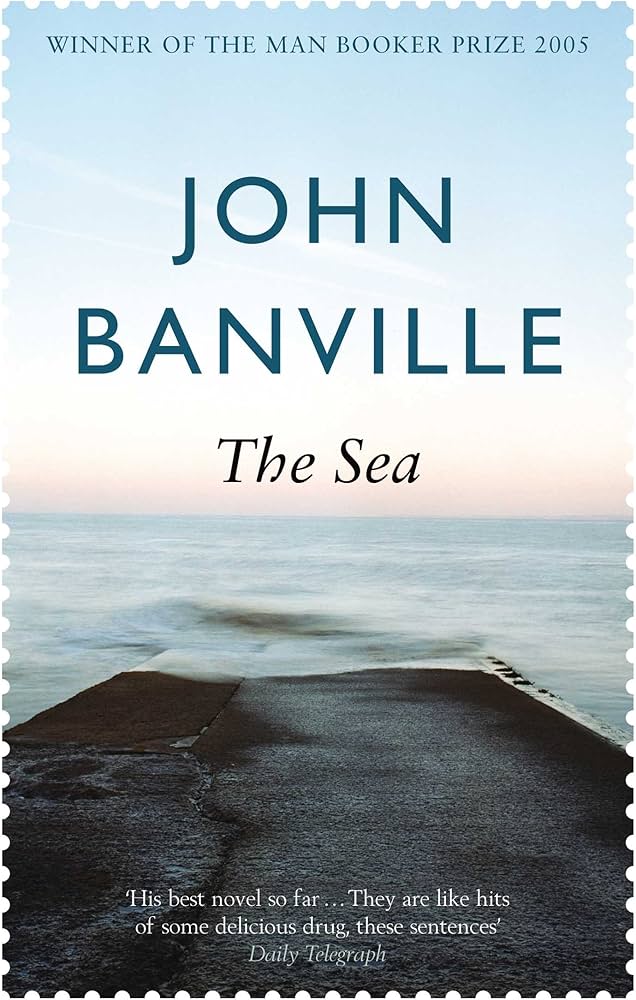
If you are looking for a definition of literary fiction, this 2005 Booker Prize winning novel is it. I know that may put some people off; it seemed to have put John Banville off too; from 2006 Banville began writing crime novels, featuring the pathologist Quirke (no first name ever mentiuoned), under the name of Benjamin Black right up until 2021 when the Quirke novel, April in Spain, was released under his own name. Since then his Quirke novels, beginning with Christine Falls (2006) have been released under his name as well.
An elderly man, Max Morden, returns to a seaside house where his family used to holiday when Max was a child. We meet the Grace family, parents and the children Myles and Chloe, from that time and the inhabitants of the same place, now a rundown boarding house, all those years later. These two time frames, and the people in them, are woven tapestry-like to create a picture of Max’s current demeanour.
This is a slow burn of a book. It creeps up on you, but you need to stay with it. I got to a stage where I could not pinpoint what was wrong but I knew that there was something definitely not right, either about what happened in the past or what was going to happen in the present. It’s about capricious memory and self-awareness and, more importantly, about that slippery slope between behaviour and intention.
Someone once wrote, memory is like an oven. You put something in, close the door, wait a while, open it, and there it is, something different.
I’m now searching for the Quirke novels. When a writer of this skill-set takes on the ubiquitous crime genre there has got to be reading richness to discover.
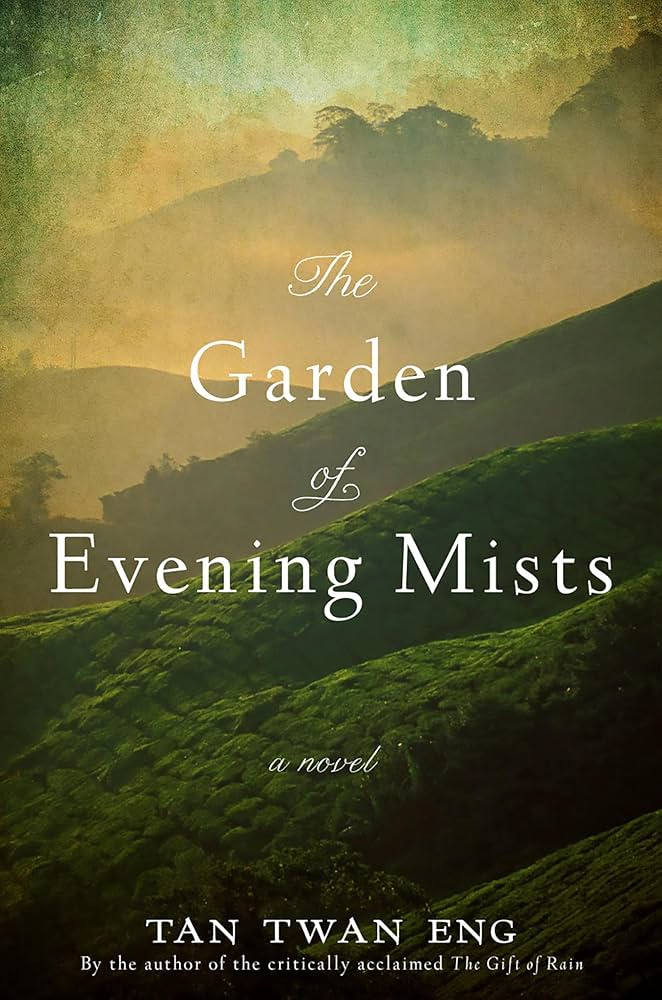
A Straits Chinese retired judge, Yun Ling Teoh, returns to spend her last days in a house in the Cameron Highlands in Central Malaya during the Communist guerrilla war with the British in the early 1950s. It was here, as a young woman, she was apprenticed to Aritomo, a famous Japanese gardener, who once was the gardener of the Emperor of Japan. This back story, their working and emotional relationship with the backdrop of WWII and the Malaya Communists against the Japanese, is THE story.
This is the second novel by Tan Twan Eng after his successful debut, The Gift of Rain (2008) which was long-listed for the Booker. His third novel, The House of Doors (2023), was also long-listed for the Booker. This one suffers from the cliched ‘second novel syndrome’. In this case, not as original and complex as the first, and not as imaginative and assured as the third. This is a personal opinion despite it being short-listed for the Booker. I enjoyed reading it but without that thrill of attachment. Like all three Tan novels, they transport you to a time, place, threats, joys and sensibilities that are completely alien, but therefore fascinating, to a contemporary reader. Of course, the raw human emotions we all know about. This one also has that Eastern flavour of wisdom and sage-like belief in elements of the world that we can’t quite grasp but which may guide or steer us in directions we haven’t planned.
Her sister, enamoured by Japanese gardens, disappeared during the war and Yun Ling wants to built a Japanese garden in her honour. Aritomo refuses to design one but offers to teach her how to design it herself. Yun Ling’s internment by the Japanese, her apprenticeship to Aritomo and her relationship with him form the spine of the narrative. The events, conversations and relationships appear ‘soft’ and incidental. I knew this work had been made into a movie in 2017 and although my interest wavered I reasoned that if there was cinematic interest in this work there must be a pay off. I continued reading and I am so glad I did. This is a ‘slow burn’ of a book … war, imprisonment, romance, intrigue, a tattoo! – there is so much I haven’t mentioned – but all will be revealed in a very satisfying climax. Highly recommended. I wait patiently for book number 4.
Here is a short video of Tan Twan Eng talking about this book.
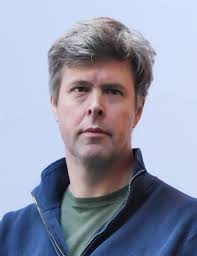
I posted recently my views on Szalay’s 2016 novel, All That Man Is, which was shortlisted for the Booker. This, his latest, Flesh, won this year’s Booker and is in the same mould. The former is a collection of short stories about nine unrelated men; the later is a collection of stories, scenes, about the life of one man, István, beginning in Hungary when he is fifteen years old. Like all the men in All That Man Is he says ‘I don’t know’, ‘OK,’ and ‘Sure’ a lot. He is not the driver of his own destiny. Women play far more important roles, his neighbour, his boss’s wife, his wife and ultimately and ironically, his mother. From a rudderless boy he becomes a soldier, a bodyguard, a wealthy man, a step-father, a father and … well, you’ll just have to read it to find out; no spoilers here. There are only a few clues as to what happens to him between the stories, scenes, of his life that Szalay chooses to feature. His style is minimalist: short sentences, simple language, stark facts without much linguistic adornment, a bit like István. This had the effect of causing this reader to gasp – I love it when a writer makes me do that – several times since the gob-smacking events are relayed with such simplicity and directness that they leap out at you like a favourite uncle who hides behind a door and says Boo! I had to re-read several of these events again to make sure I hadn’t missed anything. Although women and sex feature he is not exploitative nor unkind. He doesn’t use women, women use him, and he’s thankful to them. Without women you wonder how he would have survived. I love Szalay’s style as it respects readers’ intelligence and allows us to bring our own experience and understanding to fill in what he doesn’t say. He makes the story of a plain man an interesting one. I have criticised the Booker judges in the past for awarding the prize to a writer for writers; this one is a writer for readers.
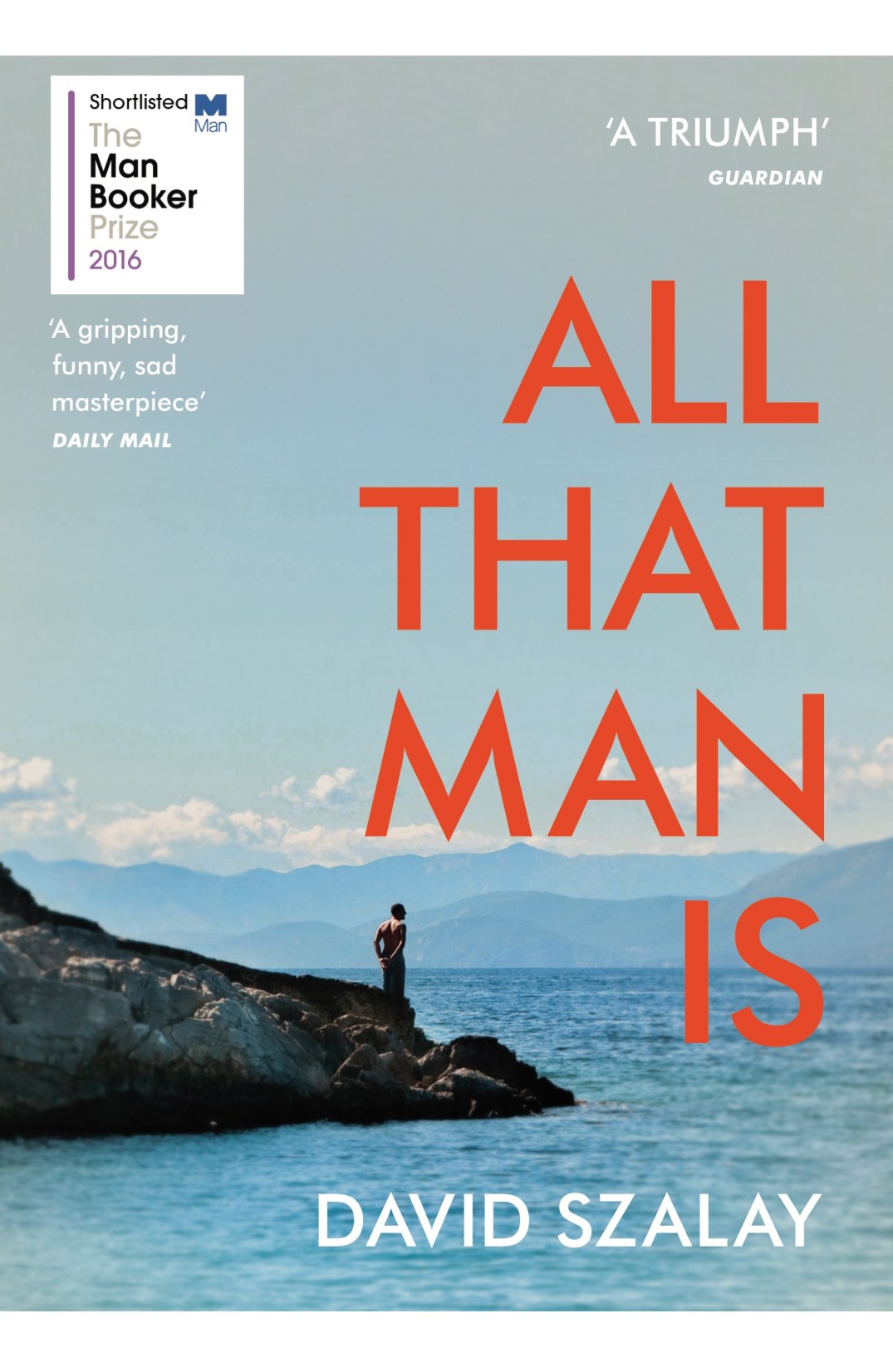
Since Szalay has won this year’s Booker with his latest novel Flesh, I saw I had this 2016 Booker shortlisted novel on my bookshelf and hadn’t read it. So I did, before I reach for the new one. His title makes you think he is referring to mankind. However, a more apt title would be All That Men Are. And my response? Not much. I mean the men, not the book. The book is great! This is not a novel but nine unrelated short stories about nine different men. Their only connection is that they “are facing the same question” so says the blurb on the back. Several of these men are rudderless, inarticulate but all of them need a good shaking while you scream, ‘Get over yourselves!’ Most are losers, some are manipulators, two of them are waiting or wanting to die. One, a Hungarian called Balázs is all muscle and ‘I don’t know’s and his understanding of ambition revolves around how long it might be until his next cigarette. What is remarkable about this book is that Szalay, a master of language, manages to make these men’s stories fascinating. Can’t wait to get my hands on Flesh! And the more I read about it, it seems to concern the 10th man that didn’t make it into this 2016 book. I’m not going to let his choice of characters deter me, and neither should you; he writes about people like us: unremarkable, but with compassion and skill that is surprising and utterly enjoyable.
This is a book about memory and how, as we age, we grow to understand our former imprecise and naive selves as we try to make sense of the world around us.
The narrator, an environmental activist, wife, mother, and atheist leaves her life and family behind to live in a remote religious community of nuns in the Monaro region of Southern NSW where she grew up. It’s a penny-watching community, understandably, viewed with suspicion by the locals, especially women, but where a local man helps out with the more physically demanding chores. Once the narrator is settled and eventually pleased with the decision she had made her life and that of the community is visited by three challenging occurrences: the return from overseas of the remains of a long lost, and murdered, nun from the community, a high-profile nun who was once the narrator’s schoolmate but an outsider due to poverty and public violence, and a mouse plague. All three interruptions spark questions about death, choices, what is sacred, commitment, parents, especially mothers, the truth about childhood events, forgiveness, and prayer.
‘I shovelled the compost and spread it, shovelled and spread, preparing the soil and waiting for things to make sense. Tried to attend, very softly and quietly, which is the closest I can get to prayer.’
Prayer isn’t an email to god seeking answers or gifts; it’s a form of meditation where the pray-er tries to make sense of what they believe.
Although the narrator is an unbeliever she joins in with the daily religious observances and finds solace in the routine and order they give her life. In fact the easy reading of it has a meditative effect, a consequence I particularly welcomed.
The book is also a testament to the emotional strength of simple clear and uncluttered language especially since it made the short list of this year’s Booker Prize. The format is similar to a diary, anecdotal, episodic, where daily actions are recorded juxtaposed with daily memories in an attempt to ‘work them through.’
I don’t think this book would appeal to young people as the attraction here is thoughtful consideration of a past life in order to come to an understanding of the kind of person you are and to forgive yourself for missteps in thinking and actions which were not entirely your fault.
Here is a short but succinct video of Charlotte Wood talking about this book.
Irish writer, Paul Lynch, winner of the 2023 Booker Prize.
In July 2023 I was house sitting for a family member and the first thing I noticed was there were no books in the house. Then one afternoon while searching for an iron I found, on the bottom shelf of the linen closet, a pile of five books, four Agatha Christie novels, and one novel by an unknown writer. What caught my attention was one of the endorsements on the front cover of this unknown title was by my all-time favourite novelist, the Irishman Colm Tóibín. Being a fan of, and I thought knowledgeable about, Irish literature I was embarrassed not to know the novel, Red Sky at Morning (2013) nor the author, Paul Lynch. I read several pages, at first wary of the poetic language but awed by the ease of understanding, the tension of, and immediate involvement in, the story. I planned to steal it, but didn’t, wished now I had, and will next time I’m in that house.
The plot is simple: a dystopian society on the edge of collapse and a deeply moving story of a mother’s fight to hold her family together. That’s on the back cover so I’m not spoiling it for you.
The language is sometimes poetic:
How the dark gathers without sound the cherry trees. It gathers the last of the leaves and the leaves do not resist the dark but accept the dark in whisper. Tired now, the day almost behind her, all that still that
And the size and design of the font is surprising clear and easy on the eye: it is very neat and black. Recently some publishers have been printing in grey, to save money I assume, which I find annoying.
But what most readers will be talking about is the punctuation, or lack of it. In this book, Lynch does not punctuate dialogue. This renders each page a justified, on left and right, slab of text. It can, on first glance, look daunting.
She lifts two mugs and peers inside them, squeaks her finger around the rim. Dad, look at these mugs, why don’t you use the dishwasher, you really need to wear your glasses when washing up. Simon does not lift his eyes from the newspaper. I’m wearing my glasses right now, he says. But you need to wear them while washing up, these mugs are ringed with tea. You can blame the useless cleaning lady …
If you realise that you do not understand what you have just read, read the line again, read the paragraph again. Listen to your own reading voice. I had to do this initially. Just like turning to Dickens or Woolf, you need to get used to the different tone, the different syntax, and in this case, the different sentence structure. There’s a reason for this difference: Lynch’s fictional world is different; it’s falling apart. But, go with it. When you listen to an audio book the reader doesn’t ‘read’ the punctuation yet the listener understands perfectly who says what. Read like a listener and you will be rewarded.
Lynch burst onto the literary scene in triumph (more personal embarrassment – why didn’t I know?) when his first novel, that one I found next to the iron among the pile of Agatha Christies, was the prize of a six-publisher auction in London, and it won him acclaim abroad, especially in France where it was a finalist for France’s Best Foreign Book Award: Prix du Meilleur Livre Étranger. He’s written three novels since. Prophet Song is his fifth.
It’s a unique book and a remarkable feat of imagination worth getting stuck into.
Here is a succinct Q&A video by Paul Lynch, on the Booker short list, before the announcement of the prize winner.
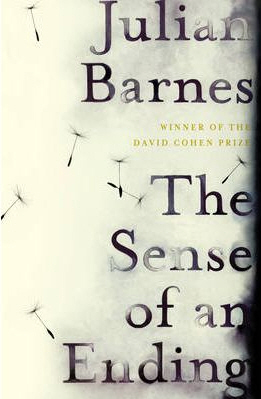
This book from 2011 has been sitting on my bookshelf for some years, winking at me. I have never been sure if I had read it, so I did. In a book world dominated by thick tomes, a novella like this can be a god-send. Claire Keegan, Foster (2010) and Small Things Like These (2021), an Irish writer, has been lately championing the novella as a legitimate art form.
This is a story about memory: what we remember and what we think we remember. Tony Webster, the first person narrator, is in his latter years and he tells us about his school days when he was nerdish, oh-so clever and amusing and, with his two mates Chris and Alex, a little ahead of the pack – so they liked to think. This gives Barnes a delicious excuse for self-deprecating witticisms about his youthful behaviour as seen from the distance of his much older self.
A new boy arrives, Adrian Finn, quite a bit ahead of them in intelligence and maturity, but who attaches himself to the three friends, which surprises everyone especially the trio themselves. Flattered though they were.
Later at university, hoping that his life will soon begin, he meets the enigmatic Veronica and does all the right things, as prescribed by his conservative and very British culture, which, in reality, is nothing much, just waiting for things to happen. They don’t. However, Veronica does invite him to meet her parents, and brother Jack for a weekend. Jack, in an aside, says, ‘I suppose he’ll do.’ And that seems the belief of Veronica as well. And still nothing happens. But Veronica’s mother, quite likes him, and he quite likes her. You get the impression that she is attracted to her daughters ‘young men’.
Finally Veronica ‘comes across’ but only after they break up.
Life continues, he and his friends drift apart, he finishes university, ages, gets married, has a child, gets divorced but keeps a close relationship with his ex-wife Margaret. He then hears from Adrain Finn via a short letter that he and Veronica are now a couple. Tony is furious.
Part One concludes with the news that Adrian Finn has killed himself, diagonally slashing his wrists (apparently that is the best way to do it) in a hot bath, and left a letter explaining that his suicide was planned and philosophically justified and so no one needs to be upset. He also leaves an apologetic letter for the paramedics and hospital staff that had to deal with his corpse. Adrian Finn; first class honours, first class suicide.
Part Two opens with the elderly Tony receiving a certified package in the mail: he has inherited £500 … and a diary, but there is no diary in the the package. Astoundingly, the deceased is Sarah, Veronica’s mother, who in her accompanying letter tells Tony that Adrian, before his death, was quite happy.
This entertaining, intriguing, and very well written novel takes us through Tony’s attempts to winnow through his memory and re-engage with people he hasn’t seen in decades to answer so many bewildering unanswered questions. Why did Adrian kill himself? Why did Sarah have Adrian’s diary? Why did she leave it to Tony? (Why was it her’s in the first place?) And why won’t Veronica, still enigmatic as ever, tell him what he wants to know? What did he miss all those years ago? AND, where is the diary? Was he so stupid, so unengaged? Did his mistakes then as a young man have anything to do with his mistakes as an older one? Maybe. He was alone then; he’s alone now.
I’m sure that any reader over 50 will see themselves, to some degree, in this book. I loved it even if Barnes throws up some very unflattering mirrors at me.
And last night I watched the 2017 movie version with a stellar British cast: Jim Broadbent, Charlotte Rampling, Harriet Walker, Emily Mortimer, Michelle Dockery, and Billy Howle.
The moment I heard about the Booker win I downloaded it. The opening pages tickled my excitement and curiosity. It was written in the present tense and in the 2nd person. I had never read anything like this before. Elliot Perlman’s Seven Types of Ambiguity (2003) uses the 2nd person in its opening pages but it’s difficult to maintain.
The narrator is flippant, ironic, and mostly humorous. He (?) is talking to Almeida who is dead. He’s been murdered. They are in an In Between place which makes the narrator a ghoul too, but they can only stay here for seven moons before Almeida is reincarnated. The narrator and Almeida ‘fly’ around trying to solve the murder? People can’t see these spirits who flit from scene to scene criticising the police and trying to prick Almeida’s memory.
The excitement of the first few pages wanes very quickly. Every character, ghost or human, speaks with the same light-hearted but critical flippancy, always searching for the next one-liner. They all sound the same. There is no character development. There is no hook on which to hang empathy or interest. I didn’t care about anybody.
At about one hundred pages I stopped. I’m filing this one under Booker Judges Seduced by Newness. It can join the 2015 Booker winner, A Brief History of Seven Killings by Jamaican writer Marlon James.
Patrick Gale is a very busy man. He is a cellist, lives in Cornwall and plays in a local string quartet, a keen gardener, artistic director of the North Cornwall Book Festival and a Patron of The Causley Trust. Oh, and, of course, a best selling novelist. Mother’s Boy is his 17th novel released in March 2022. He may be British, but he is also most definitely Cornish. Who else then to novelise the early life of another Cornish hero, the poet Charles Causley.
This is a mother-son story; Gale is particularly good with mothers.
Laura is in service when she meets Charlie Causley, also in service to the local doctor. He is a dashing lad and their romance is brief but strong. All is set for a happy married life together, but WW1 takes him away and returns him a broken man; his life is cut short leaving Laura a single mum with a baby to keep. She takes in laundry, the wine stained alter cloths of St Thomas’s church as well as the other-stained bed linen from the local ‘boarding’ house where the proprietress’s children, Aggie’s brood, all look surprisingly different. A stain is a stain to Laura Causley and each deserves her expert attention.
Charles grows into a concave-chested studious little boy, more at ease with a book than a ball. As a teenager he plays the piano in several dance bands, writes and directs plays, and occasionally takes girls to the pictures and shakes their hands good-night. Laura may be a little disappointed in her son but would never show it. A boy is a boy to Laura Causley and each deserves a mother’s love and protection.
The book is a gentle read; Gale is a master of wry observations while plunging into serious emotional depths. It is as much about Laura Causley as her son, Charles. Gales evocation of a mother’s love is particularly moving:
He had woken already and was straining to look about him. Seeing her approach, he cried out with something like a laugh and reached a hand towards her. She kissed his tiny palm, then scooped him up, furling him in her shawl to hold him against her shoulder where he sucked noisily at her neck. She rocked gently from foot to foot, loving the warm weight of him against her. ‘You,’ she said. ‘Oh, you.’
Another major theme is forbidden sexuality. We first become aware of it when Charles lets his best friend Ginger inveigle them up to Charles’s room where Ginger …
persuaded him to hold him close to demonstrate the steps of the foxtrot and then had taken advantage of the moment to kiss him full on the lips while doing things with his tongue Charles was fairly sure never happened on screen to Claudette Colbert.
But later Ginger takes Charles to the nudist section, men only, of the Plymouth Lido and disappeared for a time only to be seen later exiting a single change room only moments after a big half dressed man had emerged, who then finished dressing, and left. While walking home …
‘You do know,’ Charles wanted to tell him, ‘that what you were doing, or what I suspect you were doing, could have you up in the courts in Bodmin and wreck your prospects, even send you to prison?’ But he said nothing about it because what he longed to do was ask questions instead, and he knew the answers Ginger might give would change the dynamic of their friendship for ever in ways for which he wasn’t ready.
The Second World War sees Charles called up. He was too slight and weak-eyed for active duty so trained as a coder: sending and receiving coded messages usually on board ship but never-ending seasickness had him transferred to land: Gibraltar, and Malta. It was in the Navy that he experienced his sexuality, one relationship slightly abusive, another almost loving. But outside the flimsy protection of a male dominated existence such indulgences could not be contemplated. This is the tragedy that happened to thousands of homosexuals over thousands of years: their man-made social environment precluding their natural natures; in some parts of the world it continues still.
I was a little disappointed that a writer writing about a writer didn’t spend a little more time investigating writing itself, but this is a minor and picky response to an otherwise very enjoyable and evocative read.
Here you can purchase the book in various formats.
Charles Stanley Causley, (1917 – 2003) British poet, teacher, and writer.
Here you can find a short biography of Causley and a short essay on the poet by fellow poet and author, Kevin Crossley-Holland.
And here you can watch a trailer for the Boatshed Films’ Cornwall Native Poet, Charles Causley which as screened on BBC 4 in 2017 to celebrate the centenary of Causley’s birth.
It’s been 7 years since Galgut’s last novel, Arctic Summer (2014), a novelisation of the latter years of the English writer E. M. Forster, so The Promise, his latest, has been greatly anticipated.
The most interesting aspect of this novel is the narrative voice. The writing is free-form: no quotation marks; dialogue and narrative merge – but you’ll be surprised how distinct and recognisable the dialogue is – and usually in the 3rd person but with a little 1st, (my mother died this morning) and even a peppering of the 2nd, like he’s talking to me, you, the reader, throwing asides at you, (check out the pic if you don’t believe me). Sometimes a character speaks aloud in a sentence started by the narrator; sometimes the narrator is embodied with feelings and sarcasm (Alwyn and his spouse, sorry, his sister…) It takes a few dozen pages for this free-form to meld into a tone, a voice, an attitude, but it does, and when it does you’ll be greatly relieved. You can relax, and once you do and let this voice work on you, you will have an entertaining reading experience. Although the narrator is unnamed, as most 3rd person narrators are, this one has attitude, likes, dislikes, and lets you know them. Changes of scene and characters happen mid sentence giving the narrative an unplanned wandering song-line, like a slideshow on a phone. It gives the work an attractive chatty tone but one that leads you deep inside the minds and actions of these flawed characters.
The book is divided in to 4 sections, each for one of the main characters of the Swart family, Ma, Pa, Astrid, and Anton. But the main character is Amor, the youngest, who is a child of 10 when her mother dies. However, days before, on Ma’s death bed, Amor overheard Ma’s dying wish: Salome, the family’s loyal, long-serving, bare-foot black maid, is to be given ownership of her rented small and ramshackle house and land. Pa agrees. This is The Promise. Over the following decades South Africa sheds its hated Apartheid system, Nelson Mandela becomes president, black rule fails almost everybody’s expectations and hope for a brighter and more prosperous future; not unlike the trajectory of the disintegrating Swart family; like the slow decline of Salome and her house. Amor goes her own way but the promise is forever on her mind and whenever she returns (Return to South Africa feels more like a condition than an act), only for family funerals, her determination to have the promise fulfilled is thwarted. Will the promise be fulfilled when she is the only one left?
The knot of races in Galgut’s native South Africa seems never to be unloosed. This story could be read as a metaphor for the country; as could the plight of Salome; as could Amor’s bruised determination; yet there is hope in that she could be the only one left standing with a future to build, albeit an unknown one and obviously difficult.
The telling, but unconscious, thoughts of the whites (… so many black people drifting about as if they belong here) pepper the text and each time cement the notion that change will always remain elusive. Do all the whites have to die before the blacks can claim their place?
Highly recommended.
Galgut’s The Promise has made it onto the 2021 Booker Prize long list. If it gets to the short list, as it should, it will be his third: the first In a Strange Room in 2003 and The Good Doctor in 2010. The links will take you to my blog posts.







 Michael K Freundt