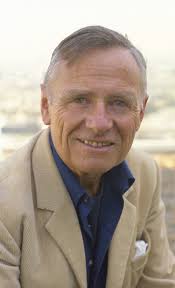
Christopher Isherwood, British born American writer, (1904 – 1986
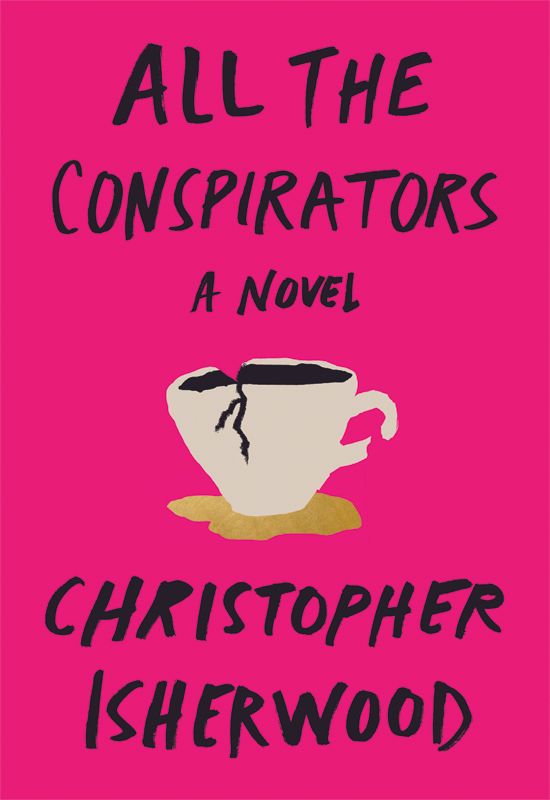
The 1920s was a period in English literature defined by intense experimentation, stream-of consciousness, away from linear narration and a concentration on the inner turmoil of characters. Notable works include, Ulysses (1920) by James Joyce, Mrs Dallaway (1925) by Virginia Woolf and T. S. Elliot’s The Wasteland (1922). American journalist and editor, Bill Goldstein, who co-founded NYTimes.com Books describes the year 1922 as a ‘literary earthquake’ in his 2017 book The World Broke in Two. Isherwood could not have missed this stumbling lurch into modernism and not been unaffected by it. He began writing All the Conspirators in 1926; it was published in 1928, the year before he moved to Berlin. Phillip Lindsey, a fey young man, as most middle-class men of the times seemed to be, who wants to simply paint and write is thwarted in his creative desires by his strict conservative society and family. A tragedy, yes. Isherwood incorporates modernist techniques with, in this reader’s opinion, not good enough reasons nor skills. Switching from the third to first person is clumsy and some passages are incomprehensible despite multiple readings. Isherwood is famous for the stark honesty of his auto-fiction. Had his life been a little more like his anti-hero’s I might have been more emotionally engaged and therefore enjoyed it more. In my recently-aquired Isherwood bro-mance (beginning with Christopher & His Kind) I’m looking forward to his latter works.
Christopher Isherwood, British born American writer, (1904 – 1986
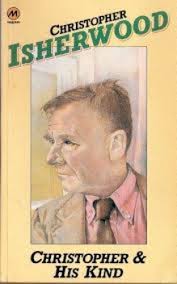
This book is fascinating for its use of a split narrator: Isherwood as he is when he wrote it in the 1970s, the first person ‘I’ and Isherwood as he was then 1929-1939, the third person ‘he’ – Christopher. This gives the older writer ease to write objectively about his younger self which he does with critical abandon. The other fascination is his life-long friendship with Wystan Auden (W. H. Auden 1907 – 1973) about which he writes with alarming, but pleasing, frankness. They were never ‘a couple’, in fact in today’s jargon it would be described as ‘friendship with benefits’. His and Auden’s sexual relationship … ‘[was] unromantic but with much pleasure … they couldn’t think of themselves as lovers … [but] it was of profound importance … it made the relationship unique for both of them.’ Isherwood was far more promiscuous, would fall in love at the drop of a suggestion, and Auden would lament with wild self-deprication at not being able to find someone to love him. They both found their life partners in America where they migrated to in 1939. Auden with the poet Chester Kallman (1921 – 1975) and Isherwood with the portrait artist, Don Bachardy, who is still alive and living in their Santa Monica home. Of course Isherwood remains famous for his Berlin Stories, Mr Norris Changes Trains and Goodbye to Berlin – insights into these works are of great intetest. These provided the material for the play I am a Camera and ultimately the musical Cabaret, which Bob Fosse hacked to pieces in his 1972 movie version: Sally Bowles was NOT a talented performer (the whole point of the story). Stage productions – there’s always one playing somewhere – have reinstated this important fact as well as all the songs Fosse cut. Isherwood, in his later years, concentrated on auto-fiction producing many auto, and semi auto, biographical works. These I am eagerly seeking out. This one is a good start. Highly recommended.
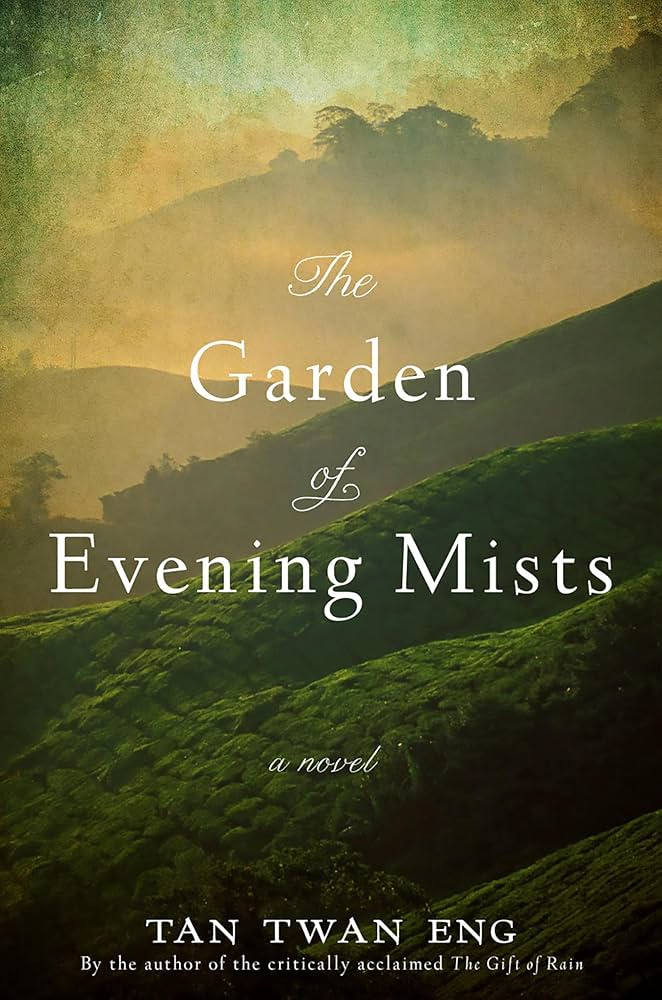
A Straits Chinese retired judge, Yun Ling Teoh, returns to spend her last days in a house in the Cameron Highlands in Central Malaya during the Communist guerrilla war with the British in the early 1950s. It was here, as a young woman, she was apprenticed to Aritomo, a famous Japanese gardener, who once was the gardener of the Emperor of Japan. This back story, their working and emotional relationship with the backdrop of WWII and the Malaya Communists against the Japanese, is THE story.
This is the second novel by Tan Twan Eng after his successful debut, The Gift of Rain (2008) which was long-listed for the Booker. His third novel, The House of Doors (2023), was also long-listed for the Booker. This one suffers from the cliched ‘second novel syndrome’. In this case, not as original and complex as the first, and not as imaginative and assured as the third. This is a personal opinion despite it being short-listed for the Booker. I enjoyed reading it but without that thrill of attachment. Like all three Tan novels, they transport you to a time, place, threats, joys and sensibilities that are completely alien, but therefore fascinating, to a contemporary reader. Of course, the raw human emotions we all know about. This one also has that Eastern flavour of wisdom and sage-like belief in elements of the world that we can’t quite grasp but which may guide or steer us in directions we haven’t planned.
Her sister, enamoured by Japanese gardens, disappeared during the war and Yun Ling wants to built a Japanese garden in her honour. Aritomo refuses to design one but offers to teach her how to design it herself. Yun Ling’s internment by the Japanese, her apprenticeship to Aritomo and her relationship with him form the spine of the narrative. The events, conversations and relationships appear ‘soft’ and incidental. I knew this work had been made into a movie in 2017 and although my interest wavered I reasoned that if there was cinematic interest in this work there must be a pay off. I continued reading and I am so glad I did. This is a ‘slow burn’ of a book … war, imprisonment, romance, intrigue, a tattoo! – there is so much I haven’t mentioned – but all will be revealed in a very satisfying climax. Highly recommended. I wait patiently for book number 4.
Here is a short video of Tan Twan Eng talking about this book.
Since Szalay has won this year’s Booker with his latest novel Flesh, I saw I had this 2016 Booker shortlisted novel on my bookshelf and hadn’t read it. So I did, before I reach for the new one. His title makes you think he is referring to mankind. However, a more apt title would be All That Men Are. And my response? Not much. I mean the men, not the book. The book is great! This is not a novel but nine unrelated short stories about nine different men. Their only connection is that they “are facing the same question” so says the blurb on the back. Several of these men are rudderless, inarticulate but all of them need a good shaking while you scream, ‘Get over yourselves!’ Most are losers, some are manipulators, two of them are waiting or wanting to die. One, a Hungarian called Balázs is all muscle and ‘I don’t know’s and his understanding of ambition revolves around how long it might be until his next cigarette. What is remarkable about this book is that Szalay, a master of language, manages to make these men’s stories fascinating. Can’t wait to get my hands on Flesh! And the more I read about it, it seems to concern the 10th man that didn’t make it into this 2016 book. I’m not going to let his choice of characters deter me, and neither should you; he writes about people like us: unremarkable, but with compassion and skill that is surprising and utterly enjoyable.
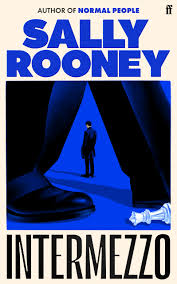
A few hundred pages into the novel I was struck by the narrative format; actually Rooney employs two narrative formats.
This is the story of two brothers and their bumpy relationship following the death of their father.
Peter, 32 is a lawyer and Ivan, 22 is, well, nothing much but a wiz at chess but scraping a living from his checkered passion is not easy.
Peter has two girlfriends; Ivan has one. Peter seems happy but Ivan is happy. I feel sorry for Peter but I love Ivan.
Sally Rooney is quite a literary phenomenon. Most of the action goes on in her character’s heads. She is a digger of truth about what goes on in the human mind which is often at odds with the way people behave. Especially men. So eager is she to explore our mental shenanigans, she sometimes overdoes it a bit. That’s a minor criticism.
But back to the double narrative styles: for the chapters about Peter the narrative is almost stream-of-consciousness. Short sentences. Shorter phrases. Even just one word followed by a full stop. They all tumble over each other. It pretty much reflects Peter’s state of mind: full. His two girlfriends, his high pressured job, what to do about his under-achieving brother, and did he love his father. Enough? Ivan’s chapters are more conservative, the third person narrator is more conventional: long sentences, precise grammar, at a slower pace. This is Ivan. He’s a simple soul not much concerned with material matters but he knows love when he feels it. Although I’m not a fan of stream-of-consciousness narration it works here; it works for Peter. Another grammatical technique binds the narratives together. The dialogue, there’s a lot, isn’t punctuated. A modern trend. But it is easy to follow. When you listen to an audio book – another modern trend – the punctuation is not read yet it is always clear who says what to whom.
I am almost to the end so I cannot tell you what happens. It’s a great read. I’m loving it. If you haven’t already give it a go.
In my attempt to find and read all of Patrick’s fiction works – only a few to go – I’ve hit some barriers: some of works are not easy to find. This one, Friendly Fire (2005), has been elusive but I discovered it on my sister’s bookshelf; she found it in a second-hand bookshop.
Sophie is fourteen, an orphan, and in a home, Wakefield House, not the horrible cliched narrative of harsh and sadistic masters in an old grey and foreboding stone mansion, but a warm and caring environment run by a childless couple, Margaret and Keiran, who although they keep their emotional distance from the children who might on any day be adopted they have formed a much closer bond with Sophie who has never sought to leave. According to Gale, “her life is changed through literature.” She is a bright student, even-tempered, and curious and earns a place at a much admired boarding school, Tatham, where she is attracted to and befriends two male students, Lucas Behrman and Charlie Somborne-Abbot. Their developing lives, friendships, sexualities, and their place in the world, home and away, form the book’s narrative. The boarding school trope has been used countless times as a metaphor for society, politics, nations, and even the world. Here it feels more like a family, a benign and nurturing one, but like every family there is unexpected tragedy. Learning doesn’t only happen at school.
Society’s rules, inconsistencies, trivialities, secrets, prejudices, both religious and financial, and, of course, hypocrisies make up the steeplechase that Sophie must navigate, jumping and sidestepping, calling for help, or facing head on, but also falling splat! on her face. Gale is an expert at pacing and plotting; his plot points, both soft and dramatic, sometimes sneak up on you. The climactic moment is dropped into a seemingly casual sentence in such an unassuming way that I had to stop and re-read it to make sure I had read what I thought I had. As a reader I felt buffeted by the narrative but at the same time confident that I was in safe and expert hands. That’s what I like about Gale’s work and why I’m seeking to read everything he has written, and will write.
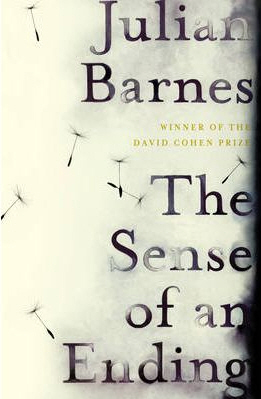
This book from 2011 has been sitting on my bookshelf for some years, winking at me. I have never been sure if I had read it, so I did. In a book world dominated by thick tomes, a novella like this can be a god-send. Claire Keegan, Foster (2010) and Small Things Like These (2021), an Irish writer, has been lately championing the novella as a legitimate art form.
This is a story about memory: what we remember and what we think we remember. Tony Webster, the first person narrator, is in his latter years and he tells us about his school days when he was nerdish, oh-so clever and amusing and, with his two mates Chris and Alex, a little ahead of the pack – so they liked to think. This gives Barnes a delicious excuse for self-deprecating witticisms about his youthful behaviour as seen from the distance of his much older self.
A new boy arrives, Adrian Finn, quite a bit ahead of them in intelligence and maturity, but who attaches himself to the three friends, which surprises everyone especially the trio themselves. Flattered though they were.
Later at university, hoping that his life will soon begin, he meets the enigmatic Veronica and does all the right things, as prescribed by his conservative and very British culture, which, in reality, is nothing much, just waiting for things to happen. They don’t. However, Veronica does invite him to meet her parents, and brother Jack for a weekend. Jack, in an aside, says, ‘I suppose he’ll do.’ And that seems the belief of Veronica as well. And still nothing happens. But Veronica’s mother, quite likes him, and he quite likes her. You get the impression that she is attracted to her daughters ‘young men’.
Finally Veronica ‘comes across’ but only after they break up.
Life continues, he and his friends drift apart, he finishes university, ages, gets married, has a child, gets divorced but keeps a close relationship with his ex-wife Margaret. He then hears from Adrain Finn via a short letter that he and Veronica are now a couple. Tony is furious.
Part One concludes with the news that Adrian Finn has killed himself, diagonally slashing his wrists (apparently that is the best way to do it) in a hot bath, and left a letter explaining that his suicide was planned and philosophically justified and so no one needs to be upset. He also leaves an apologetic letter for the paramedics and hospital staff that had to deal with his corpse. Adrian Finn; first class honours, first class suicide.
Part Two opens with the elderly Tony receiving a certified package in the mail: he has inherited £500 … and a diary, but there is no diary in the the package. Astoundingly, the deceased is Sarah, Veronica’s mother, who in her accompanying letter tells Tony that Adrian, before his death, was quite happy.
This entertaining, intriguing, and very well written novel takes us through Tony’s attempts to winnow through his memory and re-engage with people he hasn’t seen in decades to answer so many bewildering unanswered questions. Why did Adrian kill himself? Why did Sarah have Adrian’s diary? Why did she leave it to Tony? (Why was it her’s in the first place?) And why won’t Veronica, still enigmatic as ever, tell him what he wants to know? What did he miss all those years ago? AND, where is the diary? Was he so stupid, so unengaged? Did his mistakes then as a young man have anything to do with his mistakes as an older one? Maybe. He was alone then; he’s alone now.
I’m sure that any reader over 50 will see themselves, to some degree, in this book. I loved it even if Barnes throws up some very unflattering mirrors at me.
And last night I watched the 2017 movie version with a stellar British cast: Jim Broadbent, Charlotte Rampling, Harriet Walker, Emily Mortimer, Michelle Dockery, and Billy Howle.
John Boyne has never been shy to include historical people and events in his fiction: Buffalo Bill in The Congress of Rough Riders (2001), Captain Bligh et al in Mutiny on the Bounty (2008), also published as The Cabin Boy, Gore Vidal in A Ladder to the Sky (2018), the Holocaust in The Boy in the Striped Pyjamas (2006), and here in The House of Special Purpose (2009) where he places a fictitious character in the household of the final days of the reign of the Romanovs, in Russia, 1917/18.
However it is the adult life and love story of the fictitious character, Georgy Daniilovich Jachmenev that is the focus here and dominates the narrative.
It opens in 1981 when Georgy (pronounced YOR gee) is an old man, a retired librarian in London, and his wife, Zoya, is gravely ill. Each chapter swings back and forth from Georgy’s youth as a peasant in rural Russia, the extraordinary event that puts him in the path of a bullet meant for the Tzar’s cousin, his subsequent position as bodyguard for the 11 year old Russian heir, the haemophiliac, Alexei Romanov, and his life, and love, in the Romanov household, to his life in exile after the revolution, Paris first, and his eventual settling in London working at the British Library.
It is a first person narrative in the voice of the protagonist. Of course, Georgy and his wife, suffer discrimnation and hardship, like all émigrés in post revolution and war-torn Europe, but the real drama of the work, and what stimulates the reader’s interest is that the reader, assuming they have even a modicum of knowledge of European history, knows what is going to happen to the Romanovs; Georgy, and of course the royal characters do not. This writerly format, where the reader knows more than the characters, is always a generator of novelistic tension. Here, in this work, it is intensified by the reader’s wonder at how the situation of the young Georgy, in the thrall, and in the service of the Tsar and his family, and in love with one of the Tsar’s daughters transitions to the situation of the elderly Georgy living as a retired librarian with his ill wife in London.
Of course, this is resolved, very neatly, dramatically, and believably even if Boyne uses an existing trope .. erm … but no spoilers here.
In my quest to read all the works of John Boyne, and I only have a few to go, I have yet to find one that surpasses his best – in my opinion – The Heart’s Invisible Furies (2017) but this earlier work has a lot going for it: history, romance, revolution, and a fitting climax. Highly recommended.
Here you can watch John Boyne talk about, and read from, the book at the Politics & Prose Bookstore in Washington DC in 2013.
And here is a shorter, but only audio, interview with Boyne about the book.
You can purchase the book in various formats here.
Every week, on a Wednesday, I get the ‘pink’ Weekend Financial Times and I open it first to the culture section. That’s where I found a review of this book. What first attracted me was the mention by the reviewer, Michael Arditti, of the writer W. Somerset Maugham, a favourite of mine, although now he is very much out of fashion. I am always interested in novels that include real writers as characters (biographical fiction). My favourites of the genre are Colm Tóibín’s The Master (2004) and David Lodge’s Author Author (2004) both about Henry James and his failed attempt to become a playwright, as well as Damon Galgut’s Arctic Summer (2014) about E. M. Forster and his life leading up to the publication of his masterpiece, A Passage to India (1924).
I was also prompted to read this book because its author, Tan Twan Eng, was on the Booker Prize short list in 2012 for his second novel The Garden of Evening Mists (2012). Reading a Booker Prize short listed writer has sometimes proved far more satisfying than reading the winner.
The House of Doors (2023) is the story of Lesley Hamlyn, her husband, Robert, a successful lawyer in the Straits Settlement on Penang Island (the author’s birthplace) in 1921 and her affair with a local doctor; they meet in a large house where her lover keeps his collection of doors, hanging from the ceiling. Its’s a beautiful image and a symbol of the possibilities for all Tan’s characters. The Hamlyn home, Cassowary House, is the focal point of the local society and passing through are Dr Sun Yat Sen, the Chinese revolutionary seeking money and support to transform his country, and the British author, W. Somerset Maugham, an old friend of Robert’s, and Maugham’s ‘secretary’ – read ‘lover’ – Gerald Haxton who are guests in the house.
At the same time Lesley’s best friend Ethel Proudlock, living in Kuala Lumpur, is accused of murder and Lesley becomes involved in emotionally supporting her friend even though Ethel has admitted to the crime; she emptied a pistol of its six bullets into the body and head of a man on her verandah one night.
This famous case was the subject of world news and became the basis of one of Maugham’s most famous stories: The Letter, which first appeared in his short story collection The Casuarina Tree (1926) and became a very successful stage play in 1927 and, even more famously, a Hollywood movie in 1940 starring Bette Davis and Herbert Marshall.
Most reviews concentrate on the Maugham element in their reviews but the book is a lot more than that: revolution in China, the colonial way of life, and fidelity. The later is particularly strong since Lesley’s affaire weighs heavily on her conscience even though she knows her husband is having his own. Her conservative social sensibilities, brought into focus when she finally realises the true relationship between Maugham and Haxton, and the effect on her marriage and on the society in which she lives, should the affair be discovered, create a dilemma for the woman but her sense of her own worth wins through. She is very careful and maintains her marriage, family, and social position while at the same time quite enjoying Maugham’s company. W. Somerset Maugham was not a very likeable person, but Tan portrays him as a kind and soft man, if somewhat aloof, but completely in the thrall of Gerald Haxton.
Tan uses an anonymous omnipotent third person narrator interspersed with the first person, Lesley Hamblyn, which gives the work a stronger verisimilitude had it been completely told in the third. Tan has also moved the action of some of the true events to meet his novelistic needs as well as successfully mingling real and fictional characters in a known place juxtaposing the political and the romantic, against the suspense of a murder trial and the whispered prejudices of the British society sipping their G&Ts while sweltering in their linens.
Tan is completely in control of his material and ideas. It is a very enjoyable and satisfying read.
Here you can watch a short video of Tan Twan Eng talking about The House of Doors.
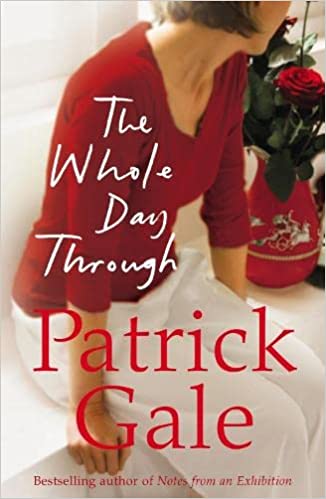
Patrick Gale’s literary strength is families, their function or disfunction, coping with disasters, or not, or just getting through each day to the next. His 2009 novel, The Whole Day Through is no exception. However, its structure is a little different in that the action takes place over one single day. This also means that there is a lot of back story. In other words, you get decades of stories all thought about by the main characters over the span of one day interspersed with the action of that day.
Basically, it is about four people. Laura is a work at home book keeper keeping mostly artistic types away from their shoe-boxes of random receipts and allowing them to get on with their artistic lives. She is also single and a carer; caring for her academic mother, Professor Jellicoe, a semi-retired virologist whose body is increasingly letting her intellect down. She is also a naturalist and so spends a lot of time at home without any clothes on. Perfectly natural thinks mother and daughter.
Ben, a sexual health doctor is working at a local men’s clinic, locally known as GUM, short for genito-urinary medicine, having forsaken a career in virology to move away from his wife, Chloe, to care for his younger brother Bobby who suffers from the Mosaic variant of Down’s Syndrome. Although ‘suffers’ isn’t quite the word: he has a job in a shop, he’s almost independent, gay, and promiscuous, and it’s entirely possible that he may be embarking on a relationship with a burly train-driver.
Laura and Ben meet accidentally. Even though they are now middle aged, they recognise each other from their hedonistic student days thirty years before when they enjoyed an overwhelming and glorious love affair. So what now? Ben has fallen out of love with his beautiful wife, who, by the way, still loves him, and he is totally amazed at the re-eruption of his love for Laura in all its gloriousness.
But they are now older and wiser. Wiser? They have responsibilities for other people; people who can’t cope on their own. Family. The couple’s decision is to clear the slate, no-matter how painful it might be, tell the truth, and think of themselves. They have to; they love each other so much! Hope gives them succour; regret they’ve had and don’t want it again.
I’m sure Gale spent exhausting hours getting the timing right: juggling the drama of past thoughts with the drama of the present action so that everything fitted into the thoughts and actions of four people over the course of one day. However, it wasn’t really necessary as it all, past and present, swirls around like a rainbow ripple cake you can enjoy without knowing which part comes from or goes where.
It is an example of familial love clashing with romantic love when ultimately they should be both sides of the same page. The plot point around which the ending depends snuck up on me like a naughty younger sibling. Fiction doesn’t always make me gasp but I love it when it does.
You can buy the ebook, and Audiobook – read by Patrick Gale himself – here.







 Michael K Freundt