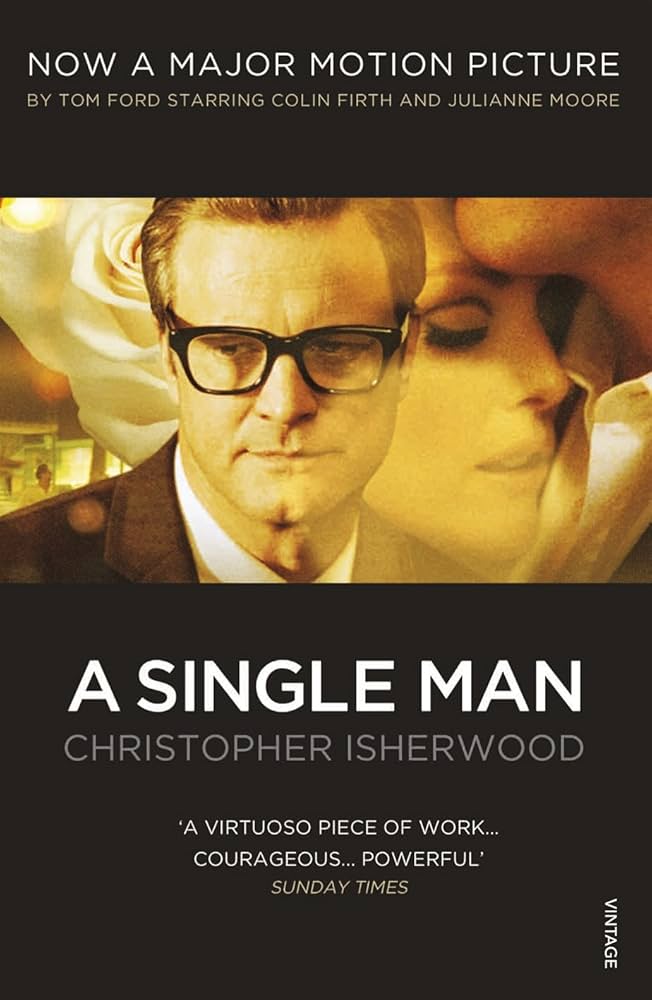
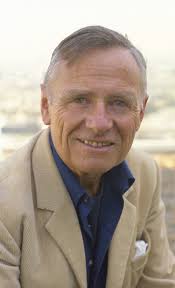
A Single Man by Christopher Isherwood

Christopher Isherwood, British born
American writer, (1904 – 1986)

If and when I’m asked about literary fiction, this is the book I will name to explain it. Don’t be put off by that, nor its first short sentence. Its meaning will be clear by the end of the first short paragraph. What an opening! It’s so apt … for every reader, for everybody … because we all know about it: getting up in the morning.

Christopher Isherwood is described as “a seminal 20th century Anglo-American writer, a chronicler of Weimar Germany, a pioneer of autofiction, and a monumental icon of the Gay Liberation movement” brought to prominence again by the fashion icon, Tom Ford, who produced, directed and cowrote the screenplay – along with David Scearce – of his 2009 feature film adaptation, and his debut, of this Isherwood classic.

A little piece of trivia: Isherwood’s partner, the portraitist, Don Bachardy is still alive (aged 92) and worked as creative consultant on the film and has a tiny cameo non-speaking role in it. He lives and works in the same Santa Monica home he shared with Isherwood for decades.

It’s 60’s beachside California when the word ‘old’ is a new dirty word, but the word ‘queer’ has been around, but whispered, for years. George, late fifties, with a kind face, is suddenly alone. His much younger partner, Jim, is gone. He is a single man again. Two men living together in a romantic relationship is rare, but made to look otherwise: for the sake of the well-meaning neighbours and the cashier at the supermarket. They know of course but it’s all hidden behind propriety and the wish for no unpleasantness.

The action takes place over a day and well into the evening. George tries to make this day as normal as possible, appearing remorseful for refusing a last minute dinner invitation from a neighbour who, pointedly, refuses his suggestion that they dine together the following evening; teaching his students the finer points of the work of Aldous Huxley, emphasising societal norms and how they affect the outsider; refusing to give into the sexual tension between himself and his favourite student Kenny; keeping at bay the amorous advances of his best friend, Charlotte. She seems more insistent now that he is single again.

Published in 1964, A Single Man is often considered Isherwood’s masterpiece and groundbreaking for painting a queer life as authentic, normal and representative of something simple, and as difficult as being human.

It’s a small book but with a big heart, and for those interested in writing as a craft, a must read.
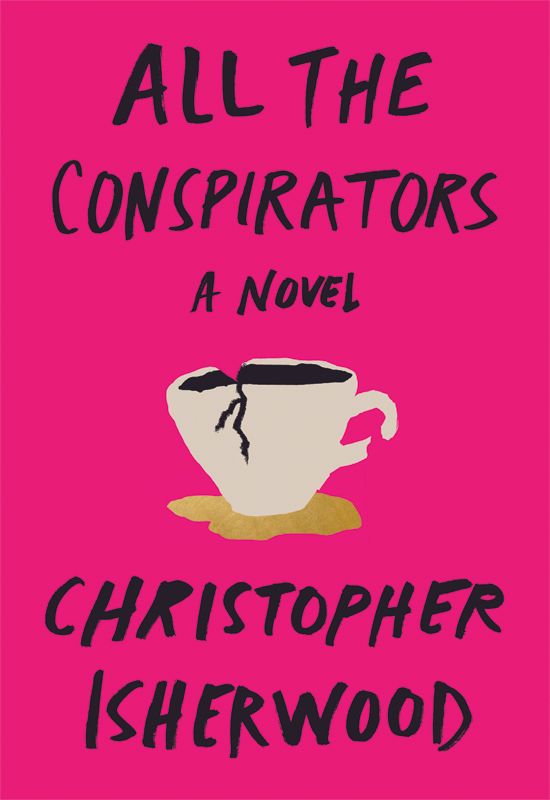

All the Conspirators by Christopher Isherwood.

Christopher Isherwood, British born American writer, (1904 – 1986

The 1920s was a period in English literature defined by intense experimentation, stream-of consciousness, away from linear narration and a concentration on the inner turmoil of characters. Notable works include, Ulysses (1920) by James Joyce, Mrs Dallaway (1925) by Virginia Woolf and T. S. Elliot’s The Wasteland (1922). American journalist and editor, Bill Goldstein, who co-founded NYTimes.com Books describes the year 1922 as a ‘literary earthquake’ in his 2017 book The World Broke in Two. Isherwood could not have missed this stumbling lurch into modernism and not been unaffected by it. He began writing All the Conspirators in 1926; it was published in 1928, the year before he moved to Berlin. Phillip Lindsey, a fey young man, as most middle-class men of the times seemed to be, who wants to simply paint and write is thwarted in his creative desires by his strict conservative society and family. A tragedy, yes. Isherwood incorporates modernist techniques with, in this reader’s opinion, not good enough reasons nor skills. Switching from the third to first person is clumsy and some passages are incomprehensible despite multiple readings. Isherwood is famous for the stark honesty of his auto-fiction. Had his life been a little more like his anti-hero’s I might have been more emotionally engaged and therefore enjoyed it more. In my recently-aquired Isherwood bro-mance (beginning with Christopher & His Kind) I’m looking forward to his latter works.

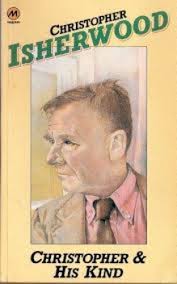
CHRISTOPHER & HIS KIND by Christopher Isherwood (1904 – 1986)

Christopher Isherwood, British born American writer, (1904 – 1986

This book is fascinating for its use of a split narrator: Isherwood as he is when he wrote it in the 1970s, the first person ‘I’ and Isherwood as he was then 1929-1939, the third person ‘he’ – Christopher. This gives the older writer ease to write objectively about his younger self which he does with critical abandon. The other fascination is his life-long friendship with Wystan Auden (W. H. Auden 1907 – 1973) about which he writes with alarming, but pleasing, frankness. They were never ‘a couple’, in fact in today’s jargon it would be described as ‘friendship with benefits’. His and Auden’s sexual relationship … ‘[was] unromantic but with much pleasure … they couldn’t think of themselves as lovers … [but] it was of profound importance … it made the relationship unique for both of them.’ Isherwood was far more promiscuous, would fall in love at the drop of a suggestion, and Auden would lament with wild self-deprication at not being able to find someone to love him. They both found their life partners in America where they migrated to in 1939. Auden with the poet Chester Kallman (1921 – 1975) and Isherwood with the portrait artist, Don Bachardy, who is still alive and living in their Santa Monica home. Of course Isherwood remains famous for his Berlin Stories, Mr Norris Changes Trains and Goodbye to Berlin – insights into these works are of great intetest. These provided the material for the play I am a Camera and ultimately the musical Cabaret, which Bob Fosse hacked to pieces in his 1972 movie version: Sally Bowles was NOT a talented performer (the whole point of the story). Stage productions – there’s always one playing somewhere – have reinstated this important fact as well as all the songs Fosse cut. Isherwood, in his later years, concentrated on auto-fiction producing many auto, and semi auto, biographical works. These I am eagerly seeking out. This one is a good start. Highly recommended.

It was filmed in 2011 by Geoffrey Sax.