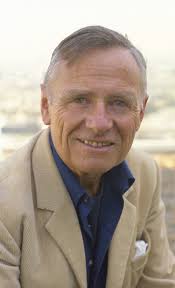
American writer, (1904 – 1986)
If and when I’m asked about literary fiction, this is the book I will name to explain it. Don’t be put off by that, nor its first short sentence. Its meaning will be clear by the end of the first short paragraph. What an opening! It’s so apt … for every reader, for everybody … because we all know about it: getting up in the morning.
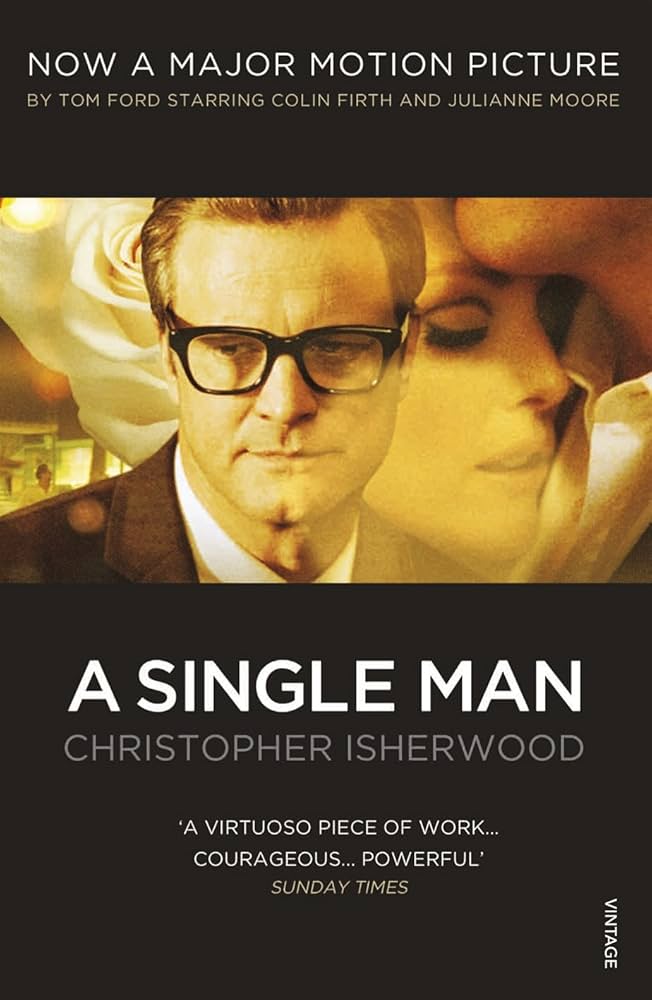
Christopher Isherwood is described as “a seminal 20th century Anglo-American writer, a chronicler of Weimar Germany, a pioneer of autofiction, and a monumental icon of the Gay Liberation movement” brought to prominence again by the fashion icon, Tom Ford, who produced, directed and cowrote the screenplay – along with David Scearce – of his 2009 feature film adaptation, and his debut, of this Isherwood classic.
A little piece of trivia: Isherwood’s partner, the portraitist, Don Bachardy is still alive (aged 92) and worked as creative consultant on the film and has a tiny cameo non-speaking role in it. He lives and works in the same Santa Monica home he shared with Isherwood for decades.
It’s 60’s beachside California when the word ‘old’ is a new dirty word, but the word ‘queer’ has been around, but whispered, for years. George, late fifties, with a kind face, is suddenly alone. His much younger partner, Jim, is gone. He is a single man again. Two men living together in a romantic relationship is rare, but made to look otherwise: for the sake of the well-meaning neighbours and the cashier at the supermarket. They know of course but it’s all hidden behind propriety and the wish for no unpleasantness.
The action takes place over a day and well into the evening. George tries to make this day as normal as possible, appearing remorseful for refusing a last minute dinner invitation from a neighbour who, pointedly, refuses his suggestion that they dine together the following evening; teaching his students the finer points of the work of Aldous Huxley, emphasising societal norms and how they affect the outsider; refusing to give into the sexual tension between himself and his favourite student Kenny; keeping at bay the amorous advances of his best friend, Charlotte. She seems more insistent now that he is single again.
Published in 1964, A Single Man is often considered Isherwood’s masterpiece and groundbreaking for painting a queer life as authentic, normal and representative of something simple, and as difficult as being human.
It’s a small book but with a big heart, and for those interested in writing as a craft, a must read.
 Michael K Freundt