The Speckled People by Hugo Hamilton

Hugo Hamilton

“When I was small I woke up in Germany… Then I got up and looked out the window and saw Ireland.” And Ireland was a place where people spoke English, a language his father ferociously banned in his house. Hamilton said later, “The prohibition against English made me see that language as a challenge. Even as a child I spoke to the walls in English and secretly rehearsed dialogue I heard outside.”

Primarily, Hugo Hamilton’s intriguing memoir, The Speckled People, is about this: a language war.

“We lived in an imaginary place that my [German] mother had created in her stories,” Hugo Hamilton told an audience in the South Lounge on the Lincoln Center campus in February 2011. “As a child, I knew exactly how to get from my mother’s house where she grew up to the bakery, though I’d never been to Kempen, where she came from. And then there was also this imaginary place that my father had, which was a vision of Ireland as an Irish-speaking country.”

“We are the new Irish. Partly from Ireland and partly from somewhere else, half Irish and half German. We’re the speckled people…homemade Irish bread with German raisins.”

The Speckled People is like no other book I’ve ever read. Firstly it is told, in the first person, not surprising as this is a memoir, but by the author of about 8 years old, and to a person of such a young age whose world is that created by his parents there are things he perceives and understands but there are things he perceives and does not understand. His thoughts are usually long, bumpy, and windy but sometimes short and pithy.

“My mother makes everything better with cakes and stories and hugs that crack your bones. When everybody is good, my father buys pencil cases with six coloured pencils inside, all sharpened to a point …My father also likes to slam the front door from time to time. He sends a message to the world depending who knocked. If it’s the old woman who says, ‘God bless you Mister’, and promises to pray for him and all his family, if it’s the man who sharpens the garden shears on a big wheel or if it’s someone collecting for the missions, then he gives them money and closes the door gently. If it’s people selling carpets he shakes his head and closes the door firmly. If it’s the two men in suits with Bibles then he slams it shut to make sure that not even one of their words enters into the hall. And if it’s one of the people selling poppies, then he slams it shut so fast the whole street shakes.”

And like a child’s idea of what and when things happened different tenses are mixed, matched, and juxtaposed carefully constructed to give the impression of a child’s mind making sense of the world, juggling memory and present action to create an unusual but gratifying picture of a childhood marred by confusion, paternal foolery but maternal strength and self-acceptance.

Secondly, there is very little dialogue; the text is dense but accessible, and the narrative is reduced to chapters like vignettes; riffs on a common theme: a young boy’s memory of how and why he is what he is.

This may give the impression of monotone, both linguistically and metaphorically, but the patches of storytelling are fascinating as children seem to see things, and collate things, that adults either miss, discount, or deny; but given this format, like snap-shots, there is still an over-riding arc of passing-time which sees his father lose the language-wars and die before seeing his Ireland completely Anglicised and lost to his romantic and nationalistic idea of it; and yet his mother, as with everything, anchors the final image of widow and children lost on a family outing, watching the day disappear, vainly searching “to find things”, memories of her past in a new land…

“My mother took out a cigarette because she was free to smoke after my father died. We stood on the road and watched her face lighting up with a match. We smelled the new smoke in the clean air and waited. She said she didn‘t know where to go from here. We were lost, but she laughed and it didn’t matter.”

Hugo Hamilton, born in 1953, lives in Dublin and is well regarded in Germany where his contemporaries tell him he speaks German, softly, like it used to be spoken. So successful was The Speckled People that he continued the memoir in The Sailor in the Wardrobe which was published in 2006, as well as turning the former volume into a stage play that premiered at The Gate Theatre, Dublin, in 2011.

In 2008 Hugo Hamilton took fellow writer and friend, Nuala O’Faolain – also represented on my 2015 ‘to read’ list – to Berlin for a few days. O’Faolain was sixty eight, wheel-chair bound, doped up on Xanax, and in the last stages of metastatic cancer for which she refused treatment. She died 10 days after the journey. Hamilton fictionalised the experience in his 2014 novel, Every Single Minute, another must-read.

The Specked People is certainly not the Irish memoir of poverty and victimhood so universally popularised by Frank McCourt’s Angela’s Ashes and its ilk. This is unusual, bold and stimulating, profound and entertaining. Everything a memoir should be but satisfying in ways I didn’t expect.
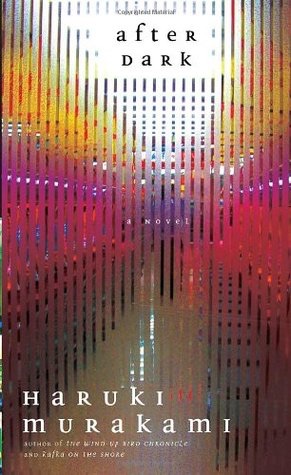

After Dark by Haruki Murikami

The Japanese writer, Haruki Murakami.

After Dark by Haruki Murakami

Haruki Murakami begins After Dark in much the same way that Charles Dickens hints at in the opening of Bleak House; that George Miller uses in the opening sequence of the film version of The Witches of Eastwick based on John Updike’s novel; and like Stephen King (with Peter Straub) opens Black House: a vast view over the land, the city, and then gradually focusing closer and closer until alighting on just one story in a land, city, of countless other stories; but as with King and Straub, but not as menacingly, Murakami personifies the god-like, eagle-eyed narrator who can fly through the air, see through roofs, and into people’s hearts. Here Murakami takes you, the reader along for the ride.

You know this in the opening two sentences.

“Eyes mark the shape of the city.
Through the eyes of a high-flying night bird, we take in the scene from mid-air.”

That all inclusive, “we” puts the reader in tandem with the narrator, described as nothing but a ‘point of view’.

However Murakami’s third person narrator has limited powers: there is limited knowledge of what is in people’s minds and these rare internal monologues are italicized, as if unusual. What is mainly recorded is what people do and say. This allows for surprises, and you, like a first person narrator, are as surprised as the next character.

It’s Tokyo after dark, beginning at 11.56 to be exact: each chapter is a time, 12.25, 2.43, 4.33 … 6.52 that marks its passing. The cast of characters is small. Takahashi, a lanky law student who plays the trombone and jams with his friends all night; the plain sister of Eri the sleeping beauty, Mari Asai who reads novels in family restaurants all night; Kaoru, the hefty manager of a love hotel, Alphaville; her two homeless assistants, Komugi and Korogi; a nameless Chinese prostitute who is beaten, robbed, and left naked in a love room; her pimp; and her abuser, the mysterious, immaculately dressed businessman, Shirakawa who seems to never sleep much to his wife’s annoyance. There are reasons why these people inhabit the small hours of Tokyo, some we discover, some we do not; but it is the story of the beautiful sleeping sister, Eri Asai, that is the most mysterious and fulfilled my expectations of Murakami. She is sometimes profoundly asleep in her bed in her room, sometimes alarmingly awake in a television set looking out trying to attract someone’s attention. There is a mildly satisfying ending but it is the relationship between Takahashi, the trombone player, and Mari Asai, the plain sister that is the most touching. Their developing attachment is handled deftly mainly through realistic dialogue – oh how effective dialogue can be to advance action and build relationships.

There is indeed mystery, a romance of sorts, and suspense but one thing marred my enjoyment of this work: the translation… I think. All the characters talk like the disaffected youth from New Jersey as they hang out over a McDonalds counter.

“I’m not gonna let the bastard get away with beating up an innocent girl. And it pisses me off that he skipped out on his hotel bill. Plus, look at this pasty-faced salaryman son-of-a-bitch: I can’t stand him.”

Do stray Japanese youth talk in Japanese like stray American youth talk in English? Possibly. Does Murakami use an Americanised Japanese to write his fictions? Possibly. Is the translator being true to Murakami or true to the target audience? I’m not sure. Do we assume that an American translator should translate Japanese into American English? Probably. Should my dissatisfaction be aimed at Murakami or the translator, Jay Rubin? I don’t know.

I have always believed that everything we read in a published book, and everything we see in a released movie is intentional: a decision has been made by someone about every detail. What we read and discern we are meant to read and discern, so I had to try to get over my dissatisfaction with the translation. Besides Jay Rubin is one of the main translators of Murikami’s work, and famous for it.

One of the joys of reading a book born from a different culture is that difference. I’ve delved into Irish, Dutch, South American, and Scandinavian literature over the past decade or so and yes, I could discern, and argue, that an Irish-ness, Dutch-ness, etc is present in each of those works. However, I felt that there is nothing Japanese about After Dark except the names of people and places. It didn’t feel Japanese. Mind you, I haven’t read much Japanese literature, in English of course; I haven’t been to Japan; I have only taught English to a handful of Japanese adults.

Murikami’s voice, in his English translations, is obviously something that I will have to come to terms with if and when I again pick up another book my Haruki Murakami.

The Cast Iron Shore by Linda Grant

Featured image

I must have read the name Linda Grant at some time in 2002 but definitely in 2008 since I always read the Man-Booker Prize short list when it comes out and Grant was long-listed in 2002 for her third novel Still Here, and short listed for her fourth novel The Clothes on Their Backs in 2008, but the name only impinged on my brain last month when her first, The Cast Iron Shore was gifted to me.

It’s the first read of my ‘to read’ pile for 2015 (see previous blog).

It’s the story of Sybil Ross, the only daughter of a Jewish furrier from Liverpool and his German wife, who was born and raised before and during the Second World War. Her mother is crazy about fashion, taste and style; her father equally so but in particular about furs: a woman isn’t a woman without a fur. The young Sybil is raised to be a fashion plate with little time or space for her brain.

Her life is dominated, and determined by men; first her father, or more aptly, her mother’s attitude to her father; then a bi-sexual sailor and baker, “a tearaway”, an opportunist, Stan, with skin the colour of milk coffee; and Julius, a reformed African-American hood who becomes immersed in the work, ideology, and expectations of the Communist Party. She has always liked men of a darker hue.

She first met Stan in Liverpool’s Sefton Park, late summer 1938, “I wore a shantung jacket over a mauve box-pleated skirt” with hair styled like Veronica Lake making her, “as usual” older than her childish years. Stan had a camera pointed at her. She always likes to be admired. Even in her sixties, when she crosses her still-shapely legs, in company and notices men looking, she stays exactly where she is and lets them. She goes where Stan goes; she has sex with him because he asks. She goes with him to America.

Julius is cut from a very different cloth and because he’s a communist, she becomes a communist and her middle years are defined by gestetner machines, rallies, leaflet-runs, and drop-in centres and when asked to speak about her working experiences as a shop-assistant in a fashion house she has no idea how to do it; no understanding of what she does, intellectually, when she sells something. She’s a worker without a voice and ripe for the CP who want to do nothing except give workers one.

“I myself have done as much as I can, all my life, to skate along on the surface of things.”

When Stan walks back into her life she goes off with him, because he asks, to Canada where Sybil has an affair with Stan’s best friend.

Her later years take her to the world “buying things cheap, selling dear” – antiques, jewellery, houses. She does alright for herself: a capitalist at heart.

“I know exactly what I am. A vain and shallow woman, though as far as I am concerned, it could have been so much worse.” A sensualist, in her dotage she gives a homeless boy, crouched in a doorway, a ten pound note because he is so handsome.

A distant relation asks her to take in a second cousin because she has the room. The idea of a man again living in her house, at 62, fills her with delight and so she fills her flat with freesias and does her yoga exercises in the nude. Twice.

In the final scene, Stan and Sybil, meet back in Liverpool, both in their 70s, she wearing furs again and both confessing to using the other: while Sybil was having an affair with Stan’s best friend, Stan was having an affair with the best friend’s wife. They were cut from the same cloth.

It’s a grand story of a woman’s life in the second half of the twentieth century, but like most people history, politics, and missed opportunities, travel in the background as people deal with their own kitchen events, justify their mistakes, and hope something better is just around the corner.

If our final years amount to a collection of outcomes prescribed by our choices made when we were younger then who we are in those final years is who we really are. For Sybil furs, a perm, matching accessories, and money in the bank is who she really is despite what she tried to make of herself because some man suggested it.

Grant writes in the first person, the most reader-friendly voice writing gurus will tell you, but in this work there is a disconnection. Sybil, the character, is forever described, even by herself, as “dumb”, “shallow”, and “vain” but the narrator is none of these things. However, by using the first person, the narrator IS the character: it is the character telling her story. How can the narrator be intelligent, insightful, and understanding when the character is not? This is a drawback to the reading of this book. There’s a feeling of unease that the writer is creating an unauthentic character and not the character telling her story.

However, finally, Sybil makes an appeal to the reader, “I am an atheist. I cannot appeal to God, only my fellow man. I set out my life before you, for judgement. Three injunctions. Self-awareness, social justice, the longing of every Jew in exile to find a home. Have I succeeded in any of it? You know my story now. You decide.”

Ian McEwan’s The Children Act

British novelist, Ian McEwan

Many decades ago a dear friend of mine gave me a little pile of novellas for my birthday. They were all by Ian McEwan. I had never heard of him but I devoured those little books hungrily. I liked the darkness, the little knot of evil in those novels. It’s become a trade mark of his and to this day I still think the first chapter of Enduring Love is the most thrilling opening to any novel I have ever read. I’ve read them all; well that’s not entirely true: I couldn’t read On Chesil Beach. I started it and almost got to the end of the first scene; in the hotel room, the honeymoon suite, with the two innocent newly-weds and the snickering staff bringing in their meal on a tray. I had such an overwhelming sense of foreboding and embarrassment for these two child-like people that I had to shut the book. I’ve never opened it again. That little dark nut at the heart of most of his work has faded over the years but he still has a talent for the unexpected except his use of the unexpected can sometimes be very subtle. I know a few readers who didn’t ‘get’ the twist that was behind the climax of his 1998 Booker Prize winning novel, Amsterdam.

After Atonement (2001) – his masterpiece, Saturday (2005) is the most representative of his latter work, and his latest, The Children Act, begins with a similar scene: a person alone at home contemplating their future, although Fiona in chapter one of The Children Act has just had the bombshell that will change her life, while Henry, in Saturday, has yet to meet it.

The Children Act

At the centre of The Children Act is a high court judge, her husband, and a case she has to decide: a case of life or death. A young underage man, three months before his 18th birthday, desperately needs a blood transfusion to save his life. He and his parents are Jehovah Witnesses, devout, and are refusing treatment. The hospital has taken the court action to allow them to treat the boy. The legislation, the Children Act of the title, is clear. The young man, Adam, is intelligent, articulate, and more than capable of understanding his situation. However just before this case is thrust upon her the judge, Fiona, nearing 60 and childless, is confronted by her husband who wants her permission for him to have an affair; he says he still loves her but his libido and masculinity want one last chance before they and he slide into an inevitable but comfortable twilight.

McEwan takes us through every detail of the hurried case, time is short, and Fiona decides to see the boy. The meeting is deftly handled, moving, real, and McEwan manages to keep the emotion from spilling into sentimentality, although a duet sung at a deathbed’s side is strewn with potential pitfalls. We are, however, along with all the parties in the case, made to wait for her decision from her high bench. There is a feeling of expectation and intrigue: what will she decide? It’s page-turning; but her decision is not the end of the story. Her decision has consequences that no-one could predict, and I won’t spoil it for you by revealing them.

Like all her decisions, separating conjoined twins, deciding which spouse gets the kids and/or the money, she listens to the arguments, does her research, decides, closes the book, and moves on immediately to the next case and another decision about the future of people’s lives. However the image of the dying Adam stays with her in both personal, and professional terms.

She is highly regarded by her peers but the means by which she makes decisions about other people are very different to the decisions she must make in her own life. How should she respond to her husband’s request? Is it reasonable? He’s being very open and honest with her. Professional decision-making has policies and precedents, but with personal decision-making you’re on your own. On impulse she demands he leave the apartment and she immediately changes the locks, which her legal mind tells her is NOT the thing to do.

These two strands of the personal and the professional are skilfully woven together around a third: music. Fiona is a very competent amateur pianist and every year she takes part is a concert among her legal fraternity and it’s as she is walking onto the stage, in the penultimate scene, her mind full of Mahler and Schubert, that news is unkindly whispered to her; news that in another circumstance may very well stop her in her tracks; but like every aspect of her life she has other responsibilities, and now, those responsibilities are to her fellow performers, her audience, herself, and especially to the composers she is interpreting. She gives an astounding performance but can’t bring herself to acknowledge the rousing applause: one set of responsibilities are fulfilled and extolled but another responsibility, one she thought she had executed, well and for the benefit of all, had just unravelled. It’s so like McEwan to defer a climactic revelation while the protagonist is intent on doing what is expected, and so like the character not to let a past failing interfere with her immediate duty.

The end is a soft, satisfying coda as she begins to tell the man lying next to her of her shame.

About grief: good grief.

Featured image


Hidden away under the heading, “Essays,” on Cólm Tóibín’s website (colmtoibin.com*) is a short story, ‘House for Sale’ written in 2000 and first published in the Dublin Review. The writing is stark, bald, and intriguingly formal. It is very different from ‘The Master’, his 2004 novel about Henry James and his second time on the Man-Booker Prize short list. The short story is simple: a recent widow decides to sell a summer house. It opens with the grieving widow visited by an inquisitive neighbour, “May Lacey, wisps of thin grey hair appearing from under her hat, her scarf still around her neck.” May Lacey in her attempt to console but not knowing how chatters away about herself and her daughter who has recently left Ireland for New York. This sounds familiar; and you realize that this is the germ of an idea that became Tóibín’s 2009 novel, “Brooklyn”, about Ellis Lacey, May’s daughter, and her immigration to New York. (The film, co-written by Tóibín and Nick Hornby, is due for release in 2015)

The story seems like a Tóibín experiment; an experiment with language. How far can you pare back a text but still make the story engaging? is the question he seems to be asking himself; and the answer? A lot.

‘House for Sale’ is not a short story at all; it is Chapter One of Tóibín’s latest novel, ‘Nora Webster’ (Scribner; and the Penguin audio book is read by Fiona Shaw).

Featured image

After the rich Jamesian prose of ‘The Master’, and the narrative-based ‘Brooklyn’, Tóibín has returned to that idea from 2000 and has obviously decided that his little experiment was a success. In fact he takes it further.

“Nora was surprised to see that while Fiona was trying to smile, there were tears in her eyes. She had not cried at Maurice’s funeral, just remained silent, staying close to her sister and her aunts, but Nora could sense what she felt all the more because she did nothing to show it. Nora did not know what she should say to her now. She sipped her coffee. The boys did not move or speak.”

There is a formality of language, a sparseness and simplicity of words: simple sentences; “She sipped her coffee. The boys did not move or speak.”

He combines this sparsity with detail, internal detail, “…Nora could sense what she felt all the more because she did nothing to show it.” This is where the plot is: internally.

“When Nora saw Nancy Brophy walking towards the house, she moved away from the window. She could not think why Nancy would want to call on her. She imagined leaving Nancy to knock and wait and listen, and then knock again before walking down the steps, turning to check the windows for a sign of life. She could feel the sheer relief that would come over her entire spirit if she had the courage to make this happen.”

This language is simple but authoritative; authoritative because Tóibín doesn’t use contractions: no “can’t”, no “they’re”, no “couldn’t”, but “can not”, “they are”, and “could not”. This grammatical formality creates this authoritative, formal tone and the lack of adjectives, only two in the above quote, and short stark sentences give his authority a sense of knowingness. These simple, blunt revelations about internal feelings and motives makes the action sharp and intriguing even if the external plot is everyday and unsensational.

There is only one difference from the short story ‘House for Sale’ and Chapter
One of ‘Nora Webster’: in the latter Nora’s eldest son has become a stutterer.

Nora’s two young boys, Donal, and Conor, stayed with her aunt, Josie, while their father, Maurice, was dying. When Josie comes to visit, the boys are distant and Josie won’t stop talking. That same evening Donal, the stutterer, has a nightmare. Nora wonders that something must have happened when the boys were staying with their aunt. She goes alone to visit the aunt to ask. This simple act of motherly concern is full of expectancy. The reader is interested not just in what might be found out but how Nora will ask the question. It sets the scene for a dramatic family revelation and possible confrontation. Nora doesn’t know either what she will say; she asks rather bluntly but Josie’s reply is also blunt. Nothing staggering happens: our expectations of drama are thwarted. The boys missed their mother. Conor started to wet the bed and Donal started stuttering. Understandable given the circumstances: a dying father, an absent mother and in the care of a distant lonely aunt. This creation of internal intrigue in the everyday is one of Tóibín’s greatest gifts to storytelling, although Tóibín himself denies the label ‘storyteller’. The reader cares about what happens, and wonders what might. These characters are cared about, wondered over; and this with Tóibín describing nothing about anyone’s appearance; and if he does describe someone it is brief and trivial: in fact May Lacey, the minor character, in chapter one is the only character described at all, and then only in terms of wispy hair from under a hat and an unwound scarf.

This stark, description-less prose of character and place is an acknowledgement to the contribution of the reader to fulfil such an artistic endeavour as this: us readers supply the detail. The lonely unmarried aunt looks like our lonely unmarried aunt; a television lounge of a hotel looks like the television lounge you went into once when you were a child. Students of Reader Theory will take heart at this.
Nora Webster is selfish, snobby, and aloof but you love her for her courage and her eventual belief in herself; you admire her for realizing that the death of her beloved husband, Maurice, has changed her for the better. She blossoms without dishonouring the love of her life or his memory. This is grief, good grief, and although this is fiction, Tóibín has taught us something true. It could be argued that this is a great book as many others have said; a book that may finally give him the Man-Booker; a prize he so richly deserves and has been so close to, three times.

Now, Tóibín, after three books about women, ‘Brooklyn’, ‘The Testament of Mary’, and ‘Nora Webster’ is writing a book about a man.

-oOo-

*Be careful when you spell Cólm Tóibín; if you leave out the first ‘i’ you’ll discover Cólm Tobin, a very different person whose comical homepage recognizes he’s one letter away from fame.