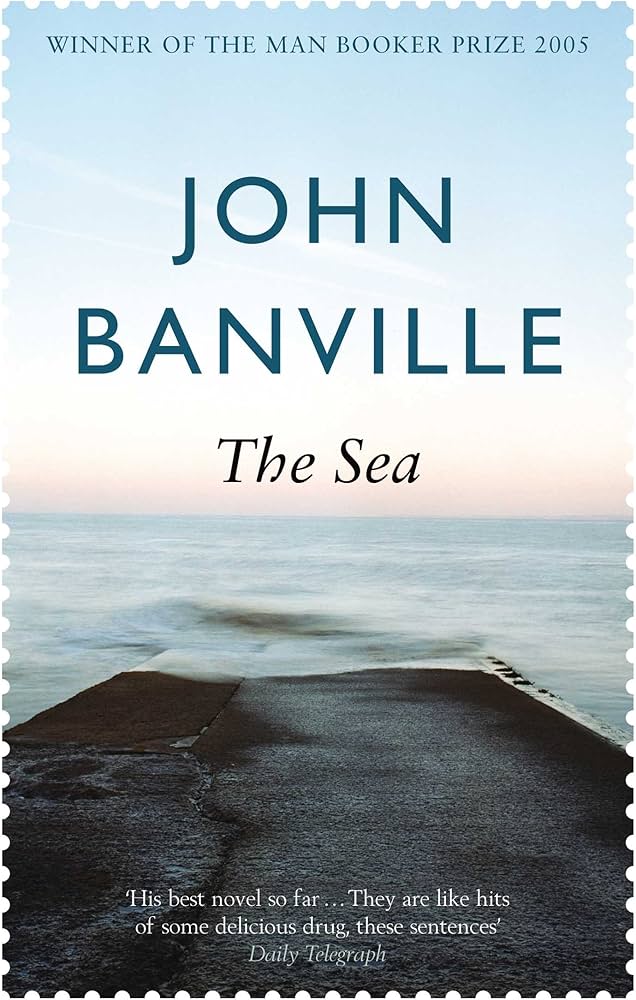
If you are looking for a definition of literary fiction, this 2005 Booker Prize winning novel is it. I know that may put some people off; it seemed to have put John Banville off too; from 2006 Banville began writing crime novels, featuring the pathologist Quirke (no first name ever mentiuoned), under the name of Benjamin Black right up until 2021 when the Quirke novel, April in Spain, was released under his own name. Since then his Quirke novels, beginning with Christine Falls (2006) have been released under his name as well.
An elderly man, Max Morden, returns to a seaside house where his family used to holiday when Max was a child. We meet the Grace family, parents and the children Myles and Chloe, from that time and the inhabitants of the same place, now a rundown boarding house, all those years later. These two time frames, and the people in them, are woven tapestry-like to create a picture of Max’s current demeanour.
This is a slow burn of a book. It creeps up on you, but you need to stay with it. I got to a stage where I could not pinpoint what was wrong but I knew that there was something definitely not right, either about what happened in the past or what was going to happen in the present. It’s about capricious memory and self-awareness and, more importantly, about that slippery slope between behaviour and intention.
Someone once wrote, memory is like an oven. You put something in, close the door, wait a while, open it, and there it is, something different.
I’m now searching for the Quirke novels. When a writer of this skill-set takes on the ubiquitous crime genre there has got to be reading richness to discover.
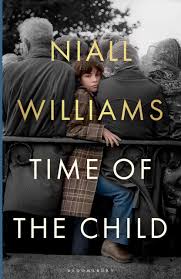
“From the reeds a second rain dripped harder than the first and the brim of the doctor’s hat released it as a third.” So, the poor doctor had three curtains of rain to deal with: from the skies, from the roof and from his hat before he made it to the back door. This descriptive layered richness of detail is the William’s trademark and peppers a simple scene with verbal interest and understanding of place and character. This latest novel Time of the Child (2024) from the Irish writer is again set in his mythical town of Faha on the western edge of Ireland making the third in what has become known as the Faha Trilogy. The first two being The History of Rain (2014) and This is Happiness (2019). The most notable feature of Faha is rain. Even when it stops, rarely, it is still on everyone’s mind; it will surely start again any minute.
There is not a lot of dialogue in William’s novels. The characters don’t talk much, hence many plot points rely on misunderstandings both comical and tragic. People understand each other by the nod, the look, the shrug, but ironically despite the lack of talking gossip spreads like a virus.
It’s coming up to Christmas 1962 and doctor Jack Troy and his eldest and unmarried daughter Ronnie are presented with a child, a foundling. Ronnie immediately loves it and names her Noelle. Keeping the child cannot happen without a man, husband and father to go with it and keeping it is exactly what Ronnie is determined to do. Jack Troy knows of a possible contender for the role of husband/father but he is in America, but conscious of his own failings and mis-steps as a father hatches a plan to bring happiness to his daughter.
It is not necessary to have read the first two to enjoy the third. Each novel is self-contained. The characters and culture of Faha are in themselves a story and you are presented with a rich tapestry of both before the child is found in a graveyard. The enjoyment of reading Williams is not just because of the plot – his focus he admits – it’s his writing style and his uplifting of daily detail to importance in the local’s lives but in rich and lyrical language. I loved this book. Highly recommended.
I posted recently my views on Szalay’s 2016 novel, All That Man Is, which was shortlisted for the Booker. This, his latest, Flesh, won this year’s Booker and is in the same mould. The former is a collection of short stories about nine unrelated men; the later is a collection of stories, scenes, about the life of one man, István, beginning in Hungary when he is fifteen years old. Like all the men in All That Man Is he says ‘I don’t know’, ‘OK,’ and ‘Sure’ a lot. He is not the driver of his own destiny. Women play far more important roles, his neighbour, his boss’s wife, his wife and ultimately and ironically, his mother. From a rudderless boy he becomes a soldier, a bodyguard, a wealthy man, a step-father, a father and … well, you’ll just have to read it to find out; no spoilers here. There are only a few clues as to what happens to him between the stories, scenes, of his life that Szalay chooses to feature. His style is minimalist: short sentences, simple language, stark facts without much linguistic adornment, a bit like István. This had the effect of causing this reader to gasp – I love it when a writer makes me do that – several times since the gob-smacking events are relayed with such simplicity and directness that they leap out at you like a favourite uncle who hides behind a door and says Boo! I had to re-read several of these events again to make sure I hadn’t missed anything. Although women and sex feature he is not exploitative nor unkind. He doesn’t use women, women use him, and he’s thankful to them. Without women you wonder how he would have survived. I love Szalay’s style as it respects readers’ intelligence and allows us to bring our own experience and understanding to fill in what he doesn’t say. He makes the story of a plain man an interesting one. I have criticised the Booker judges in the past for awarding the prize to a writer for writers; this one is a writer for readers.
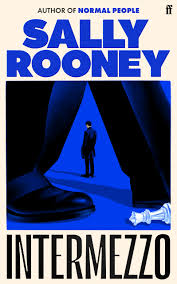
A few hundred pages into the novel I was struck by the narrative format; actually Rooney employs two narrative formats.
This is the story of two brothers and their bumpy relationship following the death of their father.
Peter, 32 is a lawyer and Ivan, 22 is, well, nothing much but a wiz at chess but scraping a living from his checkered passion is not easy.
Peter has two girlfriends; Ivan has one. Peter seems happy but Ivan is happy. I feel sorry for Peter but I love Ivan.
Sally Rooney is quite a literary phenomenon. Most of the action goes on in her character’s heads. She is a digger of truth about what goes on in the human mind which is often at odds with the way people behave. Especially men. So eager is she to explore our mental shenanigans, she sometimes overdoes it a bit. That’s a minor criticism.
But back to the double narrative styles: for the chapters about Peter the narrative is almost stream-of-consciousness. Short sentences. Shorter phrases. Even just one word followed by a full stop. They all tumble over each other. It pretty much reflects Peter’s state of mind: full. His two girlfriends, his high pressured job, what to do about his under-achieving brother, and did he love his father. Enough? Ivan’s chapters are more conservative, the third person narrator is more conventional: long sentences, precise grammar, at a slower pace. This is Ivan. He’s a simple soul not much concerned with material matters but he knows love when he feels it. Although I’m not a fan of stream-of-consciousness narration it works here; it works for Peter. Another grammatical technique binds the narratives together. The dialogue, there’s a lot, isn’t punctuated. A modern trend. But it is easy to follow. When you listen to an audio book – another modern trend – the punctuation is not read yet it is always clear who says what to whom.
I am almost to the end so I cannot tell you what happens. It’s a great read. I’m loving it. If you haven’t already give it a go.
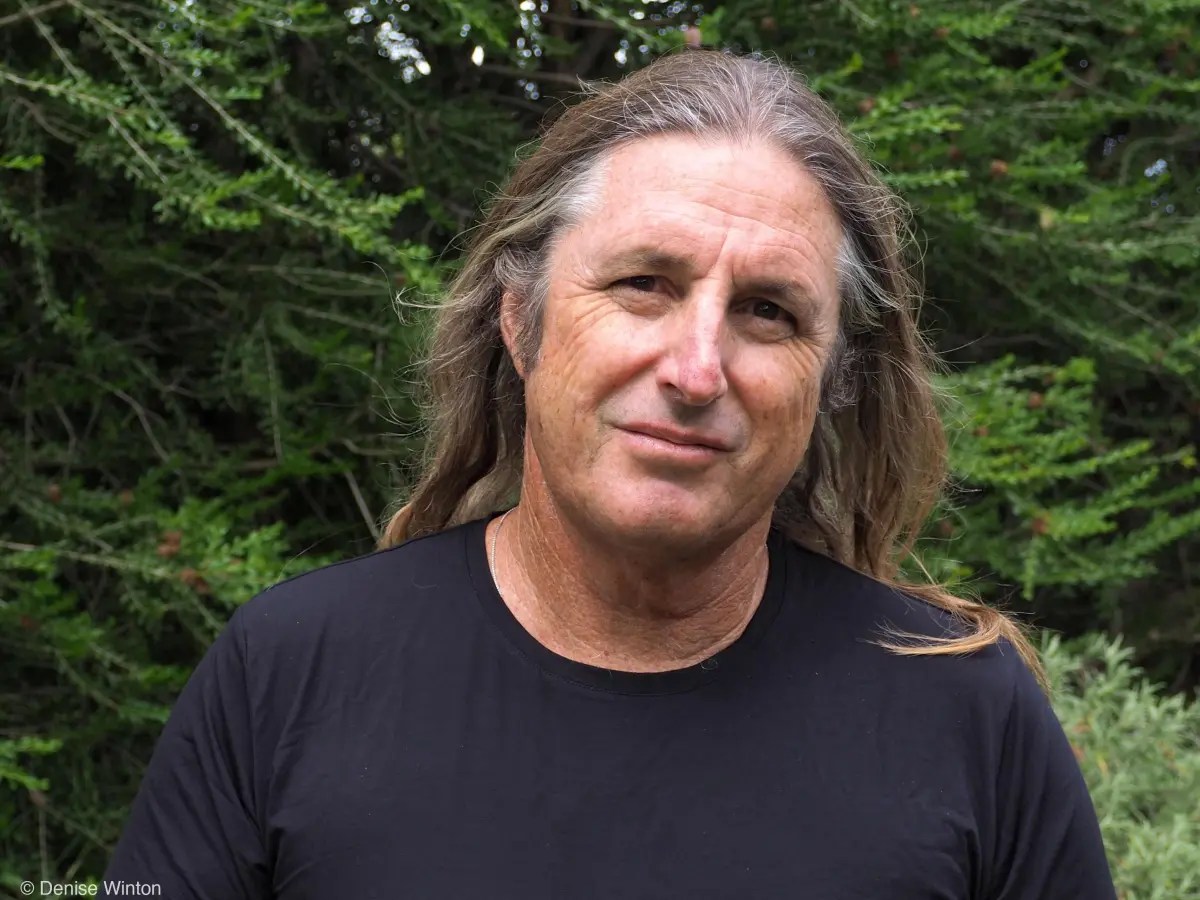
I can clearly understand that once Winton heard the untethered voice of the teenager, Jaxie Clackton, in his head there was nothing he could do but tell his story. Write it down. Rudyard Kipling said “When your Daemon is in charge, do not try to think consciously. Drift, wait, and obey.” Here, Winton’s Daemon is Jaxie Clackton.
The plight of the boy, a victim of his brutal drunken sole-parent father is known by everyone but no-one intervenes, not the neighbours, not the social workers, not the police. The opening is confronting; violence always is. Everyone expects him to retaliate one day. As it turns out, he doesn’t need too. A freak accident does the trick. It’s obvious to the boy that he’ll be blamed. Jaxie is no ordinary lad, he is undereducated but street-smart, resilient, cautious and in love. He steals a car and disappears into the Australian bush on the way to the only person who understands him: Lee, his pretty 15-year-old shaven-headed cousin with eyes of different hues.
Jaxie tells his story. If course language offends you don’t pick this one up.
As Jaxie’s supplies run low he needs to make some difficult choices. Again, fate comes to his aid. He discovers Fintan MacGillis, an old dero living in a dilapidated hut surviving on goats, guilt, and a meagre veggie patch. Although it seems these two have nothing in common there is a lot, deep down, they share. Otherness mainly. Fintan, a defrocked priest, has been ousted, but thinly supported, by the Church. His crime seems obvious but is never confirmed. Jaxie is wary and suspicious but they form a bumpy relationship which lasts until Jaxie discovers another crime.
The Shepherd’s Hut (2018) is a story about friendship, trust, survival, and redemption and Jackson Clackton’s voice and character will stay with you for quite some time. If you know Winton’s work you’ll relish this. I loved reading this book.
I’m all set now for Winton’s latest, Juice. It came out in October 2024.
Here is a very brief description by Winton of his creation, Jaxie Clackton.
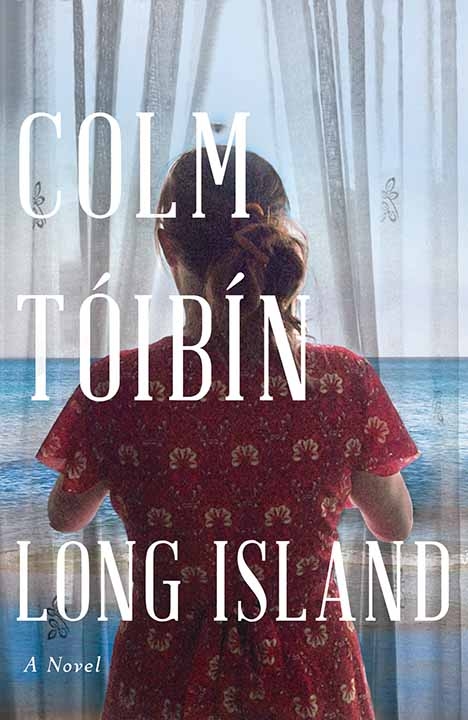
Irish writer Colm Tóibín, Laureate for Irish Fiction 2022-2024. This is his eleventh novel.
As a Tóibín fan it was like coming home to a cosy room as I settled in to page one and his simple very clear narrator’s voice with its always formal tone elicited by mainly short sentences with no contractions. It’s been twenty years or so of novelistic time since the happy ending of his novel Brooklyn (2009) when Eilis Lacey, from Enniscorthy (Tóibín’s home town in County Wexford, NE Ireland) returned to Brooklyn to continue her role as the recent wife of Italian, Tony Fiorello and to raise a family on Long Island.
Tóibín wastes no time and opens the narrative with the plot point that propels the story: a stranger arrives at Eilis’s front door with a piece of harsh news and his even harsher promise to make things worse. She lives in an enclave of the Fiorello family including her parents-in-law and Tony’s married brothers and she has forged a place in that family that she thought was secure but it’s her reaction to the news, and the only action she feels she can take, that causes her to doubt everything she has done in the past. This is despite her in-laws offering to solve the problem for her. Her stubborn Irish decision is played against the Italian pragmatic approach which she finds untenable. She refuses their help.
This is a common novelistic format: begin with an explosive event and then fill in the backstory along with the repercussions of the bomb. The reader is hooked from page one.
Brooklyn is an immigrant tale and the choices an immigrant must make, personified in the story as two men, one Irish and one an immigrant, like herself, forging an American life. She returns to Ireland to find if she has made the right choice; a little foolhardy since she has already married the Italian-American, something she does not tell anyone including her mother. She returns to America, her choice forced upon her because of her previous decisions. So, there has always been a doubt lurking in the dark, in the back of her mind and this doubt is brought to the fore in this new novel of a much older Eilis Lacey, a married American, secure, and with two teenage children.
She returns again to Ireland on the pretext of her mother’s forthcoming 80th birthday. Her twenty year ago Irish lover is still unmarried, but plans are underway to fix that. Can the way forward get more bumpy? Yes. Her children arrive! How does Eilis navigate her return to the family and ‘her Irish home’? She makes mistakes but will she learn from them? Meanwhile Tony, her foolish but devastated husband waits longingly for her to return to ‘her American home’. Once an immigrant, always an immigrant?
Irish writer, John Boyne whose work has been translated into 59 languages making him the most translated Irish writer of all time.
Evan Keogh is a minor character in the first novella of Boyne’s Elements Quartet, Water (2023) where, like, Earth, it is told in the first person; this time by Evan and his life after he fled the little island off the Irish coast forever, but left with the smell of its earth still under his fingernails.
He has an innate talent for football but no interest in it. He wants to be a painter. His upbringing was hell. An isolated backward place with a brutal and hateful father, a silent and down-trodden mother, and a best friend who betrays him. No wonder he ran away. He has vowed never to return to that island, he knows he is attractive, he is at ease with his sexuality (but always falls for the wrong people), and very ambitious. However, life doesn’t pan out as expected.
It opens in the days before a notorious rape trial. The narrative is two pronged: before and after. Evan, now a famous and wealthy soccer player is accused of accessory to rape; his straight mate, Robbie, accused of the crime itself. As the poor boy sits and waits for the trail to begin we learn about his life in London and how he ended up is such a threatening situation. Then comes the trial itself when we hear the testimony of the rape victim, an intelligent girl called Lauren. But we don’t hear about the testimony of Evan and Robbie; there’s a novelistic reason for that.
What impresses me about Boyne’s writing is it is so clear: the situation, the characters, how they feel, and his narrative choices that keep important plot events dangling before your wished discovery, just out of reach, until you are aching for them.
The scenes of sex and violence are vivid but Boyne’s words lead the reader to imagine them; he doesn’t actually describe them in detail. In other words, there’s more going on in the reader’s head than on the page. That’s good writing in my book, so don’t be fearful of what you might read.
Evan’s final decision is a very satisfying one, but will it finally rid him of that sour smell of his home island’s earth?
The next installment of The Elements Quartet is Fire, scheduled for release in November 2024.
Australian writer Amanda Lohrey. The Labyrinth won the 2021 Miles Franklin Award, the 2021 Voss Literary Prize, and the 2021 Prime Minister’s Literary Award for Fiction.
I came to Lohrey’s novel, The Labyrinth (2020) with a little trepidation. I hadn’t read her fiction before but knew her from book reviews in (I think) TheMonthly. I don’t remember much about them as there was very little information about the books or writers, which is why I found her reviews extremely annoying: heavy writerly syntax and nothing much else.
A visiting friend had left The Labyrinth with me. It sat on my coffee table for a few days when I finally picked it up. I put a lot of faith in page 1 and this page 1 did not disappoint, in fact it galvanised me to continue.
It’s a familiar narrative trope epitomised by the 1949 novel, Shane by Jack Shaefer which was filmed in 1953 and its success launched the plot as an iconic narrative; it was originally published in 1946 in three parts in Argosy magazine, and originally titled Rider from Nowhere: a stranger arrives in an isolated place and changes the local’s lives forever. Such a well-used storyline has morphed into more sophisticated versions over the decades – including, it’s the stranger who changes – but the bones of it are just that. John Boyne’s latest novella Water (2024), the first of a quartet, has a similar spine. Boyne’s protagonist is escaping her past; Lohrey’s, Erica, has followed hers: her son is imprisoned in a local gaol and she’s bought a dilapidated cottage to be near him even though he’s quite antagonistic towards her. As a mother she feels she has no choice; she’s all he has, she says… in fact, he’s all she has.
The first-person narrative allows Lohrey to tantalisingly release little bits of information from Erica’s back story which keeps the reader’s attention and interest. It also doesn’t allow any close writing of any other characters leaving them as intriguing observations and keeping the focus solely on the protagonist, her thoughts and fears; that’s the beauty of the first person.
While she waits for her fortnightly visits to her son, Daniel, Erica embarks on a project inspired by her late father, and plans to build a labyrinth in a flat piece of land between her cottage and the sand dunes. A labyrinth is a single continuous path but of an intricate and mathematical design that promises you will achieve the goal of getting to the centre if only you keep moving forward. A maze, on the other hand, has many turns and dead-ends so reaching the centre may never happen. A labyrinth is inspirational; a maze is a game.
An itinerant Albanian, Junka, possibly an illegal immigrant, is a wonderful novelistic creation. He is camping near the beach and happens to be a stone mason and seeks to keep Erica on track to build her labyrinth. Make what you will of the symbolism, if you think it’s relevant, but the narrative is engaging and the characters interesting even though the plot is soft and the ending a little undercooked.
Here, listen to Lohrey talk about the book and what inspired her to write it.
You can purchase the book and other Lohrey writing here.
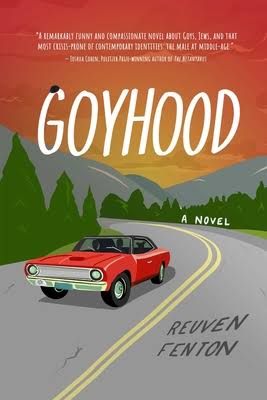
Reuven Fenton graduated from the School of Journalism at Columbia University. He has been “covering murder and scandal for the New York Post” since 2007 and is the author of Stolen Years: Stories of the Wrongfully Imprisoned (2015).
This is his debut novel.
Fenton has a playful knack with descriptions – They heard the potato potato potato of a motor … – and original similes – the mouthpiece smelt like apricots decomposing in the sun … … his thoughts scattered like feathers in a chicken coop … she hugged like a bear and kissed like a lamprey.
It proves to me that this writer is a real writer in the same way that a miraculous French onion soup is proof it’s made by a real chef.
So, to the book. Meyer, Marty, Belkin doesn’t know how to book a plane ticket, pack a suitcase, the name of any popular tv shows – nor the name of that yellow faced cartoon family who’s mom has a blue beehive as tall as she is – or who his insurance agent is. All he knows is the minutiae of Jewish law and where to read it.
His father-in-law insisted he do nothing but marry his daughter, Sarah, study the Talmud – the central text of Judaism and the primary source of Jewish religious law – be supported by him, and, oh, and her Dad threw in a house for good measure.
If you can think of the most disparate person to a dough-faced single minded Talmudist who buys new clothes that match the ones he came in with you’ve got his twin brother – although younger by 43 seconds – David, who is now a millionaire-ette thanks to the e-cigarette; this latest get-rich-quick scheme worked; many before didn’t and like all get-rich-quickers he tries anything and buys everything.
Goyhood is a road trip back to New York after finding out, at their mother’s funeral in Moab, Utah and via her suicide note, that she wasn’t Jewish after all. (This isn’t a spoiler; it’s all over the publicity – it’s the set-up) As you can imagine this is an existential crisis for Meyer – Sarah may not remarry him! – not so for David: it’s liberation, exemplified by hiring “the most powerful Charger on the market” calling it Daisy and taking to the road, and dragging his brother along.
Goyhood…having already picked up a stray dog, Popeye, in New Orleans, David reunites with a female acquaintance, Charlayne, which he rather unbelievably invites to share his cheap hotel bed when he’s already sharing it with Meyer. I worried here that Fenton had lost control of the road-trip narrative with an episode that appeared rudderless, novelistically speaking. However, he regains it again when Sarah, Meyer’s wife, rejoins the story, not in person but via a phone call. She is an interesting character and not only her husband’s Judaic anchor but she’s also set up to be the novel’s major plot hurdle. By that I mean, if Meyer can win her back, after divulging the truth of his non-Jewish ancestry – his goyhood – the novel must surely end. Does it? I’m not saying – no spoilers here.
Yes, it’s a road-trip narrative but it didn’t pan out as I expected: Fenton is more interested in how this brief exposure to the real world effects his religious commitment and there’s a few fascinating U-Oh! moments concerning Sarah! Now, that’s interesting.
I’m not religious although raised so but 1960s Australian wheat-farm Lutheranism is a far cry from present day scholastic New York Jewishness. I loved the humour in this book – that dry as oats deadpan kind that comes at things from around a corner – but readers with a Jewish string or two to their life will get far more out of it, I’m sure. The outcome is certainly not predictable as is Meyer’s fate and it’s very satisfying.
Goyhood is being released on May 28th 2024. You can pre-order the hardcover or Kindle editions here.
Irish writer, John Boyne whose work has been translated into 59 languages making him the most translated Irish writer of all time.
This is my second reading of this book. Back in 2017 I read it for the first time and fell in love with Boyne’s work. Here is my blog from that first reading: it’s still apt and relevant.
Many years ago, on a small plane trip – the plane was small, not the trip – as we were about to land in a provincial Queensland town, I continued to assiduously read my book. I was laughing so much, trying not to, but not succeeding, that my eyes were streaming, my nose running, and my face felt hot and red; the flight attendant broke the rules, unbuckled, and hurried to my seat to ask if I needed medical assistance. I just held up the book; I was unable to speak. She understood. Maybe she’d read it too. It was the hit of the season. The hysterical section was the Nativity Scene from A Prayer for Owen Meany (1989) by John Irving. The next time I laughed out loud, many decades later (yes, decades), was with this book, and the (highly illegal) Dinner Party Scene, from early on in The Heart’s Invisible Furies (2017) by John Boyne. Ironically Boyne has dedicated this book to Irving.
Making people laugh via the written word, and only the written word, is an extremely difficult and hazardous task. You can’t under play it or over sell it, and you certainly can’t ‘back-explain’ it; it’s all to do with tone, and tone is like a law of physics: it only happens when the universal conditions are absolutely right. It’s as if you need to foster a certain psychological state of mind, and write the episode with as much truthfulness and sincerity as you possibly can – don’t elaborate – just tell it, and if the tone is right, it will be hysterical. If it isn’t you can’t go back and make it right, edit it funny, you have to delete it all and start again. A plane will only fly if all the necessary preparations and current circumstances, weather, wind, mechanical health, operational skill, and power source, are perfect.
The dinner party – and it’s impossible to explain why it’s illegal, you’ll just have to read it to find out – is on page 92, but the preparation for it, and the other laugh-out-loud bits, preparation for the tone, I mean, in true Irving-esque fashion, begins right from the first killer sentence; and by the way, the opening sentence of Owen Meany has to be the killer-opening-sentence in all literature. There was a time when I knew it by heart and it became my dinner-party piece for some time after. I can’t sing, tell a joke, or play the piano, you see.
Boyne considers Irving a mentor, and Irving should be chest-thumpingly proud.
It’s impossible for Boyne to escape the moniker of “author of The Boy in the Striped Pyjamas” which he understands only too well, and he’s certain it will appear on his grave stone, so internationally popular was the book and film; but it changed his life making writing full time not only a possibility but a happy necessity.
Boyne was born in 1972. Ireland brought him up but the Church brought him down. He still suffers from its cruelty and hypocrisy. He’s not alone. His anger is present in this book but, much to his credit, he’s fashioned it into a cutting humour without lessening the truth of his understandable hatred.
The Heart’s Invisible Furies explains the life of Cyril Avery, although not a real Avery, from his pre-birth to two months before his death; from 1945 to 2015; and it is also the story of Ireland over that time; from a society dominated, straightjacketed, and suffocated by the Catholic Church, under the guise of strengthening morality, to one that legalises same-sex marriage. It’s a hell of a journey.
It’s full of surprising events, fashion, villains, extremely bad behaviour, political unrest, beauty, deception, selfishness, redemption, tears – yours as well as the character’s, death, forgiveness, love, birth in the midst of murder, politicians behaving badly, coincidences, literature, weddings, doctors behaving courageously, dreams – both fulfilled and dashed, sentiment, laughter, bigotry, violence, and even the ludicrous; in fact the entire palette that paints our lives that all conspires to prove that age-old adage, nobody’s perfect. And all these elements are wound around a cast of characters you won’t easily forget, and nor would you want to.
Boyne skilfully uses many literary devices to tantalise and seduce his readers: he drops in an outcome before explaining how it happened; he triggers the reader’s memory before the character’s; and, best of the lot, dramatic irony: when the reader knows more that the characters do.
I love this book and I’ve recommended it to others, who too have loved it. I’m preparing a space on my bookshelf, between Jane Bowles and Peter Carey. You can get the book, in various formats, here.








 Michael K Freundt