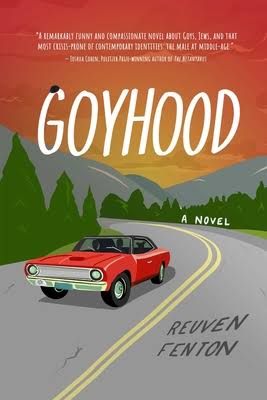
Goyhood by Reuven Fenton

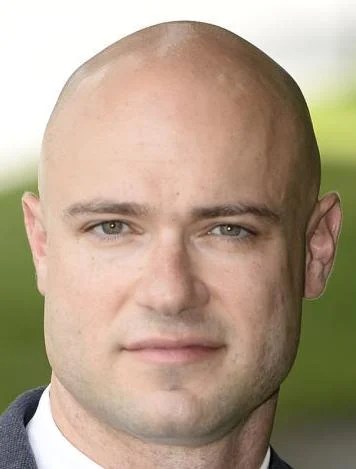
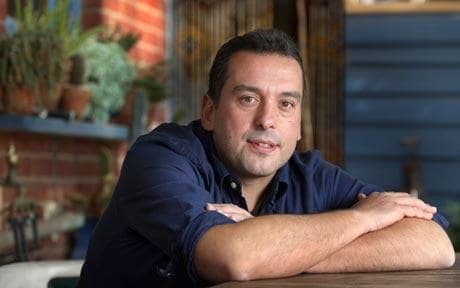
American journalist and author, Reuven Fenton

Reuven Fenton graduated from the School of Journalism at Columbia University. He has been “covering murder and scandal for the New York Post” since 2007 and is the author of Stolen Years: Stories of the Wrongfully Imprisoned (2015).

This is his debut novel.

Fenton has a playful knack with descriptions – They heard the potato potato potato of a motor … – and original similes – the mouthpiece smelt like apricots decomposing in the sun … … his thoughts scattered like feathers in a chicken coopshe hugged like a bear and kissed like a lamprey.

It proves to me that this writer is a real writer in the same way that a miraculous French onion soup is proof it’s made by a real chef. 

So, to the book. Meyer, Marty, Belkin doesn’t know how to book a plane ticket, pack a suitcase, the name of any popular tv shows – nor the name of that yellow faced cartoon family who’s mom has a blue beehive as tall as she is – or who his insurance agent is. All he knows is the minutiae of Jewish law and where to read it. 

His father-in-law insisted he do nothing but marry his daughter, Sarah, study the Talmud – the central text of Judaism and the primary source of Jewish religious law –  be supported by him, and, oh, and her Dad threw in a house for good measure. 

If you can think of the most disparate person to a dough-faced single minded Talmudist who buys new clothes that match the ones he came in with you’ve got his twin brother – although younger by 43 seconds – David, who is now a millionaire-ette thanks to the  e-cigarette; this latest get-rich-quick scheme worked; many before didn’t and like all get-rich-quickers he tries anything and buys everything. 

Goyhood is a road trip back to New York after finding out, at their mother’s funeral in Moab, Utah and via her suicide note, that she wasn’t Jewish after all. (This isn’t a spoiler; it’s all over the publicity – it’s the set-up) As you can imagine this is an existential crisis for Meyer – Sarah may not remarry him! – not so for David: it’s liberation, exemplified by hiring “the most powerful Charger on the market” calling it Daisy and taking to the road, and dragging his brother along.

Goyhood…having already picked up a stray dog, Popeye, in New Orleans, David reunites with a female acquaintance, Charlayne, which he rather unbelievably invites to share his cheap hotel bed when he’s already sharing it with Meyer. I worried here that Fenton had lost control of the road-trip narrative with an episode that appeared rudderless, novelistically speaking. However, he regains it again when Sarah, Meyer’s wife, rejoins the story, not in person but via a phone call. She is an interesting character and not only her husband’s Judaic anchor but she’s also set up to be the novel’s major plot hurdle. By that I mean, if Meyer can win her back, after divulging the truth of his non-Jewish ancestry – his goyhood – the novel must surely end. Does it? I’m not saying – no spoilers here.

Yes, it’s a road-trip narrative but it didn’t pan out as I expected: Fenton is more interested in how this brief exposure to the real world effects his religious commitment and there’s a few fascinating U-Oh! moments concerning Sarah! Now, that’s interesting.

I’m not religious although raised so but 1960s Australian wheat-farm Lutheranism is a far cry from present day scholastic New York Jewishness. I loved the humour in this book – that dry as oats deadpan kind that comes at things from around a corner – but readers with a Jewish string or two to their life will get far more out of it, I’m sure. The outcome is certainly not predictable as is Meyer’s fate and it’s very satisfying.

Goyhood is being released on May 28th 2024. You can pre-order the hardcover or Kindle editions here.

The Heart’s Invisible Furies by John Boyne

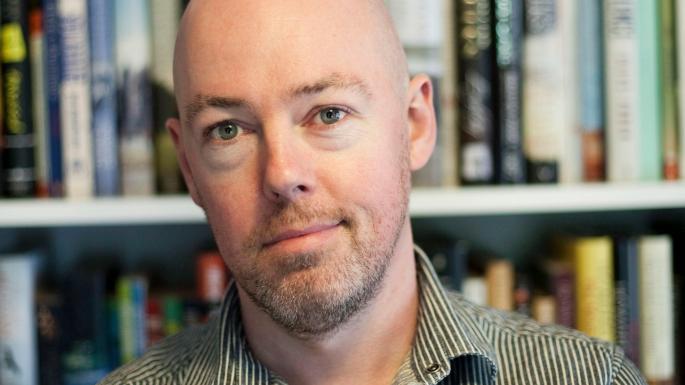
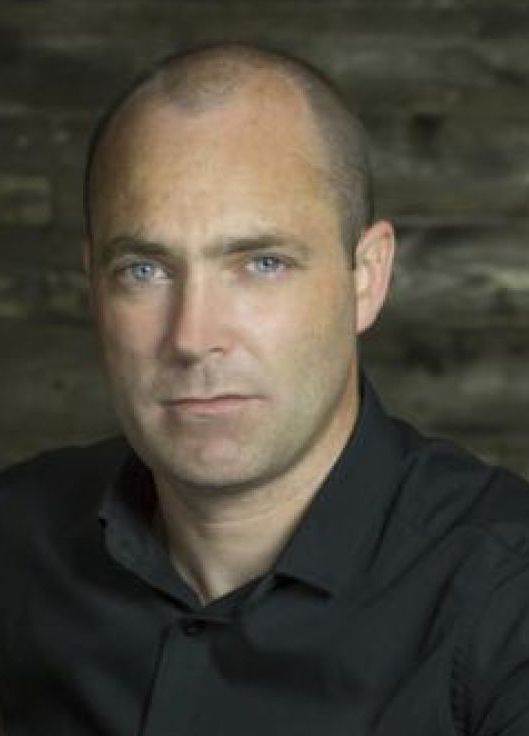
Irish writer, John Boyne whose work has been translated
into 59 languages making him the most translated Irish
writer of all time.

This is my second reading of this book. Back in 2017 I read it for the first time and fell in love with Boyne’s work. Here is my blog from that first reading: it’s still apt and relevant.

Many years ago, on a small plane trip – the plane was small, not the trip –  as we were about to land in a provincial Queensland town, I continued to assiduously read my book. I was laughing so much, trying not to, but not succeeding, that my eyes were streaming, my nose running, and my face felt hot and red; the flight attendant broke the rules, unbuckled, and hurried to my seat to ask if I needed medical assistance. I just held up the book; I was unable to speak. She understood. Maybe she’d read it too. It was the hit of the season. The hysterical section was the Nativity Scene from A Prayer for Owen Meany (1989) by John Irving. The next time I laughed out loud, many decades later (yes, decades), was with this book, and the (highly illegal) Dinner Party Scene, from early on in The Heart’s Invisible Furies (2017) by John Boyne. Ironically Boyne has dedicated this book to Irving.

Making people laugh via the written word, and only the written word, is an extremely difficult and hazardous task. You can’t under play it or over sell it, and you certainly can’t ‘back-explain’ it; it’s all to do with tone, and tone is like a law of physics: it only happens when the universal conditions are absolutely right. It’s as if you need to foster a certain psychological state of mind, and write the episode with as much truthfulness and sincerity as you possibly can – don’t elaborate – just tell it, and if the tone is right, it will be hysterical. If it isn’t you can’t go back and make it right, edit it funny, you have to delete it all and start again. A plane will only fly if all the necessary preparations and current circumstances, weather, wind, mechanical health, operational skill, and power source, are perfect.

The dinner party – and it’s impossible to explain why it’s illegal, you’ll just have to read it to find out – is on page 92, but the preparation for it, and the other laugh-out-loud bits, preparation for the tone, I mean, in true Irving-esque fashion, begins right from the first killer sentence; and by the way, the opening sentence of Owen Meany has to be the killer-opening-sentence in all literature. There was a time when I knew it by heart and it became my dinner-party piece for some time after. I can’t sing, tell a joke, or play the piano, you see.

Boyne considers Irving a mentor, and Irving should be chest-thumpingly proud.

It’s impossible for Boyne to escape the moniker of “author of The Boy in the Striped Pyjamas” which he understands only too well, and he’s certain it will appear on his grave stone, so internationally popular was the book and film; but it changed his life making writing full time not only a possibility but a happy necessity.

Boyne was born in 1972. Ireland brought him up but the Church brought him down. He still suffers from its cruelty and hypocrisy. He’s not alone. His anger is present in this book but, much to his credit, he’s fashioned it into a cutting humour without lessening the truth of his understandable hatred.

The Heart’s Invisible Furies explains the life of Cyril Avery, although not a real Avery, from his pre-birth to two months before his death; from 1945 to 2015; and it is also the story of Ireland over that time; from a society dominated, straightjacketed, and suffocated by the Catholic Church, under the guise of strengthening morality, to one that legalises same-sex marriage. It’s a hell of a journey.

It’s full of surprising events, fashion, villains, extremely bad behaviour, political unrest, beauty, deception, selfishness, redemption, tears – yours as well as the character’s, death, forgiveness, love, birth in the midst of murder, politicians behaving badly, coincidences, literature, weddings, doctors behaving courageously, dreams – both fulfilled and dashed, sentiment, laughter, bigotry, violence, and even the ludicrous; in fact the entire palette that paints our lives that all conspires to prove that age-old adage, nobody’s perfect. And all these elements are wound around a cast of characters you won’t easily forget, and nor would you want to.

Boyne skilfully uses many literary devices to tantalise and seduce his readers: he drops in an outcome before explaining how it happened; he triggers the reader’s memory before the character’s; and, best of the lot, dramatic irony: when the reader knows more that the characters do.

I love this book and I’ve recommended it to others, who too have loved it. I’m preparing a space on my bookshelf, between Jane Bowles and Peter Carey. You can get the book, in various formats, here.


Prophet Song by Paul Lynch

Irish writer, Paul Lynch, winner of the 2023 Booker Prize.

In July 2023 I was house sitting for a family member and the first thing I noticed was there were no books in the house. Then one afternoon while searching for an iron I found, on the bottom shelf of the linen closet, a pile of five books, four Agatha Christie novels, and one novel by an unknown writer. What caught my attention was one of the endorsements on the front cover of this unknown title was by my all-time favourite novelist, the Irishman Colm Tóibín. Being a fan of, and I thought knowledgeable about, Irish literature I was embarrassed not to know the novel, Red Sky at Morning (2013) nor the author, Paul Lynch. I read several pages, at first wary of the poetic language but awed by the ease of understanding, the tension of, and immediate involvement in, the story. I planned to steal it, but didn’t, wished now I had, and will next time I’m in that house.

The plot is simple: a dystopian society on the edge of collapse and a deeply moving story of a mother’s fight to hold her family together. That’s on the back cover so I’m not spoiling it for you.

The language is sometimes poetic:

How the dark gathers without sound the cherry trees. It gathers the last of the leaves and the leaves do not resist the dark but accept the dark in whisper. Tired now, the day almost behind her, all that still that

And the size and design of the font is surprising clear and easy on the eye: it is very neat and black. Recently some publishers have been printing in grey, to save money I assume, which I find annoying.

But what most readers will be talking about is the punctuation, or lack of it. In this book, Lynch does not punctuate dialogue. This renders each page a justified, on left and right, slab of text. It can, on first glance, look daunting.

She lifts two mugs and peers inside them, squeaks her finger around the rim. Dad, look at these mugs, why don’t you use the dishwasher, you really need to wear your glasses when washing up. Simon does not lift his eyes from the newspaper. I’m wearing my glasses right now, he says. But you need to wear them while washing up, these mugs are ringed with tea. You can blame the useless cleaning lady

If you realise that you do not understand what you have just read, read the line again, read the paragraph again. Listen to your own reading voice. I had to do this initially. Just like turning to Dickens or Woolf, you need to get used to the different tone, the different syntax, and in this case, the different sentence structure. There’s a reason for this difference: Lynch’s fictional world is different; it’s falling apart. But, go with it. When you listen to an audio book the reader doesn’t ‘read’ the punctuation yet the listener understands perfectly who says what. Read like a listener and you will be rewarded.

Lynch burst onto the literary scene in triumph (more personal embarrassment – why didn’t I know?) when his first novel, that one I found next to the iron among the pile of Agatha Christies, was the prize of a six-publisher auction in London, and it won him acclaim abroad, especially in France where it was a finalist for France’s Best Foreign Book Award: Prix du Meilleur Livre Étranger. He’s written three novels since. Prophet Song is his fifth.

It’s a unique book and a remarkable feat of imagination worth getting stuck into.

Here is a succinct Q&A video by Paul Lynch, on the Booker short list, before the announcement of the prize winner.

You can buy the book here, in various formats.

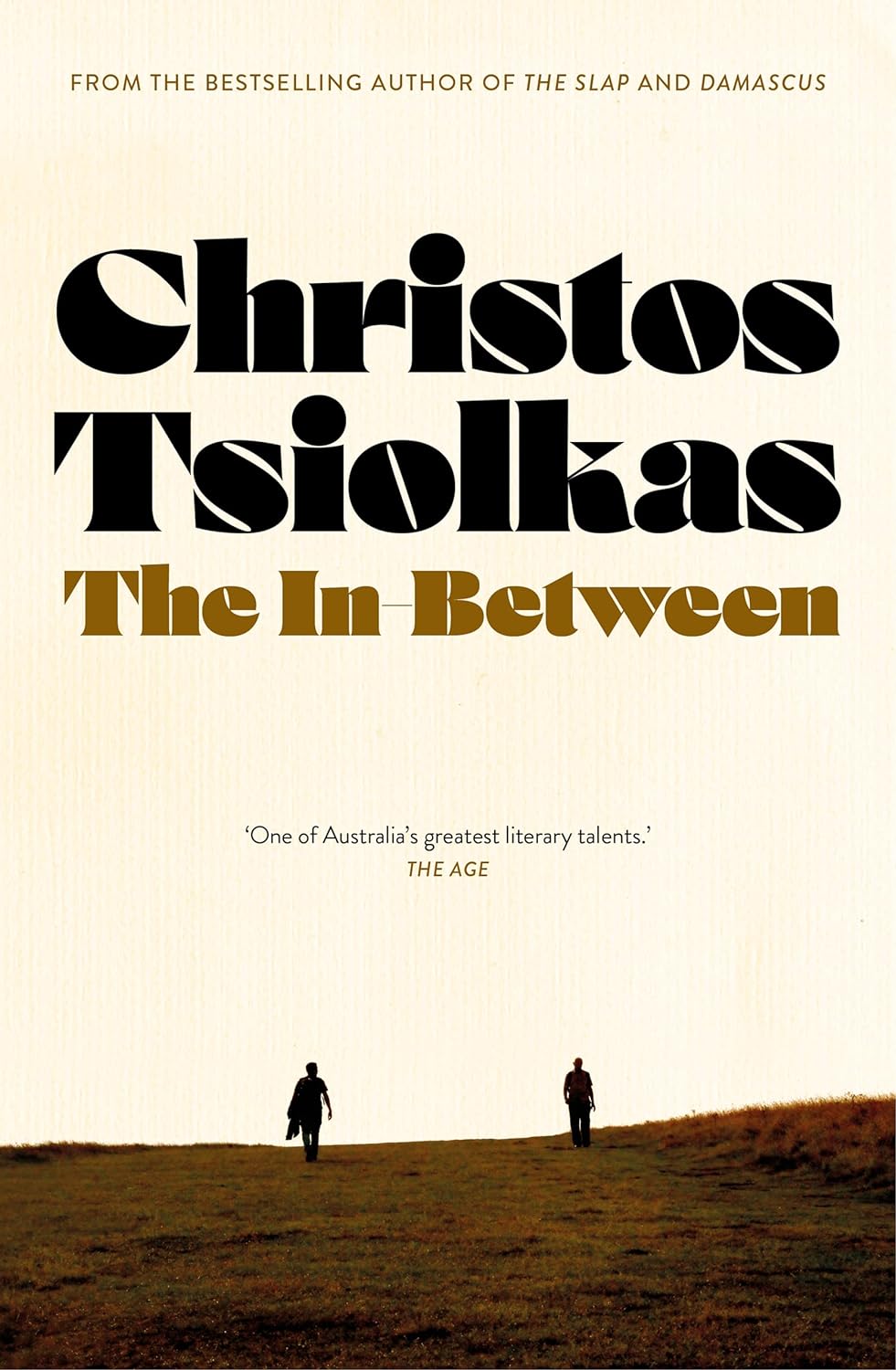
The In-Between by Christos Tsiolkas

Greek-Australian writer, Christos Tsiolkas.

WARNING: This novel contains graphic descriptions of sexual activity and language that some readers may find offensive.

This book is a triumph and has returned Tsiolkas to my high esteem after Damascus (2019) and 7 1/2 (2021) which left me rather underwhelmed. Two men in their fifties, both with pasts tainted by regrets, mistakes, and betrayal, find each other on a dating app. Perry, an academic and translator, and Ivan, a landscape designer with his own business, are both attractive men although their handsomeness has begun to fade. They embark on their first date with a lot of trepidation and too much aftershave. The description of their restaurant meal is made dramatic and insightful by Tsiolkas’ attention to both men’s explicit thoughts that accompany each gesture, look, and their possible implications. There is also a wonderful dinner party scene where Tsiolkas’ narrator digs deep into each character’s actions and reactions. It’s a masterful piece of writing juggling four very different characters each with exposed, and hidden, motivations, what they say and don’t say.

The story is told in the third person but from alternating, chapter to chapter, points of view. However, imbedded in the structure is a device I have not seen before: Tsiolkas takes passing strangers, near-by onlookers, and places them under the narrator’s attention and we see our two would-be heros as others see them, how the world sees them: two ageing homosexuals behaving normally and affectionately in the world. This device has another purpose which affords an unusual but satisfying ending … but enough said; no spoilers here.

Tsoilkas has never shied away from graphic sexual descriptions as is evident in his early work, particularly Loaded (1995) and Dead Europe (2005) but since his record breaking success The Slap (2008) thrust him into the global literary mainstream with television adaptations both in Australia and the US the sexual lives of his characters have usually been implied rather than described. This return to such syntax is welcomed because he is so good at it mainly because there is no judgement or shame in what is vividly described.

Both men have pasts that they are trying to recover from and which they may or may not reveal to the other. They both try very hard to make this new relationship work – falling in love in your fifties is very different from your heady twenties; it takes work – even though Ivan’s family, a bitter ex-wife, but a caring daughter and granddaughter, and their own tensions get in the way. Perry has his own demons, mainly in the shape of a married French ex-lover he met in Europe and how this closeted man made him see himself and the world.

Minor characters, Ivan’s family and a charming rent-boy, and Perry’s relationship with his ex-lover’s daughter are treated with the same descriptive detail that add depth and understanding to the narrative. It’s a great book. Highly recommended.

Here is a short and interesting video with Tsiolkas talking about his influences and inspirations from 10 years ago. And here is a longish interview with David Marr about The In-Between but the audio is less than adequate. Watch with patience.

You can buy the paperback edition here.

Water by John Boyne

Irish writer, John Boyne whose work has been translated into 59
languages making him the most translated Irish writer of all time.

This is a single linear story. Yes, there are minor characters but their stories are sufficiently sketched to need no more elaboration. There is just the narrative of a woman whose life, her old life, until now, has been destroyed. Her new life is yet unknown both in location and content. So she runs away. The reason? She doesn’t know. There are several possibilities to choose from but none of them stand out as more or less important. She hides on a small island in the Atlantic Ocean off the coast of western Ireland. She changes her name. She cuts off her hair.

It’s a short novel. A quick read. But an emotional one.

This is the second book where Boyne has chosen to use a female first person narrator: the first, All the Broken Places (2022). This narrator, Willow, her new name, takes residence in a small cottage near the sea. The locals, including a cat, are surprised by her, especially so since she seems not to have a husband, children, or a job. She is content to take long walks, watch the grey days, revel in what sunshine there is, and tries not to worry too much that there isn’t any Internet. Sometimes she walks into the village to get a sandwich and a bowl of soup at the New Pub. Sometimes she goes to the Old Pub. Sometimes she talks to people, sometimes they talk to her.

Slowly she can feel a possible life, sort of, returning to her. The horror, the truth, of her past is released in bits and asides. They pile upon each other like daubs on a canvas creating, and compiling, a past tangle of events that have you wondering how worse can it get. It does. The real story here is what happened to her; this, her running away, is her immediate response to those dreadful deeds. And here in this small isolated community she is forced to look at herself and wonder if she could’ve done something, anything, to avert the destruction. Is there guilt? And if so, there is blame.

Many writers, often-read and famous, have described the art of fiction writing as a force from without that could be from god, infers Jon Fosse; Colm Tóibín says its like opening a window and letting your imagination fly; Alexander McCall Smith describes it as allowing the subconscious to escape; Jennifer Egan – this unconscious generation process; writing begins with an idea for an opening and then the rest is done in a kind of trance, Paul Auster; D. H. Lawrence was up to page 145 and I’ve no notion what’s it about; and here’s another one from a more modern writer – it’s like watching a TV show in your head and you just write down what you hear and see. All of these descriptions suggest an amorphous idea, a swirling of fate and luck, of wandering and wondering without knowing what’s coming. That’s true to some degree but Boyne, in this new novel, the first of a quartet, seems far more controlled, he’s in command, and the simplicity of the narrative line gives the impression of meticulous plotting made to feel natural and easy.

The first person narrator frees the writer from worrying about what the other characters are thinking and feeling. The concentration is on the first person, the story-teller, who can only record what they see and hear: a concentrated world view experienced only through the eyes and ears of one person to lead you on. That’s why this novel is so short: a mere 166 pages. Surely, his shortest work. But, it’s a quarter of a much longer piece, that will, one day, I’m sure, be published in one volume: The Elements Quartet, maybe. Water, Earth, Air, and Fire. The second instalment, Earth, is due out in May 2024. Looking forward to that.

Highly recommended.

You can buy the hardcover or Kindle editions here.

The Queen of Dirt Island by Donal Ryan

Irish writer Donal Ryan

Donal Ryan’s 6th novel, The Queen of Dirt Island (2022) is a novel of very short chapters. All of them are short-titled and just shy of 2 pages. I would describe myself as a tough reader: it takes a lot to stir my emotions. Yet, chapter one at just one and three-quarter pages, moved me greatly. I read it four times. Of course, the emotion faded with familiarity but Ryan’s skill and control was always evident.

It’s like flicking through a family album picking up tit-bits that put the snaps into a semblance of order and understanding that becomes a narrative.

It’s the story of Saoirse (SER sha) Alyward raised by her mother, Eileen, and Nana, Mary, Eileen’s mother-in-law. Everyone speaks, adults and children, in a basic Irish rural lexicon with a heavy sprinkling of foul language at ease with the many Catholic idioms and easy blasphemy, illuminating the rural mind, more fearful of the weather than of god. They call themselves a family

…all sort of humming along in that comfortable dysfunction that seems to be the best any family can hope for…

but one that is treated with suspicion and contempt: there’s no man in the house. Saoirse had never felt afraid until at the age of fourteen years and nine months when an officious social worker asked her gossip-based leading questions about her mother’s integrity.

Her situation is slowly revealed: poverty, her mother’s privileged but outraged and aloof family, as well as her hardening personality to match the life that treacherous circumstances have chosen for her. It’s a story of husband-less and father-less women surviving in a land of patriarchal power but manage to create their own womanised niche while, at the same time, having to deal with feckless men blind to their own weaknesses.

Ryan describes writing as “burgeoning visions”. One of my gripes is that a few plot points, few ‘visions’, feel as if they’ve emanated from the writer’s universe and squeezed to fit into the story’s universe. For example, the sudden desire of Josh, Saoirse’s ill-matched boyfriend, to be a novelist and write Saoirse’s story,

…to make a record, he said … all of these things that happened, all of these dramas, all of these shades of declension between love and its absence, between living and dying, between love and hate…to sublimate all of this life into art…

the product of which she rejects and writes her own. It is, of course, a success. It’s a petty complaint and thankfully doesn’t distract from the excellence of the writing and the engaging characters and their story. But it could be seen as a metaphor for the resilience of women which makes it less of a complaint and more of a novelistic device.

Donal Ryan is one of many Irish writers that are part of what Sebastian Barry, the current Irish Laureate for Fiction, calls the ‘golden age’ of Irish writing. Writers like, Anne Enright, Colm Tóibín, Paul Murray, Elaine Feeney, Claire Keegan, Barry himself, all much loved and awarded, and Paul Lynch who on November 26th was announced as the winner of the 2023 Booker Prize for his 5th novel Prophet Song.

If you like Irish writing please, if you haven’t already, add Donal Ryan to your list.

Here you can read my blog about Ryan’s 4th novel from a low and quiet sea (2018)

You can hear Donal Ryan talking about The Queen of Dirt Island here.

You can buy the book is various formats here.


The Wren, The Wren by Anne Enright

Irish writer, Anne Enright, won the 2007 Booker Prize and the 2008 Irish Book of the Year for her third novel The Gathering.

Conversation is very different to writing. Conversation, saying what you mean, incorporates a lot of facial expressions, body language, shared history, and – most importantly – tone. Writing has none of that unless the writer uses more words to incorporate all that conversational stuff. Hence writing takes more words to get across everything conversation can do with less.

The first chapter of Anne Enright’s The Wren, The Wren (2023) is written conversationally without all that wordy conversational stuff. She creates this conversational tone not with words but with a lack of words and with a creative attitude to punctuation and line length. For the reader, this takes a little getting used to; don’t give up if you think you might. You just need to exercise more readerly skills and your wish to know will show you what you need to do. It doesn’t take long.

Does he love me
Is that him
Waiting for this man is better than being with him, it was certainly more intense, the way longing kept eating itself and giving birth to more longing. And nothing, but nothing was better than that first flash of arrival.
He loves me
There he is

This format has a subtle purpose: it prepares you for what this story is about: a poem. Or, more specifically, the shadow of its poet.

The first person narrator of the first chapter, NELL, is a young woman in thrall to the love of a man. See above. She’s young. Carmel is her mother and is the focus of the second chapter, CARMEL. She is older, of course, and so is the chapter’s format, more conventional, like Carmel who is the daughter of the poet Philip McDaragh, the writer of the poem, The Wren, The Wren.

Enright has a knack with language and uses her prose to characterise her creations. In her novel, The Green Road, one of her characters is a gay man living in Greenwich Village in New York. Her prose when dealing with him tells you far more about the character than what he says or does. Similarly here, Nell’s chapters, in their language and layout, reflect the character of Nell, modern, texting, informal, and peripatetic. Carmel’s chapters are more conventional, familiar, grounded, and mature.

Anne Enright is a writer of family. Her Booker Prize winning novel The Gathering (2007) is about a gathering of a family after a death in it. Her better book, The Green Road (2015) is about the gathering of a family after their prickly mother has decided to sell the farm. The Forgotten Waltz (2011) is a slight departure in that it’s about lust told through the eyes of ‘the other woman’, while Actress (2020) is about a mother-daughter relationship that also includes, fractiously, the mother’s career vs the mother role.

This is a novel without a narrative arc. That doesn’t mean there isn’t a story; there are many stories, particularly Nell’s and Carmel’s. Philip McDaragh left is wife and two young daughters, the youngest Carmel, and became a famous poet. The women, including Carmel’s daughter Nell – who never met her grandfather – would see him on television in a bar or YouTube clips on their phones and see a man strangely known to them but who now they must share with thousands of others and think how unfair that is. The shadow of Philip McGaragh follows these women all their lives and certainly colours Nell’s relationships with men.

Men (most) leave their families, even if they stay at home. Or am I, the reader, bringing my own meaning to this work? Readers can and should bring something to other people’s fiction. If my own father had lived long and past my 5th birthday I would be a very different person to the man I am now.

I loved this book not just because it is so different but because, even if the action is soft, the sentences, most of them, spark your interest simply because of the words she uses. I’ve searched and found many examples but showing them to you out of context doesn’t do them justice.

You’ll have to read it yourself to know what I mean.

It’s entertaining on many levels, a true work of art, a literary novel that you can easily enjoy again and again because there isn’t a plot to forget.

You can buy the book in various formats here.

Here you can watch the Waterstones Interview with Anne Enright about this new novel.

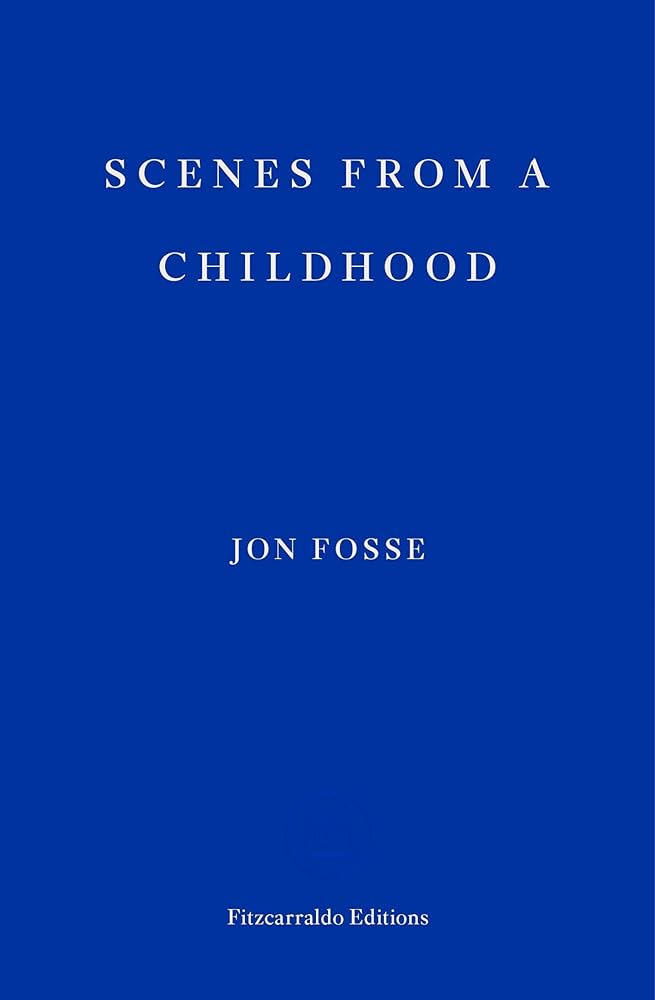
Scenes From a Childhood by Jon Fosse

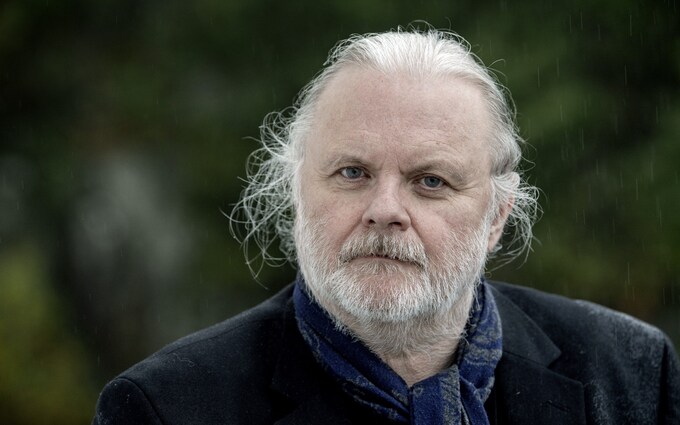
Norwegian writer, Jon Fosse, winner – finally – of the Nobel Prize for Literature, 2023.

Scenes from a Childhood (1994) by Jon Fosse is a collection of short stories, vaguely connected. He has had works published since 1983, established himself in the theatre as the most -performed living European playwright but after 30 something plays returned to fiction because it gave him more freedom. But has since continued to write for the theatre.

He is known for ‘slow fiction’ characterised by simple language and the minutiae of existence. (An online fiction writing guru argues that if you think your prose is becoming boring, don’t speed up, slow down) Scenes from a Childhood is the title of one of the five sections and its just that. Some are very short, just a line, others are longer, but they give the impression of flicking through a photo album.

The shortest is called The Axe:

One day Father yells at him and he goes out to the woodshed, he gets the biggest axe, he carries it into the living room and puts it down next to his father’s chair and asks his father to kill him. As one night expect, this only makes his father angrier.

And Then My Dog Will Come Back to Me is a much longer story, section four. A man is so incensed that a neighbour of his has shot his dog that he plans a murder. Here the prose, first person, present tense, is made up of short sharp sentences in something close to stream of consciousness that is almost breathless to read. You are forced to read as fast as the man’s thoughts come and go. Punctuation is minimal. Dialogue is incorporated into the prose only delineated by line length. But very clear. This forced rushing has the affect of creating tension, suspense even, as his thinking becomes more and more erratic, confused but determined. Will he go through with it? Does he understand the consequences? Will his plans be thwarted? No spoilers here.

It could’ve been written with no punctuation at all like his novel Septology (2022), considered for the International Booker Prize, is reported to be, all 824 pages of it. Let’s be clear here, no matter how long a sentence is, a paragraph, a page, a chapter, a book, there are of course many sentences in the true meaning of the word, just no full stops. If the writer has left them out, us readers put them in. Don’t be afraid of ‘no punctuation’. When we read prose aloud we don’t ‘read’ the punctuation yet it is clear to the listener when one sentence finishes and another begins. So it can be for the reader.

Fosse is a fascinating man. He writes in Nynorsk, a Norwegian dialect from the west coast around Bergen where he was born in 1959. He lives most of the time in the Grotten, an honorary residence in the grounds of the Norwegian Royal Palace, in recognition of his contribution to the arts and literature. Once an atheist, now a catholic, since 2012, it is implied in a recent article by Chis Power in this week’s The Guardian that Fosse was so bewilded by the fiction writing process, “I wrote and I didn’t understand where it was coming from. How do I manage it? It’s coming from somewhere else,” … maybe it came from God. He tells of a mystical – religious? – experience in his youth and used it as the basis for the latest Fitzcarraldo Edition of the novella The Shining released in October this year.

You can buy the ebook or paperback here.

Here is a short video of Fosse talking about writing prose and here a longer France24 news excerpt when Fosse won the Nobel.

Tom Lake by Ann Patchett

American writer, Ann Patchett

I never thought it was possible, but this book, Tom Lake (2023) by Ann Patchett, is a book about happiness. Of course bad things happen, they always do, but the bad things are related from another time well after the bad things, a happy time so the reader is always aware that the bad times were overcome.

I have been criticised before for using the term ‘soft fiction’. Some people think this a derogitory phrase. Not at all. By ‘soft fiction’ I mean there are no car chases, revolutions, earthquakes, spies, murders, or zombies. Plot points are naturalistic which the general reader can relate to. Patchett writes about family and in this book she writes about family to such a naturalistic degree that it feels like memoir; the verisimilitude is so strong. It’s very very good soft fiction.

The happy family are the Nelsons. Lara and Joe, in the general present, live on a stone friut farm in northern Michigan bordering the Great Lakes, Lake Michigan to be precise. They grow cherries, apples and pears in ‘the best’ and prettiest fruit growing district near Traverse City. Their three daughters, Emily, Nell, and Maisie, are adults and home for the late summer to help with the cherry harvest. While picking cherries Lara tells her daughters about her life from High School to her mid twenties when she had a romance with a famous movie actor, Peter Duke. He wasn’t famous then, of course, but the girls want to hear the details of the mother’s story having grown up with bones of the affaire all their lives.

Lara’s story begins with the auditions for a local, New Hampshire, production of Thornton Wilder’s iconic play Our Town. Lara and Peter met in summer stock when Lara thought she wanted to be an actor; she was ‘so good’ as Emily! Circumstances led her to another procuction of Our Town at Tom Lake where Peter Duke was cast as her father, Editor Webb. Their affaire began on the day she arrived only minutes after meeting Peter Duke who told her she couldn’t meet the rest of the company that afternoon because “you’ll be busy.”

What happens at Tom Lake is at the heart of the narrative. One of the things that makes the book so interesting and intringuing is that these two narratives, the cherry picking days and the summer stock months, we know will eventually converge to produce Lara’s happy family. But of course we don’t know how.

The other successful ingredient is Ann Patchett. Her first person narrator, Lara, is a reader’s joy. It’s like she’s leaning towards you, elbows on knees, in a living room in front of the fire when everyone else has gone to bed and telling you things she would’t dare tell anybody else, especially her daughters. You are forever in her thrall and made to feel special because of it.

I liked her The Dutch House (2019) but this is so much better.

It’s the best book I’ve ever read since the last best book I ever read … which was a while ago.

When next you go to your doctor for a perscription for anti-depressants don’t be surprised if it says ‘read Ann Patchett’s Tom Lake.’ It will be cheaper and more effective.

Here you can watch an interview with the wise and wonderful Ann Patchett courtesy of PBS News Hour.

You can buy the book in various formats here, where you can also read a sample for free.

-oOo-

P.S. It was very hard to find a picture of the cover of this book that didn’t look like this, the American cover:

Americans are so keen on overstatement. They don’t go horseriding, they go horseback riding, just in case you’re not sure where to sit. They don’t walk on a footpath they walk on a sidewalk, just in case you might think it’s OK to walk on the road. And they put ‘a novel’ on the cover of a novel just in case it’s a novel you really want to buy, not a cheesecake.

Devotion by Hannah Kent

This novel is about Lutheran migrants from Prussia in the nineteenth century given the opportunity to flee religious persecution and settle in the unknown but free colony of South Australia. I was very interested in this novel as my ancestors did exactly that, as did hers. My great grandfather arrived in the colony in 1851.

Kent’s description of life in the Prussian peasantry as tenant farmers is evocative, and totally believable. The story is told in the first person by the daughter of the family, Hanne, who considers herself dull and plain; her close paternal twin brother having been blessed with all the beauty of their mother. Their life and relationships in the village of Kay is austere as is their religion with its undecorated homes, churches, and liturgy. It is indeed a dour Christian denomination, a result of Luther’s revolt against the hypocritical and outrageous wealth and flamboyance of the Roman Catholic Church. But Kent’s greatest achievement is, without actually saying it, the depiction of the Lutheran lack of demonstrative acts of parental affection, by words or deeds. It’s not that the children were unloved, but they certainly felt unloved, but were therefore forced to read and understand the minute signs of affection that, when delivered, or deduced, brought a child’s greatest joy. It is not surprising that Hanne seeks love and all its demonstrations outside the family. Yes, there is a beautiful romance, its full implications unknown to the pair, that sits in the narrative foreground in stark contrast to their bleak, and later, dangerous existence.

Their village life, the trip to the port of Hamburg and the incredibly treacherous voyage on the open ocean in appalling conditions of overcrowding and health risks is testament to Kent’s novelistic ability.

However at about two thirds of the way through, while still on board the crowded ship, and only days from their destination, Kent made a novelistic decision which, in this reader’s opinion, was a big mistake. No spoilers here but anyone who has read this book will understand what I refer to. One of the writer’s major concerns is to keep in place the reader’s suspension of disbelief: that strange mental phenomena that allows us to become fully engrossed in the written situation, the fear, the joy, the laughter, the tears, the tension, etc, or whatever the characters are going through while at the same time being fully aware, but therefore must disbelieve, that we are sitting in our reading chair by the window overlooking our own garden. At this point in the book my disbelief was restored and in more common parlance, she lost me. I didn’t finish it.

Here are personal and moving reflections from Kent about this book.

You can buy the book in various formats here.