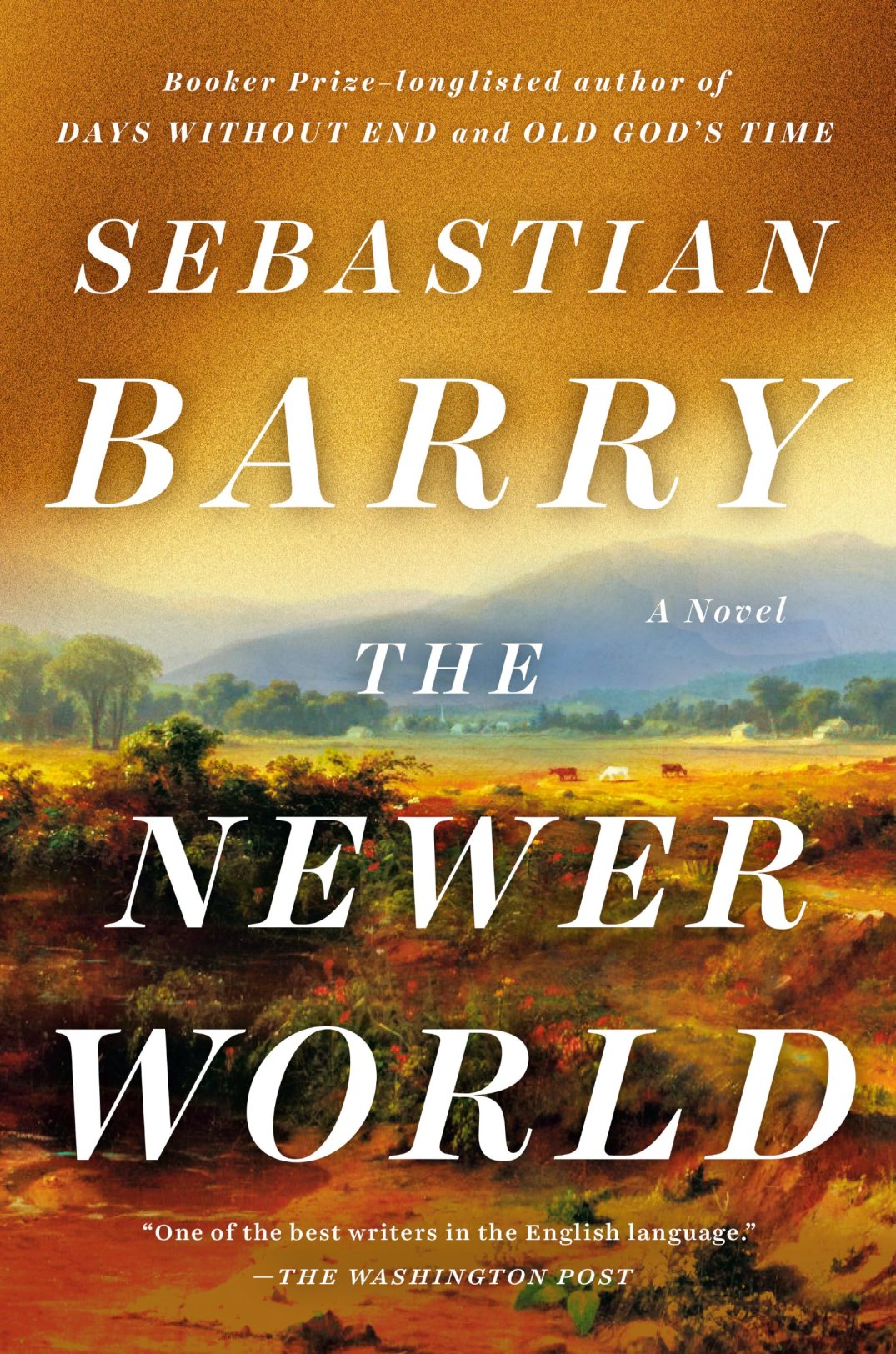
The Newer World by Sebastian Barry

Irish writer, Sebastian Barry.

For an Irish writer in the 21st century, to write a first-person narrative set almost 200 years ago of a coloured slave in Tennessee, before, during and after the Civil War takes a lot of self-confidence, skill and audacity. What impressed me most in the first opening chapters was the tone. When a writer establishes the right tone, wrapped around with vocabulary, of time place and person, and syntax they create the feeling of truthfulness. There’s a word for that: verisimilitude, the appearance of truth, created truth. It’s what every writer strives for.

This is the story of Tennyson Bouguereau, in his own words. Don’t skip his name. I know some readers skip names that may appear challenging. Tennyson Bouguereau, TEh ni sun BOO ga roh. It’s almost a story in itself. It’s certainly a song. He’s a slave in the American south trying, mainly, to stay alive each day in expectation of the next. This is not easy. To look at a white person, let alone brush passed them in the street, can get you killed. There is shocking violence in this book, not detailed, but it’s the inference that takes your breath away. If violence, even tacit violence, on a page is not your thing, this book is not for you.

One of Barry’s formidable skills is creating vivid and often alarmingly truthful prose of someone who has had very little education and so a limited vocabulary. Tennyson expresses himself with the vocabulary he has, gleened mainly from the natural world. He finds himself part of a choir that, surprisingly, tours England. They are warmly received. This is so astonishing to the singers, all black and all from Nashville, that one of them remarks, ‘Oh! So we are not lepers after-all.’ It is Barry’s descriptions of, via Tennyson’s voice, not only their concerts in England, but the music itself that is one of the many writing highlights of this book. After many adventures, even as a soldier, he finally makes it back home to his twin sister, Rosalee … and to the man who raped her. There is still revenge in his heart. But a lot has changed. No spoilers here.

There has been a lot of critical backlash against Barry for, as a white Irish man in the 21st century, writing from the perspective of a young19th century black slave. Is it cultural appropriation? But this is fiction, and if the writer convinces the reader of the truthfulness of what he writes – and for this reader he does – you won’t spend time and effort researching the 19th century Black American Slave milieu to see if Barry is ‘truthful.’ It doesn’t matter if he is, or isn’t, truthful. He has created truthfulness for the purposes of telling this story. Again, this is fiction!

Highly recommended.
Slam-Prose takes the Prize. Again.

paul-beatty
American writer, Paul Beatty

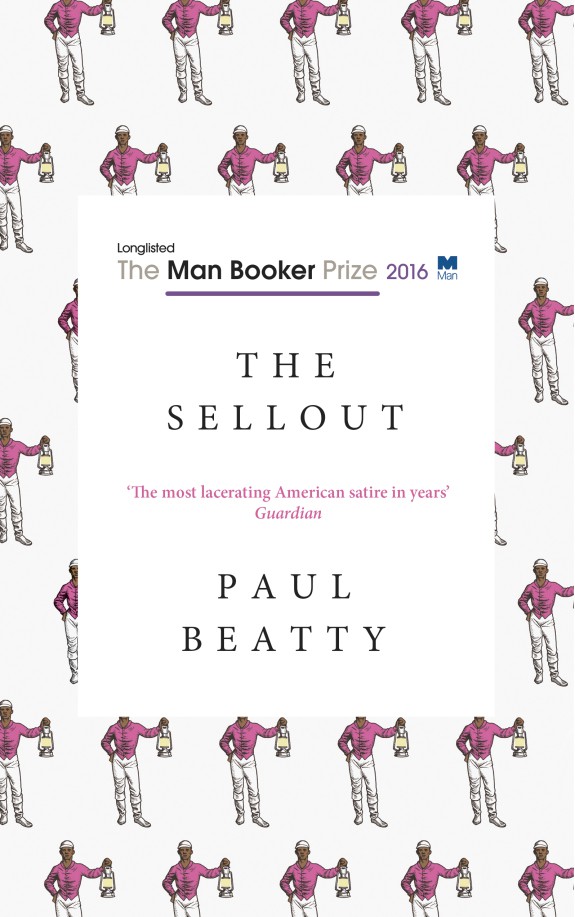
The Sellout by Paul Beatty

Paul Beatty is a 54 year old African American from Los Angeles and the first American to win the Man-Booker Prize (2016) since American writers were included in 2014. He has an MFA in creative writing from Brooklyn College and an MA in psychology from Boston University. In 1990 he became the first ever Grand Poetry Slam Champion of the Nuyorican Poets Cafe which garnered him a book deal. Two volumes of poetry Big Bank Take Little Bank (1991), Joker, Joker, Deuce (1994) and three novels , White Boy Suffle (1996), Tuff (2000), and Slumberland (2008) followed.  The Sellout was also awarded the 2015 National Book Critics Award for fiction.

Rappers and slam poets are never stuck for words

… And on hot 104-degree San Fernando Valley days, when we’re carrying their groceries to their cars or stuffing their mailboxes with bills, they turn and say, “Too many Mexicans,” a tacit agreement between aggrieved strangers that it’s neither the heat nor the humidity, but that the blame lies with our little brown brothers to the south and the north and next door, and at the Grove, and everywhere else in Califas;

they begin a collocated list and then subvert the last item

… Charisma flung back her long straight black hair from her face and took a hit that illuminated the mysteries of the internet, Ulysses, and the American fascination with cooking shows;

foster a slick line in similes

… and comforts you like a lover making your bed while you’re still in it;

manufacture an artistic range of compound adjectives

…My paternal grandmother was mocha-tinged, cafe-au-lait, graham-fucking-cracker brown! How come they never describe the white characters in relation to foodstuffs and hot liquids? Why aren’t there any yoghurt-colored, egg-shell-toned, string-cheese skinned, low-fat-milk white protagonists in these racist, no-third-act-having books? That’s why black literature sucks!;

add a touch of ethnic colour

… … If I was lucky, I’d catch a glimpse of Marpessa, Charisma, and their homegirls holding court at the rear gate, sassy as a brass big band, hula-hooping their hips, chanting Ah beep beep, walking down street, ten times a week …”Ungawa! Ungawa!” That means black power! … I’m soul sister number nine, sock it to me one more time…;

and toss in a joke or ten

… If New York is the City That Never Sleeps then Los Angeles is the City That’s Always Passed Out On The Couch. 

“I hate the act [of writing], definitely,” said Paul Beatty. “I mean, I don’t write much. One book every seven years or so. But it’s slow. When I’m doing it, it does give me a satisfaction. But it’s hard. It’s like how do you string together enough of these little moments where something is happening? That’s a pain in the a—.”

This is odd, or clever, because reading this book impels you to read it as fast as you can as if it was written while standing bare-foot on hot coals. But, then that, I suppose, is what slam-prose is all about.

In an age where a song lyric is suddenly, and some say at-long-last, recognised as literature – thanks to the Nobel Academy, The Sellout finally brings slam prose into the mainstream, and how? By out slam-prosing last year’s slam-prose Booker winner, Marlon James’s A Brief History of Seven Killings by showing James how it’s really done. Where A Brief History … was a literary wank sprukin’ how boring seven pages of no-punctuation thought-stream can really be, The Sellout, o-n-l-y  j-u-s-t makes it over the literary line by having something to say. And no wonder publishing house after publishing house turned it down (What? A book about reinstating slavery? Are you kiddin’ me?!) until finally Farrar, Straus, & Giroux hyperventilated and agreed to take a punt.

If you like a novel to have ‘nice characters’ and a ‘good story’ stay away from The Sellout. If you like clever word-play, African-American street-speak, stand-up with balls, if you’re a book judge or a literary critic, or you like a book you can keep on the coffee table and dip in to when you’re feeling low you’ll lerve this one.

You can download the paper or ebook version here or from Amazon here.