A History of Loneliness by John Boyne

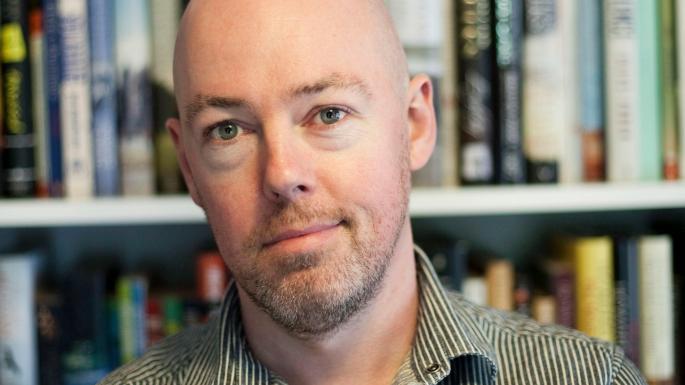
Irish writer, John Boyne.

When you are born into a Judeo-Christian society you are a product of that society whether you subscribe to the belief system or not, and that goes for all societies that have a belief system at their core.

Belief systems have accompanied human existence since the year dot; they predate governments and were in fact human’s first taste of governance. It belies our history to denounce religious belief as irrelevant and purely a product of our human ability to imagine a truth even if that truth doesn’t exist. It would be equally absurd to denounce our artistic nature simply because it is another product of our imagination that also allows us to make up stories.

However, there is a difference, a big difference, between a belief system and the administration of that belief system. It is the synagogue, the temple, the mosque, the church that tells their followers what to wear, what they can eat and when to eat it, how to sing, what the god meant, and what they must do to get to a better place; to be blunt, it is the belief system that sustains its followers but the administration that damages them. And to be blunt again, this book is about how a good priest comes to terms with a bad one.

I’m avoiding using the word evil, which shouldn’t really exist as a noun, it is better used only as an adjective: people do evil things, and at the heart of every evil thing is a need. In some cases that need, and the person’s actions to satisfy that need, are distorted, sometimes outrageously so, but nevertheless a need that needs to be sated. In some cases that need isn’t understood even by the perpetrator of the resulting evil deeds which makes them all the more difficult, some say impossible, to judge, correct, or punish.

A History of Loneliness (2014) is the book before Boyne’s master-work, The Heart’s Invisible Furies (2017) – the book that introduced me to this author – and these two books are the only ones set in his native Ireland.

Obran Yates is an Irish boy with a malleable nature. He enters a seminary in 1972 at the behest of his mother because she tells him he has a calling, and we follow his education with its friendships and frustrations, his family with its joys and tragedies, and his work as a teacher and parish priest with its disappointments and sacrifices. In parallel with this history of priestly life is the shadow of sexual abuse at the hands of priests; a shadow that grows and darkens despite that administration’s attempts to ignore it.

We all know about this blight on our Judeo-Christian society. Names like George Pell and Malka Leifer remind us of it almost nightly between Covid-19 news updates.

The writing is assured, confident, and skillful and Boyne pulls no punches. He has confessed to having a hot anger against the Catholic Church for decades but he has channelled that anger to tell a story about a good priest who like most religious leaders do the right thing and sustain the believers in their care, but Boyne also makes it clear that the old response – don’t let a few bad apples taint the whole barrel – is a very poor one. Why? because the administration of christianity is rigidly hierarchical and fiercely insular in its protection of itself, to the point of betraying then abandoning those in its care. Speaking out against their own is not what priests do. They should and hopefully will.

The belief system says “Suffer little children to come unto me, and forbid them not: for of such is the kingdom of God” and the administration of that belief system has completely reversed and blighted the meaning.

This is a book that needs to be read. It is also a great argument for the power of fiction to tell us the truth.

Here is an interview with John Boyne about A History of Loneliness.

You can purchase the book in various formats here.

Shuggie Bain by Douglas Stuart

Winner of The Booker Prize, 2020.

Scottish – American writer Douglas Stuart

This is written traditionally: it’s not a stream of consciousness (Anna Burns’ The Milkman 2018 Booker prize; Marlon James’ The Brief History of Seven Killings, 2015), it’s not multiform (George Saunders’ Lincoln in the Bardo 2017 ?), and it’s not experimental (Bernadine Evaristo’s Girl, Woman, Other, 2019). Even the quotation marks are traditionally doubled.


What gives Shuggie Bain its uniqueness and makes it so place specific is largely due to the dialogue. Stuart writes 1980’s Glaswegian talk phonetically, and if you take the time to read it as intended, aloud, you get the unmistakable flavour of Glasgow: irreverent, rough, pragmatic, and laugh-out-loud funny. Of course it isn’t funny to the talkers; they’re just telling the truth. The dialogue rolls in your mouth like half-spent jelly beans. All the characters speak like this, except Shuggie. He speaks like a normal boy, which is ironic because he thinks of himself as so far from normal he could be from another planet.

It’s a story of decimated domesticity; a portrait of just how shit-awful human beings can treat the ones they’re supposed to love, and told in vivid, often startling language but always with hard-edged truth where parenting, for all its good, but loosely held, intentions, is no match for the stifling religion-laced society of poverty that only booze and drugs can soften, but of course never does.

It is a portrait of a family steered blindly by the mother, Agnes Bain, who really wants to be steered herself, and who flaunts with glamour, attracts men as easily as they abuse her, and looks down on her skinny unkempt down-at-heel neighbours who in turn, turn their noses up at her and wonder “who the bloody hell does she think she is?”

Her taxi-driving second husband, Shug, moves the family into a newish but too small tenement – but it has its own front door! – and then abandons them. Catherine the eldest who sees quick marriage as the only way out, to South Africa, and Leek, Alexander, the second from her first husband, who wants to better himself but can’t see how. Then there’s Shug’s own, Shuggie (Scottish diminutive for ‘Hugh’). He’s the softest and youngest Bain who is no right, a mammy’s boy with a rag doll called Daphne. 

It turned to the summer holidays, and the road was hoaching with McAvennie children and their cousins and their cousins’ cousins. They were making the most of the two weeks of good west-coast weather, bouncing footballs off kerbs or riding bikes and screaming as they sent great mouse-coloured clouds of slag dust into the air. Shuggie wilted away from them. He felt something was wrong. Something inside him felt put together incorrectly. It was like they could all see it, but he was the only one who could not say what it was. It was just different, and so it was just wrong.

Shuggie practices his walking, to walk like a real boy, to try not to cross his legs when he walks, to try and make room for his cock, as Leek says he must, without his arms swishing as they do; he gets excited about things because his mother, Agnes, wants him to and then when they don’t turn out he’s learnt to accept it. Disappointment isn’t so bad if it’s familiar.

She’s sorry for him. “Why?” he asks. She says “I’m sorry you have a prick for a father.”

Agnes Bain is one of the most tragic, colourful, and alive novelistic characters I have read in a long time. She’s an attractive monster and the epitome of self-destruction. She hurls her stilettos as weapons, breaks windows with rubbish bins, and sets fire to curtains to get her way. Shuggie is her guardian angel and his fierce love for her ties him to her threatening to bring him down with her. She almost saves herself by joining AA, again, but then Eugene, a ruddy bear of a man, who might, she thinks, save her, takes her out, pours her a drink;

“Look, ah’m no trying to get ye drunk. Ah’m trying to have ye try a drink.”

“But why?” Agnes was suddenly very tired.

“Because … Because it’s what normal people do.”

… so she tries a drink, and falls back into her black hole again and becomes so not normal; his ardour wains and he disappears, leaving her desperation battling against her dignity when all she ever wants is another drink.

Whatever Agnes had done now, Shuggie couldn’t say, but they had filthy words for her. New names that sounded dank and foustie; woman’s words that put spittle on their lips and made sucking sounds like a boot in the coal slag. The imaginary moat Eugene had laid around the Bain house was gone now; he rolled it up as easily as a carpet when he left. Now the McAvennie weans hammered their feet against the locked door. They shouted all the familiar poncey names at him. They made slurping kissing noises, then they made sing-songs of kissing noises, and then started the dirty names again.

I’m aware that I might be putting you off because of the subject matter, but the writing supersedes this. It’s inventive, illustrative, surprising, and glorious. Highly recommended.

You can buy the book in various formats here.

Here is an interview with Douglas Stuart about Shuggie Bain from the Greenwich Library in March 2020 before the Booker mailstrom overtook him.

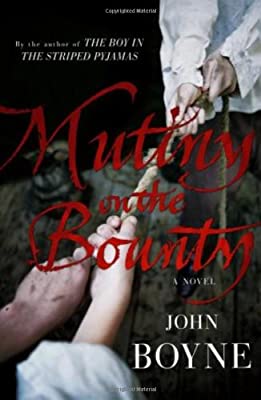
Mutiny on the Bounty by John Boyne

Irish writer, John Boyne.

It’s a rollicking ride of the story that we think we all know, and we do know the basic facts: the Bounty was captained by William Bligh to sail to Otaheite (Tahiti) in 1789; it’s mission was to collect seedlings of breadfruit to then transport to the West Indies as a cheap food source for slaves; his first mate, Fletcher Christian, led a mutiny a few days after leaving Tahiti; William Bligh and a few loyal followers were set adrift in a small launch; they sailed, rowed, and finally made it to West Timor and the Dutch settlement of Kampung; the survivors, including Bligh, were repatriated to England. Later Bligh became Governor of the colony of New South Wales.

But Boyne’ story is told from the point of view of the cabin boy, John Jacob Turnstile, christened unkindly by the crew as ‘Turnip’. He’s fourteen years old, smart, opinionated, and roughly educated; the offer to sail saved him from his life of poverty and as a member of a group of boys in Portsmouth lorded over by the vile Mr Lewis who not only trained them in the art of pickpocketing but also made them available to entertain the particular proclivities of Portsmouth’s wealthier gentlemen.

It’s a fascinating and adventurous account of life on board a small sailing vessel in the sixteenth century and Boyne sticks to the story as history; but what is different is the characters of the main players: Mr Bligh, captain in name only, not in rank, (fact) is a strict commander but kind to Turnip and in return the boy is loyal to him; Christian, a well educated son of a wealthy family fallen on hard times, is a charismatic and handsome specimen who is the only man on board who owns a mirror, uses pomade in his hair, and is noted for his body odour because of his lack of it.

While on Otaheite, Bligh allows the men freedom to reside on the island and fraternize with the natives; many of the men, including Turnip, form relationships with the local women whose culture isn’t burdened with social and sexul mores as is the Englishmen’s.

When two sailors foolishly desert their posts and hide in a remote part of the island with their women, Bligh is outraged and regrets his original leniency and commands all the men to ‘live’ back on board the Bounty. This, in Boyne’s version, is the deed that sows the seed of the eventual rebellion. The deserters are finally caught and Bligh, lenient again, has them flogged, rather than hanged. This is only the second flogging on the entire voyage, something of a record and one that Bligh is extremely proud of, but now, again, regrets his leniency and tries to impose his authority once again.

While on their way west towards the Caribbean the men were so depressed and angry at their having to leave the climate, freedom, lifestyle, and their newfound relationships that their mutinous mumblings are stoked by Christian into mutinous deeds.

Turnip remains loyal to Bligh and joins the other 18 men on the tiny launch Christian confines them to, as they watch Christian’s men sail away tossing all the one thousand breadfruit plants into the sea as they go.

The 42 day journey in an open boat to Timor is harrowing; some men don’t survive and some men succumb to the ordeal even after reaching Timor, so malnourished and mentally exhausted were they that medical assistance couldn’t save them. Turnip survives and we learn of his return to Portsmouth and … sorry, no spoilers here.

It’s an entertaining, accomplished, and a satisfying read. Boyne’s choice of vocabulary and syntax is appropriate to time, character, and social position. The story has been filmed five times and written about more, each with Bligh as the villian; this story is different.

You can buy the Kindle version, along with other formats, here.

The Outside Boy by Jeanine Cummins

American writer Jeanine Cummins

Like a lot of readers I discovered Jeanine Cummins via the controversy over her mega-selling fourth book, American Dirt (2020), which is a flight story of a mother and child fleeing the wrath of a drug cartel – they had murdered her journalist husband and 16 members of her immediate family – in Acapulco, Mexico for the safety of the USA. You can read my blog post about that book here. Latinx writers got very upset that a ‘white’ woman should deem to write, and successfully so, a Latina story; the phrase ‘cultural appropriation’ was used a lot in the ensuing brouhaha. I’m not completely sure why, but I usually tend not to read American writers; British, Irish, European, and Australian writers keep pushing the Americans down on my to-read pile. I’ll need to address this in a future post. A friend kindly sent me the book in the mail during the Melbourne lockdown – I was caught in Australia for most of 2020. I was surprised at how good it is: a cracking good read. Yes, it was a commercial success – helped along, no doubt, by Oprah Winfrey – but the writing is also good, authoritative, and compelling.

My lock-down host then gave me this, Cummin’s second book, The Outside Boy (2010). Although this too is a book set in a different culture to her own: Ireland, and a different time: 1959, no controversy erupted over this one. Cummins identifies as ‘white’, although she has a Puerto Rican grandmother; her husband is Irish which may account for the inspirational spark here.

It is a coming-of-age story of a 12 year old boy, Christy Hurley, a tinker’s son, a traveller, a pavee, told through his eyes, his words. The mashed grammar, misplaced syntax, and sometimes literal spelling all add up to the acceptable sound of a traveller’s boy, a gypsy youth who sees the world without any city notions of blame, cause & effect, and obligation.

“She’s my mother,” I said, and even though I was whispering, my words fell into the quiet room likes stones into a pond. They rippled out til I could see them on Missus Hanley’s face. She knew the weight of them words; she took them serious.

Cummins explains in an Author’s Note that she has not been entirely true to the traveller’s voice; a truly authentic pavee voice “would have rendered the book almost impenetrable to the American reader.” Her close writing and vocabulary choices are fundamentally apt and effective, although I think an unschooled gypsy boy in 1959 Ireland would not know the words ‘precarious’ or ‘choreography’, but this is a small point.

Christy is motherless. All he has of her is a mysterious photo from a partly burnt newspaper article. She died at his birth. “I killed her!” he often says. His father is frustratingly mute on the subject of the boy’s mother, but finding the truth of her becomes his, and the book’s, quest and narrative force.

The colourful world, language, and culture of the Irish travellers are major reasons that the book is such a joy to read. Like all good fiction a novel can take you out of your own world and show you how other people live, think, and carry-on regardless.

This is a highly entertaining and moving work. Highly recommended.

Here is a short video of Cummins talking about the inspiration and the writing of The Outside Boy.

You can buy various editions of the book here.

Contempt by Michael Cordell

American novelist and screenwriter
Michael Cordell

Text courtesy of TCK Publishing.

There was a time when eBooks were thought to be the death of paper books, just like television once  was thought to be the death of movies. However, on both occasions  new ways of telling stories just slotted in alongside old ways of telling stories and all that happened was consumers were given more choice. Not such a bad outcome.

Back in 2019 Colm Toibin said, “I can’t do thrillers and I can’t do spy novels. I can’t do any genre-fiction books, really, none of them. I just get bored with the prose. I don’t find any rhythm in it. It’s blank, it’s nothing; it’s like watching TV.”

Yes, genre-fiction can be like watching TV, but writing ‘like watching TV’ is a skill in itself that some writers do well – and we’ve seen a surge of good dramatic TV writing over the last decade or more – and some writers do badly; Cordell does it well. He should know: he’s been teaching screenwriting for the past 15 years.

Thane Banning, a real estate lawyer, is on death row after being found guilty of a crime he didn’t commit. After five years he is released on a legal technicality, but soon finds himself defending a man, an innocent man, up on a murder charge, just like he was .. but the sweetness of the case, for Banning, is that the prosecutor is the same man, Bradford Stone, who put him behind bars. Win this and Banning gets to see Stone’s downfall.

It was a risk for Cordell to leave the backstory – the reason why Banning was on death row in the first place – so late in the set-up, almost a third of the way in. But there is a lot of the personal backstory to establish first, and its importance to the plot keeps the reader interested. Besides his old crime is intricately linked to the new on. No spoilers here.

Banning, a novice criminal lawyer, doesn’t start his new role well: everything, personal and professional, goes wrong and before the case really heats up Banning is heading for disaster. But his contempt for the legal system lets his determination and imagination fly. He decides to work by his own rules … hear the music thump and swell as Banning goes it alone.

This plotline is expected for such a genre piece, but Banning’s hurdles aren’t cliched ones, neither are his metaphors; standard fare for crime prose since Raymond Chandler was a pup.

We stay with Banning all the way, like an imp on his shoulder. However, unusually, even the imp gets left in the dark which gives the denouement, that little post climatic tie-up, a taste of exceptional unreality; but that’s a minor point.

This is a quick, easy, and entertaining read. What’s the ‘page-turner’ appellation for an ebook? A page-swiper? Yeah! Escapist fare.

You can find the link to the book here.

Here again is the link to TCK Publishing for more of the same.

And here is the author’s website.

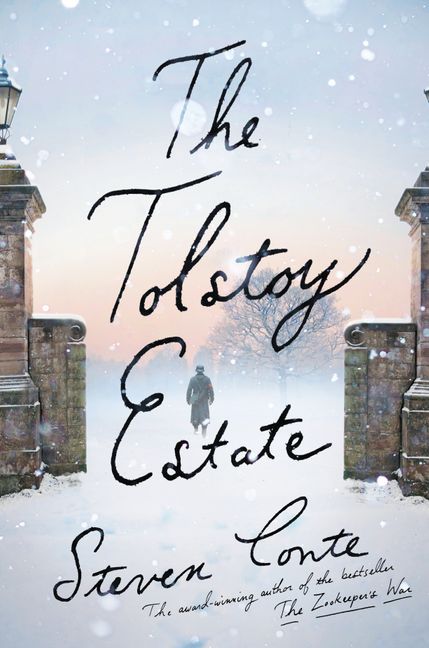
The Tolstoy Estate by Steven Conte

Australian writer, Steven Conte

Steven Conte hit the headlines in 2008 when his novel, The Zookeeper’s War won the inaugural Prime Minister’s Award for Fiction, which, by the way, was won last year by Gail Jones.

That debut novel was set in Berlin during World War II and this one, The Tolstoy Estate, is also set during that war; this time in the winter of 1941 when a German Medical Unit is deployed to the Russian front where it sets up a field hospital in a vast country estate, Yasnaya Polyana, just south of Moscow, that is, in fact, the country home, and burial place of Count Lev Nikolayevich Tolstoy, better known to us by his German appellation, Leo Tolstoy. The novel’s protagonist, Dr. Paul Bauer, is a Tolstoy fan and one of the senior surgeons of the unit. The estate is lorded over by the head custodian, and Russian firebrand, Katerina Dmitrievna Trubetzkaya. She is a formidable character, a writer herself, and a masterful creation. With her sharp tongue, hardened Russian loyalties, and fierce dedication to the great novelist she becomes a major thorn in the side of the German officers; as if they haven’t enough to deal with: the constant stream of fighting men with debilitating, challenging, and horrific wounds, their isolation, lice, and, most of all, the brain-numbing and life-threatening cold (-43°C). It defeated Napoleon and it would defeat Hitler, as Katerina Dmitrievna is continually telling them.

Conte immerses the reader in the life of the hospital, the officers and staff, their foibles and idiosyncrasies as well as their work at the operating tables. His description of a thirty six hour non-stop operating shift, where life and death tussle with each other like naughty children at play and that seemingly will never end is one of the most vivid pieces of writing I have read in a very long time.

As relationships develop, split, and reassemble it is the one between Paul Bauer and Katerina Dmitrievna that gradually pulls our focus. They have a shared love of Tolstoy and talk often about him and his work, but of course not often enough, especially for Bauer. The stability of the unit is severely challenged by the interactions between the German medical team and the Russian staff, which further complicates Bauer’s growing affection for the prickly Katerina Dmitrievna.

And then at chapter twelve, just over half way through the novel, Conte pulls a swifty. Suddenly we are twenty six years into the future, in 1967, and Katerina Dmitrievna is in Helsinki writing to Paul Bauer in Nuremberg. And so begins another narrative stream, an epistolary one, that, for the rest of the novel, runs in parallel with the harsh winter’s tale at Yasnaya Polyana in 1941.

Yes, we know that they both survive the war and we think we know what then may have happened, or even what might, but Conte is not such a formuleic writer for it was just five pages from the end that I let escape a loud and unwanted, ‘Oh no!’ as I raced to read what had happened. (No spoilers here)

Great stuff!

I loved this book and I hope we don’t have to wait 12 years for the next Conte work.

Here is an extended interview with Steven Conte about the writing of The Tolstoy Estate from Avid Reader Bookshop channel.

You can find out more about Steven Conte and his books here.

The Tolstoy Estate can be purchased in various formats here.

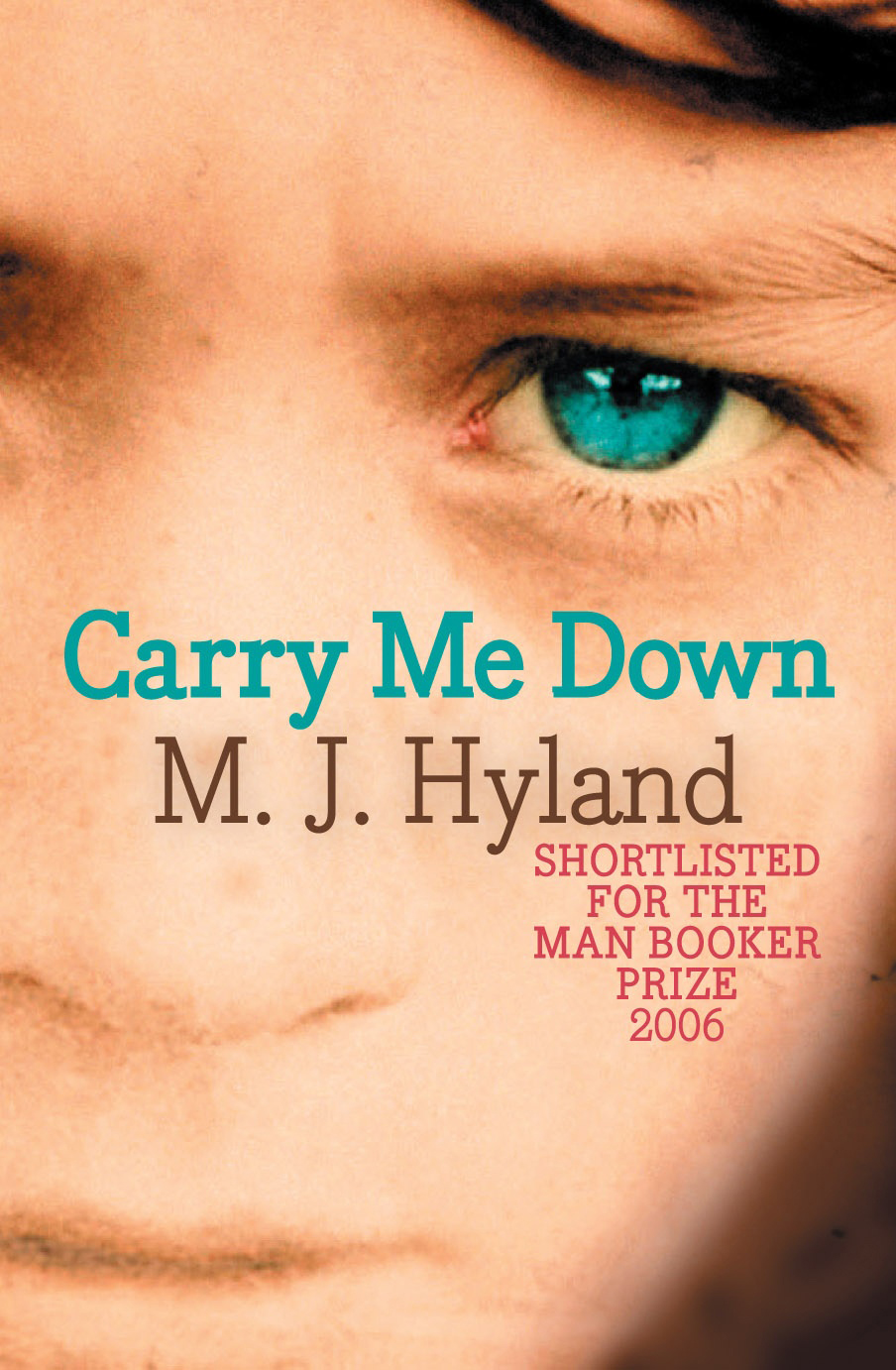
Carry Me Down by M. J Hyland

Maria Joan Hyland, born in Britain in 1968, educated in Australian, now teaches creative writing at the University of Manchester. UK.

Children often experience the world unfiltered. Their reactions to it can be mismatched, but they can also be honest and true: free from expectations, assumptions, and unconscious influences and gossip. Children tell lies from an early age, around three, but they usually don’t recognise lies in others until much later, usually due to an existential crisis: the destruction of childhood myths: the Tooth Fairy, Santa Clause, and the Easter Bunny.

John Egan, the 11 year old narrator of M. J. Hyland’s Carry me Down (2006) has just discovered he has a unique talent: he can recognise lies. He has physical reactions to them: vomiting, burning ears and he keeps a diary called the Gol of Seil. He is tall for his age and has an uncommon attachment to the Guiness Book of Records – maybe he can get into it with his lie-detecting ability – and a not-so-uncommon attachment to his mother. He stares at her too much. He lives with his parents, Michael (Da) and Helen (Mammy), his paternal grandmother (Granny), and a cat called Crito. But something is amiss in this cottage in southern Ireland.

The writing, in the present tense, is sparse and the syntax simple. Statements are bold and John notices the slightest detail.

She slurps her tea and smiles at me. She sticks her tongue out to greet the cup before each sip and, after she sips her tea, she smiles at me. There is only her slurping, and so much silence between us that, when a lorry passes, I am grateful for the noise and the distraction.

It becomes clear that the world and the people in it that John describes is distorted. John is not a reliable narrator; but then what 11 year old is? The reader needs to read between his lines to interpret what is really going on. This is one of the unexpected joys of this book.

Although John is an excellent lie-detector he self-justifiably becomes very good at telling lies himself until the contortions he puts himself through to balance the lies he hears and the lies he tells threaten to unseat his mind.

There is an ever-increasing feeling of unease. John hears later about the confrontation between Da and Granny which causes her to kick her son and family out: John and his parents move to Dublin into a bleak tenement where graffiti splatters every available surface and children defecate in the lifts.

But John’s discovery of another lie and subsequent truth splits the family. What almost unhinges the boy is that it was the truth that did the damage, not the lie. And the damage proves almost fatal. No spoilers here.

Slap-dash parenting of a willful and sensitive child can have devastating effects. The three adults, however, come to their senses, of sorts, and there is a feeling of a disaster averted, a life pulled back from the edge. However the final image is one of male friendship in a toy-like place where two men seek comfort in the domestic: rest in a warm place with tea to drink and toast and cakes to eat.

And the fire inside will warm their hands and faces. The door is open.

The ending is enigmatic but creates a feeling of the unknown; John may get another chance to be the grown-up he deserves. As with all teenagers, the door is open … although not for long.

M. J. Hyland has only written three novels and a small collection of short stories. I’m on a search for her first, How The Light Gets In, (2004) and latest, This is How (2009). A fourth book, Even Pretty Eyes, rumoured to have been released in August this year is now due for release, according to Amazon, in 2022. Her health may have something to do with the delay.

Here is her essay, Hardly Animal, which she wrote in response to being diagnosed, in 2008, with multiple sclerosis.

A short story, Even Pretty Eyes Commit Crimes, was shortlisted for 2012 BBC International Short Story Award. You can read it here.

M. J. Hyland answers a question: can writing be taught?

You can purchase M. J. Hyland’s books here. I urge you to read any of this writer’s work.

The Poisonwood Bible by Barbara Kingsolver

American writer Barbara Kingsolver

On Friday, November 16, 2018 John Chau a 26 year old adventure blogger, beef-jerky marketer, and evangelical missionary walked onto the beach of the isolated North Sentinel Island, in the Andaman Sea, east of the Bay of Bengal, southern Asia. He clutched a fish and a copy of the bible. He hollered at a group of Sentinelese natives, ‘My name is John. I love you and Jesus loves you.’ The natives strung arrows in their bows and he panicked slightly and threw the fish to them. An arrow pierced his Bible. He frantically paddled in his kayak back to the boat and the fisherman he had paid to bring him to the island. He was fearful but mainly disappointed. ‘They didn’t accept me right away.’ He returned the next day with the fishing boat out of sight thinking it was the boat the natives feared. He kayaked back to the same beach and attempted again to make contact. He was killed and his body has never been recovered. His father believes his son was a victim of an extreme vision of Christianity. John Chau has been called a martyr, an innocent child, a dumb American, and a deluded idiot.

John Chau’s mistakes that led to his death were a result of cultural ignorance, arrogance, hubris, and misguided religious fervour; and these are also behind the motivation of Kingsolver’s character Nathan Price, around which her novel The Poisonwood Bible turns in ever-dangerous circles. He attempts the same contact and Christian conversion of the villagers of Kilanga in what was then, in 1959, the Belgian Congo, but unlike Chau, Price takes along his wife, Oleanna, and their four young daughters: Rachel, Leah, Adah, and Ruth May.

John Chau, according to his family, ‘“loved God, life, helping those in need, and had nothing but love for the Sentinelese people”. Nathan Price had a similar belief in God that was so profound that he was embarrassed because God must be watching him even while his four daughters were conceived.

The story contained in the Poisonwood Bible is told only by the Price women. Oleanna opens every section but it is the girls who alternately tell the story of their continuing life-threatening existence; the villagers they befriend, the events that buffet their lives and the poverty they are forced into.

Each daughter has her own distinctive voice; this is Kingsolver’s greatest strength. The language is rich and revealing, defining and luscious. Rachel, the eldest, 15 at the beginning of the novel is self-centered and obsessed with her looks, her prised possession, a mirror. Adah, a twin, has a passion for palindromes, and has a congenital defect: the right side of her body ‘drags’; I was born with half my brain dried up like a prune. However she is witty and intelligent, opinionated but envious of her twin, Leah, who is the most outspoken, a tom-boy who worries about her salvation, and blames herself for Adah’s affliction. Ruth May. the baby, is inquisitive and observant, and sees the world as a baby might: innocently.

Seen through these five facets, the world of the Price women is multi-dimensional, exotic, and full of adversity: the natives, the forest, the river, the wildlife, the ants, the rain, the drought, and their ultimate adversary, the man, husband and father, who governs their bodies and minds. There’s no room for the devil here, not with Nathan Price around.

But it is not all doom and despair, there is childhood play and truthfulness and light-hearted growing up, but their inner lives, told to us by each narrator, tells of an existence separate, but true, from the one they have to present to their father, their supposed protector.

The Poisonwood Bible, her fourth novel published in 1998, is Kingsolver’s best known work. It as an ambitious and most assured novel. Nathan Price is almost a god-figure, rarely present, but his shadow hovers over and dominates the lives and thoughts of his women and their actions. Just like his God, he is tyrannical.

Strange to say, when it came I felt as if I’d been waiting for it my whole married life. Waiting for that axe to fall so I could walk away with no forgiveness in my heart. Maybe the tragedy began on the day of my wedding, then. Or even earlier, when I first laid eyes on Nathan at that tent revival. A chance meeting of strangers, and the end of the world unfolds.

The family seems doomed as long as it stays together, and out of sheer necessity, the women, but not all of them, save their own lives by putting themselves in even more danger.

However, ultimately this is not a book about daughters living with the day-to-day dangers triggered by a deluded dumb-American father; it’s more about how the daughters survived their deluded dumb-American father – and their mother who was powerless to stop him. Children are resilient, they survive, damaged perhaps, but they survive as best they can:

You can’t just sashay into the jungle aiming to change it all over to the Christian style, without expecting the jungle to change you right back.

The similarities between Kingsolver’s Nathan Price and Lucy Treloar’s Stanton Finch (Salt Creek, 2015) are pronounced: god-bothered men who put their loved-ones at great risk all for the sake of a belief system they learned, unchallenged, from their own parents.

I know many have read this book, but if you haven’t, do.

There are many free videos, short and long, on YouTube featuring Barbara Kingsolver talking about her work. Here is a short piece where she talks about the power of fiction.

You can buy the book, in various formats, here, along with her latest, Unsheltered (2018).

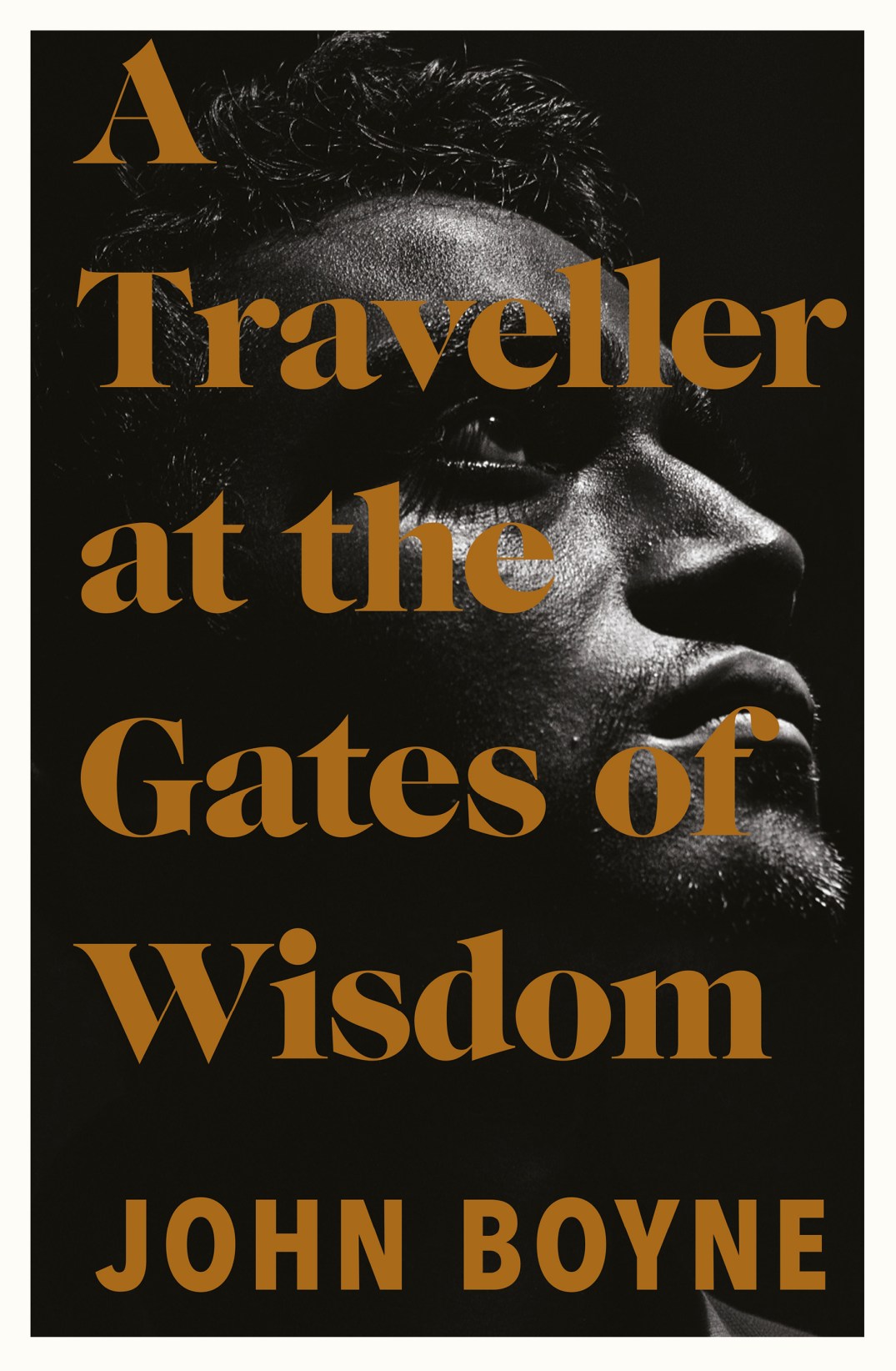
A Traveller at the Gates of Wisdom by John Boyne

Irish writer, John Boyne.

John Boyne has in his novelistic career stretched a life over two and a half centuries (A Thief of Time, 2000); channelled Buffalo Bill (The Congress of Rough Riders, 2001); Captain William Bligh (Mutiny of the Bounty, 2008); ghosts in 1860’s Norfolk, (This House is Haunted, 2013); Gore Vidal (A Ladder to the Sky, 2018); set the action in the Winter Palace of the Tsars (The House of Special Purpose, 2009); World War 1, (The Absolutist, 2011, Stay Where You are then Leave, 2013); 1930’s London (Next of Kin, 2006); Nazi Germany (The Boy in the Striped Pyjamas, 2006); Ireland and the Church (The History of Loneliness, 2014, The Heart’s Invisible Furies, 2017); so a novel that stretches a life over two millennia and includes historical people and events we recognise is really just another slice from the vast John Boyne universe: testament to his wide interests, audacity, and skill. He is certainly ambitious. 

Here in A Traveller at the Gates of Wisdom the unnamed narrator born in AD 1 has the novelistic trait of NOT aging with the years so that in AD 214, as he continues his own story, he is 10 years old.  Although events in the narrator’s life remain in his history no matter where the story takes him, and the story take him all the way to 2016 and on to 2080.  

However, there is a feeling of A Traveller … being squeezed into the gambit that Boyne has prescribed himself. A person throughout their lifetime doesn’t exist alone. Primarily it’s to do with the family: these people travel along with you. Boyne overcomes this by deeming that if the  protagonist linearly exists across centuries then his parents and siblings must also; names, except for their initial capital letter, change to suit the location; hence his brother Junius – in Palestine AD 1, becomes Jouni – Turkey AD 41, Juliu – Romania AD 105, and so on. Events also stay in our memory and can have repercussions in later life, these too are noted but the names of places and the principle players change similarly. This is acceptable and can be easily assimilated into the readers’ understanding of what the writer has defined; but all this has a cumulative effect: a distancing from the protagonist. And when magic, or is it divine intervention? intercedes to save our hero’s life – Greece AD 1223, an even broader distance is put between reader and protagonist; a protagonist that up to this point had been a centre of rationality, atheism and, to some degree, morality.

This did not change my enjoyment of the book, it’s still a fascinating, and unique read, but that enjoyment is skewed from my other experiences of Boyne’s work. There is not the same engagement I felt with the characters of his other work. This is a different book. So what is Boyne’s point here? 

Someday, we may build towers taller than the eye can see, fly through the sky on wings, even live among the stars. But know this much; the things that surround us may change, but our emotions will always remain the same.


Humans will always be human.


The cause and spread of the Black Death (The Plague) was not known until the 19th Century, certainly not in the 14th as described in the chapter Norway AD 1349. But, the reader can object to these aberrations, like little jumps – Hey! Hang on a minute! – or accept that the universe of the book need not be exactly the universe of the reader. However, the more the reader has to adjust their universe from the one expected the more removed they become from the text and the less chance of engagement.

I haven’t yet read all of Boyne’s work – that’s an on-going pleasure – but A Traveller at the Gates of Wisdom is not the book to knock The Heart’s Invisible Furies (2017) from the No 1 spot of the best of Boyne’s work; nor A Ladder to the Sky (2018) from the No. 2 position … in this reader’s opinion.  

You can buy the book, in various formats, here


Social Distancing

by Michael Freundt, a short story.

‘Don’t come near me!’ she screamed.


He struck her hard. With a fist to the face. She fell against the side board with a thud. The sound of breaking glass. Her mother’s set of champagne flutes. The ones with the gold trim. She staggered back instinctively as if she was to blame. She thought of her mother. So this is what she meant. She took another blow to the side of the head and fell to her left. She saw flashes of light and then dark, then bright again. She used a small door knob of the side-board to haul herself back to her feet; back into his range. Why did I do that? He hit her again. Harder this time. The door was still open a bit. She fell against it and heard a rib crack. Knives rattled together like rocks in a can. It took her a moment to focus. She knew she didn’t have much time. She yanked open a drawer. She reached inside.

‘What are you doing?’ he said.

She reached further in among the knives.

‘You wouldn’t dare.’

She pulled out a gun, turned and pointed it at him. That made him stop.

‘What’s the fuck!’

‘Stay away from me,’ she said. Her voice cracked.

‘What’s that!?’

‘What’s it …?” More words were hard to say. She swallowed, blinked, and wet her lips. Her left eye throbbed. ‘What’s it look like?’ She could feel her heart bumping in her chest. She wanted to run.

‘Where did you get that?’

‘Does it matter? Get away from me!’

He took a step back. She felt the taste of rare control.

‘What are you doing with a gun in the house?’

She thought this was funny. ‘Well, considering…’

‘Whose is it?’

‘Mine.’

‘Fuck!’

‘I can use it!’

‘You don’t know a fuckin’ thing abou…’

‘Try me,’ she said mildly. She could see he was unsure and she tasted that feeling again. She straightened her back. She winced and wondered if she could really go through with it.

‘Give it here,’ he said like a Dad.

‘No,’ she said like a child.

He looked at her.

She held his gaze. She swallowed.

‘Is it loaded?’ he asked.

‘ … I don’t know.’

He stepped towards her.

‘Maybe.’ The sound and feel of that word surprised her. She felt she had the upper hand. It occurred to her that he wasn’t in control as much as she had always believed he was. She had given in to him on so many occasions. Even the choice of this side-board; it was too high she had always thought. Why did I do that? It wasn’t just the gun, it was him. He faded a bit. But if the gun wasn‘t loaded everything would change. There was only one way to find out.

He stopped. ‘You kept it there? In the cutlery drawer?

‘You never open the cutlery drawer.’

She could see his anger rising again.

‘What the fuck is my wife doing with a gun in the house, for fuck sake!?’

‘Just as well, ay?’

‘You fuckin’ bitch,’ and he moved.

She lowered the gun and fired.

The sound was weak. Surprising. It didn’t fill the room. It hurt her ribs. She thought for a moment she hadn’t done it right. But yes, it was loaded.

He screamed and dropped to the floor holding his knee. Blood oozed between his fingers. His howls filled the room.

She thought of pigs.

‘You fuckin’ shot me!’

Yes, I did. Yes. That’s what I just did. She repositioned her fingers around the thing. It was warm now. Still pointing it at him. It was her only help. Her life-line.

His screams became moans.

‘Get back from me. Get back.’ She took a step forward from the sideboard but standing on her own felt uneasy. ‘Get back!’

He managed to sidle his arse on the floor and retreated from her.

She took a step back to lean against the sideboard. She reached into her jeans pocket and pulled out her phone. Her breathing was shallow and quick. She felt a little dizzy. With flickering glances at the man writhing and groaning on the floor she dialled a short number.

‘Yes,’ she said. ‘The police. Yes. An ambulance. Yes. I’ve just shot my husband. What? No. He’s fine. There’s a bit of blood.’ She told them her full name and address and put her phone on the side board. She tried to control her breathing slow it down, breath deeper.

‘You’ll go to jail for this,’ he managed to say.

‘Probably.’

‘Why the fuck did you go and shoot me!?’

‘I didn’t kill you,’ and she raised the gun, pointing at his head. ‘I could’ve.’ And then with an intent and attitude she had never used before. ‘Can you feel it?’

‘What?’

She waved the gun slightly to the left and fired into an armchair. The sound was week and tinny again. Like it was before. Maybe that’s how it is. Maybe that’s what a gun sounds like. She waved the gun back to his head. ‘Feel it now?’ She could see that he could and it felt good to her. ‘Now you know what it feels like.’

‘You’re fuckin’ crazy!’

She gave a little harrumph and said quietly. ‘Now I know what it feels like.’ She smiled.

‘You were havin’ it off with that sparky bloke.’

‘What? No.’

‘Susie Driscoll told me.’

‘She saw me fucking the electrician? No. She saw me talking to Jim in the car park.’

‘Oh, it’s Jim now, is it?’

‘Yes. That’s his name. Jim. He offered to load my boot for me. I said thanks but it’s OK. He told me about his little boy’s questions about the virus. They were apposite and cute.’

He gave a grunt. ‘You were flirting.’

‘I smiled at him, yes.’

‘What else?’

‘Nothing.’

‘I don’t believe you.’

‘Not my fault.’

‘Well this is your fuckin’ fault. You shot your husband in his own living room. In the knee! For Christ’s sake. I’m a fuckin’ rugby player!’

‘There’s no more runball until the end of next month; and that’s even in doubt.’

‘Stop calling it that. You don’t know what you’re talking about.’

‘I don’t care.’

‘You need to see a doctor.’

‘You’re the one gushing blood all over the floor.’

‘A psychiatrist. You need to see … Did you plan this? So you could be with Jimmy boy?’

‘You’re such an idiot. Why would I plan a punch to my head? Three punches to the head. Ha? How would I plan such a thing?’

‘You’ve had a gun there all this time. Loaded.’

‘Mum gave it to me.’

‘She’s always hated me.’

‘She doesn‘t hate you. Just like she doesn’t hate Dad, despite what he did to her.’

‘If she’s anything like you, I don’t blame him.’

‘You’ve never blamed him.’

‘Can you get me some pain killers?’

‘No.’ Her right arm was aching. She let it drop a little.

He moved towards her and she pointed it at him again with added intension and used her left arm to help her hold it out.

‘Getting tired?’

‘Yeah. I can use my left hand,’ and she took her right hand away and shook it. ‘But I’m a little shaky with my left, I might miss your other knee and hit something else.’

‘ … let’s just think this through. What about the boys?’

‘You’ll have to look after them.’

‘I’ll be in hospital.’

‘For a few hours maybe. You’ll be home before the boys get back. You can hop from room to room. You don’t need legs to cook, do the washing, do the ironing.’

‘I don’t know how to cook.’

‘Turn on the gas. Put water in a pot. Add beans. Wait.’

He dismissed her sarcasm with a ‘Phut … What if I’m not back?’

’You’ll have to call someone. Your sister.’ She looks at her watch on her right wrist and moves the gun back to her right.

‘The police aren’t coming.’

‘They’ll be here.’

‘You’ll going to jail.’

‘Oh, did you hear on the news this morning? The jail’s overcrowded making social distancing impractical so they’re moving low security prisoners into hotel rooms, and anyone on remand will be placed in isolation in a hotel room too. I’ll be in The Intercontinental for two weeks courtesy of the government, ordering room service, and watching my own Netflix choices.’

‘If the police were coming they’d be here by now.’

‘They’ll be here soon.’

‘I could press charges.’

‘So could I.’

‘For what?’

She used her left hand to touch her left eye and cheek. She could feel its heat and her vision through that eye was now blurry. It must look like spilt blueberry trifle. She curled her fingers in to point at her face.

‘What’s that compared to a gunshot wound?’ he said.

‘I was protecting myself.’

‘A little lop-sided don’t you think?’

‘No. What more were you capable of?’

‘Oh please. I was upset.’

‘I was bashed because you were upset.’

‘I thought you were screwing the electrician.’

‘I wish now I was.’

He pointed at her. ‘That’s evidence against you. When I’m asked to give evidence in court I’ll say you wanted to screw the electrician. You told me so. I wasn’t wrong, you see?’

‘It was a sentence of conditional wish fulfilment, not admission of an action but a desire that something could happen but didn’t, knowing what I know now.’

He sighs. ‘Spare me.’ And then, ‘I’ve got to get attention to this knee.’

‘They’re on their way.’

They looked at each other, each daring not to look away. Being alert. Everything in the past was a blur. It was like their lives had appeared out of nowhere. They began from this moment. How did they get to this? This moment of no past and no idea of the future. Time seemed stretched. How long since either had spoken?

He moved onto his other hip. She watched him closely, gun ready. He used his left hand to get his phone out of his pocket. ‘I’m going to make my own call. Call an ambulance. To report a shooting.’ He held his phone up. ‘Here you are in our family home with a gun pointed at your wounded husband.’

She shot the phone out of his hand. The sound disappeared as quickly as it had erupted.

‘Jesus!’ Blood appeared on his fingers. ‘Fuckin’ hell!’

‘I’ve got three left. Just stay where you are. And wait. And while I’ve got the floor you can tell me about you and Susan Driscoll.’

‘Don’t be ridiculous.’

‘We’ve been locked down here for three weeks. Jigsaw puzzles. YouTube. Rugby’s Best Tries. Bananas in Fucking Pyjamas. We haven’t been out of each other’s sight. Now that the boys are back at school you thought it would be good time to bring it up. Reinforce yourself. Mm? How could Susie, not Susan but Susie Driscoll, you said, Susie! How could she speak to you about … You’ve been calling her on the loo. Haven’t you?’

‘I know what you’re doing,’ he said but she could see he was rattled. He wouldn’t look at her. He sucked the blood from his fingers.

‘So do I. I know exactly what I’m doing.’ She tried hard for her face to reflect what she wanted to believe. 

‘Let’s be sensible here. What are we going to tell the police?’

‘The truth.’

‘And they’ll believe you?’

‘I shot you. Deliberately. In the leg – not in the head or the chest – in the leg, to stop you hitting me again. What’s not to believe?’

‘It’s the end of our family.’

‘Probably, yes.’

‘Maybe you should’ve thought of that before you shot me.’

‘Maybe you should’ve thought of that before you hit me.’

‘I’ve hit you before.’

‘I didn’t have a gun then.’

‘We got over it.’

‘Did we? You may have.’

‘Sometimes men hit women.’

‘Oh Yes. It’s a psychological attribute. I forgot. Like a dick.’

‘And we have reasons.’

‘So did I. And my reason is stronger than your reason.’

‘Really?’

‘I was defending my life. You were defending your masculinity.’

This had never occurred to her before. She’s never been in this situation before. But now it all seemed so clear.

‘You won’t be able to see the boys.’

This knocked her. ‘… I’ll have visiting rights.’

‘Only if I let them.’

‘What are you going to tell them?’

‘That you shot me! Twice!’

‘And when they ask why, Why Daddy? Why did Mummy shoot you? What will you say?’

‘That you don’t love me anymore, that you were in love with Sparky Jim and wanted me out of the way so you can be with him.’

‘That’s not true.’

‘You won’t have the opportunity to say so.’

‘So our two sons have become rewards in a game.’

‘What does that mean?’ He could see she was wavering. ‘That’s what you always do, rub my lack of a degree in my face. Sprout some literary jargon that means shit when you come down to it. I speak plainly. The boys are mine.’ He could see water in her eyes and saw his chance. ‘Look. We’ve got time to agree on a story. I won’t press charges and you won’t press charges. I’ll have a few hours in hospital and maybe you’ll have to give a statement or something. We’ve been cooped up here at home for three weeks. We got on each other’s nerves. A … a …. a little game developed without the kids around, you know, what you read about, some kind of kinky game thing. You know. And if we support each other we can go on as before. We just have to agree. Agree and stick to it.’

‘Same as before.’

‘Yes. Same as before. The four of us. Together with the boys. Otherwise you’re on your own. And you’ll never see your kids again.’

The two adults stared at each other. They heard cars outside coming to a stop. Footsteps on the path, then nothing on the grass, then louder on the porch. Then an urgent knocking on the front door.

‘Open up! Police!’

‘Coming!’ she called out.

‘Sweetheart…?’

She broke her gaze from her husband, walked to the front door, opened it, turned the gun around and handed it to a gloved police officer. ‘He’s in there.’

Several officers walked past all wearing masks and gloves. One of them, a female officer, took her by the arm. Para-medics dressed all in white plastic like attendants in a nuclear power plant followed with equipment and a stretcher.

About twenty minutes later as he was being wheeled to the ambulance and she was being led to the police car she turned to him and … she thought of telling him about the lasagne in the freezer but said, ‘Jamie doesn’t like tomatoes in his sandwiches and Russ won’t eat overripe bananas.’

-oOo-