The Madness of Art


Author, Author by David Lodge

david-lodge-pic
British Writer, David Lodge

When the Irish writer, Colm Tóibín, was working on his (masterpiece?) The Master (2004), about the American-English writer Henry James, he visited Lamb House, HJ’s East Sussex home in the town of Rye, and met 3 other writers all doing exactly what he was doing: researching HJ. There has been a resurgence in interest in Henry James usually considered an obtuse fiction writer but a recognition that his most alluring characteristic is that he was, like most literary greats, a writer like no other. The English writer, David Lodge, also produced a book on HJ in 2004 which seemed to have sunk from view since Tóibín’s effort was so successful: it was shortlisted for the Booker-Man Prize in 2004. Lodge’s story focuses on the same events, and in particular James’s unsuccessful foray into the theatre, as Tóibín’s, but it is a very different novel.

Lodges’s story is more old-fashioned in the sense that he puts HJ in the midst of his history setting up a life of work, friendships, and his exhausting social life, into which then Lodge plunges the unsuspecting, and dare I say it, theatrically naive writer to surround the reader with an understanding of the great cataclysm that befell HJ  and his subsequent inability to come to terms with what had happened: failure.

 It is not enough that one succeeds – others must fail.

However, Lodge has a more nuanced ambition: the juxtaposition of a literary figure and his sense of his own talent against the success of his peers, and in HJ’s terms, his inferiors. James had a contemptuous attitude towards his contemporary, Oscar Wilde, whose unprecedented theatrical success was a claw in his side, made more painful by the success of An Ideal Husband, an early performance James attended on the opening night of his own fateful play Guy Domville. He hurried from the thunderous and appreciative applause of Wilde’s audience to the jeering ‘gods’ of his own. HJ was deeply humiliated by the audience’s reaction to his play. Guy Domville only lasted three weeks and was, ironicly,  replaced by Wilde’s even-bigger success, The Importance of Being Earnest. Wilde’s subsequent fall, social disgrace, trial for sodomy, and imprisonment were his just desserts in James’s mind even if they were, not for low-brow literary frippery, but for ‘outrageous and disgraceful conduct’; James’s own sexual proclivities were always buried deep and, it is surmised, never allowed expression. However it was the popular successes of his good friends, George Du Maurier and Constance Fenimore Woolson  that really contrasted HJ’s failure and showed his idea of friendship to be constantly compromised.

It was Wilde who quipped

Anyone can sympathise with a friend’s success, but it takes a truly exceptional nature to rejoice in a friend’s failure;

which he topped a little time later with,

It is not enough that one succeeds – others must fail.

Gore Vidal, that Wilde-ish American, rephrased it in the late twentieth century as

Whenever a friend succeeds, a little something inside me dies.

HJ’s close friend, George Du Maurier, was famous as an illustrator for Punch magazine and only turned to writing a novel, Trilby, because of failing eyesight: he dictated the text to his wife. Trilby was, by today’s jargon, a blockbuster, on both sides of the Atlantic, in print and on stage; a level of success that Du Maurier never quite understood. Neither did HJ. The Trilby hat, the phrase ‘in the altogether’ and the name ‘Svengali’ are all due to George Du Maurier, who is now forgotten; his name only lives on in that of his grand-daughter, the novelist Daphne Du Maurier (1907 – 1989), author of Rebecca and Don’t Look Now.

henry-james-at-his-desk-1900
Henry James at his desk, 1900. He was nominated for the Nobel Prize three times.

Henry James had many female friends but his closest was Constance Fenimore Woolson (grand-niece of James Fenimore Cooper). She, as did Du Maurier, considered HJ as a writer of the highest order and was always self-deprecating about her own short stories and novels which sold much better than HJ’s; he agreed with her but never said so. He was always haunted by her suicide – she fell from her apartment window in Venice to the payment below – in the fear that it had something to do with her un-reciprocated love for him.

In both Tóibín’s and Lodge’s accounts the failure, and in particular the doomed opening night, of Guy Domville is the focus, although Tóibín places it near the beginning, while Lodge puts it near the end. Both also are deeply interested in HJ’s recovery and his return to prose-writing. However Lodge’s structure of the event wrings every bit of drama there is. He alternates the thoughts and utterances of the audience members– HJ’s friends and allies – on the opening night with James’s actions and thoughts as he dresses and prepares for the evening, sits through a performance of Wilde’s An Ideal Husband, – which he hates and thinks is crass and silly, and then hurries to St James Theatre to be on hand, if required, for the curtain-call. It’s a very effective use of dramatic irony – the reader knows what the protagonist doesn’t – and when George Alexander, having just taken his own curtain call, beckons the unsuspecting James onto the stage, HJ assumes it has all gone well (readers mentally yell, ‘No, James! No!’); but when his presence in the spot-light elicits a volley of abuse from the cheap-seats he is confused and to make matters worse bows not once but twice causing the rabble to ramp-up the volume of their displeasure. The already humiliating moment is compounded by Alexander who then makes a fawning and apologetic speech about him promising ‘to do better, next time.’ Despite mixed reviews – and positive ones from the youthful but the then unknown H.G Wells and George Bernard Shaw – no report, vocally or in print, avoided the mention of the reaction from the ‘gods’, and the play was doomed.

Whenever a friend succeeds, a little something inside me dies.

What Lodge is getting at is summed up thus,

Something had happened in the culture of the English-speaking world in the past few decades, some huge seismic shift caused by a number of different converging forces – the spread and thinning of literacy, the leveling effect of democracy, the rampart energy of capitalism, the distorting of values by journalism and advertising – which made it impossible for a practitioner of art of fiction to achieve both excellence and popularity, as Scott and Balzac, Dickens and George Elliot, has done in their prime.

And the result of this was a growing craving for un-intellectual entertainment. Lodge is referring to, of course, the difference between what today we call popular fiction and literary fiction.

The plot of Guy Domville angered the public the most: an eligible bachelor, a Catholic, plans to enter the priest-hood, but he is the last of his line; he discovers that he is loved, decides therefore to marry, then realises his intended is loved by another; he fosters that relationship, succeeds, and then joins the priesthood anyway. The End; three acts and over two hours to finish as it began, and no happy ending. To James it was a serious dilemma, skillfully presented as art, to the public it was boring.


The effect of such an event on a writer, his work, his sense of himself, and his friendships is what makes this novel so engaging. It’s one of the most enlightening works on success, failure, and friendship and any reader interested in such things should read it no matter what their artistic bent.


The review of Author, Author in The Independent in 2004 puts it succinctly;


Lodge deploys all his seductive storytelling craft to explore not merely the life and art of James himself, but the fate of any proud writer in an age of hype and spin.


David Lodge’s Author, Author is an immensely enjoyable work; I scheduled reading time – always a good sign.

The kindle and paper editions of Author, Author are available here.

I leave the last word to Henry James: We work in the dark – we do what we can – we give what we have. Our doubt is our passion, and our passion is our task. The rest is the madness of art.



Time Enough Later by Kylie Tennant


kylie-tennent-pic
Australian writer, Kathleen ‘Kylie’ Tennant.

There are many Australian writers that seem to have been forgotten: Miles Franklin, Christina Stead, Katherine Susannah Pritchard, Henry Handle Richardson, Ruth Park, and Kylie Tennant (Thank god Elizabeth Harrower has been resurrected from obscurity by Text Publishing).

Kylie Tennant (1912 – 1988) was hailed in 1935 as the new star of the Australian social-realist tradition with the publication of her first novel Tiburon, a three-pronged story of a small mid-west New South Wales country town and its life and loses. This was followed in 1939 with Foveaux, which translated the themes of Tiburon to the inner-city suburb of fictitious Forveau, identifiable as the Sydney suburb of Surry Hills. Her reputation peaked in 1941 with the publication of her best known work, The Battlers, which deals with the itinerant unemployed who tramp the back-roads of the countryside when war breaks out in Europe in 1939. It also secured her an international reputation and is still her best-known work among Australians. A television series of Ride on Stranger (1943), her fourth novel, in 1979, starring Noni Hazlehurst and Liddy Clark, sparked a brief revival but unfortunately Kylie Tennant has slipped from the literary landscape.

Her third novel, Time Enough Later (1942), is a departure, in that it is more light-hearted – almost (but not quite) a comedy – than her first three novels which were a serious look at the working underclass, but also a continuation of her development as a writer as it is the first to feature an independent woman and her unconventional choices, a theme she continues and masters in the novel that followed, Ride on Stranger.

 Time Enough Later is a light, slip of a story of a young girl’s discovery of an agreeable alternative to men: agriculture. Bessie Drew grows up in the inner-city Sydney suburb of Redfern. She is “unfashionably wholesome, sensible, and unselfconscious.” Her squabbling family, especially her hard-done-by mother and alcohol and temper ridden father, force her to set her feet on a different path to an unknown but adventurous future. She forms a tenuous relationship – part amorous, part professional – with a cad of a man, Maurice Wainwright: a theatrical, selfish, ego-maniac; a con-man who has a talent for photography, sets up a studio with Bessie’s self-sacrificing help, and establishes a reasonable living and reputation but without the work-ethic to make it a continuing success. Into Wainwright’s coterie of Bohemians, performers, and socialists comes Esther, a free-thinking loner who lives in the country and continually urges Bessie to come and see her place. This she finally does to house-sit for Esther as she travels on one of her botanical/zoological expeditions. Bessie takes the whinging and whining Maurice with her and all is set for what we would call in times between then and now, a ‘dirty weekend’. The seduction is a failure – a “disconcerting mixture” of Maurice’s self-possession; the normalities of the rural night – strange noises from out of the quiet, moths the size of dinner-plates, and a lumpy bed; and Bessie’s “unconventional matter-of-factness which strikes her would-be lover as exasperating stolidity”. But it’s Bessie’s plain-speaking that undermines Maurice and precipitates the slow and floppy end to their ‘affair’.

“I don’t see what you’re getting so mad about,” Bessie went on patiently. “If a thing doesn’t work, what’s the use of wasting time on it? Here’s twice we’ve had this hoo-doo on us. And it just looks like the idea is no good … Don’t think I’m not fond of you. But it just seems a waste of time getting all stirred up when it’s just as easy not to get stirred up.”

But what does grab city-raised Bessie’s interest is the countryside. Her eyes are opened to a possibility, and a place, that had never occurred to her. She had always thought of Esther as a “lonely and disappointed woman who put her passion into a wild hermitage, wilfully withdrawing into the desert.

Yet here was the desert flowering like paradise in a glory of red and gold. The trees, the earth, the smell of the leaves, stirred Bessie as none of Maurice’s ideas, none of his talk about beauty and art had done. This place talked a language of long thirst and survival, of struggle and rain and the bite of weather. Something in her knew this language; and the old restlessness clamoured as it had never done before – not Archer Street, not the studio – this place.”

Margaret Dick in her slight 1966 volume, The Novels of Kylie Tennant, almost apologises for the slapstick, the humour, and the ‘lightness’ of the theme, as if such novelistic considerations are beneath Tennant’s talent. However the success of Time Enough Later lies in the novelist’s expert handling of these difficult, and unlikely scenarios. It’s not easy making a believable failure of a sexual seduction by a selfish roué; nor is it a mere trifle to make the offerings of a rural existence, toil and thin-reward, a believable alternative for a young girl from a society which has already set her future: a future she sees as aprons, children, and the gray, grime, and gossip of Redfern. Tennant’s descriptive passages of the rural setting, nature, a threatening bushfire, and the simple rewards of husbanding chickens and ducks, rhubarb and radishes are beautiful, alive and even tantalising. You can well understand, and believe, Bessie’s attraction to such things. Light the story may be but the writing is assured, entertaining, and masterful.

Why Evaline?

At a writer’s festival in the not so distant past I heard a British writer, Jill Dawson, speak. She was fun. I checked out her book in the bookshop afterwards. I turned to the first page – I put great faith in the first page – but within seconds I had frowned, put it back on the pile, and felt a nasty taste in my mouth. I was shocked, not by what I read; well, yes that too, but more so by my reaction to what I read. It was written in the first person and the narrator was a man. I wasn’t aware that I had this prejudice: this switching gender thing. Here was a woman, not writing from a man’s POV in the third person but AS a man in the first. This is rare. And I didn’t like it. And I didn’t like me not liking it. I thought I was a liberal minded kind of guy. I’d written a lot from a woman’s POV but never in the first person: as a woman. Maybe I should give it a go. I did. Here it is. 

That Other Evaline

I went into that place to pass some time but I really know that I went into that place to see if a man will look at me in that kind of way. You know the way I mean. I know I’m pretty and people keep saying it so I know but when I look in the mirror I see someone completely different. That doesn’t bother me because I’ve heard my own voice out of a recording machine and I didn’t sound like me either but people say that’s you Evaline so I know it’s me at the same time that I don’t know but I do, that it’s my voice, my reflection. That’s how I’ve learnt to distrust what I see and hear. It isn’t rocket science. Anyway in I go and I’m aware that my hips are doing this kind of sway-y sexy thing that I don’t remember telling them to do but they are doing it all right and so I add a smile and a shoulder thing to boot. Then as I’m easing my arse onto a barstool like I’m turning a plump apple cheek over in a pan of sizzling butter I think, where did I learn to do this? But I’m not doing it for somebody! No. It’s just me walking and sitting. Yeah, right. I’m doing it for everybody, you stupid dipstick. Yet I’m just sitting here minding my own business but I’m aware that there are a lot of eyes on me, heads full of eyes, but I’m not doing anything, I’m not saying anything, I’m not given anyone the look. I say this to myself and at the same time I know it’s the truth. I also know it’s a lie but nobody knows that because nobody’s a mind-reader. It’s that other Evaline I have to mind.

I usually order a G&T because that’s what I like to drink but tonight I order a margarita. I like them too but they’re too expensive for me but at the same time as I say to myself let’s have a margarita that other Evaline is also saying to me you just hope some nice man will pay for it when it comes to that time when everything has to be added up and paid for, one way or another.

And speaking of nice, it isn’t long before I can feel a quake in the air around me and I’m aware there’s a man sitting next to me. I don’t look up in case they see something that isn’t there but I can feel him folding his arms on the bar and resting his head with his eyes to the side looking at me like a boy does when he wants something he’s not allowed from his mum. He says something and so I have to look and I have to smile, it’s what I’ve been taught, and I know then, as clear as I know I’m sitting on it; I know what’s going to happen this night. He has a nice face, what I can see of it. He looks like a nice man.

Now there’s a phrase, a nice man. I truly believe that they exist but something happens to nice men when they think that your look says something you don’t want it to say, when you know damn well they’re right but there’s that no-mind-reader evidence again and so I sit there and sip my drink with my arms held in tight so my tits bulge like water wings. I’m just sitting having a drink.

You can tell by the look in their eyes, they’re looking at your face as if that’s the cause of it all but it’s not, it’s what’s under my clothes and between my legs that they’re thinking about. What are they thinking about exactly? Funny isn’t it? It’s not what they see but what they can’t see that sends the blood racing into the dead-end lane making them touch their crotch or are they egging it along? So it’s all up to what they think is there. Then I suppose one vagina is very much like another. Yeah, but it’s always the baubles and the arrangement of the icing on top that makes the difference between a cake and a tart. 

Why ‘Watching Time’

I usually don’t watch the ABC’s Q&A as it usually annoys me, either by the gruff bullying of the host, Tony Jones, or the stupid things people say (or should that be ‘the stupid things people say on television’?). When I find myself watching it it’s more by accident than design. But one episode I did catch was a program on the issue of same-sex marriage. One guest, representing the Christian Rights Lobby, kept referring to the need of a child to have a mother and a father, as if one of both was better than two of either. I instantly felt empathy for those who only had one of either, and especially for those whose one they had wasn’t the full deal. The man annoyed me. He kept repeating the same mantra like a Flinders Street Station announcement, only clearer. This itchy-annoying feeling thing stayed with me for days. And … 

In his introduction to the published script of his play PEOPLE (2012) Alan Bennett says that most of his plays start as a niggle. Yes, that’s what it is! I thought, Yes! I know exactly what he means. The CRL man left me with a niggle and scratching that niggle resulted in the short story, Watching Time. Here it is.

Watching Time

Sa’an sits in her little room high above the garage. It is late in the day; the leafy street is about to receive the workers coming home for the evening. She can see seven houses and she knows them all. It is the time of day she thinks of as hers. All her work is done, there will be no need for complaints; the table set, two of everything, and the dinner prepared, covered, and in the warmer. All the school children come straight home, no after school care, no quick trips to town to wait in an office, these are trusted children; they are doing their homework now, peeling potatoes, walking the dogs. Good children, older children, children can be any age, Sa’an now realises. Oh! she almost says aloud, children never stop being children. Oh.

First she sees Mr. Avenel. Tall and coated, he walks from the train with a backward leaning gait that makes him recognizable from afar. Mrs. Avenel is a teacher and will bring the children, Cinnamon and Connie, home with her in the Honda Accord. Mrs. Avenel dresses in a very modern style: matte, subdued colors with chunky jewelry made from resin. Sa’an wonders where there could be a shop that sells such jewelry, or perhaps Mrs. Avenel makes it herself. Sa’an has never thought this before and she rolls the idea over in her mind and settles it in a new place, pleased that today has added something new; but quickly attends to what is happening in her street, at the Avenel’s, she can see it like television in her head. Connie sets the table while Cinnamon prepares the vegetables. Yes, that’s right. Then they go to their room to do their homework while Mr. Avenel cooks dinner. Mrs. Avenel marks essays and makes crossword puzzles for her English class. She laughs at Mr. Avenel cooking in an apron. Whoever heard of such a thing?

Mr. Wild and Mr. Liatov have a computer business together. They live next door to each other and so arrive home together in Mr. Wild’s ute. Sometimes they use Mr. Liatov’s Toyota Camry. Mrs. Wild is always with them: she does the books and office work. Mr. Wild is a keen gardener and not long after getting home he is out in the front garden tending to it, staring at it, even talking to it sometimes. He is in a world of his own. Mrs. Wild prepares dinner and checks on their only child, Patty, who is a very quiet girl who loves birds and has many books and photographs in her room of birds from all over the world. She does not keep birds in cages: she thinks this is barbaric. Why would you do such a thing to a creature with wings? But Sa’an knows that people do do such things.

It was the Wild family that she thought about last night when Sa’an and her father were watching Q&A on the television, when that Christian man talked about the bond between a man and a woman and their children. Mr. and Mrs. Wild were very proud and doting on their daughter, Patty, but Sa’an knew her to be a bit stand-offish – someone once said.

She is aware that the light is fading.

Mrs. Liatov is in hospital at the moment so Mr. Liatov, after changing his clothes, drives with their three children, Mark, Sally, and Ivan, to visit her in the hospital. She will be home in three days. Mrs. Liatov is a very large woman who, apparently, has a golden heart.

Michelle Aboud lives right next door and Sa’an supposes that she is her own best friend although no one, not even Michelle or Sa’an, have said as much. Michelle always calls her by her full name, Sara-Ann, but most people when they have the opportunity call her Sa’an. Oh! she thinks; no. She realizes she hasn’t heard her name, Sa’an, spoken since her mother left. She thinks of herself as Sa’an but now it is only Michelle who actually speaks her name, Sara-Ann. Maybe she should begin to think of herself as Sara-Ann because that is the only name that someone says. Michelle says it. Sa’an, I mean Sara-Ann, is worried now about which name is hers. But it is this special treatment that Sa’an knows makes her feel this way towards her neighbour. Michelle’s parents have a fruit and vegetable shop in the main street near the train station. They work together, live together, do everything together so Sa’an imagines that they are never apart. She wonders what that would feel like.

Mr. and Mrs. Achebe were the first black people Sa’an had ever seen. They are from Africa. There was some problem when they moved in but Sa’an could never quite work out what it was all about. They have seven children, all as black as each other; made more so by their very white, and large, teeth. They are certainly all the children of Mr. Achebe who has the largest white teeth Sa’an has ever seen. Mrs. Achebe always wears very colorful clothes and a long brightly colored headdress. Sa’an has always wanted to watch as Mrs. Achebe constructs it on her head. Of course Sa’an would not dare to ask, she just wonders. She also wonders what it would be like to have a mother that everyone looks at.

The Munro’s house is locked and silent: the whole family is in New Zealand on a very happy holiday.

The Sanderson’s are Quakers; and the two Sanderson children, Shanti and Gordy, play violins, go to prayer gatherings, or whatever they are called, and pretty much keep to themselves. Sa’an is always curious about what they eat for dinner, even more curious than she is about what the Achebe’s eat for dinner, even though Sa’an knows that this country doesn’t have any of the African animals and probably not the same vegetables either. She suspects that because the Sanderson’s are rarely seen they generate more curiosity. She wonders if other children are curious about what the Sanderson’s eat for dinner, or is it just her. They seem more like four adults living together than a family of parents and children.

The Christian man on the television last night talked a lot about parents and children. The other people on the panel seemed to be in favor of anyone having children, even two men, or two women. Sa’an didn’t quite understand what the conversation was about and she could never ask. Her father doesn’t like questions. Besides, what words would she use? She has no idea. However, it was clear to her that the Christian man was saying things that the other panel members, especially the women, did not like. When one of the women on the panel seemed to be criticizing the Christian man the audience applauded very loudly. The Christian man kept talking about the bond between parents and children and that parents had to be a man and woman and that two men adopting a baby was breaking that bond: the bond between a mother and her child. Sa’an kept wondering what did he mean. What is a bond? She could not work out what he was talking about and why he was so disliked by the women on the panel. A woman from the audience was allowed to ask a question. She asked the Christian man what he thought a family was. He said that a family was a man and a woman living with their own children in a loving environment. Yes, Sa’an thought, she only had to look out the window to know that that was true.

Sa’an looks at her watch. Oh dear! She only has ten minutes of watching time left. She moves her chair a bit, straightens her skirt over her knees; such formalities give importance to her task, and she leans her nose against the chilled glass of her window that she cleaned only an hour earlier. She concentrates on what she can see in the fading light.

Mr. Wild is watering his Zinnias. Mrs. Achebe comes out of her house and calls her children; she calls five names, two children must be already inside; a string of five names that sound like singing, which Sa’an thinks is the most beautiful sound she has ever heard. Mrs. Achebe calls once, twice, like a melody, but only twice; and see? There they come, running with their arms flapping like wings, with their colours, stripes and patterns all jumbled up like pretty birds flying home to their nest; they haven’t a care in the world. Sa’an smiles sadly and her head tips slightly to the side like an old woman does when reminded by youngsters of what she used to be. Soon Mr. Wild will be inside too and the street will be quiet as all the families sit down together to eat their dinner. She knows that usually these families talk to each other while they are eating. Sa’an wonders how they could do that without making a big mess, and if they do the meal must go on for hours and hours. She does not understand what this could be like

As the light fades even further she tries to see any movements through front windows and lace curtains; but all she sees are the warm golden glows, evidence of family lives going on just as they should, except the Munro’s house, of course. They’re on holidays, remember?

Ah! She hears a car pull into the downstairs garage. She hears a door slam and then footsteps thudding on the stairs up to her tiny room. Her door squeaks open – I must get that oiled tomorrow, she thinks – and then the unmistakable sound of a belt being whipped from its trouser loops, and then a zip. Sa’an closes her eyes and waits, conscious of darkness now all around, inside and out, and thinks of nicer things: her lonely housework, another session of watching time: tomorrow, then … well … another new day will begin all over again.

Bad Blood: a walk along the Irish border by Colm Tóibín


toibincolm_-young
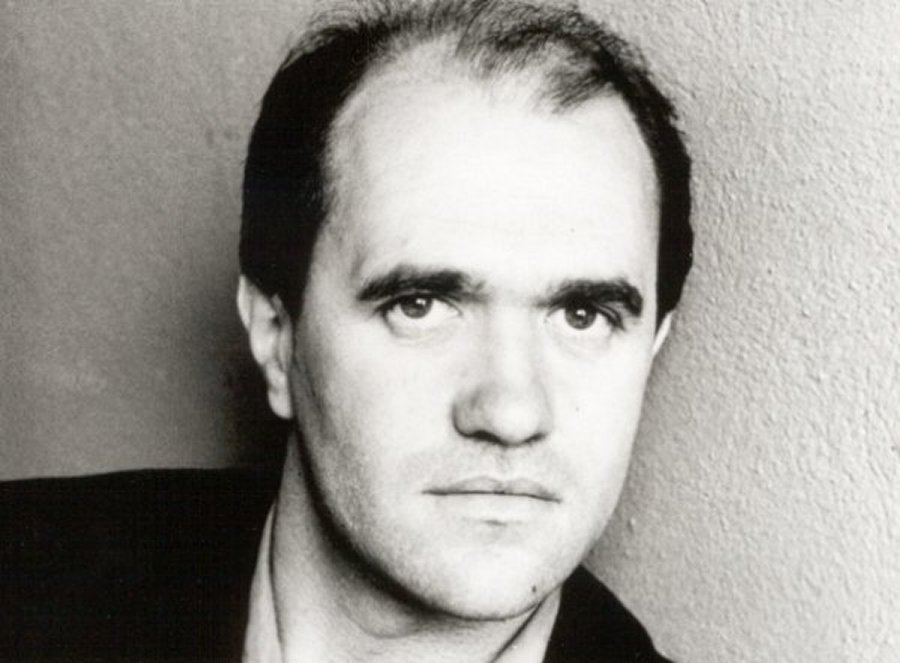
Young Colm Tóibín

In a pub in the little cross-road town of Cullaville, just two fields north of the border between the United Kingdom and the Republic of Ireland, the bar has two till-drawers: one for Euros (Irish currency) and one for the British pound. More than 200 formal and informal roads (tractor and foot paths) cross the border and it isn’t often clear for travellers which country they are in; sometimes it may only be the change of the speed-limit that may give them a clue, sometimes nothing at all.

Alastair McDonnell, an MP from Belfast has been flooded with queries, following the Brexit vote, from his constituents about what will happen if the border becomes ‘hard’ again. It’s possible that come the reality of Brexit (2019 says British PM, Therese May) little border towns like Cullaville will potentially become the EU’s back door to Britain.

Anne Devlin, a resident of the North who buys her petrol in the South where it’s cheaper, said, “Brexit got everyone talking, that’s for sure. It reminds everyone who is who, where is where, north or south, the Troubles, all of that.” It’s been only 18 years since the last bomb exploded during the religious-based conflict that claimed more than 3,500 lives.

With the signing of the Anglo-Irish Agreement in 1985 between the UK and the Irish Republic the path was finally set for peace but which didn’t come for another 13 years with the signing of the Good Friday Agreement in 1998. In the summer of 1986 Colm Tóibín walked the border in preparation for his account of the feat published the following year: Bad Blood: a walk along the Irish border. Actually it was more like a ‘drink’ along the Irish border: Colm likes his ale.

For a border that may now need to be re-fortified, given the European refugee problem that doesn’t look like slowing down – certainly not within the next two years, its ‘hardness’ may have many other repercussions. Sometimes it runs through the middle of someone’s field; in South Armagh (the North) there is a shop whose “doorway itself was the border, the outside of the shop being in the North, every entry and exit involved smuggling”; and not only that, where the border separates County Fermanagh (the North) from County Caven (the South) there is a house where “the border went right through like a slicer through a block of cheese.

The house was a small, modest, old-fashioned cottage. When I knocked on the door a man in his sixties came out. His name was Felix Murray, I discovered, and the border ran through his house in which he and his two brothers lived. These days, he said, all three slept in the North, but there was a time when one of them had slept in the South. ‘Only an odd time now,’ he said, ‘we sleep in the State’. There was a sofa in the kitchen, he pointed out through the window. Where you could sit and let the border run through you.”

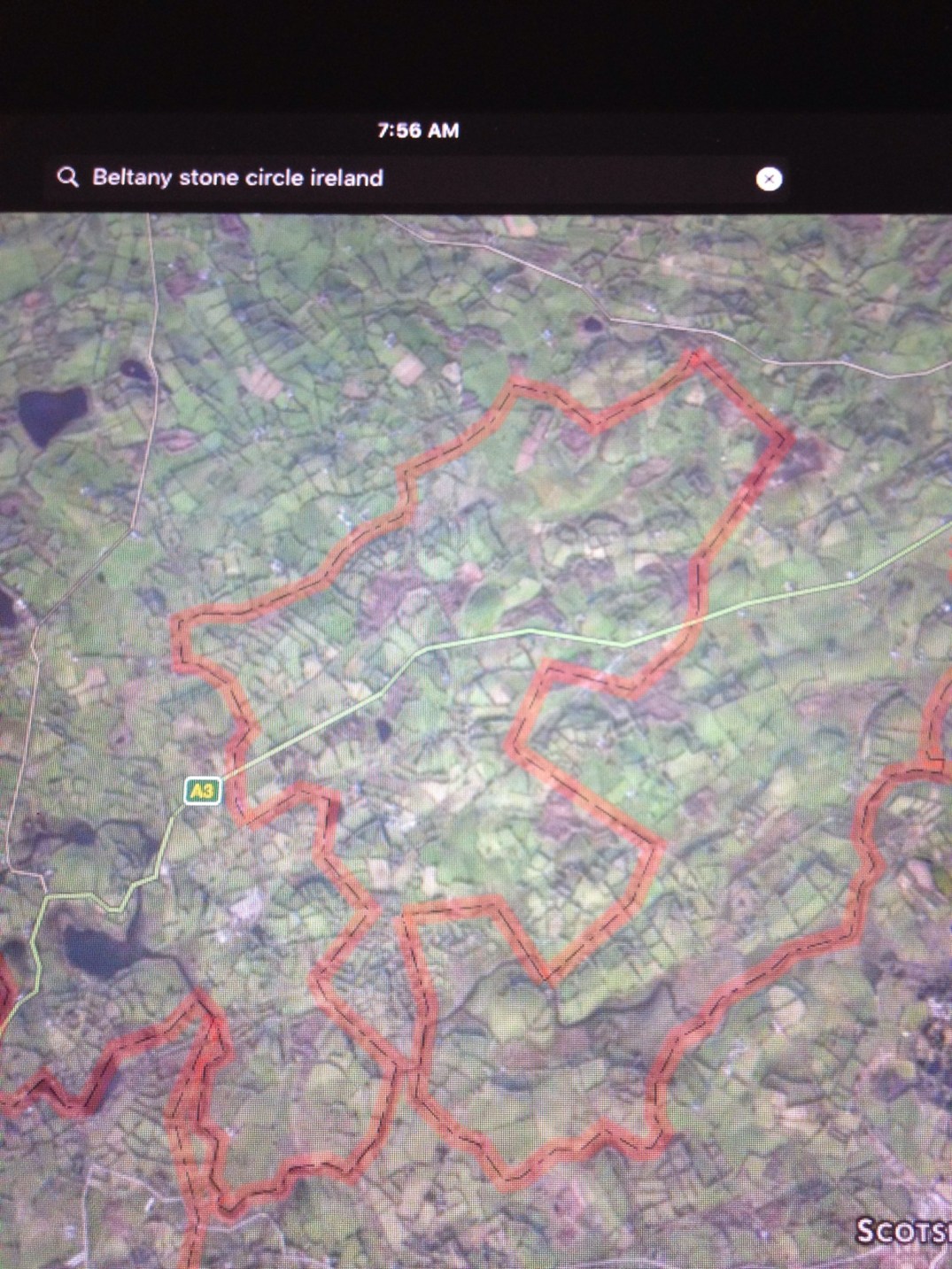
This was 20 years ago and things may be a different now but as you can see from the image below, the border to this day, seems a long way from logical.

irish-border-pic

His early non-fiction shows the development of Tóibín’s style later employed, to some extent, in his novels; his first novel, The South, was published in the following year, 1990. His fiction shows his debt to journalism with his plain unadorned prose, seen here in Bad Blood.

“I told him I was writing a book. He invited us in. He didn’t say anything. The front room of the house was small and comfortable. There was a fire lit. A television and a video machine stood in the corner.”

Compare this is a passage from his second novel, The Heather Blazing (1992),

“His grandmother was in the kitchen with his Aunt Margaret and his Aunt Molly who was married to his Uncle Patrick. Two of his cousins were in his the back room in cowboy suits. They all stood round as Eamon distributed the presents. Stephen sat by the fire, huddled in against the wall with his legs crossed. He opened his parcel slowly and smiled when he saw the book.”  Short, bald, unadorned sentences.

Tóibín trusts his readers to do most of the descriptive work and gives them great responsibility to fill in the detail, so much so that in his latest novel, Nora Webster (2014) no place or person is described: every reader has a hometown, its feel and smells, and every reader knows a nosy neighbour or a favourite aunt and Tóibín relies on this reader-experience. In this way Toibin’s work, for readers, becomes very personal. A reader from Melbourne, Australia, on finishing reading The South, slept with it under her pillow for two weeks.

In 1989, even though the border may have been on the map it wasn’t, in a lot of places, on the land (large white crosses had to be painted on roads to make the border visible to British helicopter pilots), but it was in people’s hearts. Back then it was all about tension in the air but a stiff upper British lip, this is in the North, was still the way people behaved.

At dinner in a hospitable family house in the North the first course served was beetroot soup. Toibin, from the South, innocently commented that it was called borscht, and it was a great favourite of the Pope’s. That word hung in the air like a fart. Everyone stopped listening and became immensely interested in their soup and the care it took to not let it spill on the white tablecloth. No-one spoke.

Religion was not at the heart of it but at the bottom of it.

“Yes, one of them said, the older people maintained that the accidents were a sort of revenge for what was done to the Grahams. God, you know, did I understand? It was God. It seemed like a large number of young people from the same area, I said, to be killed in accidents. They nodded grimly. I said I didn’t think it was God. No, they agreed, they didn’t either. It was just something which was said.”

Since Brexit the talk now is again about Irish re-unification: Gerry Adams, leader of Sinn Fein (once a terrorist organisation, now a major political player), said that since the vote by the North against Brexit (56%) a referendum over unification was necessary, Michael Martin leader of the main opposition party in Ireland agrees; Arlene Foster, first minister of the North, thinks such a move would be ‘a folly’.

When Tóibín walked the border the air was still tense. Now a lot of golf is being played and it’s a nice place to be a cow. In people’s lives now the border is a shadow: it’s crossed for shopping, for school, for selling. No-one wants it to become a frontier again. What everyone wants is for the leaders in London, Brussels, Dublin and Belfast to manage Brexit while preserving the peace and allowing the economy to flourish. They’ve got 2 years.

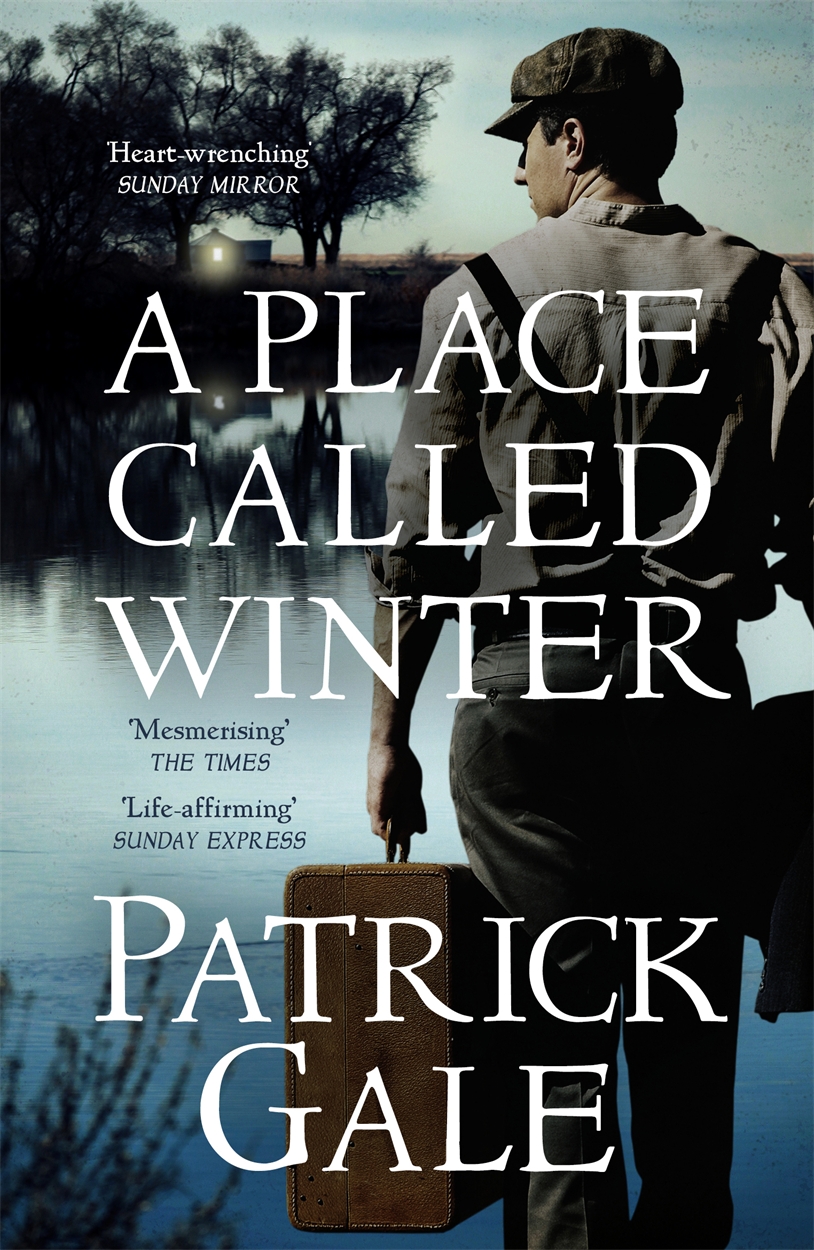
A Place Called Winter by Patrick Gale

patrick_gale_pic2
British writer, Patrick Gale

This is a very different book, Gale’s latest, from his other work which have usually been an insular look at a group of people in a localised area, usually a small Cornish community. A Place Called Winter is epic in its geography, historic in its time and language, and romantic in its tone. If you had to write a précis of this book it would read something like a historical romance, complete with abandonment of wife and family, a journey across the ocean to a strange and inhospitable land, the finding of love in the most unlikely place, a world war, murder, insanity, tragedy, and a villain of truly despicable proportions, but Gale avoids all the possible clichés that would otherwise render such a story fit only for the sensational shelves of suburban bookshops patronised by retired ladies.

“I didn’t decide, ‘Now for an historical novel!’ Rather I found myself more and more possessed by the material suggested by the fragments of my great-grandfather’s story,” and Gale has been reported many times as saying that for the purposes of fiction, and to account for surprising decisions from his ancestor’s known but sketchy life, he ‘turned’ his great-grandfather gay. This is not surprising for Gale readers, as Gale, an out gay man, writes often and well about sexuality. However “The great challenge in this novel was to write about sexuality while inhabiting the head of a man who realistically would not have had anything like the psycho-sexual vocabulary we take for granted now.” Indeed, in his first homosexual experience, which he, Harry Cane, subconsciously seeks out under the guise of a remedy for his stuttering from a handsome, but opportunistic actor and speech therapist, says, when it is obvious what is going to happen and without any stutter at all, “I have absolutely no idea what to do.”

Once his affair is discovered by a kind but firm brother he is forced to avoid a family scandal and possible imprisonment, and flees to the wild cold west of Canada where he is befriended, then abused, but finally set up by a land agent next to a shy and reclusive brother and sister pair, there for their own reasons of displacement. It is here, near a place called Winter, that he discovers what life, love, sacrifice and family really mean. Plot points of self-realization, murder and reunion are described in unsentimental terms and even the climatic act of …. No; no spoilers here.

For all of Gale’s extolling his attention “on the psychology and emotional life” of his characters I found A Place Called Winter, although enjoyable and sustaining, not as rewarding as his other works that focused on a domestic band of rural characters dealing with each other, and more importantly, themselves. The Cornish landscape, both emotional and geographic, he knows well and writes about it with, insight, force and understanding, while such considerations in A Place Called Winter are a little overshadowed by the grandeur of the plot. However, there is a lot to gain from this book; it’s probably the most commercial of his works and one that will gain him a new and, hopefully, loyal readership. He’s prolific: this is his 17th work and I eagerly look forward to what next he has to offer.

The High Window by Raymond Chandler

raymond-chandler-pic
British-American crime writer, Raymond Chandler

Writers don’t think too much about genre; writers write what interests them. Genres are more important to booksellers as signposts to help readers find what they might enjoy.

Reading crime fiction is not only about who done it. It’s an escapist adventure into a strange world, almost filmic, where our fundamental assumptions are always confirmed: good, even if a little muddy, wins in the end.

The plot revolves around a rare, valuable and stolen coin, The Brasher Doubloon; a cranky client, two corpses, a wimpy son, wise-cracking dames, lazy police and nasty rich men. You get the picture.

Most crime fiction is written in the first person, which has its limitations. Unlike a third-person god-like narrator who knows everything, what people think and what they want including what will happen in the future, a first person narrator only knows what’s going on in their own head, and relies on what is seen, heard and felt to give clues to character’s motives and wishes. This is paramount in Chandler’s work: descriptions of people are all about physiognomy – the angle if a chin, clothes – the cut of a dress, gives clues to personalities, behaviour, and what might make them either smile at you or shoot you in the back.

“He was a lanky man with carroty short hair growing down to a point on his forehead. He had a long narrow head packed with shabby cunning. Greenish eyes stared under orange eyebrows. His ears were large and might have flapped min a high wind. He had a long nose that would be into things. The whole face was a trained face, a face that would know how to keep a secret, a face that held the effortless composure of a corpse in the morgue.”

All his characters are opportunists, if not after a quick buck, a quick fix, or a hook-up, they’re looking for gaps in your defense, eager to win a point, even if only for a little self-esteem. Characters with suggestive names: Eddie Prue, Jesse Breeze, Spanglet, and Linda Conquest – not unlike character’s names of Charles Dickens: Herbert Pocket, Charles Cheeryble, Bumble, and Mercy Pecksniff. The writing of Chandler is entertaining and lovingly cliché-free; it’s as if he searches for an ever-new cliché, uses it and immediately abandons it…

“Three dizzy-looking dames… all cigarettes and arched eye-brows and go-to-hell expressions.”

“She had eyes like strange sins.”

“Men … faces like lost battles”

“… enough clothes to hide behind a toothpick.”

” … there were quiet voices whispering of love or 10%”

“A tall fine-looking man in a grey suit cut by an angel…”

“women … faces like stale beer…”

“a great long gallows of a man…”

“She looked as flustered as a side of beef.”

“… as unperturbed as a bank manager refusing a loan.”

“You boys are cute as a couple if lost golf balls.”

Many commentators, such as the British crime writer, Mark Billington, praise the characterisation of Chandler’s work, but it’s all in Chandler’s outward description of them. Such commentators don’t realise how much descriptive work they do themselves to arrive at a rounded picture of a character; inspired, of course, by a few well-chosen and succinct words by the writer. This is higher praise, but it not the praise they’re talking about.

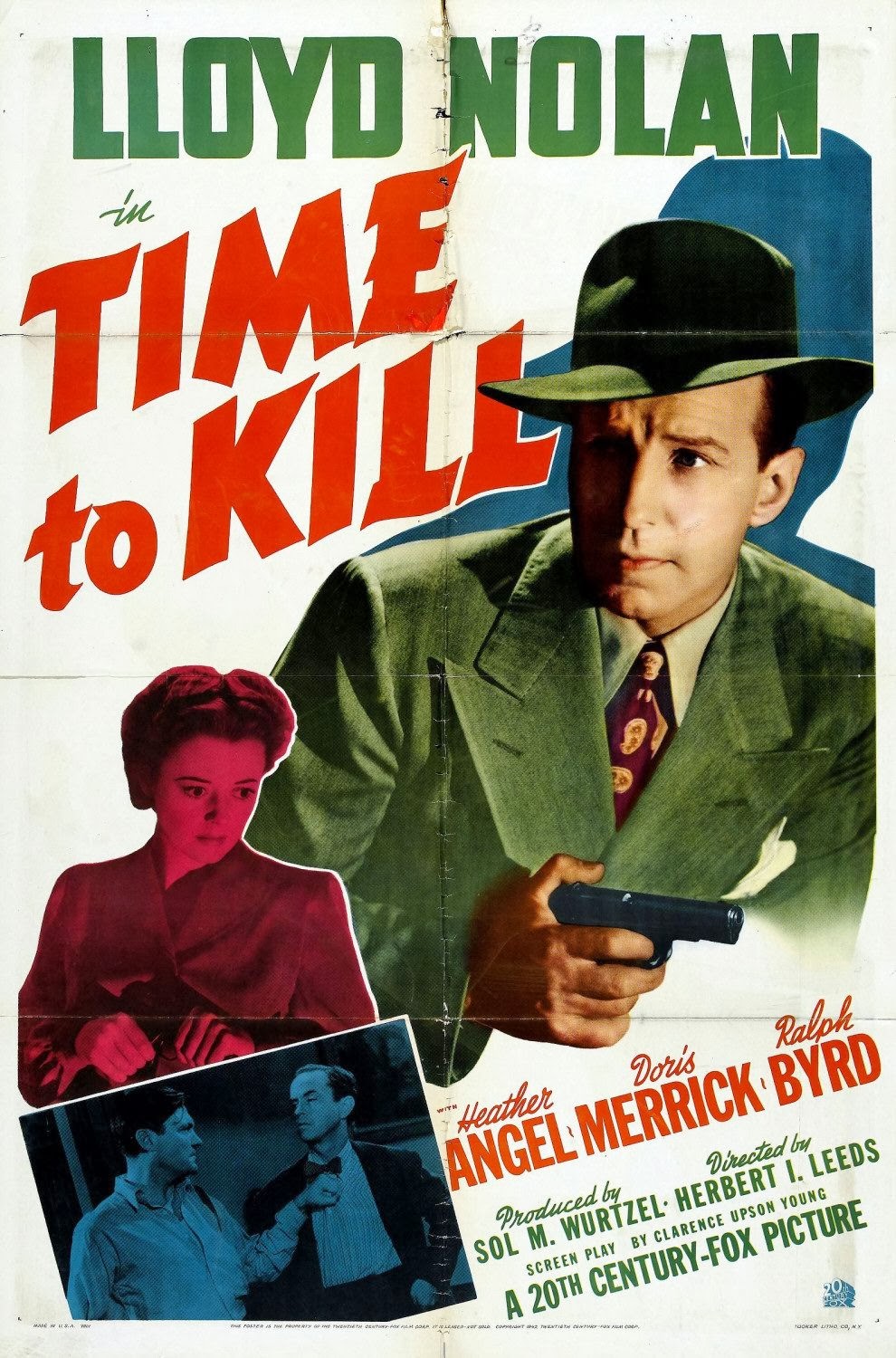
time_to_kill_pic
Time to Kill, the 1942 screen version of The High Window starring Lloyd Nolan

If anything is going on in anyone’s head it’s never mentioned except as a cause or result of a look, a tone, or snide remark. Raymond Chandler is s master of this. Detailed descriptions of a room, a desk, a face, are iconic: the perceptive awareness of an accomplished private eye like Philip Marlow, Chandler’s alter-ego. He sees everything, even the clues that a reader might miss. There is no psychological self-examination except for the odd purple passage of self-depreciation. There is no romance but more than a hint of the romantic hero, especially in The High Window, where he rescues a damsel in distress, but not from anything as corny as a caped villain, but more from her own self-delusion, bad choices, and shallow vulnerability. Marlow is a good guy, mistrusted but tolerated by the police, hired but not liked by his clients. He’s a loner but his apartment, and especially his kitchen, are neat and clean, unlike his talk to women he doesn’t trust…

“I don’t like this house or you or the air of repression in the joint, or the squeezed down face of the little girl of that twerp of a son you have, or this case, or the truth I’m not told about it and the lies I am told about it and …”

It would be fair to say that this is a minor Chandler; the plot lacks the sensationalism that popular crime fiction has come to nurture, even though it has been filmed twice in the 1940s but neither was a success. It is, however, classic Chandler, all the more enjoyable for the wise-cracking, plain-speaking, and indifferent, but work-man-like Marlow, who would never slap a woman; but then why would he when his wit and words are far more effective.

the_brasher_doubloon-large2
The Brasher Doubloon, the 1947 film version starring George Montgomery

Chandler, although born in the USA in Chicago in 1888, was raised and educated in England, becoming a British subject in 1907 but returned to America when he was 30. He lost his job as an oil executive in the Great Depression and turned to pulp fiction, studying the Perry Mason novels of Erle Stanley Gardner. The Big Sleep was his first published novel and featured for the first time, Philip Marlow. The High Window is the third in the Marlow series.

You can read The High Window as an ebook here at the Canadian site of Project Gutenburg. In Canada it is in the public domain. You can only download it for free if it is out of copyright in your country.


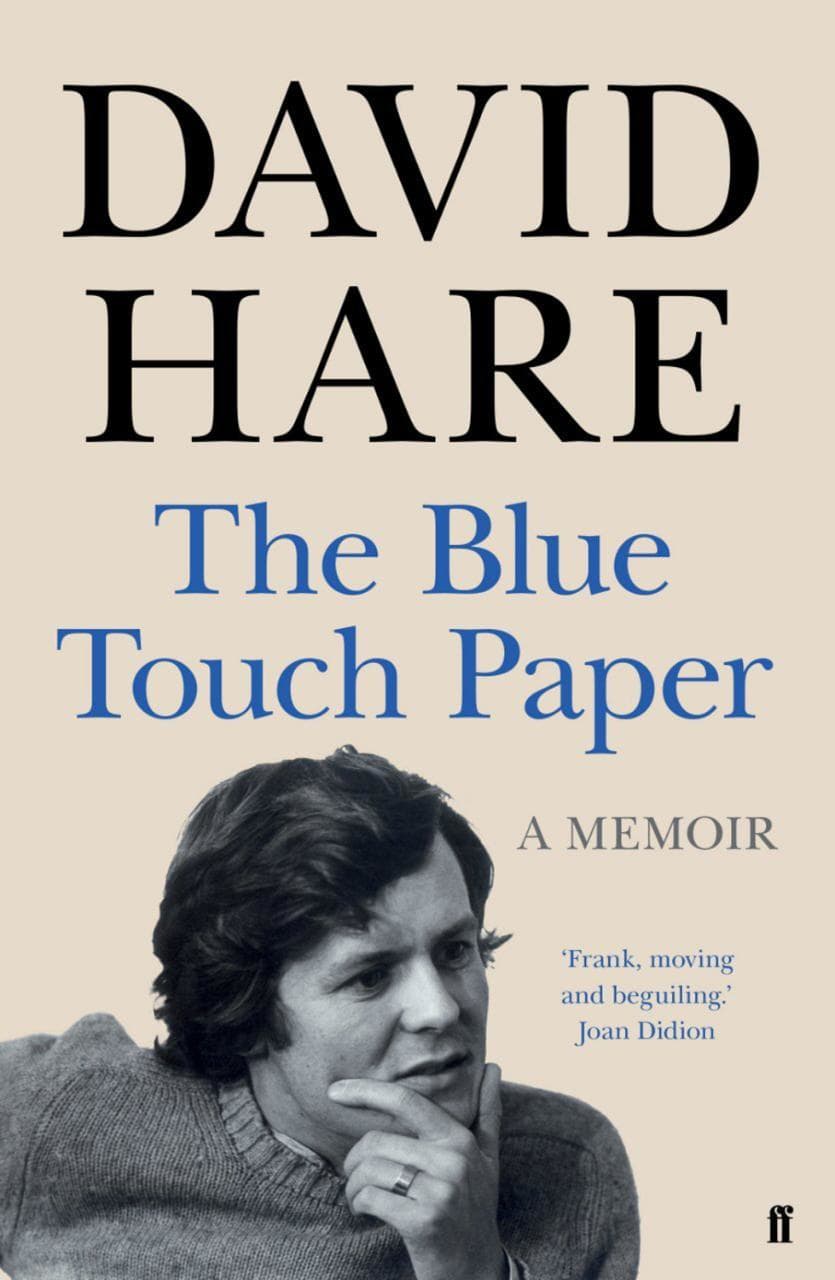
The Blue Touch Paper by David Hare

davidhare-pic
British screenwriter and playwright, David Hare

Any child who has stumbled through childhood surrounded by unanswered questions, where adults were too occupied with their own demons to take notice; where one parent was largely absent in body and/or interest, and the other so shackled to society’s norms and buffeted uncomplainingly by the stings and shallows of the life they thought they had to lead, will relate to David Hare’s childhood in this, his 2015 memoir. David Hare’s father, Clifford Hare, a merchant sailor, was absent most of the time, while his mother, Agnes, conformed to the norms of the town of Bexhill, “a parody of suburbia”, between Eastbourne and Hastings on the Channel coast; a town described by James Agate as ‘bleak and purse-proud’ and used by the director Alfonso Cuarón as the location for those surviving Armageddon in his film Children of Men.

“Childhood is like going into the jungle without knowing what animals you will meet there.”

Saved from a fate he so easily saw on his horizon by cinema, the local theatre repertory companies, and his natural intelligence he weathered his upbringing and won a scholarship to Cambridge. Hare writes in a self-deprecating tone, which is endearing, but at the same time there is a feeling that he has done this to hide a sense of self-importance, as if his success and intellectual rise was inevitable. He wants to be liked. And steps in his making did seem to come easily and letter writing was one of his most successful modes of advancement: a holiday job in Los Angeles, a visit by Alfred Hitchcock, and a meeting with Peter Hall which had formidable repercussions.

It was at Cambridge in the 1960, ‘all wasps and no honey’ so said Kenneth Tynan, in a “self-deluded Britain” that Hare began his theatre-making, as both performer, director, and then as playwright.

“The very over-sensitivity which equips you to be a writer also makes being a writer agony.”

In 1969 while leading his Portable Theatre Company, Hare and co-founder Tony Bicât, had the idea of presenting, in their second season a play based on the history of evil and asked their new friend Howard Brenton, at the time working in the Royal Mint, to take it on. He eschewed the ‘history’ but kept the ‘evil’ in the character of serial killer John Reginald Christie, and set it in a pen made of chicken wire filled with old newspaper. Christie in Love “plays with the controversial notion that when Christie practised necrophilia, assaulting his dead women, he was, in his own eyes, expressing a kind of love.” Hare had only written one short play to fill in a gap in the previous program but Brenton’s “brilliant” play, directed by Hare, set Portable, and Hare, on a path of creating and presenting new plays.

“…my most important discovery about playwriting … Every line on dialogue, every exit and entry, every development of the story, every deliberate change of mood on the stage pleases or displeases the author for reasons they would be at a loss to explain. The mystery of style is exactly that: a mystery. Yes, of course, I could clean the play up. I could redraft. I could, if necessary, make the action more deft. I was perfectly capable of saying. ‘That scene’s working, but that one isn’t. That joke’s working, but that one isn’t.’ But to the basic question ‘Why is the play the way it is?’ I had no answer at all.” No matter what you WANT to write,  “ultimately you are at the mercy of your imagination – what ever that might be”; a bit like Christie.

There are moments in everyone’s life when the wanting of something is far more powerful than the getting of it; and there are many times when our bodies and our imagination are at odds; the latter taking over from the former and causing a positive, or negative, but involuntary, outcome. A man knows when his body betrays his will with an unnecessary erection; a woman once was so attracted to Ted Hughes, she vomited, something she did not want to do; Marcel Proust wrote at the age of 18 that ‘Desire makes all things flourish, possession withers them’; and David Hare separates his wanting to write a play, from his imagination that finally finishes it. In this sense we are all victims of our imagination, which can give our lives succor, as in a creative individual like Hare, or destroy it, as in another individual like Christie.

Theatre “is about people, it is not about types. Shakespeare did not intend Macbeth to be an indictment of Scottish monarchy. Nor is the characterisation of Lady M misogynist.” Recently in the London Review of Books review of The Girl on the Train; the writer, a woman, was horrified that the novelist, a women, seemed to her, to hate women. Yes, the female characters are in turn, liars, drunks, traitors, and lay-abouts, but the story is about these women, not all women. Hare derides this “idiotic language of role models” as a symptom of the late 1988s but it continues today. He says, “…with the rising tide of programmatic wordsoup which would threaten the vigour and authenticity of theatre in the new century, I would have no patience. Work, when fully achieved, seemed to me a more powerful manifesto than manifestos.”

David Hare, now Sir David Hare, is a very British writer for stage and film with an impressive list of work over many decades: they include Knuckle (1974), Fanshen (1975), Teeth ‘n’ Smiles (1975), Plenty (1978), The Blue Room (1998), The Judas Kiss (1998), Stuff Happens (2004), South Downs (2011), The Moderate Soprano (2015). His Skylight (1995) play was presented by the Melbourne Theatre Company earlier this year. He also penned the screenplay for the 2002 film The Hours, among many others.

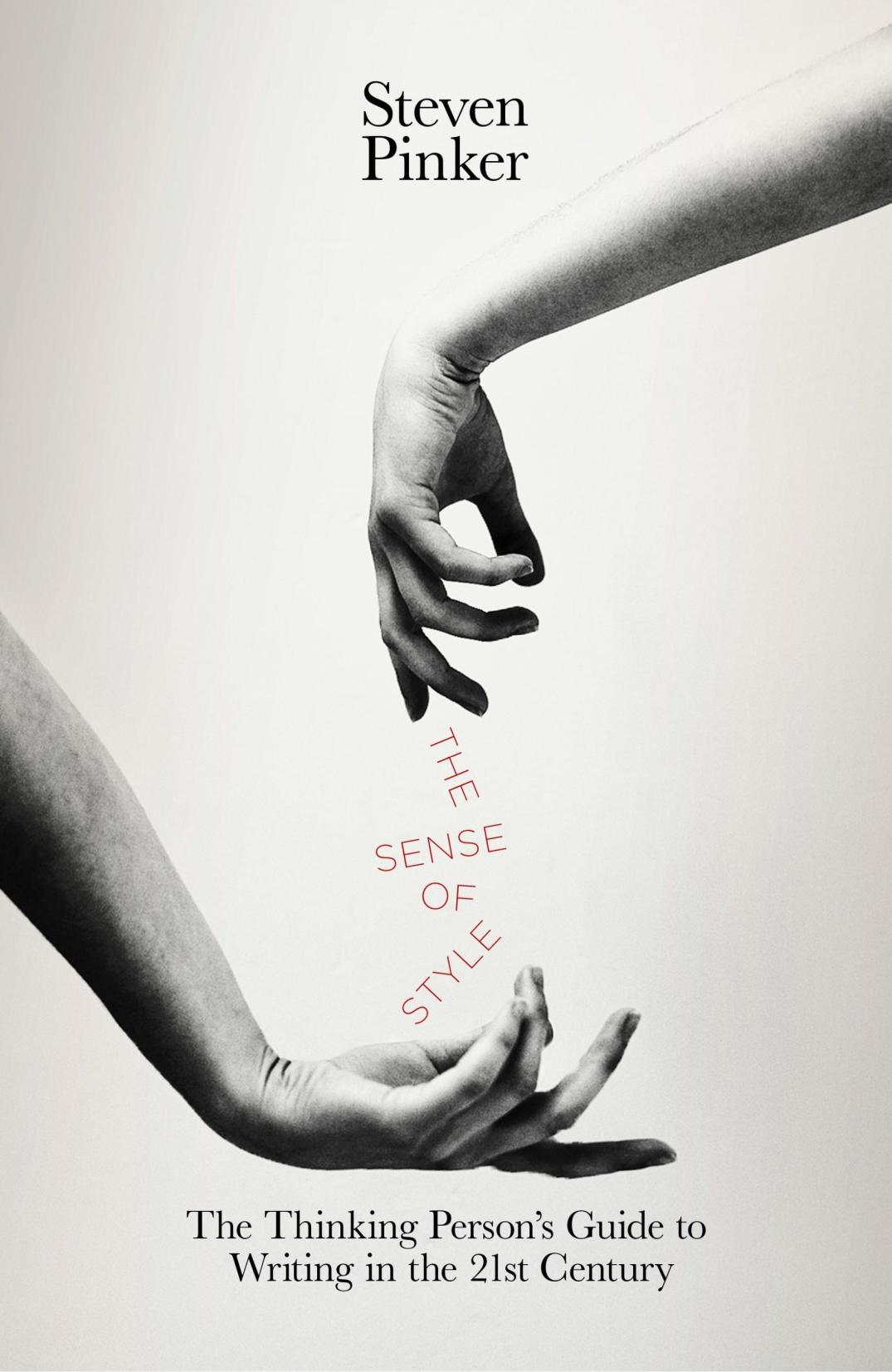
A Sense of Style: The Thinking Person’s Guide to Writing in the 21st Century by Steven Pinker

Steven Pinker pic
American psychologist and language expert, Steven Pinker

If you are bored rigid by style guides, grammar tomes, and ‘How to write’ books, skip this one. However if you are fascinated by the building blocks of a sentence; how English has changed; and the black, white, and beige of grammar rules then keep reading.

Steven Pinker, the American “Rock Star” psychologist and a Professor in the Department of Psychology at Harvard University conducts research on language and cognition and has penned many popular and accessible books on language, the mind, and thought. His latest book is this one which came out in 2014 and for which he received the International Award of the Plain English Campaign.

Generally commentators on the English language fall into two broad camps: the prescriptivists, those who believe there are rules that define how language should be used, and that mistakes result from breaking those rules; and the descriptivists, those who believe that a language is defined by what people do with it. You may recognise the former as “sticklers, pedants, peevers, snobs, snoots, nit-pickers, traditionalists, language police, usage nannies, grammar Nazis, and the Gotcha! Gang” but Pinker also damns the latter as “hypocrites: they adhere to standards of correct usage in their own writing but discourage the teaching and dissemination of those standards to others, thereby denying the possibility of social advancement to the less privileged.”

Pinker is the chair of the Usage Panel of the famously prescriptive American Heritage Dictionary but he quotes the editor as saying, “We pay attention to the way people use the language”, a clearly descriptive view. Pinker, like most writers and readers, sit on the fence. Their anchor? Clarity and meaning. There are words that we continuously mis-use, such as decimate to mean ‘destroy most of’ instead of ‘destroy a tenth of’. There is no point in using the word in its original meaning if the reader or listener believes it to mean something else. The old prescriptivist rule of ‘never split an infinitive’ only exists because of the early English need to squeeze the language to fit Latin rules. The Latin word for the English verb to go is a single word ire; it’s impossible to split a single word but splitting the English word is of course possible: ‘to boldly go where no man has gone before’ is fine by Steven Pinker, and most people, I suspect.

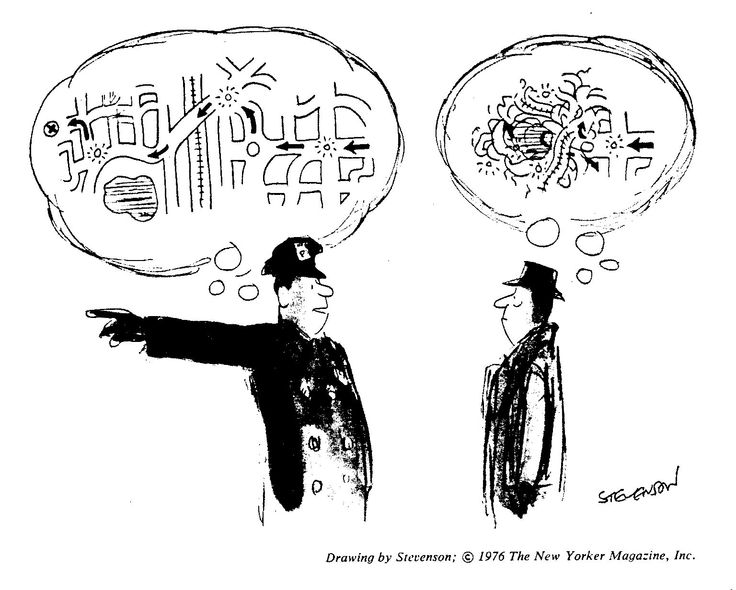
His chapter 3, The Curse of Knowledge, is a delight and has cleared up that old annoyance illustrated in the following cartoon

Giving Directions cartoon TNY

“The curse of knowledge: a difficulty in imagining what it is like for someone else not to know something that you know.” When someone gives you inadequate (to you) directions that they think are obvious (to them) and ends with the phrase ‘you can’t miss it’, you usually will. See! It’s their fault, not yours.

And did you notice I used the plural pronoun they for a singular subject someone? This has been common usage for over a century and solves the English language’s lack of a neutral singular pronoun. Oh, and did you notice I began that sentence with the conjunction, and? This was something that was considered the grammatical sin of sins in the 60s and 70s but has again been used for centuries.

However the last, and longest chapter Telling Right from Wrong will give you a lot of joy, understanding, and the edge in arguments about where to put that comma, when to use lay and lie, and the sometimes acceptable use of an adjective when the grammar police insist on an adverb.

Eggs over easily

P.S. In a student exam paper, recently, there appeared a sentence that confused everyone. “It would be a great idea if we went to the park tomorrow.” This is a sentence about the future but with the modal verb would, and the auxiliary past tense verb went. Using the future form sounds strange: “It will be a great idea if we will go to the park tomorrow.” No, the past tense is correct. This is called factual remoteness as Pinker explains with the example, If you left now, you would get there on time. “The if-clause contains a verb which sets up a hypothetical world; the then-clause explores what will happen in that world, using a modal auxiliary. Both clauses use the past tense to express the meaning ‘factual remoteness’.”

Note the full stop after the quote (not ‘ ….remoteness.’”). You’ll have to read the book now to find out what Pinker says about this (or is it that?).

You can by the kindle edition, and paper editions, here.


Days of Abandonment by Elena Ferrante

Female-silhouette
Elena Ferrante is the pseudonymous name of an Italian writer. Publicity shy, she only accepts interviews by email.
        The abandoned woman has a long tradition in classic poetry and literature with Dido, Queen of Carthage during the Trojan war as the most famous example; a time when virtuous heroes where meant to choose duty over love. Abandonment, and the courage to put up with it, became a romantic womanly duty.
        Not so for Elena Ferrante in her most famous novel, Days of Abandonment, 2002, (courageously translated by Ann Goldstein): her protagonist, Olga, who is told by her husband, Mario, a man of “quiet feelings” that he is leaving her because he was having “terrible moments of weariness, of dissatisfaction, perhaps of cowardice” and “he assumed the blame for everything that was happening and closed the front door carefully behind him” leaving Olga “turned to stone beside the sink.”  At first she thinks it is just a phase, he will be back,  but when she finds out the real reason for his departure she is enraged, she becomes violent, obsessed, deranged but determined.
        Told in the first person, the prose is robust, strong; I can understand why some readers think Ferrante is really a man: it feels masculine and has a rowdy momentum that could sweep away any male equivalent like bulls before a train. But this is its strength. It certainly makes you turn the page. I’ve never read rage like this from a writer of either gender. It’s mesmerizing. And her attempt to redeem herself by adopting a man-ish attempt at seduction is funny, sad, distressing, messy, and humiliating all at once.
        The action culminates in a single hot August day: the kids are on summer holidays; there’s no money to entertain them, besides the lock on the front door is faulty and they are trapped. There is sickness, outrage, potential violence and indifference, an annoying brat, and ants. It is exhausting and exhilarating. Great stuff. But if you hate reading strong language stay away!
        It is a war, an internal war between the woman she was and the woman she’s become. Her senses become distorted: time stretches, her spacial understanding convulses and she no longer knows the usual spaces of her own home; they’ve become “transformed into separate platforms, far away from each other.” She loses her balance and can no longer trust her eyes to tell her what is there, her ears what is said, and her past what is true.
        Convoluted but fascinating discourses on love, her past, the world, and relationships – “what a complex foamy mixture a couple is” – sways her brain away from her responsibilities which she fears will unseat her; she employs her daughter to jab her with a paper-cutter. She is losing it but she knows she is losing it.
        She is also an outsider, from Naples, in Italy’s south but living in the northern city of Turin where a common saying peppers local conversation: North Africa starts at Rome. This would put her origins, in the minds of her neighbours, as somewhere in the southern Sahara, as remote as their imaginations could muster. They already think she is a little mad; maybe she is.
        What you think could happen in a locked apartment during a hot summer’s day doesn’t prepare you for what does. The ending will be for you to discover but Ferrante’s point is unexpected, politically incorrect, but perspicacious, and once you read it, digest it and realise what she means, that last line will stay with you for a very   long    time.
the-days-of-abandonment film pic
Margarita Buy as Olga in the 2005 film directed by Roberto Faenza who co-write the script with six other writers.
        You can buy the ebook at Amazon, Kobo, and Europa Editions and if you haven’t read it you should.