Tom Lake by Ann Patchett

American writer, Ann Patchett

I never thought it was possible, but this book, Tom Lake (2023) by Ann Patchett, is a book about happiness. Of course bad things happen, they always do, but the bad things are related from another time well after the bad things, a happy time so the reader is always aware that the bad times were overcome.

I have been criticised before for using the term ‘soft fiction’. Some people think this a derogitory phrase. Not at all. By ‘soft fiction’ I mean there are no car chases, revolutions, earthquakes, spies, murders, or zombies. Plot points are naturalistic which the general reader can relate to. Patchett writes about family and in this book she writes about family to such a naturalistic degree that it feels like memoir; the verisimilitude is so strong. It’s very very good soft fiction.

The happy family are the Nelsons. Lara and Joe, in the general present, live on a stone friut farm in northern Michigan bordering the Great Lakes, Lake Michigan to be precise. They grow cherries, apples and pears in ‘the best’ and prettiest fruit growing district near Traverse City. Their three daughters, Emily, Nell, and Maisie, are adults and home for the late summer to help with the cherry harvest. While picking cherries Lara tells her daughters about her life from High School to her mid twenties when she had a romance with a famous movie actor, Peter Duke. He wasn’t famous then, of course, but the girls want to hear the details of the mother’s story having grown up with bones of the affaire all their lives.

Lara’s story begins with the auditions for a local, New Hampshire, production of Thornton Wilder’s iconic play Our Town. Lara and Peter met in summer stock when Lara thought she wanted to be an actor; she was ‘so good’ as Emily! Circumstances led her to another procuction of Our Town at Tom Lake where Peter Duke was cast as her father, Editor Webb. Their affaire began on the day she arrived only minutes after meeting Peter Duke who told her she couldn’t meet the rest of the company that afternoon because “you’ll be busy.”

What happens at Tom Lake is at the heart of the narrative. One of the things that makes the book so interesting and intringuing is that these two narratives, the cherry picking days and the summer stock months, we know will eventually converge to produce Lara’s happy family. But of course we don’t know how.

The other successful ingredient is Ann Patchett. Her first person narrator, Lara, is a reader’s joy. It’s like she’s leaning towards you, elbows on knees, in a living room in front of the fire when everyone else has gone to bed and telling you things she would’t dare tell anybody else, especially her daughters. You are forever in her thrall and made to feel special because of it.

I liked her The Dutch House (2019) but this is so much better.

It’s the best book I’ve ever read since the last best book I ever read … which was a while ago.

When next you go to your doctor for a perscription for anti-depressants don’t be surprised if it says ‘read Ann Patchett’s Tom Lake.’ It will be cheaper and more effective.

Here you can watch an interview with the wise and wonderful Ann Patchett courtesy of PBS News Hour.

You can buy the book in various formats here, where you can also read a sample for free.

-oOo-

P.S. It was very hard to find a picture of the cover of this book that didn’t look like this, the American cover:

Americans are so keen on overstatement. They don’t go horseriding, they go horseback riding, just in case you’re not sure where to sit. They don’t walk on a footpath they walk on a sidewalk, just in case you might think it’s OK to walk on the road. And they put ‘a novel’ on the cover of a novel just in case it’s a novel you really want to buy, not a cheesecake.

Devotion by Hannah Kent

This novel is about Lutheran migrants from Prussia in the nineteenth century given the opportunity to flee religious persecution and settle in the unknown but free colony of South Australia. I was very interested in this novel as my ancestors did exactly that, as did hers. My great grandfather arrived in the colony in 1851.

Kent’s description of life in the Prussian peasantry as tenant farmers is evocative, and totally believable. The story is told in the first person by the daughter of the family, Hanne, who considers herself dull and plain; her close paternal twin brother having been blessed with all the beauty of their mother. Their life and relationships in the village of Kay is austere as is their religion with its undecorated homes, churches, and liturgy. It is indeed a dour Christian denomination, a result of Luther’s revolt against the hypocritical and outrageous wealth and flamboyance of the Roman Catholic Church. But Kent’s greatest achievement is, without actually saying it, the depiction of the Lutheran lack of demonstrative acts of parental affection, by words or deeds. It’s not that the children were unloved, but they certainly felt unloved, but were therefore forced to read and understand the minute signs of affection that, when delivered, or deduced, brought a child’s greatest joy. It is not surprising that Hanne seeks love and all its demonstrations outside the family. Yes, there is a beautiful romance, its full implications unknown to the pair, that sits in the narrative foreground in stark contrast to their bleak, and later, dangerous existence.

Their village life, the trip to the port of Hamburg and the incredibly treacherous voyage on the open ocean in appalling conditions of overcrowding and health risks is testament to Kent’s novelistic ability.

However at about two thirds of the way through, while still on board the crowded ship, and only days from their destination, Kent made a novelistic decision which, in this reader’s opinion, was a big mistake. No spoilers here but anyone who has read this book will understand what I refer to. One of the writer’s major concerns is to keep in place the reader’s suspension of disbelief: that strange mental phenomena that allows us to become fully engrossed in the written situation, the fear, the joy, the laughter, the tears, the tension, etc, or whatever the characters are going through while at the same time being fully aware, but therefore must disbelieve, that we are sitting in our reading chair by the window overlooking our own garden. At this point in the book my disbelief was restored and in more common parlance, she lost me. I didn’t finish it.

Here are personal and moving reflections from Kent about this book.

You can buy the book in various formats here.

Redhead by the Side of the Road by Anne Tyler

American writer, Anne Tyler.

This is the second Anne Tyler I’ve read and again it’s about small town/suburban life that has the feeling that it was inspired by over-the-fence conversations bordering on backyard gossip.
I’m not saying her work is bad or boring, far from it. She is an excellent writer; in the USA she is a fiction super star! This work was long-listed for the Booker! Her work is inspirational and educative for writers (like me), and her particular sub-genre, ‘soft fiction’ has a huge readership, but for this reader, her concerns are all about what I recognise, have sympathy for, and have some understanding of. I want to read about what I don’t know so that I’ll then understand something I didn’t. It’s those books I prefer.

The protagonist here is Micah Mortimer, he is a freelance computer technician but he also works as a janitor for an apartment building in return for his subsidised living space in the basement. He’s a nice bloke. His non-tech-savvy, usually older, clients keep him busy, he maintains his apartment methodically – he has designated each domestic task to a day of the week – and Cass, his girlfriend – sorry, woman friend – stays over occasionally. He is the youngest sibling in his blood family and they treat him as a bit of a fastidious loner and often niggle him about still being single. But, really, he’s content with his life.

Then two things happen: Cass tells him she fears her landlord is going to evict her because she now has a pet – Micah thinks this is unlikely and humours her – and a young boy, Brink, turns up on his doorstep claiming Micah is his father. The man knows this is untrue but feels for this runaway and agrees for him to stay the night…which upsets Cass since Micah didn’t suggest she move in with him, given her potential homelessness, and now he has a stranger living with him, so she ends their relationship. Micah’s life is upended and sorting everything out, or trying to, takes him into domestic and relationship territory he’s never been before.

Let me explain my description of this work as an example of ‘soft fiction’. Micah’s relationship with Brink’s mother, some twenty odd years before, was serious but not sexual – as some relationships were in those days, so he could not be Brink’s father. Had Tyler chosen, instead, for Brink’s claim to be true, Micah’s life would be seriously upended taking this work out of my ‘soft fiction’ category and into something much ‘harder’.

Tyler’s language is simple and direct, her characters are decent, unintellectual, but rather street-wise people where family is paramount. It’s a pleasant, engaging, and quick read.

Here you can buy the book is various formats.

There are very few videos available of Anne Tyler talking about her work; I couldn’t find one relating to this book, but here is her talking about her Booker Prize short-listed novel, A Spool of Blue Thread, in 2015.

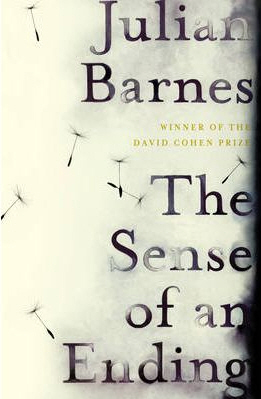
The Sense of an Ending by Julian Barnes

British writer, Julian Barnes

This book from 2011 has been sitting on my bookshelf for some years, winking at me. I have never been sure if I had read it, so I did. In a book world dominated by thick tomes, a novella like this can be a god-send. Claire Keegan, Foster (2010) and Small Things Like These (2021), an Irish writer, has been lately championing the novella as a legitimate art form.

This is a story about memory: what we remember and what we think we remember. Tony Webster, the first person narrator, is in his latter years and he tells us about his school days when he was nerdish, oh-so clever and amusing and, with his two mates Chris and Alex, a little ahead of the pack – so they liked to think. This gives Barnes a delicious excuse for self-deprecating witticisms about his youthful behaviour as seen from the distance of his much older self.

A new boy arrives, Adrian Finn, quite a bit ahead of them in intelligence and maturity, but who attaches himself to the three friends, which surprises everyone especially the trio themselves. Flattered though they were.

Later at university, hoping that his life will soon begin, he meets the enigmatic Veronica and does all the right things, as prescribed by his conservative and very British culture, which, in reality, is nothing much, just waiting for things to happen. They don’t. However, Veronica does invite him to meet her parents, and brother Jack for a weekend. Jack, in an aside, says, ‘I suppose he’ll do.’ And that seems the belief of Veronica as well. And still nothing happens. But Veronica’s mother, quite likes him, and he quite likes her. You get the impression that she is attracted to her daughters ‘young men’.

Finally Veronica ‘comes across’ but only after they break up.

Life continues, he and his friends drift apart, he finishes university, ages, gets married, has a child, gets divorced but keeps a close relationship with his ex-wife Margaret. He then hears from Adrain Finn via a short letter that he and Veronica are now a couple. Tony is furious.

Part One concludes with the news that Adrian Finn has killed himself, diagonally slashing his wrists (apparently that is the best way to do it) in a hot bath, and left a letter explaining that his suicide was planned and philosophically justified and so no one needs to be upset. He also leaves an apologetic letter for the paramedics and hospital staff that had to deal with his corpse. Adrian Finn; first class honours, first class suicide.

Part Two opens with the elderly Tony receiving a certified package in the mail: he has inherited £500 … and a diary, but there is no diary in the the package. Astoundingly, the deceased is Sarah, Veronica’s mother, who in her accompanying letter tells Tony that Adrian, before his death, was quite happy.

This entertaining, intriguing, and very well written novel takes us through Tony’s attempts to winnow through his memory and re-engage with people he hasn’t seen in decades to answer so many bewildering unanswered questions. Why did Adrian kill himself? Why did Sarah have Adrian’s diary? Why did she leave it to Tony? (Why was it her’s in the first place?) And why won’t Veronica, still enigmatic as ever, tell him what he wants to know? What did he miss all those years ago? AND, where is the diary? Was he so stupid, so unengaged? Did his mistakes then as a young man have anything to do with his mistakes as an older one? Maybe. He was alone then; he’s alone now.

I’m sure that any reader over 50 will see themselves, to some degree, in this book. I loved it even if Barnes throws up some very unflattering mirrors at me.

And last night I watched the 2017 movie version with a stellar British cast: Jim Broadbent, Charlotte Rampling, Harriet Walker, Emily Mortimer, Michelle Dockery, and Billy Howle.

You can buy the book in various formats here.

And here is a short video with Julian Barnes on The Musings of a Novelist.

The House of Special Purpose by John Boyne

John Boyne has never been shy to include historical people and events in his fiction: Buffalo Bill in The Congress of Rough Riders (2001), Captain Bligh et al in Mutiny on the Bounty (2008), also published as The Cabin Boy, Gore Vidal in A Ladder to the Sky (2018), the Holocaust in The Boy in the Striped Pyjamas (2006), and here in The House of Special Purpose (2009) where he places a fictitious character in the household of the final days of the reign of the Romanovs, in Russia, 1917/18.

However it is the adult life and love story of the fictitious character, Georgy Daniilovich Jachmenev that is the focus here and dominates the narrative.

It opens in 1981 when Georgy (pronounced YOR gee) is an old man, a retired librarian in London, and his wife, Zoya, is gravely ill. Each chapter swings back and forth from Georgy’s youth as a peasant in rural Russia, the extraordinary event that puts him in the path of a bullet meant for the Tzar’s cousin, his subsequent position as bodyguard for the 11 year old Russian heir, the haemophiliac, Alexei Romanov, and his life, and love, in the Romanov household, to his life in exile after the revolution, Paris first, and his eventual settling in London working at the British Library.

It is a first person narrative in the voice of the protagonist. Of course, Georgy and his wife, suffer discrimnation and hardship, like all émigrés in post revolution and war-torn Europe, but the real drama of the work, and what stimulates the reader’s interest is that the reader, assuming they have even a modicum of knowledge of European history, knows what is going to happen to the Romanovs; Georgy, and of course the royal characters do not. This writerly format, where the reader knows more than the characters, is always a generator of novelistic tension. Here, in this work, it is intensified by the reader’s wonder at how the situation of the young Georgy, in the thrall, and in the service of the Tsar and his family, and in love with one of the Tsar’s daughters transitions to the situation of the elderly Georgy living as a retired librarian with his ill wife in London.

Of course, this is resolved, very neatly, dramatically, and believably even if Boyne uses an existing trope .. erm … but no spoilers here.

In my quest to read all the works of John Boyne, and I only have a few to go, I have yet to find one that surpasses his best – in my opinion – The Heart’s Invisible Furies (2017) but this earlier work has a lot going for it: history, romance, revolution, and a fitting climax. Highly recommended.

Here you can watch John Boyne talk about, and read from, the book at the Politics & Prose Bookstore in Washington DC in 2013.

And here is a shorter, but only audio, interview with Boyne about the book.

You can purchase the book in various formats here.

The House of Doors by Tan Twan Eng

Malaysian writer, Tan Twan Eng

Every week, on a Wednesday, I get the ‘pink’ Weekend Financial Times and I open it first to the culture section. That’s where I found a review of this book. What first attracted me was the mention by the reviewer, Michael Arditti, of the writer W. Somerset Maugham, a favourite of mine, although now he is very much out of fashion. I am always interested in novels that include real writers as characters (biographical fiction). My favourites of the genre are Colm Tóibín’s The Master (2004) and David Lodge’s Author Author (2004) both about Henry James and his failed attempt to become a playwright, as well as Damon Galgut’s Arctic Summer (2014) about E. M. Forster and his life leading up to the publication of his masterpiece, A Passage to India (1924). 

I was also prompted to read this book because its author, Tan Twan Eng, was on the Booker Prize short list in 2012 for his second novel The Garden of Evening Mists (2012). Reading a Booker Prize short listed writer has sometimes proved far more satisfying than reading the winner. 

The House of Doors (2023) is the story of Lesley Hamlyn, her husband, Robert, a successful lawyer in the Straits Settlement on Penang Island (the author’s birthplace) in 1921 and her affair with a local doctor; they meet in a large house where her lover keeps his collection of doors, hanging from the ceiling. Its’s a beautiful image and a symbol of the possibilities for all Tan’s characters. The Hamlyn home, Cassowary House, is the focal point of the local society and passing through are Dr Sun Yat Sen, the Chinese revolutionary seeking money and support to transform his country, and the British author, W. Somerset Maugham, an old friend of Robert’s, and Maugham’s ‘secretary’ – read ‘lover’ – Gerald Haxton who are guests in the house.

At the same time Lesley’s best friend Ethel Proudlock, living in Kuala Lumpur, is accused of murder and Lesley becomes involved in emotionally supporting her friend even though Ethel has admitted to the crime; she emptied a pistol of its six bullets into the body and head of a man on her verandah one night.

This famous case was the subject of world news and became the basis of one of Maugham’s most famous stories: The Letter, which first appeared in his short story collection The Casuarina Tree (1926) and became a very successful stage play in 1927 and, even more famously, a Hollywood movie in 1940 starring Bette Davis and Herbert Marshall. 

Most reviews concentrate on the Maugham element in their reviews but the book is a lot more than that: revolution in China, the colonial way of life, and fidelity. The later is particularly strong since Lesley’s affaire weighs heavily on her conscience even though she knows her husband is having his own. Her conservative social sensibilities, brought into focus when she finally realises the true relationship between Maugham and Haxton, and the effect on her marriage and on the society in which she lives, should the affair be discovered, create a dilemma for the woman but her sense of her own worth wins through. She is very careful and maintains her marriage, family, and social position while at the same time quite enjoying Maugham’s company. W. Somerset Maugham was not a very likeable person, but Tan portrays him as a kind and soft man, if somewhat aloof, but completely in the thrall of Gerald Haxton. 

Tan uses an anonymous omnipotent third person narrator interspersed with the first person, Lesley Hamblyn, which gives the work a stronger verisimilitude had it been completely told in the third. Tan has also moved the action of some of the true events to meet his novelistic needs as well as successfully mingling real and fictional characters in a known place juxtaposing the political and the romantic, against the suspense of a murder trial and the whispered prejudices of the British society sipping their G&Ts while sweltering in their linens. 

Tan is completely in control of his material and ideas. It is a very enjoyable and satisfying read. 

Here you can watch a short video of Tan Twan Eng talking about The House of Doors.

You can buy the book in various formats here

Purple Hibiscus by Chimamanda Ngozi Adichie

Nigerian writer, Chimamanda Ngozi Adiche who recently was awarded a Chieftaincy Title by the traditional ruler of her hometown, Abba.

Purple Hibiscus (2003) is the story seen through the eyes of a young girl, Kambili (KAM bi lee) of a small Nigerian family, her older brother, Jaja, Mama, and her wealthy and very Christian Papa, told in deceptively simple English. Most stories have a villain and this story certainly has one: him. And some stories with a villain have a villian’s mate: a second-in-command, or a side-kick, or, as in this case, a manipulator, here it is the Christian god. The two of them make a formidable pair.

Papa is a prominent citizen and a fundamentalist Christian. Everything about the Christian god to Papa is good and right. If it is right to thank god briefly for the food they are about to eat then it must be better to thank him for twenty minutes. Although from humble and heathen beginnings, he now owns several biscuit factories and a radical newspaper that puts him and his family in danger from the military autocratic government. Yes, He’s not all bad.

It is the time of political unrest in Nigeria and opens with the boy, Jaja, being castigated strongly by his father for not taking communion, that Sunday, Palm Sunday. It is the first time the boy has openly defied his father. ‘The priest keeps touching my mouth and it nauseates me,’ Jaja explained tersely. His father said, ‘You cannot stop receiving the body of our Lord. It is death, you know that.’ ‘Then I will die,’ came the boy’s calm reply. His father is speechless and so throws the prayerbook across the room. That was when ‘things started to fall apart’. That line opens the book. It is reminiscent, and likely in honour of, Nigeria’s literary hero, Chinewa Achebe, whose debut novel, Things Fall Apart (1958) became an early beacon of postcolonial writing – giving ‘the other’ a voice – depicting the tumultuous and destructive effect of colonialism and Christianity on the proud Igbo nation.

Kambili does not know the world, or domestic chores; she does not talk much, afraid the words would not come out, and if they did, afraid they would be the wrong words and Papa would be angry. She comes 2nd in her school exams when she usually comes first. Papa is very angry; he makes her stand in the bathtub and pours boiling water over her bare feet. She does not look at people’s skin below their necks, Papa would be angry. During Papa’s twenty minute grace she can not move, Papa would be angry. She can not speak to her grandfather, Papa Nnukwu, because he is a heathen; she closes her eyes so she won’t see her brother Jaja touch their grandfather; so Papa won’t be angry at her. The revelation of Papa’s violence sneaks up on you. The first morning bruises on Mama’s face are described as innocently as one might describe a waking woman yawning and rubbing her eyes or the morning rays of the sun through the mango trees dappling the lawn in front of the house.

Kambili’s life is dominated by the Christian god and Papa’s unflinching devotion to him. It is implied that Kambili doesn’t think of god as her god, but Papa’s god.

There are similarities here with novelistic depiction of Irish domestic life, like the stories and novels of John McGahern: a dominating, god-fearing and violent father who punishes children and his wife for perceived Christian misdeeds, punishment to make them see that their deeds takes them away from god, punishment for their own good, to bring them back to god. A self-defeating idea.

This all changes when, because of a military coup, he allows the two children to spend a few days with Papa’s sister, Aunty Ifeoma, and her three children in a poor village some distance away. Aunty Ifeoma is also a Christian but her pre-meal grace is a comfortable number of seconds. Kambili is shocked, but even more shocked when Aunty Ifeoma ends her grace with a prayer for singing and daily laughter. Papa would be angry. Kambili did not know that laughter was something you could pray for.

Aunty Ifeoma is a lecturer at the local university but she is poor: lecturers have not been paid for many months. She and her three children eat a lot of boiled yams and her daily routine is dictated by the usual scramble for fuel for her rusty car.

Eventually Kambili and Jaja are forced back to their father’s estate; all their dreams and friendships they have to leave behind, but they return with the knowledge that family life can be soft, adults can be kind, Igbo songs can be sung while peeling yams, laughter can be allowed without punishment, and that the moist sticks of the purple hibiscus from Aunty Ifeoma’s garden carry their hope that they will take root, grow, and produce their magnificent purple blooms in the garden of Papa’s austere mansion.

You will have to read this book to find out if all or any of these things do indeed ‘bloom’.

One of the joys of fiction is that it takes you to different places, cultures, times, and beliefs. This one certainly does.

You can buy the book in various formats here.

Here is a video of Chimamanda Ngozi Adiche giving the 2019 Yale Class Day speech. Also you can watch the video of her speech at the graduation ceremony of the Harvard class of 2018.

The Whole Day Through by Patrick Gale

British writer Patrick Gale lives in Cornwall

Patrick Gale’s literary strength is families, their function or disfunction, coping with disasters, or not, or just getting through each day to the next. His 2009 novel, The Whole Day Through is no exception. However, its structure is a little different in that the action takes place over one single day. This also means that there is a lot of back story. In other words, you get decades of stories all thought about by the main characters over the span of one day interspersed with the action of that day.

Basically, it is about four people. Laura is a work at home book keeper keeping mostly artistic types away from their shoe-boxes of random receipts and allowing them to get on with their artistic lives. She is also single and a carer; caring for her academic mother, Professor Jellicoe, a semi-retired virologist whose body is increasingly letting her intellect down. She is also a naturalist and so spends a lot of time at home without any clothes on. Perfectly natural thinks mother and daughter.

Ben, a sexual health doctor is working at a local men’s clinic, locally known as GUM, short for genito-urinary medicine, having forsaken a career in virology to move away from his wife, Chloe, to care for his younger brother Bobby who suffers from the Mosaic variant of Down’s Syndrome. Although ‘suffers’ isn’t quite the word: he has a job in a shop, he’s almost independent, gay, and promiscuous, and it’s entirely possible that he may be embarking on a relationship with a burly train-driver.

Laura and Ben meet accidentally. Even though they are now middle aged, they recognise each other from their hedonistic student days thirty years before when they enjoyed an overwhelming and glorious love affair. So what now? Ben has fallen out of love with his beautiful wife, who, by the way, still loves him, and he is totally amazed at the re-eruption of his love for Laura in all its gloriousness.

But they are now older and wiser. Wiser? They have responsibilities for other people; people who can’t cope on their own. Family. The couple’s decision is to clear the slate, no-matter how painful it might be, tell the truth, and think of themselves. They have to; they love each other so much! Hope gives them succour; regret they’ve had and don’t want it again.

I’m sure Gale spent exhausting hours getting the timing right: juggling the drama of past thoughts with the drama of the present action so that everything fitted into the thoughts and actions of four people over the course of one day. However, it wasn’t really necessary as it all, past and present, swirls around like a rainbow ripple cake you can enjoy without knowing which part comes from or goes where.

It is an example of familial love clashing with romantic love when ultimately they should be both sides of the same page. The plot point around which the ending depends snuck up on me like a naughty younger sibling. Fiction doesn’t always make me gasp but I love it when it does.

You can buy the ebook, and Audiobook – read by Patrick Gale himself – here.

Next of Kin by John Boyne

John Boyne appeared at the 2023 Adelaide Writers’ Week.

Irish writer, John Boyne.

Half way through this fourth novel of John Boyne’s, Next of Kin (2006) I thought, ‘What a grubby little tale.’ That turned out to be quite unfair. It’s a crime novel but not a crime mystery; well, it is to everyone except the protagonist and you, the reader; it’s not a ‘who-done-it’ but a ‘will-he-be-caught’. One of Boyne’s major themes in all his work is family, whether it be happy ones or unhappy ones; this one is definitely of the latter.

Set in 1936 in London and the Montignac’s estate, Leyville, it’s a story of an orphaned boy taken in by his wealthy relatives and brought up as one of the family, in fact, the most favoured one, but of course, nothing goes to plan, except the crime. Or does it? No spoilers here. Owen Montignac is a clever handsome man made all the more so by a head of startling white hair. He is conspicuous wherever he goes. He runs a contemporary art gallery, and does quite well, even though his contempt for the overpriced scratchings of the mediocre artists he exhibits is j-u-s-t kept in check by his paper thin charm. He, along with his cousin Stella, are the sole survivors of the Montignac dynasty, Stella’s brother Andrew having been killed in a shooting accident many years earlier and the story opens at the funeral and wake for Stella’s father, Owen’s uncle, Peter Montignac.

This opening scene is a test for the reader. The cast of characters at the funeral is extensive since a lot of the significant backstory and attitudes to the deceased and, of course, the inheritance are exposed via the conversations of the mourners. If you are a reader who usually skips over names you’ll get yourself into serious trouble here. Boyne doesn’t make it easy for you: there are two characters at the wake called Marjory Redmond and Margaret Richmond, one is a minor character, the other a major one, but you don’t know that then. Stay alert! And, as if to test your memory for names, this early scene is juxtaposed with a court case where you will meet more people, the well-respected Judge, Mr Justice Roderick Bentley KC, his wife Jane, always on the lookout for social advancement, especially if it involves The Palace, and their lay-about son Gareth.

What sets this novel above others of its ilk is the important sub-plot of King Edward VIII and Mrs Simpson and the dilemma for the country, and in particular, for the constitutional judiciary, that the King places everyone in: will he or won’t he marry her?

Boyne has never shied away from incorporating real historical people into his fiction: Buffalo Bill in The Congress of Rough Riders (2001), Captain Bligh and Fletcher Christian in Mutiny on the Bounty (2008), also published as The Cabin Boy, Tzar Nicolas and the Romanov’s in The House of Special Purpose (2008) and Gore Vidal in A Ladder to the Sky (2018).  

How the plot-lines of the Montignacs, the Bentleys, and the future of the English monarchy are interwoven around a crime, its motive, delivery, and resolution is what keeps the reader enthusiastically turning the pages. It’s. Very. Well. Done.

You can purchase the book in various formats here.

Shadows on our Skin by Jennifer Johnston

Jennifer Johnston’s Shadows on our Skin (1977) was shortlisted for the Booker. The winner that year? Iris Murdoch’s The Sea The Sea.

Irish novelist and playwright, Jennifer Johnston

There is so much going on on Johnston’s Page 1: The protagonist, young Joe NOT paying attention in maths class; writing a daring poem about hating his father and wishing him dead; Miss McCabe, the frustrated teacher, squeaking her chalk to demonstrate the glories of the equilateral triangle – each image illuminating an unwritten, but acknowledged, back-story. Joseph Logan has such a miserable home life (a ruined, bitter, and abusive father and a disappointed, sour, but high-principled mother) but dispite his dour life, almost McGahern*-ish, the writing is so vivid. Everything is so clear. Johnston puts sound (squeak squeak of the chalk), thoughts of the characters (Because I hate you so), little telling actions (Hot fat spotted the floor) into the narrative, as well as comments from the narrator (The conversation wasn’t exactly swinging). You have to be vigilant and take notice of the tiny singular quotation marks: it’s important that you know what is said and what is thought, and who thinks it. It’s a rich and full tapestry of little black marks, full of meaning, that make up a page of narrative. But the most telling and useful writer’s tool she uses is dialogue. I know of one Australian teacher of creative writing who advises her students (or used to) to steer clear of dialogue. What a misguided and anti-creative piece of advice! Dialogue is one of the most effective, useful, and versatile tools a writer can have. A line of speech can paint a character more effectively than a paragraph of description. Needless to say, I enjoyed it immensely; more than half of this text has people talking, with very few adverbs. It’s clear, by the words they use, how they are spoken.

The story is set during The Troubles, in the early 1970s, in Londonderry, Northern Ireland. There’s always gunfire in the distance. Joe sees a young woman sitting on a wall. He’s noticed her before but one day he sits down next to her. Her name is Kathleen, she’s a teacher, a chain-smoker, and family-less. All three attributes alien to the boy. This meeting and their growing relationship provides the catalyst for the narrative. His older brother Brendan comes back from England but what he does when out at night remains a mystery. The father lives on his past triumphs as a fighter against the British, but now that his health is rapidfly declining it’s only his memories, or fantasies, that sustain him. The mother is stoic and sour, bitter about her lot as bread-winner and carer of a useless man but diligent in her responsibilities. Love seems as alien as good weather. And the British soldiers and gunshots get ever closer.

And then one day Brendan meets Kathleen… no spoilers here.

I was convinced that the narrative would end tragically, and yes it doesn’t end well but quite differently to what I expected.

My book-fairy (an Irishman retired to Brussels who comes to my island home bearing books twice a year) introduced me to Johnston via her 1974 novel How Many Miles to Babylon?, a WWI tale of class, affection, and betrayal. I now want to read more. Her last published book was Naming the Stars (2015). She lives near Dublin.

Some years ago, I received an email from an English writer; she obviously found my contact details on this blog. She wasn’t having much success with getting her work published so she founded her own publishing house. She was impressive and obviously determined and entrepreneurial. She asked me to review her novel and post it on my blog. I was happy to oblige. My expectations were misguided. The writing was long-winded and verbose. It appeared the writer’s main aim was to impress the reader with her vocabulary and lengthy sentences. I read the prologue twice; there was tension in the text, but still I had no idea where the two characters were nor what they were talking about. I replied to her carefully but pointed out that simple and clear sentences were the best way to tell a story. I ultimately blamed myself telling her that ‘I was not the reader for her.’ I should recommend this book to her.

The BBC filmed it in 1980, directed by Jim O’Brien with a screenplay by Derek Mahon.

Here is a short, but surprising, clip of Jennifer Johnston talking about writing.

You can purchase the book in various formats here.

*John McGahern (1934 – 2006) the Irish writer famous for his bleak settings: the squat Irish homes of the rural poor, usually dominated by a deeply religious, unforgiving, and brutal husband and father.