Crossing to Safety by Wallace Stegner

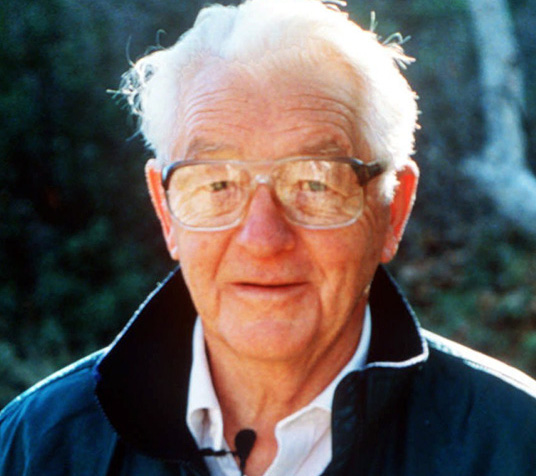
American writer Wallace Stegner 1909 – 1993

In this semi-autobiographical novel, a classic of American Modern Literature and set during the Depression at the University of Wisconsin, it isn’t surprising that the first person narrator, Larry Morgan, is a writer and so there are many references to the art, misuse, difficulties, and frustrations of such a profession.

Are writers reporters, prophets, crazies, entertainers, preachers, judges, what?

Is the gift, the talent, its own justification?

The process of writing fiction is an expression of  self-discovery: being free and relaxed enough to let the sub-conscious out. And when it comes out you grab it and write it down. All the experiences of the world, the good, the bad, the insignificant, and the inferred make up one’s past life and the sub-conscious arranges them into memories which may or may not be accurate and can sometimes be perverse.

From these memories, the talent springs – the activity of imagining – but most of us, when the ‘talent springs’, do nothing about it. Scenes, conversations, ideas, rehearsed retorts, and wishful decisions occur to everyone all the time but only the writers write them down. But to write it down, you need to be practiced at writing things down, putting the products of your senses into words, and knowing the difference between a gerund and the infinitive.

Writing takes talent but it also takes practice. You can teach the practice but you can’t teach the talent.

Crossing to Safety (1987) tells the story of the remarkable friendship between Larry (the narrator) and Sally Morgan, young, poor, intelligent, and curious and a slightly older couple, Sid and Charity Lang, already ensconced in the English Department, and to the Morgans, a wonderfully urbane, astute, fascinating, devoted, and wealthy couple who take the newbies under their luxurious wings.

It’s easy for a first person narrator to slip into the third – they could tell a story, just like Terry Hayes does in I Am Pilgrim, – just as it is equally easy for the third person to get so close to a character that it a-l-m-o-s-t becomes the first. That’s why this more usual knack is sometimes called close writing. In more literary circles it’s called free indirect discourse. I prefer the less formal.
What is unusual here is that Larry, Stegner’s  first-person narrator, has only just met Sid and Charity and knows nothing about how their past unfolded, nor do they tell him. This is not a problem for Stegner. He imagines the meeting and early courtship of Sid and Charity;

“Who is this boy?” I can imagine her mother asking. “Do we know him? Do we know his family?” Suppose they are sitting …”

Yes, an audacious technique but one that works given that imagining is what fiction writing is all about.

It’s also audacious to let a character, Charity’s sister, keep the name Comfort. It’s likely Stegner didn’t choose it; it just happened. Things like that often occur when writing fiction. I know of a novelist who, at 83,000 words, thought he had nothing but a pile of poo until out of the mouth of a young character came, out of the blue, the title of the thing. Not only did the phrase give the thing a name, and its theme, it also turned the pile of poo into a novel and out of relief and gratitude the author burst into tears.

It’s moments like these that one could easily believe that fiction comes unbidden, from another place, from another being: fate, a muse maybe, or even a spirit or god. It’s also the reason why you might hear young writers foolishly say, “Oh, actually it wrote itself.” That’s nonsense of course, but the feeling is real.

Being a semi-autobiographical novel, the events may be part of the writer’s past but the intimate moments, the conversations, and minute-by-minute thoughts must rely on imagination; imagined and written down.

The fulcrum of this quartet of characters is Charity Lang. She is forceful, controlling, opinionated, always right, passive aggressive, and never backs down. Two major scenes stick in my mind and will for some time to come. I can’t describe them as that would give too much away but the first revolves around preparation for a camping expedition and whether a packet of tea-bags was packed, or not. Seemingly a trite scenario but in the hands of Stegner it’s a pivotal moment in the building of Charity’s character. The second, the devastating climax, is about who should or shouldn’t go on a family picnic. Here the character of Charity is at its most prickly, unbending, and cruel. However, the reader understands her point of view, and it’s a tribute to Stegner that you also understand the three other points of view. It’s a shattering scene.

This is a book of rich language with a commitment to nature, happiness, and the human foibles that shatter or uplift our lives.

Here you can view an interview with Stegner from the early 1970s.

And here is an hour long documentary “Wallace Stegner: A Writer’s Life,” narrated by Robert Redford and produced only a few years before the writer’s death in 1993.

The book in various formats can be bought here.

I AM PILGRIM by Terry Hayes

Terry Hayes, English-Australian screenwriter and novelist

I think it was John Irving, the winner of both the National Book Award for a novel and the Oscar for a screenplay, who said that writing a movie is like swimming in a bath and writing a novel is like swimming in the ocean. T.H.

I Am Pilgrim has to be the holiday read to top all holiday reads!

And despite living up to the hype slashed all over its covers, it is also not what I expected. But it is long: 888p.
It begins traditionally enough with a baffling crime seemingly unsolvable and then several chapters of interconnected back stories. Then in Part 2 another novel begins: the development of a young jihadist, simply known as The Saracen, and his decades long quest to bring down America and so similarly destroy its ally, the Saud family, rulers of Saudi Arabia, whose leaders murdered his father.
It reads like a film script; not surprising since Hayes is a noted screenwriter, with short chapters, each like a single-set scene with usually a stinger of a last line; I call them waterfalls: they link smartly into the next scene, or, in a writing trope, they lead you to hastily turn the page. Lines like, ‘I was in the North Tower when it came down’ and ‘It was time to enter the dark and brooding house’ and ‘… it was a terrible thing I ended up doing to him.’

And then there’s the simple lists of what he plans to do and the outcomes he expects, to be followed by another page turning device: predicated hindsight – lines like “but I couldn’t’ve been more wrong” or “I should’ve taken more notice of the photo but I didn’t.” And the interest level goes up a notch or three.

The plot is international: Manhattan, Bodrum, Berlin, Jeddah, and the mountains of the Hindu Kush. The threat is not nuclear, or extraterrestrial, but, ironically for the times, viral. Firstly there is the murder in a sleazy hotel in Manhattan: a woman’s body is found in a bath full of acid, face down but because of the acid she has no face, and her fingertips have been removed as well as all her teeth. She is unidentifiable.

There is the first-person hero: a spook, an intelligence officer, a spy, a detective, and all-round nice guy who isn’t adverse to doing unspeakable things but only because he has to. He has many names so you are never sure which name is real. The villain, The Saracen, you know as a teenager and understand why he becomes the deliverer of evil; you almost like him. However, his unspeakable deeds are worse.

But then there is a death in Bodrum, Turkey, which the local authorities are convinced was due to misadventure. Our man knows it’s murder but needs to prove it. And all the while we jump back to The Saracen who is consolidating his self-manufactured weapon of mass destruction, starting with medical school. His is a very long term plan.

The faceless woman in Manhattan. The Saudi teen with revenge via mass-death on his mind. And a drug dazed tourist falling over a cliff to his death in Bodrum. Are they linked? Of course they are but for most of the book it’s hard to see how. But the deadly virus is manufactured, tested, packaged into 10,000 vials, and posted; the Saracen’s job is done. Our man’s task is to find out how and where the shipment is and when it will land. The climax is unputdownable!

Terry Hayes was born in Sussex in the UK but his family moved to Australia when he was five. As an adult after working as a journalist and investigative reporter he was hired by George Millar to do the novelisation of the original film, Mad Max (1979) and then subsequently several other Mad Max reincarnations and worked as a producer and/or screenwriter for TV shows like The Dismissal (1983), Bodyline (1984), Vietnam (1987) and Bangkok Hilton (1989) and several movies, including The Year My Voice Broke (1987), Dead Calm (1989), Payback (1999), and From Hell (2001). I Am Pilgrim (2013) is his debut novel and his second The Year of the Locust is yet to be released. MGM has acquired the film rights to Pilgrim with Hayes as writer but I wouldn’t be surprised if the project is re-done as a TV series; a far more suitable format for such a sprawling yarn, in my opinion.

Here is a very interesting, although over an hour long, interview with Hayes about writing I Am Pilgrim and where the inspiration came from.

You can buy the book in various formats here.

from a low and quiet sea by Donal Ryan

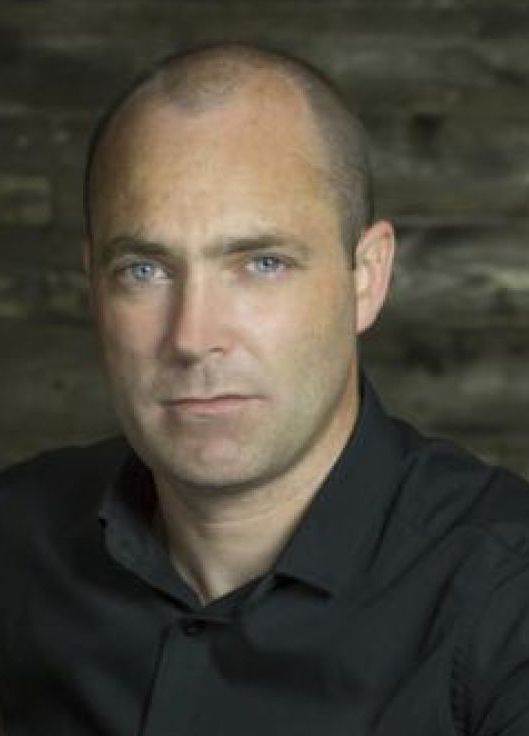
Irish writer Donal Ryan

Right from the beginning I should tell you that the writing is assured and fine, but for those of you who want signposts to tell you who says what to whom you’ll be disappointed: the dialogue is imbedded in the prose, unpunctuated, so this one may not be for you.

This is proving to be popular with contemporary writers: the last three books I’ve read have been written with minimal punctuation and certainly no  dialogue punctuation. I was skeptical at first but once you read it, reading it as if it’s being read to you, it’s clear what is dialogue and what isn’t.
 

  It’s about three men: Farouk, his country torn apart by war attempts to save his family and then can’t believe the worst of reality; Laurence, Lampy, a young man with an old chip on his shoulder the size of the bus he drives, a bastard but there’s absolutely nothing he can do about that – but it might be why Chloe doesn’t love him; and John a man bewildered and damaged by idle patents and left with ‘a filthy soul’. The final chapter begins enigmatically and these three men and their relationship to each other become clear only in the last pages. It’s really three back stories before the final chapter sews them all together; a very different form of a novel.

Farouk’s and Lampy’s chapters, and the final one are written in the third person but with many a patch of close writing: third person writing that’s  a-l-m-o-s-t in the first; but John’s chapter is all in the first. I don’t think there’s anything significant about that; it’s just how it turned out. 

The prose, in every chapter, is strewn with very long, sometimes beautiful, sentences full of clauses separated by conjunctions that create a tense tone of urgency as if the speaker has to rush and get as much information into the sentence as possible before they run out of breath because there’s a full stop coming up and there’s more and more important things to say and there’s unease in the voice, which sets the tone, as if there might be failure ahead and the rush is to beat it before the full stop comes into view and there, it’s almost upon you but there’s just another very important thing to say and yet another one and here it comes and there it is.

Alex Clark in The Guardian in mid-2019 acknowledged the boom in Irish contemporary fiction writing and credited its rise to fearless publishers and writers. However, writers have always been fearless; it’s the publishers alone that should now deserve the credit. Lucy Ellmann’s Ducks, Newburyport (2019) which takes eight sentences to fill over a thousand pages, was on the Booker shortlist that year, and was picked up by a small publisher Galley Beggar Press (GBP) which also took Eimear McBride’s A Girl is a Half-formed Thing (2013). That took nine years to find GBP and is considered a ‘difficult’ book. Form and style have broadened literary fiction’s borders and I don’t just mean with the diminishing use of punctuation. Colum McCann’s Apeirogon (2020) on the Booker shortlist for 2020 is called ‘a novel’ on the cover but isn’t: it’s a great read but it’s definitely creative journalism. The only thing made-up about it is its form. 

from a low and quiet sea was shortlisted for the Costa Novel Award and long listed for the Booker Prize (2018).

If it’s writing with characters deeply drawn and language that makes you read sentences out loud just for the joy of it then this one is for you. 

Here you can watch Donal Ryan reading from this book from a low and quiet sea.

You can buy the book here in various formats. 
 

Sea of Poppies by Amitav Ghosh

Indian writer Amitav Ghosh

This is what novels can do: take us away from what we know and set us down in other worlds, at other times, to see the universe from another angle and hopefully reassess our choices and privilege. Yet, we still, usually – well, I do – continue to read books about and written by, English-speaking muddle-class whities.

What is most remarkable about Sea of Poppies (2008) is the language:

A quartermaster lured the boy into the ship’s store with a mind to trying a bit of udlee-budlee. But chota as he was, young Benjamin didn’t lack for bawhawdery – set upon the old launderbuzz with a belaying-pin and beat him with such a will that his life-line was all but unrove.

He also assigns formal speech peppered with malapropisms to paint an innocent, although well-meaning, young Caucasian character through her attempt at what she thinks to be  proper conversation.

Also the wonderfully colourful Indian-English of yesteryear full of jangled word-order and inappropriate gerunds “too much not time to be arousing and uprising…’ juggling accents and idiolects from the lowest poverty-stricken rice farmer to a Zamindar, the Rajah of Raskhali who looses everything to indignant hubris.

And it isn’t just his wild, wonderful, and inventive lexicon but it’s also the exotic time and place full of words for staff, house geography, clothes, food, ship-craft, and colloquialisms.

You would think all this verbal unfamiliarity would send you rushing to the dictionary; a tiresome task if all too necessary – although reading it as an eBook allows this to be less so. But no. The overall meaning of a sentence, conversation, or paragraph is always clear even if some individual words are not.

One of the joys of the writing here is it’s inventiveness and possible authenticity. Ghosh acknowledges his debt to several publications, including Thomas Roebuck’s An English And Hindoostanee Naval Dictionary Of Technical Terms And Sea Phrases As Also The Various Words of Command Given In Working A Ship, &C. With Many Sentences of Great Use at Sea; To Which Is Prefixed A Short Grammar Of The Hindoostani Language (1813).

However, whether it is authentic or inventive doesn’t matter, it’s a joy to read, and reading some sections out loud is a very pleasurable thing to do.

The book, and it’s a big one, the first of a trilogy, is set prior to the first Opium War (1839-1842) when the British successfully came to the aid of the opium merchants when the Qing Dynasty of China banned the drug from its shores. It is divided into three sections: Land, River, Sea and centres around a schooner, the Ibis, and the exotic collection of humanity that find themselves on and below its decks as it sails from Calcutta to Mauritius.

The characters are varied, three-dimensional, and extraordinary. There is Deeti, a widowed poppy farmer saved from her husband’s funeral pyre by a handsome ‘untouchable’, Kalua; Zachary Reid, a mixed race American sailor; Serang Ali, the leader of the lascars and colourfully mangles the English language along with various other tongues; Neel Rattan Halder, a Raja convicted of forgery; Ah Fatt, a Parsi-Chinese opium addict; Paulette, a French orphan raised in India; Jodu, her childhood friend; and the extraordinary Nob Kissin Baboo, a would-be priest. All of these major characters, and many minor ones, have colourful backstories, some comic, some tragic, some heart-thumping, some tear-jerking but by part three of the novel they are all on board the Ibis, bound for Mauritius and their various destinies.

As well as all the above there is Ghosh’s descriptive, rich, and luminescent prose: describing the love in a young girl’s heart along with its negative opposite, not hate but cowardice for saying nothing for fear of rejection; describing the effect of the first lungful of opium smoke in a man’s breast, nulling the gravity in his limbs and creating delusions clean of doubt; to untying a knot on a bowsprit as it plunges a sailor into a mighty wave and out the other side, like threading a needle with courage.

It’s a great read and reinforces what novels do best: carry us away.

Sea of Poppies was shortlisted for the Booker Prize, 2008.

The epic story, The Ibis Trilogy, continues with River of Smoke (2011), and Flood of Fire (2015).

-oOo-

You can buy the book in various formats here.

Here you can watch an interview with Amitav Ghosh as he explains his sentiments behind Sea of Poppies.

And here is a little documentary with Ghosh as he talks about the background to his iconic Ibis Trilogy.

Homo Deus by Yuval Noah Harari

Yuval Noah Harari, Israeli historian and author

Yuval Noah Harari is not a historian of centuries, epochs, or nations. He is a historian of ideas.

“According to current scientific dogma, everything I experience is the result of electrical activity in my brain, and it should be therefore be theoretically feasible to simulate an entire virtual world that I could not possible distinguish from the ‘real’ world. Some brain scientists believe that in the not too distant future, we shall actually do such things. Well, maybe it has already been done – to you? For all you know, the year might be 2216 and you are a bored teenager immersed inside a ‘virtual world’ game that simulates the primitive and exciting world of the early twenty-first century. Once you acknowledge the mere feasibility of this scenario , mathematics leads you to a very scary conclusion: since there is only one real world, whereas the number of potential virtual worlds is infinite, the probability that you happen to inhabit the sole real world is almost zero.”

His delving under the covers of what makes things happen is usually about the compromises Homo Sapiens has made in order to get what it wants.

Modernity is a deal: “humans agree to give up meaning in exchange for power.”

He doesn’t explain how and why a country emerged, floundered, revived, and then flourished; he explains how the Dark Ages persisted for so long – the future was thought unnecessary – but then evolved into the Renaissance and eventually into modernity because of the invention of trust and its consequence, credit. And it is this expansion of ideas that maintains and powers our modernity, and although we are looking down the barrel of an environmental disaster, it is the evolution and development of ideas, and their consequences, that may be our salvation. Not God or the return of one, but our own endeavours.


Europe for centuries was a hotbed of conflict, disasters, and battlegrounds. Now, just sixty years after the last great conflict, World War II, Europe is the most stable, cooperative, and progressive region on Earth; mainly thanks to two other ideas: democracy and capitalism. Yes, at the moment there is an energy crisis, but no hint of war.


We once asked God to help us recover from illness; now we ask science whose credo is humanism. Religion still exists. Sapiens hasn’t completely lost faith in God, but we have found our faith in humanity.
It was thought for centuries that if Sapiens stopped believing in God law and order would vanish. But the greatest threat to global law and order today is not the secular nations, the Netherlands, Sweden, Vietnam, but god-fearing nations, Syria, Afghanistan, and bands of god-warriors, Boko-Haram, Islamic-State.

“Religion is any all-encompassing story that confirms super-human legitimacy on human laws, norms, and values. It legitimises social structures by arguing that they reflect superhuman laws.”

Religions: Hinduism, Christianity, Islam, and the like, but also Buddhism, communism, Nazism, and liberalism.
And humanism is the current one.

“If modernity has a motto, it is ‘shit happens’ so since there is no cosmic plan we can do whatever we want. We can even create paradise here on earth; we just have to find a way and overcome a few technical difficulties.” This is at the heart of the book.


Islam says do what God says, you servants, and you will be rewarded in Heaven; Christianity says even though you were created bad, you sinners, you must strive to be good; Humanism says create meaning, you humans, for a meaningless world.

This book was written pre Covid, 2015. But when referencing the Ebola epidemic in West Africa on 2014 prayers weren’t sent to Heaven (as was done as late as 1918 during the deadly Spanish Flu pandemic) but calls were made to stockbrokers, and shares of pharmaceutical companies working on anti-Ebola drugs increased to up to 90%. Now shares in Pfizer, Johnson & Johnson, and Moderna, and the rest have skyrocketed. They have the money to work on a cure, a vaccine in record time.

“For the stock exchange an epidemic [pandemic] is a business opportunity.”


If a woman in mediaeval Britain had sex with her married neighbour and worried later about her actions she would go to a priest, tell her story, and ask what should she do. The priest would say she must atone for her sin, say twenty Hail Mary’s, go on a pilgrimage, go without meat for a month, and put a lot of coins in the collection box. Today the woman would go to her therapist, tell her story and ask what should she do. The therapist will say “How do you feel about what you have done?”

What next? What comes after Humanism? … Dataism.

You must read the book to find out what that means.

You can buy the book in various formats here.

Here is a lecture given by Harari at the University of California in 2017 about this book, Homo Deus.

And here is a shorter TED talk from 2015 on “Why Humans Run the World.”

The Magician by Colm Tóibín

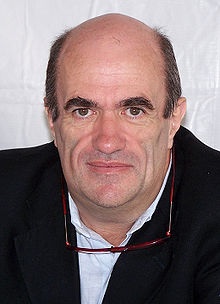
Irish writer, Colm Tóibín.

In 1984 I took my first trip out of Australia, to Europe. On a clear day while wandering through the old streets of Budapest I was fascinated by some of the old buildings, solid and substantial but on closer inspection I saw pock marks in the stone, little indentations that … I audibly gasped as I realised they were damage caused by bullets. I was born in 1952 but always thought of WWII as way way in the past. Here it was right in my face. The feeling in my stomach was significant and deep. These bullet marks may have been from the 1956 uprising but I didn’t know about that then; these bullet holes brought home to me the fear of war, bullets whizzing past you at head height, but in much the same way that Toibin’s new novel The Magician did. This is curious because most of the novel is set away from the war: they didn’t experience it.  But Tóibín’s gets inside the characters and, especially, Mann himself who battles with his reactions to things and what he should do, how he should feel, the guilt he felt by leaving Germany, his horror at what is happening to his country and countrymen, and his seemingly lack of control over his two eldest of six children, Erika and Klaus. Their sexuality, politics, and morals were free, fluid and difficult and epitomised the Germany between its wars and the Germany that Hitler wanted to bury. Mann kept his true sexuality hidden and it was only with the publication of his diaries well after his death that the extent of his homosexuality was revealed.

Thomas Mann was the second most famous German in his day: Einstein was number one. A Nobel Laureate (1929) his books were very popular but of the old school; elongated sentences, long and sometimes obtuse with philosophical passages and ideas about politics, art, and beauty, not unlike those of Henry James, another writer Tóibín successfully novelised in his novel The Master (2004). Ironically Tóibín’s writing itself is not at all like that. It is bold in its simplicity, short sentences plainly made and stimulating. There are very few adverbs; no-one ever says anything ‘accusingly’; no-one looks ‘disapprovingly’. There are no contractions – a Tóibín moniker – which gives the language a formal and serious tone. It’s as if Tóibín’s plain words paints deep feelings in the reader’s mind – or should that be, Tóibín’s plain words forces the reader to paint deep feelings in their own mind? 

There are passages about writing, especially concerning his three most famous works, Buddenbrooks (1901), his first novel about the decline of a family which launched his career; Death in Venice (1912) his popular novella about death and beauty; and The Magic Mountain (1924) the work that gained him the Nobel Prize. Thomas Mann understood that while Buddenbrooks was based on his own family, there was some source for it that was outside of himself, beyond his control. It was like something in magic, something that would not come again so easily. This is what the prolific novelist Alexander McCall Smith referred to when he said writing was about opening up the subconscious. This ‘magic’, this evidnece of ‘the muse’ can also be described as like watching a television scene and writing down what you see and hear. Mann experienced it and I’m sure Tóibín does too.

The detailed passages of Mann’s thoughts about war, literature, creativity, and desire lead me to think Tóibín must have done intensive research into the works of Mann, particularly his essays, diaries, and non-fiction, and even into the works of Mann commentators. However, I had no wish to follow him there in an attempt to prove that what he writes is correct; I don’t care if he is correct. What I do care about is the veracity, the verisimilitude, of this work, this novel. What Tóibín has written concerning Mann’s thoughts might indeed be novelistic creation, ie fiction, but its believability is strong. That’s a novelist’s job: to make the reader believe the fiction even if it might not be true.

The narrative covers Mann’s life from the age of sixteen (1891) in Lübeck, a small city north east of Hamburg in Northern Germany; the family’s exile in Switzerland in 1933 and then the USA from 1940 to 1950; and final tour of a very different Germany but settling in Kilchberg, just south of Zurich, Switzerland in 1952; to just before his death in 1955 at the age of eighty.

While Tóibín’s other novelisation of a writer and his work, The Master (2004), about Henry James’s failed attempt to become a noted playwright is more creative and successful; this work, although interesting and enjoyable, is more biographical, as if Tóibín felt obliged to stick to the truth, rather than creating his own.

Here is a video of a reading by Colm Tóibín from The Magician, and conversation with Friedhelm Marx, Chair of Modern German Literature at the University of Bamberg, given recently at the Thomas Mann House in Los Angeles.

You can buy the book in various formats here.

The Echo Chamber by John Boyne

Irish writer, John Boyne.

  ‘But you live in Croydon,’ he said.

  ‘What on earth has that got to do with anything?’

  ‘If you don’t know, then there’s very little point in me trying to explain.’

   ‘I’ll have you know that Croydon is becoming quite gentrified these days.’

   ‘I just prefer a postcode that begins with a SW, that’s all,’ said George.

‘My father instilled certain values in me from the start that have stood me in good stead over the years. Carrying a monogrammed handkerchief, for example. Having a good tailor. Matching one’s belt with one’s shoes. The stuff of civilised living.’

‘You can’t make life decisions based on letters of the alphabet.’

‘I don’t see why not.’

It sounds like Boyne’s channelling Noel Coward! But if you’re out to write a comic novel Coward isn’t a bad role model. 

Boyne calls The Echo Chamber, his 13th novel for adults, a farce and indeed it is; and it should be read as one. Outrageous characters with appalling attitudes, self-serving decisions with names to match. Boyne, I think, had a ball writing this one and after his pummelling via social media by internet trolls and hate-loving twitter-ites over his last YA book, My Brother’s Name is Jessica (2019) – he could’ve avoided a lot of angst had he called it My Sister’s Name was Jason –  he had a lot to say and scream at, and a lot to get off his chest.  

The plot involves a famous British couple, George Cleverly, a Michael Parkinson-like BBC TV talk-show host; his popular novelist wife, Beverly Cleverly, who since her first success now employs ‘ghosts’ to pen her novels; their three Children, Nelson, an anxious nelly who can’t make up his mind who he is but likes to wear uniforms; Elizabeth, a social-media acolyte whose narcissism is only second to that of the youngest, Achilles, who scams older men via his charm and good looks while waiting to get laid by any pretty girl who sees him. It’s a family to loath but you also hope it will suddenly see the errors of its ways and move to the Outer Hebrides, or at least to somewhere without an Internet connection. 

This book is a lot of fun and is nothing like anything Boyne has written before. I hope he’s freed himself from his victimhood, taken a deep breath, and, since he’s blessed with booming sales, he will eventually, once all the PR appearances, chat-shows, and media interviews are over, settle down and chill out and let his novelistic talent that created, The Absolutist (2011), The History of Loneliness (2014), and (his masterpiece) The Heart’s Invisible Furies (2017), surge again. THAT I’m looking forward to very much. 

The Echo Chamber is a great quick read to make you laugh out loud, groan a few times, and blow away a few lockdown cobwebs.  

Tring, a small town NW of London, in Herefordshire, holds an annual Book Festival; you can watch John Boyne being interviewed by fellow writer, Clare Pooley, at the 2021 event and talking about The Echo Chamber here

You can purchase the book in various formats here

The Promise by Damon Galgut

The South African writer, Damon Galgut

It’s been 7 years since Galgut’s last novel, Arctic Summer (2014), a novelisation of the latter years of the English writer E. M. Forster, so The Promise, his latest, has been greatly anticipated. 

The most interesting aspect of this novel is the narrative voice. The writing is free-form: no quotation marks; dialogue and narrative merge – but you’ll be surprised how distinct and recognisable the dialogue is –  and usually in the 3rd person but with a little 1st, (my mother died this morning) and even a  peppering of the 2nd, like he’s talking to me, you, the reader, throwing asides at you, (check out the pic if you don’t believe me). Sometimes a character speaks aloud in a sentence started by the narrator; sometimes the narrator is embodied with feelings and sarcasm (Alwyn and his spouse, sorry, his sister…) It takes a few dozen pages for this free-form to meld into a tone, a voice, an attitude, but it does, and when it does you’ll be greatly relieved. You can relax, and once you do and let this voice work on you, you will have an entertaining reading experience. Although the narrator is unnamed, as most 3rd person narrators are, this one has attitude, likes, dislikes, and lets you know them. Changes of scene and characters happen mid sentence giving the narrative an unplanned wandering song-line, like a slideshow on a phone. It gives the work an attractive chatty tone but one that leads you deep inside the minds and actions of these flawed characters.

The book is divided in to 4 sections, each for one of the main characters of the Swart family, Ma, Pa, Astrid, and Anton. But the main character is Amor, the youngest, who is a child of 10 when her mother dies. However, days before, on Ma’s death bed, Amor overheard Ma’s dying wish: Salome, the family’s loyal, long-serving, bare-foot black maid, is to be given ownership of her rented small and ramshackle house and land. Pa agrees. This is The Promise. Over the following decades South Africa sheds its hated Apartheid system, Nelson Mandela becomes president, black rule fails almost everybody’s expectations and hope for a brighter and more prosperous future; not unlike the trajectory of the disintegrating Swart family; like the slow decline of Salome and her house. Amor goes her own way but the promise is forever on her mind and whenever she returns (Return to South Africa feels more like a condition than an act), only for family funerals, her determination to have the promise fulfilled is thwarted. Will the promise be fulfilled when she is the only one left? 

The knot of races in Galgut’s native South Africa seems never to be unloosed. This story could be read as a metaphor for the country; as could the plight of Salome; as could Amor’s bruised determination; yet there is hope in that she could be the only one left standing with a future to build, albeit an unknown one and obviously difficult. 

The telling, but unconscious, thoughts of the whites (… so many black people drifting about as if they belong here) pepper the text and each time cement the notion that change will always remain elusive. Do all the whites have to die before the blacks can claim their place? 

Highly recommended.

Galgut’s The Promise has made it onto the 2021 Booker Prize long list. If it gets to the short list, as it should, it will be his third: the first In a Strange Room in 2003 and The Good Doctor in 2010. The links will take you to my blog posts. 

You can buy the book, in various formats, here

UPDATE November 4 2021: Galgut’s The Promise won the 2021 Booker Prize!

This House is Haunted by John Boyne

Irish writer, John Boyne.

In my attempt to read John Boyne’s entire work for adults I’m continually impressed by the variety of people, places, times, and voices he uses.

  • 2000: The Thief of Time – a story, from 1758: the adventures of a man who forgets to die
  • 2001: The Congress of Rough Riders – about William Cody, the son of Buffalo Bill. 
  • 2004: Crippen – 1910, London, the body of a singer is discovered
  • 2006: Next of Kin – 1936, a cunning son tries to overturn his father’s will
  • 2008: Mutiny on the Bounty – the classic story told by the cabin boy, Jacob Turnstile
  • 2009: The House of Special Purpose – early 20 century, the Russian Tsar and revolution
  • 2011: The Absolutist – Tristan Sadler and his shocking secret of WWI
  • 2014: A History of Loneliness – an Irish priest confronts faith, friendship, and conscience
  • 2017: The Heart’s Invisible Furies – the life and times of Cyril Avery, Boyne’s masterpiece
  • 2018: A Ladder To The Sky – a would-be but uninspired writer finds other ways to be one
  • 2020: A Traveler at the Gates of Wisdom – one family, the 1st century to the near future
  • 2021: The Echo Chamber – a comic novel of social media – to be released 5th August

This House is Haunted (2013), as the jacket tells us, and the title implies, is a ghost story. By being so upfront about what the book is, Boyne undermines any reticence a potential reader, like me, might have about ‘believing’ such a story. I don’t usually read ghost stories and wouldn’t necessarily have chosen this one except for the author. But knowing what it is, there is no need for Boyne to ‘convince’ you to go along with it; even as you open page one you are already going along with it.  

Boyne tells the straight-forward story in the past tense, in a first person narrative, as a young, determined, but plain woman, Eliza Caine in 1867. It’s not often that a writer writes in the gender not their own; Peter Carey, Jill Dawson, Ann Patchett have tried it, most don’t. Writing in the third person about a protagonist of another gender is very different to writing as the protagonist of another gender. Eliza faces an uncertain future after the death of her father and therefore unhesitatingly takes a governess position to the Westerly children of Gaudlin Hall in Norfolk. Her arrival is, of course, on a dark and stormy night and the house is large, shadowy, and turreted. The back story and her attempts to meet the seemingly elusive parents, to understand the deaths of three out of her four predecessors, and her growing relationship with enigmatic Isobella, quiet Eustace, and the other tight-lipped staff constitute the narrative; unexplainable incidents abound until Eliza is forced to admit, mainly to her practical self, that she is confronted, not by one spirit, but two. Who are they, and why are they still there? 

Like Peter Cary in My Life as a Fake, and Ann Patchett in The Dutch House both avoid any writerly pitfalls – writing in another gender – when it comes to matters of sex and romance by either making their protagonists uninterested in all that stuff (Carey) or not mentioning it at all (Patchett); Boyne also avoids such pitfalls by making his heroine especially plain and seemingly resigned to her probable spinsterhood. Good and sensible choices by all three, I suspect. 

The climax is, as expected, dramatic and almost filmic in its ghostly effects and although the ending is relatively happy – no spoilers here – it has a sting in its tail. 

This is a holiday-read, never demanding, always intriguing and for those of you who are familiar with this genre, I expect, completely satisfying. 

You can buy the book in various formats here.


The Lonely Man by Chris Power

British writer Chris Power

I was intrigued by a review of Chris Power’s A Lonely Man by Zoë Apostolides in the May 5 edition of The Financial Times for two reasons: the reviewer dubbed it ‘a literary thriller’ and used the word ‘postmodern’. I downloaded it immediately.

postmodernism: a late-20th-century style and concept in the arts, architecture, and criticism that represents a departure from modernism and has at its heart a general distrust of grand theories and ideologies as well as a problematical relationship with any notion of “art”.

Oxford Dictionary

Literary theorists, usually critics, search for patterns in the literary output of the recent past. In simple terms what they found was a tendency ‘away’ from the well-plotted naturalistic narrative to a freer, less neat product. One of the postmodern techniques is incorporating the world of the writer into the world of the written; for example auto-fiction. Other examples of literary postmodernism are parody, unreliable narrators, and the abandonment of a single theme.

Although I’m not a great believer in genres, I am interested in how writers write, what the literary industry will allow, its latest trends, and how best to tell a story, but always with the reader in mind. Postmodernism, I think, lets the reader slip from the top position of the writer’s responsibilities; to be replaced by the writer.

Robert Prowe (anagram of Power), with his wife Karijn, live in Berlin. He is a writer trying to write a novel but it isn’t going well. He meets Patrick, who appears to be a rather dishevelled drunk, in a bookshop and then on a few other occasions until they form a friendship, of sorts. Patrick is a writer too and also struggling, but as a ghostwriter for a Russian oligarch, Sergei Vanyashin, who “pissed of Putin and had to get out of Russia” and so wants to write his memoir to clear his name, but, it seems, at Putin’s expense. Robert finds Patrick’s story of his meeting with Vanyashin not only fascinating but also inspiring. The meeting is described in novelistic detail until you, the reader, realise that what you have just read is not narrated by Power’s third-person narrator of A Lonely Man, but narrated by Robert and is his first attempt at novelising Patrick’s story. Robert’s dilemma is what can a writer use? Is Robert thieving or creating? The ‘thriller’ element is the threat felt by Patrick from Putin’s henchmen is transferred to Robert, but this only works if you, the reader, finds this transference plausible. This reader didn’t.

The other postmodern element is the incredibly un-neat ending: the henchmen certainly make their threatening presence felt, but then just walk away. This blunt ending feels less postmodern and more like a literary waterfall full of the expectation of a sequel.

I always enjoy writers writing about writing, and here the writing is assured and competent, but this ‘literary thriller’ did not, for this reader, live up to the hype.

You can watch an interview with Chris Power here.

And here you can buy the book in various formats.