Wifedom by Anna Funda

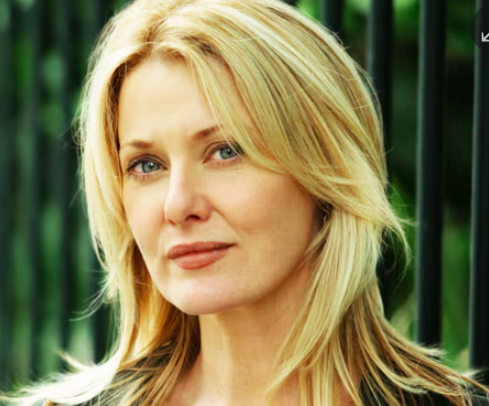
Australian writer, Anna Funda.

Yes, Wifedom (2023) is about George Orwell’s largely forgotten wife, Eileen O’Shaughnessy, and the important, yet unacknowledged role, she played in his life and work, but it is more than that. It is an excoriating assessment of the general neglect of women who are gathered by artistic men for their own personal and artistic betterment.

A high-wire act is not awe-inspiring if you can see the wires. Invisible and unacknowledged, a wife is the practical and often intellectual wiring that allows the act to soar; and for it to be truly astonishing, the wires, and the wife need to be erased both at the time, and then over time.


Her portrayal of George Orwell – real name, Eric Blair – reveals him to have been cantankerous, needy, useless at any manual work, generally ill and egocentric without anything, except his writing, to be egocentric about. A sexual predator and a misogynist: he treated women as mere service providers. Also, Funda doesn’t hide her mild contempt for Orwell’s many biographers, all men, for erasing Eileen O’Shaughnessy from their books just as Orwell did from his work, like some male club of matedom keeping it all in house, slaps on the back and “Well done old chap!” But remember, in the mid twentieth century, patriarchy was still the dominate force.

Funda has come under some criticism for ‘trashing’ a famous writer’s reputation, but as she explains in the text, a ‘good’ book can be written by a ‘bad’ man. Understanding more about him, his wife and marriage doesn’t lessen her admiration for Orwell’s work – she may not now love the man but she still loves his writing.

I read Funda’s first book, Stasiland (2002) and loved it for telling compelling untold stories of life behind the Berlin Wall. I read All That I Am (2011), her first novel, and remember nothing about it. Here, Funda, has audaciously combined biography, memoir, polemic, social commentary and imagined conversations: fiction – it’s a heady mix and a great one – to create a truely memorable world of a forgotten woman who contributed much to the artistic output and fame of her husband. Her life with Orwell was one of poverty, struggle, sacrifice and determination but with an unwavering belief in his art and the ultimate success of it.

She followed him to Spain where he wanted to fight against Franco. He didn’t do much; she did a lot; she worked for the political organisation he was fighting for. After Franco’s victory she, her colleagues, and Orwell were in danger. She narrowly escaped imprisonment – when some of her colleagues did not – and, along with her own, saved his life. In his Homage to Catalonia (1938), his account of his experiences in the Spanish civil war, which she edited and typed, she is never mentioned.

He needed her but she didn’t deserve him.

So women are said to have the same human rights as men, but our lesser amounts of time and money and status and safety tell us we do not.

Animal Farm (1945) and 1984 (1949) are now classics, his most famous works, and rightly so, but both had great input from the writer’s wife, not only as editor, typist, and researcher, but also as a contributor and sounding board, sometimes in bed, for his ideas, slip-ups, and decisions.

Funda reprints Eileen’s letters to friends where you can hear her whimsical tone, sense of humour and self-deprecation which are characteristics of the ensemble of characters in Animal Farm. You can ‘hear’ Eileen’s influence.

The golden age of feminist literature may be over but here’s one that should, and probably will, be added to that lexicon. It’s a great and uplifting read. Highly recommended.

Here is a fascinating interview with Funda by Sarah Ferguson on the 7:30 Report from July 2023.

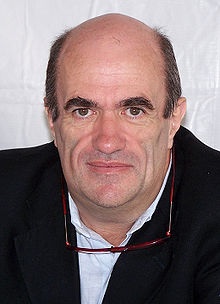
A Guest at the Feast – Essays, by Colm Tóibín

Christmas Reading I

I’m usually a fiction tragic but anything my Colm Tóibín is worth reading so I was happy to take his new essay collection away with me on my Christmas break.

Most, but not all, of these essays were originally published in the London Review of Books. The book is divided into three parts: the first part is basically memoir ; the second concerns his writings about the Catholic Church and, in particular, the Popes and the Vatican; and the third is about writers – Marilynne Robinson, Francis Stuart, and John McGahern.

The most engaging is the first: Cancer: My Part in its Downfall (LRB 2019) and not just because of the opening line – “It all started with my balls.” He charts, with candour and detail, what led him to see a doctor, his examination, procedures, diagnosis (testicular cancer which had spread to his lungs), more procedures, surgery, chemo therapy, and recovery. He obviously wrote the piece well after it was all over; how else could he have written it with such dry humour, frankness, and detachment. Despite the content it’s a very revealing, educational, and entertaining piece of writing. The namesake piece, A Guest at the Feast, first published by Penguin in 2011, is a memoir of his early recollections about growing up in the small town of Enniscorthy, in County Wexford, south east Ireland in the 1960s. His early life was dominated, like all children in Ireland at the time, by Family and the Catholic Church with very little space between them. A Brush with the Law (The Dublin Review 2007) centres on his years as a journalist and the fight to repeal, or at least amend, the laws governing homosexuality in Ireland.

Part Two concentrates on the Vatican, Karol Józef Wojtyła who became Pope John Paul II and his determination to avoid any change whatsoever in policies concerning morality, women, and child abuse; Among the Flutterers (LRB 2010) the dragging of the Church, kicking and screaming, into the 21st century causing it to begrudgingly admit to the coverup of child abuse by the clergy, and the ongoing fight for apologies and compensation; The Bergoglio Smile: Pope Frances (LRB 2021) focuses on the current Pope and his very vague attitudes and activities during the political upheaval of the 1970 and 80s in his native Argentina, involving kidnappings, murders, and ‘disappearances’; The Ferns Report (LRB 2005), the official Irish government inquiry into the allegations of clerical sexual abuse in the Diocese of Ferns in County Wexford which placed the blame for child abuse firmly in the hands of the Church and the Police.

Part three contains essays on the American writer, Marilynne Robinson, and how her Christianity pervades her work; Francis Stuart, the controversial Iris writer (though born in Townsville, Queensland in 1902) who spent most of WWII in Berlin broadcasting to Ireland. He said he didn’t support Hitler, he supported change. His latter fiction, all inspired by his time in Germany, tries to explain his position and exonerate himself in the eyes of his readers; and John McGahern (1934-2006) arguably one of the most important Irish writers. His work is imbued with darkness, the Catholic Church, abusive fathers, long-suffering sons, and stoic women.

Above all this book is shadowed by the Catholic Church and Tóibín’s response to it. He was raised a Catholic, contemplated the Church as a career to ‘hide’ his homosexuality, now shares a Los Angeles home with his partner, Hedi El Kholti, a writer and editor. He teaches at Columbia University and was appointed Chancellor the University of Liverpool in 1917. He has written numerous books of fiction, non-fiction, poetry and plays and is ‘perhaps Ireland’s greatest living male writer’.I don’t know Tóibín’s current belief, or stance, on Christianity but what I took away from this collection of essays was that the Catholic Church, the Vatican, is going to continue to decline in influence, and may never recover, because of its basic premise, and number one flaw, indeed, it’s paradox: we are born sinful but must live to be good.

You can buy the book in various editions here.

Unfettered and Alive: a memoir by Anne Summers

anne summers pic
Anne Summers: journalist, feminist, and writer. “If we constantly rewrite history to fit how we see things now, we forget how things used to be and, equally important to future scholars, how we used to see them.”

Anne Summers and her publishers have produced a handsome book, and it begins, unusually, with a letter to her thirty-year-old self: Dear Anne, and so, consequently, it’s written in the second person; and it sets the beginning as at that time, when she was thirty, and summarises what went before which was told in her first autobiographical work, Ducks on the Pond 1945-1976 (1999).  So this, a re-cap, is a neat and imaginative way to catch you up, especially if you haven’t read the earlier work; which is, by the way, now only available on Amazon US at $115.64 for the second-hand hardcover, which is cheaper than the $191.89 for a second hand paperback! However, if you can’t find a copy anywhere else, here’s the link.

For someone who, from an early age, felt profoundly at odds with what the Adelaide world of her Catholic childhood promised her: an identity based on a man and the success, or otherwise, of their children and a future slowly fading into cranky old age and invisibility, she has stubbornly and courageously shunned all of that and forged her own path that has turned out to be something like an open-ended roller-coaster. It’s a crackling tale: ecstatic highs and scary lows; and all along the way the reader gets an insight into the characters she engaged with and the history we all lived through, all in a chatty and self-effacing tone that has you barracking for her as she strides around yet another corner into the unknown, including South Africa, the badlands of western Pakistan – without a hijab, and later as Chair of Greenpeace International which took her, well, everywhere.

anne summers 1980
Anne Summers at the National Press Club during the 1980 CHOGM meeting in Australia directing a question at British Prime Minister Margaret Thatcher. photo: Allan & Unwin

The personal is also covered. Her uneasy relationship with her parents, especially her father; the painful rediscovery of her paternal grandfather; there’s treachery and betrayal from colleagues and friends; a health scare; and finally meeting the love of her life, and that started in the photo-copy room! He’d been around all along!

The political years of this chronicle cover Fraser, Hawke, Keating, Howard, and Rudd/Gillard/Rudd: a turbulent, often frustrating – for us, I mean – but never a boring time in Australian politics. Of special note is her calling out the appalling misogyny Prime Minister Gillard received at the hands of the shock jocks, political opponents, and a particular, but faded, cartoonist. Her insights and insider status make fascinating reading as seen from her media perspective (her attitude to Keating changed; her attitude to Howard didn’t); and then in the middle of all that her successful empire building (and spectacular fall!) at the top of the media tree in New York “…if I can make it there, I’ll make it …..” you know how it goes! Well, she did and then, almost immediately, she didn’t!

But when down, or idle – something she hates – an opportunity passes her window or, more usually, she creates one, and so grabs it with both hands and she’s off again!

Running through all of this, is her strong advocacy for the rights of women; their professional fulfilment, all their wishes, needs, and ideas taken seriously, and the universal understanding that they make mistakes but deserve to, and be allowed to, try again. What a rich, informative, and fulfilling read this is.

anne summers stamp
2011 Australia Day postage stamp featuring Dr Anne Summers AO.

I’ve known Anne for a few decades usually meeting with mutual friends over a sumptuous meal and a bottle of good red wine or three but I wasn’t prepared for the breadth and depth of her worldly participation nor her personal honesty.

I find scheduling reading time a sign of a good book; but you’ll also need to schedule a breather now and then. Don’t read this in bed. You’ll never get to sleep.

You can find the book here, and the kindle version here. For Indonesian readers you can find the book here.

Be very careful when Googling Anne; you’ll undoubtedly get the English Ann Summers (Ann, no ‘e’) who is a designer and marketer of raunchy women’s underwear.