Bloody Poetry!

Even fonts can get in on the act.

I’ve always had a love-hate relationship with poetry: I love mine but hate everybody else’s.
In the part of my brain where poetry lies there are only four (see below) rattling around like lost beach-balls, Robert Browning’s Porphyria’s Lover, Robert Frost’s Out Out …, William Carlos Willimas’ To a poor old woman, and Les Murray’s An Absolutely Ordinary Rainbow: the first because of the lines “ … and all her hair / In one long yellow string I wound / Three times her little throat around,/And strangled her, …”; the second because it’s about the poetics of a fatally amputated limb in a milling accident; the third because of the line “a solace of plums” and its punctuation: there is only one punctuation mark, a full stop, that happens to be in the middle of a line; and the last because of the image, “There’s a fellow crying in Martin Place.” I swore once never to read any Les Murray because he described prose as poetry to the edge of the page. I thought it trite, a lazy thing to say, absolutely untrue, and completely missing the point of the question, but then maybe even he resorts to triteness when he doesn’t know the answer. Anyway, a fellow writer, Katherine Thomson, told me I should read it; I did and it stayed.
What these four poems have in common is that they are all narrative poems. They are all remnants of a poetic tradition that was once lauded and common place but we don’t value narrative poems any more. Today poetry is praised for imagery, and the more personal the better. Spring seems still to be a popular subject.
I would never write a poem about spring. I might write a poem about a murder in spring. I could very well write a poem about amputations in autumn (“limbs falling like leaves” Ha!).
I took heart when I discovered Howard Stewart’s and James McAuley’s attempt, in 1943, to debunk ‘the modern’ with the invention of Ern Malley. They won the battle but lost the war. Even George Bernard Shaw got into the act and put an end to the jape by declaring that Stewart and McAuley, by abandoning their rigid poetic rules had ‘accidently’ written good poetry. Ern Malley was taught, up until the 1970’s in American colleges and universities and in the Penguin Book of Modern Australian Poetry (1991 ed. John Tranter and Philip Mead) Malley’s entire oeuvre is included. I would like to see the Malley poems attributed to Stewart and McAuley; they were, after all, their creators.
The lesson from The Ern Malley Affair is that everybody can write poetry; everybody should and everybody does. The four poems mentioned above were written with an audience in mind: that’s probably why they have stuck with me. Modern poetry is, generally, not. Modern poetry is written with only the poet in mind: it’s poetry as therapy, which is as good a reason as any.
So, here’s a therapeutic poem with an audience in mind; it’s called, funnily enough, Poetry.

Poetry
Poetry poetry
What is it you are
A house made of cards
A heart in a jar

Poetry poetry
Get out of my hair
I’d rather play golf
Give birth to a chair

Poetry poetry
Leave me alone
There’s dishes to do
And people to phone

Poetry poetry
Get out of my sight
It’s not about you
I’ve novels to write

Poetry poetry
You’re a pain in the neck
A stacked deck of hopes
But wait just a sec

Poetry poetry
You’re dead as din Laden
Dead as a coffin
Dead as a rhyme

Porphyria’s Lover: http://www.poetryfoundation.org/poem/175584
To a poor old woman: http://www.poemhunter.com/i/ebooks/pdf/william_carlos_williams_2004_9.pdf
Out Out …: http://www.poetryfoundation.org/poem/238122
An Absolutely Ordinary Rainbow: http://www.lesmurray.org/pm_aor.htm

Reading is like travelling

Featured image

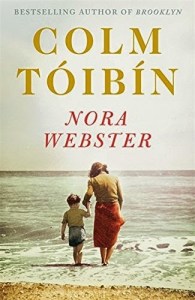
I indulge in Google alerts. I have one email alert for Cólm Tóibín. Every time his name is mentioned, anywhere, I receive an email and a link to the article. In this way I have read every English language review of his latest book, Nora Webster. I had one for Virginia Woolf but all I got were picky reviews of Albee’s play so I deleted it; and I have a Google news alert for ‘literature’ (as well as Books and Writing).

Because of this I received recently in my ‘personalised Australian Edition of Google News’ an item called “What makes the Russian Literature of the 19th Century So Distinctive?” It came from a New York Times column called Bookends where two writers ‘take on questions about the world of books’. It was in this article that I encountered for the first time, Francine Prose. I had never heard of her. I hadn’t heard of the other writer either, Benjamin Moser, but it was the name ‘Francine Prose’ that caught my attention. It sounded pretentious. Is there a poet called ‘Phoebe Poetry’? I could google it and find out but instead I googled Francine Prose. That is how I came to know the book “Reading Like a Writer” which, since my blog is ‘writing about reading and writing’ I thought I should have so I downloaded it as an ebook; it took less than a minute and I didn’t have to leave my desk. The fact that it was billed as a ‘New York Times Bestseller’ may have also had something to do with it. When on a wet and warm Ubudian Friday afternoon I delved into it I came upon a chapter on Chekov and in particular her line “as my bus pulled out of New Rochelle, I began Chekhov’s “The Two Volodyas.” I immediately went to ebooks.adelaide.edu.au (click the link and you can go there too) where everything out of copyright – i.e., all the classics – is available for free, and read “The Two Volodyas” and so I was prepared for whatever she was going to relate about the writing of Chekhov and in particular this story. Ms Prose is, or was, also a creative writing teacher and the point of this chapter in her book was to explain that Chekhov undermines every creative writing rule she had confidently confided to her students. “Don’t listen to me,” she shouted, “read Chekhov”.

From a Google alert on my screen in Ubud, Bali, I travelled to a sleazy bus station in New Rochelle, New York, to a scatty young 19th century Russian bride in love with two men, but never at the same time, and back to you, my friends, with a message – although one of Chekhov’s lessons is that you don’t need one – that modern technology has never been so supportive of our creative and entertaining lives.

If you take nothing from this little rant take this: set up Google alerts for whatever tickles your fancy; armchair travelling has never been so easy, so informative, and so entertaining.
If you would like to know more about Google alerts you can email me at michaelkfreundt@gmail.com or ask Google.

There was no reason for me.

I know how he feels.

“I took it for granted that like most of the billions of people who are born and die on this planet I was just an accident. There was no reason for me.”
Are You Somebody?
– Nuala O’Faolain.

I often find books on my shelves that I have never seen before. Where do they come from? They pile up, literally, and having lost an entire life’s library of books and music CDs when we moved overseas four years ago I am not as attached to them now as I once was. Occasionally I pick out some of these volumes that I know we will never read and swap them at a bookshop in my new hometown for ones that we might. I did this recently with five and came back with two: Barbara Klingsolver’s The Poisonwood Bible and Nuala O’Faolain’s Are You Somebody? The first I chose because a very good friend recommended it and the second because the author was Irish and my literary hero at the moment is that other quintessential Irish writer, and very much alive as O’Faolain is not, Colm Toibin.

This morning, a writing morning, has not begun well. An attack of mild stomach-ache, and the resulting consequences have not inspired any creative juices; until I read O’Faolain’s introduction to her memoir and the above quote jumped out at me.
I thought immediately of my mother.
I have a favorite photo of my late parents taken about the time I was born. They were at a party although they were by no means party-people. My father liked a drink but not insurance so when he died suddenly when I was six the family suffered greatly. The party may have been at Christmas time or New Year’s Eve; I was born in late September. You do the maths. This family joke has been bandied about all my life and I am quite willing to believe it is true. The combination of the word ‘accident’ and the phrase ‘no reason’ sent me scurrying to my laptop; it is after all a writing day and if I cannot make headway with my current project (Veronica II) I must write something.

This is it.

From my early adulthood, but, really, for as long as I can remember, I’ve always had the feeling that I wasn’t born by accident, but raised by accident. There didn’t seem to be a plan, a policy, of what to do with me. I wasn’t particularly upset by this; all kids, I think, just accept their life as their life. What could possibly be the alternative?

I was the last of four children and all my siblings were in their teens when I came along.

Parental decisions seemed to be made on the spot, depending how they felt at the time. When I received good marks, which was usual – I was the teacher’s pet kind of child – my mother’s reaction was usually stern and her parental guidance went along the lines of ‘be careful not to get too big for your boots’; ‘the higher you climb, the harder you fall.’ This was normal I thought. Years later I understood this fear of being noticed came from her German background and that both sides of my family did not have a nice time during the two world wars when Germany was the enemy. She would like report card phrases like, ‘fits in well’, ‘never a nuisance in class:’ don’t stand out and all will be well.

My mother remarried when I was nine. My step-father never spoke to me. Nobody thought to tell me what I was to call him so I didn’t speak to him either, which was easy; he was deaf. I had four very much older step brothers, the youngest two were still at home, working the farm. Then the transition from teens into adulthood (late 60s South Australian wheat belt) followed a predictable path. You left school and there was a party. You got your driver’s license and there was a party. You had all your teeth out and there was a party. You got engaged and there was a party. You got married and there was a really big party.

Dentures were considered necessary and modern. The four adults on the farm went to bed each night with their teeth in a Vegemite jar full of murky Steradent water. We were a ‘with it’ family. When I came home from school one day having been subjected to a dental examination, courtesy of the government, I told my mother I had to have 4 teeth removed and 16 fillings in order to save them. She thought this unnecessary and uneconomical. ‘Get them all out while you’re at it; I’ve got plenty of empty Vegemite jars in the cupboard’ was her thinking.

I was still at school and I was already breaking the party line.

During my high school years when my step-siblings had successfully followed the party line and left the farm my music lessons by lazy teachers, spurred on by a belief that young people wanted to play pop songs, were scheduled for a Monday night which meant staying with a relative in town as I would miss the school bus back to the farm. I wouldn’t understand until I was much older that for my parents, having the house to themselves, at least for one night a week, had its own rewards.

Childhood memories can be strong but usually rest on shaky ground. I would not be surprised if science one day unequivocally discovers that childhood memories are a complete adult fabrication. However these are my memories, my fabrications, and what I have just done, it seems, is delve, briefly, for the first time into memoir.

I have plans for an autobiographical work, covering much of the above material, but written as fiction. Fiction is a great way to tell the truth, but in order to make it clear you have to lie about it a little. Not the truth of plot but of behaviour, feelings, and the reasons for things.
It would be interesting to write the above ‘report card’ scene or the ‘dental’ scene from the mother’s point of view. That would explain a lot: close writing (free indirect discourse – see previous blogs about this) would do more to colour the inner life of the mother that simple reportage would not permit. Fiction allows such literary devices, memoir does not.

So, I passed, what I thought was going to be, a fruitless day, literarily speaking, by writing a piece of memoir; and inspired by a piece of reading. There’s a lesson in that.

What I’ve learnt from writing a novel

Featured image

 This is my desk; and yes, that’s a peacock on the right, made out of sprite cans. I stare at it a lot.

What I’ve learnt from writing a novel
There is always a starting point but you don’t have to have an ending. The idea for Alex Miller’s Autumn Laing came from the sound of a voice in his head; a strong, determined, female voice. He had no idea where this would lead. The idea for Colm Toibin’s widow-novel, Nora Webster, came from the visit of a recent widow to his house and he married this idea to an autobiographical one; his father had died when he was twelve. In the first chapter of Nora Webster there is the seed that leads to his novel Brooklyn; he abandoned the widow idea for the immigrant idea, so strong it must have been. He didn’t come back to the widow idea for twelve years. However there has to be an idea, something, a seed, even though you may not know what it will grow into.

Next: try it. If the idea came from an overheard conversation then try to write the conversation; it might take you somewhere unexpected and stimulating. If it is a place, write about what makes the place so significant; how does the place feel? How does the place make your protagonist feel? No matter how you begin, at some point you must make it clear where you are, even if the location is nowhere; you know as a reader that you like to know where the narrator is, where the story is happening, or has happened.

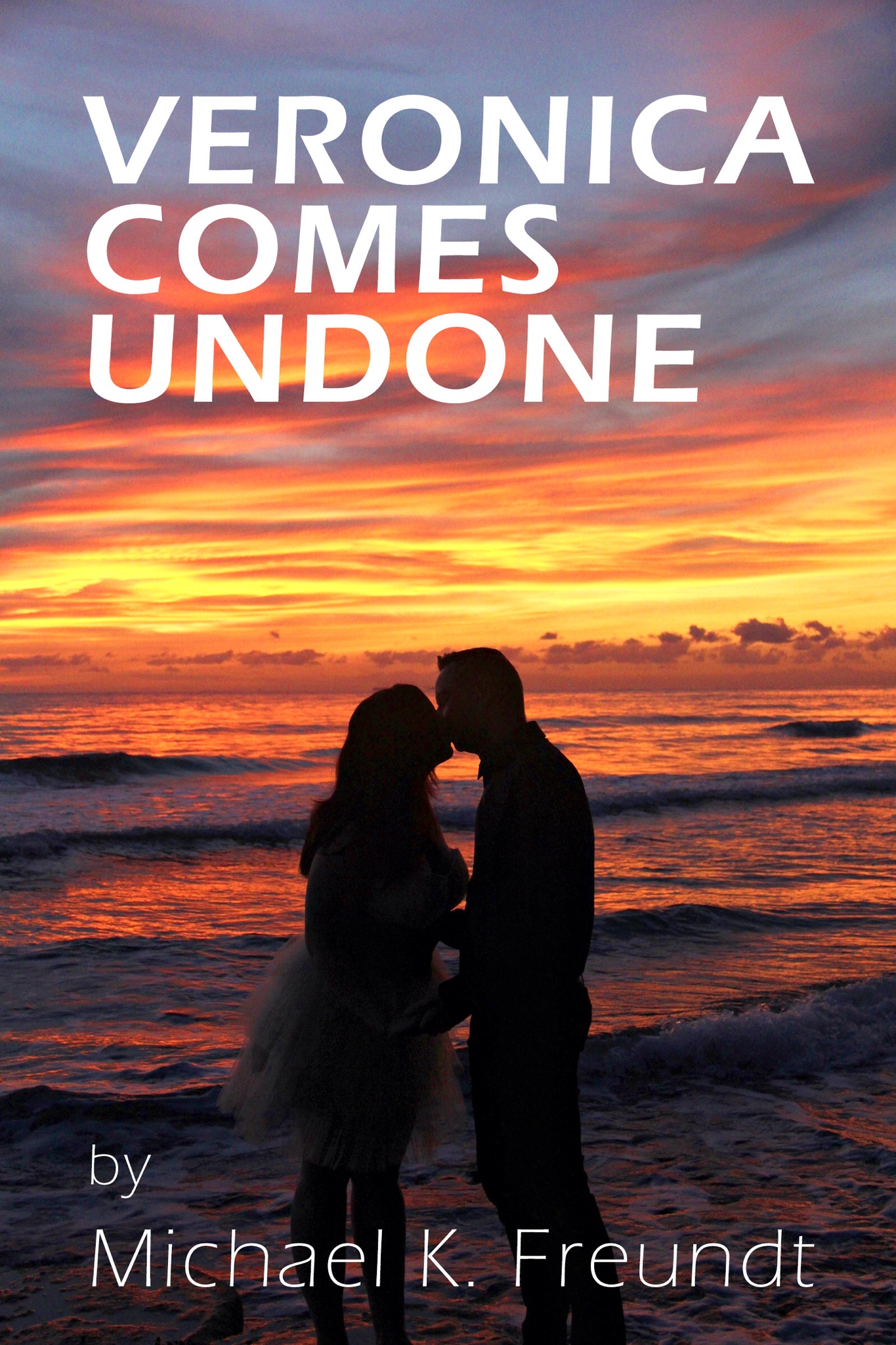
There are many ways to tell a story, many points of view. Choose one. You could write it from the outside using the all-seeing, all-knowing god-like narrator; a narrator that knows everyone’s inner-most thoughts, actions, and desires, past, present, and future. (Anything by Jane Austen) You could write it from the outside using a narrator that ‘sits’ on the shoulder of one character so the story is told from that person’s point of view and no-one else’s. (My ebook Veronica Comes Undone) You could write it from the inside where the narrator is one of the characters in the story (F Scott Fitzgerald’s The Great Gatsby) There are many variations on these POVs. Christos Tsiolkas’ latest novel, Barracuda, uses two narratives: one in the recent past written in the first person; and one in the further past, written in the third person. Sometimes you don’t need to decide, sometimes one particular way just feels right. Trust what feels right and so write what feels right.

Next: just start. If you only have time to write 700 words a day, so be it. By the end of the week you’ll have 4,900 words; by the end of the month you’ll have 19,600. I wrote Veronica Comes Undone in a year and a half of Mondays.

What you write first may not be chapter one. You’ll work it out later. Write first what interests you first. Every idea you have while you’re writing something may not be suitable for that project, but it might. If you’re not sure, put it in. This is only draft number one, decide later if it is appropriate or not. Wait until you step back and look at it from afar. You can cut and add whatever and whenever you like. You’re god here. You’re creating worlds, lives, actions, and consequences. You are all-powerful.

Just spew it out. Whether you write in longhand in a note book (like Toibin does)or tap it out onto a screen, just blurt it out. Even grammar, spelling and appropriateness can be amended later. Everything and anything can be amended later. Draft 1 can be an utter mess; draft 1 should be an utter mess. No-one sees it but you.

You don’t have to be a slave to narrative time. The journey from one plot point to the next can be instantaneous even if months of story time have passed. If an important plot point is that your protagonist starts a business, or renovates a house, you don’t need to go into great detail writing about choosing tiles. Boring! Cut to the opening, the moving in. Time is your slave.

Of all the tools available to a writer the best one for developing a character is dialogue. Some writers eschew dialogue. I don’t understand this. People, and even nationalities, have conversational idiosyncrasies. Americans says things like “You like pizza, right?” Australians usually use the negative, “You like pizza, don’t you?” Once at a writer’s festival I heard an American writer read from his latest work. His book was set in Rome and one of his main characters was Mexican. The novel, of course, was written in English. He spent many pages vividly describing these people but when they spoke, all the time and ink expended on these characters went for naught: they all sounded the same, like the writer. I don’t know how a Mexican living in Italy might speak English but the writer should’ve thought about this and worked it out. Dickens, especially Dickens, James, Winton, Rowling, Doyle, Tsiolkas, Joyce, and St Aubyn, all paint life-like characters with the way they talk, or think. We all make grammatical mistakes, or different pronunciations but different characters can make different grammatical mistakes; and when we talk we rarely speak in compete sentences, and we rarely speak the same incomplete sentences as the next person.

Don’t underestimate the contribution of the reader. Let the reader do some of the work. Cólm Tóibín in Nora Webster lets the reader do a lot of work, all the work! Characters and places are never described. See my review of Nora Webster About grief: good grief on my blog posted November 2 for more about reader theory. However a succinct descriptive passage can spark the reader to paint his own version of the character. Describing a man as “oval with buttons fit to burst” is all that may be needed. The reader knows he is chubby, greedy, selfish; and uses his own experiences of like-looking people to complete the characterisation that the writer has only, but skilfully, hinted at.

Allow cooking time. Step away from your project for a week or two and write something else; read a novel, re-design the garden, re-organise the second drawer. When you come back to it you will read it with a reader’s eyes and as you’re reading if you ‘jump’ or feel a ‘jolt’ (That doesn’t sound right; How does he know that? Wasn’t she wearing jeans a moment ago? He wouldn’t say that…) then there is something wrong. Don’t let it pass. Fix it.

Ah, the pay-offs. The most exciting time is when you are deep in a scene and the creative juices are flowing, ideas tumble over each other, you can’t tap, or write, fast enough; time is irrelevant, and all your senses are honed in on the scene that you are creating, manipulating, describing, being a part of. That’s such a buzz! But of course, that you know, or you wouldn’t be reading this.

The next good bit is draft 2; when you have all this stuff and you shape it, cut and add, link and re-arrange, mould into the story that only months before was just an idea you had as you sat on the bus on the way home from work.

However the most liberating, the most powerful, and the most stimulating change in the writer’s landscape in recent years is the ability to self-publish digitally. I could paper walls with the number of rejection slips I’ve received over the years from agents and publishers, had I kept them; and the most usual reason for abandoning a work is the feeling of ‘why bother?’ The agent/publisher wall is too high, too thick, too impenetrable, but with digital publishing and the liberation it gives you there comes more responsibility. To self-publish digitally you must make sure the text is ready, edited, corrected, error-free, ‘jolt’ free and something you are proud of. You’re not only the writer, you’re the editor, mentor, agent, publisher, and marketer; and the last in that list is the most time-consuming and, at times, the most frustrating. But all this hard work is worth it when you get your first sale; and this happened to me within 30 minutes of pressing ‘publish’ on August 24th. (See my blog-post Veronica Comes Undone. How did this happen dated August 29). Now that’s the best buzz of all. Access to readers is now at our fingertips and although book-sellers are chiming about the survival of the paper-book and the plateauing of ebook sales, digital self-publishing is a reality no matter what portion of the market it’s claiming. It’s there; use it.

Veronicability II: a teaser, Undressing Mr Pyne

Featured image


For those of you who have read Veronica Comes Undone, and for those who haven’t, here is a little teaser from the sequel, Veronica Spreads it Around.

Note: Any resemblance to a politician alive or dead is purely coincidental.

Undressing Mr Pyne.
Among Veronica’s clients, mainly female, Veronica had one male client of many years, Mr Pyne. His problem was simple, he could not be physically touched, but its legacy was complex and debilitating. He lived alone, he worked alone, online; he had no friends, no family, well none that Veronica knew about, and he rarely went out of his small apartment. After many years of regular sessions, all of which were about finding ways of touching him, Veronica focused diligently on making it seem that she was doing something completely different: not touching him. On this day a hurdle was about to be jumped, or so Veronica hoped. She understood that it all had to do with his mother, who, although she had died three years ago, had a powerful hold over him; a hold Veronica was hoping to break.
She let herself into her small city bedsit, her office, dumped her bag on the bed, and logged on to her computer. She kicked off her shoes, took off her jacket, t-shirt and jeans and laid them on the bed. She went into the bathroom and removed what little make-up she had on. She washed and dried her face and applied a very thin layer of face powder giving her face a matt mask-like look, pale and wan. She checked her computer schedule, times, address, and further appointments for the week. She was pleased there were no surprises. From the small closet she chose a bluish plaid skirt, well below the knee, and a white long-sleeved blouse with a high lace buttoned-up collar which, for the moment, she left undone. The skirt was tight and for a brief moment she thought about a vanilla slice. She slicked back her hair and pinned it tight to the back of her head. From one of the antique wooden wig stands on the top shelf she chose a short mouse-coloured wig, boyish and unkempt. She put this on, tugged and pulled it into place. Without stockings or socks she put on a pair of brown lace-up walking shoes. She inspected herself in a full-length mirror, buttoned up her lace collar, and considered herself ready. From the bottom of the closet she took out a small, ready packed, suitcase, looked at herself one last time and left the apartment.
Two hours later she parked her car outside a small block of flats all well hidden behind a wall of neglected greenery on a quiet street in an obscure suburb called Pemulwuy. Mr Pyne’s flat was upstairs at the back, at the far end of the common balcony.
She sat in the car and rehearsed her voice. “It’s Susan, Mr Pyne. It’s awful outside. You’re lucky to be home.” Her voice was high, clipped, and expressionless. “It’s Susan, Mr Pyne. It’s awful outside. You’re lucky to be home. It’s Susan, Mr Pyne. It’s awful outside. You’re lucky to be home.”
Moments later, with the suitcase at her feet, she knocked quietly on the door, “It’s Susan, Mr Pyne,” she said. “It’s awful outside. You’re lucky to be home.” She waited. She always had to wait because Mr Pyne took a long time to gather the courage needed to open the door even to someone he knew and was expecting. He also had a series of manoeuvres to perform, one tour of the room, three full-circled pirouettes, and one wide-armed open -palmed stretch: an appeal to the heavens where he knew his mother was. It was only then could he feel able to open his front door.
“Hello, Mr Pyne. It’s nice to see you again,” she says passing him as if nothing is unusual. Mr Pyne is wearing a red and blue turban, a long silk kaftan in bright blue and gold over dark blue Turkish pants and a stick-on moustache. He lets her pass, furtively checks the common balcony for prying eyes, closes the door firmly and reattaches three chain latches.
Mr Pyne’s apartment is small but incredibly neat. Veronica, Susan, had put the little suitcase on a small table and is now undoing the multiple zips as Mr Pyne sheds his middle eastern disguise and emerges in a white shirt, school tie, duff-grey school shorts, long white socks and no shoes.
“Well, that was close. Did you see all the slightly open doors along the balcony? Bloody cheek! They won’t let up you know.”
“Mr Pyne what could they possibly want with you and what could you possibly want with them?”
“Exactly.”
She opens the suitcase and takes a step towards him. He takes a step back. Susan ignores this. “Now, Mr Pyne, are you ready for your fitting?”
“No. Absolutely not.” He stands rigidly with his eyes closed and fists clenched.
“Oh! OK, you’re the boss.” Susan returns to her suitcase, closes the lid and multiple zips, picks up the suitcase and heads for the door.
“OK, OK, OK!”
“Oh! Alright then.” Susan returns to the little table, puts the suitcase on it, opens all the zips, and then the lid. “Now, Mr Pyne, are you ready for your fitting?”
“…yes,” he says in a voice that sounds like it’s coming from somewhere a long way away.
“Good,” says Susan. “Now first let’s get you out of your day clothes.” Susan starts undoing the buttons on his shirt, being very careful not to touch his flesh. Mr Pyne is rigid and holding his breath. “Breathing out, two three four, breathing in two three four.” Susan stops and looks.”My Pyne?”
“mm.” The noise is high and squeaky like air escaping a balloon.
“Breathing out two three four, breathing in two three four. Breathing out two three four, breathing in two three …”
Mr Pyne, now with a red face, explodes the air out of his body, “A-a-a-h! Twothreefour!”
“Very good, Mr Pyne. Breathing in two three four, breathing out two three four,” continues Susan casually undoing all his shirt buttons as Mr Pyne accustoms himself to, and imitates Susan’s breathing rhythm.
“Breathing in two three four, breathing out two three four,” repeats Mr Pyne.
Susan peels the shirt off him revealing a white singlet underneath, folds it neatly, and lays it on the sofa. With two fingers of each hand she takes hold carefully of a little fold of singlet at Mr Pyne’s waist and continues her chant, “Breathing in two three four, arms up two three four,” and Mr Pyne obeys like a good little boy and Susan whips the singlet over his head and lays it neatly next to his shirt.
“And now Mr Pyne .. Oh, did I tell you that in just a little while I’m going to touch you? Just a little bit…. you’re going to have to help me a bit here.” Susan puts her hands almost on his pale chest. “Open your eyes. Open! Open!” He opens his eyes and she slowly takes her hands away.
Mr Pyne says in panic and dismay, “She said she wouldn’t put up with another hand upon me!”
“But I just did.”
“What?” He is stunned.
“I just touched you. You saw.”
“What?”
“Like I did before. Like all those times before.”
“But I didn’t feel anything.”
“See how unimportant it is.”
“Does she know?” he asks in a hushed whisper.
“No. Nothing’s happened; so no. See.” And Susan holds up her unfettered palms so Mr Pyne can see them. “And see? This is now the second time today,” she says as she lays her hands gently on his cool chest.
Mr Pyne gasps and holds his breath.
“So now we can get to work.” And so with efficient speed and while chatting about nothing in particular, Susan unbuttons his shorts and takes them off, “Now this leg, now this leg,” and she removes his long white socks, “Now this leg, now this leg,” with Mr Pyne’s total co-operation. He seems to be amazed that the roof has not caved in and that the walls are still standing. He stands there in his white baggy briefs. Susan hasn’t gone past this stage before but without hesitation she thumbs his briefs on each of his hips and whips them down, “This leg, now this leg,” and Mr Pyne stands there naked; and Susan says “Oh the traffic today! You’re really very lucky to work from home. I sometimes wish I could do that as I said to my gardener, Neville, just the other day how nice it would be to work from home; and now Mr Pyne I’ve got some wonderful new clothes for you. Look at these,” and she holds up a pair of stylish white and blue Aussie Bum briefs. “So let’s see how they fit. This leg now this leg,” and she hoists them up to his knees. “Now look, Mr Pyne, look here. These have a little pouch and the salesman told me that they are very comfortable, see? So let’s just put your testicles in here,” and she gently lifts his testicles and slips the edge of the pouch under them, “Now how does that feel, OK? Now do you dress to the left or the right?” she says with his penis in her hand, “Like this?” as she tries the right.
“No.”
“Oh, so to the left then,” and she replaces it, “or do you want it down,” and she places it again.
“I can’t believe nothing’s happening.”
“Is that OK?”
“No.”
“Then back to the left then.”
“Oh no! Something’s happening!” and he looks down at his penis in Susan’s hand as they both can see it growing slowly and gaining momentum and weight; she can feel it, like something waking up. My Pyne’s eyes grow in direct proportion to his penis; Susan looks up at him looking down and she looks just as amazed as he is at what is happening, and when his eyes are as big as big can be his pelvis starts rocking. This is virgin territory for Susan but she goes along with it, increasing her grip. His lack of violence or revulsion she takes as encouragement. Mr Pyne seems unaware of what his body is doing and why it is doing this; it’s as if he has never seen it do this before; as if some foreign force is at play.
She places one hand on his buttock to give her leverage and holds his penis firmly as his body moves it in and out along her fist. His face and body begin to react as if something more is about to happen; something bigger but unknown, something he is sure is not far away. Susan mimics his look of astonishment and expectation; she wants him to believe that she is with him in this: she’s his corroborator here, his testifier is this astonishing event.
Susan knows, of course, what is coming and has to do something. A mess on the rug will send him into apoplexy and may undo what this experience may finally achieve; but Mr Pyne unknowingly comes to her aide. As he feels whatever-it-is-that-is-going-to-happen getting closer, his body tenses, his arms spread wide and his head slowly falls back as he faces heaven again, all agog. Susan hands are full but she must get the discarded singlet lying on the sofa. She judges his rhythmic thrusts and as skilfully as a timpani player lets go of his buttock, grabs the singlet from behind, lets it fall at his feet, and grabs his arse again. Too close! If this is his first orgasm, which it just might be, the singlet may be too close. She times her grab again and gets the singlet where she wants it.
By now his body is rigid with his hips thrusting widely, arms and eyes wide in some sweet agony he does not understand. He gasps! He shudders! Susan doesn’t release either hand but keeps an eye on him. He gasps again. Shudders again and she almost immediately feels his body relaxing. She thinks he is going to fall forward as his knees give way, but she manages to angle him as he gives out a piercing cry of wonder and release, and she lets him fall backwards into an armchair. She grabs at the soiled singlet, so superbly placed, rolls it, and shoves it under the sofa. He lays there panting, staring at nothing. What must he be thinking Susan wonders.
He slowly pulls his head forward and looks around the room, looking at everything just as it was before; the furniture, the doilies on the back of the sofa, the coloured glasses in the cabinet, the boomerangs on the wall, all the same. Susan sits on the sofa, hands in her lap gently smiling at him. He is incredulous, wide-eyed and says quietly as if he only has the energy for a whisper, “And nothing happened. It seems impossible, but nothing happened.”
Susan chats away as if what has just happened is the most natural thing in the world. She helps him into his new clothes, a pair of cotton, cream-coloured trousers, tan deck shoes, and a dark blue polo shirt. He seems distracted, uneasy but calm.
Once she has washed her hands, packed her bag and neatly folded all his discarded clothes she says holding out her bag to him, “You can carry this to the car for me.” This little walk to the car has only been a recent addition to the routine but today, now, he offers no hesitation, no reluctance. He takes the proffered bag and follows her out of the flat and along the balcony past several closed doors. She stops at the stairs, turns and waits for him, noticing that he has left his front door open. She decides to say nothing. They walk silently down the stairs and through the garden to her car on the street. She opens the back door of her car, takes the bag from him, says “Thank you Mr Pyne,” puts it on the back seat, closes the door and stands and smiles at him.
He gazes around the incredibly normal suburban street and then looks at her. He seems incredibly sad. “Shall I expect a message from you, Mr Pyne?”
“Yes, Susan,” and then, “Ah!” He suddenly looks behind him as if he has just heard something fearful. A dove has just landed on the garden fence. It sits there coo-ing and doesn’t fly away. “Is everything like this?” he asks, looking around and back to the dove, and then back at her, “so, so … unconcerned?”
“It’s just the same as before.”
“No, look again. Look all around you again.”
Susan does as she is asked and says, “No, just the same. Normal.”
“Normal?”
“Yes. Normal, common, same as before, the everyday. ”
“The every day,” he repeats slowly; and then, “What do you think happened?”
“I brought you your new set of clothes for you to try, and you look very smart; very smart indeed.”
“Of course. Thank you Susan.” They shake hands. His is soft, warm, but before he lets go of hers he squeezes it gently. She watches him walk back through the overgrown garden until he disappears. She gets into her car and drives away.
Had she waited a little longer she would’ve realised that when he entered his flat he left his front door wide open.

The Two Hotel Francforts by David Leavitt

Featured image

David Leavitt (b. 1961) is an American writer, currently part of the Creative Writing faculty of the University of Florida. He first came to my attention with his second novel The Lost Language of Cranes (1986) which was filmed in 1991 and is basically a ‘coming out’ story. Sexuality often looms large in his work which hit a peak with While English Sleeps(1993). However the English poet, Stephen Spender (Barry Humphries’ father-in-law) sued him for copyright infringement alleging that Leavitt used material from Spender’s memoir, World Within World; and in particular, Spender’s relationship with Jimmy Younger, the character based on an early lover of Spender, as the pivotal relationship in Leavitt’s book. The case was settled out of court; the publishers, Penguin-Vintage, withdrew the book, and it was revised and re-issued in 1995.

Leavitt’s latest, The Two Hotel Francforts (or should it be The Two Hotels Francfort?) published last year is nowhere near his best.

Featured image

My main objection is Leavitt’s use of the first person; well, to be more precise, his wasteful use of the first person. Choosing the right point of view (see my blog post “Close Writing” on October 12 2014 for more about point of view) for your story is a powerful novelistic tool and once you choose one (or many) it seems sensible to use it (or them) to the fullest.

Let me explain.

The Two Hotel Francforts is set in the neutral port of Lisbon in the summer of 1940 where many exiles, refugees, and shady characters have gathered, fearing war in Europe, and hoping for a safe passage to America. Here we find two couples: Julia and Pete Winter, sedate and middle-class; and Edward and Iris Freleng, elegant, bohemian, and wealthy. Each couple is staying in a hotel called the Hotel Francfort; yes, there are two.

The story is told in the first person with the sedate and conservative Pete Winter as the narrator and all that he describes for us, the readers, is the action, what he sees. Here is an example of what I mean.

“Edward!” I called.

A few seconds later another wave hurled him back onto the sand. “That was glorious!” he said, pushing his hair back. “Come on!”

I didn’t hesitate. I pulled off my clothes as he had, without ceremony. I took off my glasses. The patch of darkness towards which I swam might have been a rock or a sea monster. All I had to navigate by was Edward’s voice. “Warmer,” he said. “Colder … Warmer…” Suddenly we collided.

Behind us a wave was building. I tried to draw away, but Edward wouldn’t let me go. “The thing to do is to go under it,” he said. “Hold on to me.”

Then he pulled me down until we were sitting on the sandy bottom. The wave broke over us. I felt it as the faintest trembling.

We rose again. I was laughing. He took my head in his hands, and now he did kiss me. Another wave broke, pulling us apart from each other, sending us tumbling.

And, yes, that is when their love affair begins.

It’s like watching a movie, which is great if it’s a movie you’re watching; but this is prose, and prose allows you to do so much more. A first person narrative puts you inside the narrator’s head, with all the thoughts, memories, hopes, desires, fears, and expectations; to report on simply what he sees, and not on what he feels, thinks, remembers and wants, seems to me a waste of the first person.

There is metaphor and skill, “The patch of darkness towards which I swam might have been a rock or a sea monster … I felt it as the faintest trembling” but  it’s like picking up a multi-coloured palette to paint a portrait and only using one colour; or composing a symphony and only using one chord. It can be done and as an exercise it might be worthwhile for the creator, but the audience is let down; I know I was.

There is no internal life in this story, and, consequently, we know nothing of the internal life of the characters. It is the opposite of what makes Colm Toibin’s Nora Webster shine (see my post dated November 2); where the external plot is minimal, all the action, drama, and interest is internal.

Leavitt is an experienced and accomplished writer but his novelistic choices in the composition of The Two Hotel Francforts just don’t do justice to the material.

About grief: good grief.

Featured image


Hidden away under the heading, “Essays,” on Cólm Tóibín’s website (colmtoibin.com*) is a short story, ‘House for Sale’ written in 2000 and first published in the Dublin Review. The writing is stark, bald, and intriguingly formal. It is very different from ‘The Master’, his 2004 novel about Henry James and his second time on the Man-Booker Prize short list. The short story is simple: a recent widow decides to sell a summer house. It opens with the grieving widow visited by an inquisitive neighbour, “May Lacey, wisps of thin grey hair appearing from under her hat, her scarf still around her neck.” May Lacey in her attempt to console but not knowing how chatters away about herself and her daughter who has recently left Ireland for New York. This sounds familiar; and you realize that this is the germ of an idea that became Tóibín’s 2009 novel, “Brooklyn”, about Ellis Lacey, May’s daughter, and her immigration to New York. (The film, co-written by Tóibín and Nick Hornby, is due for release in 2015)

The story seems like a Tóibín experiment; an experiment with language. How far can you pare back a text but still make the story engaging? is the question he seems to be asking himself; and the answer? A lot.

‘House for Sale’ is not a short story at all; it is Chapter One of Tóibín’s latest novel, ‘Nora Webster’ (Scribner; and the Penguin audio book is read by Fiona Shaw).

Featured image

After the rich Jamesian prose of ‘The Master’, and the narrative-based ‘Brooklyn’, Tóibín has returned to that idea from 2000 and has obviously decided that his little experiment was a success. In fact he takes it further.

“Nora was surprised to see that while Fiona was trying to smile, there were tears in her eyes. She had not cried at Maurice’s funeral, just remained silent, staying close to her sister and her aunts, but Nora could sense what she felt all the more because she did nothing to show it. Nora did not know what she should say to her now. She sipped her coffee. The boys did not move or speak.”

There is a formality of language, a sparseness and simplicity of words: simple sentences; “She sipped her coffee. The boys did not move or speak.”

He combines this sparsity with detail, internal detail, “…Nora could sense what she felt all the more because she did nothing to show it.” This is where the plot is: internally.

“When Nora saw Nancy Brophy walking towards the house, she moved away from the window. She could not think why Nancy would want to call on her. She imagined leaving Nancy to knock and wait and listen, and then knock again before walking down the steps, turning to check the windows for a sign of life. She could feel the sheer relief that would come over her entire spirit if she had the courage to make this happen.”

This language is simple but authoritative; authoritative because Tóibín doesn’t use contractions: no “can’t”, no “they’re”, no “couldn’t”, but “can not”, “they are”, and “could not”. This grammatical formality creates this authoritative, formal tone and the lack of adjectives, only two in the above quote, and short stark sentences give his authority a sense of knowingness. These simple, blunt revelations about internal feelings and motives makes the action sharp and intriguing even if the external plot is everyday and unsensational.

There is only one difference from the short story ‘House for Sale’ and Chapter
One of ‘Nora Webster’: in the latter Nora’s eldest son has become a stutterer.

Nora’s two young boys, Donal, and Conor, stayed with her aunt, Josie, while their father, Maurice, was dying. When Josie comes to visit, the boys are distant and Josie won’t stop talking. That same evening Donal, the stutterer, has a nightmare. Nora wonders that something must have happened when the boys were staying with their aunt. She goes alone to visit the aunt to ask. This simple act of motherly concern is full of expectancy. The reader is interested not just in what might be found out but how Nora will ask the question. It sets the scene for a dramatic family revelation and possible confrontation. Nora doesn’t know either what she will say; she asks rather bluntly but Josie’s reply is also blunt. Nothing staggering happens: our expectations of drama are thwarted. The boys missed their mother. Conor started to wet the bed and Donal started stuttering. Understandable given the circumstances: a dying father, an absent mother and in the care of a distant lonely aunt. This creation of internal intrigue in the everyday is one of Tóibín’s greatest gifts to storytelling, although Tóibín himself denies the label ‘storyteller’. The reader cares about what happens, and wonders what might. These characters are cared about, wondered over; and this with Tóibín describing nothing about anyone’s appearance; and if he does describe someone it is brief and trivial: in fact May Lacey, the minor character, in chapter one is the only character described at all, and then only in terms of wispy hair from under a hat and an unwound scarf.

This stark, description-less prose of character and place is an acknowledgement to the contribution of the reader to fulfil such an artistic endeavour as this: us readers supply the detail. The lonely unmarried aunt looks like our lonely unmarried aunt; a television lounge of a hotel looks like the television lounge you went into once when you were a child. Students of Reader Theory will take heart at this.
Nora Webster is selfish, snobby, and aloof but you love her for her courage and her eventual belief in herself; you admire her for realizing that the death of her beloved husband, Maurice, has changed her for the better. She blossoms without dishonouring the love of her life or his memory. This is grief, good grief, and although this is fiction, Tóibín has taught us something true. It could be argued that this is a great book as many others have said; a book that may finally give him the Man-Booker; a prize he so richly deserves and has been so close to, three times.

Now, Tóibín, after three books about women, ‘Brooklyn’, ‘The Testament of Mary’, and ‘Nora Webster’ is writing a book about a man.

-oOo-

*Be careful when you spell Cólm Tóibín; if you leave out the first ‘i’ you’ll discover Cólm Tobin, a very different person whose comical homepage recognizes he’s one letter away from fame.

Veronicability II: Veronica Spreads It Around. A work in progress

shop-fitting in progress

In light of my post yesterday concerning point-of-view (POV) here is a new scene from the sequel to Veronica Comes Undone, Veronica Spreads It Around that I’ve been working on today.

Let me set it up for you.

Veronica is determined to get back custody of her son Jack from her ex-husband, David, Jack’s father. To do this she has planned to give up her freelance psychology consultancy and open a ‘legitimate’ business: a business the family court will find acceptable. The scene is the shop she is renovating into a small hospitality business that she has big and unique plans for. She is sitting at a table in the corner of the space surrounded by workmen, dust and noise doing the accounts.

I’m writing ‘close’ (third person subjective; see yesterday’s post for details) but as the scene hots up (sexually I mean) I found myself slipping, briefly, into the second person POV; as if the narrator is talking directly to Veronica. This wasn’t planned and I don’t know examples of this in my reading history. It felt right though. I might leave it in.

Also note the change from past tense to present. I’m writing in the past tense but all of Veronica’s scenes with men are written in the present. It’s more immediate, more alive.

It wasn’t midday yet but the numbers began to swim and shake on the computer screen. She knew transferring all her accounts onto a spreadsheet was sound sense but she also knew she had to concentrate and input the information accurately: one little slip and all her formatting would produce false results. Her coffee latte was cold. Why did she always do that: forget about it and waste the last third? She propped her elbows on the table where she sat in the corner of the space and rested her face in the palms of her hands letting her fingertips massage her closed and prickly eyes.
She attended to the noises. A moment ago all sound had morphed into one: a white noise she ignored. Now she heard the whine of a tile-cutter; the traffic outside in the busy street; a car-horn; a rhythmic hammering somewhere; and Vera’s buzz-saw voice talking on her mobile berating a dodgy supplier.
She opened her eyes and took in the scene. The sign writer, Paco, was putting a border around the enormous plate glass window. A workman, young, skinny, goofy-looking, cleaned paint-rollers in a tray of turpentine. Another man angled tiles into a cutter that spat out dust and a piercing and ever modulating drone. Two men were installing the large hood over the stove in the long kitchen, and a burly man in overalls stood at a portable workbench cutting glass panels.
She had noticed him before. He was tall but stocky. He had reddish-sandy hair that stuck out from under his hard-hat; a neat, very neat but short, beard and wore overalls over a plaid shirt, with the sleeves rolled up his sandy arms. His hair was messy but his beard was tailored, tended, clipped. He obviously had spent some time in front of a mirror. She decided the messy hair was deliberate. This man looked after himself. She liked that. She wondered about the beard. A beard. This beard; how it would feel on her finger tips as she touched his cheek; moved through the growth to the soft lobes of his ears and the wispy sandy hair. She had kissed a bearded man once, a long time ago but it was black, thick and his moustache had hung down over his top lip. She had felt it. It was not unpleasant; but this beard was short. She wondered how it might feel brushing her cheek; fussy? prickly? ticklish? She wondered how it would feel against her thighs, against her …

He’s staring at her. How long has he been doing that? Not as long as she’s been staring at him. She looks away, but, hey; it’s all a bit late for coyness. She smirks and looks up again and meets his gaze.

He puts down his tool and walks towards her. She is aware of intense embarrassment, her hot cheeks, but she holds his stare as he approaches. He sits down. His eyes are brown.
“I was always taught not to stare at people,” he says in a soft voice tempered with a faint grin, “but that’s for children; for grown-ups it’s something completely different.” Veronica opens her mouth to speak but hesitates: she knows she’s been caught out; she knows she was staring; she knows her cheeks are red; and she knows that he knows all this. “Sorry Bill…”
“Bob. Robert.” His grin widens, warms.
She returns his smile, mimics it, which is really all she can do. “Robert. Sorry. I was day dreaming.”
“Really? So you weren’t staring at me?”
“ … I was staring, yes.”
“I know you were.” He waits. She still isn’t sure why. What is he expecting? She only thinks she knows.
“You remind me of someone, ” she says.
“I see. Do I look like him?”
“No.” She could’ve said yes.
“So, what’s to remind?”
She wishes she had said yes. “The way … the way you hold yourself.”
“Really! That’s very perspicacious of you.”
She’s impressed by his use of this word – he’s a shop-fitter! – and wonders now if her understanding of it is correct and instantly, to cover a whiff of intimidation, she counters dryly with, “Actually it’s your beard.”
“I see. So he had a beard like mine.”
“No. It was long.”
“Do you like it long?”
“I don’t know. His is the only one I know. I was just wondering…”
“Would you like to touch it?”
“Bob,” she reprimands.
“Oh, have I crossed the line, have I?” and his eyebrows jump; “and it’s Robert.”
“It’s not that, Robert. It’s …” Yes it is! You want him to cross the line. You want him to lean over and put his cheek against yours. You want to feel his hairy cheek against your skin. You want to lick it! And if the truth has air you want him to put his tongue in your mouth; and a few other places you could name. But instead you say, “It’s very light in here.”
“Oooo,” he says with dancing eyes, “You’d like some place darker?”
“Bob.” She says abruptly. “Robert, it’s the middle of the day in the middle of a workplace.”
His smile fades. “I see. It’s the old ‘lady boss’ and ‘tradesman’ divide.”
She worries that she may have offended him. She’s worried that she may have turned him off; so she counters, and with a smile says cunningly, “That’s not a negative.”
He stares at her and she holds it. He stands up, puts his hand in his pocket and pulls out a business card, gives it to her, and says “Call me when you finish.”

He walked back to his workbench.

Close Writing

James Wood is an English literary critic, essayist and novelist. He is Professor of the Practice of Literary Criticism at Harvard University and a critic for  The New Yorker magazine.
James Wood is an English literary critic, essayist and novelist. He is Professor of the Practice of Literary Criticism at Harvard University and a critic for The New Yorker magazine.

When I discovered a way to bypass the agent/publisher mechanism, with all its frustrations, time-walls and disappointments, and make my work available directly to readers a great weight lifted from my head and allowed the creative juices air again: I was very excited. However I could see that the books that were self-published on smashwords.com were mainly popular fiction and not the literary fiction I usually read and aspire to write. I searched my bank of ideas and resurrected the idea that eventually became Veronica Comes Undone.
See my blog post Veronica Comes Undone: How did this happen? August 29 2014.

Available at https://www.smashwords.com/books/view/470135

I started writing immediately, with that warm feeling of creativity gaining momentum and urging me along; using the third person point of view (POV) which is the usual form for popular fiction. I was well into the piece, about 30,000 words, when I realised that I was actually using third person subjective: I was writing in the third person but from a specific character’s close POV, that of my protagonist, Veronica, and no-one else’s.
The third person POV allows you to be omniscient, to know everything; the past, present, and future of the world and everything in it; everybody, everyone’s desires, secrets, and obsessions; in short to be god-like with the capacity to tell the story from multiple POV’s jumping from character to character; as if the god-like narrator is sitting on the characters’ shoulders experiencing the same story from everyone’s POV (Jane Austen, Tolstoy, St Aubyn).

First person POV only allows the narrator access to the first person; the protagonist is the narrator (I said, we went). It’s only from inside the narrator’s head that you see, feel, and are told the story.
Third person subjective is indeed using the third person (he said, they did, she went) but not jumping from the shoulder of character to character, but staying on the shoulder of only one: in my case, Veronica’s. Initially I worried that this was limiting: too much like the first person, that I was cutting myself off from a richer narrative, other character’s thoughts and motives but I had 30,000 words in my wake and it felt right; it was working.
I soon realised that third person subjective, as well as first person, has an up-side: you do not have to explain the motivations of others. People’s actions to us and others in our own sphere of perception can be confusing, annoying, or down-right maddening but they can also be surprising, alarming and devastating, and it is not possible, in the first person, to explain why these other characters do what they do. This is great fiction fodder.
Formally and academically this third person subjective is called free indirect discourse which can also be defined as the practice of embedding a character’s speech or thoughts into an otherwise third-person narrative. It’s almost like the narrative is coming from two brains: the narrator’s and the character’s.
James Woods, literary critic for the New Yorker, and Professor of the Practice of Literary Criticism at Harvard, in his book How Fiction Works (Woods J,2008 Jonathan Cape) calls it ‘close writing’. I like this term. It expresses exactly what it feels like, what it reads like.
Here’s an example;

As he walked towards her she noticed nothing but his hair: it bounced and shone like a Pantene commercial. How does he get it to do that?
The first sentence is the narrator’s; the second is the character’s: something she didn’t say but only thought as if the narrator, sitting on her shoulder, heard her think this.

If close writing gets too close it can slip into the first person.

As he walked towards her she noticed nothing but his hair: it bounced and shone like a Pantene commercial. How does he get it to do that? I’d kill for hair like that. And before she knew it they were shaking hands and she was smiling far too much.

And the last sentence is back to the third person again.

By the way, writing in the second person (you said, your wife, take yours) is rare. However Elliot Perlman in his masterpiece Seven Types of Ambiguity opens in the second person;

He nearly called you again last night. Can you imagine that, after all this time? He can.

This is rather intriguing and troubling as it appears the narrator is talking to an unknown character or, even more disconcerting, to you, the reader.

However second person POV is used more commonly in advertising (Apple – “Think different”; even though this is grammatically incorrect), and song lyrics (“You don’t know what you’ve got till it’s gone.” Big Yellow Taxi by Joni Mitchell).

For a light hearted take on ‘close writing’ follow the link to the essay, The Art of Close Writing by Jonathan Russell Clark, a literary critic and fiction writer who writes the essay ‘close’ and not in the first person, as you might expect.
http://www.themillions.com/2014/08/the-art-of-close-writing.html

For a more detailed discussion of close writing try
http://litreactor.com/columns/the-benefits-of-free-indirect-discourse

Edward St Aubyn and the Patrick Melrose Novels

Edward St Audyn. He has known horrific suffering. Sexually abused from childhood by his father, he later endured serious drug addiction and a breakdown. When a student at Oxford, he famously turned up for his finals with a biro charged not, alas, with ink, but heroin. Understandably he received the lowest possible pass a student could get.

“My mother’s death is the best thing that ever happened to me since, well, since my father’s death.” So says Patrick Melrose in At Last the 5th and last book in the Patrick Melrose series by Edward St Aubyn.

It took the author well into adulthood to finally confess to his mother, long after his father had died, that the man had sexually abused him as a child. He said something like ‘my father, your husband, sexually abused me.’ She looked at him and said ‘Me too’ denying him the sympathy we was looking for. St Aubyn’s creation, the father, David Melrose, a brilliant, disappointed but monstrous man also tried to teach his son to swim by throwing him into the swimming pool expecting the child’s innate sense of survival to force him to get to the edge and save his own life. He also attempted, while drunk, to circumcise the infant on the kitchen table much to the horror of the staff. If you’re a little confused as to whom I talking about: the character or the author, don’t worry as this series is robustly autobiographical which St Aubyn isn‘t shy in talking about.
At 54 Edward St Aubyn, an English novelist of meagre aristocracy is the darling of the literary world at the moment and at the Adelaide Writers Week in March 2013 he discussed his choice of fiction rather than memoir to Michael Cathcart (Books and Arts Daily, Radio National).
“I preferred the distancing effects that are available in a novel, the unity of setting something on one day in one place is very artificial; couldn’t be done in a memoir; the creation of a lot of characters who presents the reader with this arena of points of view; the margin for invention, conflation; all the powers of art and also because the books that have influenced me and that I’ve enjoyed most have been novels and not memoirs. I always wanted to write a novel; I always felt that novels were where it was at for me. Patrick is an alter-ego; the writer is an aspect of a person, the narrator is an aspect of the writer, the alter-ego is an aspect of the narration, so there’s a telescopic effect which isn’t available in memoir. The first person who is narrating is assumed to be the author. All of those gaps collapse in the case of the memoir. And I’m not making a confession. I was interested in creating something that was entertaining even if it dealt with very troubling material.”
Book 1, Never Mind, is set in Provence on one afternoon and evening when the sexual abuse by David Melrose of his 6 year old son Patrick begins. Book 2, Bad News, is a harrowing but often funny two days in New York where Patrick, now a heroin, alcohol and ‘ice’ addicted adult flies to pick up his father’s ashes while scoring on the down-and-out streets of the city. Some Hope, book 3, has Patrick now drug free at a party in the country where he tries to find his place in a world he no longer thinks is worth joining. Mother’s Milk, the Booker Prize short-listed 4th novel deals with Patrick and his loss of the family home in Provence which gave him solace from his neglectful family while dealing with his mother’s slow slip into dementia. At Last, book 5, is set around the funeral of his mother where Patrick, finally free of his parents, may find some peace and so can avoid repeating the horrid mistakes of his forebears, especially since he now has two sons of his own.

Jack Davenport as Patrick Melrose, with his ageing mother,  played by the late Margaret Tyzack, in her final role in the  2011 production of Mother’s Milk, directed by Gerry Fox, who co-wrote the script with St Aubyn.
Jack Davenport as Patrick Melrose, with his ageing mother, played by the late Margaret Tyzack, in her final role in the 2011 production of Mother’s Milk, directed by Gerry Fox, who co-wrote the script with St Aubyn.

St Aubyn uses the third-person subjective voice, which James Woods, literary critic for the New Yorker, calls ‘close writing’. It’s as if the narrator is sitting on the shoulder of the protagonist, or, in fact, sitting inside the head of the protagonist and writes not only what he sees but what he feels and wishes. This gives the reader a sense of belonging to that character; a taste of compassion and understanding. St Aubyn take’s this technique further and has the narrator jumping from character to character seeing the narrow Melrose world, the people in it and what they are doing to each other from a single point of view; but in fact from many single points of view; and when this narrator, and therefore the reader, is in the head of David Melrose, this sadistic tyrant, this disappointed, angry and parsimonious father, this treacherous and violent husband the reader can’t help but feel some degree of compassion and understanding, tempered, of course, by the man’s vile and hateful actions. While at every turn a smile and a chuckle is never far away thanks to St Aubyn’s dry English wit and snobby asides.
The St Aubyn family came to England from France with William the Conqueror and, according to the Doomsday Book, has sat with wealth and privilege on a piece of English soil since 1087; “so there’s a lot of … continuity,” says St Aubyn. He has the voice you would expect: measured and slow in its lower register, with elongated vowels that just stop short of camp. He will undeniably join the likes of Wilde in that club of quotable writers;

“People never remember happiness with the care that they lavish on preserving every detail of their suffering.”

“Surely: the adverb of a man without an argument.”

“Looking after children can be a subtle way of giving up… They become the whole ones, the well ones, the postponement of happiness, the ones who won’t drink too much, give up, get divorced, become mentally ill. The part of oneself that’s fighting against decay and depression is transferred to guarding them from decay and depression. In the meantime one decays and gets depressed.”

“It seems people spend the majority of their lives believing they’re dying, with the only consolation being that at one point they get to be right.”

“…life is just the history of what we give our attention to; the rest is packaging.”

… and my favourite, “Never use the conditional when talking about money.”

St Aubyn isn’t much interested in plot but his characters and their battered senses provide the action and the twists and turns are due to how well, or not, they all deal with each other. The Patrick Melrose novels are sharp, witty, and short. Highly recommended.