CHRISTOPHER & HIS KIND by Christopher Isherwood (1904 – 1986)

Christopher Isherwood, British born American writer, (1904 – 1986

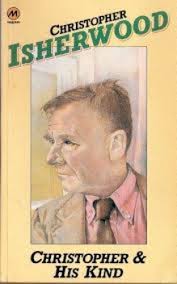
This book is fascinating for its use of a split narrator: Isherwood as he is when he wrote it in the 1970s, the first person ‘I’ and Isherwood as he was then 1929-1939, the third person ‘he’ – Christopher. This gives the older writer ease to write objectively about his younger self which he does with critical abandon. The other fascination is his life-long friendship with Wystan Auden (W. H. Auden 1907 – 1973) about which he writes with alarming, but pleasing, frankness. They were never ‘a couple’, in fact in today’s jargon it would be described as ‘friendship with benefits’. His and Auden’s sexual relationship … ‘[was] unromantic but with much pleasure … they couldn’t think of themselves as lovers … [but] it was of profound importance … it made the relationship unique for both of them.’ Isherwood was far more promiscuous, would fall in love at the drop of a suggestion, and Auden would lament with wild self-deprication at not being able to find someone to love him. They both found their life partners in America where they migrated to in 1939. Auden with the poet Chester Kallman (1921 – 1975) and Isherwood with the portrait artist, Don Bachardy, who is still alive and living in their Santa Monica home. Of course Isherwood remains famous for his Berlin Stories, Mr Norris Changes Trains and Goodbye to Berlin – insights into these works are of great intetest. These provided the material for the play I am a Camera and ultimately the musical Cabaret, which Bob Fosse hacked to pieces in his 1972 movie version: Sally Bowles was NOT a talented performer (the whole point of the story). Stage productions – there’s always one playing somewhere – have reinstated this important fact as well as all the songs Fosse cut. Isherwood, in his later years, concentrated on auto-fiction producing many auto, and semi auto, biographical works. These I am eagerly seeking out. This one is a good start. Highly recommended.

It was filmed in 2011 by Geoffrey Sax.

the Garden of Evening Mists by Tan Twan Eng

Malaysian/British writer, Tan Twan Eng

A Straits Chinese retired judge, Yun Ling Teoh, returns to spend her last days in a house in the Cameron Highlands in Central Malaya during the Communist guerrilla war with the British in the early 1950s. It was here, as a young woman, she was apprenticed to Aritomo, a famous Japanese gardener, who once was the gardener of the Emperor of Japan. This back story, their working and emotional relationship with the backdrop of WWII and the Malaya Communists against the Japanese, is THE story.

This is the second novel by Tan Twan Eng after his successful debut, The Gift of Rain (2008) which was long-listed for the Booker. His third novel, The House of Doors (2023), was also long-listed for the Booker. This one suffers from the cliched ‘second novel syndrome’. In this case, not as original and complex as the first, and not as imaginative and assured as the third. This is a personal opinion despite it being short-listed for the Booker. I enjoyed reading it but without that thrill of attachment. Like all three Tan novels, they transport you to a time, place, threats, joys and sensibilities that are completely alien, but therefore fascinating, to a contemporary reader. Of course, the raw human emotions we all know about. This one also has that Eastern flavour of wisdom and sage-like belief in elements of the world that we can’t quite grasp but which may guide or steer us in directions we haven’t planned.

Her sister, enamoured by Japanese gardens, disappeared during the war and Yun Ling wants to built a Japanese garden in her honour. Aritomo refuses to design one but offers to teach her how to design it herself. Yun Ling’s internment by the Japanese, her apprenticeship to Aritomo and her relationship with him form the spine of the narrative. The events, conversations and relationships appear ‘soft’ and incidental. I knew this work had been made into a movie in 2017 and although my interest wavered I reasoned that if there was cinematic interest in this work there must be a pay off. I continued reading and I am so glad I did. This is a ‘slow burn’ of a book … war, imprisonment, romance, intrigue, a tattoo! – there is so much I haven’t mentioned – but all will be revealed in a very satisfying climax. Highly recommended. I wait patiently for book number 4.

Here is a short video of Tan Twan Eng talking about this book.

The River Capture by Mary Costello

Irish writer Mary Costello

This novel, The River Capture (2019), is Costello’s third published work, her second novel. The style is literary and immersed in family values, loyalty, obligation, and what happens when all of these are challenged; it is written with the sensibility and skill we associate with Irish literature. Luke O’Brien is a thirty something teacher, a Joyce scholar, who took leave to care for dying relatives but then continued his sabbatical to deal with the family land in county Waterford on the banks of the River Sullane. There he also tends to his favorite, but very old aunt, Ellen. They are very close. Luke is a man in tune with nature, not religious, but believes in the uniqueness of the individual free of labels or what any other individual may think of him. He is willing to consider that natural objects, animals, including humans, trees and water are infused with special energy and may also contain elements of memory and the future. Like all natural things, everything, including mankind, will pass to allow for what is next.

When two rivers collide due to climatic devastation, geological disruption or similar, one captures the other and a third unexpected river is born: a river capture.

A young woman, Ruth Mulvey, hears about him and his passion for animals and asks him to take over the care of a young, but abandoned dog. This meeting develops into a relationship, emotional and sexual, and is hoped by both participants to develop even further. But then Luke introduces her to Aunt Ellen. She is aware of this young woman; more significantly, she knows her father. A family secret is revealed and Ellen, his devoted aunt, places a huge burden on his shoulders and mind.

Up to this point, almost half of the way through, the format is usual and expected: literary fiction, narration of elegant language, relevant and insightful dialogue (as it should be) that builds to a tension created by the revelation. An accomplished opening.

Then things change. Not only for Luke, who is devastated, and the choice he’s given, impossible, but also for the reader: the format changes. This can be seen as a metaphor for the state of Luke’s mind. Nothing is as expected. the rest of the novel is a description of Luke’s state of mind and choice of actions, what he believes and what he doesn’t; what he does to overcome the bolt of lightning that hit him far square in his heart and mind. The revelation is so devastating that the book itself is affected. The book no longer reads like a novel.

This unique and rare literary device was not, for this reader, entirely successful. It eroded most of my emotional investment in the characters and narrative. It became, or felt like, an academic exercise, and a repetitive one, and although I read it to the end, I have to admit I skipped bits.

However, Costello is a very good writer and I look forward to her next.

Click the link for my review of her first novel, Academy Street (2014).

Intermezzo by Sally Rooney

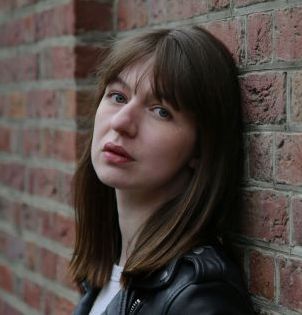
Irish writer Sally Rooney

A few hundred pages into the novel I was struck by the narrative format; actually Rooney employs two narrative formats.

This is the story of two brothers and their bumpy relationship following the death of their father.

Peter, 32 is a lawyer and Ivan, 22 is, well, nothing much but a wiz at chess but scraping a living from his checkered passion is not easy.

Peter has two girlfriends; Ivan has one. Peter seems happy but Ivan is happy. I feel sorry for Peter but I love Ivan. 


Sally Rooney is quite a literary phenomenon. Most of the action goes on in her character’s heads. She is a digger of truth about what goes on in the human mind which is often at odds with the way people behave. Especially men. So eager is she to explore our mental shenanigans, she sometimes overdoes it a bit. That’s a minor criticism.  

But back to the double narrative styles: for the chapters about Peter the narrative is almost stream-of-consciousness. Short sentences. Shorter phrases. Even just one word followed by a full stop. They all tumble over each other. It pretty much reflects Peter’s state of mind: full. His two girlfriends, his high pressured job, what to do about his under-achieving brother, and did he love his father. Enough? Ivan’s chapters are more conservative, the third person narrator is more conventional: long sentences, precise grammar, at a slower pace. This is Ivan. He’s a simple soul not much concerned with material matters but he knows love when he feels it. Although I’m not a fan of stream-of-consciousness narration it works here; it works for Peter. Another grammatical technique binds the narratives together. The dialogue, there’s a lot, isn’t punctuated. A modern trend. But it is easy to follow. When you listen to an audio book – another modern trend – the punctuation is not read yet it is always clear who says what to whom. 

I am almost to the end so I cannot tell you what happens. It’s a great read. I’m loving it. If you haven’t already give it a go.    

The Shepherd’s Hut by Tim Winton

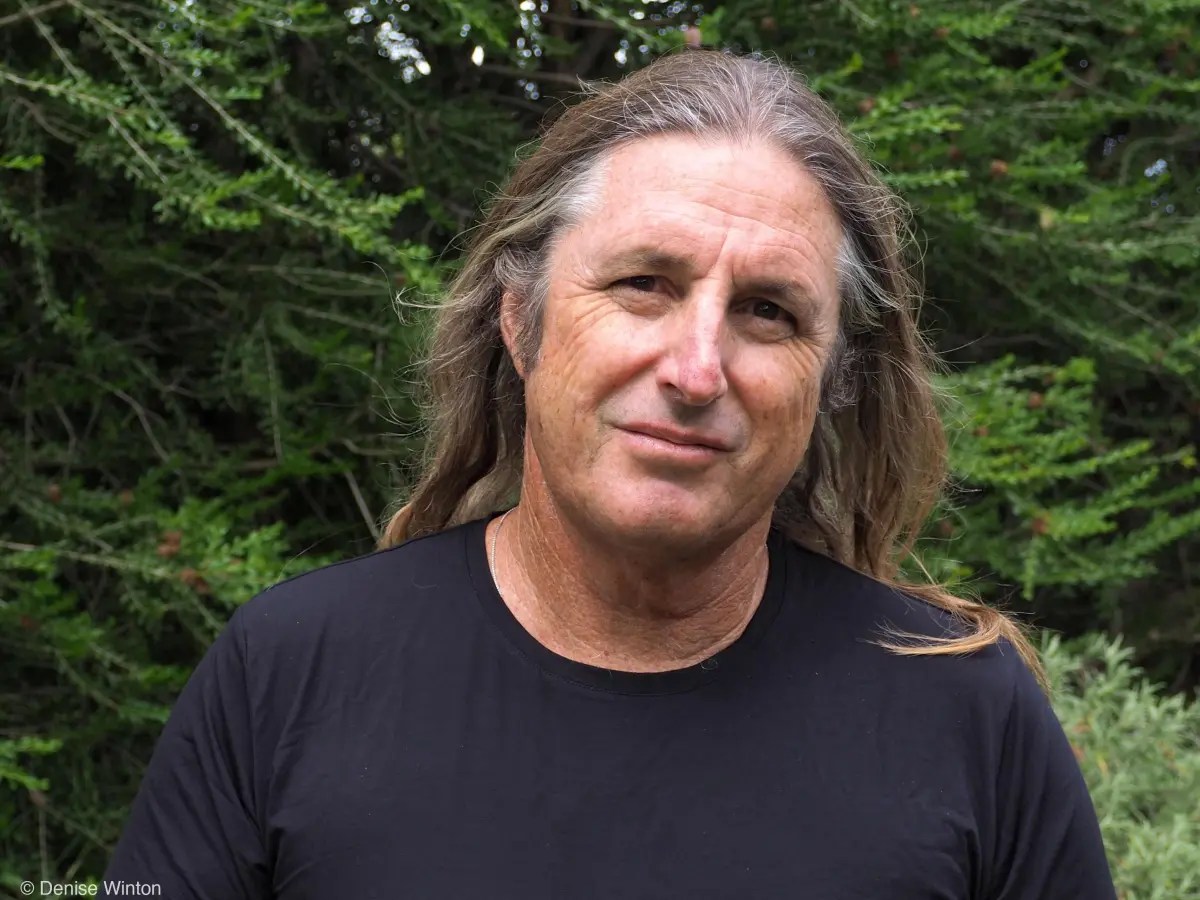
Australian writer Tim Winton.

I can clearly understand that once Winton heard the untethered voice of the teenager, Jaxie Clackton, in his head there was nothing he could do but tell his story. Write it down. Rudyard Kipling said “When your Daemon is in charge, do not try to think consciously. Drift, wait, and obey.” Here, Winton’s Daemon is Jaxie Clackton.

The plight of the boy, a victim of his brutal drunken sole-parent father is known by everyone but no-one intervenes, not the neighbours, not the social workers, not the police. The opening is confronting; violence always is. Everyone expects him to retaliate one day. As it turns out, he doesn’t need too. A freak accident does the trick. It’s obvious to the boy that he’ll be blamed. Jaxie is no ordinary lad, he is undereducated but street-smart, resilient, cautious and in love. He steals a car and disappears into the Australian bush on the way to the only person who understands him: Lee, his pretty 15-year-old shaven-headed cousin with eyes of different hues.

Jaxie tells his story. If course language offends you don’t pick this one up.

As Jaxie’s supplies run low he needs to make some difficult choices. Again, fate comes to his aid. He discovers Fintan MacGillis, an old dero living in a dilapidated hut surviving on goats, guilt, and a meagre veggie patch. Although it seems these two have nothing in common there is a lot, deep down, they share. Otherness mainly. Fintan, a defrocked priest, has been ousted, but thinly supported, by the Church. His crime seems obvious but is never confirmed. Jaxie is wary and suspicious but they form a bumpy relationship which lasts until Jaxie discovers another crime.

The Shepherd’s Hut (2018) is a story about friendship, trust, survival, and redemption and Jackson Clackton’s voice and character will stay with you for quite some time. If you know Winton’s work you’ll relish this. I loved reading this book.

I’m all set now for Winton’s latest, Juice. It came out in October 2024.

Here is a very brief description by Winton of his creation, Jaxie Clackton.

Stone Yard Devotional by Charlotte Wood

Australian writer Charlotte Wood

This is a book about memory and how, as we age, we grow to understand our former imprecise and naive selves as we try to make sense of the world around us.

The narrator, an environmental activist, wife, mother, and atheist leaves her life and family behind to live in a remote religious community of nuns in the Monaro region of Southern NSW where she grew up. It’s a penny-watching community, understandably, viewed with suspicion by the locals, especially women, but where a local man helps out with the more physically demanding chores. Once the narrator is settled and eventually pleased with the decision she had made her life and that of the community is visited by three challenging occurrences: the return from overseas of the remains of a long lost, and murdered, nun from the community, a high-profile nun who was once the narrator’s schoolmate but an outsider due to poverty and public violence, and a mouse plague. All three interruptions spark questions about death, choices, what is sacred, commitment, parents, especially mothers, the truth about childhood events, forgiveness, and prayer.

‘I shovelled the compost and spread it, shovelled and spread, preparing the soil and waiting for things to make sense. Tried to attend, very softly and quietly, which is the closest I can get to prayer.’

Prayer isn’t an email to god seeking answers or gifts; it’s a form of meditation where the pray-er tries to make sense of what they believe.

Although the narrator is an unbeliever she joins in with the daily religious observances and finds solace in the routine and order they give her life. In fact the easy reading of it has a meditative effect, a consequence I particularly welcomed.

The book is also a testament to the emotional strength of simple clear and uncluttered language especially since it made the short list of this year’s Booker Prize. The format is similar to a diary, anecdotal, episodic, where daily actions are recorded juxtaposed with daily memories in an attempt to ‘work them through.’

I don’t think this book would appeal to young people as the attraction here is thoughtful consideration of a past life in order to come to an understanding of the kind of person you are and to forgive yourself for missteps in thinking and actions which were not entirely your fault.

Here is a short but succinct video of Charlotte Wood talking about this book.