Christopher Isherwood, British born American writer, (1904 – 1986
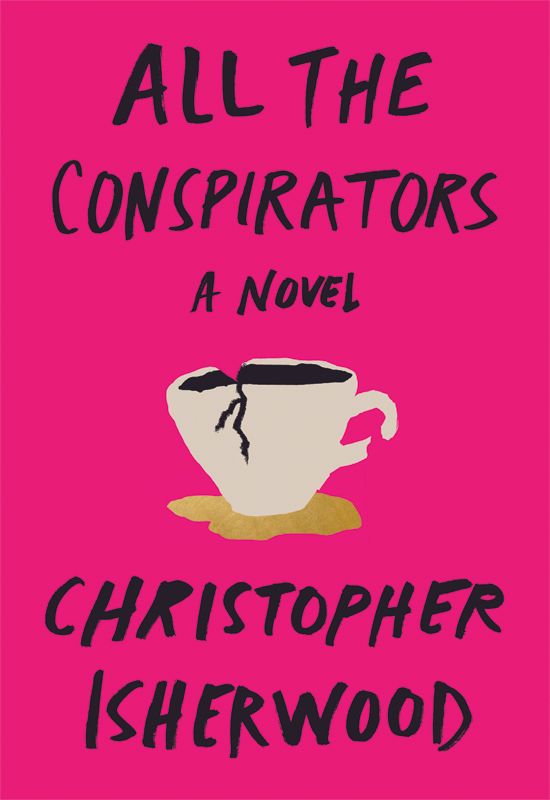
The 1920s was a period in English literature defined by intense experimentation, stream-of consciousness, away from linear narration and a concentration on the inner turmoil of characters. Notable works include, Ulysses (1920) by James Joyce, Mrs Dallaway (1925) by Virginia Woolf and T. S. Elliot’s The Wasteland (1922). American journalist and editor, Bill Goldstein, who co-founded NYTimes.com Books describes the year 1922 as a ‘literary earthquake’ in his 2017 book The World Broke in Two. Isherwood could not have missed this stumbling lurch into modernism and not been unaffected by it. He began writing All the Conspirators in 1926; it was published in 1928, the year before he moved to Berlin. Phillip Lindsey, a fey young man, as most middle-class men of the times seemed to be, who wants to simply paint and write is thwarted in his creative desires by his strict conservative society and family. A tragedy, yes. Isherwood incorporates modernist techniques with, in this reader’s opinion, not good enough reasons nor skills. Switching from the third to first person is clumsy and some passages are incomprehensible despite multiple readings. Isherwood is famous for the stark honesty of his auto-fiction. Had his life been a little more like his anti-hero’s I might have been more emotionally engaged and therefore enjoyed it more. In my recently-aquired Isherwood bro-mance (beginning with Christopher & His Kind) I’m looking forward to his latter works.
I posted recently my views on Szalay’s 2016 novel, All That Man Is, which was shortlisted for the Booker. This, his latest, Flesh, won this year’s Booker and is in the same mould. The former is a collection of short stories about nine unrelated men; the later is a collection of stories, scenes, about the life of one man, István, beginning in Hungary when he is fifteen years old. Like all the men in All That Man Is he says ‘I don’t know’, ‘OK,’ and ‘Sure’ a lot. He is not the driver of his own destiny. Women play far more important roles, his neighbour, his boss’s wife, his wife and ultimately and ironically, his mother. From a rudderless boy he becomes a soldier, a bodyguard, a wealthy man, a step-father, a father and … well, you’ll just have to read it to find out; no spoilers here. There are only a few clues as to what happens to him between the stories, scenes, of his life that Szalay chooses to feature. His style is minimalist: short sentences, simple language, stark facts without much linguistic adornment, a bit like István. This had the effect of causing this reader to gasp – I love it when a writer makes me do that – several times since the gob-smacking events are relayed with such simplicity and directness that they leap out at you like a favourite uncle who hides behind a door and says Boo! I had to re-read several of these events again to make sure I hadn’t missed anything. Although women and sex feature he is not exploitative nor unkind. He doesn’t use women, women use him, and he’s thankful to them. Without women you wonder how he would have survived. I love Szalay’s style as it respects readers’ intelligence and allows us to bring our own experience and understanding to fill in what he doesn’t say. He makes the story of a plain man an interesting one. I have criticised the Booker judges in the past for awarding the prize to a writer for writers; this one is a writer for readers.
This book began as an early attempt by the British poet to write a memoir about a holiday in Germany in 1929. It was unpublishable because of its libellous and pornographic content according to the law at the time. Many books were banned then, including Ulysses by James Joyce, The Well of Loneliness by Radcliffe Hall and paintings by D.H. Lawrence. During a particularly lean period in the early sixties, Spender, by then an established, but poor, writer, sold the first draft manuscript and promptly forgot about it. Fast forward to 1985 when a friend told him about the manuscript he had read in the rare books section of the University of Texas. Spender wrote for a xerox copy (remember Xerox?) and re-wrote it between 1985 and 1987 turning it into “a complex of memory, fiction and hindsight”. He changed his own name to Paul Schoner and faintly disguised W. H. Auden and Christopher Isherwood as Simon Wilmot and William Bradshaw respectively. It is, what we now call today, auto-fiction. It is also one of a rare group of autobiographies that is written in the third person. Another example of this is James Joyce’s Portrait of the Artist as a Young Man. The Temple, its original title, was finally published in 1988. Germany between the wars had a reputation of being very liberal, emphasising personal freedom. Nothing at all was happening in England. Young Englishmen went to Spain for politics and to Germany for sex. The story is indeed an account of Paul Schoder’s holiday in Hamburg 1929 – 1931, the people he meets, the cafes and bars he frequents, the senses he explores, and the danger he foretells: the rise of the extreme right in the form of the Nazi Party. Only a few understand the danger; most are complacent, believing that their first parliamentary democracy, The Weimar Republic, will withstand the threat – it will pass. The parallel to our parliamentary democracy today and the rise of the Right, almost 100 years later, will not be lost on you. Part of the attraction for the young Englishman is the German youth who idolise the human body, praising it, showing it, using it, hence the title, The Temple; ironically from a biblical quote. It is full of ideas, conversations about ideas and characters and events that portray these ideas or are in contrast to them. I loved this book, and will undoubtedly read it again. There is so much to be gained from it, not just as a reader but as a writer: his use of the nameless, but god-like, narrator and his unjudgemental descriptions of feelings and experiences that are heightened, exaggerated, and sometimes invented in order to make a point, explore an idea; these are all part of the writer’s varied and colourful palette. Highly recommended.
Yes, Wifedom (2023) is about George Orwell’s largely forgotten wife, Eileen O’Shaughnessy, and the important, yet unacknowledged role, she played in his life and work, but it is more than that. It is an excoriating assessment of the general neglect of women who are gathered by artistic men for their own personal and artistic betterment.
A high-wire act is not awe-inspiring if you can see the wires. Invisible and unacknowledged, a wife is the practical and often intellectual wiring that allows the act to soar; and for it to be truly astonishing, the wires, and the wife need to be erased both at the time, and then over time.
Her portrayal of George Orwell – real name, Eric Blair – reveals him to have been cantankerous, needy, useless at any manual work, generally ill and egocentric without anything, except his writing, to be egocentric about. A sexual predator and a misogynist: he treated women as mere service providers. Also, Funda doesn’t hide her mild contempt for Orwell’s many biographers, all men, for erasing Eileen O’Shaughnessy from their books just as Orwell did from his work, like some male club of matedom keeping it all in house, slaps on the back and “Well done old chap!” But remember, in the mid twentieth century, patriarchy was still the dominate force.
Funda has come under some criticism for ‘trashing’ a famous writer’s reputation, but as she explains in the text, a ‘good’ book can be written by a ‘bad’ man. Understanding more about him, his wife and marriage doesn’t lessen her admiration for Orwell’s work – she may not now love the man but she still loves his writing.
I read Funda’s first book, Stasiland (2002) and loved it for telling compelling untold stories of life behind the Berlin Wall. I read All That I Am (2011), her first novel, and remember nothing about it. Here, Funda, has audaciously combined biography, memoir, polemic, social commentary and imagined conversations: fiction – it’s a heady mix and a great one – to create a truely memorable world of a forgotten woman who contributed much to the artistic output and fame of her husband. Her life with Orwell was one of poverty, struggle, sacrifice and determination but with an unwavering belief in his art and the ultimate success of it.
She followed him to Spain where he wanted to fight against Franco. He didn’t do much; she did a lot; she worked for the political organisation he was fighting for. After Franco’s victory she, her colleagues, and Orwell were in danger. She narrowly escaped imprisonment – when some of her colleagues did not – and, along with her own, saved his life. In his Homage to Catalonia (1938), his account of his experiences in the Spanish civil war, which she edited and typed, she is never mentioned.
He needed her but she didn’t deserve him.
So women are said to have the same human rights as men, but our lesser amounts of time and money and status and safety tell us we do not.
Animal Farm (1945) and 1984 (1949) are now classics, his most famous works, and rightly so, but both had great input from the writer’s wife, not only as editor, typist, and researcher, but also as a contributor and sounding board, sometimes in bed, for his ideas, slip-ups, and decisions.
Funda reprints Eileen’s letters to friends where you can hear her whimsical tone, sense of humour and self-deprecation which are characteristics of the ensemble of characters in Animal Farm. You can ‘hear’ Eileen’s influence.
The golden age of feminist literature may be over but here’s one that should, and probably will, be added to that lexicon. It’s a great and uplifting read. Highly recommended.
Here is a fascinating interview with Funda by Sarah Ferguson on the 7:30 Report from July 2023.
This book is the best of what fiction can do: it takes you out of your time, your place, your beliefs, your expectations, and your complacency. Its appearance of truth, verisimilitude, is so strong it’s hard not to feel that this is memoir – how does he do that? – yet Tan Twan Eng, the Malaysian / British author, was born in Penang 30 years after the action, 1941-46.
The novel is written in two parts. The first and longer is a slow burn of friendship, self-awareness, family, and discovery. The second is a rollercoaster ride as WWII decimates the contented and almost healed world of the protagonist, Phillip Hutton, the Chinese / British son of a wealthy English businessman whose completely English family seemed complete before he came along.
Phillip’s Chinese mother was his father’s second wife. Although the youngest, he feels he is in the middle: in the middle of everything, being pulled this way and that, fielding heavy demands on him from every angle: the Malay locals, his Chinese forebears, his English father, and, most importantly, his Japanese instructor in the ancient Japanese martial art of aikijutsu, testing his loyalty, his responsibilities, his obligations, and his sense of self. Phillip gathers all these strands of himself into one comprehensive knot and so is able to finally understand himself and his place in the world, or so he believes. Then the war arrives in December 1941 and everything unravels. But young Phillip discovers that all those strands of his life that he thought were fighting him, pulling him, were actually teaching him; he does the unthinkable, then recants, then … no, no spoilers here.
For anyone interested in the mysterious art of writing fiction don’t bother with all those vlogs on YouTube giving free writing advice from ‘experts’ most of which look like they’re just out of high school; you’ll find out more about writing fiction by reading this book, but read it like a writer: search for the ‘way’ and ‘how’ he writes and understand how he makes it so real.
The Gift of Rain (2007) was Tan Twan Eng’s debut novel, and it was long listed for the Booker Prize as was his most recent, The House of Doors (2023). I’m now searching for his second, The Garden of Evening Mists (2011), also a prize winner – it won the Man Asian Literay Prize – and which has been adapted for big screen by HBO. Highly recommended.
Here Tan Twan Eng talks about the perils of being a new writer.
Listen to Tan Twan Eng’s advice to new writers here.
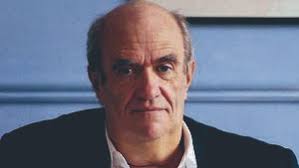
Irish writer Colm Tóibín, Laureate for Irish Fiction 2022-2024. This is his eleventh novel.
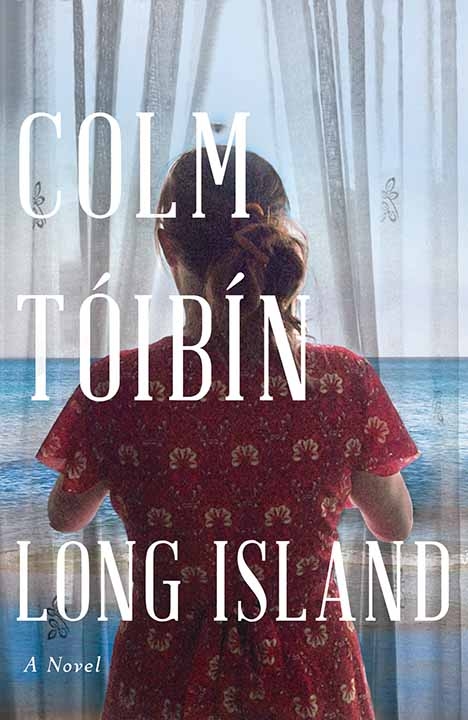
As a Tóibín fan it was like coming home to a cosy room as I settled in to page one and his simple very clear narrator’s voice with its always formal tone elicited by mainly short sentences with no contractions. It’s been twenty years or so of novelistic time since the happy ending of his novel Brooklyn (2009) when Eilis Lacey, from Enniscorthy (Tóibín’s home town in County Wexford, NE Ireland) returned to Brooklyn to continue her role as the recent wife of Italian, Tony Fiorello and to raise a family on Long Island.
Tóibín wastes no time and opens the narrative with the plot point that propels the story: a stranger arrives at Eilis’s front door with a piece of harsh news and his even harsher promise to make things worse. She lives in an enclave of the Fiorello family including her parents-in-law and Tony’s married brothers and she has forged a place in that family that she thought was secure but it’s her reaction to the news, and the only action she feels she can take, that causes her to doubt everything she has done in the past. This is despite her in-laws offering to solve the problem for her. Her stubborn Irish decision is played against the Italian pragmatic approach which she finds untenable. She refuses their help.
This is a common novelistic format: begin with an explosive event and then fill in the backstory along with the repercussions of the bomb. The reader is hooked from page one.
Brooklyn is an immigrant tale and the choices an immigrant must make, personified in the story as two men, one Irish and one an immigrant, like herself, forging an American life. She returns to Ireland to find if she has made the right choice; a little foolhardy since she has already married the Italian-American, something she does not tell anyone including her mother. She returns to America, her choice forced upon her because of her previous decisions. So, there has always been a doubt lurking in the dark, in the back of her mind and this doubt is brought to the fore in this new novel of a much older Eilis Lacey, a married American, secure, and with two teenage children.
She returns again to Ireland on the pretext of her mother’s forthcoming 80th birthday. Her twenty year ago Irish lover is still unmarried, but plans are underway to fix that. Can the way forward get more bumpy? Yes. Her children arrive! How does Eilis navigate her return to the family and ‘her Irish home’? She makes mistakes but will she learn from them? Meanwhile Tony, her foolish but devastated husband waits longingly for her to return to ‘her American home’. Once an immigrant, always an immigrant?
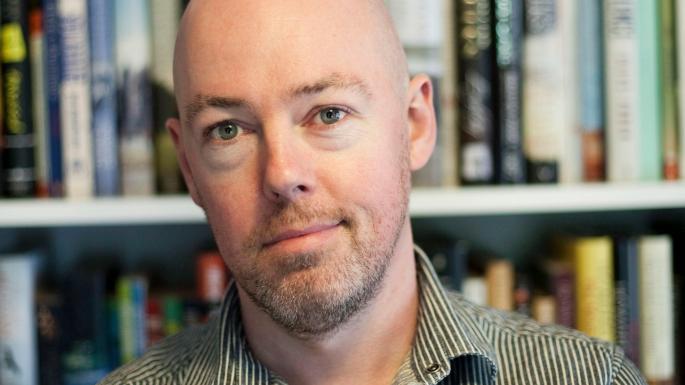
Irish writer, John Boyne whose work has been translated into 59 languages making him the most translated Irish writer of all time.
Evan Keogh is a minor character in the first novella of Boyne’s Elements Quartet, Water (2023) where, like, Earth, it is told in the first person; this time by Evan and his life after he fled the little island off the Irish coast forever, but left with the smell of its earth still under his fingernails.
He has an innate talent for football but no interest in it. He wants to be a painter. His upbringing was hell. An isolated backward place with a brutal and hateful father, a silent and down-trodden mother, and a best friend who betrays him. No wonder he ran away. He has vowed never to return to that island, he knows he is attractive, he is at ease with his sexuality (but always falls for the wrong people), and very ambitious. However, life doesn’t pan out as expected.
It opens in the days before a notorious rape trial. The narrative is two pronged: before and after. Evan, now a famous and wealthy soccer player is accused of accessory to rape; his straight mate, Robbie, accused of the crime itself. As the poor boy sits and waits for the trail to begin we learn about his life in London and how he ended up is such a threatening situation. Then comes the trial itself when we hear the testimony of the rape victim, an intelligent girl called Lauren. But we don’t hear about the testimony of Evan and Robbie; there’s a novelistic reason for that.
What impresses me about Boyne’s writing is it is so clear: the situation, the characters, how they feel, and his narrative choices that keep important plot events dangling before your wished discovery, just out of reach, until you are aching for them.
The scenes of sex and violence are vivid but Boyne’s words lead the reader to imagine them; he doesn’t actually describe them in detail. In other words, there’s more going on in the reader’s head than on the page. That’s good writing in my book, so don’t be fearful of what you might read.
Evan’s final decision is a very satisfying one, but will it finally rid him of that sour smell of his home island’s earth?
The next installment of The Elements Quartet is Fire, scheduled for release in November 2024.
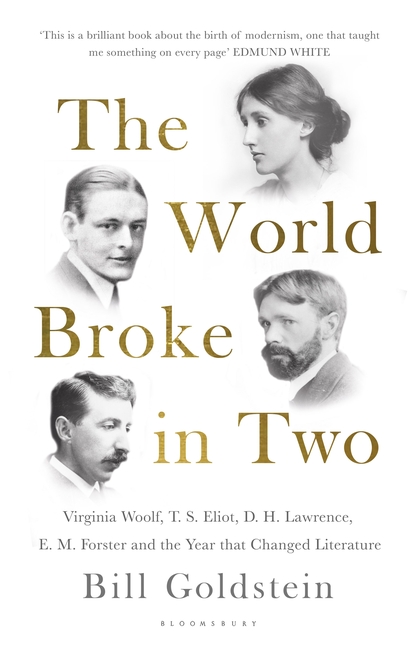
Bill Goldstein, the founding editor of the books site of The New York Times on the Web, reviews books and interviews authors for NBC’s “Weekend Today in New York.”
In 1922 the literary world buckled and, according to Goldstein, broke under the weight of four powerful novelists. This is an account of what happened.
In January 1922 Adeline Woolf, everyone called her Virginia, turned forty and was very sick with influenza which stopped her writing; T. S. Eliot, everyone called him Tom, 34, had been over worked, unhappy, in therapy, but now quietly confident since he had started writing again but fearful of returning to work in the Bank that trapped him between the concrete and the sky; E. M. Forster, called Morgan, 43, was sexually and artistically frustrated; and D. H. Lawrence, called Bert, 36, had the threat of his books being banned(Women in Love, 1921, ” … ugly, repellant, vile”), and a libel suit against him so wanted to know “For where was life to be found” and thought by going to a quiet place by himself he might find it: Ceylon, New Mexico, or New South Wales.
All four had achieved some degree of literary fame: Woolf had published two novels and the third, Jacob’s Room, was waiting for her final revisions, however her illness kept her away from her work. Eliot had published successfully TheLovesong of J. Alfred Prufrock in Poetry magazine in 1915 and had been a regular contributor of reviews and essays, primarily for The Times Literary Suppliment right up to December 1921. Forster had achieved great success with a series of novels, usually about the English aboard, beginning with Where Angels Fear to Tread in 1905 but by 1922 nothing had appeared after the very successful Howard’s End in 1910. Lawrence was more infamous than famous and had had Women in Love published in June 1921. It garnered bad reviews, and low sales. This added to the outrage caused by its prequel, The Rainbow, 1915; it was withdrawn by the publisher after it was banned under the Obscene Publications Act. Lawrence had also characterised in the latter work, an acquaintance, Philip Heseltine, and thought he had disguised him enough, but Heseltine was not fooled and threatened legal action.
For all four writers 1922 did not begin well.
Artistic endeavour is always trying to solve the problems of the art form itself. How does a writer write an autobiography and make it interesting without using the boring phrases, “Then I went …. she cried and so I said …., Then I said, and he went ….”? Novelists for centuries have been using description and dialogue to draw a character; but in an autobiography how do you create an image of the narrator. There must be another way? Yes, there is, and one of the first writers to find another way was James Joyce who began his autobiographical novel Portrait of the Artist as a Young Man (1916) like this
Once upon a time and a very good time it was there was a moocow coming down along the road and this moocow that was coming down along the road met a nicens little boy named baby tuckoo.
First of all he writes not in the first person, but in the third (very radical, this is an autobiography, remember) and the above opening is not dialogue, it is prose; it’s not said by the protagonist but by the narrator using the language that the little boy, James, might use to describe what he sees and what he sees is himself! It’s as if the third person narrator is not some all-pervasive, god-like know-it-all but an imp sitting on the shoulder of the little boy seeing the world through his eyes and hearing the thoughts in his head. This literary device has become known as free indirect discourse, or as the literary critic of The New Yorker, James Wood, calls it, ‘close writing’; and it’s as common today in contemporary fiction as Vegemite is for breakfast. But it can’t be used in the first person because the first person doesn’t need it.
It is not just new ways of expression that all writers look for but new ways to solve old problems. Woolf, Eliot, Forster, and Lawrence always had difficulties writing their next work even if their previous work was successful. “That worked! Why don’t you write one like that again?” remains the continual cry to all writers.Even Forster, the most commercially successful of the four of them, was always afraid of repeating himself.
Painters of the same period sought to bypass the ‘real’ bit in order to paint, say, serenity, by trying to paint serenity with just the paint on the canvas, not trying to be something else, a face or landscape, to ‘portray’ serenity. In other words, they painted not what they saw but what they felt. Writers similarly de-focused the ‘real’ bit and concentrated on, not what the characters did – the plot – but what the characters felt and thought. The plot became internalised.
Before January 1922 was over Eliot and Lawrence had succumbed to the influenza that brought Woolf so low and was rapidly becoming an epidemic to rival the devastating outbreak of 1918-19 that killed more people than the Great War. At least for Eliot the influenza kept him away from the bank and, despite the disease, hard at work on his long poem. His ill wife also being absent was yet another and usual worry out of the way.
On his way back to London from the unsuccessful trip to India Forster bought and read Proust’s first volume, Swann’s Way. He was “awestruck”. Woolf, with her illness almost past, read him in the spring while working on an essay about reading and dabbling with and reworking a character from her first novel, The Voyage Out, Clarissa Dallaway, into a short story called Mrs Dallaway in Bond Street.Both Woolf and Forster were enthralled with Proust’s use of memory to evoke the current state of mind of a character. In the opening scene of the short story, which eventually evolved into the novel Mrs Dallaway, Woolf has Clarissa arrested by the chiming of Big Ben which announces the convergence of the past and present, not only in the character’s mind but also on the page. Very Proustian! Clarissa Dallaway in Woolf’s first novel is described by the narrator but Woolf was determined in this one, this modern one, to have Clarissa think everything the reader needs to know about her. As Woolf wrote later to a friend, she didn’t mind being sick as “Proust’s fat volume comes in very handy.”
Woolf, who wrote that she wanted to write like Proust, didn’t of course, but it was because of him that she began to write like herself again.
Joyce was different. Woolf and Joyce were both the same age, and Joyce in early 1922 had “a novel out in the world, a massive – expensive – box of a book”, Ulysses, and Woolf had not published a novel in two and a half years. She was jealous. Bert Lawrence ran away to New South Wales and began a book where no one takes their clothes off, but since the libel suit against Women in Love was unsuccessful, the (negative) publicity sparked interest from readers and sales swiftly grow. Morgan Forster at home with mother burned all his “indecent writings” and embarked on a new novel, A Passage to India.
If the English literary world did actually break in two in 1922 it was because of Proust and Joyce. Proust’s monumental seven-volume À la recherche du temps perdu variously translated as The Remembrance of Things Past or In Search of Lost Time, and labeled in some quarters as the greatest novel ever written, came out in English and Joyce’s Ulysses, which began as a serial in an American magazine and consequently banned, was finally published in book form that year. It is also the year that Marcel Proust died. The major effect was on writing and therefore the literary novel took a turn to the introspective, to the experimental, to the perverse and in so doing left a lot of readers behind, sticking stubbornly to the realism of the previous century; and most of them still do. They want a painting of serenity to be paint on canvas masquerading as a face or a landscape. However, it is true that because of what happened to literature in 1922 the relationship between writer and reader was changed forever.
This is a fascinating book, well written, and full of information about writing and writers… if you like that sort of thing.
You can watch the charming and playful School of Life animated videos, narrated by Alain de Botton, on James Joyce here, Marcel Proust, here, and Virginia Woolf here.
Here, you can watch a short biographical video on T. S. Eliot, and you can watch a short video on D. H. Lawrence by Anthony Burgess, here.
You can download all the novels and short stories of Virginia Woolf, Marcel Proust, including all 7 volumes of The Remembrance of Things Past, James Joyce, and D. H. Lawrence, for FREE, here.
Here, you can download the major works of E. M. Forster, for FREE, and you wan watch a short film of Forster talking about writing novels, here.
In my attempt to find and read all of Patrick’s fiction works – only a few to go – I’ve hit some barriers: some of works are not easy to find. This one, Friendly Fire (2005), has been elusive but I discovered it on my sister’s bookshelf; she found it in a second-hand bookshop.
Sophie is fourteen, an orphan, and in a home, Wakefield House, not the horrible cliched narrative of harsh and sadistic masters in an old grey and foreboding stone mansion, but a warm and caring environment run by a childless couple, Margaret and Keiran, who although they keep their emotional distance from the children who might on any day be adopted they have formed a much closer bond with Sophie who has never sought to leave. According to Gale, “her life is changed through literature.” She is a bright student, even-tempered, and curious and earns a place at a much admired boarding school, Tatham, where she is attracted to and befriends two male students, Lucas Behrman and Charlie Somborne-Abbot. Their developing lives, friendships, sexualities, and their place in the world, home and away, form the book’s narrative. The boarding school trope has been used countless times as a metaphor for society, politics, nations, and even the world. Here it feels more like a family, a benign and nurturing one, but like every family there is unexpected tragedy. Learning doesn’t only happen at school.
Society’s rules, inconsistencies, trivialities, secrets, prejudices, both religious and financial, and, of course, hypocrisies make up the steeplechase that Sophie must navigate, jumping and sidestepping, calling for help, or facing head on, but also falling splat! on her face. Gale is an expert at pacing and plotting; his plot points, both soft and dramatic, sometimes sneak up on you. The climactic moment is dropped into a seemingly casual sentence in such an unassuming way that I had to stop and re-read it to make sure I had read what I thought I had. As a reader I felt buffeted by the narrative but at the same time confident that I was in safe and expert hands. That’s what I like about Gale’s work and why I’m seeking to read everything he has written, and will write.
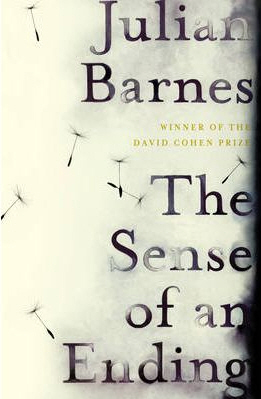
This book from 2011 has been sitting on my bookshelf for some years, winking at me. I have never been sure if I had read it, so I did. In a book world dominated by thick tomes, a novella like this can be a god-send. Claire Keegan, Foster (2010) and Small Things Like These (2021), an Irish writer, has been lately championing the novella as a legitimate art form.
This is a story about memory: what we remember and what we think we remember. Tony Webster, the first person narrator, is in his latter years and he tells us about his school days when he was nerdish, oh-so clever and amusing and, with his two mates Chris and Alex, a little ahead of the pack – so they liked to think. This gives Barnes a delicious excuse for self-deprecating witticisms about his youthful behaviour as seen from the distance of his much older self.
A new boy arrives, Adrian Finn, quite a bit ahead of them in intelligence and maturity, but who attaches himself to the three friends, which surprises everyone especially the trio themselves. Flattered though they were.
Later at university, hoping that his life will soon begin, he meets the enigmatic Veronica and does all the right things, as prescribed by his conservative and very British culture, which, in reality, is nothing much, just waiting for things to happen. They don’t. However, Veronica does invite him to meet her parents, and brother Jack for a weekend. Jack, in an aside, says, ‘I suppose he’ll do.’ And that seems the belief of Veronica as well. And still nothing happens. But Veronica’s mother, quite likes him, and he quite likes her. You get the impression that she is attracted to her daughters ‘young men’.
Finally Veronica ‘comes across’ but only after they break up.
Life continues, he and his friends drift apart, he finishes university, ages, gets married, has a child, gets divorced but keeps a close relationship with his ex-wife Margaret. He then hears from Adrain Finn via a short letter that he and Veronica are now a couple. Tony is furious.
Part One concludes with the news that Adrian Finn has killed himself, diagonally slashing his wrists (apparently that is the best way to do it) in a hot bath, and left a letter explaining that his suicide was planned and philosophically justified and so no one needs to be upset. He also leaves an apologetic letter for the paramedics and hospital staff that had to deal with his corpse. Adrian Finn; first class honours, first class suicide.
Part Two opens with the elderly Tony receiving a certified package in the mail: he has inherited £500 … and a diary, but there is no diary in the the package. Astoundingly, the deceased is Sarah, Veronica’s mother, who in her accompanying letter tells Tony that Adrian, before his death, was quite happy.
This entertaining, intriguing, and very well written novel takes us through Tony’s attempts to winnow through his memory and re-engage with people he hasn’t seen in decades to answer so many bewildering unanswered questions. Why did Adrian kill himself? Why did Sarah have Adrian’s diary? Why did she leave it to Tony? (Why was it her’s in the first place?) And why won’t Veronica, still enigmatic as ever, tell him what he wants to know? What did he miss all those years ago? AND, where is the diary? Was he so stupid, so unengaged? Did his mistakes then as a young man have anything to do with his mistakes as an older one? Maybe. He was alone then; he’s alone now.
I’m sure that any reader over 50 will see themselves, to some degree, in this book. I loved it even if Barnes throws up some very unflattering mirrors at me.
And last night I watched the 2017 movie version with a stellar British cast: Jim Broadbent, Charlotte Rampling, Harriet Walker, Emily Mortimer, Michelle Dockery, and Billy Howle.











 Michael K Freundt