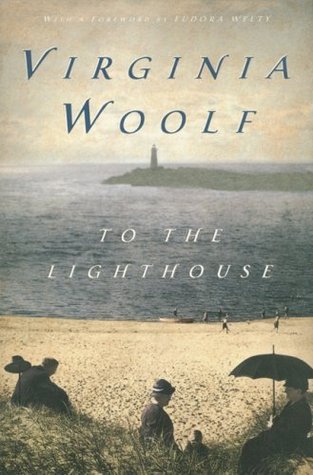
To the Lighthouse by Virginia Woolf

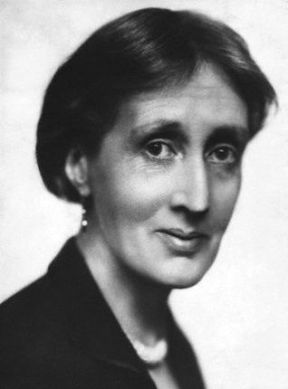
virginia_woolf_pic
Virginia Woolf

This is not a story, and readers may find it difficult and not worth continuing with, but it takes a little gear change to alter your expectations. However, for readers interested in the life of the novel To the Lighthouse is an interesting read; but before sitting down with it a little research into the times and the literary landscape into which it was written is a good idea. It is considered a pioneering work of literary modernism.

Modernism is hard to define since it’s such a broad term and encompasses other ‘isms’ like expressionism and surrealism to name just two; and modernists did not actively adhere to any philosophy or movement like the visual impressionists did. However, it is generally considered to show a strong feeling for experimentation, and anything that was new, as well as a strong anti-Victorian bent. It is also difficult to pin down a starting date but generally it is agreed that literary modernism began at or near the turn of the 20th Century. While Robert M Kirschen of the English Department at the University of Nevada, opts for the end of Modernism in 1939 (some say 1945) with the publication of Joyce’s Finnegan’s Wake: “the ultimate work of Modernism.  It is truly the pinnacle of this experimentation and novelty. After the Wake, it is no longer possible for a writer to attempt to supersede his or her predecessors in the way Modernists often strove to do.  As such, the Modernist movement had reached its natural teleological* conclusion, and anything which came after must be part of a different part of literary history” i.e. Postmodernism. However, these labels are arbitrary and are the result of literary theorists looking back into the immediate past and recognising similar themes, memes, and ideas across the broad spectrum of literary endeavour. James Joyce, T. S. Eliot, Ezra Proud and Virginia Woolf are all considered pioneers and pillars of modernism.

In To the Lighthouse the drama, like many modernist texts, is not in the action, there is very little. Action did not interest Woolf. The book begins with the announcement of a desire, for the boy’s sake, for James, to go to the lighthouse, and ends, 10 years later, with them actually setting out. The drama is internal, the weave and weft of emotional attachments, of familial love and hate, the gamut between, and even dissertations on life matters. There is also an argument, external to the book, but installed in it’s very creation, about doubt of the creative force; about two guests, two of many, at the house: Charles Tansley, a sycophant, who pronounces that women do not have a creative force, and Lilly Briscoe, a woman who desperately yearns, and attempts, to be an artist, a successful painter, but fails. She is a metaphor for Woolf herself and her own legendary self-doubt (thinks Margaret Atwood); but ironically Woolf not only completes this work, and publishes it, but knows its success.

The man, Mr Ramsey, stands over his wife, while she knits a pair of stockings for the underprivileged boy of the lighthouse keeper, which she hopes to take and give to him, if they ever get there, and he demands sympathy, since he declares himself a failure as a man. While knitting, as the boy, James – loving his mother, hating his father – stands between her knees clutching a book, she assures her husband, “beyond a shadow of a doubt, by her laugh, her poise, her competence” that he is wrong about himself. Look at the undying admiration of Charles Tansley, and his very own fecundity, his own house “full of life” – he has eight children – and in response to his wife’s success in turning his self-doubt into self-admiration- not via the sympathy he sought – but “as a nurse carrying a light across a dark room assures a fractious child” he goes for a walk to watch the children playing cricket. But once he is gone she is exhausted and can hardly lift her needles; can hardly read the fairy tale James so wants to hear, with the demands on her to mend her husband as well as wonder where the fifty pounds will come from to mend the greenhouse roof; and all this laden with the half knowledge that her husband is right about himself, adding lies to the accumulated burden she has to bear.

It is this internal drama, thoughts, treacheries, responsibilities, and admissions that interest Woolf. Then here, while knitting and thinking about why children must grow up; why can’t they stay happy forever, she thinks, “We are in the hands of the Lord?”

What brought her to say that: “We are in the hands of the Lord?” she wondered. The insincerity slipping in among the truths roused her, annoyed her. She returned to her knitting again. How could any Lord have made this world? she asked. With her mind she had always seized the fact that there is no reason, order, justice: but suffering, death, the poor. There was no treachery too base for the world to commit; she knew that. No happiness lasted; she knew that. She knitted with firm composure, slightly pursing her lips and, without being aware of it, so stiffened and composed the lines of her face in a habit of sternness that when her husband passed, though he was chuckling at the thought that Hume, the philosopher, grown enormously fat, had stuck in a bog, he could not help noting, as he passed, the sternness at the heart of her beauty. It saddened him, and her remoteness pained him, and he felt, as he passed, that he could not protect her, and, when he reached the hedge, he was sad. He could do nothing to help her. He must stand by and watch her. Indeed, the infernal truth was, he made things worse for her. He was irritable — he was touchy. He had lost his temper over the Lighthouse. He looked into the hedge, into its intricacy, its darkness.

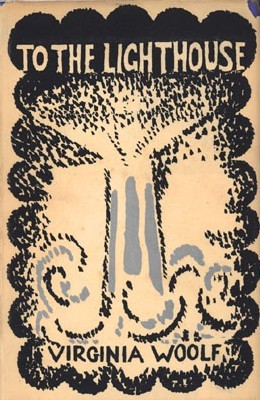
ToThe Lighthouse Original cover
Original cover design by Virginia’s sister Vanessa Bell: 1927

It is this combination, this ‘conversation’ between the narrator, Mrs Ramsey, and Mr, but all in the narrator’s ‘words’, that, among others, mark this text as a work of ‘modernism’; and, indeed, one of the first.

If you think of the third person narrator as an omnipotent genie commenting and assessing each character, every moment, past, present and future, and sitting on the shoulder of the protagonist listening in to their thoughts and desires and explaining, prophesizing, and assessing them for the reader, here it is like that genie is not just rooted to the shoulder of the main character but, flitting to and fro onto the shoulders of many characters. And in the final short sentence of chapter 11 Woolf has all three voices ‘speaking’: the narrator, wife and husband,

For he wished, she knew, to protect her.

James Joyce’s Ulysses was published in English in 1922 and Woolf’s reaction to it was initially uncomplimentary, “puzzled, bored, irritated & disillusioned as by a queasy undergraduate scratching his pimples,” but she later came around to admitting his genius even if she may have not finished reading it. However, it is clear that she was influenced by him, and, no doubt, by the first English translation of Marcel Proust’s À la recherche du temps perdu, translated into English as In Search of Lost Time or Remembrance of Things Past, which also came out in English – it was originally published in France – in 1922. What a year!**.

However, it is important to keep in mind that just as fads flutter through most of our civilised efforts, food, fashion, and politics, so too do fads pepper our literary history; and ‘obscurity’ was a particular literary fad of the early 20th century. Writers thought that every story that could be written had been written so they sought ‘the new’ within the structure of the novel itself, the use of the language, and in the relationship between writer, narrator, and reader.

Woolf did not deliberately seek to be obscure, no writer does, but in order to describe, set down, what interested her she had to find new ways of convincing her readers that they would be interested in it too.

The pleasure of the works of Virginia Woolf is immediate; it is in the reading, not the remembering.

godrevy-lighthouse-pic
Although the story is set on the Isle of Skye, western Scotland, Godrevy Lighthouse, built in 1858–1859 on Godrevy Island in St Ives Bay, Cornwall, was the inspiration for Woolf’s novel.

You can find the ebook, in various formats, for free here, as well as other works by Virginia Woolf including all her novels and a large number of short stories. If you are interested in discovering Woolf try her first novel, The Voyage Out (1915); a good place to start.

-oOo-

* Teleology is the philosophical attempt to describe things in terms of their apparent purpose, directive principle, or goal

** THE WORLD BROKE IN TWO: Virginia Woolf, T.S. Eliot, D.H. Lawrence, E.M. Forster, and the Year That Changed Literature, by Bill Goldstein, comes out in November this year.

House of Names by Colm Tóibín

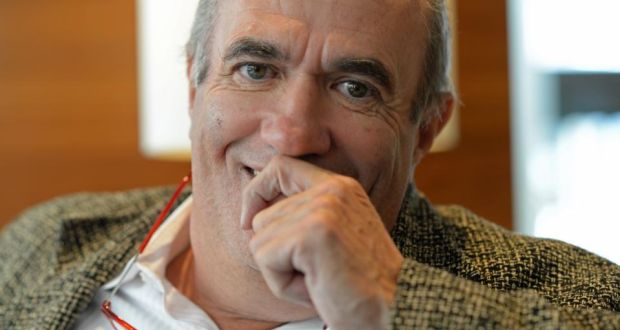
Colm Toibin image
Irish writer Colm Tóibín

When trying to describe the writing of Colm Tóibín it is easier to point out, not what he does, but what he does not do. He does not use contractions which gives his writing formality, gravitas, and weight; he does not use many adjectives and rarely long and compound sentences making the writing plain, stark, and bold; he does not describe places, people, or the weather unless it is absolutely necessary; and he does not use many adverbs or sentimental phrases to steer the reader into an emotional reaction. It is like watching a movie without a soundtrack (and if you would like an example of such a movie try Maren Ade’s superb comedy/drama Toni Erdmann, 2016 – no soundtrack).

Tóibín asks a lot of his readers; he allows readers to supply the detail: he simply says
‘she walked slowly along the corridor of the palace to her room,’ and leaves it up to us to provide the detail: the decorations, the floor tiles, the guards and their uniforms, drapes, and statues. We all have an idea of the a corridor in a pre-christian palace. Our thoughts may not be accurate, but interior design has nothing to with Tóibín’s story. Our imaginative efforts are all he needs.

All of these elements are in his latest work, House of Names, Tóibín’s retelling of the pagan Greek tragedy of the turbulent family of the House of Atreus, headed by Agamemnon who prepares to besiege the city-state of Troy and return his kidnapped sister-in-law, the beautiful Helen, and return her to her husband, his brother, Menelaus. There is also no sense of good and evil, there is just what must be done to get what you want. Revenge, rape, human sacrifice, incest, matricide, kidnapping, imprisonment, and murder by any means are par for their daily lives as they are for the gods they worship and from whom they seek guidance.

She [Cassandra] had come to us in glory and now, in ignominy, she was running through the palace seeking Agamemnon, having divined that something had happened to him. Aegisthus followed her at a slow pace. When I saw her, I calmly ushered her into the bathroom, where she could see my husband bent over naked, his head in the bloody water. As she howled, I handed Aegisthus the knife I had used on Agamemnon and indicated to him that I would leave him to his task.

Tóibín has used the bones of the story garnered from the Greek playwrights, Sophocles, Euripides, and Aeschylus but has also relied heavily on his own imagination, especially in the Orestes section. The book is divided into parts each focusing on one of the three main characters, Clytemnestra, wife of Agamemnon, Orestes, their son, and Electra, their daughter. The sections labeled Clytemnestra are told in the first person, the others in the third. However, Tóibín uses free indirect discourse (also known as ‘close writing’) where the words used are similar to those the protagonist might use giving the third person narrative a taste of the first; so, whether told in the first or third person this tale is very personal to the murderous trio.

The story opens the day after Clytemnestra has slit the throat of her husband Agamemnon just after he slipped into a warm bath,

I gave orders that the bodies should remain in the open under the sun a day or two, until the sweetness gave way to stench

but quickly takes us back to the reason for this: the death of Iphigenia, Clytemnestra and Agamemnon’s eldest daughter; rather than marrying Achilles, her father’s famed warrior, which she thought was happening that day, she was sacrificed to the gods, with Agamemnon’s approval, to enable fair winds to take him and his fleet to Troy. Clytemnestra plots her revenge which never fades while Agamemnon is away fighting the decade long Trojan War.

This novel, his eleventh work of fiction, is a departure for Tóibín, which may have been his attraction to the idea. Usually his family stories are more about the emotional geography of everyday life of everyday people: the inability of a father to confess love to a lonely son; a recently widowed mother’s attempt to regain her life on her own terms; or how a writer, used to success, copes with failure; rather than the murderous shenanigans of the rich and powerful. However, in the first-person narrative of Clytemnestra, there are similarities with Tóibín 2012 novel, The Testament of Mary. Here too the tone is confessional: a woman, a character from our ancient past, confessing to the reader her inner thoughts, motivations, and decisions.

To facilitate her murderous plans, Clytemnestra has her son, Orestes, still a teenager, kidnapped and sent away along with other young men – to garner silence from their fathers – and guards who might get in her way. Orestes, with two others, the strong and decisive Leander, and the weak and sickly Mitros, escape and in this third-person narrated section there exists, eventually, a taste of domestic happiness, rural contentment, and even romance. But Tóibín only hints at such human pleasures with the same distanced control he uses to describe filial treachery, pride, and murder.

Electra, a sad and rather pathetic character does not have the beauty of her dead sister, Iphigenia, nor the cunning and charisma of her mother, or the courage of her brother, but she hovers over the story biding her time, making plans, until she is able to set up the matricide for her brother to commit.

I enjoyed this tale – it’s a quick read –  but I hanker for Tóibín to get back to what he does best and to the promise he made post Brooklyn (2009), that after three novels about women he would tackle a story about men; his previous, The Heather Blazing (1992), The Story of the Night (1996), and The Master (2004), where a long time ago.

You can obtain this work in various editions here.

Gulliver’s Travels

IMG_0609
I don’t know who this person is – I found the image on the net – but to me now he is the reason for this work. The look, the attitude, the knowingness, and even the colouring all add up to my image of Robert. Robert, never Bobby or, heaven-forbid, Bob.

This is Robert Gulliver, and he’s in the process of being born.

Over the last few years, longer probably, I have sketched out a story about this curious character in script form. Because that’s how I originally saw him, it. I don’t remember where he, the idea, came from. He is sixteen but the rigours of puberty landed heavily and early on dear Robert; that, and given his unusual parenting, and intellect, he is very much a round peg in a square hole. In fact, he is a man still in high school.

I was inspired to re-visit Robert recently as circumstances are that I don’t have the luxury of blocks of hours at my disposal to give long-form writing the wealth of time it needs. I have a few long-form projects that need just that. I thought polishing and cut & pasting an existing work would be a much better use of the time I have. Unfortunately I had written 80% of Gulliver’s Travels on a script-writing program called Final Draft; my subscription had expired, the update was expensive, and I was locked out of the program. However, although Robert has been sitting there, locked in the ether, he has been a lot on my mind: the story is well formed and remembered, and re-remembering it, but in a different form, was an interesting and challenging idea to dive into.

Robert’s story is about family. And the moment I wrote that word ‘family’ Leo Tolstoy’s famous opening line from Anna Karenina sprang to mind:

Happy families are all alike; every unhappy family is unhappy in its own way.     (Translation by Constance Garnett)

And a comment by Patrick Gale, a British and favoured author of mine, in which he said he likes page one to hold some sort of key to the whole work itself.  It’s not that Robert’s family is unhappy or that I need a cryptic smack of the whole thing to begin, but what those two thoughts inspired was this,

Gulliver’s Travels

a novel

by Michael Freundt

Prelude

If you asked a family member – of any family – if they were happy, they would invariably pause, not wanting to simply say “yes”, and try to think of a word, or words, that would accurately describe their … but they would all so quickly realize that they have no idea how to describe how they feel so they say, “Yes,” usually adding, “of course.” You know that this is a lie, but politeness and fear forces you to acquiesce and you smile and say something limp in acknowledgment, like “Good.” This is an example of two lies being better than none. You can both now get on with whatever you were doing; conditioning your hair, mowing the lawn, doing your tax, without upsetting the balance of the universe, happy in the faceless knowledge that you have successfully bypassed the slippery dip to yelling, tears, and/or the breakdown of your world as you know it. This is the bedrock of why families survive; sometimes, even when they shouldn’t.  

If you realise at any time that you have somehow been perplexingly born into the wrong family, or if circumstances render your family suddenly, or slowly, unacceptable to you, you need to – or may be forced to – do something about it. This is a story of a boy who did just that.

Let’s see how it goes.