Black Water by Louise Doughty

louise-doughty-pic
British writer, Louise Doughty.

In Indonesia in 1965, fifty-one years ago, a coup against President Sukarno was crushed by the military leadership of Suharto and the blame fell on the Communist Party (PKI) which led to mass killings of suspected Communist members, sympathizers, and their families. Nowhere was the massacre more severe than in Bali: in the weeks surrounding Christmas 1965 it has been estimated that 80,000 people were killed; around 5% of the island’s population. Village people could not opt out: if you did not name someone as a Communist, you, yourself were suspected of being one. Even if you were merely fighting for land reform or education for women and girls, these communist-tainted ideologies were enough to condemn you. Villagers who huddled with their terrified, but relieved, families after naming a neighbour, then had to listen to screams as those neighbours were dragged from their beds and hacked to death with machetes; no-one could expect the relatively swift and painless bullet from a gun: too expensive. Villages only had long-handled sickle-like knives they used for cutting grass for their pigs; those and other methods that were easy at hand.

“We shoved wood in their anus until they died. We crushed their necks with wood. We hung them. We strangled them with wire. We cut off their heads. We ran them over with cars. We were allowed to do it. And the proof is, we murdered people and were never punished”.

— Adi Zulkadry, death squad leader quoted in the Oscar nominated documentay The Act of Killing

Old scores, family feuds, village rivalries that had been simmering for decades, generations, suddenly had an outlet for settlement. Any Bali villager today over the age of 60 must have memories of that time; and their families, being spared, must have had a hand in it. So the logic goes.

There have been various books, (including Christopher Koch’s The Year of Living Dangerously), and films and documentaries (40 Years of silence: An Indonesian Tragedy, 2009, The Act of Killing, 2012) that were based on this ‘tragedy’.

“1965 is an event that has and continues to influence many Indonesians and as such, we chose to dedicate a proportion of the program to enriching our understanding about this, through themes of reconciliation and remembrance. We hoped that these panel sessions would enable conversations to take place that continue Indonesia on its journey of healing, particularly for those whose lives were so severely affected.” Janet deNeefe, Founder and Director, Ubud Writers and Readers Festival.

The Ubud Festival has presented many written and visual works based on the killings at various festivals but it was the 2015 festival that the police stepped in and forced the organisers to cancel various sessions; the 50th anniversary too remindful, too dangerous, too raw to allow talk and debate about such a controversial event – “the massacre of up to 500,000 or more alleged Communists between 1965 and 1968 by the Suharto regime.”
“Unfortunately, whilst we pride ourselves in bringing topical issues to the forefront of national and international dialogue, we had to consider the festival’s program in its entirety and the many other important issues which will be explored through it, including human rights, activism and censorship,’ DeNeefe said.

Indonesian President, Joko Widodo, last year refused to apologise to the victims of 1965, even though he had made an election promise to confront Indonesia’s past cases of human rights violations. The event is not taught in schools; it is being erased from the country’s history.

It was this event of 1965 that inspired British writer Louise Doughty, a regular visitor to the Ubud Festival to write Black Water, her ninth novel, which was published by Faber & Faber earlier this year.

Ironically many writers choose fiction to highlight real events.

“Novels arise from the shortcomings of history”.  So said Georg Philipp Friedrich Freiherr von Hardenberg, born 2 May 1772 and known by his pen name, Novalis. The facts of history are usually dry and un-engaging, so to engage readers writers use the novelist’s art of researching the facts by talking to the participants, then imagining the detail; the personal detail that can grab a reader’s attention, put them in the character’s shoes and inspire them to dig further, light their own imagination and spur them on to seek more answers: the truth can inspire fiction in the writer and then that fiction can inspire truth in the reader.

Black Water tells the personal fictive story of a mixed race (Dutch, Malay) man, an intelligence operative, called, by his English name, John Harper. The book is divided into three parts: the first set in 1998 when Harper is on ‘forced leave’ in Bali (why?) and embarks on a love-affair; part 2 is his early mixed race life in the Dutch East Indies, Holland, the US, and then Indonesia from 1942 to 1965, the year of ‘the tragedy’ which marked the making of Suharto; and finally, back to 1998 where the personal and the historical co-mingle; where we discover what really happened to John Harper.

Doughty is often described as a thriller-writer but in supplying the personal facts to colour the historical truth Doughty doesn’t describe the horrific violence but ‘imagines’ what could happen: dense prose of the atrocities that could befall you if you were in the wrong place at the wrong time; like most village victims. This and rather flippant drops of dryness, along with little glimpses into the future undermine any suspense as if such novelistic techniques were too commercial; or maybe it’s her attempt to dislodge the ‘thriller’ epithet. Consequently, the reader is distanced from the actual threat to Harper’s life rendering his fear as mere paranoia until well towards the end where the narrative takes on a page-turning haste that would’ve served the text better had it arrived earlier. It’s really a small point but important from a reader’s point of view. However, Doughty’s side-stepping of horrific descriptions of torture and murder may just be her novelistic skill at work: preparing us, blind-siding us, for the tense and terrifying climax. But Doughty at her best is when she is charting the geography of the heart especially of lonely, damaged people as they fumble for some support, trust, and commitment even if talk of such things are rarely on their lips.

Doughty, a British writer of Romany descent was born in 1963. She spent most of her twenties in casual teaching and temporary secretarial jobs, the latter supplying material for her first novel Crazy Paving (1995). She has been nominated and won many awards as well as being a judge for some of the prizes she has, in the past, won.

Black Water is the first book I have read that is set in the place where I live. I was interested in Doughty’s book to give colour, weight, and detail to the events of 1965 that have only filtered through to me via the Ubud Writers and Readers Festival. Literature in Indonesia is not an important pastime, especially in Bali where free time is usually taken up with duties to the banjar (village council) and the temple. But this is changing although Indonesia’s most famous novelist, Pramoedya Ananta Toer, via his Baru Quartet, publishing in English by Penguin, is not known in Indonesia: the book in the Indonesian language is banned because of its anti-authority themes. Indonesia is a country that is crawling out from under its past but it’s a slow and bumpy ride. Black Water should help to it along a bit.

You can find the book here.

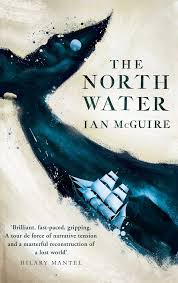
The North Water by Ian McGuire

Ian McGuire pic
English academic and writer, Ian McGuire.

Since 1996 Ian McGuire has been at The University of Manchester initially as a lecturer in American Literature and more recently as a lecturer in Creative Writing. He now co-directs the Centre for New Writing. His first novel, Incredible Bodies, “very funny and disconcertingly sad” said The Times; a contemporary campus novel was published by Bloomsbury in 2006. He specialises in the American realist tradition; Melville, Conrad are evoked in The North Water, his second novel (2016), and not just because it is set on a whaler. However the tone is most-certainly modern, mainly because of the very modern ‘foul’ language: he pulls no punches.

McGuire’s notable reviewers of The North Water, Hilary Mantel, Martin Amis, and Colm Tóibín, have written repeatedly about his “narrative tension” and his “remorselessly vivid” prose but when the writer writes narratives, each stuffed with its own tense detailed vividness: the brutal murder, then rape of a street urchin; the evisceration of a screaming sepoy; a face blown away with musket-shot; an arm ripped from a man’s torso by a ravenous polar bear; that same creature killed with a harpoon to the spine; the slaughter, dismemberment, and carving up of whales and their blubber; the medical inspection of a ravished anus; oh, and a whoring piece of low-life who sniffs then sucks his filthy fingers just “getting his final money’s worth”, all one needs to do is describe all this simply and accurately and ‘remorseless vividness’ is what you’ve got. I’m not at all deriding McGuire’s work, quite the opposite, but when your material is as rich, rare, and image-encrusted as any material can get, describing it simply is what a talented writer must do; and he does.

The tale, circa 1859, is one of a whaling expedition from the sludge of the Humber estuary, northeast England, to the whiskey ‘n’ women – each at a shilling a pop – in Lerwick of the wind-blown Shetlands, then north, and north again, and as far north as one can possibly go, beyond the Arctic Circle to the North Water, northwest of Greenland, in a boat packed with foul-mouthed vagabonds, murderers, liars, rapists, brutish thugs, opportunists with grudges; where life is a drudge, full of excrement, gore, and blood; where death is as easy and as light as a penny; where killing is a chore after your porridge, and where one shits first or is forever shat upon. Get the picture?

All ye who must like your book’s characters keep well away from this one.

But, yes, it is one of the most pleasurable reads I’ve had in a long time. This is where literary fiction meets plot and the latter comes up trumps; ah, but oh how sweet a brutal plot can be when it’s dressed in literariness and style such as this!

There are two main characters, Henry Drax, a villain of “pure evil” if there ever was one – we see him in all his ‘gory’, literary; and Patrick Sumner, a disgraced surgeon from his days serving the Raj in India, where a simple miscalculation under fire shatters his reputation. These two misfits, one with a shadow of redemption, the other, with absolutely none, lock horns on a fatal voyage where whaling may or may not be the ultimate goal: no spoilers here.

McGuire uses an omnipotent third-person narrator with no literary qualms about swapping POVs; all for going where the narrative takes him. (See my previous post of The Filth Heart, where the writer, Dan Simmons, abounds in such undermining qualms). The pace is fast and engaging but for brief passage of short but dense and fascinating description. A great read!

Highly recommended.

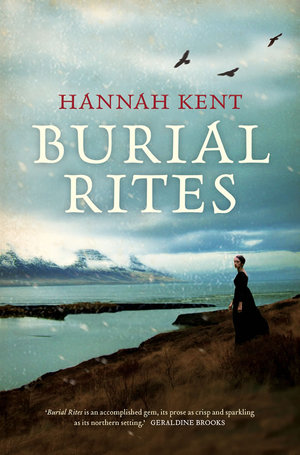
Burial Rites by Hannah Kent

Hannah Kent lic

Hannah Kent

On January 12, 1830 in a poor rural community in northern Iceland, Agnes Magnúsdóttir, 34 years old, a farmhand, and Friðrik Sigurðsson, a farmer’s son were beheaded for the murder of two men almost two years earlier. For the months leading up to her execution Agnes was forced to live with a farming family who were extremely reluctant hosts but forced to do so by the farmer’s local administrative responsibilities. The executions were the last in Iceland, for in 1869 executions were outlawed in Iceland under Danish law.

In 2002 Hannah Kent was 17 years old and on a student exchange program, living and studying, in the north of Iceland. She arrived in January when the place was dominated by snow and darkness (for 20 hours a day). She was lonely, socially isolated on the edge of the world, and cold. On a trip around the region, obviously in a gap in the weather, she asked about local places of significance and she was directed to three small hills, white against white, where, her host parents said, a woman called Agnes was beheaded: the last execution in Iceland.

“I was immediately intrigued. What had she done? What had happened? … Retrospectively, I can only speculate that the strange, isolated place of Agnes’s death made me think of my own feelings of loneliness; that I thought of Agnes as a fellow outsider in a remote Icelandic community, and I identified with her in some small way.”

In January 2011 Hannah Kent had to face the task of writing an historical novel as the creative component of a PhD and her discovery of Agnes’s story nine years earlier sprang to mind.

Burial Rites is the result.

The thought of reading an Australian writer’s work with no gum trees (no tress at all actually), no kangaroos and no barbeques was too tantalising to resist. Kent uses two narrative frames: an uninvolved narration in the third person and a more poetic one in the first, as Agnes and so giving her a voice. The landscape, social and familial structures are revealed, not in dense descriptive paragraphs but as a background to the action. The arrival of Agnes at the lonely farm, her ostracisation, her predicament and demeanour are all skilfully drawn as is the family members of her reluctant jailers; and part of the charm of the situation is the slow growing understanding between the doomed woman and her hosts.

Of course the force that drives the plot is ‘did she or didn’t she’ and as the months of summer give way to the always harsh winter Agnes’s position improves and one thinks that the details of her background and crime will emerge in her religious counselling from a very young trainee clergyman, Toti (a rather wasted character). However this does not happen, instead Kent peppers the text with the story of Agnes and the eventual crime of which she is accused, through more poetic monologues from Agnes, part of the first-person narrative, and through dialogues by the fire with the mistress of the house, Margrit. This is a mistake on Kent’s part as she already has an impartial third person narrator that could faithfully serve as a means to dramatise the events rather than through a static duologue of two women sitting down before a fire in the dead of an Icelandic winter. Agnes’s first person narrative is intriguing and personalises the historical figure, which is exactly what a first-person narrative should do; but in the latter stages of the story, when we discover the romantic relationship between Agnes and one of the dead men, Kent’s re-imagining of this relationship descends into soap-opera of the ‘love him-hate him-love him’ kind. Such personal ruminations may be the musings of a lovelorn teenager but Agnes is mature, intelligent, and self-aware so notions of ‘if only I could talk to him I could change his mind,’ do not ring true.

These weaknesses in the text damage Kent’s novelistic authority but in relation to the work itself they are minor. Burial Rites is an imaginative, a mostly well-crafted debut with a wonderful evocation of period and life well within the Arctic Circle, and I look forward to her next work, which I believe will also be set in Iceland.

Burial Rites has won, among others, the Victorian Premier’s Literary Award People’s Choice Award, and for Kent she was named the 2014 Sydney Morning Herald Best Young Australian Novelist.

Kent co-founded and served as deputy editor of the Australian literary journal Kill Your Darlings. Burial Rites was released in Australia, the USA and the UK in 2013 and translation rights have been sold to 15 countries. In October this year she toured Canada as a guest of the Calgary’s Wordfest, the Vancouver Writer’s Festival and the International Festival of Authors in Toronto.

It was reported in 2013 two months after the book’s release that Jennifer Lawrence is scheduled to star, as Agnes, in the movie version of Burial Rites, directed by her Hunger Games director, Gary Ross.