The Echo Chamber by John Boyne

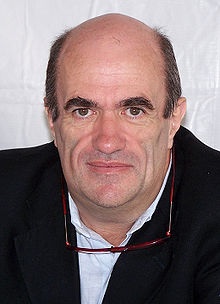
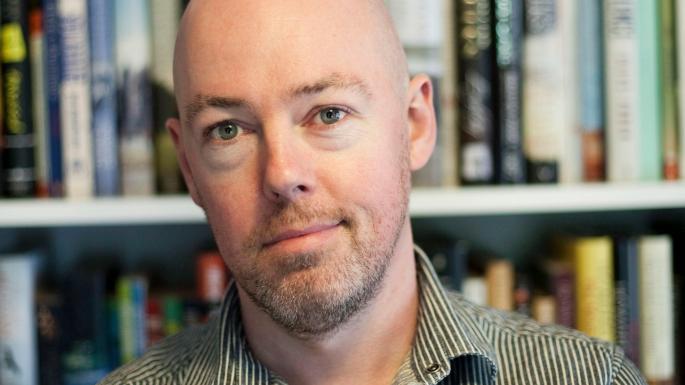
Irish writer, John Boyne.

  ‘But you live in Croydon,’ he said.

  ‘What on earth has that got to do with anything?’

  ‘If you don’t know, then there’s very little point in me trying to explain.’

   ‘I’ll have you know that Croydon is becoming quite gentrified these days.’

   ‘I just prefer a postcode that begins with a SW, that’s all,’ said George.

‘My father instilled certain values in me from the start that have stood me in good stead over the years. Carrying a monogrammed handkerchief, for example. Having a good tailor. Matching one’s belt with one’s shoes. The stuff of civilised living.’

‘You can’t make life decisions based on letters of the alphabet.’

‘I don’t see why not.’

It sounds like Boyne’s channelling Noel Coward! But if you’re out to write a comic novel Coward isn’t a bad role model. 

Boyne calls The Echo Chamber, his 13th novel for adults, a farce and indeed it is; and it should be read as one. Outrageous characters with appalling attitudes, self-serving decisions with names to match. Boyne, I think, had a ball writing this one and after his pummelling via social media by internet trolls and hate-loving twitter-ites over his last YA book, My Brother’s Name is Jessica (2019) – he could’ve avoided a lot of angst had he called it My Sister’s Name was Jason –  he had a lot to say and scream at, and a lot to get off his chest.  

The plot involves a famous British couple, George Cleverly, a Michael Parkinson-like BBC TV talk-show host; his popular novelist wife, Beverly Cleverly, who since her first success now employs ‘ghosts’ to pen her novels; their three Children, Nelson, an anxious nelly who can’t make up his mind who he is but likes to wear uniforms; Elizabeth, a social-media acolyte whose narcissism is only second to that of the youngest, Achilles, who scams older men via his charm and good looks while waiting to get laid by any pretty girl who sees him. It’s a family to loath but you also hope it will suddenly see the errors of its ways and move to the Outer Hebrides, or at least to somewhere without an Internet connection. 

This book is a lot of fun and is nothing like anything Boyne has written before. I hope he’s freed himself from his victimhood, taken a deep breath, and, since he’s blessed with booming sales, he will eventually, once all the PR appearances, chat-shows, and media interviews are over, settle down and chill out and let his novelistic talent that created, The Absolutist (2011), The History of Loneliness (2014), and (his masterpiece) The Heart’s Invisible Furies (2017), surge again. THAT I’m looking forward to very much. 

The Echo Chamber is a great quick read to make you laugh out loud, groan a few times, and blow away a few lockdown cobwebs.  

Tring, a small town NW of London, in Herefordshire, holds an annual Book Festival; you can watch John Boyne being interviewed by fellow writer, Clare Pooley, at the 2021 event and talking about The Echo Chamber here

You can purchase the book in various formats here

The Promise by Damon Galgut

The South African writer, Damon Galgut

It’s been 7 years since Galgut’s last novel, Arctic Summer (2014), a novelisation of the latter years of the English writer E. M. Forster, so The Promise, his latest, has been greatly anticipated. 

The most interesting aspect of this novel is the narrative voice. The writing is free-form: no quotation marks; dialogue and narrative merge – but you’ll be surprised how distinct and recognisable the dialogue is –  and usually in the 3rd person but with a little 1st, (my mother died this morning) and even a  peppering of the 2nd, like he’s talking to me, you, the reader, throwing asides at you, (check out the pic if you don’t believe me). Sometimes a character speaks aloud in a sentence started by the narrator; sometimes the narrator is embodied with feelings and sarcasm (Alwyn and his spouse, sorry, his sister…) It takes a few dozen pages for this free-form to meld into a tone, a voice, an attitude, but it does, and when it does you’ll be greatly relieved. You can relax, and once you do and let this voice work on you, you will have an entertaining reading experience. Although the narrator is unnamed, as most 3rd person narrators are, this one has attitude, likes, dislikes, and lets you know them. Changes of scene and characters happen mid sentence giving the narrative an unplanned wandering song-line, like a slideshow on a phone. It gives the work an attractive chatty tone but one that leads you deep inside the minds and actions of these flawed characters.

The book is divided in to 4 sections, each for one of the main characters of the Swart family, Ma, Pa, Astrid, and Anton. But the main character is Amor, the youngest, who is a child of 10 when her mother dies. However, days before, on Ma’s death bed, Amor overheard Ma’s dying wish: Salome, the family’s loyal, long-serving, bare-foot black maid, is to be given ownership of her rented small and ramshackle house and land. Pa agrees. This is The Promise. Over the following decades South Africa sheds its hated Apartheid system, Nelson Mandela becomes president, black rule fails almost everybody’s expectations and hope for a brighter and more prosperous future; not unlike the trajectory of the disintegrating Swart family; like the slow decline of Salome and her house. Amor goes her own way but the promise is forever on her mind and whenever she returns (Return to South Africa feels more like a condition than an act), only for family funerals, her determination to have the promise fulfilled is thwarted. Will the promise be fulfilled when she is the only one left? 

The knot of races in Galgut’s native South Africa seems never to be unloosed. This story could be read as a metaphor for the country; as could the plight of Salome; as could Amor’s bruised determination; yet there is hope in that she could be the only one left standing with a future to build, albeit an unknown one and obviously difficult. 

The telling, but unconscious, thoughts of the whites (… so many black people drifting about as if they belong here) pepper the text and each time cement the notion that change will always remain elusive. Do all the whites have to die before the blacks can claim their place? 

Highly recommended.

Galgut’s The Promise has made it onto the 2021 Booker Prize long list. If it gets to the short list, as it should, it will be his third: the first In a Strange Room in 2003 and The Good Doctor in 2010. The links will take you to my blog posts. 

You can buy the book, in various formats, here

UPDATE November 4 2021: Galgut’s The Promise won the 2021 Booker Prize!

This House is Haunted by John Boyne

Irish writer, John Boyne.

In my attempt to read John Boyne’s entire work for adults I’m continually impressed by the variety of people, places, times, and voices he uses.

  • 2000: The Thief of Time – a story, from 1758: the adventures of a man who forgets to die
  • 2001: The Congress of Rough Riders – about William Cody, the son of Buffalo Bill. 
  • 2004: Crippen – 1910, London, the body of a singer is discovered
  • 2006: Next of Kin – 1936, a cunning son tries to overturn his father’s will
  • 2008: Mutiny on the Bounty – the classic story told by the cabin boy, Jacob Turnstile
  • 2009: The House of Special Purpose – early 20 century, the Russian Tsar and revolution
  • 2011: The Absolutist – Tristan Sadler and his shocking secret of WWI
  • 2014: A History of Loneliness – an Irish priest confronts faith, friendship, and conscience
  • 2017: The Heart’s Invisible Furies – the life and times of Cyril Avery, Boyne’s masterpiece
  • 2018: A Ladder To The Sky – a would-be but uninspired writer finds other ways to be one
  • 2020: A Traveler at the Gates of Wisdom – one family, the 1st century to the near future
  • 2021: The Echo Chamber – a comic novel of social media – to be released 5th August

This House is Haunted (2013), as the jacket tells us, and the title implies, is a ghost story. By being so upfront about what the book is, Boyne undermines any reticence a potential reader, like me, might have about ‘believing’ such a story. I don’t usually read ghost stories and wouldn’t necessarily have chosen this one except for the author. But knowing what it is, there is no need for Boyne to ‘convince’ you to go along with it; even as you open page one you are already going along with it.  

Boyne tells the straight-forward story in the past tense, in a first person narrative, as a young, determined, but plain woman, Eliza Caine in 1867. It’s not often that a writer writes in the gender not their own; Peter Carey, Jill Dawson, Ann Patchett have tried it, most don’t. Writing in the third person about a protagonist of another gender is very different to writing as the protagonist of another gender. Eliza faces an uncertain future after the death of her father and therefore unhesitatingly takes a governess position to the Westerly children of Gaudlin Hall in Norfolk. Her arrival is, of course, on a dark and stormy night and the house is large, shadowy, and turreted. The back story and her attempts to meet the seemingly elusive parents, to understand the deaths of three out of her four predecessors, and her growing relationship with enigmatic Isobella, quiet Eustace, and the other tight-lipped staff constitute the narrative; unexplainable incidents abound until Eliza is forced to admit, mainly to her practical self, that she is confronted, not by one spirit, but two. Who are they, and why are they still there? 

Like Peter Cary in My Life as a Fake, and Ann Patchett in The Dutch House both avoid any writerly pitfalls – writing in another gender – when it comes to matters of sex and romance by either making their protagonists uninterested in all that stuff (Carey) or not mentioning it at all (Patchett); Boyne also avoids such pitfalls by making his heroine especially plain and seemingly resigned to her probable spinsterhood. Good and sensible choices by all three, I suspect. 

The climax is, as expected, dramatic and almost filmic in its ghostly effects and although the ending is relatively happy – no spoilers here – it has a sting in its tail. 

This is a holiday-read, never demanding, always intriguing and for those of you who are familiar with this genre, I expect, completely satisfying. 

You can buy the book in various formats here.


The Lonely Man by Chris Power

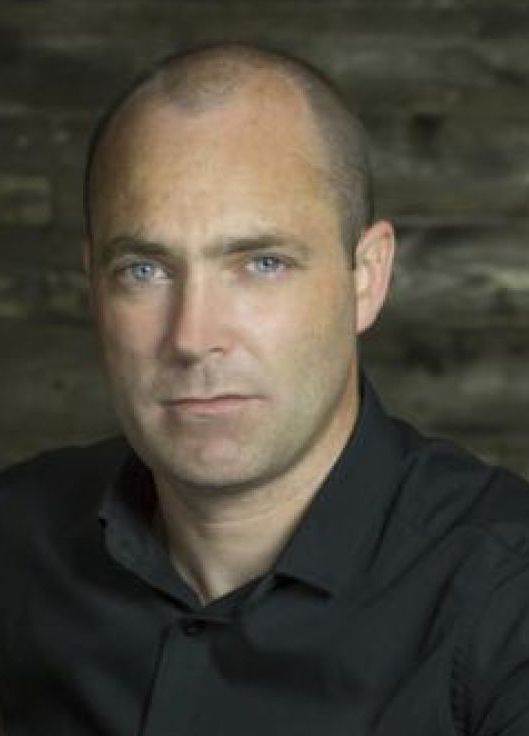
British writer Chris Power

I was intrigued by a review of Chris Power’s A Lonely Man by Zoë Apostolides in the May 5 edition of The Financial Times for two reasons: the reviewer dubbed it ‘a literary thriller’ and used the word ‘postmodern’. I downloaded it immediately.

postmodernism: a late-20th-century style and concept in the arts, architecture, and criticism that represents a departure from modernism and has at its heart a general distrust of grand theories and ideologies as well as a problematical relationship with any notion of “art”.

Oxford Dictionary

Literary theorists, usually critics, search for patterns in the literary output of the recent past. In simple terms what they found was a tendency ‘away’ from the well-plotted naturalistic narrative to a freer, less neat product. One of the postmodern techniques is incorporating the world of the writer into the world of the written; for example auto-fiction. Other examples of literary postmodernism are parody, unreliable narrators, and the abandonment of a single theme.

Although I’m not a great believer in genres, I am interested in how writers write, what the literary industry will allow, its latest trends, and how best to tell a story, but always with the reader in mind. Postmodernism, I think, lets the reader slip from the top position of the writer’s responsibilities; to be replaced by the writer.

Robert Prowe (anagram of Power), with his wife Karijn, live in Berlin. He is a writer trying to write a novel but it isn’t going well. He meets Patrick, who appears to be a rather dishevelled drunk, in a bookshop and then on a few other occasions until they form a friendship, of sorts. Patrick is a writer too and also struggling, but as a ghostwriter for a Russian oligarch, Sergei Vanyashin, who “pissed of Putin and had to get out of Russia” and so wants to write his memoir to clear his name, but, it seems, at Putin’s expense. Robert finds Patrick’s story of his meeting with Vanyashin not only fascinating but also inspiring. The meeting is described in novelistic detail until you, the reader, realise that what you have just read is not narrated by Power’s third-person narrator of A Lonely Man, but narrated by Robert and is his first attempt at novelising Patrick’s story. Robert’s dilemma is what can a writer use? Is Robert thieving or creating? The ‘thriller’ element is the threat felt by Patrick from Putin’s henchmen is transferred to Robert, but this only works if you, the reader, finds this transference plausible. This reader didn’t.

The other postmodern element is the incredibly un-neat ending: the henchmen certainly make their threatening presence felt, but then just walk away. This blunt ending feels less postmodern and more like a literary waterfall full of the expectation of a sequel.

I always enjoy writers writing about writing, and here the writing is assured and competent, but this ‘literary thriller’ did not, for this reader, live up to the hype.

You can watch an interview with Chris Power here.

And here you can buy the book in various formats.

The Absolutist by John Boyne

Irish writer, John Boyne.

“You can’t judge a book by its cover” goes the old saying, but of course we do. The cover of John Boyne’s 7th adult novel, The Absolutist (2011), tells us a lot: WW I, soldiers, a white feather, trench warfare. So here’s the opening lines,

Seated opposite me in the railway carriage, the elderly lady in a fox-fur shawl was recalling some of the murders that she had committed over the years. ‘There was the vicar of Leeds’s she said, smiling a little …

This is one of the things I like about Boyne: he sparks curiosity, intrigue, interest at every turn.

In 1919, Tristan Sadler, on the eve of his twenty first birthday, is going to Norwich to deliver a bunch of letters to a woman he’s never met. In a pub he thinks about getting drunk, causing a scene, getting arrested, and being put back on the next train to London, then … I wouldn’t have to go through with it.

The woman is Marian Bancroft, the sister of Will Bancroft, the man he met in army training, served with in the trenches of France, who refused to fight anymore, and who was court-martialed and shot. He was also the man Tristan Sadler fell in love with.

There is a melancholic tone to this story, but one in which Boyne trickles out important information and intriguing details which adds to the vivid characterisations and keeps your interest high.

There are two narratives: Tristan’s tough journey in 1919 to see the sister of his secret lover and public traitor, Will Bancroft, and interspersed with this, the events of 1916/17 when he first met Will at army training, and then in the rat and mud infested trenches of France where the devastating climax is revealed. But there is a coda: Tristan and Marian meet 60 years later, in 1979, when he is a famous novelist, and she a prickly woman still, widow, and grandmother, who had never liked reading novels. “Actually, I came around to them in the end. Just not yours.” It’s a bold but satisfying end to “a wonderful, sad, tender book,” says the quote from Colm Tóibín; another bit of truth on the front cover.

Boyne’s adult writing is literary fiction but his style isn’t dry or over written or weighed-down by internal musings. This one, in essence, is a story of a man going on a train to visit a stranger. The interest is why he is going, how (if) he will tell her, and what will happen then? This, of course, depends on Tristan’s backstory which is where the real plot is. Boyne is fundamentally a storyteller and he always does this admirably by putting the plot in the hands and minds of three-dimensional, flawed, but brave characters. The structure also seems right. It’s neat and satisfying and not surprising that the film rights have been bought by Ridley Scott. Although there has been no news about the production since the cast (William Moseley, Jack O’Connell, Derek Jacobi, Joely Richardson, Colin Firth, Vanessa Redgrave) and director (Stephen Daltry) were announced in 2013.

This 2011 work is up there with Boyne’s best.

Highly recommended.

Here is a short video of John Boyne talking about the inspiration for The Absolutist.

You can buy the book in various formats here.

Infinite Splendours by Sofie Laguna

Australian writer, Sofie Laguna.

The first thing that struck me about this book was the marketing quotes on the covers, back and front: they were all for Sofie Laguna’s previous novels, not this one. I found this curious, particularly the quotes on the front cover. Were there no advanced critical readings? Maybe not. I have not read her previous work. However, I certainly know about her prizes and acclaim.

The title, Infinite Splendors (2020), is an uncommon collocation, and therefore very difficult to remember but when you realise it refers to the craft of painting it makes sense.

Lawrence Loman is an intelligent 10 year old growing up in Western Victoria in the shadow of the Grampians in the early 1950s. He lives remotely with his war-widowed mother, Louise, his younger brother, Paul, and next door to Mrs Barry. These people, and his teachers, Mrs St Clare and Mr Wade make up his world. They define everything he knows.

Mrs St Clare introduces him to splendors he had never imagined. One Friday afternoon she asks her students to don smocks, to stand in front of easels with paint and brushes, and to look at the large blank pieces of white paper on each one. She then directs their gaze towards the windows. What do you see? Lawrence does as he is bid, picks up the brush, dabs it in paint, and attends to what he sees out the window. Minutes later he looks at what he has done and gasps: Ah! Who did that?

From that moment he is attune to paint and light. He notices shadows on wet moss and wonders how to put them on paper; he notices the light on the mountains that loom over his world; he sees the light change and how it changes each peak; he understands how light on a face can change its expression, can change feelings. His teachers and mother are astounded at his intuitive skill, as is he. His future seems assured. These early chapters are wonderful to read and expertly described as a young bright boy discovers creativity, and more remarkably that that creativity is his own.

When his much-admired, and anticipated, batchelor uncle comes to stay everything changes, as did my expectations.

We are living in the golden age of television. Drama, particularly crime drama has been abundantly produced for the last few decades or more. Streaming services are many and the product they stream is excellent in every possible way. My only complaint at times has been the subject matter; too many crime dramas have relied on crimes against women: kidnappings, murders, rapes, mutilations, terror, and abandonment. This trend, I believe, is waning, much to my relief, but for a long time I lamented the apparent limited scope of television writers in their search for a plot. These crimes are horrific and spotlight the worst of our species and, of course, we can’t look away but as fodder for scripted drama I found it repetitive and predictable.

Similarly, was my reaction to this novel: a pedophile uncle? Oh no, not again! But yes. Lawrence Loman’s life is destroyed without any understanding, interference, or support from the adults around him: he has never told, can’t tell, anybody. His personality changes, he loses the ability to verbally communicate, he retreats within himself, and after all the adults in his world die or move away he is alone and we, as readers, are only left with his internal monologue and sparse meetings with strangers that scare him, abuse him, and think him crazy. That crazy old hermit who does nothing but paint. And paint he does, until the house is overrun with canvases, still lifes and the objects that inspire them, portraits, landscapes and cloudscapes. Anything that can capture light.

This is a great challenge for the writer: a protagonist that cannot effectively communicate and the 1st-person narrative combine to leave the writer with little but an internal monologue to work with. Laguna takes on the challenge head-on but is not completely successful. The latter half of the book is strewn with patches of repetitive purple prose that left this reader cold.

I also noticed that on her Acknowledgement Page no initial readers are thanked. So there were no advanced critical readings. This is a pity; such previews are invaluable and I’m sure this novel would’ve benefited from such a process.

Here is a short video of Sophie Laguna introducing her new book, Intimate Splendors.

You can buy Sofie Laguna’s Infinite Splendors, and her other novels, in various formats here.

Tree Surgery for Beginners by Patrick Gale

British writer Patrick Gale lives in Cornwall

This is a story about Lawrence, a tree surgeon and a man at the mercy of his emotions and those that love him. In a bout of jealousy he shoves his wife, Bonnie, and she falls and does far more damage than he ever intended. She leaves him and takes their daughter, Lucy, with her. She not only leaves, she disappears. Coincidentally, the charred and unidentifiable remains of a female is found in a shallow grave near his house the next day and he is implicated, jailed, and tried by media as the (very) possible murderer.

This is the entry into Lawrence’s family: his mother, Dora, his father-in-law, Charlie, and his ‘batchelor’ uncle Darius. These characters are well drawn in true Patrick Gale fashion; he is a master not only of character-building but also of character-differentiation.

What impresses me about Gale is his succinct strokes of the novelistic brush: he describes Bonnie’s inexperienced seduction of Lawrence as ” … inquisitive as a Brownie, insistent as a nurse.” How clear!

We learn of everyone’s back story and the velcro-ed relationships that take us up to Lawrence’s incarceration. Bonnie and Lucy, having ‘disappeared’ to Paris with the cause of Lawrence’s jealousy, Craig, and so know nothing of the legal and media furor that enveloped her husband, return and Lawrence is released although his career, business, and demeanour are all smashed.

The bridge-expert, Darius, takes Lawrence on a transAtlantic card-playing cruise to try to restore the poor man’s self-confidence. The characters he, and us, meet are also expertly drawn; people that he wouldn’t usually come into contact with crowd around him and try as he might to distance himself from ‘these people’ they sustain him. He falls in love with the on-board entertainer, Lala, who everybody believes, and as her publicity infers, was born a man. This is handled with great subtlety, skill, and truth.

Then in Chapter 20 while on a stopover on the Caribbean island of St Martin, the plot goes off the rails. A tiger, another (unclear) death, a murder explained, a disappearance, an even more unlikely marriage, and a long-lost twin.

Keeping the reader’s suspension of disbelief* in tact is the writer’s main aim; losing the writer the greatest sin. Gale lost me with the fate of Lala and her later … no more spoilers here.

What happened in this book is that Gale let the reader fade from his novelistic decision making. I had to go back and re-read sections to make sure I hadn’t missed something. I shouldn’t have to do this. I still enjoyed the writing, but I felt this book needed another draft. When something ultra-surprising happens – and it’s my belief that if the reader is surprised the author probably was too – the writer has to overcome the disbelief of such a surprise and take the reader along – not leave them behind; take the time to describe the detail. Detail, afterall, is the hallmark of novelistic belief. Some of the twists and coincidences in this novel from 1998 were hurried and veracity lost.

Nevertheless, I remain a Gale fan and will continue on my quest to read all his work; eleven so far, nine more to go; some I want to re-read. He also has a new novel coming out this year, Mother’s Boy.

*The concept that to become emotionally involved in a narrative, audiences must react as if the characters are real and the events are happening now, even though they know it is ‘only a story’. In other words, you know you’re sitting in your reading chair by the window in your living room, all of which is real, but you can also engage emotionally, believe, the characters and setting of the fiction, which isn’t real, that you happen to be reading. This is exactly what happens in the theatre. The disbelief is that what you are reading is not real, because you are sitting in your reading chair at home – that is real; you need to suspend this disbelief in order to become engaged with the book, i.e., emotionally believe it. And this is exactly what happens with religion.

A Suitable Boy by Vikram Seth

British-Indian author Vikram Seth

The story begins:

‘You will marry a boy I choose,’ said Mrs Rupa Mehra to her youngest daughter, Lata.

Seth doesn’t waste time, which is well to remember as you turn from page 1276 to page 1277 with several hundred to go.

It is a novel of rich history, set in the years 1949 to 1951 in the fictional city of Brahmpur on the banks of the Ganges, only a few years after the separation of the subcontinent into India, West Pakistan and East Pakistan (now Bangladesh): Hindus from Muslims. It has been reported that 2 million Muslims were killed in the violence that resulted from partition. There is little evidence of the bloodshed; Muslim and Hindu families feature prominently in the story; they mix socially and even politically but their social and political differences are only as severe as those of the other stratas of society: caste, employment, race, and education.

The three Hindu families: the Mehras, Chatterjis, and Kapoors are all connected by marriage. The Muslim family, the Khans, are linked to the other families through politics, friendship, and wealth.

Through the course of the story three suitors emerge, Kabir Durrani, a fellow student, whom Lata Mehra, the potential bride, befriends over their love of literature; Amit Chatterji, a poet and the brother of Lata’s sister-in-law, and Haresh Khanna, an ambitious and enterprising young man and the one favoured by Mrs Rupa Mehra as the most suitable boy. However, Kadir, whom Lata really loves, is Muslim.

There is also a subplot – the main among many – of Maan Kapoor, the son of the respected state Minister of Revenue and his relationship with Firoz Khan and with a beautiful singer and courtesan, Saeeda Bai.

It would be foolish to precis the plot as it may end up far longer than a precis should ever be. However, Seth uses these interconnected characters and families, history and society, time and custom, to weave a colourful diorama as entertaining, instructive, and dense as the book’s size suggests. Religious observance, sexuality and desire, hypocrisy, infidelity, colonialism, independence, tragedy, humour, parental and social power, love, and duty are all interwoven and treated with honesty and skill by a writer whose command is never in doubt.

The language is plain and sometimes surprising in its forthrightness. Standout scenes: a highly comic cocktail party with the remaining but slightly bewildered British and the newly empowered locals; the description of the near-tragic religious festival (Kumbh Mela called Pul Mela in the book) where hundreds of thousands of pilgrims bath in holy rivers all over India; and the consequences of a wayward condom.

Seth has been working on a ‘sequel’ called A Suitable Girl but as of 2019 it was unfinished; a suitable ending has proved elusive.

A Suitable Boy has been on my to-read list for years. If you decide to tackle it, give it your best. It deserves it.

Highly recommended.

Here is a charming interview with Seth from 2015, mainly about poetry and writer’s block filmed at his home in England.

The BBC produced a 6 part television series released in 2020. Directed by Mira Nair with a teleplay by Andrew Davies, you can watch the trailer here. The series is available on Netflix.

Magpie Murders by Anthony Horowitz

Anthony Horowitz, British novelist and screenwriter

There is a constant with contemporary crime writing: you don’t get to know the victim until after they’re dead. There is a focus on the mystery, the who-did-it, the victim is not so important, except in relation to why. Consequently, popular crime fiction has, usually, left me cold. Of course, as sheer entertainment, it fills the bill, but I don’t really care who did it; that’s not the point, I’ve been told: it’s the working it out, of having it worked out for you, that provides the satisfaction.

What attracted me to pick up Magpie Murders (2016) from my sister’s bookshelf, in the beautiful Barossa Valley, while waiting for international travel to re-start so I could go home, was the promise that this was something different; not just a who-done-it.

This is a book about a book. A book editor, Susan Ryeland, is to read the latest manuscript of her author client, Alan Conway; a man she doesn’t like very much but she likes his work (because it’s successful and makes her company a lot of money that secures her job) and is looking forward to reading Conway’s latest, Atticus Pünt mystery #9, Magpie Murders. We meet Susan in the first-person prologue as she sits in her house in Crouch End London preparing herself to read and telling us that, she didn’t know it then, Magpie Murders was going to change her life.

But Magpie Murders really did change everything for me. I no longer live at Crouch End. I no longer have my job. I’ve managed to lose a great many friends. That evening, as I reached out and turned the first page of the typescript, I had no idea of the journey I was about to begin and, quite frankly, I wish I’d never allowed myself to get pulled on board. It was all down to that bastard, Alan Conway.

Then we turn the page and get to Alan Conway’s typescript itself – the book that this book is about – satisfactorily in a different font, a typescript font, Courtier, always used for screen and tele plays. However, to cement the pretense we first read About the Author, Alan Conway, and his many achievements; then a list of his other Atticus Pünd titles; then a page of glowing quotes from writers, newspapers, and magazines ending with a capitalised announcement:

SOON TO BE A MAJOR BBC1 TELEVISION SERIES (and it probably will be)

We, now, like Susan, are about to read Alan Conway’s new book, Magpie Murders.

And yes, the first victim has already been dispatched.

23 July 1955. There was going to be a funeral. Two gravediggers, old Jeff Weaver and his son, Adam, had been out at first light and everything was ready. (Gravediggers! So classic, Shakespearean even. Detail has always been the novelists’ trick to make you believe their fiction, and a day and date is the most believable detail of all.)

Conway’s Magpie Murders is set in a small English village, Saxby-on-Avon, and, as expected, small village life is far from quiet, or straight-forward; all reminiscent of Horowitz’s other vastly popular invention, Midsomer Murders. Then there’s another murder, a decapitation no less, and then another death with Atticus Pünd fishing around for clues and revealing all the undercurrents of resentment, jealousy, lies, and treachery that seem to make up British village existence.

This is all faithful to the genre in the great tradition of Agatha Christie and Dorothy L. Sayers. But if you flick through the pages-to-come you will see a change in font and a return to Susan’s first person narrative in Crouch End in 2016:

Annoying isn’t it? She says. I dared not read or flick further as I wanted to let Horowitz do his work on me, and read the book as he intended it to be read, but I was re-assured that, yes, this was probably going to be a very different crime novel. I was intrigued because what we discover is that Alan Conway’s Magpie Murders is … (no spoilers here).

(I was reminded of Ian McEwan who also likes to play around with the reader, as in his novel Sweet Tooth (2012) where the fact that you’re reading it tells you how it ends.)

Whatever it was that I was expecting from Horowitz, the different fonts, and information from the front and back covers, my sister’s comments, doesn’t happen. Something else happens. The book, Conway’s Magpie Murders, and the dilemma that faces Susan Ryland, when she, and you, get to page 219 of Conway’s Magpie Murders, takes Horowitz’s Magpie Murders, off in a completely different direction … or does it?

For crime buffs, this is a real and unexpected treat, although the unexpected bit turns out to be another who-done-it: two for the price of one!

Horowitz also has his tongue firmly in his cheek – and for this reason alone I j u s t might read another book of his. (Look at that smile on his face!) Susan arranges a meeting over a cup of tea with the local policeman. He gives her 15 minutes of his time but he spends almost 12 minutes of this time telling her about the reality of murder:

All the murderers I’ve met have been thick as shit. Not clever people. Not posh or upper class. Thick as shit. And you know how we catch them? We don’t ask them clever questions and work out that they don’t have an alibi, that they weren’t actually where they were meant to be. We catch them on CCTV. Half the time they leave their DNA all over the crime scene. Or they confess. Maybe one day you should publish the truth although I’m telling you, nobody would want to read it … if you want my advice, you’ll go back to London and forget it. Thanks for the tea.

If you read who-done-its, read this one, if you haven’t already.

Here, at the end of my blog I usually supply links to interesting videos of, or about, the writer and/or their book, to compliment what I have written. But not this time. Too much information would give away the surprises.

However, I will tell you where you can buy it. Here.

Released this year is another Susan Ryeland mystery: Moonflower Murders (Magpie Murders 2). He loves alliteration.

A History of Loneliness by John Boyne

Irish writer, John Boyne.

When you are born into a Judeo-Christian society you are a product of that society whether you subscribe to the belief system or not, and that goes for all societies that have a belief system at their core.

Belief systems have accompanied human existence since the year dot; they predate governments and were in fact human’s first taste of governance. It belies our history to denounce religious belief as irrelevant and purely a product of our human ability to imagine a truth even if that truth doesn’t exist. It would be equally absurd to denounce our artistic nature simply because it is another product of our imagination that also allows us to make up stories.

However, there is a difference, a big difference, between a belief system and the administration of that belief system. It is the synagogue, the temple, the mosque, the church that tells their followers what to wear, what they can eat and when to eat it, how to sing, what the god meant, and what they must do to get to a better place; to be blunt, it is the belief system that sustains its followers but the administration that damages them. And to be blunt again, this book is about how a good priest comes to terms with a bad one.

I’m avoiding using the word evil, which shouldn’t really exist as a noun, it is better used only as an adjective: people do evil things, and at the heart of every evil thing is a need. In some cases that need, and the person’s actions to satisfy that need, are distorted, sometimes outrageously so, but nevertheless a need that needs to be sated. In some cases that need isn’t understood even by the perpetrator of the resulting evil deeds which makes them all the more difficult, some say impossible, to judge, correct, or punish.

A History of Loneliness (2014) is the book before Boyne’s master-work, The Heart’s Invisible Furies (2017) – the book that introduced me to this author – and these two books are the only ones set in his native Ireland.

Obran Yates is an Irish boy with a malleable nature. He enters a seminary in 1972 at the behest of his mother because she tells him he has a calling, and we follow his education with its friendships and frustrations, his family with its joys and tragedies, and his work as a teacher and parish priest with its disappointments and sacrifices. In parallel with this history of priestly life is the shadow of sexual abuse at the hands of priests; a shadow that grows and darkens despite that administration’s attempts to ignore it.

We all know about this blight on our Judeo-Christian society. Names like George Pell and Malka Leifer remind us of it almost nightly between Covid-19 news updates.

The writing is assured, confident, and skillful and Boyne pulls no punches. He has confessed to having a hot anger against the Catholic Church for decades but he has channelled that anger to tell a story about a good priest who like most religious leaders do the right thing and sustain the believers in their care, but Boyne also makes it clear that the old response – don’t let a few bad apples taint the whole barrel – is a very poor one. Why? because the administration of christianity is rigidly hierarchical and fiercely insular in its protection of itself, to the point of betraying then abandoning those in its care. Speaking out against their own is not what priests do. They should and hopefully will.

The belief system says “Suffer little children to come unto me, and forbid them not: for of such is the kingdom of God” and the administration of that belief system has completely reversed and blighted the meaning.

This is a book that needs to be read. It is also a great argument for the power of fiction to tell us the truth.

Here is an interview with John Boyne about A History of Loneliness.

You can purchase the book in various formats here.