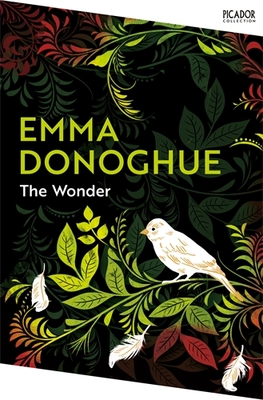
This novel, The Wonder (2016) is set in rural Ireland in the 1850s. There is no descriptions of daffodils under the trees, clouds in the sky or ravens in the belfry to begin this story. Donoghue jumps right in. The plot begins in the first sentence. Nurse Lib Wright is on a train to a new and very unusual job to the town of Athlone slap bang in the centre of Ireland, something the locals are very proud of.
I was not aware of the nature of the job when I started reading. Therefore, I’m not going to tell you, so you too will discover the strange job it is just like I and Nurse Lib did. I will say though that there is a lot of waiting and looking.
Mrs Lib Wright, a widow, is a very proud nurse since she was chosen and trained by the then and now iconic carer, Florence Nightingale. The parents, the maid, the doctor, the priest, a nun and a reporter complete the list of characters who all, as far as Nurse Lib is concerned, get in her way. The parents and maid because of their ignorance; the doctor and priest because they are not telling Nurse Lib everything she needs to know and Lib Wright needs to know a lot; the nun because she hardly says anything at all and the reporter because he can sniff a story. A story that Nurse Lib cannot tell.
Emma Donoghue, an Irish-Canadian writer, has written sixteen novels, the most famous of them is Room (2010) which was subsequently and successfully filmed in 2015. Donoghue received many awards for writing the screenplay and was nominated for an Oscar.
The most remarkable aspect of Donoghue’s writing here is that although, as I have said, the story revolves around a lot of waiting and looking, it’s a very engaging read. The theme is belief, whether you have it or not and Nurse Lib, although baptised as a protestant, has a very flimsy belief in Christianity. The various levels of belief of the other characters go quite a long way to supplying the story with tension and propulsion.
In 2022 The Wonder was filmed starring Florence Pugh and directed by Sebastián Lelio. Emma Donoghue contributed to the screenplay along with the director and Alice Birch. You can find it on Netflix.
One of the great attributes of fiction is that it can take you to worlds and people you would never meet in a million years. And they can be with you in your reading chair. I hope you will love this story-rich book as I did.
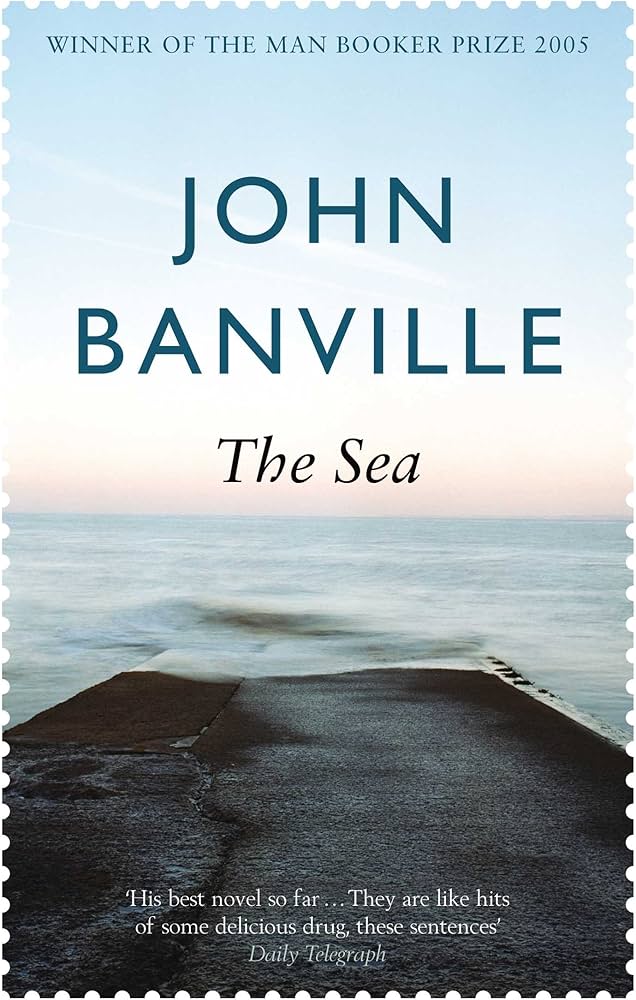
If you are looking for a definition of literary fiction, this 2005 Booker Prize winning novel is it. I know that may put some people off; it seemed to have put John Banville off too; from 2006 Banville began writing crime novels, featuring the pathologist Quirke (no first name ever mentiuoned), under the name of Benjamin Black right up until 2021 when the Quirke novel, April in Spain, was released under his own name. Since then his Quirke novels, beginning with Christine Falls (2006) have been released under his name as well.
An elderly man, Max Morden, returns to a seaside house where his family used to holiday when Max was a child. We meet the Grace family, parents and the children Myles and Chloe, from that time and the inhabitants of the same place, now a rundown boarding house, all those years later. These two time frames, and the people in them, are woven tapestry-like to create a picture of Max’s current demeanour.
This is a slow burn of a book. It creeps up on you, but you need to stay with it. I got to a stage where I could not pinpoint what was wrong but I knew that there was something definitely not right, either about what happened in the past or what was going to happen in the present. It’s about capricious memory and self-awareness and, more importantly, about that slippery slope between behaviour and intention.
Someone once wrote, memory is like an oven. You put something in, close the door, wait a while, open it, and there it is, something different.
I’m now searching for the Quirke novels. When a writer of this skill-set takes on the ubiquitous crime genre there has got to be reading richness to discover.
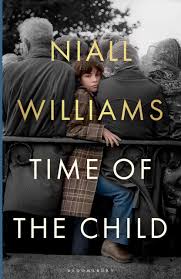
“From the reeds a second rain dripped harder than the first and the brim of the doctor’s hat released it as a third.” So, the poor doctor had three curtains of rain to deal with: from the skies, from the roof and from his hat before he made it to the back door. This descriptive layered richness of detail is the William’s trademark and peppers a simple scene with verbal interest and understanding of place and character. This latest novel Time of the Child (2024) from the Irish writer is again set in his mythical town of Faha on the western edge of Ireland making the third in what has become known as the Faha Trilogy. The first two being The History of Rain (2014) and This is Happiness (2019). The most notable feature of Faha is rain. Even when it stops, rarely, it is still on everyone’s mind; it will surely start again any minute.
There is not a lot of dialogue in William’s novels. The characters don’t talk much, hence many plot points rely on misunderstandings both comical and tragic. People understand each other by the nod, the look, the shrug, but ironically despite the lack of talking gossip spreads like a virus.
It’s coming up to Christmas 1962 and doctor Jack Troy and his eldest and unmarried daughter Ronnie are presented with a child, a foundling. Ronnie immediately loves it and names her Noelle. Keeping the child cannot happen without a man, husband and father to go with it and keeping it is exactly what Ronnie is determined to do. Jack Troy knows of a possible contender for the role of husband/father but he is in America, but conscious of his own failings and mis-steps as a father hatches a plan to bring happiness to his daughter.
It is not necessary to have read the first two to enjoy the third. Each novel is self-contained. The characters and culture of Faha are in themselves a story and you are presented with a rich tapestry of both before the child is found in a graveyard. The enjoyment of reading Williams is not just because of the plot – his focus he admits – it’s his writing style and his uplifting of daily detail to importance in the local’s lives but in rich and lyrical language. I loved this book. Highly recommended.
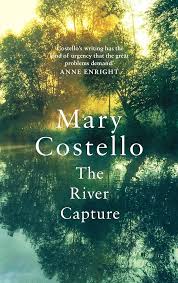
This novel, The River Capture (2019), is Costello’s third published work, her second novel. The style is literary and immersed in family values, loyalty, obligation, and what happens when all of these are challenged; it is written with the sensibility and skill we associate with Irish literature. Luke O’Brien is a thirty something teacher, a Joyce scholar, who took leave to care for dying relatives but then continued his sabbatical to deal with the family land in county Waterford on the banks of the River Sullane. There he also tends to his favorite, but very old aunt, Ellen. They are very close. Luke is a man in tune with nature, not religious, but believes in the uniqueness of the individual free of labels or what any other individual may think of him. He is willing to consider that natural objects, animals, including humans, trees and water are infused with special energy and may also contain elements of memory and the future. Like all natural things, everything, including mankind, will pass to allow for what is next.
When two rivers collide due to climatic devastation, geological disruption or similar, one captures the other and a third unexpected river is born: a river capture.
A young woman, Ruth Mulvey, hears about him and his passion for animals and asks him to take over the care of a young, but abandoned dog. This meeting develops into a relationship, emotional and sexual, and is hoped by both participants to develop even further. But then Luke introduces her to Aunt Ellen. She is aware of this young woman; more significantly, she knows her father. A family secret is revealed and Ellen, his devoted aunt, places a huge burden on his shoulders and mind.
Up to this point, almost half of the way through, the format is usual and expected: literary fiction, narration of elegant language, relevant and insightful dialogue (as it should be) that builds to a tension created by the revelation. An accomplished opening.
Then things change. Not only for Luke, who is devastated, and the choice he’s given, impossible, but also for the reader: the format changes. This can be seen as a metaphor for the state of Luke’s mind. Nothing is as expected. the rest of the novel is a description of Luke’s state of mind and choice of actions, what he believes and what he doesn’t; what he does to overcome the bolt of lightning that hit him far square in his heart and mind. The revelation is so devastating that the book itself is affected. The book no longer reads like a novel.
This unique and rare literary device was not, for this reader, entirely successful. It eroded most of my emotional investment in the characters and narrative. It became, or felt like, an academic exercise, and a repetitive one, and although I read it to the end, I have to admit I skipped bits.
However, Costello is a very good writer and I look forward to her next.
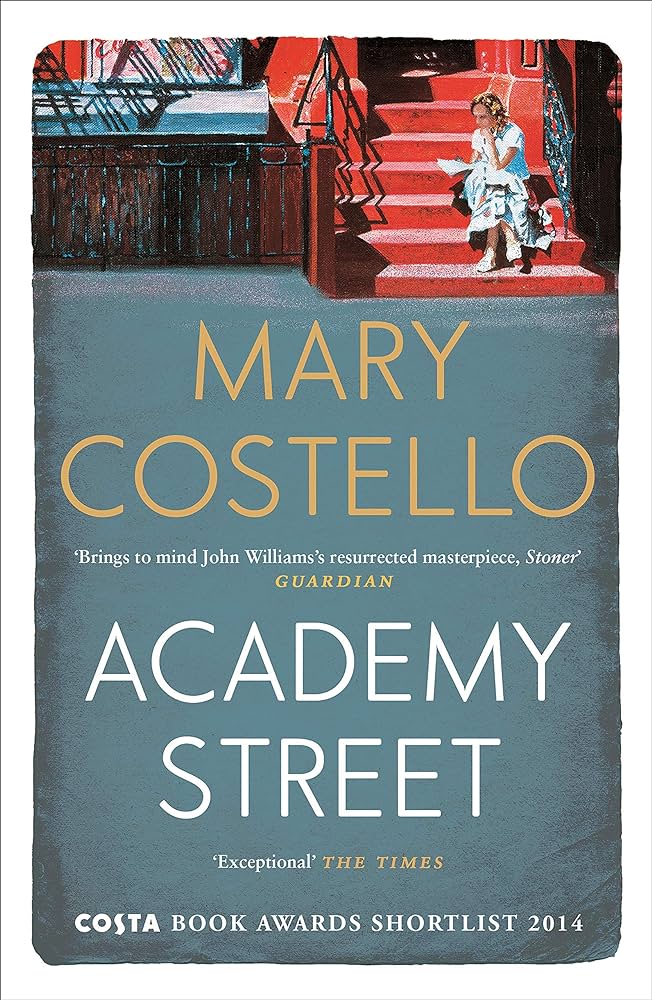
Click the link for my review of her first novel, Academy Street(2014).
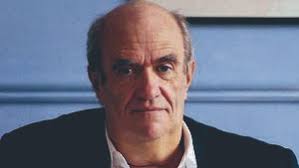
Irish writer Colm Tóibín, Laureate for Irish Fiction 2022-2024. This is his eleventh novel.
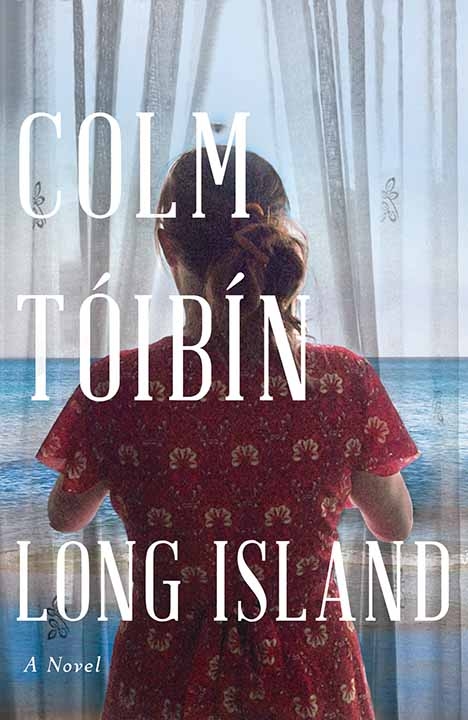
As a Tóibín fan it was like coming home to a cosy room as I settled in to page one and his simple very clear narrator’s voice with its always formal tone elicited by mainly short sentences with no contractions. It’s been twenty years or so of novelistic time since the happy ending of his novel Brooklyn (2009) when Eilis Lacey, from Enniscorthy (Tóibín’s home town in County Wexford, NE Ireland) returned to Brooklyn to continue her role as the recent wife of Italian, Tony Fiorello and to raise a family on Long Island.
Tóibín wastes no time and opens the narrative with the plot point that propels the story: a stranger arrives at Eilis’s front door with a piece of harsh news and his even harsher promise to make things worse. She lives in an enclave of the Fiorello family including her parents-in-law and Tony’s married brothers and she has forged a place in that family that she thought was secure but it’s her reaction to the news, and the only action she feels she can take, that causes her to doubt everything she has done in the past. This is despite her in-laws offering to solve the problem for her. Her stubborn Irish decision is played against the Italian pragmatic approach which she finds untenable. She refuses their help.
This is a common novelistic format: begin with an explosive event and then fill in the backstory along with the repercussions of the bomb. The reader is hooked from page one.
Brooklyn is an immigrant tale and the choices an immigrant must make, personified in the story as two men, one Irish and one an immigrant, like herself, forging an American life. She returns to Ireland to find if she has made the right choice; a little foolhardy since she has already married the Italian-American, something she does not tell anyone including her mother. She returns to America, her choice forced upon her because of her previous decisions. So, there has always been a doubt lurking in the dark, in the back of her mind and this doubt is brought to the fore in this new novel of a much older Eilis Lacey, a married American, secure, and with two teenage children.
She returns again to Ireland on the pretext of her mother’s forthcoming 80th birthday. Her twenty year ago Irish lover is still unmarried, but plans are underway to fix that. Can the way forward get more bumpy? Yes. Her children arrive! How does Eilis navigate her return to the family and ‘her Irish home’? She makes mistakes but will she learn from them? Meanwhile Tony, her foolish but devastated husband waits longingly for her to return to ‘her American home’. Once an immigrant, always an immigrant?
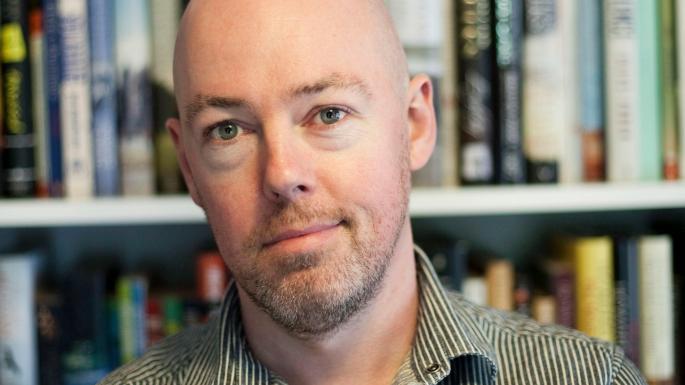
Irish writer, John Boyne whose work has been translated into 59 languages making him the most translated Irish writer of all time.
Evan Keogh is a minor character in the first novella of Boyne’s Elements Quartet, Water (2023) where, like, Earth, it is told in the first person; this time by Evan and his life after he fled the little island off the Irish coast forever, but left with the smell of its earth still under his fingernails.
He has an innate talent for football but no interest in it. He wants to be a painter. His upbringing was hell. An isolated backward place with a brutal and hateful father, a silent and down-trodden mother, and a best friend who betrays him. No wonder he ran away. He has vowed never to return to that island, he knows he is attractive, he is at ease with his sexuality (but always falls for the wrong people), and very ambitious. However, life doesn’t pan out as expected.
It opens in the days before a notorious rape trial. The narrative is two pronged: before and after. Evan, now a famous and wealthy soccer player is accused of accessory to rape; his straight mate, Robbie, accused of the crime itself. As the poor boy sits and waits for the trail to begin we learn about his life in London and how he ended up is such a threatening situation. Then comes the trial itself when we hear the testimony of the rape victim, an intelligent girl called Lauren. But we don’t hear about the testimony of Evan and Robbie; there’s a novelistic reason for that.
What impresses me about Boyne’s writing is it is so clear: the situation, the characters, how they feel, and his narrative choices that keep important plot events dangling before your wished discovery, just out of reach, until you are aching for them.
The scenes of sex and violence are vivid but Boyne’s words lead the reader to imagine them; he doesn’t actually describe them in detail. In other words, there’s more going on in the reader’s head than on the page. That’s good writing in my book, so don’t be fearful of what you might read.
Evan’s final decision is a very satisfying one, but will it finally rid him of that sour smell of his home island’s earth?
The next installment of The Elements Quartet is Fire, scheduled for release in November 2024.
Irish writer, John Boyne whose work has been translated into 59 languages making him the most translated Irish writer of all time.
This is my second reading of this book. Back in 2017 I read it for the first time and fell in love with Boyne’s work. Here is my blog from that first reading: it’s still apt and relevant.
Many years ago, on a small plane trip – the plane was small, not the trip – as we were about to land in a provincial Queensland town, I continued to assiduously read my book. I was laughing so much, trying not to, but not succeeding, that my eyes were streaming, my nose running, and my face felt hot and red; the flight attendant broke the rules, unbuckled, and hurried to my seat to ask if I needed medical assistance. I just held up the book; I was unable to speak. She understood. Maybe she’d read it too. It was the hit of the season. The hysterical section was the Nativity Scene from A Prayer for Owen Meany (1989) by John Irving. The next time I laughed out loud, many decades later (yes, decades), was with this book, and the (highly illegal) Dinner Party Scene, from early on in The Heart’s Invisible Furies (2017) by John Boyne. Ironically Boyne has dedicated this book to Irving.
Making people laugh via the written word, and only the written word, is an extremely difficult and hazardous task. You can’t under play it or over sell it, and you certainly can’t ‘back-explain’ it; it’s all to do with tone, and tone is like a law of physics: it only happens when the universal conditions are absolutely right. It’s as if you need to foster a certain psychological state of mind, and write the episode with as much truthfulness and sincerity as you possibly can – don’t elaborate – just tell it, and if the tone is right, it will be hysterical. If it isn’t you can’t go back and make it right, edit it funny, you have to delete it all and start again. A plane will only fly if all the necessary preparations and current circumstances, weather, wind, mechanical health, operational skill, and power source, are perfect.
The dinner party – and it’s impossible to explain why it’s illegal, you’ll just have to read it to find out – is on page 92, but the preparation for it, and the other laugh-out-loud bits, preparation for the tone, I mean, in true Irving-esque fashion, begins right from the first killer sentence; and by the way, the opening sentence of Owen Meany has to be the killer-opening-sentence in all literature. There was a time when I knew it by heart and it became my dinner-party piece for some time after. I can’t sing, tell a joke, or play the piano, you see.
Boyne considers Irving a mentor, and Irving should be chest-thumpingly proud.
It’s impossible for Boyne to escape the moniker of “author of The Boy in the Striped Pyjamas” which he understands only too well, and he’s certain it will appear on his grave stone, so internationally popular was the book and film; but it changed his life making writing full time not only a possibility but a happy necessity.
Boyne was born in 1972. Ireland brought him up but the Church brought him down. He still suffers from its cruelty and hypocrisy. He’s not alone. His anger is present in this book but, much to his credit, he’s fashioned it into a cutting humour without lessening the truth of his understandable hatred.
The Heart’s Invisible Furies explains the life of Cyril Avery, although not a real Avery, from his pre-birth to two months before his death; from 1945 to 2015; and it is also the story of Ireland over that time; from a society dominated, straightjacketed, and suffocated by the Catholic Church, under the guise of strengthening morality, to one that legalises same-sex marriage. It’s a hell of a journey.
It’s full of surprising events, fashion, villains, extremely bad behaviour, political unrest, beauty, deception, selfishness, redemption, tears – yours as well as the character’s, death, forgiveness, love, birth in the midst of murder, politicians behaving badly, coincidences, literature, weddings, doctors behaving courageously, dreams – both fulfilled and dashed, sentiment, laughter, bigotry, violence, and even the ludicrous; in fact the entire palette that paints our lives that all conspires to prove that age-old adage, nobody’s perfect. And all these elements are wound around a cast of characters you won’t easily forget, and nor would you want to.
Boyne skilfully uses many literary devices to tantalise and seduce his readers: he drops in an outcome before explaining how it happened; he triggers the reader’s memory before the character’s; and, best of the lot, dramatic irony: when the reader knows more that the characters do.
I love this book and I’ve recommended it to others, who too have loved it. I’m preparing a space on my bookshelf, between Jane Bowles and Peter Carey. You can get the book, in various formats, here.
Irish writer, Paul Lynch, winner of the 2023 Booker Prize.
In July 2023 I was house sitting for a family member and the first thing I noticed was there were no books in the house. Then one afternoon while searching for an iron I found, on the bottom shelf of the linen closet, a pile of five books, four Agatha Christie novels, and one novel by an unknown writer. What caught my attention was one of the endorsements on the front cover of this unknown title was by my all-time favourite novelist, the Irishman Colm Tóibín. Being a fan of, and I thought knowledgeable about, Irish literature I was embarrassed not to know the novel, Red Sky at Morning (2013) nor the author, Paul Lynch. I read several pages, at first wary of the poetic language but awed by the ease of understanding, the tension of, and immediate involvement in, the story. I planned to steal it, but didn’t, wished now I had, and will next time I’m in that house.
The plot is simple: a dystopian society on the edge of collapse and a deeply moving story of a mother’s fight to hold her family together. That’s on the back cover so I’m not spoiling it for you.
The language is sometimes poetic:
How the dark gathers without sound the cherry trees. It gathers the last of the leaves and the leaves do not resist the dark but accept the dark in whisper. Tired now, the day almost behind her, all that still that
And the size and design of the font is surprising clear and easy on the eye: it is very neat and black. Recently some publishers have been printing in grey, to save money I assume, which I find annoying.
But what most readers will be talking about is the punctuation, or lack of it. In this book, Lynch does not punctuate dialogue. This renders each page a justified, on left and right, slab of text. It can, on first glance, look daunting.
She lifts two mugs and peers inside them, squeaks her finger around the rim. Dad, look at these mugs, why don’t you use the dishwasher, you really need to wear your glasses when washing up. Simon does not lift his eyes from the newspaper. I’m wearing my glasses right now, he says. But you need to wear them while washing up, these mugs are ringed with tea. You can blame the useless cleaning lady …
If you realise that you do not understand what you have just read, read the line again, read the paragraph again. Listen to your own reading voice. I had to do this initially. Just like turning to Dickens or Woolf, you need to get used to the different tone, the different syntax, and in this case, the different sentence structure. There’s a reason for this difference: Lynch’s fictional world is different; it’s falling apart. But, go with it. When you listen to an audio book the reader doesn’t ‘read’ the punctuation yet the listener understands perfectly who says what. Read like a listener and you will be rewarded.
Lynch burst onto the literary scene in triumph (more personal embarrassment – why didn’t I know?) when his first novel, that one I found next to the iron among the pile of Agatha Christies, was the prize of a six-publisher auction in London, and it won him acclaim abroad, especially in France where it was a finalist for France’s Best Foreign Book Award: Prix du Meilleur Livre Étranger. He’s written three novels since. Prophet Song is his fifth.
It’s a unique book and a remarkable feat of imagination worth getting stuck into.
Here is a succinct Q&A video by Paul Lynch, on the Booker short list, before the announcement of the prize winner.
This writer, ‘one of literature’s finest new voices’ it says on the back cover, was new to me. I took it on my recent Christmas break. Previously a short story writer, this is her first novel.
This is a story of the life of Tess Lohan, from her mother’s funeral in Ireland through years of growing up, motherhood, work, and tragedy through to her old age in New York. It sounds like an epic but the book is slim, only 179 pages, but it is packed full of, not just events, but emotion. Costello’s experience of the short story has given her an economy of language.
It contains the usual tropes one expects from Irish fiction: hard religious fathers, stoic women, and the children who have to put up with surviving within their orbits. Tess moves to New York to start a new life – just like Colm Tóbín’s protagonist in Brooklyn (2009) – and eventually lives in an apartment on Academy Street. It is written in the usual third person but oscillates between the present and past tense to suit the writer’s intent.
The opening scene, her mother’s funeral, is imbued with little child expectations and ignorances. Her sisters corral her to join the family but she sees things from between people’s legs, from behind furniture, through windows and finds it easy to imagine that what is happening isn’t happening at all. Any moment her mother will come down the stairs in her new blue dress and Tess will sigh and realise she had it all wrong. It is someone else’s funeral; someone else is in the big shiny box with the gold handles. And Tess’s life will continue like before. We all know how easy it is to know something but not know something at the same time. She runs upstairs to find her mother but when she can’t she rummages through her mother’s wardrobe. And the new blue dress is not there either. There is a black cloth over her mother’s dressing mirror. So, yes, she knows where the new blue dress really is.
I won’t explain the events of the story because they are the story. It’s a life that could happen to anyone. Fate, mistakes, ignorance, love, and neglect are all familiar to all. It’s so hard to control a life, especially when it’s happening.
Costello’s writing is reminiscent of that other Irish short story writer, experiencing great acclaim at the moment, Claire Keegan, whose short stories, especially her latest ones, have been published as novels. Academy Street (2014) is definitely a novel but the tone and that of Keegan’s is similar. Apt descriptions and the understanding of the very things, sometimes small things, that are pertinent and important to a life. These writers know what a reader needs.
Yes, this is literary fiction but with a heart. Highly recommended.
Donal Ryan’s 6th novel, The Queen of Dirt Island (2022) is a novel of very short chapters. All of them are short-titled and just shy of 2 pages. I would describe myself as a tough reader: it takes a lot to stir my emotions. Yet, chapter one at just one and three-quarter pages, moved me greatly. I read it four times. Of course, the emotion faded with familiarity but Ryan’s skill and control was always evident.
It’s like flicking through a family album picking up tit-bits that put the snaps into a semblance of order and understanding that becomes a narrative.
It’s the story of Saoirse (SER sha) Alyward raised by her mother, Eileen, and Nana, Mary, Eileen’s mother-in-law. Everyone speaks, adults and children, in a basic Irish rural lexicon with a heavy sprinkling of foul language at ease with the many Catholic idioms and easy blasphemy, illuminating the rural mind, more fearful of the weather than of god. They call themselves a family
…all sort of humming along in that comfortable dysfunction that seems to be the best any family can hope for…
but one that is treated with suspicion and contempt: there’s no man in the house. Saoirse had never felt afraid until at the age of fourteen years and nine months when an officious social worker asked her gossip-based leading questions about her mother’s integrity.
Her situation is slowly revealed: poverty, her mother’s privileged but outraged and aloof family, as well as her hardening personality to match the life that treacherous circumstances have chosen for her. It’s a story of husband-less and father-less women surviving in a land of patriarchal power but manage to create their own womanised niche while, at the same time, having to deal with feckless men blind to their own weaknesses.
Ryan describes writing as “burgeoning visions”. One of my gripes is that a few plot points, few ‘visions’, feel as if they’ve emanated from the writer’s universe and squeezed to fit into the story’s universe. For example, the sudden desire of Josh, Saoirse’s ill-matched boyfriend, to be a novelist and write Saoirse’s story,
…to make a record, he said … all of these things that happened, all of these dramas, all of these shades of declension between love and its absence, between living and dying, between love and hate…to sublimate all of this life into art…
the product of which she rejects and writes her own. It is, of course, a success. It’s a petty complaint and thankfully doesn’t distract from the excellence of the writing and the engaging characters and their story. But it could be seen as a metaphor for the resilience of women which makes it less of a complaint and more of a novelistic device.
Donal Ryan is one of many Irish writers that are part of what Sebastian Barry, the current Irish Laureate for Fiction, calls the ‘golden age’ of Irish writing. Writers like, Anne Enright, Colm Tóibín, Paul Murray, Elaine Feeney, Claire Keegan, Barry himself, all much loved and awarded, and Paul Lynch who on November 26th was announced as the winner of the 2023 Booker Prize for his 5th novel Prophet Song.
If you like Irish writing please, if you haven’t already, add Donal Ryan to your list.
Here you can read my blog about Ryan’s 4th novel from a low and quiet sea (2018)
You can hear Donal Ryan talking about The Queen of Dirt Islandhere.







 Michael K Freundt