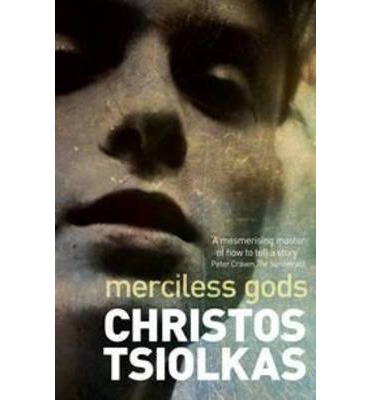

These stories are masterful, enlightening, moving, shocking, blasphemous, erotic, breath-taking, and scary: some of the best I’ve ever read. They are so good, they could render a yearning writer silent.
The opening, and title, story sets the bar. A group of young Australian professionals, close friends, at a deliberately over-indulgent dinner party thrown to celebrate an important new editing job in San Francisco for one of their number is destroyed by another: his ego, self-importance, and jealousy – he wanted the job – combine with a silly game to allow him to dominate the room and shatter these long-time university-born relationships forever. The story has a tricky structure: a story-telling within the story, and set-up information is economic enough not to turn you off or lead you to wonder where it’s going, but detailed enough that you understand what’s happening. Tsiolkas also tells the story from a more recent time reminiscing about a lost past, lost friendships, and lost innocence. This creates an expectation that the point is big: it is, even though on the surface it’s a bunch of mates boozing, snorting, talking, and toking at, and after, a dinner party. Thinking back on the story a day later some of the necessary plot-points seem over-stretched but at the time nothing jarred. There is nothing for the reader to do except go along with it. This, I believe, is a sign of a good writer: the reader will believe whatever is thrown at them even if, on reflection, some things are a little bumpy; but in the moment, while reading it, the reader is completely in the thrall of the writer, ready for anything. It’s what a reader – well, this reader – craves.
“The title story of Merciless Gods is stunning and should be read by everyone in the country who cares about fiction. It is worth the price of the book alone.” Sydney Morning Herald
Saturn Return is about dying. And grief.
When the door finally opens again, Barney rushes out sobbing and falls on me. I hold him tight. It is not as if he his crying exactly; rather, sorrow is pouring out of him, from every heaving breath, from every lacerating tear. The warm lounge room is suddenly freezing and the only heat comes from where our bodies touch. I strengthen my hold on him. I’m scared that if I let go,not only the room, not only this city, but the whole world will go cold forever.
I cried. Not bad for a story of twelve and a half pages.
Tsiolkas has never shied away from writing about sex, particularly in its extremes. His novels Loaded (1995) and Dead Europe (2005) are testament to that. There are stories here that may curl your toes; this book may not be a good idea as a Christmas present for Gran.
A reviewer at The Guardian labeled Tsiolkas as “the master of the stain”.
The Slap (2008) was his breakout hit; publication in Europe and around the world set him up as one of Australia’s premier writers. However, he had already established a small group of fans in Australia with challenging works like, Loaded, – adapted for the screen in 1998 as Head On – Dead Europe – which some considered the best book of 2005 – and The Jesus Man (1999). The television series of The Slap (2011) in Australia and the US version (2015) consolidated his reputation and broadened his readership. His 2013 novel, Barracuda, was also adapted for television in 2016.
Read these stories. You won’t forget them.
You can get the kindle edition here.
 Michael K Freundt