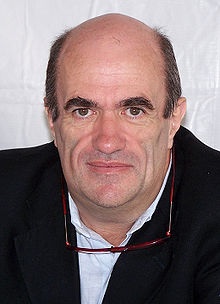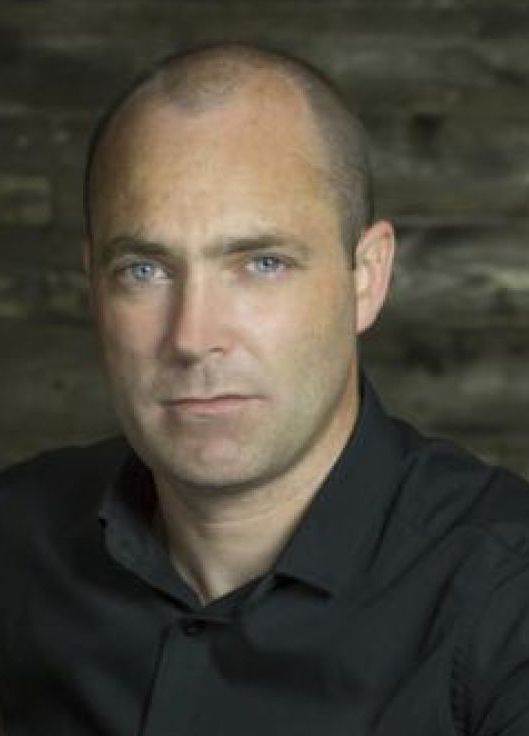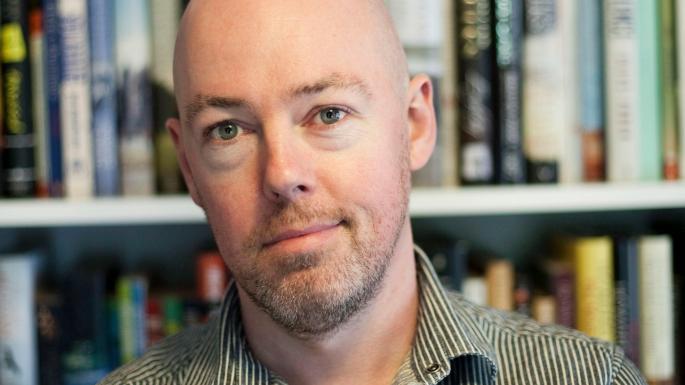
The Heart’s Invisible Furies by John Boyne

Irish writer, John Boyne whose work has been translated
into 59 languages making him the most translated Irish
writer of all time.

This is my second reading of this book. Back in 2017 I read it for the first time and fell in love with Boyne’s work. Here is my blog from that first reading: it’s still apt and relevant.

Many years ago, on a small plane trip – the plane was small, not the trip –  as we were about to land in a provincial Queensland town, I continued to assiduously read my book. I was laughing so much, trying not to, but not succeeding, that my eyes were streaming, my nose running, and my face felt hot and red; the flight attendant broke the rules, unbuckled, and hurried to my seat to ask if I needed medical assistance. I just held up the book; I was unable to speak. She understood. Maybe she’d read it too. It was the hit of the season. The hysterical section was the Nativity Scene from A Prayer for Owen Meany (1989) by John Irving. The next time I laughed out loud, many decades later (yes, decades), was with this book, and the (highly illegal) Dinner Party Scene, from early on in The Heart’s Invisible Furies (2017) by John Boyne. Ironically Boyne has dedicated this book to Irving.

Making people laugh via the written word, and only the written word, is an extremely difficult and hazardous task. You can’t under play it or over sell it, and you certainly can’t ‘back-explain’ it; it’s all to do with tone, and tone is like a law of physics: it only happens when the universal conditions are absolutely right. It’s as if you need to foster a certain psychological state of mind, and write the episode with as much truthfulness and sincerity as you possibly can – don’t elaborate – just tell it, and if the tone is right, it will be hysterical. If it isn’t you can’t go back and make it right, edit it funny, you have to delete it all and start again. A plane will only fly if all the necessary preparations and current circumstances, weather, wind, mechanical health, operational skill, and power source, are perfect.

The dinner party – and it’s impossible to explain why it’s illegal, you’ll just have to read it to find out – is on page 92, but the preparation for it, and the other laugh-out-loud bits, preparation for the tone, I mean, in true Irving-esque fashion, begins right from the first killer sentence; and by the way, the opening sentence of Owen Meany has to be the killer-opening-sentence in all literature. There was a time when I knew it by heart and it became my dinner-party piece for some time after. I can’t sing, tell a joke, or play the piano, you see.

Boyne considers Irving a mentor, and Irving should be chest-thumpingly proud.

It’s impossible for Boyne to escape the moniker of “author of The Boy in the Striped Pyjamas” which he understands only too well, and he’s certain it will appear on his grave stone, so internationally popular was the book and film; but it changed his life making writing full time not only a possibility but a happy necessity.

Boyne was born in 1972. Ireland brought him up but the Church brought him down. He still suffers from its cruelty and hypocrisy. He’s not alone. His anger is present in this book but, much to his credit, he’s fashioned it into a cutting humour without lessening the truth of his understandable hatred.

The Heart’s Invisible Furies explains the life of Cyril Avery, although not a real Avery, from his pre-birth to two months before his death; from 1945 to 2015; and it is also the story of Ireland over that time; from a society dominated, straightjacketed, and suffocated by the Catholic Church, under the guise of strengthening morality, to one that legalises same-sex marriage. It’s a hell of a journey.

It’s full of surprising events, fashion, villains, extremely bad behaviour, political unrest, beauty, deception, selfishness, redemption, tears – yours as well as the character’s, death, forgiveness, love, birth in the midst of murder, politicians behaving badly, coincidences, literature, weddings, doctors behaving courageously, dreams – both fulfilled and dashed, sentiment, laughter, bigotry, violence, and even the ludicrous; in fact the entire palette that paints our lives that all conspires to prove that age-old adage, nobody’s perfect. And all these elements are wound around a cast of characters you won’t easily forget, and nor would you want to.

Boyne skilfully uses many literary devices to tantalise and seduce his readers: he drops in an outcome before explaining how it happened; he triggers the reader’s memory before the character’s; and, best of the lot, dramatic irony: when the reader knows more that the characters do.

I love this book and I’ve recommended it to others, who too have loved it. I’m preparing a space on my bookshelf, between Jane Bowles and Peter Carey. You can get the book, in various formats, here.


Prophet Song by Paul Lynch

Irish writer, Paul Lynch, winner of the 2023 Booker Prize.

In July 2023 I was house sitting for a family member and the first thing I noticed was there were no books in the house. Then one afternoon while searching for an iron I found, on the bottom shelf of the linen closet, a pile of five books, four Agatha Christie novels, and one novel by an unknown writer. What caught my attention was one of the endorsements on the front cover of this unknown title was by my all-time favourite novelist, the Irishman Colm Tóibín. Being a fan of, and I thought knowledgeable about, Irish literature I was embarrassed not to know the novel, Red Sky at Morning (2013) nor the author, Paul Lynch. I read several pages, at first wary of the poetic language but awed by the ease of understanding, the tension of, and immediate involvement in, the story. I planned to steal it, but didn’t, wished now I had, and will next time I’m in that house.

The plot is simple: a dystopian society on the edge of collapse and a deeply moving story of a mother’s fight to hold her family together. That’s on the back cover so I’m not spoiling it for you.

The language is sometimes poetic:

How the dark gathers without sound the cherry trees. It gathers the last of the leaves and the leaves do not resist the dark but accept the dark in whisper. Tired now, the day almost behind her, all that still that

And the size and design of the font is surprising clear and easy on the eye: it is very neat and black. Recently some publishers have been printing in grey, to save money I assume, which I find annoying.

But what most readers will be talking about is the punctuation, or lack of it. In this book, Lynch does not punctuate dialogue. This renders each page a justified, on left and right, slab of text. It can, on first glance, look daunting.

She lifts two mugs and peers inside them, squeaks her finger around the rim. Dad, look at these mugs, why don’t you use the dishwasher, you really need to wear your glasses when washing up. Simon does not lift his eyes from the newspaper. I’m wearing my glasses right now, he says. But you need to wear them while washing up, these mugs are ringed with tea. You can blame the useless cleaning lady

If you realise that you do not understand what you have just read, read the line again, read the paragraph again. Listen to your own reading voice. I had to do this initially. Just like turning to Dickens or Woolf, you need to get used to the different tone, the different syntax, and in this case, the different sentence structure. There’s a reason for this difference: Lynch’s fictional world is different; it’s falling apart. But, go with it. When you listen to an audio book the reader doesn’t ‘read’ the punctuation yet the listener understands perfectly who says what. Read like a listener and you will be rewarded.

Lynch burst onto the literary scene in triumph (more personal embarrassment – why didn’t I know?) when his first novel, that one I found next to the iron among the pile of Agatha Christies, was the prize of a six-publisher auction in London, and it won him acclaim abroad, especially in France where it was a finalist for France’s Best Foreign Book Award: Prix du Meilleur Livre Étranger. He’s written three novels since. Prophet Song is his fifth.

It’s a unique book and a remarkable feat of imagination worth getting stuck into.

Here is a succinct Q&A video by Paul Lynch, on the Booker short list, before the announcement of the prize winner.

You can buy the book here, in various formats.

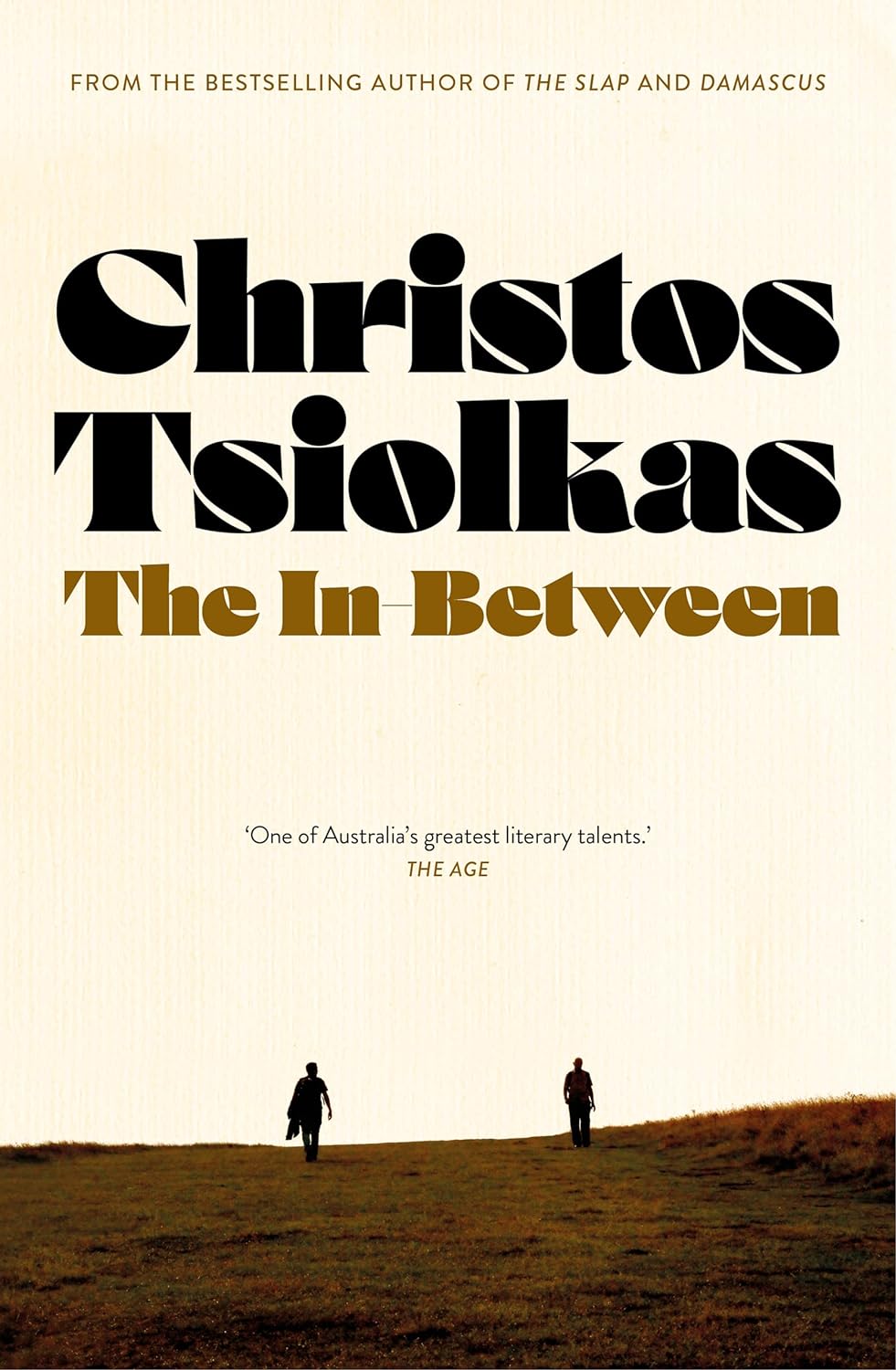
The In-Between by Christos Tsiolkas

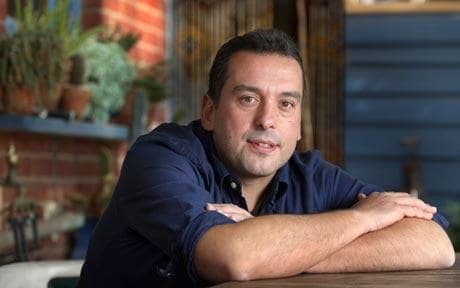
Greek-Australian writer, Christos Tsiolkas.

WARNING: This novel contains graphic descriptions of sexual activity and language that some readers may find offensive.

This book is a triumph and has returned Tsiolkas to my high esteem after Damascus (2019) and 7 1/2 (2021) which left me rather underwhelmed. Two men in their fifties, both with pasts tainted by regrets, mistakes, and betrayal, find each other on a dating app. Perry, an academic and translator, and Ivan, a landscape designer with his own business, are both attractive men although their handsomeness has begun to fade. They embark on their first date with a lot of trepidation and too much aftershave. The description of their restaurant meal is made dramatic and insightful by Tsiolkas’ attention to both men’s explicit thoughts that accompany each gesture, look, and their possible implications. There is also a wonderful dinner party scene where Tsiolkas’ narrator digs deep into each character’s actions and reactions. It’s a masterful piece of writing juggling four very different characters each with exposed, and hidden, motivations, what they say and don’t say.

The story is told in the third person but from alternating, chapter to chapter, points of view. However, imbedded in the structure is a device I have not seen before: Tsiolkas takes passing strangers, near-by onlookers, and places them under the narrator’s attention and we see our two would-be heros as others see them, how the world sees them: two ageing homosexuals behaving normally and affectionately in the world. This device has another purpose which affords an unusual but satisfying ending … but enough said; no spoilers here.

Tsoilkas has never shied away from graphic sexual descriptions as is evident in his early work, particularly Loaded (1995) and Dead Europe (2005) but since his record breaking success The Slap (2008) thrust him into the global literary mainstream with television adaptations both in Australia and the US the sexual lives of his characters have usually been implied rather than described. This return to such syntax is welcomed because he is so good at it mainly because there is no judgement or shame in what is vividly described.

Both men have pasts that they are trying to recover from and which they may or may not reveal to the other. They both try very hard to make this new relationship work – falling in love in your fifties is very different from your heady twenties; it takes work – even though Ivan’s family, a bitter ex-wife, but a caring daughter and granddaughter, and their own tensions get in the way. Perry has his own demons, mainly in the shape of a married French ex-lover he met in Europe and how this closeted man made him see himself and the world.

Minor characters, Ivan’s family and a charming rent-boy, and Perry’s relationship with his ex-lover’s daughter are treated with the same descriptive detail that add depth and understanding to the narrative. It’s a great book. Highly recommended.

Here is a short and interesting video with Tsiolkas talking about his influences and inspirations from 10 years ago. And here is a longish interview with David Marr about The In-Between but the audio is less than adequate. Watch with patience.

You can buy the paperback edition here.

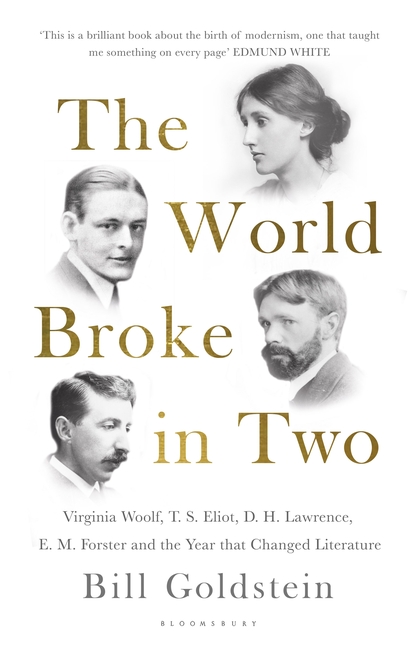
The World Broke in Two by Bill Goldstein

Bill Goldstein-photo
Bill Goldstein, the founding editor of the books site of The New York Times on the Web, reviews books and interviews authors for NBC’s “Weekend Today in New York.”

 In 1922 the literary world buckled and,   according to Goldstein, broke under the weight   of four powerful novelists. This is an account of   what happened.

 In January 1922 Adeline Woolf, everyone called   her Virginia, turned forty and was very sick with   influenza which stopped her writing; T. S. Eliot,   everyone called him Tom, 34, had been over   worked, unhappy, in therapy, but now quietly   confident since he had started writing again   but fearful of returning to work in the Bank that   trapped him between the concrete and the sky; E. M. Forster, called Morgan, 43, was sexually and artistically frustrated; and D. H. Lawrence, called Bert, 36, had the threat of his books being banned  (Women in Love, 1921, ” … ugly, repellant, vile”), and a libel suit against him so wanted to know “For where was life to be found” and thought by going to a quiet place by himself he might find it: Ceylon, New Mexico, or New South Wales.

All four had achieved some degree of literary fame: Woolf had published two novels and the third, Jacob’s Room, was waiting for her final revisions, however her illness kept her away from her work. Eliot had published successfully The Lovesong of J. Alfred Prufrock in Poetry magazine in 1915 and had been a regular contributor of reviews and essays, primarily for The Times Literary Suppliment right up to December 1921. Forster had achieved great success with a series of novels, usually about the English aboard, beginning with Where Angels Fear to Tread in 1905 but by 1922 nothing had appeared after the very successful Howard’s End in 1910. Lawrence was more infamous than famous and had had Women in Love published in June 1921. It garnered bad reviews, and low sales. This added to the outrage caused by its prequel, The Rainbow, 1915; it was withdrawn by the publisher after it was banned under the Obscene Publications Act. Lawrence had also characterised in the latter work, an acquaintance, Philip Heseltine, and thought he had disguised him enough, but Heseltine was not fooled and threatened legal action.

For all four writers 1922 did not begin well.

Artistic endeavour is always trying to solve the problems of the art form itself. How does a writer write an autobiography and make it interesting without using the boring phrases, “Then I went …. she cried and so I said …., Then I said, and he went ….”? Novelists for centuries have been using description and dialogue to draw a character; but in an autobiography how do you create an image of the narrator. There must be another way? Yes, there is, and one of the first writers to find another way was James Joyce who began his autobiographical novel Portrait of the Artist as a Young Man (1916) like this

Once upon a time and a very good time it was there was a moocow coming down along the road and this moocow that was coming down along the road met a nicens little boy named baby tuckoo.

First of all he writes not in the first person, but in the third (very radical, this is an autobiography, remember) and the above opening is not dialogue, it is prose; it’s not said by the protagonist but by the narrator using the language that the little boy, James, might use to describe what he sees and what he sees is himself! It’s as if the third person narrator is not some all-pervasive, god-like know-it-all but an imp sitting on the shoulder of the little boy seeing the world through his eyes and hearing the thoughts in his head. This literary device has become known as free indirect discourse, or as the literary critic of The New Yorker, James Wood, calls it, ‘close writing’; and it’s as common today in contemporary fiction as Vegemite is for breakfast. But it can’t be used in the first person because the first person doesn’t need it.

It is not just new ways of expression that all writers look for but new ways to solve old problems. Woolf, Eliot, Forster, and Lawrence always had difficulties writing their next work even if their previous work was successful. “That worked! Why don’t you write one like that again?” remains the continual cry to all writers.  Even Forster, the most commercially successful of the four of them, was always afraid of repeating himself.

Painters of the same period sought to bypass the ‘real’ bit in order to paint, say, serenity, by trying to paint serenity with just the paint on the canvas, not trying to be something else, a face or landscape, to ‘portray’ serenity. In other words, they painted not what they saw but what they felt. Writers similarly de-focused the ‘real’ bit and concentrated on, not what the characters did – the plot – but what the characters felt and thought. The plot became internalised.

Before January 1922 was over Eliot and Lawrence had succumbed to the influenza that brought Woolf so low and was rapidly becoming an epidemic to rival the devastating outbreak of 1918-19 that killed more people than the Great War. At least for Eliot the influenza kept him away from the bank and, despite the disease, hard at work on his long poem. His ill wife also being absent was yet another and usual worry out of the way.

On his way back to London from the unsuccessful trip to India Forster bought and read Proust’s first volume, Swann’s Way. He was “awestruck”. Woolf, with her illness almost past, read him in the spring while working on an essay about reading and dabbling with and reworking a character from her first novel, The Voyage Out, Clarissa Dallaway, into a short story called Mrs Dallaway in Bond Street.  Both Woolf and Forster were enthralled with Proust’s use of memory to evoke the current state of mind of a character. In the opening scene of the short story, which eventually evolved into the novel Mrs Dallaway, Woolf has Clarissa arrested by the chiming of Big Ben which announces the convergence of the past and present, not only in the character’s mind but also on the page. Very Proustian! Clarissa Dallaway in Woolf’s first novel is described by the narrator but Woolf was determined in this one, this modern one, to have Clarissa think everything the reader needs to know about her. As Woolf wrote later to a friend, she didn’t mind being sick as “Proust’s fat volume comes in very handy.”

Woolf, who wrote that she wanted to write like Proust, didn’t of course, but it was because of him that she began to write like herself again.

Joyce was different. Woolf and Joyce were both the same age, and Joyce in early 1922 had “a novel out in the world, a massive – expensive – box of a book”, Ulysses, and Woolf had not published a novel in two and a half years. She was jealous. Bert Lawrence ran away to New South Wales and began a book where no one takes their clothes off, but since the libel suit against Women in Love was unsuccessful, the (negative) publicity sparked interest from readers and sales swiftly grow. Morgan Forster at home with mother burned all his “indecent writings” and embarked on a new novel, A Passage to India.

If the English literary world did actually break in two in 1922 it was because of Proust and Joyce. Proust’s monumental  seven-volume À la recherche du temps perdu variously translated as The Remembrance of Things Past or In Search of Lost Time, and labeled in some quarters as the greatest novel ever written, came out in English and Joyce’s Ulysses, which began as a serial in an American magazine and consequently banned, was finally published in book form that year. It is also the year that Marcel Proust died. The major effect was on writing and therefore the literary novel took a turn to the introspective, to the experimental, to the perverse and in so doing left a lot of readers behind, sticking stubbornly to the realism of the previous century; and most of them still do. They want a painting of serenity to be paint on canvas masquerading as a face or a landscape. However, it is true that because of what happened to literature in 1922 the relationship between writer and reader was changed forever.

This is a fascinating book, well written, and full of information about writing and writers… if you like that sort of thing.

You can watch the charming and playful School of Life animated videos, narrated by Alain de Botton, on James Joyce here, Marcel Proust, here, and Virginia Woolf here.

Here, you can watch a short biographical video on T. S. Eliot, and you can watch a short video on D. H. Lawrence by Anthony Burgess, here.

You can download all the novels and short stories of Virginia Woolf, Marcel Proust, including all 7 volumes of  The Remembrance of Things Past, James Joyce, and D. H. Lawrence, for FREE, here.

Here, you can download the major works of E. M. Forster, for FREE, and you wan watch a short film of Forster talking about writing novels, here.

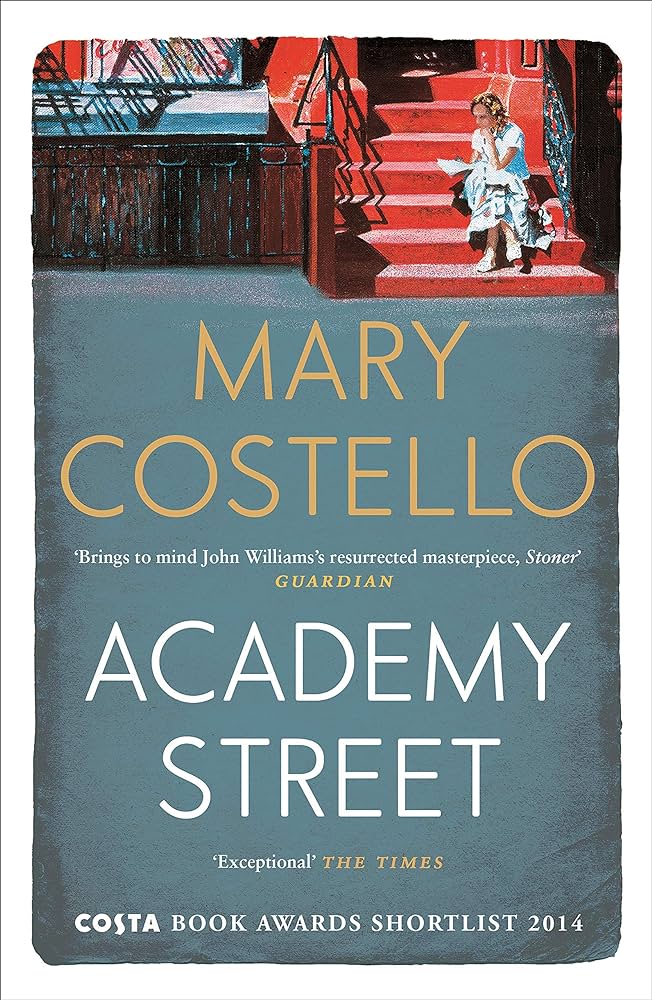
Academy Street by Mary Costello

Christmas Read 2

Irish writer Mary Costello

This writer, ‘one of literature’s finest new voices’ it says on the back cover, was new to me. I took it on my recent Christmas break. Previously a short story writer, this is her first novel.

This is a story of the life of Tess Lohan, from her mother’s funeral in Ireland through years of growing up, motherhood, work, and tragedy through to her old age in New York. It sounds like an epic but the book is slim, only 179 pages, but it is packed full of, not just events, but emotion. Costello’s experience of the short story has given her an economy of language.

It contains the usual tropes one expects from Irish fiction: hard religious fathers, stoic women, and the children who have to put up with surviving within their orbits. Tess moves to New York to start a new life – just like Colm Tóbín’s protagonist in Brooklyn (2009) – and eventually lives in an apartment on Academy Street. It is written in the usual third person but oscillates between the present and past tense to suit the writer’s intent.

The opening scene, her mother’s funeral, is imbued with little child expectations and ignorances. Her sisters corral her to join the family but she sees things from between people’s legs, from behind furniture, through windows and finds it easy to imagine that what is happening isn’t happening at all. Any moment her mother will come down the stairs in her new blue dress and Tess will sigh and realise she had it all wrong. It is someone else’s funeral; someone else is in the big shiny box with the gold handles. And Tess’s life will continue like before. We all know how easy it is to know something but not know something at the same time. She runs upstairs to find her mother but when she can’t she rummages through her mother’s wardrobe. And the new blue dress is not there either. There is a black cloth over her mother’s dressing mirror. So, yes, she knows where the new blue dress really is.

I won’t explain the events of the story because they are the story. It’s a life that could happen to anyone. Fate, mistakes, ignorance, love, and neglect are all familiar to all. It’s so hard to control a life, especially when it’s happening.

Costello’s writing is reminiscent of that other Irish short story writer, experiencing great acclaim at the moment, Claire Keegan, whose short stories, especially her latest ones, have been published as novels. Academy Street (2014) is definitely a novel but the tone and that of Keegan’s is similar. Apt descriptions and the understanding of the very things, sometimes small things, that are pertinent and important to a life. These writers know what a reader needs.

Yes, this is literary fiction but with a heart. Highly recommended.

Here you can buy the book in various formats.

And here is an interview with Mary Costello, winner of The Eason Novel of the Year 2014.

A Guest at the Feast – Essays, by Colm Tóibín

Christmas Reading I

I’m usually a fiction tragic but anything my Colm Tóibín is worth reading so I was happy to take his new essay collection away with me on my Christmas break.

Most, but not all, of these essays were originally published in the London Review of Books. The book is divided into three parts: the first part is basically memoir ; the second concerns his writings about the Catholic Church and, in particular, the Popes and the Vatican; and the third is about writers – Marilynne Robinson, Francis Stuart, and John McGahern.

The most engaging is the first: Cancer: My Part in its Downfall (LRB 2019) and not just because of the opening line – “It all started with my balls.” He charts, with candour and detail, what led him to see a doctor, his examination, procedures, diagnosis (testicular cancer which had spread to his lungs), more procedures, surgery, chemo therapy, and recovery. He obviously wrote the piece well after it was all over; how else could he have written it with such dry humour, frankness, and detachment. Despite the content it’s a very revealing, educational, and entertaining piece of writing. The namesake piece, A Guest at the Feast, first published by Penguin in 2011, is a memoir of his early recollections about growing up in the small town of Enniscorthy, in County Wexford, south east Ireland in the 1960s. His early life was dominated, like all children in Ireland at the time, by Family and the Catholic Church with very little space between them. A Brush with the Law (The Dublin Review 2007) centres on his years as a journalist and the fight to repeal, or at least amend, the laws governing homosexuality in Ireland.

Part Two concentrates on the Vatican, Karol Józef Wojtyła who became Pope John Paul II and his determination to avoid any change whatsoever in policies concerning morality, women, and child abuse; Among the Flutterers (LRB 2010) the dragging of the Church, kicking and screaming, into the 21st century causing it to begrudgingly admit to the coverup of child abuse by the clergy, and the ongoing fight for apologies and compensation; The Bergoglio Smile: Pope Frances (LRB 2021) focuses on the current Pope and his very vague attitudes and activities during the political upheaval of the 1970 and 80s in his native Argentina, involving kidnappings, murders, and ‘disappearances’; The Ferns Report (LRB 2005), the official Irish government inquiry into the allegations of clerical sexual abuse in the Diocese of Ferns in County Wexford which placed the blame for child abuse firmly in the hands of the Church and the Police.

Part three contains essays on the American writer, Marilynne Robinson, and how her Christianity pervades her work; Francis Stuart, the controversial Iris writer (though born in Townsville, Queensland in 1902) who spent most of WWII in Berlin broadcasting to Ireland. He said he didn’t support Hitler, he supported change. His latter fiction, all inspired by his time in Germany, tries to explain his position and exonerate himself in the eyes of his readers; and John McGahern (1934-2006) arguably one of the most important Irish writers. His work is imbued with darkness, the Catholic Church, abusive fathers, long-suffering sons, and stoic women.

Above all this book is shadowed by the Catholic Church and Tóibín’s response to it. He was raised a Catholic, contemplated the Church as a career to ‘hide’ his homosexuality, now shares a Los Angeles home with his partner, Hedi El Kholti, a writer and editor. He teaches at Columbia University and was appointed Chancellor the University of Liverpool in 1917. He has written numerous books of fiction, non-fiction, poetry and plays and is ‘perhaps Ireland’s greatest living male writer’.I don’t know Tóibín’s current belief, or stance, on Christianity but what I took away from this collection of essays was that the Catholic Church, the Vatican, is going to continue to decline in influence, and may never recover, because of its basic premise, and number one flaw, indeed, it’s paradox: we are born sinful but must live to be good.

You can buy the book in various editions here.

Water by John Boyne

Irish writer, John Boyne whose work has been translated into 59
languages making him the most translated Irish writer of all time.

This is a single linear story. Yes, there are minor characters but their stories are sufficiently sketched to need no more elaboration. There is just the narrative of a woman whose life, her old life, until now, has been destroyed. Her new life is yet unknown both in location and content. So she runs away. The reason? She doesn’t know. There are several possibilities to choose from but none of them stand out as more or less important. She hides on a small island in the Atlantic Ocean off the coast of western Ireland. She changes her name. She cuts off her hair.

It’s a short novel. A quick read. But an emotional one.

This is the second book where Boyne has chosen to use a female first person narrator: the first, All the Broken Places (2022). This narrator, Willow, her new name, takes residence in a small cottage near the sea. The locals, including a cat, are surprised by her, especially so since she seems not to have a husband, children, or a job. She is content to take long walks, watch the grey days, revel in what sunshine there is, and tries not to worry too much that there isn’t any Internet. Sometimes she walks into the village to get a sandwich and a bowl of soup at the New Pub. Sometimes she goes to the Old Pub. Sometimes she talks to people, sometimes they talk to her.

Slowly she can feel a possible life, sort of, returning to her. The horror, the truth, of her past is released in bits and asides. They pile upon each other like daubs on a canvas creating, and compiling, a past tangle of events that have you wondering how worse can it get. It does. The real story here is what happened to her; this, her running away, is her immediate response to those dreadful deeds. And here in this small isolated community she is forced to look at herself and wonder if she could’ve done something, anything, to avert the destruction. Is there guilt? And if so, there is blame.

Many writers, often-read and famous, have described the art of fiction writing as a force from without that could be from god, infers Jon Fosse; Colm Tóibín says its like opening a window and letting your imagination fly; Alexander McCall Smith describes it as allowing the subconscious to escape; Jennifer Egan – this unconscious generation process; writing begins with an idea for an opening and then the rest is done in a kind of trance, Paul Auster; D. H. Lawrence was up to page 145 and I’ve no notion what’s it about; and here’s another one from a more modern writer – it’s like watching a TV show in your head and you just write down what you hear and see. All of these descriptions suggest an amorphous idea, a swirling of fate and luck, of wandering and wondering without knowing what’s coming. That’s true to some degree but Boyne, in this new novel, the first of a quartet, seems far more controlled, he’s in command, and the simplicity of the narrative line gives the impression of meticulous plotting made to feel natural and easy.

The first person narrator frees the writer from worrying about what the other characters are thinking and feeling. The concentration is on the first person, the story-teller, who can only record what they see and hear: a concentrated world view experienced only through the eyes and ears of one person to lead you on. That’s why this novel is so short: a mere 166 pages. Surely, his shortest work. But, it’s a quarter of a much longer piece, that will, one day, I’m sure, be published in one volume: The Elements Quartet, maybe. Water, Earth, Air, and Fire. The second instalment, Earth, is due out in May 2024. Looking forward to that.

Highly recommended.

You can buy the hardcover or Kindle editions here.

Friendly Fire by Patrick Gale

British writer Patrick Gale lives in Cornwall

In my attempt to find and read all of Patrick’s fiction works – only a few to go – I’ve hit some barriers: some of works are not easy to find. This one, Friendly Fire (2005), has been elusive but I discovered it on my sister’s bookshelf; she found it in a second-hand bookshop.

Sophie is fourteen, an orphan, and in a home, Wakefield House, not the horrible cliched narrative of harsh and sadistic masters in an old grey and foreboding stone mansion, but a warm and caring environment run by a childless couple, Margaret and Keiran, who although they keep their emotional distance from the children who might on any day be adopted they have formed a much closer bond with Sophie who has never sought to leave. According to Gale, “her life is changed through literature.” She is a bright student, even-tempered, and curious and earns a place at a much admired boarding school, Tatham, where she is attracted to and befriends two male students, Lucas Behrman and Charlie Somborne-Abbot. Their developing lives, friendships, sexualities, and their place in the world, home and away, form the book’s narrative. The boarding school trope has been used countless times as a metaphor for society, politics, nations, and even the world. Here it feels more like a family, a benign and nurturing one, but like every family there is unexpected tragedy. Learning doesn’t only happen at school.

Society’s rules, inconsistencies, trivialities, secrets, prejudices, both religious and financial, and, of course, hypocrisies make up the steeplechase that Sophie must navigate, jumping and sidestepping, calling for help, or facing head on, but also falling splat! on her face. Gale is an expert at pacing and plotting; his plot points, both soft and dramatic, sometimes sneak up on you. The climactic moment is dropped into a seemingly casual sentence in such an unassuming way that I had to stop and re-read it to make sure I had read what I thought I had. As a reader I felt buffeted by the narrative but at the same time confident that I was in safe and expert hands. That’s what I like about Gale’s work and why I’m seeking to read everything he has written, and will write.

You can buy the Kindle or paperback edition here.

The Queen of Dirt Island by Donal Ryan

Irish writer Donal Ryan

Donal Ryan’s 6th novel, The Queen of Dirt Island (2022) is a novel of very short chapters. All of them are short-titled and just shy of 2 pages. I would describe myself as a tough reader: it takes a lot to stir my emotions. Yet, chapter one at just one and three-quarter pages, moved me greatly. I read it four times. Of course, the emotion faded with familiarity but Ryan’s skill and control was always evident.

It’s like flicking through a family album picking up tit-bits that put the snaps into a semblance of order and understanding that becomes a narrative.

It’s the story of Saoirse (SER sha) Alyward raised by her mother, Eileen, and Nana, Mary, Eileen’s mother-in-law. Everyone speaks, adults and children, in a basic Irish rural lexicon with a heavy sprinkling of foul language at ease with the many Catholic idioms and easy blasphemy, illuminating the rural mind, more fearful of the weather than of god. They call themselves a family

…all sort of humming along in that comfortable dysfunction that seems to be the best any family can hope for…

but one that is treated with suspicion and contempt: there’s no man in the house. Saoirse had never felt afraid until at the age of fourteen years and nine months when an officious social worker asked her gossip-based leading questions about her mother’s integrity.

Her situation is slowly revealed: poverty, her mother’s privileged but outraged and aloof family, as well as her hardening personality to match the life that treacherous circumstances have chosen for her. It’s a story of husband-less and father-less women surviving in a land of patriarchal power but manage to create their own womanised niche while, at the same time, having to deal with feckless men blind to their own weaknesses.

Ryan describes writing as “burgeoning visions”. One of my gripes is that a few plot points, few ‘visions’, feel as if they’ve emanated from the writer’s universe and squeezed to fit into the story’s universe. For example, the sudden desire of Josh, Saoirse’s ill-matched boyfriend, to be a novelist and write Saoirse’s story,

…to make a record, he said … all of these things that happened, all of these dramas, all of these shades of declension between love and its absence, between living and dying, between love and hate…to sublimate all of this life into art…

the product of which she rejects and writes her own. It is, of course, a success. It’s a petty complaint and thankfully doesn’t distract from the excellence of the writing and the engaging characters and their story. But it could be seen as a metaphor for the resilience of women which makes it less of a complaint and more of a novelistic device.

Donal Ryan is one of many Irish writers that are part of what Sebastian Barry, the current Irish Laureate for Fiction, calls the ‘golden age’ of Irish writing. Writers like, Anne Enright, Colm Tóibín, Paul Murray, Elaine Feeney, Claire Keegan, Barry himself, all much loved and awarded, and Paul Lynch who on November 26th was announced as the winner of the 2023 Booker Prize for his 5th novel Prophet Song.

If you like Irish writing please, if you haven’t already, add Donal Ryan to your list.

Here you can read my blog about Ryan’s 4th novel from a low and quiet sea (2018)

You can hear Donal Ryan talking about The Queen of Dirt Island here.

You can buy the book is various formats here.


The Wren, The Wren by Anne Enright

Irish writer, Anne Enright, won the 2007 Booker Prize and the 2008 Irish Book of the Year for her third novel The Gathering.

Conversation is very different to writing. Conversation, saying what you mean, incorporates a lot of facial expressions, body language, shared history, and – most importantly – tone. Writing has none of that unless the writer uses more words to incorporate all that conversational stuff. Hence writing takes more words to get across everything conversation can do with less.

The first chapter of Anne Enright’s The Wren, The Wren (2023) is written conversationally without all that wordy conversational stuff. She creates this conversational tone not with words but with a lack of words and with a creative attitude to punctuation and line length. For the reader, this takes a little getting used to; don’t give up if you think you might. You just need to exercise more readerly skills and your wish to know will show you what you need to do. It doesn’t take long.

Does he love me
Is that him
Waiting for this man is better than being with him, it was certainly more intense, the way longing kept eating itself and giving birth to more longing. And nothing, but nothing was better than that first flash of arrival.
He loves me
There he is

This format has a subtle purpose: it prepares you for what this story is about: a poem. Or, more specifically, the shadow of its poet.

The first person narrator of the first chapter, NELL, is a young woman in thrall to the love of a man. See above. She’s young. Carmel is her mother and is the focus of the second chapter, CARMEL. She is older, of course, and so is the chapter’s format, more conventional, like Carmel who is the daughter of the poet Philip McDaragh, the writer of the poem, The Wren, The Wren.

Enright has a knack with language and uses her prose to characterise her creations. In her novel, The Green Road, one of her characters is a gay man living in Greenwich Village in New York. Her prose when dealing with him tells you far more about the character than what he says or does. Similarly here, Nell’s chapters, in their language and layout, reflect the character of Nell, modern, texting, informal, and peripatetic. Carmel’s chapters are more conventional, familiar, grounded, and mature.

Anne Enright is a writer of family. Her Booker Prize winning novel The Gathering (2007) is about a gathering of a family after a death in it. Her better book, The Green Road (2015) is about the gathering of a family after their prickly mother has decided to sell the farm. The Forgotten Waltz (2011) is a slight departure in that it’s about lust told through the eyes of ‘the other woman’, while Actress (2020) is about a mother-daughter relationship that also includes, fractiously, the mother’s career vs the mother role.

This is a novel without a narrative arc. That doesn’t mean there isn’t a story; there are many stories, particularly Nell’s and Carmel’s. Philip McDaragh left is wife and two young daughters, the youngest Carmel, and became a famous poet. The women, including Carmel’s daughter Nell – who never met her grandfather – would see him on television in a bar or YouTube clips on their phones and see a man strangely known to them but who now they must share with thousands of others and think how unfair that is. The shadow of Philip McGaragh follows these women all their lives and certainly colours Nell’s relationships with men.

Men (most) leave their families, even if they stay at home. Or am I, the reader, bringing my own meaning to this work? Readers can and should bring something to other people’s fiction. If my own father had lived long and past my 5th birthday I would be a very different person to the man I am now.

I loved this book not just because it is so different but because, even if the action is soft, the sentences, most of them, spark your interest simply because of the words she uses. I’ve searched and found many examples but showing them to you out of context doesn’t do them justice.

You’ll have to read it yourself to know what I mean.

It’s entertaining on many levels, a true work of art, a literary novel that you can easily enjoy again and again because there isn’t a plot to forget.

You can buy the book in various formats here.

Here you can watch the Waterstones Interview with Anne Enright about this new novel.