The Story of a New Name by Elena Ferrante


Female-silhouette
Elena Ferrante is/might-be the pseudonymous name of an Italian writer. Publicity shy, she only accepts interviews by email. There are no photos of her online. James Wood, The New Yorker critic has deduced … a number of her letters have been collected and published. From them, we learn that she grew up in Naples, and has lived for periods outside Italy. She has a classics degree; she has referred to being a mother. One could also infer from her fiction and from her interviews that she is not now married…In addition to writing, “I study, I translate, I teach.”

the story of the facts has to reckon with filters, deferments, partial truths, half lies: from it comes as arduous measurement of time passed that is based completely on the unreliable measuring device of words.

That … what are writers stuck with? … the unreliable measuring device of words.

Every tone of voice, every possible meaning of words spoken, every possible meaning of words unspoken, the way they dress, walk, cry, smile, serve the pasta, look, and stand; all are analysed by Elena, the first-person narrator, in her attempt to understand what’s going on. It’s a Brugel-esque landscape of feelings colouring the lives of the Neapolitan working class in the 1960s and all seen through the eyes of Elena Greco  -“always fearful, always subordinate, always pleasingly willing”, the unmarried, bookish one with glasses.

Elena Greco:  I said to myself every day: I am what I am and I have to accept myself; I was born like this, in this city, with this dialect, without money, I will give what I can give, I will take what I can take, I will endure what has to be endured. This could easily be Lina’s creed too.

The title refers to Elena’s brilliant friend, Lina Cerullo and her new name now that she’s married, her married name, Lina Carracci, and, of course, Elena can’t be everywhere, especially in Lina and Stephano’s hotel room on their disastrous wedding night, but we get the scene, in the third person. Ferrante doesn’t need to justify how the narrator, Elena, knows what happened, she does (Lina told me) and clumsily so. However, there are other instances when the narration slips from the first to the third person unannounced. It’s OK. It’s a legitimate literary device, unnoticeable if attention is not drawn to it. It allows a flow of action or insight. This inconsistency is something the editor should’ve picked up. Ferrante is usually masterful at using these literary tools. Quotation marks, and ‘he said’, ‘she said’ are abandoned at times in the frenzy of verbal, sexual, or social violence giving the scene a filmic quality, making the action jump out of the flat page. This is good stuff, but doesn’t need justification.

The story is about Lina’s marriage that fell apart at the wedding at the end of Book One and how it continues on its downhill slide while Elena continues to bump against her upbringing and pursue an academic life, free – she thinks – from her stifling Neapolitan history; but Elena by this book’s end still believes Lina, despite her choices, is the more beautiful, the more intelligent.

Thank god there’s a glossary of families and family members at the front of the book. Ten families and their intra and extra familial relationships make up the fodder of the story and the glossary is well needed; and don’t be afraid to use it (no-one will know). Things get complicated especially with diminutives, family nicknames, and similarities; Alfonso, Antonio, Lina, Linu, which is a diminutive of Elena, not Lina whose real name is Raffaella. See? And don’t skip over the Italian family names, Cerullo, Cappuccio, Scanno, Solara. Say them out loud! You need to be familiar with them all and if you say them, you’ll be saying them a lot, right from the beginning so it won’t take long before you’re at one with the family, families. You’ll be in among them all. That’s the best bit.

The worst bit is the fate of the women. Not only are they treated like shit by all of the men – except when they want something, usually sex – their worst enemies are the other women: mothers, sisters, aunts, cousins, and  friends. Shame, gossip, inference, innuendo, treachery, lies, superstition, and pride are all weapons these Neapolitan women use against their own. And Elena sails bumpily, battered and bruised, but defiant, through it all, but ultimately aware that she is a woman and people see her more clearly, listen to her more intently, talk to her more respectfully, when she is on the arm, even metaphorically, of a man. Have things changed?

And then the story splits: Elena goes to study in Pisa, and Lina’s messy life of deception, abandoned commercial success, and personal war-mongering continues to engulf everyone in her circle of destructive intent and selfishness. Here I wanted to hear more about Elena, but I had to wait.

And then this:

One morning I bought a graph-paper notebook and began to write, in the third person, about what happened to me that night on the beach near Barano. Then, still in the third person, I wrote what happened to me on Ischia. Then I wrote a little about Naples and the neighborhood. Then I changed names and places and situations. Then I imagined a dark force crouching in the life of the protagonist, an entity that had the capacity to weld the world around her, with the colors of the flame of a blowtorch: a blue violet dome where everything went well for her, shooting sparks, but that soon came apart, breaking up into meaningless gray fragments. I spent twenty days writing this story, a period in which I saw no one, I went out only to eat. Finally, I reread some pages, I didn’t like them, and I forgot about it.

This is Elena Greco explaining herself, describing what changed her life, but it is more; it is a confession from Ferrante: how to write a novel. It’s finding the ‘dark force’ that’s the tricky bit. However, it’s this notebook, hand-written, unedited, that she gives as a gift – despite “I reread some pages, I didn’t like them” – and it’s this notebook that finds it’s way into literary circles, someone types it and shows it to a publisher and …

When Elena and Lina finally re-unite it’s in the most unlikely of places; two women, one about to be hoisted aloft, the other about as low as she can go but united by a shared intellect, history, and belief in the other, no mater how sorely that belief is tested. One ignored the upbringing they both had no control over; the other gave in to it. And like the end of Book One, My Brilliant Friend, this, Book Two, has a sting on the last page that compels you, no matter what you might think, to move on as quickly as possible to Book Three, Those Who Leave and Those Who Stay. Ferrante is a reading experience like no other.

You can purchase the book, in various formats including the ebook, here.

Suspended Sentences by Patrick Modiano

Patrick Modiano pic
Jean Patrick Modiano, known as Patrick Modiano, is a French novelist.

I had never heard of Patrick Modiano until he was awarded the Nobel Prize for literature in 2014. He is French of Italian descent and not only does he mine his own life for inspiration – usually to do with WWII and the city of Paris, he was born the year the war ended – but his focus is on the reliability, or not, of memory, which is not the same as one’s personal history, or memoir.

Reading Modiano is like walking through a maze: each chapter creates an expectation, but when you turn the corner, it is more of the same, another expectation; and when you get to the end, the centre of the maze, you realise that it’s not the end, just another beginning.

What is this book about? It’s about memory and its fickleness. A writer once said, “Memory is like an oven: you put something in, close the door, wait a while, open the door, and there it is, something else.”

There are three novellas in this short volume, Afterimage, Suspended Sentences, and Flowers of Ruin.

The narrator of the first, Afterimage, almost like the writer, is like someone remembering anecdotes that will eventually lead to a point, but one anecdote only leads to another. The veracity of these episodes is given weight by detail: the colour of a hat, the bullet holes in a wall, a list – Modiano loves lists – a footnote containing a minor thought or an address, the sound of leaves in a breeze. And all to do with the narrator’s memory of Francis Jensen, an enigmatic man who the narrator remembers over a period of 20 years.

The first sentence:

I met Francis Jansen when I was nineteen, in the spring of 1964, and today I want to relate the little I know of him;

which starts comfortably enough, but there is a wobble of uncertainty by the end of it: a book usually tends to contain a lot of information a writer knows about a person, not a ‘little’.

By the end of this short story – only 55 pages – you feel as if the short chapters – some very short – could be in any order. There is no obvious narrative ark. Francis Jansen is ‘revealed’ hazily through what the narrator remembers and the people, friends, lovers, and photographs the narrator discovers and the interplay he remembers having with them, which may have happened, or not. It reads like autobiography, and maybe it is, maybe it is not. This is fiction after all.

Mark Polizzotti, the translator, says “Modiano’s narrators seem fatally drawn to individuals who are uncommonly vague about themselves and their situation” and Modiano himself confirms this, “the more obscure and mysterious things remained, the more interested I became in them. I even looked for mystery where there was none.”

Read his biography in his own words here. In true Modiano-fashion he leaves out a lot of information, creating his own mysteries. He doesn’t say, for example, that the interesting reason that he spent his childhood with his grandparents was that his father was deported during the war and his mother was a touring actor.

The second, and title story, has a narrator of 10 years old: Patoche (a diminutive of Patrick), but here the prose is remembered by the adult Patoche who tries to remember and understand the adult world around the boy, and true to Modiano’s love of mystery there is one here. However, what does a 10-year-old boy know of the world of adults. Why are there policemen scouring his home one day when he gets home from school? And where are all the adults. No spoilers here.

“With each new book, Modiano has refined his memorial mode. He is perhaps the most repetitive novelist in world literature: he uses the novel as a serial form, like a screen print,” wrote Adam Thirlwell in The Guardian.

The third, Flowers of Ruin, is the narrator’s shadowy attempt to solve a double suicide and to uncover the history of an acquaintance: Phillipe de Pacheco, commonly known as simply ‘Pachero’; or his name could’ve been Phillipe de Bellune with a tarnished shadow of nobility.

I sat at a sidewalk table of one of the café’s facing the Charlety stadium. I constructed all the hypotheses concerning Phillippe de Pacheco, whose face I didn’t even know. I took notes. Without fully realising it I began writing my first book. It was neither a vocation nor a particular gift that pushed me to write, but quite simply the enigma posed by the man I had no chance of finding again, and by all those questions that would never have an answer.

Behind me, the jukebox was playing an Italian song. The stench of burned tires filled the air. A girl was walking under the leaves of the trees along Boulevard Jourdan. Her blond bangs, cheekbones, and green dress were the only note of freshness on that early August afternoon. Why bother chasing ghosts and trying to solve insoluble mysteries, when life was there, in all its simplicity, beneath the sun?

This sounds like the ending, doesn’t it? But it isn’t; there’s 33 more pages to go!

Like Virginia Woolf, and other modernists, and post modernists, the pleasure is in the action of reading them, not in following a story or remembering it later. Memory has not been explored like this since that other French writer, Marcel Proust (1871-1922). Modiano’s works are short; read one, and tell me what you think.

You can purchase this book in various formats here.


Don’t be Afraid of Virginia Woolf.

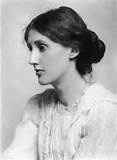
Virginia Woolf, 1902

Virginia Woolf, 1902

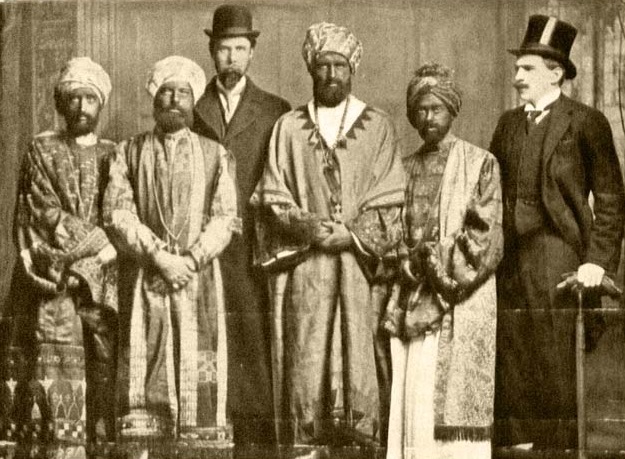
In London on 7 February 1910 a telegram was received from Sir Charles Hardinge, the Permanent Under-Secretary of Foreign Affairs, by the Commander-in-Chief of the Home Fleet and the captain of the H.M.S. Dreadnought, the flagship of the British navy, then lying off Portland, Dorset. It informed him that Prince Makalin of Abyssinia and his party were arriving in the afternoon and were to receive every attention. When they arrived by private train carriage they were received with an honour guard and taken ceremoniously on board. The chatter of the dusky-skinned entourage was completely unintelligible although one of the party, Prince Mandax, wearing a sky-blue silk robe, beard, jewels and a turban, constantly murmured “Bunga Bunga” which their interpreter explained was Abyssinian for “Isn’t it lovely?” They refused all refreshments which the interpreter again explained was due to their religious beliefs as they could not be served food or drink with the naked hand. Gloves were not available.

A few days later the officers and crew of the Dreadnought were amazed and dismayed to learn, via the Daily Mirror, that it was all a monumental practical joke and the Royal navy was pilloried and laughed at for weeks in the national press and at every dinner table in the land. It has become known as the Dreadnought Hoax and was reported all over the world.

One of the hoaxers, Prince “Bunga Bunga” Mandax, was, in reality, a young girl who was quoted as saying “I found I could laugh like a man easily enough but it was difficult to disguise the speaking voice. As a matter of fact the only really trying time I had was when I had to shake hands with my first cousin, who is an officer on the Dreadnought, and who saluted me as I went on deck. I thought I should burst out laughing, but, happily I managed to preserve my Oriental stolidity of countenance.”

This young lady was the 28 year old Miss Adeline Stephen, who two years later married and became Mrs Woolf. We know her better by her middle name, Virginia.

The Dreadnought hoaxers. Virginia Woolf far left. 1910

The Dreadnought hoaxers, 1910. Virginia Woolf, far left.

Apart from being a practical joker, Virginia Woolf was a very beautiful woman. This is certainly not how we think of her today but all the people who wrote about her, and there were many, used adjectives, especially those that knew her well, like, beautiful, mischievous, intelligent, talkative, and inquisitive. She would say things like, “You said you went for a walk, but what made you go for a walk?” When out walking herself with a friend she would see a farmer tossing hay and say, “Look at that farmer pitching hay. What do you think he had for breakfast?” It was this inquisitiveness that made her attend to everything you said to her; and attend with real interest. When you talked to Virginia you always felt that you were intently listened to, and, once literary fame came into the picture, you didn’t even mind that she was mining you for information, words and reasons for human behaviour; in fact, you were flattered that such a famous and beautiful woman was hanging on your every word; gazing into your eyes and eagerly waiting for your next pronouncement. Of course under such scrutiny, if you simply said ‘I don’t know’ you could be sure that she would lose interest immediately and seek someone else’s company. She had a habit of forcing you to search your brain for the right words, because nothing less than the right words were always expected.

She was tall, with a thin face, slender hands and always wore shapeless clothes of indeterminate colours: fashion was of no concern to her.

She was born Adeline Virginia Stephen in 1882 but almost immediately was called Virginia despite the confusion of initials with her elder sister, Vanessa. She came from a good family of landowners and was well but home educated. She was the third child of her father’s second wife and an incident with her half-brother, George Duckworth, was to have a profound effect on her.

“I still shiver with shame,” she wrote many years after the incident, “at the memory of my half brother standing me on a ledge, aged about six or so, exploring my private parts.” Then, many years later, when her father lay dying from cancer three floors below, George would fling himself on her bed, kissing and hugging her, aged in her early 20s, “to console her”, he later said. Quentin Bell, her biographer and nephew, would write, “in sexual matters she was from this time terrified back into a posture of frozen and defensive panic.”  She briefly considered accepting Lytton Strachey’s proposal of marriage knowing that he was homosexual so she thought a simple brother-sister sort of marriage may be preferable to one that included the ‘horror of sex’. She wanted to be married, since being a spinster was considered a failure and finally accepted the proposal of Leonard Woolf and they were married on August 10 1912 after an engagement that, her sister wrote, was “an exhausting and bewildering thing even to the bystanders.” Virginia said to him “I feel no physical attraction to you, … and yet your caring for me as you do almost overwhelms me. It is so real and so strange.” They were planning a honeymoon in Iceland (how metaphoric) but settled for a Mediterranean one instead. Michael Holroyd wrote,

“There seemed some unfathomable inhibition that made male lust, even when compounded with love, if not horrific, quite incomprehensible to her. The physical act of intercourse was not even funny: it was cold. Leonard regretfully accepted the facts and soon brought the word in line with the deed by persuading her that they should not have children. It was a sensible decision for, though she could never contemplate her sister’s fruitfulness without envy, children with their wetness and noise would surely have killed off the novels in her: and it was novel-writing that she cared for most.”

Nicole Kidman as Virginia Woolf, The Hours, 2002

Nicole Kidman as Virginia Woolf in The Hours, 2002.

In 2002 the film The Hours was released with much fanfare and a stellar cast. It was written by David Hare and based on the Michael Cunningham Pulitzer Prize winning book of the same name, which in turn used Woolf’s novel Mrs Dalloway (1925) as the core of the film about, not only Virginia Woolf and the writing of the book, but also its effect on two women: one in the 1950s and one in the 1980s. Readers can find Mrs Dalloway curious, annoying and tedious but when you read you must not let the words wash over you as one lets light from a fire without looking into the flames; into the beauty at its core.

Her novel of 1928, Orlando, is dedicated to Vita Sackville-West, Woolf’s friend, neighbour and sometime lover and tells the story, over a period of 300 years, of the romantic adventures of a man called Orlando, who suddenly, miraculously, half way through the book becomes a woman. This is revealed in the film version, starring Tilda Swinton, as Orlando with his long, straight, reddish blond hair gazes at himself standing naked in front of a full length mirror and seeing the reflection of a long, straight, reddish blond haired naked woman staring back saying, “Same person, different body.”

Vita Sackville West

Vita Sackville-West, the inspiration for Orlando (1928).

Virginia confessed her affair with Vita to her sister Vanessa and in a letter to Vita describes the moment.
“I told Nessa the story of our passion in a chemist’s shop the other day. ‘But do you really like going to bed with women’ she said – taking her change. ‘And how’d you do it?’ and so she bought her pills to take abroad, talking as loud as a parrot.”

Uncharacteristically a lot happens in Orlando but it’s not plot that interests Virginia Woolf ( “facts are a very inferior form of fiction”) but the feelings, nuanced emotions that precede the action, or arise because of it; she was more interested in, not the ‘What’, but the ‘Why’, and, more importantly, how one would describe that ‘Why’.

Leonard and Virginnia Woolf photographed by Vita Sackville-West, 1926

Leonard and Virginia Woolf photographed by Vita Sackville-West.

Nowhere is this more evident than in her novel (most call it her masterpiece) To the Lighthouse (1927). The very title is full of expectation and when the possibility is revealed to little six year old James he is transfixed, incapacitated with the joy of it. This is the opening, including the title which is really part of the first sentence.

“To the Lighthouse
“Yes, of course, if it’s fine tomorrow,” said Mrs Ramsay. “But you’ll have to be up with the lark,” she added.
To her son these words conveyed an extraordinary joy, as if it were settled, the expedition were bound to take place, and the wonder to which he had looked forward, for years and years it seemed, was, after a night’s darkness and a day’s sail, within touch. Since he belonged, even at the age of six, to that great clan which cannot keep this feeling separate from that, but must let future prospects, with their joys and sorrows, cloud what is actually at hand, since to such people even in earliest childhood any turn in the wheel of sensation has the power to crystallise and transfix the moment upon which its gloom or radiance rests, James Ramsay, sitting on the floor cutting out pictures from the illustrated catalogue of the Army and Navy stores, endowed the picture of a refrigerator, as his mother spoke, with heavenly bliss. It was fringed with joy.”

And what is illustrative, most of all, of her genius, and her deep and all-consuming curiosity of human intention and behaviour, and her determination to create art, is that by the last page the lighthouse itself disappears into a mist and we, the readers, along with the remaining onlookers in the house, can only assume that they have arrived.

Leonardo de Vinci fought tooth and nail to acquire a particular block of marble, also much coveted by, his rival, Michelangelo because he knew that inside there was a statue of David and all he had to do was chip away the extraneous rock to reveal the body within. If Virginia Woolf were present it would be the act of chipping the marble and the chips of marble lying on the floor that would attract her interest and not the finished, polished figure.

Janet Vaughan (a medical scientist and friend) had this to say about Virginia Woolf and ‘genius’.
“Well, it’s a sixth sense. It’s somebody who jumps a gap which other people would need a very, very solid bridge to walk across. She didn’t do it as a scientist might, she did it by interpreting what she saw and what people might be thinking and how they interacted with one another. But she had this quality of jumping gaps.”

And similarly Vita Sackville-West describes it thus: “I always thought her genius led her by short cuts to some essential point which everybody else had missed. She did not walk there: she sprang.”

But it’s the adjectives ‘mischievous, witty, warm and humorous’ that are most intriguing. She loved to tease and teased most those she was most fond of; and those teased seemed to love it and certainly were not offended by it since the teasing was done with such warmth.

In the early 20s Virginia Woolf used the name of writer Berta Ruck (albeit mis-spelt) on a minor character, and a subsequent tombstone, in her novel Jacob’s Room (1920). Angus Davidson, friend, literary critic, and manager for a time of their publishing house, The Hogarth Press, said this was done unwittingly. This is hard to believe as the name Berta Ruck is quite distinctive and her name and the names of her novels were emblazoned on the tops of London buses. However Ms Ruck was a writer of a very different genre than Virginia’s. She wrote romantic stories and almost seventy novels (Khaki and KissesLove on Second Thoughts, etc) where beautiful young women were treated dismissively by fathers, brothers and men in general but who fell in love with one of them and lived happily ever after. One can imagine Virginia Woolf thinking this scenario extremely unlikely and with a name like Berta Ruck, and the married name of Mrs Onions, perfectly ripe for mischief. Ms Ruck, however, did not see the humour in the incident and with urgings from her indignant husband, wrote to Woolf in sorrow and indignation threatening legal action. Virginia wrote back rather sarcastically, “I am more pleased than I can say that you survived my burial. Never will I attempt such a thing again. To think that you have bought my book.” It took Ms Ruck eight years to discover the slight so Woolf could hardly have taken her seriously. However they ‘made up’ via correspondence and almost a year later Ms Ruck got her own back by becoming the success at a party, attended by Virginia, by singing a very risqué song, “Never Allow a Sailor an Inch Above Your Knee.” Virginia was reported as being “filled with amazement and delight.” All animosity was forgiven.

Unfortunately, the memory of her is clouded by her diaries which record her mental suffering and her depression even though her husband, and editor, went to great pains to explain; “…diaries give a distorted and one-sided view of the writer, because, as Virginia Woolf herself remarks, one gets into the habit of recording one particular kind of mood – irritation or misery say – and of not writing one’s diary when one is feeling the opposite. The portrait in therefore from the start unbalanced.”

Her bouts of illness sprung from the effort of writing, and in particular the exhaustion from finishing a particular work. Her headaches would begin and if left unchecked, she would lose coherence of speech, and her brain would race with images and noises (birds crying out in Greek) and delusions (King Edward VII, among the azaleas, swearing in the most foulest language). Complete rest and quiet would eventually restore her normal life but her recovery would be ridden with doubt and worry about the worth of her just-completed work. Praise and encouragement were oxygen to her.  So eventually with Leonard’s care and concern, her own courage, immense courage, she would roll up her sleeves and begin to write again, knowing that creation was hard, completion fearful, and a bout of madness inevitable.

Portrait of Virginia Woolf, 1939 by Gisele Freund.

Portrait of Virginia Woolf, 1939, by Gisele Freund, two years before her death.

And then this: her final piece of writing; a short letter to her husband, written on the day she died.

Dearest, I feel certain that I am going mad again. I feel we can’t go through another of those terrible times. And I shan’t recover this time. I begin to hear voices, and I can’t concentrate. So I am doing what seems the best thing to do. You have given me the greatest possible happiness. You have been in every way all that anyone could be. I don’t think two people could have been happier ’til this terrible disease came. I can’t fight any longer. I know that I am spoiling your life, that without me you could work. And you will I know. You see I can’t even write this properly. I can’t read. What I want to say is I owe all the happiness of my life to you. You have been entirely patient with me and incredibly good. I want to say that — everybody knows it. If anybody could have saved me it would have been you. Everything has gone from me but the certainty of your goodness. I can’t go on spoiling your life any longer. I don’t think two people could have been happier than we have been. V.

She then put on a hat, a coat, grabbed a walking stick and headed to the river. There she put down her stick, took off her hat, put rocks in her pockets and disappeared into the water. When Leonard found the letter, he, along with the house keeper, Mrs Meyer, searched the house, the grounds, and the surrounding countryside and when they found her stick and hat assumed the worst. Three weeks later her gruesome body was found by children as it bumped against the bank of the river many miles downstream. She was 59.

Remember Virginia Woolf as a beautiful and intelligent woman, a prankster, a great and innovative writer, the creator of the outrageous Orlando, and the cheeky biographer of Flush, Elizabeth Barrett Browning’s little cocker spaniel; she was a curious and inquisitive human being, a tease, a lover, and a writer who launched modernism on the literary world. And remember that when her little nephews, nieces, and their friends were preparing for a party who was number one on their invitation list?

“V-i-r-g-i-n-i-a!” they would shriek with delight, because Aunt Virginia always made them laugh. Virginia Woolf, 1927

Virginia Woolf, 1927, aged 45, the year To the Lighthouse was published. 

Personal by Lee Child

Lee-Child-pic
James D. “Jim” Grant, better known by his pen name Lee Child, is a British writer, who for many years worked at the BBC and Granada and was involved in the production of many popular television drama series. After being retrenched he took up writing: his first Jack Reacher novel appeared in 1997. He now lives in New York City.

It’s not that I’m an ‘author snob’ – although I can understand why that might be true – it’s just that procedural crime, thrillers, page-turners and the like, whether books, films or TV series, usually boor me. I just don’t care enough: who did it, how they did it, why, where, and, well … who cares?  But I decided to give Lee Child a go. Everyone else is. This one, Personal (2014) is #19 of 23 and counting. He produces one bestseller every year.

I haven’t tried Stephen King, either. Yes, I know, I know. I should!

I was nearly put off by the quote, from the Independent, on the cover of this one: “Pulseracing”. See it? It’s not even a word, it’s two words: Pulse racing. It means that it makes your pulse race; not the book’s pulse, whereas … Oh, forget it! See what I mean?

I place a lot of faith in page one. Here is the first paragraph of this page one:

Eight days ago my life was an up and down affair. Some of it good. Some of it not so good. Most of it uneventful. Long slow periods of nothing much, with occasional bursts of something. Like the army itself. Which is how they found me. You can leave the army, but the army doesn’t leave you. Not always. Not completely. 

Chatty. Casual. Matey. Short sentences, even if some of those short sentences aren’t actual sentences (no verb) but are there, nonetheless, courtesy of authorial licence. But it was the line, “Which is how they found me.” that sparked my interest.

The chapters are short – 58 in this one – and each one is like a little scene from the movie (there’s bound to be one) with a chapter-ending waterfall, some no more than an amusement – “So I headed for the sound of her voice, and stepped into a room, and came face to face with myself.” – some a major plot point  – ” …first a tiny pinprick of sudden light in the far distance, and then the snap of flags everywhere as a gust of wind blew by, and then Khenkin’s head blew apart, right next to my shoulder.” Although this is action, the first real action (p116), a death, it’s passive action: Reacher doesn’t do anything, it happens to him. Well, it was supposed to happen to him: that little gust of wind, not an act of god but one by the author, blew the initially accurate bullet off course.

I was getting a little restless.

The next chapter continues with the aftermath: “His shattered head hit me on the way down and left a red and grey slick on the shoulder of my jacket. I remember thinking Damn, that was brand new, …” Such black-humoured, character-layering, Tarantino-esque moments are common in popular culture today. It’s been 23 years since Pulp Fiction – a cliche yet?

I re-arranged myself in my seat.

It took another 78 pages to get to the first piece of thrilling action: Reacher violently and swiftly overpowers 2 thugs masquerading as policemen; kills one, maims the other, but in the description of this, this:

and launched the same elbow at the first guy, who was a big strong man, but clearly not much of a fighter. Maybe he had gotten too comfortable with getting by on appearance and reputation alone. Maybe it was years since he had been involved in an actual scuffle. The only way to deal with a sudden incoming elbow was to twist and drive forward and take it on the meat of the upper arm, which is also painful and sometimes numbing, but generally you stay in your feet. But the guy went the other way. He chose the wrong option. He reared up and back…

Three lengthly sentences of explanation, instruction, and justification in the middle of a description of a frenzied fight. This surprised me. But what surprised me more was that it didn’t matter. I was with him all the way. This book is in the first person, which can be limiting: the hero in a first person narrative only knows what they know, but the first person is IN the action, not outside it, and such thoughts and musings don’t subvert the action; the reader is with the narrator, safely in his (the author’s) hands.

This piece of action went on for three chapters and included this description of a man, a villain obviously, getting out of, and back into, a car:

And then a giant climbed out. He led with a bent head and a bent back, folded at the waist, folded at the knees, and then he straightened up in stages, like a complex mechanism, like a child’s toy that starts out as a squat dump truck and then clicks open, one component after another, to reveal an action figure. He was huge. … The action figure became a dump truck again. He bent his knees, and bent at his waist, and tucked in his elbows, and hunched his shoulders, and ducked his head, and backed butt-first into his seat.  

And this piece of light-hearted description of a “hideous old farm vehicle” gearing up for motion:

The transmission was slower than the postal service. She rattled the selector into reverse, and all the mechanical parts inside called the roll and counted a quorum and set about deciding what to do. Which required a lengthy debate, apparently, because it was whole seconds before the truck lurched backward. She turned the wheel, which looked like hard work, and then she jammed the selector into a forward gear, and first of all the reversing committee wound up its business and approved its minutes and exited the room, and then the forward crew signed on and got comfortable, and a motion was tabled, seconded and discussed. More whole seconds passed, and then the truck slouched forward …

And it reads so well. I read it many times, and each time it made me smile. Great creative passages like these are worth the time and put this thriller writer a little above the rest, in this, my learning opinion.

But, back to the action, the second piece of action. Serious action only 23 pages on. Similar to the first but on a bigger scale. The first was 2 men, dressed like, but not, policemen asking Reacher and partner, Casey Nice, (her name. Nice.) to nicely get into the back of a van. Reacher didn’t oblige. The second was not a van but a one-door-one-window room behind an auto-shop which they, foolishly it turned out, walked into, with not 2 men present but 4 outside. “He closed the door behind him. And locked it.” End of chapter. The next chapter opens with just over 2 pages describing the 6 seconds of deductive thought going through Reacher’s mind after the click of the lock. This for two reasons: 1) it shows you what a smart-arse our hero is, and 2) it sets the time scale, 100-ish words per second. Reacher and Nice have a little chat which ends with them totting up what they have. A chair, a desk, a dirty jumper in a drawer, an arm chair, a window, a locked door. She says, “We’ve got nothing.” He says, “We’ve got what we’ve got.” “What are we going to do?” And the chapter ends with

So I told her what, and we rehearsed it carefully, over and over again, and then we started doing it. 

Note the verb tense. Not the past tense, and then we did it = action completed; but the past continuous tense: and then we started doing it = action not finished yet. (Now, that’s a waterfall!)

Well, you’ve just got to turn the page!

So, man number 1 bursts into the room lured by the noise of the armchair going though the window, and while Nice deals with him with her hand wrapped in the dirty jumper and holding a large slither of glass (“Aim for his eye.” She does), Reacher quickly renders unsuspecting but hurrying man number 2 unconscious with the chair and then confronts men numbers 3 and 4, not in the boxed room but in the auto-workshop, bigger space, more to play with, where he can see both of them at once. He deals with them, expertly of course, telling us how and when and why they made the wrong choices and why he didn’t – he’s a smart-arse remember, taking about 1500 words, which adds up to 15 seconds of screen time, just over 5 pages of book time. So that’s how you write action! The chapter ends with

Then I hustled back to the boxed-off room, to see how Casey Nice was doing.

Would you stop there and start preparing dinner?

However, after this bit of page-turning there was over 100 pages of chat, explanation, assumptions, predictions and justification; a long wait for more thrills. This being a ‘thriller’. In fact in terms of pages, ‘thrills’ take up a very small number indeed. Or have I been seduced by the jacket quotes “Another cracker …” “The best one yet.” “Generates relentless momentum … Child’s dedication to suspense … approaches the Hitchcockian” and Child’s soaring reputation? Yes, the thrills happen expertly but not very often. Relentless momentum? I don’t think so.

Oh, the plot? Some sniper has taken a potshot at the French president. The Russians, French, and the British all have their theories, but the Americans know who it was, and the only man to find him is Reacher. But then we learn that the French president was only a decoy/rehearsal; there’s a G8 summit coming up in London. So who’s the target?However on the way there’s two London gangs who get involved – one led by that giant! And, yes, the climax is in the giant’s house where everything is 50% bigger than a normal house (great design opportunity for the movie-version) but Child throws a naked woman in the final scene. Tacky, but you’ve got to be true to the genre, I suppose.

The first Jack Reacher movie, One Shot, of book No. 9, came out in 2012. Child wasn’t impressed, I hear: Reacher is more the build and temperament of a beefy Arni Schwarzenegger, not a weedy Tom Cruise. So we’ll see if there’s more.

Child’s Reacher #20 is in the 3rd person, which might be an interesting comparison to this one in the 1st. But, maybe I am a snob when it comes to airport genres, after all. No. 20, Make Me (2015) is there on the shelf. I’ll think about it.

You can find Lee Child novels, well,  … everywhere. Read one and tell me what you think.