The Story of a New Name by Elena Ferrante


Female-silhouette
Elena Ferrante is/might-be the pseudonymous name of an Italian writer. Publicity shy, she only accepts interviews by email. There are no photos of her online. James Wood, The New Yorker critic has deduced … a number of her letters have been collected and published. From them, we learn that she grew up in Naples, and has lived for periods outside Italy. She has a classics degree; she has referred to being a mother. One could also infer from her fiction and from her interviews that she is not now married…In addition to writing, “I study, I translate, I teach.”

the story of the facts has to reckon with filters, deferments, partial truths, half lies: from it comes as arduous measurement of time passed that is based completely on the unreliable measuring device of words.

That … what are writers stuck with? … the unreliable measuring device of words.

Every tone of voice, every possible meaning of words spoken, every possible meaning of words unspoken, the way they dress, walk, cry, smile, serve the pasta, look, and stand; all are analysed by Elena, the first-person narrator, in her attempt to understand what’s going on. It’s a Brugel-esque landscape of feelings colouring the lives of the Neapolitan working class in the 1960s and all seen through the eyes of Elena Greco  -“always fearful, always subordinate, always pleasingly willing”, the unmarried, bookish one with glasses.

Elena Greco:  I said to myself every day: I am what I am and I have to accept myself; I was born like this, in this city, with this dialect, without money, I will give what I can give, I will take what I can take, I will endure what has to be endured. This could easily be Lina’s creed too.

The title refers to Elena’s brilliant friend, Lina Cerullo and her new name now that she’s married, her married name, Lina Carracci, and, of course, Elena can’t be everywhere, especially in Lina and Stephano’s hotel room on their disastrous wedding night, but we get the scene, in the third person. Ferrante doesn’t need to justify how the narrator, Elena, knows what happened, she does (Lina told me) and clumsily so. However, there are other instances when the narration slips from the first to the third person unannounced. It’s OK. It’s a legitimate literary device, unnoticeable if attention is not drawn to it. It allows a flow of action or insight. This inconsistency is something the editor should’ve picked up. Ferrante is usually masterful at using these literary tools. Quotation marks, and ‘he said’, ‘she said’ are abandoned at times in the frenzy of verbal, sexual, or social violence giving the scene a filmic quality, making the action jump out of the flat page. This is good stuff, but doesn’t need justification.

The story is about Lina’s marriage that fell apart at the wedding at the end of Book One and how it continues on its downhill slide while Elena continues to bump against her upbringing and pursue an academic life, free – she thinks – from her stifling Neapolitan history; but Elena by this book’s end still believes Lina, despite her choices, is the more beautiful, the more intelligent.

Thank god there’s a glossary of families and family members at the front of the book. Ten families and their intra and extra familial relationships make up the fodder of the story and the glossary is well needed; and don’t be afraid to use it (no-one will know). Things get complicated especially with diminutives, family nicknames, and similarities; Alfonso, Antonio, Lina, Linu, which is a diminutive of Elena, not Lina whose real name is Raffaella. See? And don’t skip over the Italian family names, Cerullo, Cappuccio, Scanno, Solara. Say them out loud! You need to be familiar with them all and if you say them, you’ll be saying them a lot, right from the beginning so it won’t take long before you’re at one with the family, families. You’ll be in among them all. That’s the best bit.

The worst bit is the fate of the women. Not only are they treated like shit by all of the men – except when they want something, usually sex – their worst enemies are the other women: mothers, sisters, aunts, cousins, and  friends. Shame, gossip, inference, innuendo, treachery, lies, superstition, and pride are all weapons these Neapolitan women use against their own. And Elena sails bumpily, battered and bruised, but defiant, through it all, but ultimately aware that she is a woman and people see her more clearly, listen to her more intently, talk to her more respectfully, when she is on the arm, even metaphorically, of a man. Have things changed?

And then the story splits: Elena goes to study in Pisa, and Lina’s messy life of deception, abandoned commercial success, and personal war-mongering continues to engulf everyone in her circle of destructive intent and selfishness. Here I wanted to hear more about Elena, but I had to wait.

And then this:

One morning I bought a graph-paper notebook and began to write, in the third person, about what happened to me that night on the beach near Barano. Then, still in the third person, I wrote what happened to me on Ischia. Then I wrote a little about Naples and the neighborhood. Then I changed names and places and situations. Then I imagined a dark force crouching in the life of the protagonist, an entity that had the capacity to weld the world around her, with the colors of the flame of a blowtorch: a blue violet dome where everything went well for her, shooting sparks, but that soon came apart, breaking up into meaningless gray fragments. I spent twenty days writing this story, a period in which I saw no one, I went out only to eat. Finally, I reread some pages, I didn’t like them, and I forgot about it.

This is Elena Greco explaining herself, describing what changed her life, but it is more; it is a confession from Ferrante: how to write a novel. It’s finding the ‘dark force’ that’s the tricky bit. However, it’s this notebook, hand-written, unedited, that she gives as a gift – despite “I reread some pages, I didn’t like them” – and it’s this notebook that finds it’s way into literary circles, someone types it and shows it to a publisher and …

When Elena and Lina finally re-unite it’s in the most unlikely of places; two women, one about to be hoisted aloft, the other about as low as she can go but united by a shared intellect, history, and belief in the other, no mater how sorely that belief is tested. One ignored the upbringing they both had no control over; the other gave in to it. And like the end of Book One, My Brilliant Friend, this, Book Two, has a sting on the last page that compels you, no matter what you might think, to move on as quickly as possible to Book Three, Those Who Leave and Those Who Stay. Ferrante is a reading experience like no other.

You can purchase the book, in various formats including the ebook, here.

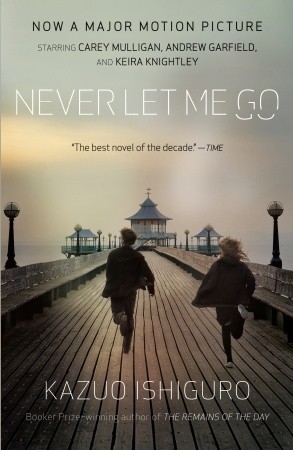
Never Let me Go by Kazuo Ishiguro

Kazuo-Ishiguro-pic
British writer, Kazuo Ishiguro.

I have a mild aversion to literary fantasy. I rarely read fantasy novels; I’ve never had the slightest interest in reading George R. R. Martin’s The Song of Ice and Fire, more commonly known by the TV version, Game of Thrones, although I did try to read Lord of the Rings when I was way too young, but I found myself acknowledging the genre, and roping it in support of my argument when a dinner guest, on hearing that I had written a novel on the sex life of a single mum, said, “So, do you know any single mums?” “I’m not writing a documentary,” I said, “I’m writing fiction.” She looked at me as if I’d said the world was flat. I continued, “Well, I’m glad you weren’t dishing out literary advice to Tolkien or George Martin otherwise we’d be without Lord of the Rings, and Game of Thrones.” Zombies, aliens, vampires, fairy god-mothers, elves, and talking rats and rabbits also sprang to mind, but she moved to the other end of the table before I could bring them in to bat.

When the British writer, Kazuo Ishiguro, won this year’s Nobel Prize for literature I scoured my bookshelf and found Never Let me Go (2005). I didn’t know anything about it, and all that I knew previously about Ishiguro, was that he had won the Man-Booker Prize for Remains of the Day, was born in Japan, and that his family had moved to London when he was a child.

Page one begins, “My name is Kathy H.” I had just read Sebastian Barry’s memorable The Secret Scripture, a male writer writing in the first person as a woman, so my pre-established prejudice against such literary cross-dressing had been severely weakened, to a point of not caring very much. However, halfway down the page there is this:

“My donors have always tended to do much better than expected. Their recovery times have been impressive, and hardly any of them have been classified as ‘agitated’ even before fourth donation.”

The words “donors” and “fourth donation” sent a worry-jolt to my brain and I suspected that the created universe in which this story would unfold was not the one that I live in, but I felt safe from dragons or talking trees, so I continued reading.

It’s important to tell you that I was hooked very quickly but the book also made me think more about why I don’t read novels from the fantasy genre, as I now thought this book belonged to. It’s a general feeling of aversion for the literary ‘cop out’. If the universe of the novel has dragons flying through the air, i.e., the universe of the novel is not your universe, then it seems to me that anything is possible. A plot complication of any magnitude could be sorted out by any deus ex machina the writer deems necessary. This feeling isn’t strong, but with so much to read in the genres I prefer, the urge to delve into others doesn’t really come up. Genres are only important for publishers, booksellers, and readers; I acknowledge them as a reader, but writers, and especially Ishiguro, don’t pay much heed to them. His Remains of the Day, a very English tale of love and painful reticence is in the most English of settings: below stairs in a manor house; while his most recent novel, The Buried Giant is a true fantasy novel set in post-Arthurian Briton.

Kathy H is a thirty-something woman remembering her education at a boarding school, Hailsham, and her friends, Ruth and Tommy. The school is recognisably British but with weird and worrying rules, attitudes, and characters. It becomes clear, through mis-matched memories, remembered inconsistencies, and briefly explained circumstances that the world of the novel is not the world of the reader; and the fate of the students is mapped out, rigid, and dystopian.

The almost lazy diary-style of remembrance, “It was just like the time when…”, “… looking back now…”,”I don’t know about you, but where we were…”, “… and that reminded me of Chrissie, who …”, “…the way I remember it is…”, “It’s funny now recalling the way it was at the beginning…”, “… and that’s when we had that talk I told you about …”, gets a little repetitive, and the incidents and events she remembers has about as much dramatic content as “sharpening a pencil”, as one critic joked; but these remembrances of seemingly minor happenings do create something in the reader similar to the experience of the narrator; no mean feat: a jumble-book of seemingly indistinct and trivial memories flavoured with asides and happenstance of their lives that coalesce eventually into a sprawling picture of unease, and controlled morality and personal destiny. You begin to like these young people; wonder how much and what they know about themselves and their circumstances; and what is this curious feeling of dread you find creeping over you like a blanket?  Yes, the remembrances may be small but the stakes are incredibly high and when Kathy H and her peers discover the true meaning of their existence … no, no spoilers here; you’ll have to read it yourself to understand the frightful truth.

Ishiguro’s chosen narrative style is conversational, prosaic even, how a good friend may write a letter (remember writing letters?) telling you what they did on the weekend. No literary language or erudite psychological musings, just memories of a middle-class woman about her upbringing; oh, and allowing un-spoken assumptions that the reader takes in, by osmosis, that creates, deep-down at first, this creeping disquiet.

It’s not a book you can easily forget. It is one of the most unusual and emotionally disturbing books I have ever read. I admire Ishiguro’s control over what he writes; how his skill is hidden and you only marvel at it when the story is over, and then you understand that what you feel is a direct, and deliberate, result of it.

You can find the book, in various formats, here.

The movie version (2010) stars Carey Mulligan, Andrew Garfield, Keira Knightley, and Charlotte Rampling; adapted by Alex Garland, and directed by Mark Romanek.

Oh, and BTW, here is a piece of advice from Kazuo Ishiguro, Write what you know is the stupidest thing I’ve ever heard”. I wish I’d known about this quote as more ammunition for my brief literary discussion with above dinner guest.

Happy reading!


The Secret Scripture by Sebastian Barry

Sebastian Barry pic
Irish writer, Sebastian Barry.

Some years ago at the Ubud Readers and Writers Festival I was intrigued and entertained by a British writer called Jill Dawson who had the audience at her session in the palm of her hand, so I checked out one of her volumes in the festival bookshop. I place a lot of importance and insight into a book by its first page. It wasn’t long, still on page one, that I heard a faint gasp from my own mouth and a thunk as I put the book back immediately. Both actions were involuntary. I was alarmed; not by the content but by my reaction to the content: she was writing in the first person as a man. I was not aware that I held this prejudice. Since then I have tried several times to write as a woman; I mean, in a first person (and third person) female voice with mixed success. So, when it was clear that Barry’s first person narrator was a woman I did not act as before but thought it was time I faced my prejudice, although weakened since by my own efforts, and continued reading.

The narrative is, in fact, in two voices: one the old woman, Roseanne Clear, the dominant voice, and the other, Dr Grene, the psychiatrist who tends to her at the Roscommon mental hospital, St Malarky’s, where Roseanne has been living for as long as anyone can remember. Roseanne Clear is very old, maybe even a hundred.

I am only a thing left over, a remnant woman, and I do not even look like a human being no more, but a scraggy stretch of skin and bone in a bleak skirt and blouse, and a canvas jacket, and I sit here in my niche like a songless robin – no, like a mouse that died under the hearthstone where it was warm, and lies now like a mummy in the pyramids.

She writes out her life on “unwanted paper” and stashes it under a loose floorboard; not unusual as the building is falling apart. Barry gives her language that is poetic, articulate, melancholy, and wise but seemingly uneducated at times: “no more”, although this could be her Irish-ness peeking through. Yet she is in a mental hospital. This is usually a theatrical device, a character being one thing to the other characters, and someone else to the audience; a form of dramatic irony.  This is reinforced by conversations she has with Dr Grene where she gives simple answers or sometimes no answer at all, while telling the reader her reasons.

Her aim is to try and remember why she is where she is and whether memory, about a husband, then a non-husband, abandonment, expulsion, and a child, has any relation to reality. Is memory trustworthy?

Her story is one of Ireland: beginning with political unrest and genteel poverty as the daughter of a Presbyterian gravedigger in Sligo, western Ireland in the 1940s. Almost half of the book is devoted to her memory of her childhood with a father she adored, and you will too – even when be is reduced to work as a rat-catcher –  but with a mother who is as distant and silent as a housemaid, which she resembles. Dr Grene has a similar wife, blank, distracted, lonely and you wonder at times whose memory is the more reliable.

The themes here are literary-Irish through and through: the slap-dash care, easy-bitterness, and bloody-mindedness of family; the down-right intractability of a mean-spirited Church hiding behind the skirts of a dour and silent god; secrets of paternity; the hyper-critical branding based on any sexuality that isn’t church-condoned, but done in the dark, and never mentioned; and the dis-empowerment, subordination, and denigration of women.  It’s a very long way from the Ireland of today with its diminished religiosity, liberalism, and political leadership by an openly gay young man whose paternity is from India. However, as long as there are Irish writers who were damaged, but survived, their Irish past, as holocaust survivors survived theirs, there will be books like this.

The writing is luscious, and sometimes you need to re-read aloud a line, a paragraph, just to wallow in the words, to delight in the feel of them in your mouth; and since we read for pleasure – like we listen to music – there’s no need to engage the memory, this is a book for reading again.

The Secret Scripture was short-listed for the Man-Booker, won the Jame Tait Black Memorial Prize, and the Costa Award in 2008; which Barry won again in 2016 for Days Without End.

You can find the book in various formats, including audio book and audio CD, here.

The film version, directed and co-written by Jim Sheridan with Johnny Ferguson, was made in 2016 starring Rooney Mara (the love interest to Cate Blanchett’s title-character in Carol, from 2015) as young Rose, Vanessa Redgrave as old Rose, and Eric Bana as Dr Grene; it was released in the USA in October.  It will be in cinemas in Australia from December 7, 2017.


Arguably. Essays by Christopher Hitchens

christopher-hitchens pic
Christopher Hitchens (1949 – 2011) Anglo-American author, columnist, essayist, orator, religious and literary critic, social critic, and journalist. “What can be asserted without evidence can also be dismissed without evidence.

This book is for dipping into.

The essays, 97 of them, are entertaining, enlightening, short, but sometimes challenging, and not just because of the subject matter, literature, science, history, politics and more. They are challenging because his language can be of a higher form and one should read this book within easy reach of a dictionary, app or paper; and that’s a good thing, as we all should not let an unknown word pass us by. Hitchens was a prolific writer, but he also was a prolific reader: every essay is full of references, anecdotes, comparisons, opinions, and so wide-ranging and eclectic is his accumulated knowledge that one wonders when he had time to sleep, eat, and raise a family.

Most of the writings in this volume were first published in magazines or newspapers such as The Atlantic, Newsweek, The New York Times Book Review, Slate, Vanity Fair, Foreign Affairs, among many others.

Just a glance at the Contents page will throw up depths of interest that one can look forward to plumbing: Abraham Lincoln: Misery’s Child; In Defence of Foxhole Athiests; The Dark Side of Dickens; W. Somerset Maugham: Poor Old Willie; Stephen Spender: A Nice Bloody Fool; Harry Potter: The Boy Who Lived; Why Women Arn’t Funny; So Many Men’s Rooms, So Little Time; Charles, Prince of Piffle; The Swastika and the Cedar; North Korea: A Nation of Racist Dwarfs; you see what I mean?

His asides are where the fun is:

” … Bertrand Russell, who could have been world famous in several departments, from adultery to radicalism …”

” … [Isaac] Newton spent much of his time dwelling in a self-generated fog of superstition and crankery.”

re Jessica Mitford. “These themes – of kinship and class, flight from same, residual loyal-ties to same, commitment to revolution, and stiff-upper-lippery in the face if calamity – recur throughout this assemblage of Jessica’s correspondence. ”

re W. Somerset Maugham. “Despite his exile and his increasingly distraught public and private life, Maugham eventually received an honour from the Crown – but it was for “services to literature” rather than for literature itself, and this distinction represents all the difference in the world”, as bitchy as his subject is arch.

What I have learned from Mr. Hitchens:

The French ‘ban’ on the burka can be seen as not a ban at all: it is a lifting of a ban on women being able to choose their own attire, and it is a lifting of the ban on women being able to question clerical, ie male, authority, and to be free to communicate to fellow humans face to face.

Isn’t it ironic that the Promise Land that god promised the Jews, a promise that was finally fulfilled, is the only bit of land in the Middle East that doesn’t have any oil.

“Jewish humour, boiling as it is with angst and self-deprication, is almost masculine by definition.”

The fundamental tenant of Christianity may contain its own unravelling: we are created bad, but commanded to be good.

The Magna Carta was not written in English. Of course it wasn’t; look at its name!

The Sixth Commandment, Thou Shall Not Kill, has nothing to do with pacifism since Moses told his Levite faction after receiving the original tablets containing the Ten Commandments from god on Mt. Sinai, to “slay everyman his brother, and every man his companion, and every man his neighbour” (Exodus 32:27-28). Killing for honour, revenge, or conquest is not really killing at all. The three monotheistic religions were born in extremely violent times and they continue to be violent religions to this day. Maybe God meant ‘murder’ and he was mis-translated. So, we must remember that the problem of ‘authority’ in the first 1500 years of Christianity was solved by having it all ‘wrapped up’ in languages that the majority of adherents could not understand; its mysteries being decoded by a select few: a ‘special caste’; and recoded many times since.

And while we’re on the subject of The Ten Commandments, it seems they were specifically written for men who had staff: “Thou shall not covert thy heighbour’s house, his wife, nor his manservant, nor his maidservant, nor his ox, ass, …” lumping his wife (wives) in with all of his other chattels.

Kurdistan (The Other Iraq) is (was) marketing itself as an investment and tourism hub.

America’s first military tussle with the world of Islam was from 1801-1805, The Barbary Wars, which not only gained US access to European trade but created the U.S. Navy.

The meaning of the phrase ‘tumbril remark’; his examples are hysterical.

How it feels to be ‘waterboarded.’

The etymology of the phrase ‘blowjob’ and who will, and who will not, do it.

An intelligent person sifts out the truth with a lot of ‘senses’, far more than the original five; hearing and understanding words being the least of them.

Hitchens died at the age of 62 in December 2011 from pneumonia, a complication of oesophageal cancer (he was a nicotine addict; by his own reckoning he smoked 15,000 cigarettes a year ). Although his death came before the rise, and now continuing decline, of IS, his essays on the politics of the Middle East and north Africa give important insights into the recent history of these regions; and it’s recent history that seems, paradoxically, the easiest to forget.

One of his last pieces, from May 2011 in Vanity Fare, gives an enlightening and humorous account of how the language of the Bible has been used, politically, commercially, and sect-affirmingly to, not only sell bibles, but to make them accessible to absolutely every one, like an offering in a “cut-price spiritual cafeteria”. Only in America could there be published bibles called “Extreme Teen Study Bible” or “Policeman’s Bible” or, my favourite, “One Year New Testament for Busy Moms.”

But what one is left with after browsing in, flipping, and giggling through this entertaining volume is his precise and educative use of the English language. It may be of an un-coffee-table-book shape, given its fatness, but the coffee table is where it should be; or, at least, somewhere as easily accessible. Happy dipping!

You can get this book in various formats, including audio CD, here.

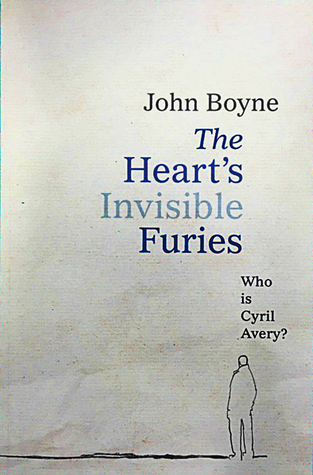
The Heart’s Invisible Furies by John Boyne

John Boyne pic
Irish writer, John Boyne.

Many years ago, on a small plane trip – the plane was small, not the trip –  as we were about to land in a provincial Queensland town, I continued to assiduously read my book. I was laughing so much, trying not to, but not succeeding, that my eyes were streaming, my nose running, and my face felt hot and red; the flight attendant broke the rules, unbuckled, and hurried to my seat to ask if I needed medical assistance. I just held up the book; I was unable to speak. She understood. Maybe she’d read it too. It was the hit of the season. The hysterical section was the Nativity Scene from A Prayer for Owen Meany by John Irving. The next time I laughed out loud, many decades later (yes, decades), was with this book, and the (highly illegal) Dinner Party Scene, from early on in The Heart’s Invisible Furies by John Boyne. Ironically Boyne has dedicated this book to Irving.

Making people laugh via the written word, and only the written word, is an extremely difficult and hazardous task. You can’t under play it or over sell it, and you certainly can’t ‘back-explain’ it; it’s all to do with tone, and tone is like a law of physics: it only happens when the universal conditions are absolutely right. It’s as if you need to foster a certain psychological state of mind, and write the episode with as much truthfulness and sincerity as you possibly can – don’t elaborate – just tell it, and if the tone is right, it will be hysterical. If it isn’t you can’t go back and make it right, edit it funny, you have to delete it all and start again. A plane will only fly if all the necessary preparations and current circumstances, weather, wind, mechanical health, operational skill, and power source, are perfect.

The dinner party – and it’s impossible to explain why it’s illegal, you’ll just have to read it to find out – is on page 92, but the preparation for it, and the other laugh-out-loud bits, preparation for the tone, I mean, in true Irving-esque fashion, begins right from the first killer sentence; and by the way, the opening sentence of Owen Meany has to be the killer-opening-sentence in all literature. There was a time when I knew it by heart and it became my dinner-party piece for some time after. I can’t sing, tell a joke, or play the piano, you see.

Boyne considers Irving a mentor, and Irving should be chest-thumpingly proud.

It’s impossible for Boyne to escape the moniker of “author of The Boy in the Striped Pyjamas” which he understands only too well, and he’s certain it will appear on his grave stone, so internationally popular was the book and film; but it changed his life making writing full time not only a possibility but a happy necessity.

Boyne was born in 1972. Ireland brought him up but the Church brought him down. He still suffers from its cruelty and hypocrisy. He’s not alone. His anger is present in this book but, much to his credit, he’s fashioned it into a cutting humour without lessening the truth of his understandable hatred.

The Heart’s Invisible Furies explains the life of Cyril Avery, although not a real Avery, from his pre-birth to two months before his death; from 1945 to 2015; and it is also the story of Ireland over that time; from a society dominated, straightjacketed, and suffocated by the Catholic Church, under the guise of strengthening morality, to one that legalises same-sex marriage. It’s a hell of a journey.

It’s full of surprising events, fashion, villains, extremely bad behaviour, political unrest, beauty, deception, selfishness, redemption, tears – yours as well as the character’s, death, forgiveness, love, birth in the midst of murder, politicians behaving badly, coincidences, literature, weddings, doctors behaving courageously, dreams – both fulfilled and dashed, sentiment, laughter, bigotry, violence, and even the ludicrous; in fact the entire palette that paints our lives that all conspires to prove that age-old adage, nobody’s perfect. And all these elements are wound around a cast of characters you won’t easily forget, and nor would you want to.

Boyne skillfuly uses many literary devices to tantalise and seduce his readers: he drops in an outcome before explaining how it happened; he triggers the reader’s memory before the character’s; and, best of the lot, dramatic irony: when the reader knows more that the characters do.

I love this book and I’ve recommended it to others, who too have loved it. I’m preparing a space on my bookshelf, between Jane Bowles and Peter Carey. You can get the book, in various formats, here.

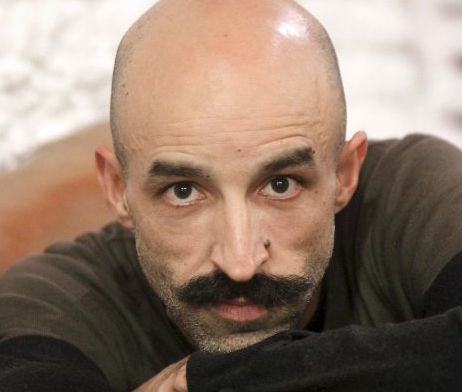
Out in the Open by Jesús Carrasco


Jesus Carrasco pic
Spanish writer Jesús Carrasco

In the European summer of 1984 my partner and I were driving around Europe. One of our stop overs was the very un-tourist-town of Badajoz, on the Spanish Portuguese border. Western Spain is not dissimilar to the Australian interior, brown, dry and dusty. There were hot summer hazes on the bitumen, the look and dry odour of stubble and the sharp acrid smell of eucalyptus trees; but my childhood memories of the dry mid-north of South Australia in summer were debunked by the odd donkey cart, a stork perching on a power line, and olive groves. We stayed in Badajoz over night and saw our first bullfight in a red-brick Plaza de Toros, with an atmosphere not unlike an Aussie country footy match. There were food stalls, ice cream sellers, souvenir hawkers, and kids running around under the stands. One of those kids could’ve been 12-year-old Jesús Carrasco, born in Badajoz in 1972. Since school he has worked as a grape-picker, a washer-up, a music manager, an exhibition fitter, a graphic designer and an advertising copywriter, and somewhere during that time he achieved a Batchelor’s Degree in Physical Education. He began writing when he moved to Madrid in 1992 and now lives in Seville. Out in the Open (Intemperie in Spain) is his first novel and was a best seller in Spain and then the Netherlands in 2014.  It won the European Union Prize for Literature and also the English PEN Award and has been translated into 14 languages; this English translation for Vintage, UK is by Margaret Jull Costa.

It’s been called a ‘road’ story and a ‘dystopian’ tale, about a frightened boy who takes refuge in a hole in the ground and then escapes into a vast apocalyptic-like desert which has engulfed the land, his world. He is pursued by men of the village for an unknown reason, but the boy is obviously terrified and can do nothing but flee. He meets a lone goat-herd, an old man who lives on goat’s milk, dried meat, rancid almonds and mouldy cheese. A boy beginning his life and a man close to his end. They flee from the pack of men, and then a persistent bailiff and his deputy, and form a strange almost messiah-disciple-like alliance despite their mistrust of spoken words and their respective body odours : there’s not enough water to drink let alone to wash: anyway urine is better for wounds from fists, boots, backs of hands, and whips. Their only bond seems to be their shared branding as the ‘other’. No character has a name.

It’s written in a straight, past tense, third person narrative of plain language;

They crossed the stony ground at such a slow pace that they didn’t even kick up any dust. The landscape they passed through, full of abandoned arable fields and threshing floors, spoke to them of desolation. As did the flattened furrows covered in a crust of baked earth so hard that it only gave beneath the hooves of the heavily laden donkey.

Apart from the vivid writing the thing that urges you on is to find out why is the boy afraid, what terrible thing did he do? You are hungry for clues, your attention is sharpened. They are few but therefore precious. You hang on to them and you must resist letting your mind wonder around superfluous possibilities. The threat of violence is ever present, and when it comes, it is alarmingly real. Don’t be squeamish!

Place and time are unimportant, it is as if the land is devoid of people, hopes, ambitions and work. There is just ruins, rocks, bones, and dust. The boy and man protect each other, the boy certainly not really understanding why. There is a mule, a dog and a few goats: a small band of survivors? Outlaws? Refugees? If only it would rain! It is a story of self-reliance, determination, courage, acceptance, hope, and, and triumph? You will have to read it to find out.

You can purchase the book in various formats here.

Stoner by John Williams

NEWS!

Variety magazine has just announced that Casey Affleck, Best Actor Oscar for Manchester by the Sea will star in a film adaptation of the novel Stoner by John Williams, directed by Joe Wright (Pride and Prejudice, Atonement).

Stoner cover pic

As the sticker on this particular book cover states, yes, this is the greatest novel you’ve ever read. It has a reputation for being loved by all who read it, but unknown by everyone else.

John_Williams_pic
John Edward Williams (1922 – 1994)

John Williams, as his name implies, was an ordinary man, shy; an academic who wrote four very different novels: Stoner is his third.

What you notice when only a few pages in is the plain, unadorned prose that immediately puts you at ease, confirms that you made the right choice to pick up this book, and wraps you in a quilt of confidence that something important will be revealed to you;  and you simply can’t wait to know what it is. Reading Stoner is like watching a movie – the prose is so vivid – which has me excited, and also wary, about the forthcoming movie. But don’t just take my word for it:

The New Yorker from October 2013 wrote this.

Julian Barnes in the Guardian from October 2013 wrote “Stoner the must-read novel of 2013” even though it was published fifty years before.

The New York Times Magazine stated “You Should Seriously Read ‘Stoner’ Right Now” in May 2014.

AND something from Elaine Showalter, a professor emerita of English at Princeton University, who is NOT a Stoner fan. She wrote in the Washington Post in November 2015, “Classic ‘Stoner’? Not so fast“.

And now, as I page through my copy to prepare this post, I can feel the pull of it.

It’s probably going to take a year or more for the movie to be made and released; plenty of time for you to hunt down a copy. Here’s a good place to start.


Suspended Sentences by Patrick Modiano

Patrick Modiano pic
Jean Patrick Modiano, known as Patrick Modiano, is a French novelist.

I had never heard of Patrick Modiano until he was awarded the Nobel Prize for literature in 2014. He is French of Italian descent and not only does he mine his own life for inspiration – usually to do with WWII and the city of Paris, he was born the year the war ended – but his focus is on the reliability, or not, of memory, which is not the same as one’s personal history, or memoir.

Reading Modiano is like walking through a maze: each chapter creates an expectation, but when you turn the corner, it is more of the same, another expectation; and when you get to the end, the centre of the maze, you realise that it’s not the end, just another beginning.

What is this book about? It’s about memory and its fickleness. A writer once said, “Memory is like an oven: you put something in, close the door, wait a while, open the door, and there it is, something else.”

There are three novellas in this short volume, Afterimage, Suspended Sentences, and Flowers of Ruin.

The narrator of the first, Afterimage, almost like the writer, is like someone remembering anecdotes that will eventually lead to a point, but one anecdote only leads to another. The veracity of these episodes is given weight by detail: the colour of a hat, the bullet holes in a wall, a list – Modiano loves lists – a footnote containing a minor thought or an address, the sound of leaves in a breeze. And all to do with the narrator’s memory of Francis Jensen, an enigmatic man who the narrator remembers over a period of 20 years.

The first sentence:

I met Francis Jansen when I was nineteen, in the spring of 1964, and today I want to relate the little I know of him;

which starts comfortably enough, but there is a wobble of uncertainty by the end of it: a book usually tends to contain a lot of information a writer knows about a person, not a ‘little’.

By the end of this short story – only 55 pages – you feel as if the short chapters – some very short – could be in any order. There is no obvious narrative ark. Francis Jansen is ‘revealed’ hazily through what the narrator remembers and the people, friends, lovers, and photographs the narrator discovers and the interplay he remembers having with them, which may have happened, or not. It reads like autobiography, and maybe it is, maybe it is not. This is fiction after all.

Mark Polizzotti, the translator, says “Modiano’s narrators seem fatally drawn to individuals who are uncommonly vague about themselves and their situation” and Modiano himself confirms this, “the more obscure and mysterious things remained, the more interested I became in them. I even looked for mystery where there was none.”

Read his biography in his own words here. In true Modiano-fashion he leaves out a lot of information, creating his own mysteries. He doesn’t say, for example, that the interesting reason that he spent his childhood with his grandparents was that his father was deported during the war and his mother was a touring actor.

The second, and title story, has a narrator of 10 years old: Patoche (a diminutive of Patrick), but here the prose is remembered by the adult Patoche who tries to remember and understand the adult world around the boy, and true to Modiano’s love of mystery there is one here. However, what does a 10-year-old boy know of the world of adults. Why are there policemen scouring his home one day when he gets home from school? And where are all the adults. No spoilers here.

“With each new book, Modiano has refined his memorial mode. He is perhaps the most repetitive novelist in world literature: he uses the novel as a serial form, like a screen print,” wrote Adam Thirlwell in The Guardian.

The third, Flowers of Ruin, is the narrator’s shadowy attempt to solve a double suicide and to uncover the history of an acquaintance: Phillipe de Pacheco, commonly known as simply ‘Pachero’; or his name could’ve been Phillipe de Bellune with a tarnished shadow of nobility.

I sat at a sidewalk table of one of the café’s facing the Charlety stadium. I constructed all the hypotheses concerning Phillippe de Pacheco, whose face I didn’t even know. I took notes. Without fully realising it I began writing my first book. It was neither a vocation nor a particular gift that pushed me to write, but quite simply the enigma posed by the man I had no chance of finding again, and by all those questions that would never have an answer.

Behind me, the jukebox was playing an Italian song. The stench of burned tires filled the air. A girl was walking under the leaves of the trees along Boulevard Jourdan. Her blond bangs, cheekbones, and green dress were the only note of freshness on that early August afternoon. Why bother chasing ghosts and trying to solve insoluble mysteries, when life was there, in all its simplicity, beneath the sun?

This sounds like the ending, doesn’t it? But it isn’t; there’s 33 more pages to go!

Like Virginia Woolf, and other modernists, and post modernists, the pleasure is in the action of reading them, not in following a story or remembering it later. Memory has not been explored like this since that other French writer, Marcel Proust (1871-1922). Modiano’s works are short; read one, and tell me what you think.

You can purchase this book in various formats here.


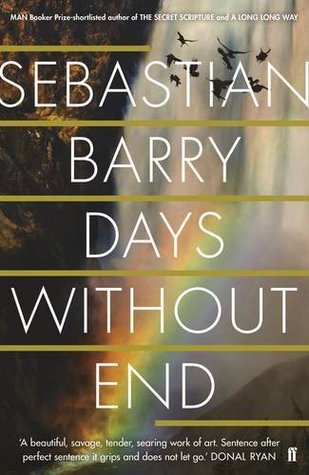
Days Without End by Sebastian Barry

Sebastian Barry pic
Irish writer, Sebastian Barry.

The first thing you know about this work is the person, the narrator. Thomas McNulty is seventeen and has escaped the Irish famine to find himself in the wilds of the American west, not for fame and fortune, just a life. Barry has been mining the lives of the McNulty family for inspiration for many of his works, plays and novels; but what stands out in this book is Barry’s close writing: sometimes more academically called free indirect discourse, the use of language that the character might use when speaking; and he is speaking, speaking directly to the reader in the first person. The words – like ‘knowed’ instead of knew, ‘drear’ instead of dreary, ‘swole’ instead of swollen; the punctuation – nothing fancier than a comma or full stop; and the grammar – double negatives and wrong articles, all help to paint a picture of this boy. Uneducated, naïve, but smart, observant and handsome; no, not handsome, young Thomas is pretty. It is John Cole who is handsome, ‘handsome John Cole’ he is called. They meet in the wilds of Missouri, Thomas seeks shelter from a rain-storm in a hedge and there he is, handsome John Cole.

Their relationship is tender, romantic, sexual, and strong and is at the core of the book. There is hardly any descriptive detail about this partnership, no pink-rosed romance or comfortable sex; it’s just like the scenery, the killing, the survival, it’s just there.

And there is a lot of killing. The two boys get enlisted into the army and take part in the Indian Wars and then the Civil War. There is murder, mayhem, scalpings, scrotums removed to be dried out for bakky pouches, vaginas pinned on hats, children hacked, heads blown off Confederate soldiers not men yet; and all described with the plane observation and simple descriptive language gleaned from Thomas McNulty’s short little life, like he describes the glorious sunsets and the mountains ‘as black as burnt bread’ in the lands that don’t have names yet.

When the boys aren’t killing Indians or gray-boys they are play-acting to earn a dollar. First in a prairie hotel, they don frilly dresses and dance with the miners to offer a bit of pseudo-female company. No hanky-panky mind, just dancin’ and polite conversation including drunken but demure marriage proposals that are gently refused; and later in a grown-up theatre where Thomas sings romantic ballads in makeup and a dress to make grown men cry. Eventually Thomas and John and their adopted ‘daughter’ Winona, an Indian child saved from a bullet by Thomas’s quick thinking, settle down in post-war Tennessee growing tobacco. However, Thomas’s past deeds catch up with him and a happy ending is in doubt. No spoilers here.

But it’s Barry’s writing that is the star. You feel the need to re-read sentences and passages, the joy and innocence of them is captivating. Here is his description of the Major’s new wife:

There’s something sleek about her, like a trout moving through water. Her hair is glossy as pine-needles, pitch black, and she wears a diamond-spangled net over it, like she was ready for business. She carries one of those new Colt guns in her belt. She’s better armed than we are. Guess we think Mrs Neale is top-notch alright. It warms my heart to see how much she is kind to the major. They link arms about the place and she talks like a geyser. Every little thing she says has grammar in it, she sounds like a bishop.

The book is dedicated to his son, Toby:

Years ago, when he was 16 and I was doing the reading for this book, Toby was very unhappy, and when a young man is unhappy we must take note. I was desperately trying to find out what was wrong, but you can’t ask him directly. You have to be a sleuth, a kind of Sherlock Holmes of his unhappiness … Then one morning he came into our bedroom and said, ‘The thing is Dad, I’m gay.’ I can’t describe to you the immense sense of relief and freedom in the very speaking of the words. His unhappiness fell away, my unhappiness fell away, and from that moment on we entered into this extraordinary period where he was instructing me in the magic of gay life … I was very impressed by the subtlety, the delicacy and the intricacy of the love between Toby and his boyfriend. People talk about tolerance, but it’s not really about tolerance. It should also be about emulation and reverence and learning from.”

Barry won the Costa Award, for an unprecedented second time, with Days Without End; it is also long-listed for the current Man-Booker Prize. The winner will be announced in October.

This is an unsentimental work full of violence but anchored by deep love and commitment that is all the more powerful for its simple existence and unwavering certainty.

You can purchase the book in various formats here.

Don’t be Afraid of Virginia Woolf.

Virginia Woolf, 1902

Virginia Woolf, 1902

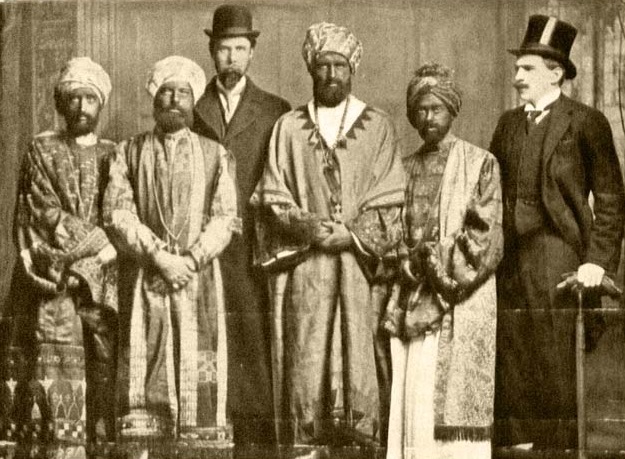
In London on 7 February 1910 a telegram was received from Sir Charles Hardinge, the Permanent Under-Secretary of Foreign Affairs, by the Commander-in-Chief of the Home Fleet and the captain of the H.M.S. Dreadnought, the flagship of the British navy, then lying off Portland, Dorset. It informed him that Prince Makalin of Abyssinia and his party were arriving in the afternoon and were to receive every attention. When they arrived by private train carriage they were received with an honour guard and taken ceremoniously on board. The chatter of the dusky-skinned entourage was completely unintelligible although one of the party, Prince Mandax, wearing a sky-blue silk robe, beard, jewels and a turban, constantly murmured “Bunga Bunga” which their interpreter explained was Abyssinian for “Isn’t it lovely?” They refused all refreshments which the interpreter again explained was due to their religious beliefs as they could not be served food or drink with the naked hand. Gloves were not available.

A few days later the officers and crew of the Dreadnought were amazed and dismayed to learn, via the Daily Mirror, that it was all a monumental practical joke and the Royal navy was pilloried and laughed at for weeks in the national press and at every dinner table in the land. It has become known as the Dreadnought Hoax and was reported all over the world.

One of the hoaxers, Prince “Bunga Bunga” Mandax, was, in reality, a young girl who was quoted as saying “I found I could laugh like a man easily enough but it was difficult to disguise the speaking voice. As a matter of fact the only really trying time I had was when I had to shake hands with my first cousin, who is an officer on the Dreadnought, and who saluted me as I went on deck. I thought I should burst out laughing, but, happily I managed to preserve my Oriental stolidity of countenance.”

This young lady was the 28 year old Miss Adeline Stephen, who two years later married and became Mrs Woolf. We know her better by her middle name, Virginia.

The Dreadnought hoaxers. Virginia Woolf far left. 1910

The Dreadnought hoaxers, 1910. Virginia Woolf, far left.

Apart from being a practical joker, Virginia Woolf was a very beautiful woman. This is certainly not how we think of her today but all the people who wrote about her, and there were many, used adjectives, especially those that knew her well, like, beautiful, mischievous, intelligent, talkative, and inquisitive. She would say things like, “You said you went for a walk, but what made you go for a walk?” When out walking herself with a friend she would see a farmer tossing hay and say, “Look at that farmer pitching hay. What do you think he had for breakfast?” It was this inquisitiveness that made her attend to everything you said to her; and attend with real interest. When you talked to Virginia you always felt that you were intently listened to, and, once literary fame came into the picture, you didn’t even mind that she was mining you for information, words and reasons for human behaviour; in fact, you were flattered that such a famous and beautiful woman was hanging on your every word; gazing into your eyes and eagerly waiting for your next pronouncement. Of course under such scrutiny, if you simply said ‘I don’t know’ you could be sure that she would lose interest immediately and seek someone else’s company. She had a habit of forcing you to search your brain for the right words, because nothing less than the right words were always expected.

She was tall, with a thin face, slender hands and always wore shapeless clothes of indeterminate colours: fashion was of no concern to her.

She was born Adeline Virginia Stephen in 1882 but almost immediately was called Virginia despite the confusion of initials with her elder sister, Vanessa. She came from a good family of landowners and was well but home educated. She was the third child of her father’s second wife and an incident with her half-brother, George Duckworth, was to have a profound effect on her.

“I still shiver with shame,” she wrote many years after the incident, “at the memory of my half brother standing me on a ledge, aged about six or so, exploring my private parts.” Then, many years later, when her father lay dying from cancer three floors below, George would fling himself on her bed, kissing and hugging her, aged in her early 20s, “to console her”, he later said. Quentin Bell, her biographer and nephew, would write, “in sexual matters she was from this time terrified back into a posture of frozen and defensive panic.”  She briefly considered accepting Lytton Strachey’s proposal of marriage knowing that he was homosexual so she thought a simple brother-sister sort of marriage may be preferable to one that included the ‘horror of sex’. She wanted to be married, since being a spinster was considered a failure and finally accepted the proposal of Leonard Woolf and they were married on August 10 1912 after an engagement that, her sister wrote, was “an exhausting and bewildering thing even to the bystanders.” Virginia said to him “I feel no physical attraction to you, … and yet your caring for me as you do almost overwhelms me. It is so real and so strange.” They were planning a honeymoon in Iceland (how metaphoric) but settled for a Mediterranean one instead. Michael Holroyd wrote,

“There seemed some unfathomable inhibition that made male lust, even when compounded with love, if not horrific, quite incomprehensible to her. The physical act of intercourse was not even funny: it was cold. Leonard regretfully accepted the facts and soon brought the word in line with the deed by persuading her that they should not have children. It was a sensible decision for, though she could never contemplate her sister’s fruitfulness without envy, children with their wetness and noise would surely have killed off the novels in her: and it was novel-writing that she cared for most.”
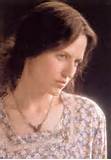
Nicole Kidman as Virginia Woolf, The Hours, 2002

Nicole Kidman as Virginia Woolf in The Hours, 2002.

In 2002 the film The Hours was released with much fanfare and a stellar cast. It was written by David Hare and based on the Michael Cunningham Pulitzer Prize winning book of the same name, which in turn used Woolf’s novel Mrs Dalloway (1925) as the core of the film about, not only Virginia Woolf and the writing of the book, but also its effect on two women: one in the 1950s and one in the 1980s. Readers can find Mrs Dalloway curious, annoying and tedious but when you read you must not let the words wash over you as one lets light from a fire without looking into the flames; into the beauty at its core.

Her novel of 1928, Orlando, is dedicated to Vita Sackville-West, Woolf’s friend, neighbour and sometime lover and tells the story, over a period of 300 years, of the romantic adventures of a man called Orlando, who suddenly, miraculously, half way through the book becomes a woman. This is revealed in the film version, starring Tilda Swinton, as Orlando with his long, straight, reddish blond hair gazes at himself standing naked in front of a full length mirror and seeing the reflection of a long, straight, reddish blond haired naked woman staring back saying, “Same person, different body.”
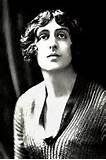
Vita Sackville West

Vita Sackville-West, the inspiration for Orlando (1928).

Virginia confessed her affair with Vita to her sister Vanessa and in a letter to Vita describes the moment.
“I told Nessa the story of our passion in a chemist’s shop the other day. ‘But do you really like going to bed with women’ she said – taking her change. ‘And how’d you do it?’ and so she bought her pills to take abroad, talking as loud as a parrot.”

Uncharacteristically a lot happens in Orlando but it’s not plot that interests Virginia Woolf ( “facts are a very inferior form of fiction”) but the feelings, nuanced emotions that precede the action, or arise because of it; she was more interested in, not the ‘What’, but the ‘Why’, and, more importantly, how one would describe that ‘Why’.
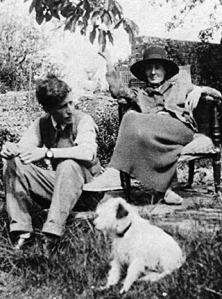
Leonard and Virginnia Woolf photographed by Vita Sackville-West, 1926

Leonard and Virginia Woolf photographed by Vita Sackville-West.

Nowhere is this more evident than in her novel (most call it her masterpiece) To the Lighthouse (1927). The very title is full of expectation and when the possibility is revealed to little six year old James he is transfixed, incapacitated with the joy of it. This is the opening, including the title which is really part of the first sentence.

“To the Lighthouse
“Yes, of course, if it’s fine tomorrow,” said Mrs Ramsay. “But you’ll have to be up with the lark,” she added.
To her son these words conveyed an extraordinary joy, as if it were settled, the expedition were bound to take place, and the wonder to which he had looked forward, for years and years it seemed, was, after a night’s darkness and a day’s sail, within touch. Since he belonged, even at the age of six, to that great clan which cannot keep this feeling separate from that, but must let future prospects, with their joys and sorrows, cloud what is actually at hand, since to such people even in earliest childhood any turn in the wheel of sensation has the power to crystallise and transfix the moment upon which its gloom or radiance rests, James Ramsay, sitting on the floor cutting out pictures from the illustrated catalogue of the Army and Navy stores, endowed the picture of a refrigerator, as his mother spoke, with heavenly bliss. It was fringed with joy.”

And what is illustrative, most of all, of her genius, and her deep and all-consuming curiosity of human intention and behaviour, and her determination to create art, is that by the last page the lighthouse itself disappears into a mist and we, the readers, along with the remaining onlookers in the house, can only assume that they have arrived.

Leonardo de Vinci fought tooth and nail to acquire a particular block of marble, also much coveted by, his rival, Michelangelo because he knew that inside there was a statue of David and all he had to do was chip away the extraneous rock to reveal the body within. If Virginia Woolf were present it would be the act of chipping the marble and the chips of marble lying on the floor that would attract her interest and not the finished, polished figure.

Janet Vaughan (a medical scientist and friend) had this to say about Virginia Woolf and ‘genius’.
“Well, it’s a sixth sense. It’s somebody who jumps a gap which other people would need a very, very solid bridge to walk across. She didn’t do it as a scientist might, she did it by interpreting what she saw and what people might be thinking and how they interacted with one another. But she had this quality of jumping gaps.”

And similarly Vita Sackville-West describes it thus: “I always thought her genius led her by short cuts to some essential point which everybody else had missed. She did not walk there: she sprang.”

But it’s the adjectives ‘mischievous, witty, warm and humorous’ that are most intriguing. She loved to tease and teased most those she was most fond of; and those teased seemed to love it and certainly were not offended by it since the teasing was done with such warmth.

In the early 20s Virginia Woolf used the name of writer Berta Ruck (albeit mis-spelt) on a minor character, and a subsequent tombstone, in her novel Jacob’s Room (1920). Angus Davidson, friend, literary critic, and manager for a time of their publishing house, The Hogarth Press, said this was done unwittingly. This is hard to believe as the name Berta Ruck is quite distinctive and her name and the names of her novels were emblazoned on the tops of London buses. However Ms Ruck was a writer of a very different genre than Virginia’s. She wrote romantic stories and almost seventy novels (Khaki and KissesLove on Second Thoughts, etc) where beautiful young women were treated dismissively by fathers, brothers and men in general but who fell in love with one of them and lived happily ever after. One can imagine Virginia Woolf thinking this scenario extremely unlikely and with a name like Berta Ruck, and the married name of Mrs Onions, perfectly ripe for mischief. Ms Ruck, however, did not see the humour in the incident and with urgings from her indignant husband, wrote to Woolf in sorrow and indignation threatening legal action. Virginia wrote back rather sarcastically, “I am more pleased than I can say that you survived my burial. Never will I attempt such a thing again. To think that you have bought my book.” It took Ms Ruck eight years to discover the slight so Woolf could hardly have taken her seriously. However they ‘made up’ via correspondence and almost a year later Ms Ruck got her own back by becoming the success at a party, attended by Virginia, by singing a very risqué song, “Never Allow a Sailor an Inch Above Your Knee.” Virginia was reported as being “filled with amazement and delight.” All animosity was forgiven.

Unfortunately, the memory of her is clouded by her diaries which record her mental suffering and her depression even though her husband, and editor, went to great pains to explain; “…diaries give a distorted and one-sided view of the writer, because, as Virginia Woolf herself remarks, one gets into the habit of recording one particular kind of mood – irritation or misery say – and of not writing one’s diary when one is feeling the opposite. The portrait in therefore from the start unbalanced.”

Her bouts of illness sprung from the effort of writing, and in particular the exhaustion from finishing a particular work. Her headaches would begin and if left unchecked, she would lose coherence of speech, and her brain would race with images and noises (birds crying out in Greek) and delusions (King Edward VII, among the azaleas, swearing in the most foulest language). Complete rest and quiet would eventually restore her normal life but her recovery would be ridden with doubt and worry about the worth of her just-completed work. Praise and encouragement were oxygen to her.  So eventually with Leonard’s care and concern, her own courage, immense courage, she would roll up her sleeves and begin to write again, knowing that creation was hard, completion fearful, and a bout of madness inevitable.

Portrait of Virginia Woolf, 1939 by Gisele Freund.

Portrait of Virginia Woolf, 1939, by Gisele Freund, two years before her death.

And then this: her final piece of writing; a short letter to her husband, written on the day she died.

Dearest, I feel certain that I am going mad again. I feel we can’t go through another of those terrible times. And I shan’t recover this time. I begin to hear voices, and I can’t concentrate. So I am doing what seems the best thing to do. You have given me the greatest possible happiness. You have been in every way all that anyone could be. I don’t think two people could have been happier ’til this terrible disease came. I can’t fight any longer. I know that I am spoiling your life, that without me you could work. And you will I know. You see I can’t even write this properly. I can’t read. What I want to say is I owe all the happiness of my life to you. You have been entirely patient with me and incredibly good. I want to say that — everybody knows it. If anybody could have saved me it would have been you. Everything has gone from me but the certainty of your goodness. I can’t go on spoiling your life any longer. I don’t think two people could have been happier than we have been. V.

She then put on a hat, a coat, grabbed a walking stick and headed to the river. There she put down her stick, took off her hat, put rocks in her pockets and disappeared into the water. When Leonard found the letter, he, along with the house keeper, Mrs Meyer, searched the house, the grounds, and the surrounding countryside and when they found her stick and hat assumed the worst. Three weeks later her gruesome body was found by children as it bumped against the bank of the river many miles downstream. She was 59.

Remember Virginia Woolf as a beautiful and intelligent woman, a prankster, a great and innovative writer, the creator of the outrageous Orlando, and the cheeky biographer of Flush, Elizabeth Barrett Browning’s little cocker spaniel; she was a curious and inquisitive human being, a tease, a lover, and a writer who launched modernism on the literary world. And remember that when her little nephews, nieces, and their friends were preparing for a party who was number one on their invitation list?

“V-i-r-g-i-n-i-a!” they would shriek with delight, because Aunt Virginia always made them laugh. Virginia Woolf, 1927
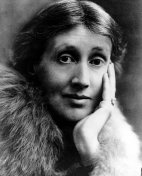
Virginia Woolf, 1927, aged 45, the year To the Lighthouse was published.