The Moons of Jupiter by Alice Munro

Canadian writer, Alice Munro, Nobel Laureate for Literature, 2013.

How’s this for a scenario; an artistic projectory: shy student marries as soon as she graduates, scared that she is old-maid material; wants to write novels but has children instead; still wants to write novels but time is limited so writes short stories while the babies are napping; when they reach school age has more time to write but has to stop writing mid-afternoon to do housewife and mother duties before family gets home; keeps writing short stories until she’s 82; wins Nobel Prize for Literature.

When told of her win, “It just seems impossible,” she said.

She is the 13th woman to win the Literature Prize and the second Canadian (after Saul Bellow), and therefore the first Canadian woman.

She writes about the internal drama of relationships usually from the female point of view; about simple country people, but also academics. She is often called ‘the modern Chekhov’ which is not entirely true: Chekhov is more interested in behaviour, Munro in the thoughts behind behaviour.

This collection, The Moons of Jupiter, came out in 1982. It contains eleven stories. One of them, Barton Bus, written in the first person describes a brief love affair in Australia but all the other scenes, like scenes from a bus window that pass you by, describe what it might be like if she, the narrator, bumps into the once brief lover. What will she say? What will she do? She doesn’t use his name only a letter;

“I call him X, as if he were a character in an old fashioned novel, that pretends to be true. X is a letter in his name, but I chose it also because it seems to suit him. The letter X seems to me expansive and secretive.”

In the brief final scene a female friend, Kay, describes to the narrator a man who is a friend of her husband’s and after dinner he sighed and laid his head in Kay’s lap. She thought it was a ‘nice simple’ thing to do. She mentions his name. I gasped! It was him! and the narrator does not say a word.

I’ve probably spoiled this story for you but when you read it, it will undoubtedly mean something different to you as meaning is always in the mind of the reader.

In Visitors a couple welcome the husband’s brother, his wife, and her sister to stay in their house which is so small that no room can accommodate them all at once. If the fifth person enters someone has to stand in the doorway. Sleeping arrangements are a bit like camping. They go for a drive – they can all fit in the car … just. They talk, they drive, they look for the site of the birth-house of one of them. It’s no longer there, but they imagine it. The talk is simple, personal, clichéd like small-talk. The three visitors finally go back home, a very long way away. The couple are back in their own small bed and Mildred realises Wilfred is crying: he will never see his brother again. They could visit. Will they? Probably not but she says ‘maybe’ and he says ‘not next week’.

I was left with a feeling of regret, mixed with helplessness wound around with sorrow leaving these two people in their cramped space forced to cling to each other as some sort of protection from the miseries of the world.

“When I write about something happening in this setting, I don’t think that I’m choosing to be confined. Quite the opposite. I don’t think I’m writing just about this life. I hope to be writing about and through it.”

All her stories are set in the country to the east of Lake Huron, Canada because she loves it; she understands the people, she likes its climate, its falling down barns, its “occasional farms that have swimming pools and airplanes.” She speaks the language.

Alice Munro, who doesn’t write any more (there are many published collections), reads and sometimes she doesn’t start to read a story from the beginning. She starts anywhere and reads forward a bit and sometimes goes back a bit. To her a story

“is not like a road to follow, it’s more like a house. You go inside and stay there for a while, wandering back and forth and settling where you like and discovering how the rooms and corridors relate to each other, how the world outside is altered by being viewed from these windows … and you can go back again and again, and the house, the story, always contains more than you saw last time.”

Having a volume of Alice Munro short stories by your bed is comforting as well as enlightening and entertaining no matter how many times you read one.
Fun with Paul & Jane: The Sheltering Sky by Paul Bowles

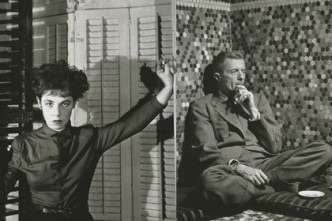
Paul (born 1910) and Jane (born 1917) Bowles led an eventful life including creativity in music and writing, the theatre (he as a composer, she as a playwright) literary frustration, depression, same-sex affairs, travel – Europe, Ceylon, and North Africa, drugs, and famous friends which included Jean Cocteau, Ezra Pound, Gertrude Stein & Alice B. Toklas, Jean Rhys, Stephen Spender, Christopher Isherwood – who would give Paul’s surname to his famous character, Sally, in Goodbye to Berlin, Aaron Copland – who gave Paul music composition lessons, Max Ernst, Tennessee Williams, Truman Capote, Gore Vidal, Alan Ginsberg, and Peggy Guggenheim and they shared a house for a time in Brooklyn with W. H. Auden, Benjamin Britten, Virgil Thomson, and Gypsy Rose Lee. I would’ve loved to be at that breakfast table!

image
Although Paul wrote crime stories and painted in his youth he received his initial fame as a Broadway composer for, mainly, the works of Tennessee Williams: The Glass Menagerie, Sweet Bird of Youth, The Milk Train Doesn’t Stop Here Anymore, and Summer and Smoke. He also wrote incidental music for his wife’s play In the Summer House for its Washington season before a short stint on Broadway in 1954.

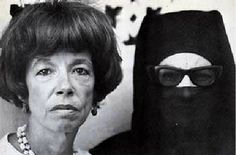
Jane with her Morrocan partner, Cherifa
Jane with her Moroccan partner, Cherifa

Jane’s only novel Two Serious Ladies was published in 1943 to mediocre reviews although Tennessee Williams loved it and called Jane “the most important writer of prose fiction in modern American letters.” When I read that line in his memoir I was shocked that I had never heard of her. I soon remedied that and have been collecting her work ever since; that isn’t difficult, her output is small.

Two Serious Ladies began as Three Serious Ladies, she dropped one of them but from her early drafts featuring the third lady Paul edited various short pieces and submitted them whenever an editor or publisher wanted something from Jane.  She was completely indifferent to it all: she considered herself a failure as a writer.

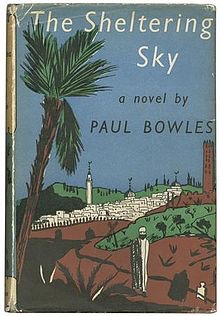
Paul turned to serious writing and his first, and most famous novel, The Sheltering Sky came out in 1948 and by 1950 was in the New York Times best-seller list. There is a taste here of a potential Joe Orton/Kenneth Halliwell literary rivalry but there were no murderous consequences. Jane was more interested in her female lovers and pre-occupied with her declining health. The Bowles’ latter years were spent in North Africa.

Jane died, after several strokes and breakdowns in 1973; Paul died from a heart attack in 1999.

The Sheltering Sky.

image

Port and Kit are a married American couple, financially independent, and crave to visit the centre of the Sahara Desert. What they really mean is to go as far as they can as long as the degree of ‘desert-ness’ increases. The moment the desert-ness begins to weaken they turn back. They want to be lost. They encouraged another American, Tunner, to be their traveling companion, although by the opening of the story they want to be rid of him; and finally succeed. They also meet the mother and son team Mrs Lyle and her lay-about off-spring, Eric. The mother has got to be one of the more odious characters in 20th century literature and together with Eric, and Tunner, who has his heart set on seducing Kit, form a trio embodying everything the couple hate in the civilized world; giving them the reason they need for running away.

Getting lost in the desert is akin to going to bed, and waiting in an airport for a flight to begin: they abrogate life’s responsibilities especially if you believe those responsibilities are crushing you or causing you grief. At an airport life stops until you get where you’re supposed to be; going to bed forces everything to leave you alone so you can sleep; and getting lost in a desert leaves your life on hold while you find your way back to it.

Kit Moresby is obviously modeled on Jane. “Ambivalence was her natural element: a decision filled her with anguish. The possibilities for an ‘about face’ had to be kept open” writes Paul Bowles in a biographical piece for the collection of Jane’s work, Everything is Nice published by Sort Of Books in 2012. Kit’s psychological problem relates to her obsession with omens and the ever-possibility of doom: all decisions about unfolding days depend on events that may or may not happen. For Kit

“… the feel of doom was so strong that it became a hostile consciousness just behind or beside her, foreseeing her attempts to avoid flying in the face of the evil omens, and thus all too able to set traps her her.”

Doom does catch up with her and when it does Kit is almost relieved that she was right and takes to her appalling circumstances with an energy and satisfaction at not having to be Kit Moresby any more. The more abhorrent her circumstances the more she gives in to them. Her plight includes, thirst, near starvation, kidnapping, daily rape, imprisonment dressed as a boy, and a beating by three angry wives; but what terrifies her more is what she will have to do and say when she is rescued by the civilisation she is running away from.

Being born out of the mid 20th century’s romance with expressionism it’s not surprising that there are adsurdist and Kafkaeque elements in the writing. The pleasure is not just the exotic locations but also the waiting for what torment will fall on her next but Kit’s acceptence of all that keeps you applauding her resilience while at the same time wondering where will it all end. It is Bowles’ plotting skills, only seemingly haphazard, that keep the revelation of the point of it all to the very last paragraph.

Bernardo Bertolucci filmed it in 1990 with John Malkovitch, Debra Winger, and Campbell Scott. That I’ve got to see. The excellent short stories of both Paul and Jane are readily available. Give them a go first.

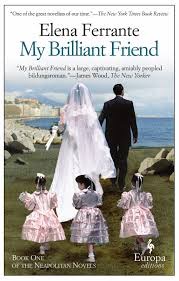
My Brilliant Friend by Elena Ferrante

image

My Brilliant Friend by Elena Ferrante
When we watch a film we have to assume that everything we see is what the film-maker wants us to see: that dreadful yellow coat the woman on the left is wearing in the airport scene is delibate; the bad hair on the star in the night-club scene is also deliberate. This book reminded me that the same assumption applies to books.

My Brilliant Friend begins with a series of events, reminisesces by the narrator, Elena, about her friend, Lila, the ‘brilliant friend’ of the title. They are scenes like, ‘I remember one day when she …’ and ‘and then one evening when we were six she ….’ Ferrante is colouring a picture which isn’t going anywhere. There is no clear narrative, no feeling of time passing. I was getting impatient and a little frustrated; and then the teacher in me was getting annoyed at the sloppy grammar, the confusing pronouns, and the profuse scattering of seemingly random commas, as if from a sloppy pen: comma splices proliferate like ants.

And then on page 74 I came across this line …

“Trained by our school books to speak with great skill about what we had never seen, we were excited by the invisable.”

I found this line profound. I read it again. Thought about it and read it again. That’s when I was reminded about the veracity of the above assumption. I was forced to find a reason for the grammatical sloppiness and such a reason wasn’t hard to find. The voice is extremely informal, like a mate sitting with you over a coffee latte telling you a story. It’s very conversational and, I eventually conceeded, intentionally so. In fact about half way through the book Elena eventually receives a longed for letter from Lila and describes it thus,

“The voice set in the writing overwhelmed me, enthralled me even more than when we talked face to face; it was completely cleansed of the dross of speech, of the confusion of the oral; it had the vivid orderliness that I imagined would belong to conversation if one were so fortunate to be born with the head of Zeus.”

This description of Lila’s writing as ‘vivid orderliness’ as if from the gods put Ferrante’s writing into focus as ‘the dross of speech’ and ‘the confusion of the oral’ and I understood that the sloppy grammar and punctuation had a purpose; it was a writerly technique designed to create the conversational tone and the confusion of the oral just as Lila’s letter wasn’t.

My Brilliant Friend is about self awareness and female friendship told by an elderly Elena Greco looking back at her lifelong friend, Lila Cerullo, from 3 years old to 16 years old, childhood and adolescence. Elena is the third-person narrator but very much part of the action; it feels like an autobiography.

Lilia’s family, like all the families in this book, is scarred with fillial violence. “What do you mean by love?” Lilia murmured to her brother, “what does love mean for our family?” Love seems to be at the heart of everything but it’s rarely visable. The Neapolitan characters, especially the men, wear their arrogance and ego so confidently and so visably but when it is challenged even ever so slightly they react as if such confidence and ego were tissue-thin: a side-ways glance is responded to as if a stab in the back; a smirk, a snide remark, as if a throat is cut, a eye gouged out and revenge is metered out ruthlessly.

This threat of violence is ever present, and terrifying since when it erupts it is life-threatening; not just between husband and wife but between father a daughter, brother and sister and usually over the purpetrator being made to feel foolish by circumstances that no-one has control over. It is the women who suffer the most. The blame, when its origins are unclear or undefinable, is always planted on a woman: a truely mysoginistic culture. Ferrante describes it as common-place, like doing the washing up and putting out the garbage. It is part of the fabric of their lives.

Despite what I said at the opening of this review the seemingly anacdotal descriptions give way to a narrative and a time-line slowly evolves and towards the end of this book, the first of a trilogy, tension and narrative builds slowly but firmly to Lila’s wedding day, at the age of sixteen, as a final act threatens to explode everyone’s lives. You don’t get the explosion, just the gasp, as someone who shouldn’t be there walks into the room, sits, crosses his legs, shows off his gleaming new shoes; the explosion, we assume, must open book two in the series. What a cliff-hanger!

We know that Elena Ferrante was born in Naples, and that’s about it. If you google images of her you get several pictures of Italian looking women which, if you pursue them, lead nowhere or to women who have written about Ferrante. However on ‘her’ website I found this …
” … guesswork around Ferrante’s identity proliferated, with reviewers speculating that “she” might be a mother, a man, or a sentient cabal of fire-ants,” says a reviewer Katy Waldman in her article for Slate (an online journal) heralding the Paris Review’s coup at gettng the first in-person interview with Elena Ferrante; in their Spring 2015 issue. So, soon, we may find out more about this intriguing writer that no-one has up until now seen and no-one up until The Paris Review has seemingly spoken to.

My Dream of You by Nuala O’Faolain (noola o fway lorn)

Nuala O'Faolain
Nuala O’Faolain

I loved this book!

After the international success of O’Faolain’s memoir Are You Somebody? this novel, her first, was published in 2001 and in a brief Afterward she acknowledges “splendid energetic advice” from fellow Irish writer Colm Toibin who recently opined that

“… in autobiographical writing your [the writer’s] job is to create illusion, to work with rhythm and image and detail to make the reader feel that whatever is on the page matters and must have happened.”

I would venture to say that this also applies to writing in the first person, memoir or fiction, since the first person point of view is meant to make the reader believe the protagonist is also the writer. I recently complained that in The Cast Iron Shore, Linda Grant’s debut novel, that I reviewed on this blog recently (posted January 27), Grant failed her first person POV responsibilities by inadvertantly creating a disconnect between the protagonist and the writer: they seemed like two different people.

O’Faolain does not make the same mistake. Although a novel (fiction), My Dream of You reads like a memoir, feels like a memoir; so skilfully does O’Faolain make you believe, using “rhythm and image and detail” that her story actually happened to her. Having read her first memoir there is a lot of O’Faolain’s past in Kathleen’s but autobiography and fiction are interwoven seemlessly. How do I know this? I cared about her.

Kathleen de Burca is an Irish travel writer fast approaching fifty, and with a waist to match, who travels the world, usually with her best friend, an gay American man called Jimmy, writing travel copy for her boss, and also close friend, Alex. These two men, and staff in the office in London, serve as her family, since she has all but abandoned hers, and her country, many years before. Then there is her boyfriend, Hugo, a law student, who interests her in a divorce case from the annals of Irish history: the young wife of an English aristocrat, on a forlorn Irish estate in the middle of nowhere, is accused of infidelity with her husband’s Irish groom, a very common man. In those days, the 1850’s, a divorce needed an act of parliament so the event is well documented although from a very English point of view. The wife is chastised, forsaken, deprived of her young daughter, and locked up in an asylum where she inevitably goes mad.

Kathleen is intrigued and fascinated by this tragedy and when Jimmy, her moral compass, suddenly dies she takes leave of her job (Hugo, the boyfriend, she betrayed and lost) and travels to Ireland to, maybe, write a book about this young wife and her passion for a comman man.

The book has three narrative arcs: Kathleen’s journey to Ireland, her adventures, and the brief reunion with her siblings and their families; her memories of her arrogant, distant, and emotionally violent father, her deeply unhappy and useless mother, and her friends and lovers; and the story from the 1850s of Marianne and her affair with the lowly William Mullen. Yes, there is a book within the book.

She thinks she is going to Ireland to research a story about someone else’s passion but what she actually does is confront passion in her own life and what she discovers is not what she expected.

The writing of the Marianne’s story (in the third person) begins confidently and the affair with Mullen is handled expertly: O’Faolain makes the reader understand how intense physical attraction can operate outside the realms of reason; but Kathleen discovers another document that proports to prove that … well, I don’t want to spoil it for you. There is here the flavour of a mystery to be solved.

O’Faolain’s literary skills are put to good use as she weaves the first and third narratives into a shared ending which also ends the book itself. Very satisfying.

My Dream of You is about love, sex, family, and aging, and it contains one of the best descriptions I have ever read of female friendship – how it works – and how emotional love with a woman can be far more rewarding and long-lasting than sexual love with a man. Mind you, Kathleen has a lot of experience with sexual love with men and she understands, and shows, that passion is far more complex and evolutionary than romantic books make out; and she comes to realize that her relationship with her body is also a part of the ‘passion’ equation and far from what she would like it to be, or thought it was. She is, or was, a beautiful woman and there are magic passages where a beautiful woman talks about being beautiful, without pride or sentiment, and when she believed it and when she didn’t. This is unusual stuff.

Nuala O’Faolain was engaged once but never married, had a fifteen year relationship with the Irish journalist, Nell McCarthy, but spent her latter years with a New York lawyer, John Low-Beer. She was diagnosed with metastatic cancer in 2008. Hugo Hamilton, whose memoir The Speckled People I recently reviewed on this blog (posted February 10), was a friend of O’Faolain’s and his 2014 novel Every Single Minute is a fictionalised retelling of a trip he took with the very ill O’Faolain to Berlin just before she died (May 9 2008).

She wrote two volumes of memoir Are You Somebody: The Accidental Memoir of a Dublin Woman (1996), and Almost There: The Onward Journey of a Dublin Woman (2003); another novel published posthumously in 2009 Best Love, Rosie; and a ‘history with commentary’ The Story of Chicago May (2005). Chicago May was the nickname of Mary Ann Duignan, an Irish criminal, who became famous in America, France and Britain in the beginning of the twentieth century.

Impression vs Experience

On April 25 1884 Walter Besant, English novelist and historian, gave a lecture at the Royal Institution, the London organisation devoted to scientific research founded in 1799. It was called Fiction as One of the Fine Arts. Besant’s novel All Sorts and Conditions of Men was published two years earlier and sold over 250,000 copies. It anticipated the rise of the slum novel and with the publication of The Revolt of Man (1882), The Inner House (1888) and The Children of Gibeon (1896), he consolidated his fame as a master of dystopian fiction.

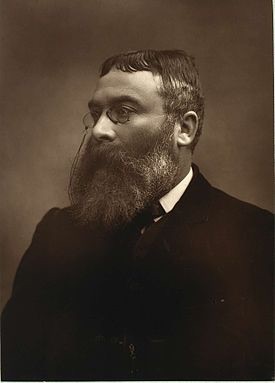
British novelist, historian and humanitarian, Walter Besant (1836 - 1901)
British novelist, historian and humanitarian, Walter Besant (1836 – 1901)

However he is best known today for the little pamphlet of his speech given at the Royal Institution that April day, which was published as The Art of Fiction. Most importantly it surprised everyone that people seemed to be interested in such a subject.

Besant’s little speech started an excited debate on the purpose of literary fiction and since that time many writers have weighed in to the argument with their own thoughts, beliefs, and theories on the subject.

Besant believed that writing fiction should be considered as a ‘fine art’ and like other fine arts – painting, sculpture, music and poetry – it “is governed and directed by general laws; and that these laws may be laid down and taught with as much precision and exactness as the laws of harmony, perspective, and proportion.” But fiction, like the other fine arts, is “so far removed from the mere mechanical arts that no laws or rules whatever can teach it to those who have not already been endowed with the natural and necessary gifts.”

Prior to this time “the general – The Philistine – view of the Profession is, first of all, that it is not one which a scholar and a man of serious views should take up: the telling of stories is inconsistent with a well-balanced mind.”

Everyone, it seems, agreed with what Mr Besant had to say, especially the belief that Fiction is an Art; but what started the debate was his assertion that “a young lady brought up in a quiet country village should avoid descriptions of garrison life; a writer whose friends and personal experiences belong to what we call the lower middle class should carefully avoid introducing his characters into Society … never go beyond your own experience.”

As an exponent of the ‘slum’ novel Mr Besant seems to be saying that when writing fiction one can write ‘down’ from your own experience but not ‘up’.

You can find most of Walter Besant’s work, fiction and non-fiction, including his essay, The Art of Fiction, at http://ebooks.adelaide.edu.au where you can download them for free.

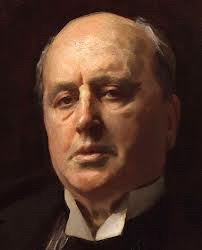
Henry James: The Art of Fiction.

James’s famous ‘reply’ using the same title as Basent’s pamphlet has become the cornerstone of fiction writing as an art, far outshining Besant’s in the fame stakes. His rebuttal is extremely polite to Besant and he certainly agrees with his elder that fiction writing is an art. However James took a more light-hearted tone and what the general pubic at the time thought of the novel, James famously wrote, “there was a comfortable, good humoured feeling abroad that a novel is a novel, as a pudding is a pudding and that our only business with it could be to swallow it.” This attitude, in some quarters, persists today.

James explains his ideas thus …

Experience “is the very atmosphere of the mind; and when the mind is imaginative … it takes to itself the faintest hints of life, it converts the very pulses of the air into revelations… I remember an English novelist, a woman of genius, telling me that she was much commended for the impression she had managed to give in one of her tales of the nature and way of life of the French Protestant youth. She had been asked where she learned so much about this recondite being, she had been congratulated on her peculiar opportunities. These opportunities consisted in her having once, in Paris, as she ascended a staircase, passed an open door where, in the household of a pasteur, some of the young Protestants were seated at table round a finished meal. The glimpse made a picture; it lasted only a moment, but that moment was experience. She had got her impression, and she evolved her type. She knew what youth was, and what Protestantism; she also had the advantage of having seen what it was to be French; so that she converted these ideas into a concrete image and produced a reality.”

James sums up his advice to novice novelists as,

“Above all, however, [the novelist must be] blessed with the faculty which when you give it an inch takes an ell, and which for the artist is a much greater source of strength than any accident of residence or of place in the social scale. The power to guess the unseen from the seen, to trace the implication of things, to judge the whole piece by the pattern, the condition of feeling life, in general, so completely that you are well on your way to knowing any particular corner of it.”

In other words, impressions are experience; and the novelist’s task is to convert those impressions into reality: “the power to guess the unseen from the seen…”

You can read James’s The Art of Fiction at
http://public.wsu.edu/~campbelld/amlit/artfiction.html

Other writers who have written on this subject.

Robert Louis Stevenson (1885): Essays in the Art of Writing
Free ebook at http://ebooks.adelaide.edu.au

Arthur Schopenhauer (1891): the Art of Literature
Free ebook at http://ebooks.adelaide.edu.au

Anonymous (1901): How to Write a Novel
Free ebook at http://manybooks.net

Clayton Hamilton (1918): A Manual of the Art of Fiction
Free ebook at http://manybooks.net

E. M. Forster (1927): Aspects of the Novel
Available through Amazon.com, BukuKita.com and Gramedia

John Gardner (1983): The Art of Fiction
Available on Kindle (ebook) through Amazom.com

Ray Bradbury (1990): Zen in the Art of Writing
New and used editions available on Amazon.com

David Lodge (1992): The Art of Fiction
Available through Amazon.com, BukuKita.com and Gramedia

Ayn Rand (2000): The Art of Fiction
Available through Amazon.com, BukuKita.com and Gramedia

Stephen King (2000): On Writing
Available through Amazon.com, BukuKita.com and Gramedia

John Mullen (2006): How Novels Work
Available through Amazon.com, BukuKita.com and Gramedia

James Wood (2009): How Fiction Works
Available on Kindle (ebook) through Amazom.com

Colm Toibin (2010): All a Novelist Needs: Colm Toibin on Henry James
Available from Amazon.com

The Paris Review: The Art of Fiction Interviews
(from 1953 to 2015 and continuing)

http://theparisreview.org/interviews