The Swerve by Stephen Greenblatt

Stephen Greenblatt, Professor of Humanities, Harvard University

It has been suggested, more than once, that the greatest thought that mankind has ever made is that matter is neither created nor destroyed, it is just rearranged … endlessly. In other words, there is a finite number of atoms but an infinite number of their combinations. One of those combinations is you. This is one of the ideas of the Greek philosopher, Epicurus (341 – 270 BCE) and he got the idea from someone a little bit older, his teacher, Democritus (c. 460 – c. 370 BCE). It’s been around a very long time.

I’m a fiction nerd, but every now and again a non-fiction work, catches my eye. The Swerve: How the Renaissance Began (2012) is the story of Poggio Bracciolini (POH joh BRA cho LEE nee), a papal secretary, scribe and book-hunter, who in 1417 discovered a manuscript called De Rerum Natura (Of the Nature of Things) written by Lucretius around 55 BCE. It had been lost for over 1500 years. It was, is, an elegant and beautifully written poem describing the natural world in strong Epicurean ideas.

  • The Universe has no creator or designer; everything comes into being as a result of a swerve, which is also the source of our free will
  • Nature ceaselessly experiments ( this is the idea at the heart of Darwin’s theory of Natural Selection)
  • Humans are not unique
  • The soul dies and there is no afterlife; death is the cessation of all feelings, including fear
  • All organised religions are superstitious delusions, which are invariably cruel
  • The highest goal of human life is the enhancement of pleasure and the reduction of pain and the greatest obstacle to pleasure is delusion
  • Everything is made of minute, invisible and eternal particles, atoms, floating in a void (scientifically proved by Jean Perrin, via John Dalton, Robert Brown and Albert Einstein, in 1909)

Like any passionate book-hunter, Poggio was ecstatic. He had it copied – he is also credited with designing the font we know now as Roman – and circulated. Of course, only to people who could read sophisticated Latin and that meant highly educated people who invariably were clergymen. In a world where all aspects of life: commerce, travel, governance, art, architecture, music and science were dominated by the Catholic Church, the discovery of this poem was like a bomb going off … slowly.

It influenced writers and thinkers for centuries: Leonardo di Vinci, Thomas More, Shakespeare, Milton, Spencer, Montaigne, Voltaire, Isaac Newton, Ben Johnson, Copernicus, Galileo, Thomas Jefferson, (he owned 5 Latin editions of the poem) to name a few. But the incredible impact of Lucretius’s poem is not only measured by the influence it had on writers and thinkers but, more importantly, by the multiple efforts the Catholic Church created to oppose it.

Greenblatt has used novelistic techniques to tell the story not only of Poggio and his discovery but also of the characters he interacted with and the times in which he lived and worked. This is not a dry academic tome. It is a lively account of how one lived and worked in the early years of the Renaissance. For example the Council of Constance was arranged to end the Western Schism (1378 – 1417): three men had claimed simultaneously to be Pope. It is estimated that over 100,000 people descended on the small German town, Dukes, royalty, administrators, ambassadors, cardinals, archbishops each with his own retinue of servants, cooks, maids, scribes as well as opportunists, singers, actors, barbers, acrobats and over 700 whores. It is an engaging and wondrous read.
Lucretius wrote that atoms did not move in a straight line but they randomly changed course. He called it a swerve. According to Greenblatt that is exactly what Lucretius’s text did: its trajectory was a straight line to oblivion, but it swerved and was found. Thousands of fragments and editions exist today all over the world.


Wifedom by Anna Funda

Australian writer, Anna Funda.

Yes, Wifedom (2023) is about George Orwell’s largely forgotten wife, Eileen O’Shaughnessy, and the important, yet unacknowledged role, she played in his life and work, but it is more than that. It is an excoriating assessment of the general neglect of women who are gathered by artistic men for their own personal and artistic betterment.

A high-wire act is not awe-inspiring if you can see the wires. Invisible and unacknowledged, a wife is the practical and often intellectual wiring that allows the act to soar; and for it to be truly astonishing, the wires, and the wife need to be erased both at the time, and then over time.


Her portrayal of George Orwell – real name, Eric Blair – reveals him to have been cantankerous, needy, useless at any manual work, generally ill and egocentric without anything, except his writing, to be egocentric about. A sexual predator and a misogynist: he treated women as mere service providers. Also, Funda doesn’t hide her mild contempt for Orwell’s many biographers, all men, for erasing Eileen O’Shaughnessy from their books just as Orwell did from his work, like some male club of matedom keeping it all in house, slaps on the back and “Well done old chap!” But remember, in the mid twentieth century, patriarchy was still the dominate force.

Funda has come under some criticism for ‘trashing’ a famous writer’s reputation, but as she explains in the text, a ‘good’ book can be written by a ‘bad’ man. Understanding more about him, his wife and marriage doesn’t lessen her admiration for Orwell’s work – she may not now love the man but she still loves his writing.

I read Funda’s first book, Stasiland (2002) and loved it for telling compelling untold stories of life behind the Berlin Wall. I read All That I Am (2011), her first novel, and remember nothing about it. Here, Funda, has audaciously combined biography, memoir, polemic, social commentary and imagined conversations: fiction – it’s a heady mix and a great one – to create a truely memorable world of a forgotten woman who contributed much to the artistic output and fame of her husband. Her life with Orwell was one of poverty, struggle, sacrifice and determination but with an unwavering belief in his art and the ultimate success of it.

She followed him to Spain where he wanted to fight against Franco. He didn’t do much; she did a lot; she worked for the political organisation he was fighting for. After Franco’s victory she, her colleagues, and Orwell were in danger. She narrowly escaped imprisonment – when some of her colleagues did not – and, along with her own, saved his life. In his Homage to Catalonia (1938), his account of his experiences in the Spanish civil war, which she edited and typed, she is never mentioned.

He needed her but she didn’t deserve him.

So women are said to have the same human rights as men, but our lesser amounts of time and money and status and safety tell us we do not.

Animal Farm (1945) and 1984 (1949) are now classics, his most famous works, and rightly so, but both had great input from the writer’s wife, not only as editor, typist, and researcher, but also as a contributor and sounding board, sometimes in bed, for his ideas, slip-ups, and decisions.

Funda reprints Eileen’s letters to friends where you can hear her whimsical tone, sense of humour and self-deprecation which are characteristics of the ensemble of characters in Animal Farm. You can ‘hear’ Eileen’s influence.

The golden age of feminist literature may be over but here’s one that should, and probably will, be added to that lexicon. It’s a great and uplifting read. Highly recommended.

Here is a fascinating interview with Funda by Sarah Ferguson on the 7:30 Report from July 2023.

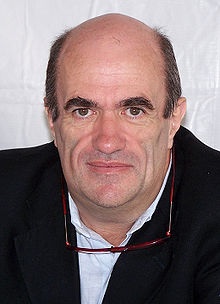
A Guest at the Feast – Essays, by Colm Tóibín

Christmas Reading I

I’m usually a fiction tragic but anything my Colm Tóibín is worth reading so I was happy to take his new essay collection away with me on my Christmas break.

Most, but not all, of these essays were originally published in the London Review of Books. The book is divided into three parts: the first part is basically memoir ; the second concerns his writings about the Catholic Church and, in particular, the Popes and the Vatican; and the third is about writers – Marilynne Robinson, Francis Stuart, and John McGahern.

The most engaging is the first: Cancer: My Part in its Downfall (LRB 2019) and not just because of the opening line – “It all started with my balls.” He charts, with candour and detail, what led him to see a doctor, his examination, procedures, diagnosis (testicular cancer which had spread to his lungs), more procedures, surgery, chemo therapy, and recovery. He obviously wrote the piece well after it was all over; how else could he have written it with such dry humour, frankness, and detachment. Despite the content it’s a very revealing, educational, and entertaining piece of writing. The namesake piece, A Guest at the Feast, first published by Penguin in 2011, is a memoir of his early recollections about growing up in the small town of Enniscorthy, in County Wexford, south east Ireland in the 1960s. His early life was dominated, like all children in Ireland at the time, by Family and the Catholic Church with very little space between them. A Brush with the Law (The Dublin Review 2007) centres on his years as a journalist and the fight to repeal, or at least amend, the laws governing homosexuality in Ireland.

Part Two concentrates on the Vatican, Karol Józef Wojtyła who became Pope John Paul II and his determination to avoid any change whatsoever in policies concerning morality, women, and child abuse; Among the Flutterers (LRB 2010) the dragging of the Church, kicking and screaming, into the 21st century causing it to begrudgingly admit to the coverup of child abuse by the clergy, and the ongoing fight for apologies and compensation; The Bergoglio Smile: Pope Frances (LRB 2021) focuses on the current Pope and his very vague attitudes and activities during the political upheaval of the 1970 and 80s in his native Argentina, involving kidnappings, murders, and ‘disappearances’; The Ferns Report (LRB 2005), the official Irish government inquiry into the allegations of clerical sexual abuse in the Diocese of Ferns in County Wexford which placed the blame for child abuse firmly in the hands of the Church and the Police.

Part three contains essays on the American writer, Marilynne Robinson, and how her Christianity pervades her work; Francis Stuart, the controversial Iris writer (though born in Townsville, Queensland in 1902) who spent most of WWII in Berlin broadcasting to Ireland. He said he didn’t support Hitler, he supported change. His latter fiction, all inspired by his time in Germany, tries to explain his position and exonerate himself in the eyes of his readers; and John McGahern (1934-2006) arguably one of the most important Irish writers. His work is imbued with darkness, the Catholic Church, abusive fathers, long-suffering sons, and stoic women.

Above all this book is shadowed by the Catholic Church and Tóibín’s response to it. He was raised a Catholic, contemplated the Church as a career to ‘hide’ his homosexuality, now shares a Los Angeles home with his partner, Hedi El Kholti, a writer and editor. He teaches at Columbia University and was appointed Chancellor the University of Liverpool in 1917. He has written numerous books of fiction, non-fiction, poetry and plays and is ‘perhaps Ireland’s greatest living male writer’.I don’t know Tóibín’s current belief, or stance, on Christianity but what I took away from this collection of essays was that the Catholic Church, the Vatican, is going to continue to decline in influence, and may never recover, because of its basic premise, and number one flaw, indeed, it’s paradox: we are born sinful but must live to be good.

You can buy the book in various editions here.

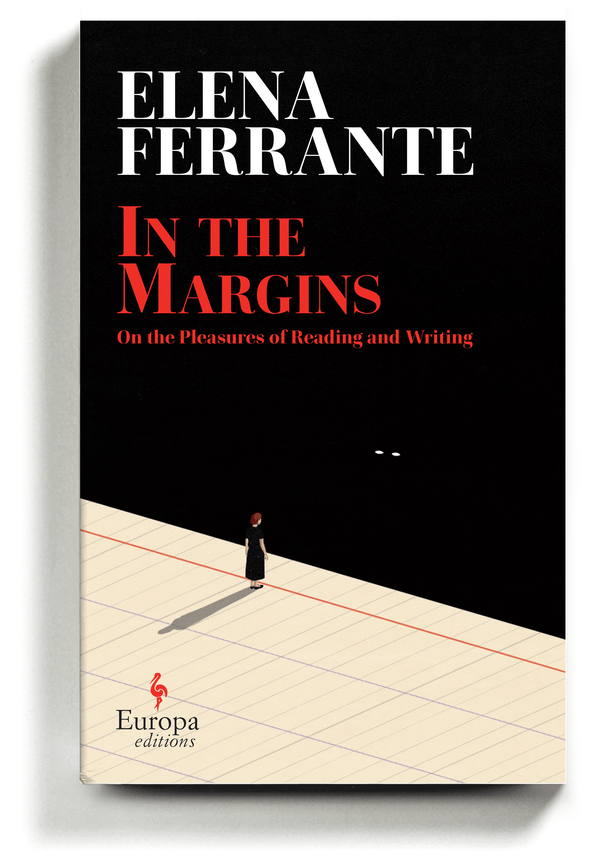
In the Margins: of the pleasures of reading and writing by Elena Ferrante

Elena Ferrante has always said that once a book is written it has no further need for its writer. She has never been seen in public. Some have even suggested that she could be a man, but the general consensus is that ‘Elena Ferrante’ is a pseudonym for an unknown female writer.

This slim volume of essays is a very personal attempt to put into words what happens when a writer writes and a reader reads. No mean task. The first three were presented in November 2021 at the Teatro Arena del Sole in Bologna, Italy as the 2021 instalment of the Eco Lectures produced by Umberto Eco International Center for Humanities. They were read by the actress Manuela Mandracchia ‘in the guise’ of Elena Ferrante. The fourth and last essay, Dante’s Rib, concluded the conference Dante and Other Classics in April 2021 to celebrate the 700th anniversary of Dante’s death. It was read by the scholar Tiziana de Rogatis.

Ferrante vividly reimagines her early school days when she was compelled to write on black lined paper but between two vertical red lines, one positioning the left margin, the other the right. She was diligent to recognise the ease to honour the left margin but recognising “that if your writing didn’t stay between those taut lines you would be punished,” she found the right margin difficult to obey.

I was punished so often that the sense of the boundary became part of me, and when I write by hand I feel the threat of the vertical red line even though I haven’t used paper like that for years.

There is, and always has been, a mysterious element to the creation of fiction. If you as a reader are surprised by what someone does or what someone says in a book, the writer probably was too. Most writers are pantsters: they fly by the seat of their pants. You can begin a scene not knowing where it’s going until you get there.

By mysterious I mean that which makes a writer re-read yesterday’s work and think, ‘Did I write that? Where did that come from?’ When a writer is in the heat of creativity and the keys (or pen) are jumping with energy and excitement, and the little black marks – typos misspellings galore – are coming lickerty-split onto the pale background there isn’t time to think, ‘What did Stephen King say about this situation?’ ‘Passive or active here?’ ‘Maybe I should re-read that Ferrante lecture’ and ‘I’d better ask what’s-his-name? that YouTube guy’. No, there isn’t time. If I stop I’ll lose it. One has to hope-to-god that all that advice, those corrections, mistakes, answers, instructions, and trial & errors have somehow, by osmosis perhaps, made it into my subconscious and are now flowing creatively through my fingertips shoving those little black marks all over that pale background and will coalesce into something worthwhile, giving me a rich and productive resource on which to later manipulate, via several drafts, into a good book. What is that magical force? (muse? imagination? the holy spirit? creative fire?). I don’t think we’ll ever know, because it’s an amorphous product of our imagination that our measly 26 man-made letters – no matter in what order we put them – are just too limited, or too few in number, to give it meaning we can understand.

She quotes Virginia Woolf, from A Writer’s Diary (1953):

“And your novel?

“Oh, I put in my hand and rummage in a bran pie*.”

“That’s what’s so wonderful. And it’s all different”

“Yes, I’m 20 people.”

*a bran pie = a tub full of bran in which treats are hidden: a lucky dip.

Ferrante believes there are two kinds of writing, the first compliant, the second impetuous; the first from the ‘outside’, the second from the imaginary ‘inside’ which is by its nature fleeting.

The thought-vision appears as something in motion – it rises and falls – [it’s not unlike watching TV in your mind] and its task is to make itself evident before disappearing.

And fleeting it certainly is. Many times between being hit by an exciting idea and racing to my nearest device with its Note App – it’s gone! And when I try to retrace my thoughts to whatever it was that sparked the thought train in the first place – the caption on a photo, a news article, a phrase – it’s nowhere to be found. Many writers have expressed this mysterious aspect of fiction writing:

Alexander McCall Smith: (writing fiction is) allowing the sub-conscience to escape.

Wole Soyinka: (writing fiction is) a kind of creative reportage.

John Irving: writing a movie is like swimming in a bath and writing a novel is like swimming in the ocean.

D. H. Lawrence: I am doing a novel which I have never grasped …there I am at page 145 and I’ve no notion what’s it about.

Jonathan Safran Foer: when writing non-fiction I always know in the morning what I’m going to work on; when writing fiction I get up in the morning NOT knowing what I’m going to work on.

Virginia Woolf again: writing is camping out in your brain.

There are quotable quotes in almost all of Ferrante’s paragraphs, ideas that will spark your own thought trains. If you are interested in this stuff please read it and re-read it as re-reading is wonderfully necessary; it will delight, amuse, and amaze you. If you’re not, don’t bother.

You can buy the ebook or hard cover edition here.

Neither Here nor There by Bill Bryson

or   How to write a ‘Hugely Funny’ Travel Book.

Bill Bryson
Anglo-American non-fiction writer, Bill Bryson: born 1951.

Step one: Choose a common phrase like, There and Back to See How Far it is, Head you Off at the Pass, It’s a Long Way to ……, you get the idea, and make it your title.

Step two: Collect anecdotes of your coming of age (COA).

Step thee: rack your brain for your pubescent sexual fantasies (PSF).

Step four: make a list of your own foibles (SD = self-deprecation).

Step five: have handy anecdotes from other trips to the same places  (SP).

Step six: if you’re an American living in Britain, collect phrase and stories that put down the Yanks or the Brits. (OPD = own put downs).

Step seven: collect puts downs of a nerd that gets put down a lot by your targeted audience, like the Irish, the Mormons, the Kiwis, etc. (NPD = nerd put downs)

Step eight: you’ll also need some RPD’s – racial put downs.

So, let’s begin.

Chapter One. Of course, you start with a journey. However, if the journey is a little boring you can always rely on a PSF:

I fanaticised about “…finding myself seated next to a panting young beauty being sent by her father against her wishes to the Lausanne Institute for Nymphomaniacal Disorders, who would turn to me somewhere over the mid-Atlantic and say, ‘Forgive me, but would it be alright if I sat on your face for a while?”

and you can then tack on an NPD which has OPD overtones:

“In the event my seatmate turned out to be an acned string-bean with Buddy Holly glasses and a line-up of ball-point pens clipped into a protective plastic case in his shirt pocket.”

But if you find yourself on an inspirational roll you can continue this novel scenario:

“I spied a coin under the seat in front of me, and with protracted difficulty leaned forward and snagged it. When I sat up, I saw my seatmate was at last looking at me with that ominous glow.

‘Have you found Jesus?’ he said suddenly.

‘Uh, no, it’s a quarter,’ I answered and quickly settled down and pretended for the next six hours to be asleep, ignoring his whispered entreaties to let Christ build a bunkhouse in my heart.”

It’s important to understand that such ‘stories’ don’t necessarily need to come from the trip you are now writing about, nor do they necessarily need to have happened at all. Let’s call it comedic license.

And of course, when in Germany, it’s likely that funny incidents are few and far between but there’s always a good PSF to come to your aid:

“I had only signed up for German [as a boy] because it was taught by a walking wet dream named Miss Webster, who had the most magnificent breasts and buttocks that adhered to her skirt like melons in shrink-wrap.”

Or, as in his few pages on Cologne, he begins with an RPD about the woman running the statin café who ignored him because he ignored her:

“This is the worst characteristic of the Germans. Well, actually a predilection for starting land wars in Europe is their worst characteristic, but this is up there with it.”

He then segues into an SP about a previous visit to Cologne when he stayed in a cheap hotel and read soft-porn magazines that other guests had left behind. He then contemplates the massive cathedral and comments on its size with a little OPD:

“You can understand why it took 700 years to build – and that was with German workers. In Britain they would still be digging the foundations.”

Without any nicer things to say about Cologne Bryson indulges in a reminiscence about flying on a 747, and regaling the reader with the lack of American know-how of audio electronics – a bit of ODP – and praising the Japanese “for filling my life with convenient items like a wristwatch that can store telephone numbers, calculate my overdraft and time my morning egg” – a sort of reverse RDP. He then cuts short his Cologne stay when he spies a non-stop porno cinema in the train station, which one would’ve thought would’ve given Mr Bryson an extra beat of his heart but it instead caused him to high-tail it out of Cologne and head for, ironically, Amsterdam.

His stay in Hamburg is similar: he complains about the ugliness of the prostitutes, the smallness and expense of his carpet-less hotel room, the sex-shops – “nothing compared to those in Amsterdam” – although he does praise their ingenuity when it comes to manufacturing and promoting sex dolls. He indulges in a little RDP, ODP, SP and then tops it off with a lengthy analysis of why beautiful and stylish German women don’t shave their armpits; like “a Brillo pad hanging there. I know some people think it’s earthy, but so are turnips …”

Oh, and he also hates dogs.

It seems that Mr Bryson understands well his potential readership: the kind of travellers that other travellers try to avoid.

However, after reading the dense prose of our human stains in the stories by Tsiolkas, a house-brick sized Moorhouse about mores, political and sexual, in Canberra in the 1950’s, and the ethereal beginnings of literary modernism in Joyce, I thought I needed something light.

Neither Here nor There (1992) is entertaining-ish, undemanding, diverting, and completely forgettable, but don’t let it inform you about Europe.

Access to all 46 formats and editions you can find here.

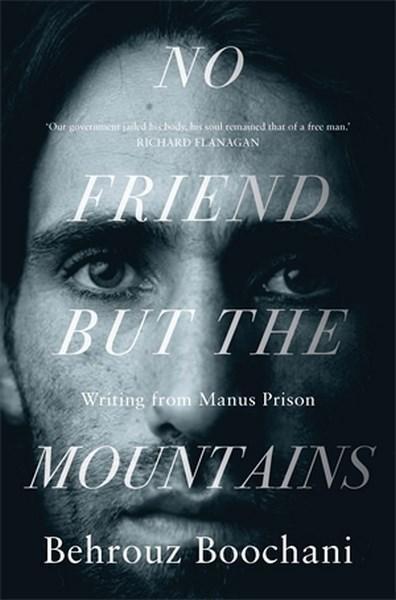
No Friend but the Mountains: Writing from Manus Prison by Behrouz Boochani

Translated by Omid Tofighian

Omid Tofighian pic

Omid Tofighian is Lecturer in Rhetoric and Composition in the School of Literature, Art, and Media and Honorary Research Associate in the School of Philosophical and Historical Inquiry at the University of Sydney.

Although Tofighian is the translator, he acknowledges over a dozen people involved in getting Boochani’s original text smuggled from Manus via WhatsApp and Facebook into his hands.

One aspect I was always conscious of was that Behrouz was writing in Farsi, not Kurdish. He was writing in the language of his oppressors, even though he is a fervent advocate of Kurdish culture, language and politics. And the book was being translated into the language of his torturers.

I saw this translation opportunity as a chance to contribute to history by documenting and somehow supporting the persecution of forgotten people; translation for me, like writing for Behrouz, is a duty to history and a strategy for positioning the issue of indefinite detention of refugees deep within Australia’s collective memory.

Janet Galbraith lic

The book is dedicated to Janet Galbraith who coordinates and facilitates the writing group Writing Through Fences, an organisation that collaborates with incarcerated refugees (or previously detained refugees) and amplifies and supports their writing and art.


____________________________________

Behrouz Boochani pic
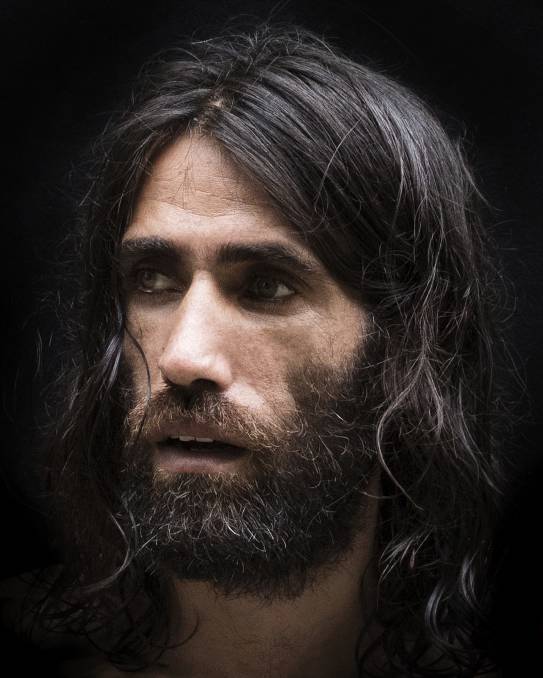
Kurdish-Australian writer and asylum seeker, Behrouz Boochani. Winner of the Non-Fiction Prize and the Victorian Prize for Literature at the Victorian Premier’s Literary Awards, 2019. 

“In 2013, Kurdish journalist Behrouz Boochani was illegally detained on Manus Island.

He has been there ever since.”

Australian law would object strongly to the word ‘illegally’, international law may not.

On a truck bumping through the dense Javanese jungle on a dark and bumpy track heading to the beach, even asylum seekers aren’t immune to the hazards of public transport,

A loud, obnoxious and completely inconsiderate Kurdish guy forces everyone to breathe his cigarette smoke throughout the trip. He is accompanied by a gaunt wife, adult son, and another son, a little bastard. This kid has his mother’s physical features and his father’s character. He is so loud he torments the whole truck, treating everything as a joke, and annoying everyone with his impatient and disruptive manner. He even gets on the nerves of the smuggler, who yells at him.

Finally after much shouting, rudeness, and disrespect as the over-wrought passengers jostle for space, the rotting boat heads out to sea

like a heavily pregnant mare cantering carefully across a dark prairie of water,

where there isn’t enough room for everyone to sit or lie but those who can, sleep.

Even the normal physical boundaries between families has fallen apart. Men lie in the arms of another’s wife, children lie on the chests and bellies of strangers…the young Sri Lankan family, whose bond is maybe the strongest of all on board, has fallen apart. The husband is in the arms of the man next to him, the wife has her head on the bicep of another man, and their child has ended up across the thighs of a different woman.

Those who aren’t sleeping are vomiting as the waves get bigger and pound the leaking boat … then the bilge pump fails …

This whole mess / In the darkness of midnight / Looks like death / Smells like death / Embodies death / The cries / The screams / The swearing / The knocking about / The sounds of the small children / The heart-wrenching and painful sounds of the little children / These sounds transform the chaotic boat into hell.

Why don’t the people, who just hours earlier were in danger of death from the waves but now on the deck of the Australian ship listening to those same waves lick and lap harmlessly against the hull; why don’t they yell and laugh with happiness at their salvation? They sit quietly and still. Even Boochani doesn’t know why. To the Australians they must seem like, like, cargo, soundless cargo, salvaged from the sea.

Boochani has known death and fear; as a young man he wanted to fight for the liberation of his homeland, but he chose the pen over the gun. Was he a coward? Afraid of death? Then on the ocean he faced both fear and death. Saw fear in the faces of others and felt it in his guts, tasted it on his tongue; the ocean provided him with the most intimate relationship with fear and death. Now he is judged and locked up by people who know neither of these two things. Maybe he should’ve been a soldier, at least he would be shot at by people who, like him, knew about fear and death. It would be an equal fight. Just, even.

Boochani tried twice to get to Australia. He encountered fear and death on both attempts. As he scrambled onto another ill-prepared boat for his second attempt he had to admit that such an action wouldn’t be possible but for courage and foolishness. Returning to Iran, unthinkable! He was aware of his fellow travellers not really knowing any of these four demons: fear, foolishness, courage, and death. They soon would.

I’m stopping! I write this post as I read – as I usually do when reviewing a book, but it’s hard to know what not to cut and paste to show you, let you see what it sounds like because everything is worthy of quoting; every line is full of something, something worth passing on. I want to show you all of it. So, do it; just read it.

Writing allows us to “come to understand another’s point of view in the most profound way possible.” (Erica Wagner, writer, critic, and a Man-Booker Prize judge, twice)

I will continue to read this book, not out of a need for entertainment, but for enlightenment, understanding. I’ve only ever seen asylum seekers on the news, voiceless bodies behind wire. The Australian Government has not wanted us to hear what they have to say: journalists are banned on Manus and Nauru. This is the first time I have the opportunity to hear what the Australian Government does not want me to hear. That is why I will read it to the end; as I hope you will too.

You can buy the eBook ($14.99) from Pan-Macmillan here.

You can buy the Kindle version ($US11.99) here.

Arnold Zable, an Australian writer is also part of this story. You can read his SMH article and watch a short trailer for the video Chauka, please tell me the time, here

Watch Behrouz’s videoed acceptance speech, here. He was not allowed to attend the Award’s Presentation.

Unfettered and Alive: a memoir by Anne Summers

anne summers pic
Anne Summers: journalist, feminist, and writer. “If we constantly rewrite history to fit how we see things now, we forget how things used to be and, equally important to future scholars, how we used to see them.”

Anne Summers and her publishers have produced a handsome book, and it begins, unusually, with a letter to her thirty-year-old self: Dear Anne, and so, consequently, it’s written in the second person; and it sets the beginning as at that time, when she was thirty, and summarises what went before which was told in her first autobiographical work, Ducks on the Pond 1945-1976 (1999).  So this, a re-cap, is a neat and imaginative way to catch you up, especially if you haven’t read the earlier work; which is, by the way, now only available on Amazon US at $115.64 for the second-hand hardcover, which is cheaper than the $191.89 for a second hand paperback! However, if you can’t find a copy anywhere else, here’s the link.

For someone who, from an early age, felt profoundly at odds with what the Adelaide world of her Catholic childhood promised her: an identity based on a man and the success, or otherwise, of their children and a future slowly fading into cranky old age and invisibility, she has stubbornly and courageously shunned all of that and forged her own path that has turned out to be something like an open-ended roller-coaster. It’s a crackling tale: ecstatic highs and scary lows; and all along the way the reader gets an insight into the characters she engaged with and the history we all lived through, all in a chatty and self-effacing tone that has you barracking for her as she strides around yet another corner into the unknown, including South Africa, the badlands of western Pakistan – without a hijab, and later as Chair of Greenpeace International which took her, well, everywhere.

anne summers 1980
Anne Summers at the National Press Club during the 1980 CHOGM meeting in Australia directing a question at British Prime Minister Margaret Thatcher. photo: Allan & Unwin

The personal is also covered. Her uneasy relationship with her parents, especially her father; the painful rediscovery of her paternal grandfather; there’s treachery and betrayal from colleagues and friends; a health scare; and finally meeting the love of her life, and that started in the photo-copy room! He’d been around all along!

The political years of this chronicle cover Fraser, Hawke, Keating, Howard, and Rudd/Gillard/Rudd: a turbulent, often frustrating – for us, I mean – but never a boring time in Australian politics. Of special note is her calling out the appalling misogyny Prime Minister Gillard received at the hands of the shock jocks, political opponents, and a particular, but faded, cartoonist. Her insights and insider status make fascinating reading as seen from her media perspective (her attitude to Keating changed; her attitude to Howard didn’t); and then in the middle of all that her successful empire building (and spectacular fall!) at the top of the media tree in New York “…if I can make it there, I’ll make it …..” you know how it goes! Well, she did and then, almost immediately, she didn’t!

But when down, or idle – something she hates – an opportunity passes her window or, more usually, she creates one, and so grabs it with both hands and she’s off again!

Running through all of this, is her strong advocacy for the rights of women; their professional fulfilment, all their wishes, needs, and ideas taken seriously, and the universal understanding that they make mistakes but deserve to, and be allowed to, try again. What a rich, informative, and fulfilling read this is.

anne summers stamp
2011 Australia Day postage stamp featuring Dr Anne Summers AO.

I’ve known Anne for a few decades usually meeting with mutual friends over a sumptuous meal and a bottle of good red wine or three but I wasn’t prepared for the breadth and depth of her worldly participation nor her personal honesty.

I find scheduling reading time a sign of a good book; but you’ll also need to schedule a breather now and then. Don’t read this in bed. You’ll never get to sleep.

You can find the book here, and the kindle version here. For Indonesian readers you can find the book here.

Be very careful when Googling Anne; you’ll undoubtedly get the English Ann Summers (Ann, no ‘e’) who is a designer and marketer of raunchy women’s underwear.


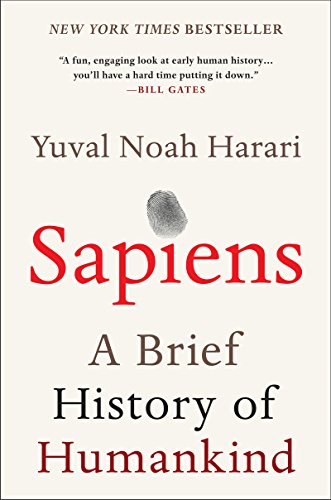
Sapiens: A Brief History of Humankind by Yuval Noah Harari

yuval hariri pic
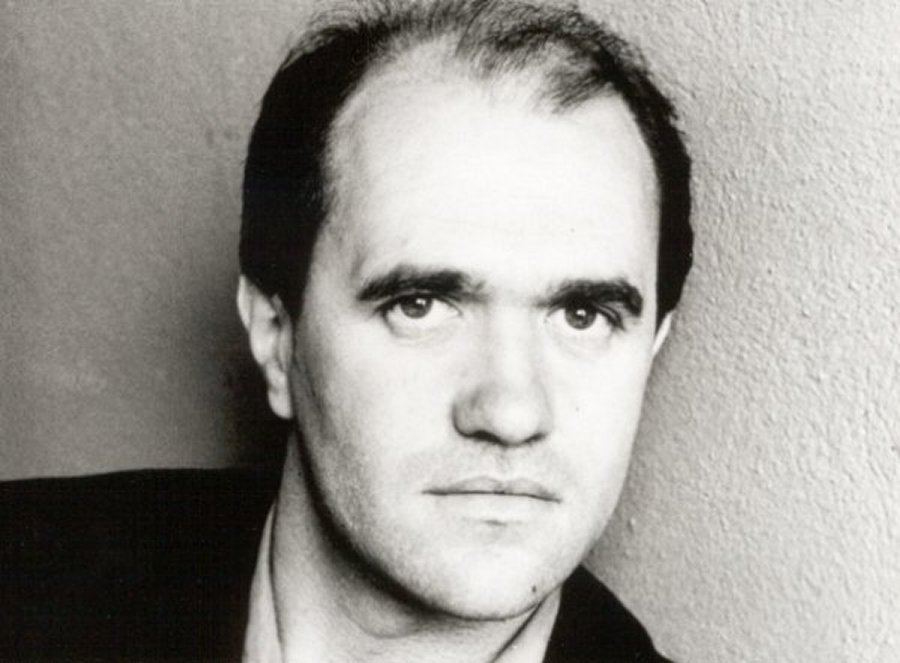
Yuval Noah Harari, Israeli Historian and Professor of History at the Hebrew University of Jerusalem

For a man who likes fiction, and who usually only reads fiction, I found myself, because of Christmas, with 4 new non-fiction books on my bedside table: Anne Summers’ memoir, Unfettered and Alive; Colm Tóibín’s Mad, Bad, & Dangerous to Know: the Fathers of Wilde, Yeats and Joyce; Stephen King’s On Writing, and this one, Yuval Noah Harari’s Sapiens: A Brief History of Humankind (2014).

The first I have because Anne Summers is a friend; the second because I am a fan of Colm Tóibín and I collect everything he writes; the third was a Christmas gift from my sister; and the fourth was a grab-bag gift from the festivities of Christmas Day. They all interest me, in fact many non-fiction books interest me, but volumes of fiction always got in the way. Even now, there are seven novels hovering ready to pounce and to grab my attention.

Let’s start with Harari’s definition of history: the development of elaborate human structures called cultures which the organism known as Homo Sapiens began to form about 70,000 years ago. Once I read this I knew I was in safe hands and that I was going to, not only find out stuff that would fascinate, but that it would all be in accessible language.

Sapien’s time on this planet is a very short period in the cosmic time frame: if you could squeeze the time from the beginning of the universe to the present day into a 12 hour period, Homo Sapiens would have first stood upright at about 11.59.

The book is full of fascinating detail and remarkable insights. Homo Sapiens was not the only Homo species to exist at the same time but the reason Sapiens prevailed and destroyed the others – as one theory goes – is not because of our strength or our brain size – the Neanderthals had bigger brains and bigger bodies –  but because of one fundamental difference: our cognitive ability, via language, to imagine things that do not exist: fictions like religion, nationalism, honour, human rights, politics, literature, and (the only fiction that everyone in the world believes in) money.* These mental constructs were what enabled Homo Sapiens the where-with-all to organise themselves in large numbers. Large crowds of people, from 2,000 to 100,000 individuals can organise themselves to behave well and orderly for many hours to witness the outcome of a competition (football) or the staging of a story (Wagner’s Ring Cycle). If you put only 500 of our nearest relatives, the chimpanzees, in a theatre there would be chaos. Of course, large crowds of humans can degenerate into chaos but only when the acceptable boundaries, rules; i.e., agreed constructs, that all members of the gathering adhere to, or believed would be adhered to, are broken. For example, the premier of Stravinsky’s ballet Rite of Spring.

And fundamental to the success of our ability to co-operate in large numbers is our obsession with social information: gossip. This fascinating topic and its historical necessity I’ll leave for you to read about.

English suffers from the absence of the third-person singular and genderless personal pronoun. We have plural ones: themthey, and their, and they are allowed to be used in singular form (“Each writer needs to be merciless when re-writing their work” – his/her is no clumsy), but the long standing acceptable way around this problem has been to use the masculine singular personal pronouns: he, his, and him.  Harari raises the finger to such ‘traditions’ and opts for the feminine: she, her, and hers. A nice touch, given our current social and linguistic shenanigans around gender. It puts it firmly in the 21st century.

The language is not simplistic but is easily digestible – you need to read it with the TV off –  and is peppered with humour, irony, and hyperbole. It’s a wonderful read, entertaining, enlightening, and often astounding.

You can watch and listen to an excerpt from Harari’s TED talk (June 2015) on “Why Humans Run the World” here.

Everyone is reading this book and the two that follow it: Homo Deus: A Brief History of Tomorrow (2016) and 21 Lessons for the 21st Century (2018). They are everywhere. If you haven’t seen a copy you’re either blind or have just returned from Mars.

* Money was created many times in many places. It’s development required no technical breakthroughs – it was purely a mental revolution. It involved the creation of a new inter-subjective reality that exists solely in people’s shared imagination. Money is not coins and banknotes. Money is anything that people are willing to use in order to represent systematically the value of other things for the purpose of exchanging goods and services. Money enables people to compare quickly and easily the value of different commodities (such as apples, shoes and divorces), to easily exchange one thing for another, and to store wealth conveniently. Sapiens, Page 197


Arguably. Essays by Christopher Hitchens

christopher-hitchens pic
Christopher Hitchens (1949 – 2011) Anglo-American author, columnist, essayist, orator, religious and literary critic, social critic, and journalist. “What can be asserted without evidence can also be dismissed without evidence.

This book is for dipping into.

The essays, 97 of them, are entertaining, enlightening, short, but sometimes challenging, and not just because of the subject matter, literature, science, history, politics and more. They are challenging because his language can be of a higher form and one should read this book within easy reach of a dictionary, app or paper; and that’s a good thing, as we all should not let an unknown word pass us by. Hitchens was a prolific writer, but he also was a prolific reader: every essay is full of references, anecdotes, comparisons, opinions, and so wide-ranging and eclectic is his accumulated knowledge that one wonders when he had time to sleep, eat, and raise a family.

Most of the writings in this volume were first published in magazines or newspapers such as The Atlantic, Newsweek, The New York Times Book Review, Slate, Vanity Fair, Foreign Affairs, among many others.

Just a glance at the Contents page will throw up depths of interest that one can look forward to plumbing: Abraham Lincoln: Misery’s Child; In Defence of Foxhole Athiests; The Dark Side of Dickens; W. Somerset Maugham: Poor Old Willie; Stephen Spender: A Nice Bloody Fool; Harry Potter: The Boy Who Lived; Why Women Arn’t Funny; So Many Men’s Rooms, So Little Time; Charles, Prince of Piffle; The Swastika and the Cedar; North Korea: A Nation of Racist Dwarfs; you see what I mean?

His asides are where the fun is:

” … Bertrand Russell, who could have been world famous in several departments, from adultery to radicalism …”

” … [Isaac] Newton spent much of his time dwelling in a self-generated fog of superstition and crankery.”

re Jessica Mitford. “These themes – of kinship and class, flight from same, residual loyal-ties to same, commitment to revolution, and stiff-upper-lippery in the face if calamity – recur throughout this assemblage of Jessica’s correspondence. ”

re W. Somerset Maugham. “Despite his exile and his increasingly distraught public and private life, Maugham eventually received an honour from the Crown – but it was for “services to literature” rather than for literature itself, and this distinction represents all the difference in the world”, as bitchy as his subject is arch.

What I have learned from Mr. Hitchens:

The French ‘ban’ on the burka can be seen as not a ban at all: it is a lifting of a ban on women being able to choose their own attire, and it is a lifting of the ban on women being able to question clerical, ie male, authority, and to be free to communicate to fellow humans face to face.

Isn’t it ironic that the Promise Land that god promised the Jews, a promise that was finally fulfilled, is the only bit of land in the Middle East that doesn’t have any oil.

“Jewish humour, boiling as it is with angst and self-deprication, is almost masculine by definition.”

The fundamental tenant of Christianity may contain its own unravelling: we are created bad, but commanded to be good.

The Magna Carta was not written in English. Of course it wasn’t; look at its name!

The Sixth Commandment, Thou Shall Not Kill, has nothing to do with pacifism since Moses told his Levite faction after receiving the original tablets containing the Ten Commandments from god on Mt. Sinai, to “slay everyman his brother, and every man his companion, and every man his neighbour” (Exodus 32:27-28). Killing for honour, revenge, or conquest is not really killing at all. The three monotheistic religions were born in extremely violent times and they continue to be violent religions to this day. Maybe God meant ‘murder’ and he was mis-translated. So, we must remember that the problem of ‘authority’ in the first 1500 years of Christianity was solved by having it all ‘wrapped up’ in languages that the majority of adherents could not understand; its mysteries being decoded by a select few: a ‘special caste’; and recoded many times since.

And while we’re on the subject of The Ten Commandments, it seems they were specifically written for men who had staff: “Thou shall not covert thy heighbour’s house, his wife, nor his manservant, nor his maidservant, nor his ox, ass, …” lumping his wife (wives) in with all of his other chattels.

Kurdistan (The Other Iraq) is (was) marketing itself as an investment and tourism hub.

America’s first military tussle with the world of Islam was from 1801-1805, The Barbary Wars, which not only gained US access to European trade but created the U.S. Navy.

The meaning of the phrase ‘tumbril remark’; his examples are hysterical.

How it feels to be ‘waterboarded.’

The etymology of the phrase ‘blowjob’ and who will, and who will not, do it.

An intelligent person sifts out the truth with a lot of ‘senses’, far more than the original five; hearing and understanding words being the least of them.

Hitchens died at the age of 62 in December 2011 from pneumonia, a complication of oesophageal cancer (he was a nicotine addict; by his own reckoning he smoked 15,000 cigarettes a year ). Although his death came before the rise, and now continuing decline, of IS, his essays on the politics of the Middle East and north Africa give important insights into the recent history of these regions; and it’s recent history that seems, paradoxically, the easiest to forget.

One of his last pieces, from May 2011 in Vanity Fare, gives an enlightening and humorous account of how the language of the Bible has been used, politically, commercially, and sect-affirmingly to, not only sell bibles, but to make them accessible to absolutely every one, like an offering in a “cut-price spiritual cafeteria”. Only in America could there be published bibles called “Extreme Teen Study Bible” or “Policeman’s Bible” or, my favourite, “One Year New Testament for Busy Moms.”

But what one is left with after browsing in, flipping, and giggling through this entertaining volume is his precise and educative use of the English language. It may be of an un-coffee-table-book shape, given its fatness, but the coffee table is where it should be; or, at least, somewhere as easily accessible. Happy dipping!

You can get this book in various formats, including audio CD, here.

Bad Blood: a walk along the Irish border by Colm Tóibín


toibincolm_-young
Young Colm Tóibín

In a pub in the little cross-road town of Cullaville, just two fields north of the border between the United Kingdom and the Republic of Ireland, the bar has two till-drawers: one for Euros (Irish currency) and one for the British pound. More than 200 formal and informal roads (tractor and foot paths) cross the border and it isn’t often clear for travellers which country they are in; sometimes it may only be the change of the speed-limit that may give them a clue, sometimes nothing at all.

Alastair McDonnell, an MP from Belfast has been flooded with queries, following the Brexit vote, from his constituents about what will happen if the border becomes ‘hard’ again. It’s possible that come the reality of Brexit (2019 says British PM, Therese May) little border towns like Cullaville will potentially become the EU’s back door to Britain.

Anne Devlin, a resident of the North who buys her petrol in the South where it’s cheaper, said, “Brexit got everyone talking, that’s for sure. It reminds everyone who is who, where is where, north or south, the Troubles, all of that.” It’s been only 18 years since the last bomb exploded during the religious-based conflict that claimed more than 3,500 lives.

With the signing of the Anglo-Irish Agreement in 1985 between the UK and the Irish Republic the path was finally set for peace but which didn’t come for another 13 years with the signing of the Good Friday Agreement in 1998. In the summer of 1986 Colm Tóibín walked the border in preparation for his account of the feat published the following year: Bad Blood: a walk along the Irish border. Actually it was more like a ‘drink’ along the Irish border: Colm likes his ale.

For a border that may now need to be re-fortified, given the European refugee problem that doesn’t look like slowing down – certainly not within the next two years, its ‘hardness’ may have many other repercussions. Sometimes it runs through the middle of someone’s field; in South Armagh (the North) there is a shop whose “doorway itself was the border, the outside of the shop being in the North, every entry and exit involved smuggling”; and not only that, where the border separates County Fermanagh (the North) from County Caven (the South) there is a house where “the border went right through like a slicer through a block of cheese.

The house was a small, modest, old-fashioned cottage. When I knocked on the door a man in his sixties came out. His name was Felix Murray, I discovered, and the border ran through his house in which he and his two brothers lived. These days, he said, all three slept in the North, but there was a time when one of them had slept in the South. ‘Only an odd time now,’ he said, ‘we sleep in the State’. There was a sofa in the kitchen, he pointed out through the window. Where you could sit and let the border run through you.”

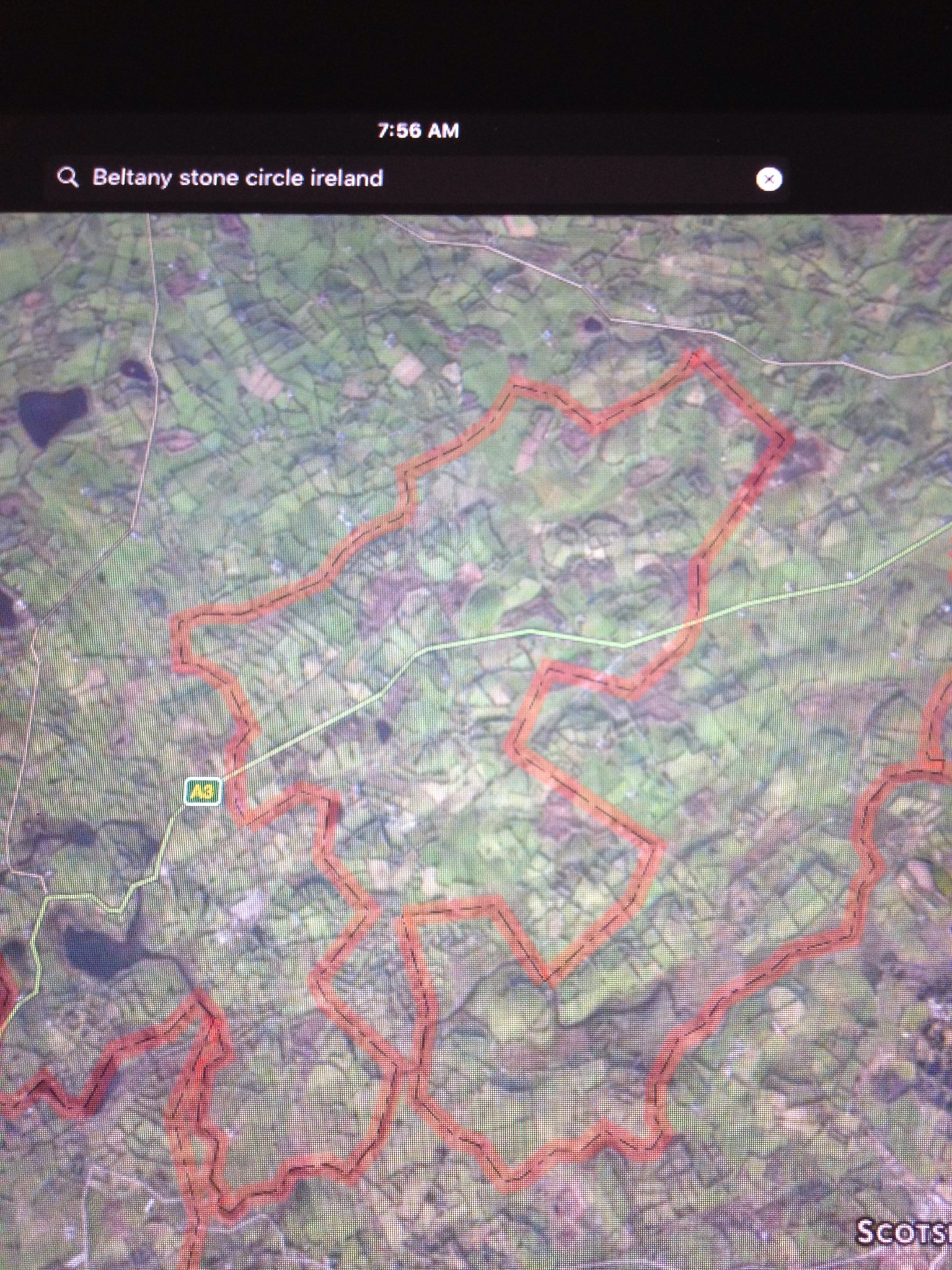
This was 20 years ago and things may be a different now but as you can see from the image below, the border to this day, seems a long way from logical.

irish-border-pic

His early non-fiction shows the development of Tóibín’s style later employed, to some extent, in his novels; his first novel, The South, was published in the following year, 1990. His fiction shows his debt to journalism with his plain unadorned prose, seen here in Bad Blood.

“I told him I was writing a book. He invited us in. He didn’t say anything. The front room of the house was small and comfortable. There was a fire lit. A television and a video machine stood in the corner.”

Compare this is a passage from his second novel, The Heather Blazing (1992),

“His grandmother was in the kitchen with his Aunt Margaret and his Aunt Molly who was married to his Uncle Patrick. Two of his cousins were in his the back room in cowboy suits. They all stood round as Eamon distributed the presents. Stephen sat by the fire, huddled in against the wall with his legs crossed. He opened his parcel slowly and smiled when he saw the book.”  Short, bald, unadorned sentences.

Tóibín trusts his readers to do most of the descriptive work and gives them great responsibility to fill in the detail, so much so that in his latest novel, Nora Webster (2014) no place or person is described: every reader has a hometown, its feel and smells, and every reader knows a nosy neighbour or a favourite aunt and Tóibín relies on this reader-experience. In this way Toibin’s work, for readers, becomes very personal. A reader from Melbourne, Australia, on finishing reading The South, slept with it under her pillow for two weeks.

In 1989, even though the border may have been on the map it wasn’t, in a lot of places, on the land (large white crosses had to be painted on roads to make the border visible to British helicopter pilots), but it was in people’s hearts. Back then it was all about tension in the air but a stiff upper British lip, this is in the North, was still the way people behaved.

At dinner in a hospitable family house in the North the first course served was beetroot soup. Toibin, from the South, innocently commented that it was called borscht, and it was a great favourite of the Pope’s. That word hung in the air like a fart. Everyone stopped listening and became immensely interested in their soup and the care it took to not let it spill on the white tablecloth. No-one spoke.

Religion was not at the heart of it but at the bottom of it.

“Yes, one of them said, the older people maintained that the accidents were a sort of revenge for what was done to the Grahams. God, you know, did I understand? It was God. It seemed like a large number of young people from the same area, I said, to be killed in accidents. They nodded grimly. I said I didn’t think it was God. No, they agreed, they didn’t either. It was just something which was said.”

Since Brexit the talk now is again about Irish re-unification: Gerry Adams, leader of Sinn Fein (once a terrorist organisation, now a major political player), said that since the vote by the North against Brexit (56%) a referendum over unification was necessary, Michael Martin leader of the main opposition party in Ireland agrees; Arlene Foster, first minister of the North, thinks such a move would be ‘a folly’.

When Tóibín walked the border the air was still tense. Now a lot of golf is being played and it’s a nice place to be a cow. In people’s lives now the border is a shadow: it’s crossed for shopping, for school, for selling. No-one wants it to become a frontier again. What everyone wants is for the leaders in London, Brussels, Dublin and Belfast to manage Brexit while preserving the peace and allowing the economy to flourish. They’ve got 2 years.