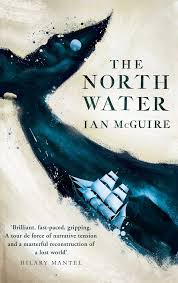
The North Water by Ian McGuire

Ian McGuire pic
English academic and writer, Ian McGuire.

Since 1996 Ian McGuire has been at The University of Manchester initially as a lecturer in American Literature and more recently as a lecturer in Creative Writing. He now co-directs the Centre for New Writing. His first novel, Incredible Bodies, “very funny and disconcertingly sad” said The Times; a contemporary campus novel was published by Bloomsbury in 2006. He specialises in the American realist tradition; Melville, Conrad are evoked in The North Water, his second novel (2016), and not just because it is set on a whaler. However the tone is most-certainly modern, mainly because of the very modern ‘foul’ language: he pulls no punches.

McGuire’s notable reviewers of The North Water, Hilary Mantel, Martin Amis, and Colm Tóibín, have written repeatedly about his “narrative tension” and his “remorselessly vivid” prose but when the writer writes narratives, each stuffed with its own tense detailed vividness: the brutal murder, then rape of a street urchin; the evisceration of a screaming sepoy; a face blown away with musket-shot; an arm ripped from a man’s torso by a ravenous polar bear; that same creature killed with a harpoon to the spine; the slaughter, dismemberment, and carving up of whales and their blubber; the medical inspection of a ravished anus; oh, and a whoring piece of low-life who sniffs then sucks his filthy fingers just “getting his final money’s worth”, all one needs to do is describe all this simply and accurately and ‘remorseless vividness’ is what you’ve got. I’m not at all deriding McGuire’s work, quite the opposite, but when your material is as rich, rare, and image-encrusted as any material can get, describing it simply is what a talented writer must do; and he does.

The tale, circa 1859, is one of a whaling expedition from the sludge of the Humber estuary, northeast England, to the whiskey ‘n’ women – each at a shilling a pop – in Lerwick of the wind-blown Shetlands, then north, and north again, and as far north as one can possibly go, beyond the Arctic Circle to the North Water, northwest of Greenland, in a boat packed with foul-mouthed vagabonds, murderers, liars, rapists, brutish thugs, opportunists with grudges; where life is a drudge, full of excrement, gore, and blood; where death is as easy and as light as a penny; where killing is a chore after your porridge, and where one shits first or is forever shat upon. Get the picture?

All ye who must like your book’s characters keep well away from this one.

But, yes, it is one of the most pleasurable reads I’ve had in a long time. This is where literary fiction meets plot and the latter comes up trumps; ah, but oh how sweet a brutal plot can be when it’s dressed in literariness and style such as this!

There are two main characters, Henry Drax, a villain of “pure evil” if there ever was one – we see him in all his ‘gory’, literary; and Patrick Sumner, a disgraced surgeon from his days serving the Raj in India, where a simple miscalculation under fire shatters his reputation. These two misfits, one with a shadow of redemption, the other, with absolutely none, lock horns on a fatal voyage where whaling may or may not be the ultimate goal: no spoilers here.

McGuire uses an omnipotent third-person narrator with no literary qualms about swapping POVs; all for going where the narrative takes him. (See my previous post of The Filth Heart, where the writer, Dan Simmons, abounds in such undermining qualms). The pace is fast and engaging but for brief passage of short but dense and fascinating description. A great read!

Highly recommended.

Sherlock Holmes, where are you?

Sherlock Holmes, invented by Sir Arthur Conan Doyle in 1897 in A Study in Scarlet, keeps popping up again and again; a contemporary television series “Sherlock” (2010) starring Benedict Cumerbatch, and a movie franchise “Sherlock Holmes” (1: 2009, 2: 2011, 3: in development) starring Robert Downey Jr. and Jude Law. Now he appears in two celebrated novels.

The Fifth Heart by Dan Simmons

The Fifth Heart Cover pic

Fiction, by its very definition, is the process of “imaginative narration” or “a composition of non-factual events” and accordingly enables writers to create, to ‘make up’, whatever the hell they want. It is a little incongruous then that most readers seem to want to read stories that are familiar, plot driven (literary fiction is on the decline) and with an ending that is expected and therefore satisfying. I think it is fair to say that all stories can be whittled down to the good guy wins, the bad guy looses or, as Oscar Wilde has Miss Prism say about her three volume novel she wrote in her youth, in The Importance of Being Earnest, Act 2, Scene 1, “The good ended happily, and the bad unhappily. That is what Fiction means”.  However fantasy and science fiction, extremely ‘made up’ narratives, are among the top five most popular literary genres. Still within their contexts what is familiar (treachery, jealousy, love, betrayal, and relationships) is still what is expected.

Dan Simmons pic

Dan Simmons is one of the few novelists whose work spans the genres of fantasy, science fiction, horror, suspense, historical fiction, noir crime fiction, and mainstream literary fiction. His books are published in 29 counties.

I first encountered Dan Simmons with his novel, Drood (2009), his re-invention of Dickens’ last and unfinished novel, The Mystery of Edwin Drood. I didn’t finish it. It had nothing to do with Dickens and I have very little time for horror/fantasy. However, with The Fifth Heart (2015) I was prepared to ‘swallow’ whatever Simmons ‘made up’; and he makes up everything except the names of his two main characters, Sherlock Holmes, a made up character himself, and the novelist, Henry James, a real person.

It is clear from page one that the reader is well and truly in Dan Simmons territory: Henry James, the famous American expat novelist (and real person once upon a time) is approaching 50, in Paris, depressed, and plans to kill himself by throwing himself into the Seine under Pont Neuf. Not surprisingly he is thwarted in his suicide attempt (it doesn’t take such Holmesian logic to realise that Henry James’s name is on the front cover and this is only page 4) by a Norwegian explorer who James instantly recognises as Sherlock Holmes (you know, the literary character invented by Sir Arthur Conan Doyle) despite the disguise (wig and puttied nose); despite the dark and misty night; despite the fact that this is 1896 and Holmes, the fictional character, has been dead for 3 years, having been killed off in the last of the Holmes published mysteries, The Adventure of the Final Problem published in 1893 which saw Holmes tumble over Switzerland’s Reichenbach Falls in the deadly grip of his arch-foe Moriarty. The bodies were never found. Ha! Oh, Henry James shrugs off all these discrepancies, and Simmons expects us to do so too, since James remembers meeting Holmes at an afternoon soirée at the home of his good friend Mrs. O’Connor four years before. Holmes is also contemplating suicide because he is worried that he may not be a real person; he only “feels really alive” when he is on (read “written into”) a mystery. This is real fiction I keep reminding myself and I promised myself I would keep my disbelief at bay and go along for the ride…that is what readers of fiction are supposed to do.

The mystery, “The Mystery of the Century” as the quote on the jacket cover reassures us concerns a group of friends, known affectionately as The Five Hearts, and known well by Henry James. One of them, Clover Adams, The Fifth Heart, committed suicide two years prior to the action but on every anniversary of the death, the remaining members of the group all receive a type-written card announcing unsubtilely “She was murdered.” Holmes coerces James to accompany him to the USA to help solve the mystery.

A novel is within its own universe; and this universe may or may not be the universe of the reader. This is most obvious is the genres of horror, science fiction, and fantasy; in fact it is possible, and easy, to argue that the universe of a novel is never that of the reader.

In the same sense that the stature of David had always existed in the massive block of stone that Michelangelo and Leonardo da Vinci fought over and Michelangelo, who obviously won the fight, simply had to remove the outer, and superfluous, rock to reveal the image of the boy, a story can also be thought of as having happened in all its detail, nuances, and meaning and someone just needs to tell it; to write it down. This is exactly what happens in journalism, history writing, and memoir. There is also a sense of this in all forms of fiction

Let us assume that I write a story about an astronaut who develops bowel cancer. This would be a very rare, and unlucky, even ironic, occurrence since all astronauts, before donning their space suit, for rehearsal, training, and the actual space travel itself, must undergo an enema; if you wanted an occupation that would guarantee you a healthy bowel, especially if your family history was riddled with unhealthy ones, then astronaut would be the job for you. Now, my story hangs on this one event: the tragedy of my protagonist who contracts a life-threatening disease, the one he was convinced would never happen to him and how he comes to terms with his own mortality even though he is the healthiest, most positive, most enthusiastic, fearless, and life-loving person he knows; he’s walked in space, for Christ’s sake, to repair a faulty solar energy unit while conducting experiments on neutron absorption, and stood on the moon watching the Earth rise. He deserves to live.

The last thing I want my reader to do is to rush to his computer and Google ‘enema+astronaut’ to verify that astronauts do indeed undergo enemas before they don their space-suits. I want my reader to accept that in the universe of my story, which may not be his/her universe, astronauts do undergo enemas before climbing into their space suits. By the way, I have no idea if astronauts have enemas or not; I made it up, but it’s not a difficult idea to accept; it’s plausible, in the universe I have created for my story; but my point is that it doesn’t have to be plausible it just has to be acceptable.

In the universe of The Fifth Heart people that actually existed in the reader’s universe (Henry James, William Dean Howells, and Samuel Clemens – yes, Mark Twain makes an appearance) rub shoulders, have dinners and arguments, and go on mystery-solving adventures with made-up characters from other literary universes, ie, Sherlock Holmes, and even he doesn’t know if he’s a real person or not. I find this very hard to accept; I know I should, but I can’t; and that’s why I stopped reading it.

Mr. Simmons also makes a novelistic mistake: he breaks the ‘fourth-wall’ and has his narrator address the reader directly.

“Wait a minute. The reader needs to pardon this interruption as the narrator makes a comment here.” (Who is speaking here? If it is the narrator surely he would say “The reader needs to pardon this interruption as I make a comment here.” This is another narrator! (Oh, picky-picky!)

This would be fine, and normally acceptable, if it is necessary, but it is not. Simmon’s narrator is not a character in the story, he is an un-named voice and like most un-named narrative voices, is all-seeing, all knowing, omnipotent: god-like. Mr. Simmons allocates almost a whole chapter to his narrator to apologise to the reader for switching the narrative’s point of view from Henry James to Sherlock Holmes when it is an acceptable tradition in fiction writing that an omnipotent narrator can change the POV whenever it is necessary. There are many novels that do this, the Patrick Melrose novels by Edward St Aubyn for example (see my blog post of October 6, 2014): St Aubyn’s narrator jumps around all over the place. The reason for Simmons doing this is that he may have never done this before and he felt that he owed it to his loyal readers to explain what he is doing; or, maybe, that is what distinguishes literary fiction from other genres; or, maybe, it is the publisher/editor speaking. Oh! Never mind!

Mr Holmes by Mitch Cullin

Mr Holmes Cover pic

The universe of Mitch Cullin’s Mr Holmes is unsullied. We meet the ageing Holmes (a real person in the same universe first created by Doyle) in the twilight years of his life, in 1947. He lives in a little cottage in Sussex tended by a saddened widow, Mrs Munro, who lives next door with her young delightful son, Roger. Mr Holmes has become quite an expert at bee-keeping and despite his curmudgeonly demeanour forms an affectionate attachment to the intelligent lad who shares his fascination and love of bees.

The story has three narrative lines: his quiet and, seemingly, idyllic life in the country, tending bees with Roger; a trip to Japan, from which he has just returned, where he was invited by another bee-keeping enthusiast, Mr. Umezaki who lives with his dour mother and male partner in Kobe; and an unsolved mystery, from the zenith of his career, which Holmes has been writing, but which needs a resolution and which the young Roger finds buried on Mr. Holmes’ cluttered desk and begins to read: The Glass Armonicist.

An armonica is a musical instrument consisting of glass discs of increasing diameters on a single shaft which when spun produce, via friction, notes of calculated tones. An armonicist is a player of such an instrument.

These three seemingly unconnected narratives coalesce due to a tragedy that rocks not only the ageing detective’s sense of himself but also gives him an understanding of life and love that he didn’t know he needed. This is literary fiction at its best: intriguing, beguiling, and satisfying.

Mitch Cullin pic 3

Mitch Cullin is an American writer, born in 1968; he has written seven novels and shares his time between Arcadia, California and Tokyo Japan.

A screen adaptation, Mr. Holmes, was produced in 2015 starring Ian McKellen, Laura Linney, and Hiroyuki Sanada.

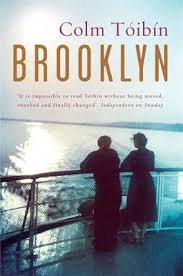
Brooklyn by Colm Tóibín

The Irish writer, Colm Toibin
Irish writer Colm Tóibín

On Colm Tóibín’s website under ‘Essays” is a short story called “House for Sale.” It was written decades ago and attempts to recreate the atmosphere and situation of late 1967 when Tóibín’s father died and he and his brother were left alone in the house with his mother. Early in the story a nosy neighbour comes to visit and relates a story of two Irish men who meet in a hospital ward in Brooklyn. They discover not only that they are from Ireland, and not only from the same county, but from the same town. This obviously got Tóibín thinking about immigration and in particular the Irish kind of immigration: what is it you want by leaving and what is it that you leave behind? As a result of this digression another novel was born, Brooklyn (2010). This is the opening paragraph:

Eilis Lacey, sitting at the window of the upstairs living room in the house on Friary Street, noticed her sister walking briskly from work. She watched Rose crossing the street from sunlight into shade, carrying the new leather handbag that she had bought in Clery’s in Dublin in the sale. Rose was wearing a cream-coloured cardigan over her shoulders. Her golf clubs were in the hall; in a few minutes, Eilis knew, someone would call for her and her sister would not return until the summer evening had faded.

The language is simple – it is hard to imagine it being simpler – but contains a wealth of information. This is going to be a story about Eilis. Her sister works but she does not. Rose has her own money: she has taste and buys leather handbags in the sales in Dublin. She also plays golf, golf clubs are not cheap, and she is part of a crowd that Eilis is not; and the flit into the future makes it clear that this is a routine. Rose works but also parties, and parties late, eats and drinks at clubs, while Eilis does none of these things, she stays at home gazing at other people’s lives from a window.

By the way, the short story eventually became chapter one of his 2014 novel, Nora Webster.

What interests Tóibín is how the immigrant changes, not through any conscious decisions, but merely through contact with the strange and how that strange becomes normal by the immigrant adopting it as a matter of course; and this change is only evident if and when the immigrant goes back home. This is what happens to Eilis Lacey. She goes; she changes; she comes back; she is forced to choose. This provides a neat bi-line for the current movie adaptation of Tóibín’s novel: two loves, two countries, one heart.

Saoirse Ronan Brooklyn pic
Saoirse Ronan as Eilis Lacey in Brooklyn

The film, directed by John Crowley, with a screenplay by Nick Hornby, stars Saoirse (Ser sha) Ronan who you might remember as the 13 year old girl, Bryony, who gets it so so wrong in the film adaptation of Ian McEwen’s Atonement. Ronan, Hornby, and the film are all nominated for Oscars in this year’s awards announced on February 28th.

Having just read, and reviewed Marlon James’s A Brief History of Seven Killings (see previous blog February 6) I was curious to know why one award winning author left me unmoved (James) while another (Tóibín) had the opposite effect.

Tóibín places one character at the centre; his third person narrator describes her feelings, emotions, indecisions, prejudices, desires, faithfulness, and faithlessness in the simplest terms possible, even when the character herself is not aware, or does not understand them. He does this with no other character. Everything is seen through her eyes, her prism. It is as if the narrator is sitting close on her shoulder, spying on her thoughts, seeing everything from her point of view; it is the closest to a first person narrator as a third person narrator can get.

“When she returned she realised that Father Flood had heard about her job at Miss Kelly’s.” Tóibín could have left it up to the narrator to simply say ” Father Flood had heard about her job at Miss Kelly’s.” But he does not do this, we get the information through what Eilis does; how she sees it. His language is formal, no contractions, and straightforward which enhances his authority and leaves our emotions vulnerable and easily affected. However plot points are not obvious. We know all her misgivings, prevarications, fears and hopes; is she in love with Tony? She almost has to talk herself into it, but it is Tony’s reaction to her rehearsed confession that convinces her; but does she really?

 “…and the next time if you tell me that you love me. I’ll …”

“You’ll what?”

“I’ll say I love you too.”

“Are you sure?”

“Yes.”

“Holy shit! Sorry for my language but I thought you were telling me that you didn’t want to see me again.”

She stood beside him looking at him. She was shaking.

“You don’t look as though you mean it.”

“I mean it.”

“Well, why aren’t you smiling?”

She hesitated and then smiled weakly.

“Can I go home now?”

“No. I want to jump up and down. Can I do that?”

“Quietly, ” she said and laughed.

He jumped into the air waving his hands.

All of Tóibín’s Irish characters come from his hometown, Enniscorthy, in Wexford, southeast Ireland. He knows these people but by putting them into unusual surroundings (Eilis in 1950’s New York: Katherine Proctor in Spain, The South; Richard Garay in Buenos Aires, The Story of the Night; Nora in widowhood, Nora Webster) he delights in seeing them falter, challenged, confronted, but ultimately surviving; getting through it all, if not unscathed.

Tóibín is not long on descriptions. In Nora Webster, no descriptions at all! However a sense of place and time is effectively created through fashion and behaviour of the day: the prices and availability of things, the New York Irish attitude to Jews and Norwegians; when coloured women are first served in department stores; the morality of dating, dancing, and music; and what your job, clothes, and choice of words say about you.

It is a romance, a tale of dislocation, of loyalty and belonging, and the meaning of ‘home’. It is also a bloody good read. You may guess the ending but you will not guess how it happens.

A Brief History of Seven Killings by Marlon James.

Marlon James pic
Jamaican writer Marlon James; winner of the 2015 Man Booker Prize for his third novel A Brief History of Seven Killings.

When I heard that the Man-Booker Prize had been announced I quickly Googled it – I was between classes and so I had to be quick, then Googled “Marlon James”, found the ebook on Amazon, and read the first page; or as much as I could in the time that I had. I got excited and quickly texted my sister, a keen reader, in the Barossa Valley to tell her the news and share my excitement. It was a new voice. I downloaded the ebook as soon as I got home.

Reading A Brief History of Seven Killings is like paining the Sydney Harbour Bridge; as soon as you finish you feel an urge, yeah, a necessity, to start all over again if only to prove you have missed something. However there’s a bloody lot you can miss and not miss it.

 He didn’t have to put brief in the title (it so isn’t) nor seven killings (there are many more) in order for us to understand this is fiction; it is, but it is also based on fact (What fiction isn’t?), albeit, just a little bit.

It’s based loosely around the unsuccessful assassination attempt on Bob Marley (“the Singer”) in 1976. It is told through multiple points of view and voices, all in the first person, male and female: local gang members, hit men, enforcers, politicians, CIA station chiefs, journalists, lovers and wives, fixers, and even a dead man; and all in low American and Caribbean English in all its rough and street-wise disguises, Jamaican patois, dialects and accents that will send grammarians screaming from the room.

Shotta Sherrif killing him own now? Him no know say able-bodied man rationed? he say. Must be Eight Lanes birth control. Everybody laugh. I say Mama and Daddy and can’t say anything else but he nod and understand. You want to kill him back? he say and I want to say for my father but not my mother but all I say is y-y-y-y-y and I nod hard like I just get hit and can’t talk. He say soon, soon and call a woman over and she try to pick me up but I grab my Clarks and the man laugh.

 James is not a subtle writer. He’s brash, over the top, risky, outrageous, uncompromising, dangerous, fool-hardy even, but in the end you have to admire the final-effect; it’s like up-close thick ugly paint blotches that when you stand back it all merges into a beautiful attitude-altering scene; and it’s sometimes even funny.

I was inside a woman whose name I cannot remember but she stopped me complaining of thirst.

It’s rude, bloody, violent, numbing at times, annoying, rich, frustrating, sloppy, and self-indulgent.

And the boy mother shout, Lawd! Woi! Tek pity ’pon the boy, Papa. Is ’cause he no have no daddy fi teach him them things! And is lie, she lie, look how she pussy dry up. Josey Wales just hiss because Papa-Lo thinking too much these days, but then Papa rip off the boy clothes and yell out for a machete and beat the boy with the flat side, every whack slapping the air like a thunderclap, every whack slicing the skin a little. The boy bawl and scream but Papa-Lo big as tree and faster than wind. Do, Papa-Lo, lawd, Papa-Lo, but Papa-Lo, is caw she did want me buddy and me never give her, he say, which only make Papa-Lo worse.

To escape his lisp and a limp wrist “outing me as a fag” James as a boy hid away in Dickens’s London, Huck Finn’s Mississippi River or Professor Xavier’s School for Gifted Youngsters; as a young man he hid in the church but then he read Salman Rushdie’s Shame hidden between his leather bible covers:

“I had never read anything like it. It was like a hand grenade inside a tulip. Its prose was so audacious, its reality so unhinged, that you didn’t see at first how pointedly political and just plain furious it was. It made me realize that the present was something I could write my way out of. And so I started writing for the first time since college, but kept it quiet because none of it was holy.”            The New York Times Magazine March 10 2015

Marlon James (born 24 November 1970) is from Kingston, Jamaica. Both parents were in the police force; his mother became a detective, his father a lawyer. Three quarters of the university population were female; a literary or academic career for a man seemed foolhardy; James studied just that; and life off campus was also tricky: he was fearful of becoming a victim of the local rage against “batty boys” – gay men.

“I knew I had to leave my home country — whether in a coffin or on a plane.”

The men haven’t touched you yet but you’ve already blamed yourself, you stupid naïve little bitch this is how man in uniform rape a woman, when you still think they are there to take your cat out of a tree, like this is a Dick and Dora story.

 “The more I second-guess, the more afraid I get. The more overcorrecting I do, the more I second-guess myself, the less risky I get. Half of the risks that are in this novel would not have happened if I stopped to think about it.”

[Risking what?]

“Risking excess. Meaning: two back-to-back explicit gay sex scenes near each other, or seven-page sentences, or a climactic moment in a novel written in free verse. Things like that. It just felt right. I didn’t think about it. I just went into it.”

Well, Marlon, you should’ve thought about it, or at least your editor should’ve, someone should’ve. No, seven-page sentences are not enjoyable, and just because there’s no punctuation doesn’t make it a sentence; it’s just seven pages full of words that at the end of the seventh don’t mean anything. The free verse “climactic moment” works, to a point, but that it comes just before the half-way mark is annoying: what’s all that stuff that comes after it? I lost interest. Even the sex-scenes don’t make it worthwhile.

If you attempt it, sit up straight in good light; be alert; don’t you dare read it lying down; read it in large chunks; set yourself page goals; turn off your phone and TV; send away the kids and tie up the dog; turn off your grammar gene if you have one; better still, put on the alarm and get up in the middle of the night when everyone and everything is playing dead and sink yourself in it.

Marlon James is currently teaching literature at Macalester College in St Paul, Minnesota; writing a fantasy novel Black Leopard, Red Wolf, the first in a series; and working on the screenplay with Eric Roth (Munich, The Curious Case of Benjamin Button) for a TV series of  …Seven Killings to be produced by HBO, which is encouraging since they may be able to decipher the narrative and elide the vast cacophony of words that gets in the way of it. Television is narrative.

“I didn’t set out thinking, [like some say] I’m going to push the boundaries of what is a novel. If anything, I did the reverse. I’m like, “I’m going to stop thinking about the novel and just write and go wherever feels right at the time.” Yeah, right, Marlon.

A Little Life by Hanya Yanagihara

Hanya Yanagihara Pic
American novelist Hanya Yanagihara. A Little Life was short-listed for the 2015 Man-Booker Prize

This is a novel about friendship; no, it’s more than that, it’s about love-ship. It’s a solar system of people, with planets, Willem (an actor), JB (a painter), and Malcolm (an architect), and their hugging friends who hover like moons as they all circle in ever-decreasing orbits around Jude (a lawyer), the sun-like centre; where a career is as important as sex, where sex is fluid and non-defining, where who you think you are can be a million miles away from who others think you are, and where desire is unhinged from the brain and is a simple bodily necessity.

Yes, on one level it is a hymn to this love-ship but it is also a harrowing account of the affects of child sexual abuse and “how far a body will go to protect itself, at all costs. How hard it fights to live. But then the fact is,” she suggests, “our bodies don’t care about us at all.”

Yanagihara puts omnipotence back into the qualities of the third-person narrator: her narrator is fluent in the intricacies of pure math[s] – zero must exist but has it been proven to exist; the legal arguments that define the difference between what is fair and what is right; the architectural pitfalls of urban interior design; the sexual ambivalence of well-heeled twenty-somethings as opposed to the sexual certainty of the under-educated; and the life-threatening aspects and the psychological roller-coaster ride of a physical and emotional retard whose depths of self-loathing are bottomless, but who is, by every account, the most intelligent of the lot of them. This character, Jude St Francis, whose little life this book is about, is the emotional heart of this group of friends living in and around New York City, and we are not spared any of the tragic, horrific, and dehumanising aspects of his existence and upbringing and it is all due to Yanagihara’s skill that his life is so enthralling. She makes it very clear that intelligence can overcome even the most debilitating consequences, while at the same time proving that, in regards to the self, intelligence has very little traction.

Yanagihara’s prose is informal and chatty (conjunctions often begin new ideas, just like a chat with your neighbour), dense (a paragraph can contain the past, the future, and the present – she loves dashes and brackets), and of course her characters are flawed (after-all there are no novelistic perfect characters) but her description of them is pure, true, but non-judgemental; unlike her characters’ descriptions of each other.

And even though it is difficult at any given moment to understand where the narrative is on its own timeline there is a feeling of moving forward; that despite the rich characterisation and back-story anecdotes a narrative is unfolding. She pulls no punches so even as you are enjoying a moment of happiness in Jude’s chaotic, damaged, but professionally charmed life, there is a dread in your guts that it could all come tumbling down disastrously, on the next page. Sometimes you feel like you want to skip a bit, so detailed and horrendous are the descriptions of moments in Jude’s life but the skipping moment is always voyeuristically delayed and finally when the dread is over you can feel that lump in your throat slowly melting away and you can breath evenly again.

Hanya Yanagihara is an American writer and editor of Hawaiian extraction and currently works as the deputy editor of The New York Times Style magazine. Her first novel, The People in the Trees, was considered one of the best in 2013.

I wrote my second novel, A Little Life, in what I still think of as a fever dream: for 18 months, I was unable to properly concentrate on anything else … but if the actual writing of the book was brief, it’s only now that I realise that I had been thinking of this novel for far longer. I began collecting photography when I was 26, 14 years ago; and when I actually began writing, it was these images I returned to, again and again: they provided a sort of tonal sound check, as it were … Now that the book is done, I realize that these images are now so inextricable from the book — and my experience of writing it — that looking at them again is somehow jolting: they’ve become a visual diary of that year and a half, and I find myself unable to look at them without thinking of the life of my novel.

Hanya Yanagihara (http://www.vulture.com/2015/04/how-hanya-yanagihara-wrote-a-little-life.html)

Yanagihara is not interested in marriage; it is not for her, nor for her friends, nor for her characters. A Little Life makes us aware of the meaning of the word, family: how we create them, keep them, succour them, honour them, even when there are no blood-ties, the lack of which seemingly makes this family stronger, truer, safer, more honourable.

This is the first book I can remember reading that made me cry (there are also a lot of laughs, mainly of recognition) well before the half-way mark; it is however, despite the title, a big book. If you find the first fifty pages just a blur of dense information persevere, it is very much worth it.

A great book!

The Search Warrant by Patrick Modiano

Patrick_Modiano_pic

French writer and 2015 Nobel Prize Laureate, Patrick Moldano.

When you watch a movie it is important to understand, not only that decisions have been made about every thing in every frame: the glare from the wet tarmac, the broken zinnia in the vase of otherwise perfect flowers, or the dreadful yellow hat on the third boy from the right, but that even if something is missed, like the broken flower; if someone has not done his or her job well, or even if simply there was not time or money to re-shoot the scene or re-dress the set – so we will just have to live with the little boy putting his fingers in his ears moments before Eva Marie Saint ‘shoots’ Cary Grant in that now famous blooper from Hitchcock’s North by Northwest – we have to acknowledge that what we see is what is meant, and the person ultimately responsible for this is the director, because he or she has allowed his or her name to be put on it.  Just like a name on the bottom of a painting: the person is taking responsibility for what you see. It says, I did this; what you see is what I want you to see.

What the viewer thinks it ‘means’ is something completely different and has nothing to do with the creator but everything to do with the viewer.

Similarly with a book of fiction: what we read is what the writer wants us to read and the writer employs various techniques – tricks – to make us think – believe – in a particular way. Most writing is about wanting the reader to believe that what is written is true; and just like ‘the suspension of disbelief’ that audiences in the theatre and cinema have to do to become emotionally involved is what they are watching, so too does a reader: a young girl is fleeing her convent school and suffering the dangers of occupied France. This is what the writer wants us to believe is true, but it is only the appearance of truth, and there’s a glorious word for that: verisimilitude; but what is really true is that I’m sitting in a nice chair with good light and a cup of ginger tea.

This particular ability to mentally put ourselves in a description of something (using words, paint, dance, light, stone, sound) made by someone else is a wonderfully human characteristic and is the sole reason we have something called art.

One of the tricks writers use to make us believe that what is written is true is detail, and ironically, unknown detail (“I don’t know what the figures 20998 and 15/24 stand for”) makes that belief stronger: writers, creators, don’t usually use words or numbers that have no known meaning. Why does he tell us this? Because it is true; so goes the logic.

The Search Warrant, or as it was originally published in France, Dora Bruder, is the 1997 novel from this year’s recipient of The Nobel Prize for Literature, Patrick Modiano. The story is sparked, so he tells us, from a missing-person ad in the magazine, Paris Soir, dated 31 December 1941, which reads,

PARIS

Missing, a young girl, Dora Bruder, age 15, height 1.55m, oval-shaped face, grey-brown eyes, grey sports jacket, maroon pullover, navy blue skirt and hat, brown gym shoes. Address all information to M. and Mme Bruder, 41 Boulevard Ornano, Paris.”

 As a reader, one accepts this. I can comfortably say that no reader is going to spend the time and effort researching copies of Paris Soir, and in particular the issue from New Years Eve 1941, to verify if this ad is true. It does not matter if it is true or not; in the world that Modiano creates between the covers of this fiction, it is true; we believe this, and to assist us in this belief Modiano includes a footnote (footnotes are also very useful in creating verisimilitude), giving the title of the column in which the ad appeared (“D’hier a aujourd’hui” – “From Day to Day”).

Modiano is obsessed with the past, and in particular, the German occupation of France and the French resistance during World War II even though (or because of it) he was born the year the war ended, 1945. “The plot too is the recognisable one [all Modiano’s plots are markably the same] as a search into the past of a first-person narrator.”*. It is a work (some, like Kawakani, say not a novel) that infuses memoir, (auto) biography, detection, and memory. The reader finds out much more about the narrator (the writer?) than he does about Dora Bruder. The narrator knows the address of the parents, 41 Boulevard Ornano; it is next door to a cinema he visited as a child. He, like Dora, and his father, like Dora’s father, Emile, are French jews and subject to the whims and prejudices of the German occupying forces that involve lists, registers, travel documents, curfews, identification badges, suspicion, and intimidation. There are many questions in this book, almost every chapter begins with one; questions about Dora Bruder that Modiano cannot answer, so he answers with details of others; police reports, timetables, journal entries, and memories of writers of the period; and if one of these writers once slept in the same room as he, or Dora, all the more reason for including it. These glimpses of many lives still add up to the shattering truth of Dora’s; at least one which Modiano wants us to believe.

The autobiographic detail is fascinating – what a surreal time and place to be in where what authorities think you are can cause alienation, deportation, imprisonment, death – and the mystery of Dora pulls you along, but memory as we all know can be treacherous.

(I have a friend, let me call her Gillian. Every time I poach tamarillos I have a vivid memory of Gillian showing me how, in the kitchen of someone else, let me call him Harry. Gillian, however, has no recollection of this, not of ever eating poached tamarillos, before I fed her some on a recent visit, or of ever being in Harry’s kitchen. Did this event happen? I believe it did. She believes it did not. What is true?)

As I’ve said before, somewhere**, fiction is all about truth, but to make it clear, one has to lie about it a little.

On his Italian father’s side he is descended from Sephardic Jews from northern Greece; his mother, was a Flemish actress, “a pretty girl with an arid heart“; Flemish is Modiano’s first language as he was raised by his maternal grandparents: his father, a black-marketeer,  was interned, his mother on tour. His younger brother Rudi died at the age of 9. Moldano wrote a memoir about his childhood and called it Un Pedigree: I couldn’t write an autobiography, that’s why I called it a ‘pedigree’: it’s a book less on what I did than on what others, mainly my parents, did to me.” He is married with two daughters.

 He writes about “the pull of the past, the threat of disappearance, the blurring of moral boundaries, the dark side of the soul“*** ; his art “is the art of speculation“****.

Whatever this book is it is a fascinating way (‘postmodern!’ I hear someone screaming) to tell a story. His novels are only now starting to appear in English, spurred on, no doubt, by the Nobel Prize. Search them out and let me know what you think.

-oOo-

*Kawakani, Akane; 2000, A Self-conscious Art: Patrick Modiano’s Postmodern Fictions, Liverpool University Press, Liverpool

**In a soon to be published autobiographical fiction called Johnny William & the Cameraman.

***Schwartz, Alexandra, The New Yorker Oct 9 2014

****Schwartz, Alexandra, The New Yorker Oct 5 2015


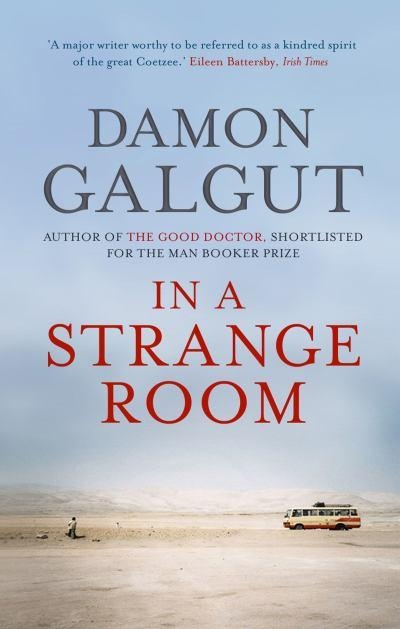
In a Strange Room by Damon Galgut


image
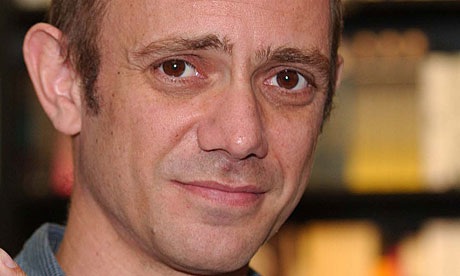
The South African writer, Damon Galgut

It is about a South African man called Damon; it may be Damon Galgut, or it may not.

He is only passing through … he doesn’t carry any abstract moral burdens, but their absence is represented for him by the succession of flyblown and featureless rooms he sleeps in, night after night, always changing but somehow always the same room.”

 He is a walker, a little lost, a little directionless, a little uncertain of his own motives; a sojourner. He is walking in Greece where he meets, on the road, an enigmatic, and attractive German, Reiner – “He knows that he is beautiful and somehow this makes him ugly”. They travel together but the relationship never grows beyond the casual, despite the sexual tension in the air. Galgut is good at sexual tension. Yet even the casual becomes a disaster.

His second journey, Lover, involves meeting a mixed bunch of people, Jerome, Alice, Charles, and Rodrigo and following them over half the African continent. He doesn’t know why. He sometimes is surprised at what his legs are doing, at what direction they are taking him. Jerome seems interested in him but Damon does nothing. He leaves them, regrets leaving them, plans to follow, but doesn’t then eventually does. This ‘action’ is by no means boring; it is the most intimate of prose, deeply interesting, deeply personal, almost uncomfortably so at times. “It is a story of what never happened, the story of traveling a long way while standing still.”

 The third part, Guardian, is concerned about his traveling companion, Anna, on a trip to India. She is teetering on the edge and threatens to drag him over with her. She relies on a trove of pills which, if taken as directed, will reboot her life but if taken all at once will take it away, and what’s he to do in India with a corpse?

There is something about this book that I must tell you; it is the most unusual fiction, although thrilling too, I have ever read. I was in two minds about telling you about it; it may put you off, I can think of two people that it would put off, but it is so essential to the tone of it, the flavour of it that I could not not tell you. It is told in the third person, and begins, “He sets out in the afternoon on the track that has been shown him….” and very soon he sees a figure in the distance walking towards him. Eventually they approach each other; both watching each other. The figure is described, all dressed in black; “Even his rucksack is black”, and then at the bottom of the first page, there is this, “What the first man is wearing I don’t know, I forget.” I felt a jolt. What? There is the walker, and the man dressed in black, and now another man? “I”? I read the first page again; maybe I had missed something. No I had not missed something. I read on and peppered sparingly are these first person references, and I realised that the third person narrator is referring to himself: the ‘he’ and the “I” are the same person, Damon; so, yes, maybe Damon is Damon Galgut. The writer is his own character. This is a little alarming only if you aren’t prepared for it; hence my telling you. Galgut is also free with punctuation especially of conversation:

Where are you from. He has an improbable English accent, very overdone. South Africa, goodness me, how did you get up here. Through Malawi, my word, I’m off to Malawi in a few days. Look around, yes please, be my guest. What did you say your name was.”

My same two friends would be equally put off by this, but it is surprisingly clear; or maybe it is only a thought of conversation, an expectation; a fictive chat.

Despite the title of the book what action there is takes place as far away from a room as you can get: the open road. Whether it be Greece, Malawi, Switzerland, India, or Kenya he is a traveler and his life is about the people he meets and journeys with, but the drama of this book is in the man himself, the ‘he’, the ‘I’ and in a sense this is a stronger form of autobiography: Galgut (I) is standing apart from himself, watching himself (he), describing his actions, trying to work out what it is about himself. “I am writing about myself alone, it’s all I know, and for this reason I have always failed in every love, which is to say at the very heart of my life. He sits in the empty room, crying.”

Lines like “I don’t remember what they do for the rest of that day” meaning ‘what I did for the rest of the day’ give the feeling of truth; ironically the admission of no action makes it all the more believable.

“In the morning his actual departure will be an echo of this one. He has already left, or perhaps he never arrived.”

Yes, in the first two parts of the book the action is languid, undefined, unimpressive; where the drama is all internal: a personal journey to try and work out why Damon is like he is; fascinating it its novelistic skill. Part three begins as expected but suddenly a life hangs in the balance and Damon is forced to act. The pace is frenetic, the action white-hot, and Galgut doesn’t pull any punches. It hits you in the guts just like it did him, and I read and read ’til the end, redefining the term ‘page-turner’. His skill at internal drama is eclipsed with his mastery of fast-paced action. It’s head-spinning stuff!

I wait with heightened expectation for Galgut’s next work.


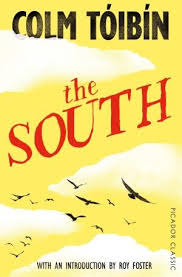
The South by Colm Tóibín


Colm Toibin 1987
A young Colm Tóibín 1987

For a woman who, at any given moment, doesn’t quite know what to do, Kathleen Proctor, the protagonist in Colm Tóibín’s The South, has accumulated a raft of major decisions by the time she hits forty: she has abandoned her husband (just like her mother had done), son, and country; moved almost penniless to Barcelona, said yes to her mother’s financial support; taken up painting, taken a lover for his looks and attention; moved with him to the top of an isolated mountain in the eastern Spanish Pyrenees; and had a daughter. She just can’t decide if she should stay or go.

Tóibín’s attitude to, or fascination with, motherhood is a flavoursome ingredient in a lot of his work: it’s foremost in his first Booker Prize nominated novel, The Blackwater Lightship (1999) – about three diffident mothers; it underpins the decisions of the protagonist in Brooklyn (2009), she runs away from hers; The Story of the Night (1996) opens with a dying one; it is pivotal to his latest novel Nora Webster (2014) when a mother finds herself a widow and reclaims her life as ‘hers’, not ‘theirs’; & Jesus! how mother-obsessed can you get when you write a lengthy, grumpy, but redemptive speech for the mother of God, The Testament of Mary (2012). Here in his first published long-form fiction it is something that the protagonist, Kathleen Proctor, is ambivalent and confused about: children get in the way, children make a mother out of a woman and if it’s a woman you are trying to be, being a mother seems like a second choice, and she lets it happen, twice!

 I went to live in Barcelona in 1975, when I was twenty. Even before I went there, I knew more about the Spanish Civil War than I did about the Irish Civil War. I liked Barcelona, and then I grew to like a place in the Catalan Pyrenees called the [Farrera de] Pallars, especially an area between the village of Llavorsi and the high mountains around it. Until the late nineteen-fifties, the eight or nine villages in the area were cut off from the outside world, with only a footbridge connecting them to Llavorsi; there were some mountain passes, but no roads into France. I loved how enclosed it all was. For the past twenty years, I have spent a part of every year there.”

Colm Tóibín The New Yorker, February 24, 2013.

 Tóibín worked as a journalist in Barcelona and wrote many short stories, including explicit autobiographical tales; a journalistic book about the city itself, Homage to Barcelona came out in 2002, and also this, his first novel, published in 1990.

It establishes Tóibín’s style; stark, formal, where the language is simple but clear – you never have to rush to the dictionary:

Isona was playing on her own in the garden. Katherine picked her up and took her into the house. Miguel was in the kitchen. Katherine put Isona down. There was hot water on the gas; she washed out the jug and poured in the milk from the bucket.                                                                                                               The South, p 141.

 Like frames from a film where the reader supplies the action between each one; the movement between frames. The action seems mundane but the drama is in what the characters may be thinking or feeling but not saying.

He also spends short introductory paragraphs describing the weather, the place; something he no longer does.

Surprisingly the book opens with a first person narrative, by Katherine, of her first few disorientating days in Barcelona, alone and poor, after her abandonment of Ireland and her family. I’ve always been disquieted by works where the gender of the story-teller is different from that of the author (a publisher who turned it down thought it was written by a woman) but Tóibín’s honest prose appeased my initial objection via a detailed description of a potential molestation, in the dark, on a train, and I forgot all about gender; more about this later.

The South is a story of wish fulfilment even though Katherine doesn’t know quite what the wish is. However she takes up painting because she moves in painterly circles and it becomes her wish: to be a painter. Her development as an artist, and growing confidence, is reflected in the size of her canvases: small bits of paper at first but eventually to formats so big that they have to be left outside covered in plastic. She disappoints her husband and child by leaving them but picks up with two disappointed men in Spain; one she sleeps with, the Catalonian, the other, the Irishman, she doesn’t. Her life in Spain is about passion, sexual and artistic, the former she learns to do without, the latter she concentrates on but success is not what interests her. She doesn’t care, she is doing what she wants. Even tragedy becomes part of the passion: a rich and full life, albeit a penniless one.

As the book begins with a departure, it ends with a return; she faces the consequences of her youthful, and selfish determination, and learns to live with the forgiveness, of sorts, that is offered to her.

Although Tóibín’s featured characters are usually women, their gender isn’t what interests him. If a man had squeased two children out of his own body, born of love, necessity, acceptance, resignation or simple lust, and was then expected to care for them even if he didn’t want to; even if doing so made him feel less of a man; this is what interests him. This is what feeds his novelistic brain: human beings coming to terms with, not coming to terms with, fooling themselves, berating themselves, celebrating, manipulating, cursing, damning their own biology.

There are hardly any women at all in The Master (2004), arguably his masterpiece, but that’s exactly what it’s about too.

Oh, and by the way, The South doesn’t appear on Tóibín’s website; there’s not a mention of it. However in the new edition I have just read (Picador Classic Series) – my first copy was lost with my entire library in 2010 – there is a charming Afterward by the author where he talks of it with some affection and also surprise that he managed to finish it.

One day, when I had no idea how to proceed, when no new images came, when I felt I was blocked with the book, I remembered what Barrie Cooke had said. I made a mark. I decided that I would write the first thing that came into my head and then make it stick. What came was: ‘The Sea. A grey shine on the sea.’ I was surprised by this and began to work with it.

Colm Tóibín’s,  Afterward, 2015.

Colm Toibin 2015
Colm Tóibín 2015

The Blackwater Lightship by Colm Tóibín

Colm Toibin
Colm Toibin

In 2009 in the US state of Illinois two siblings, Steven and Kathryn Miner, began a lawsuit against their mother, Kimberly Garrity, for ‘bad-mothering’, suing her for $50,000 for ’emotional distress’: the mother had sent her son an ‘inappropriate birthday card’ that did not contain any money; called her daughter to come home early from a ‘homecoming’ event; and threatened her 7 year-old son with the police if he did not put his seat belt on. Two years and two courts later the case was thrown out. The fact that one of the sibling’s lawyers was their father, Garrity’s ex-husband, only adds fuel to the farce. What is bad mothering? What is good mothering? How do mothers learn to be mothers? Today there is a wealth of information on the internet, as well as publications and TV shows but for baby-boomers, people born in the decades after World War II, there was no such help; mothering was assumed to be innate.

Colm Toibin’s fourth novel, The Blackwater Lightship (1999), which earned him his first appearance (the first of three) on the Man-Booker Prize short list, is about just that: mothering. It is a story of Helen, a young mother of two boys, her mother, Lily, and Lily’s mother Dora. All mothers. These three women are thrown into a crisis when a man called Paul, the best friend of Declan, Helen’s much-adored brother, visits her with awful news. Declan is in hospital. He has AIDS and he has had it, unknown to his family, for a long time. He is dying and he wants to be taken to his grandmother’s house near the sea, and he wants Helen to break the news to their mother, Lily. The husbands of these mothers are either dead or away: Helen’s husband has taken their two boys to visit his family in the west.

All this is most difficult for Helen, who has been estranged from her mother, and grandmother, for more than ten years: over-mothering is what Helen would describe as the reason. However Helen does as she is bid. She re-arranges her busy life as an education administrator, breaks the news to her mother in her mother’s new and expensive house, a house Helen has never seen before and they take an emaciated and very sick young man to his grandmother’s house on the coast where he remembers boyhood summer visits with affection; but two of Declan’s friends come as well: Paul, of course, and another gay man called Larry.

The three men sit in Declan’s bedroom with the door shut, talking and giggling, while the three women sit around the kitchen table trying to think of something to say to each other; what they have in common is only the past, and the past is thwart with danger.

Transience is everywhere. Grandma’s house is falling down and in a few decades it will probably fall down the cliff and into the sea, just like the house down the road where only a back wall remains: the coast is moving inland, time is winning. Declan can remember the lighthouse from his childhood, the Blackwater Lightship, but it is no longer there, replaced by a modern electric one, its moving beam washing over the house and everyone in it

Three diffident mothers and two confident and self-assured men haggle over mothering rights. The men win because the men know what to do. All Declan wants from these women in his life is for them to love him. Unconditional love is something all three women know very little about.

This was the book that introduced me to the work of Colm Toibin. His formal and authorial prose (no contractions) clearly defines the boundaries between these people and his deft handling of the back-stories and the changes and smudges that develop over these boundaries brings a smile to your lips (Larry tells a bemused Grandma about his first sexual experience) and a tear to your eye (Declan’s stark, angry but silent confrontation with his future as he sits by the fire staring into it; the women set the table and chat about the weather not knowing what else to say).

It is a confrontation between the past and the present; a clash of generations; a stark reminder of how far the world has changed in a single lifetime; it highlights the difference between mothering and caring, and it is a wonderful affirmation of the power of literature.

If you don’t know the work of Toibin, and you should, this is a great place to start.


Burial Rites by Hannah Kent

Hannah Kent lic

Hannah Kent

On January 12, 1830 in a poor rural community in northern Iceland, Agnes Magnúsdóttir, 34 years old, a farmhand, and Friðrik Sigurðsson, a farmer’s son were beheaded for the murder of two men almost two years earlier. For the months leading up to her execution Agnes was forced to live with a farming family who were extremely reluctant hosts but forced to do so by the farmer’s local administrative responsibilities. The executions were the last in Iceland, for in 1869 executions were outlawed in Iceland under Danish law.

In 2002 Hannah Kent was 17 years old and on a student exchange program, living and studying, in the north of Iceland. She arrived in January when the place was dominated by snow and darkness (for 20 hours a day). She was lonely, socially isolated on the edge of the world, and cold. On a trip around the region, obviously in a gap in the weather, she asked about local places of significance and she was directed to three small hills, white against white, where, her host parents said, a woman called Agnes was beheaded: the last execution in Iceland.

“I was immediately intrigued. What had she done? What had happened? … Retrospectively, I can only speculate that the strange, isolated place of Agnes’s death made me think of my own feelings of loneliness; that I thought of Agnes as a fellow outsider in a remote Icelandic community, and I identified with her in some small way.”

In January 2011 Hannah Kent had to face the task of writing an historical novel as the creative component of a PhD and her discovery of Agnes’s story nine years earlier sprang to mind.

Burial Rites is the result.

The thought of reading an Australian writer’s work with no gum trees (no tress at all actually), no kangaroos and no barbeques was too tantalising to resist. Kent uses two narrative frames: an uninvolved narration in the third person and a more poetic one in the first, as Agnes and so giving her a voice. The landscape, social and familial structures are revealed, not in dense descriptive paragraphs but as a background to the action. The arrival of Agnes at the lonely farm, her ostracisation, her predicament and demeanour are all skilfully drawn as is the family members of her reluctant jailers; and part of the charm of the situation is the slow growing understanding between the doomed woman and her hosts.

Of course the force that drives the plot is ‘did she or didn’t she’ and as the months of summer give way to the always harsh winter Agnes’s position improves and one thinks that the details of her background and crime will emerge in her religious counselling from a very young trainee clergyman, Toti (a rather wasted character). However this does not happen, instead Kent peppers the text with the story of Agnes and the eventual crime of which she is accused, through more poetic monologues from Agnes, part of the first-person narrative, and through dialogues by the fire with the mistress of the house, Margrit. This is a mistake on Kent’s part as she already has an impartial third person narrator that could faithfully serve as a means to dramatise the events rather than through a static duologue of two women sitting down before a fire in the dead of an Icelandic winter. Agnes’s first person narrative is intriguing and personalises the historical figure, which is exactly what a first-person narrative should do; but in the latter stages of the story, when we discover the romantic relationship between Agnes and one of the dead men, Kent’s re-imagining of this relationship descends into soap-opera of the ‘love him-hate him-love him’ kind. Such personal ruminations may be the musings of a lovelorn teenager but Agnes is mature, intelligent, and self-aware so notions of ‘if only I could talk to him I could change his mind,’ do not ring true.

These weaknesses in the text damage Kent’s novelistic authority but in relation to the work itself they are minor. Burial Rites is an imaginative, a mostly well-crafted debut with a wonderful evocation of period and life well within the Arctic Circle, and I look forward to her next work, which I believe will also be set in Iceland.

Burial Rites has won, among others, the Victorian Premier’s Literary Award People’s Choice Award, and for Kent she was named the 2014 Sydney Morning Herald Best Young Australian Novelist.

Kent co-founded and served as deputy editor of the Australian literary journal Kill Your Darlings. Burial Rites was released in Australia, the USA and the UK in 2013 and translation rights have been sold to 15 countries. In October this year she toured Canada as a guest of the Calgary’s Wordfest, the Vancouver Writer’s Festival and the International Festival of Authors in Toronto.

It was reported in 2013 two months after the book’s release that Jennifer Lawrence is scheduled to star, as Agnes, in the movie version of Burial Rites, directed by her Hunger Games director, Gary Ross.