Stone Yard Devotional by Charlotte Wood

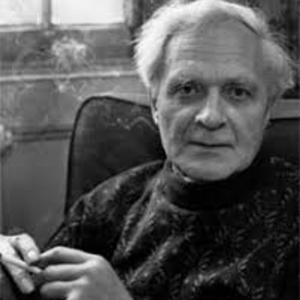
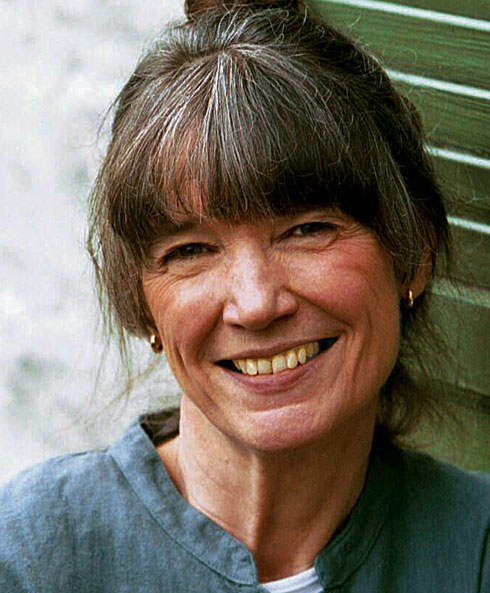
Australian writer Charlotte Wood

This is a book about memory and how, as we age, we grow to understand our former imprecise and naive selves as we try to make sense of the world around us.

The narrator, an environmental activist, wife, mother, and atheist leaves her life and family behind to live in a remote religious community of nuns in the Monaro region of Southern NSW where she grew up. It’s a penny-watching community, understandably, viewed with suspicion by the locals, especially women, but where a local man helps out with the more physically demanding chores. Once the narrator is settled and eventually pleased with the decision she had made her life and that of the community is visited by three challenging occurrences: the return from overseas of the remains of a long lost, and murdered, nun from the community, a high-profile nun who was once the narrator’s schoolmate but an outsider due to poverty and public violence, and a mouse plague. All three interruptions spark questions about death, choices, what is sacred, commitment, parents, especially mothers, the truth about childhood events, forgiveness, and prayer.

‘I shovelled the compost and spread it, shovelled and spread, preparing the soil and waiting for things to make sense. Tried to attend, very softly and quietly, which is the closest I can get to prayer.’

Prayer isn’t an email to god seeking answers or gifts; it’s a form of meditation where the pray-er tries to make sense of what they believe.

Although the narrator is an unbeliever she joins in with the daily religious observances and finds solace in the routine and order they give her life. In fact the easy reading of it has a meditative effect, a consequence I particularly welcomed.

The book is also a testament to the emotional strength of simple clear and uncluttered language especially since it made the short list of this year’s Booker Prize. The format is similar to a diary, anecdotal, episodic, where daily actions are recorded juxtaposed with daily memories in an attempt to ‘work them through.’

I don’t think this book would appeal to young people as the attraction here is thoughtful consideration of a past life in order to come to an understanding of the kind of person you are and to forgive yourself for missteps in thinking and actions which were not entirely your fault.

Here is a short but succinct video of Charlotte Wood talking about this book.

The Labyrinth by Amanda Lohrey

Australian writer Amanda Lohrey. The Labyrinth won the 2021 Miles Franklin Award, the 2021 Voss Literary Prize, and the 2021 Prime Minister’s Literary Award for Fiction.

I came to Lohrey’s novel, The Labyrinth (2020) with a little trepidation. I hadn’t read her fiction before but knew her from book reviews in (I think) The Monthly. I don’t remember much about them as there was very little information about the books or writers, which is why I found her reviews extremely annoying: heavy writerly syntax and nothing much else.

A visiting friend had left The Labyrinth with me. It sat on my coffee table for a few days when I finally picked it up. I put a lot of faith in page 1 and this page 1 did not disappoint, in fact it galvanised me to continue.

It’s a familiar narrative trope epitomised by the 1949 novel, Shane by Jack Shaefer which was filmed in 1953 and its success launched the plot as an iconic narrative; it was originally published in 1946 in three parts in Argosy magazine, and originally titled Rider from Nowhere: a stranger arrives in an isolated place and changes the local’s lives forever. Such a well-used storyline has morphed into more sophisticated versions over the decades – including, it’s the stranger who changes – but the bones of it are just that. John Boyne’s latest novella Water (2024), the first of a quartet, has a similar spine. Boyne’s protagonist is escaping her past; Lohrey’s, Erica, has followed hers: her son is imprisoned in a local gaol and she’s bought a dilapidated cottage to be near him even though he’s quite antagonistic towards her. As a mother she feels she has no choice; she’s all he has, she says… in fact, he’s all she has.

The first-person narrative allows Lohrey to tantalisingly release little bits of information from Erica’s back story which keeps the reader’s attention and interest. It also doesn’t allow any close writing of any other characters leaving them as intriguing observations and keeping the focus solely on the protagonist, her thoughts and fears; that’s the beauty of the first person.

While she waits for her fortnightly visits to her son, Daniel, Erica embarks on a project inspired by her late father, and plans to build a labyrinth in a flat piece of land between her cottage and the sand dunes. A labyrinth is a single continuous path but of an intricate and mathematical design that promises you will achieve the goal of getting to the centre if only you keep moving forward. A maze, on the other hand, has many turns and dead-ends so reaching the centre may never happen. A labyrinth is inspirational; a maze is a game.

An itinerant Albanian, Junka, possibly an illegal immigrant, is a wonderful novelistic creation. He is camping near the beach and happens to be a stone mason and seeks to keep Erica on track to build her labyrinth. Make what you will of the symbolism, if you think it’s relevant, but the narrative is engaging and the characters interesting even though the plot is soft and the ending a little undercooked.

 Here, listen to Lohrey talk about the book and what inspired her to write it.

You can purchase the book and other Lohrey writing here.

.

The Heart’s Invisible Furies by John Boyne

Irish writer, John Boyne whose work has been translated
into 59 languages making him the most translated Irish
writer of all time.

This is my second reading of this book. Back in 2017 I read it for the first time and fell in love with Boyne’s work. Here is my blog from that first reading: it’s still apt and relevant.

Many years ago, on a small plane trip – the plane was small, not the trip –  as we were about to land in a provincial Queensland town, I continued to assiduously read my book. I was laughing so much, trying not to, but not succeeding, that my eyes were streaming, my nose running, and my face felt hot and red; the flight attendant broke the rules, unbuckled, and hurried to my seat to ask if I needed medical assistance. I just held up the book; I was unable to speak. She understood. Maybe she’d read it too. It was the hit of the season. The hysterical section was the Nativity Scene from A Prayer for Owen Meany (1989) by John Irving. The next time I laughed out loud, many decades later (yes, decades), was with this book, and the (highly illegal) Dinner Party Scene, from early on in The Heart’s Invisible Furies (2017) by John Boyne. Ironically Boyne has dedicated this book to Irving.

Making people laugh via the written word, and only the written word, is an extremely difficult and hazardous task. You can’t under play it or over sell it, and you certainly can’t ‘back-explain’ it; it’s all to do with tone, and tone is like a law of physics: it only happens when the universal conditions are absolutely right. It’s as if you need to foster a certain psychological state of mind, and write the episode with as much truthfulness and sincerity as you possibly can – don’t elaborate – just tell it, and if the tone is right, it will be hysterical. If it isn’t you can’t go back and make it right, edit it funny, you have to delete it all and start again. A plane will only fly if all the necessary preparations and current circumstances, weather, wind, mechanical health, operational skill, and power source, are perfect.

The dinner party – and it’s impossible to explain why it’s illegal, you’ll just have to read it to find out – is on page 92, but the preparation for it, and the other laugh-out-loud bits, preparation for the tone, I mean, in true Irving-esque fashion, begins right from the first killer sentence; and by the way, the opening sentence of Owen Meany has to be the killer-opening-sentence in all literature. There was a time when I knew it by heart and it became my dinner-party piece for some time after. I can’t sing, tell a joke, or play the piano, you see.

Boyne considers Irving a mentor, and Irving should be chest-thumpingly proud.

It’s impossible for Boyne to escape the moniker of “author of The Boy in the Striped Pyjamas” which he understands only too well, and he’s certain it will appear on his grave stone, so internationally popular was the book and film; but it changed his life making writing full time not only a possibility but a happy necessity.

Boyne was born in 1972. Ireland brought him up but the Church brought him down. He still suffers from its cruelty and hypocrisy. He’s not alone. His anger is present in this book but, much to his credit, he’s fashioned it into a cutting humour without lessening the truth of his understandable hatred.

The Heart’s Invisible Furies explains the life of Cyril Avery, although not a real Avery, from his pre-birth to two months before his death; from 1945 to 2015; and it is also the story of Ireland over that time; from a society dominated, straightjacketed, and suffocated by the Catholic Church, under the guise of strengthening morality, to one that legalises same-sex marriage. It’s a hell of a journey.

It’s full of surprising events, fashion, villains, extremely bad behaviour, political unrest, beauty, deception, selfishness, redemption, tears – yours as well as the character’s, death, forgiveness, love, birth in the midst of murder, politicians behaving badly, coincidences, literature, weddings, doctors behaving courageously, dreams – both fulfilled and dashed, sentiment, laughter, bigotry, violence, and even the ludicrous; in fact the entire palette that paints our lives that all conspires to prove that age-old adage, nobody’s perfect. And all these elements are wound around a cast of characters you won’t easily forget, and nor would you want to.

Boyne skilfully uses many literary devices to tantalise and seduce his readers: he drops in an outcome before explaining how it happened; he triggers the reader’s memory before the character’s; and, best of the lot, dramatic irony: when the reader knows more that the characters do.

I love this book and I’ve recommended it to others, who too have loved it. I’m preparing a space on my bookshelf, between Jane Bowles and Peter Carey. You can get the book, in various formats, here.


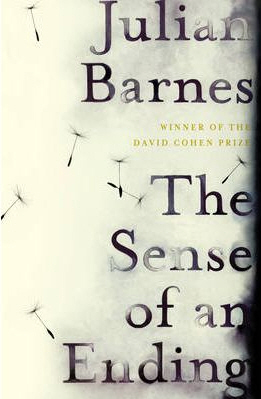
The Sense of an Ending by Julian Barnes

British writer, Julian Barnes

This book from 2011 has been sitting on my bookshelf for some years, winking at me. I have never been sure if I had read it, so I did. In a book world dominated by thick tomes, a novella like this can be a god-send. Claire Keegan, Foster (2010) and Small Things Like These (2021), an Irish writer, has been lately championing the novella as a legitimate art form.

This is a story about memory: what we remember and what we think we remember. Tony Webster, the first person narrator, is in his latter years and he tells us about his school days when he was nerdish, oh-so clever and amusing and, with his two mates Chris and Alex, a little ahead of the pack – so they liked to think. This gives Barnes a delicious excuse for self-deprecating witticisms about his youthful behaviour as seen from the distance of his much older self.

A new boy arrives, Adrian Finn, quite a bit ahead of them in intelligence and maturity, but who attaches himself to the three friends, which surprises everyone especially the trio themselves. Flattered though they were.

Later at university, hoping that his life will soon begin, he meets the enigmatic Veronica and does all the right things, as prescribed by his conservative and very British culture, which, in reality, is nothing much, just waiting for things to happen. They don’t. However, Veronica does invite him to meet her parents, and brother Jack for a weekend. Jack, in an aside, says, ‘I suppose he’ll do.’ And that seems the belief of Veronica as well. And still nothing happens. But Veronica’s mother, quite likes him, and he quite likes her. You get the impression that she is attracted to her daughters ‘young men’.

Finally Veronica ‘comes across’ but only after they break up.

Life continues, he and his friends drift apart, he finishes university, ages, gets married, has a child, gets divorced but keeps a close relationship with his ex-wife Margaret. He then hears from Adrain Finn via a short letter that he and Veronica are now a couple. Tony is furious.

Part One concludes with the news that Adrian Finn has killed himself, diagonally slashing his wrists (apparently that is the best way to do it) in a hot bath, and left a letter explaining that his suicide was planned and philosophically justified and so no one needs to be upset. He also leaves an apologetic letter for the paramedics and hospital staff that had to deal with his corpse. Adrian Finn; first class honours, first class suicide.

Part Two opens with the elderly Tony receiving a certified package in the mail: he has inherited £500 … and a diary, but there is no diary in the the package. Astoundingly, the deceased is Sarah, Veronica’s mother, who in her accompanying letter tells Tony that Adrian, before his death, was quite happy.

This entertaining, intriguing, and very well written novel takes us through Tony’s attempts to winnow through his memory and re-engage with people he hasn’t seen in decades to answer so many bewildering unanswered questions. Why did Adrian kill himself? Why did Sarah have Adrian’s diary? Why did she leave it to Tony? (Why was it her’s in the first place?) And why won’t Veronica, still enigmatic as ever, tell him what he wants to know? What did he miss all those years ago? AND, where is the diary? Was he so stupid, so unengaged? Did his mistakes then as a young man have anything to do with his mistakes as an older one? Maybe. He was alone then; he’s alone now.

I’m sure that any reader over 50 will see themselves, to some degree, in this book. I loved it even if Barnes throws up some very unflattering mirrors at me.

And last night I watched the 2017 movie version with a stellar British cast: Jim Broadbent, Charlotte Rampling, Harriet Walker, Emily Mortimer, Michelle Dockery, and Billy Howle.

You can buy the book in various formats here.

And here is a short video with Julian Barnes on The Musings of a Novelist.

7½ by Christos Tsiolkas

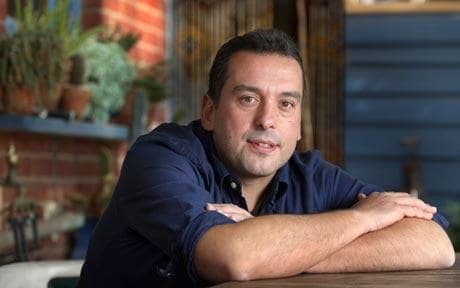
Greek-Australian writer, Christos Tsiolkas.

I have heard several heated discussions about this book. I’m a Tsiolkas fan but my appreciation has waned since his Damascus which was an ambitious work and although there were some evocative sections it was ultimately a disappointment for this reader.
In fact I’ve been reading Tsiolkas since The Jesus Man (1999) – good, then Dead Europe (2005) -fantastic, and then, of course, The Slap (2008) – brilliant, then Barracuda (2013) -good, Merciless Gods (2014) – very good, then Damascus (2019) – not so good.
I found this one in a swap-library at a modest beachfront hotel in Candidasa, Bali, my island home now for 12 years. So, I picked it up and exchanged it for several copies of The Economist.

All of these matters politics, sexuality, race, history, gender, morality, the future – all of them now
bore me.

It’s a novel about a writer going away by himself to write a novel. It’s a mixture of autobiography,
memory, criticism, natural history, angst, and confession.

Most writers are glorified and bewildered by the fiction writing process. The difficulty of squeezing in the writing process into one’s life seems a rich seam of inspiration. And it is! But not, I fear, for readers. What Tsiolkas has tried to do is worthy of trying but there’s a reason that it’s not attempted more often. I’m not really interested in how a stylish but comfortable pair of shoes is made; I just want them to be stylish and comfortable.

Although he tells us there are 3 stories he wants to write we only really get to know one: Sweet Thing.

A young couple, Paul and Jemma, who met as porn movie actors, and their son, Neal. An elderly gentleman offers Paul $US150,000 for 3 nights with him. They need the money. There isn’t a moral dilemma here, the tension is the trip back to the USA, and not the encounter with the desotted man but the attempt to reacquaint himself with friends, family, and country; a trip into, and escape from, his personal idea of hell, with undertones of, and references to, Dante’s Inferno, the first part of 14th Century writer’s epic poem, The Divine Comedy.

The marketing blurbs on the covers put me in mind of a writer who isn’t comfortable with his idea, a
long held idea, he tells us, and so needs to isolate himself with only the idea for company.

truth and imagination are enemies.

I don’t believe that: fiction, via our imagination, can help us see the truth. He says he wants to write about beauty. But what does that mean? Beautiful people? Beautiful actions? Beautiful relationships? He loves the idea of writing about beauty but doesn’t articulate how it may be achieved. What is most vivid in this book are the scenes where beauty is nowhere to be seen.

Every artist, very writer, must have an element of the superstitious to them … we have faith in
alchemy.
Yes.

He gives in to the temptation of writing as therapy, yet doesn’t acknowledge that such self-absorption
sidelines the reader. All writers must know that writing is, as he says, via alchemy; writers want that
alchemy to be understandable, enjoyable, want it to resonate with the reader, and so edit it to make it
more so. I don’t know how a writer can ever ignore the reader.

I am a writer, and I believe in the utility of by accident, its necessity.

There are moments of verbosity that sound forced but can be forgiven since this is not so much a novel as a DIY manual – with examples.

Tsiolkas’s narrative jumps seamlessly, grammatically speaking, from his minute by minute existence at the beach house to the story he’s writing, Sweet Thing, to memories, some long lost, as he paddles around the beach and house while trying to write. The ‘work’ is always present. This may make the reading confusing but it doesn’t. Writers, I’m sure, know this feeling, which causes great annoyance to the people who share their lives: their current project is forever taking the writer away from, and getting in the way of, them and the present.

There are pesky little mistakes that the editors should’ve picked up but didn’t. He describes an eagle
circling the ocean and beach then diving into the sea and emerging with a fish in its beak. Is this an
attempt at writing about beauty? Eagles are raptors and so grab their prey with their feet as they skim
the water. This mistake doesn’t worry me, as it might others, since I no longer assume that the universe
of the book I’m reading is my universe. However, it does grate a little. Maybe it was a cormorant or booby; they do dive for their prey; he just thought it was an eagle, or wanted it to be an eagle. And no bird eats on the wing. But, maybe it was the image, ‘of the profound amorality of nature’ he was after: ‘… drops of blood and flesh [that] fall from the fish it has taken; they fall softly as rain …’ The image is what’s important even if the details are wrong. Anyway, I don’t let it undermine the veracity of the narrative. Some would.

There wasn’t a time when I wanted to stop reading, although I did skim the more purple prose of his
nature writing and his repetitive description of bodily odours. I’m interested in writers and their writing
processes, as some readers are, and would’ve liked more of it. We get the main bits of Sweet Thing but not the continuing, and potentially intriguing, detail. This reinforced my idea that he never quite trusted the idea to stand on its own and so wrote it into a story about the writing of it. It isn’t clear whether the work, Sweet Thing, actually was finished, or written. The end of this book is more about the end of the retreat and getting back to his partner than the end of the novel he was trying to write.

Once I finished reading, I felt like it wasn’t written to be read; it was written to be written. As a reader, I
felt a little sidelined, left out.

There’s no doubt Tsiolkas is a writer of talent, authority, and variety. What this reader wants is for him
to return to the truth-telling of family. He is SO good at that. It is, after all, a bottomless well.

Here is a longish interview, via the Avid Reader Bookshop, with Tsiolkas about 7½.

You can buy the Kindle or Paperback edition here.

Normal People by Sally Rooney

Sally Rooney pic
Irish writer Sally Rooney

Two introspective young people, Connell and Marianne,  find a mutual attraction, sexual and psychological, at school but their socio-economic differences, other people’s perceived opinions, and their own view of themselves, keep them apart. As they mature and they cross paths, along with new partners, they still feel the attraction: one that they don’t fully understand.

The dialogue is simple, sparse, inarticulate like the speakers – belying their intelligence. The narrator carries all the nuances, the real meaning, and the narrative.

It’s this role of the narrator that struck me as unusual. In genre fiction the narrator’s role is very narrow: an isolated voice, in the 3rd person, past tense, with god-like abilities – seeing into everyone’s mind, their desires, regrets,  and intentions, the past, present, and future, genderless, as if one minute sitting on the shoulders of characters gaining intimate knowledge of what they are thinking, planning, the next sitting on a drone just above the action seeing what is unfolding from all angles and from all points of view.

In literary fiction the role of the narrator is more varied; not only using the usual 3rd person voice, sometimes the 1st and even the 2nd, mixing past and present tense; or multiple voices, different narrators, some reliable, some not.

Rooney uses a narrator, yes with god-like abilities, but also as interpreter, explaining what the characters are thinking but do not know how to express. They are proto-adults, unaware of what is happening to them, and also unaware of why they do things, highly-strung and sensitive, feeling at odds with their surroundings and peers.

He tells her that she is beautiful. She has never heard that before though she has privately suspected it of herself, but it feels different to hear it from another person. She touches his hand to her breast where it hurts, and he kisses her. Her face is wet, she’s been crying. He kisses her neck. Are you okay? he says: It’s alright to be upset, you know. She lies with her face against his chest. She feels like a soft piece of cloth that is wrung out and dripping.

     You would never hit a girl, would you? she says. 

    God, no. Of course not. Why would you ask that?

    I don’t know.

    Do you think I’m the kind of person who would go around hitting girls. he says.

She presses her face very hard against his chest. My dad used to hit my mum, she says. For a few seconds, which seems like an unbelievably long time, Connell says nothing.

Connell and Marianne are sensitive to each other although Connell hurts her deeply, unaware of what he is doing; and she accepts the rebuke as indicative of how she sees herself: unworthy, unlovable, and possibly mentally disturbed. This ugly duckling turns into a beautiful duck but with all the feelings of ugliness she grew up with just under the surface. Her mother and brother were, and are, her greatest enemies, whom she gives into as her way of surviving them; just like she does to the various men in her life. Connell rescues her on several occasions only letting her drift away again, usually because of their educational opportunities. Academically they are both exceptional. As readers, onlookers to this on-going train crash of a relationship, we hope they will one day survive it and stay together. This is where the dramatic momentum comes from fostered by the time line: each chapter is several months into the future, although one chapter is five minutes into the future and the tension this creates is remarkable.

The joy of reading this book is the insight into her characters Rooney gives us. We’re watching them along with the narrator wishing them well, cursing their decisions, cheering with their triumphs. We desperately want them to be happy.

I loved this book.

“I found Henry James almost unreadable five or six years ago, and now I love him! Who knows what I might get into next?” Yes, we’d all like to know that.

Sally Rooney, at 29, has had two novels published, Conversations with Friends (2017) and  Normal People (2018), which was long-listed for the Booker 2018 and won the 2019 British Book Awards and will soon be on our televisions this year with a Hulu, BBC production penned by Rooney and directed by Lenny Abrahamson.
Here you can watch an interview with Sally Rooney from the London Review Bookshop in May 2019.
Here is the trailer for the up-coming TV series.
You can buy the book is various formats here.


Truth in Fiction

Robert Gulliver Cover pic

In his unpublished novel, Gulliver’s Travels, the writer Michael K Freundt* tackles this notion of truth in fiction. His protagonist, a young writer, Robert Gulliver, takes over his mother’s work after she dies suddenly. Edith McGowan was a novelist, an agoraphobic, and not a very good wife and mother who only lived for the books she wrote, published, and sold on-line: a series of novels about a free-lance psychologist called Veronica.

Up until her death Robert had been helping her with her research and increasingly writing scenes and even full chapters; so much so that when she died it didn’t take much for him to take over her work completely. However, his intelligence and precociousness stimulated his marketing prowess and turned him into a social media star and eventually into the mainstream when a paper-book publisher picked him up. The books were moderately successful but then he craftily manoeuvred himself into a literary festival where his good-looks, charm, and audacity wowed the audience. It was at this festival, the inaugural Tathra Literary Weekend, that the following interview, in front of a live audience, took place with Emmy Mueller, an arts administrator and partner of the Festival’s director, Michelle Day.

Emmy finally gets around to Robert’s mother’s death.

‘I read in a newspaper report, Robert, you emailed it to me I think, that she died suddenly at her keyboard. She fell forward and her head typed hundreds of thousands of pages of the letter ‘t’ before you found her and lifted her off!’ 

‘Well, not quite like that.’ 

‘But hundreds and thousands of pages of the letter ’t’? That’s amazing!’

‘Actually, it was only 4378 pages. 

‘But, I’m sure I read hundreds and thousands …’

‘No, it was 4378 pages. The exaggerated figure was, to be real, from a tabloid report.’

‘You sent me fake news then.’

‘You could say that.’

‘But with the letter ’t’.’

Robert adopts a well-rehearsed naughty boy expression, smirks, and says, ‘Actually, no.’

‘Another bit of fake news?’ 

‘No. I changed it to the letter ’t’.’

‘Sorry?’ Emmy Mueller had been annoyed at Robert’s email; taking it as a bit of author interference in her moderating role but the thousands of pages, still being created before Robert lifted his mother’s head off the keyboard, appealed to her sense of the theatrical, but she wasn’t prepared for this little admission.

‘I changed it to the letter ’t’,’ repeats Robert with a little uncomfortable burr in his brain, as if his little plan isn’t going to work.

‘So, if the letter isn’t true, what about the pages?’

‘Oh, there were thousands of pages.’

‘Over four thousand pages?’

‘Yes. 4378.’ 

‘But not with the letter ’t’.’

‘No.’ 

‘You changed it.’

‘Yes.’ 

‘You altered the facts. You lied to the police.’

‘No, I’m pretty sure I didn’t lie to the police. They could see the pages and what was written on them.’

‘So when did you lie?’

‘When I was interviewed a few days later.’

‘Why did you lie to the Press?’

‘So it would be believed.’

‘Robert, you’re going to have to explain that to us.’ 

‘The facts are not believable.’ 

‘You mean, the truth is not believable?’ 

‘ … Yes.’

‘What is the truth?’ 

‘The number of pages is the truth…’

‘But the letter that took up thousands of pages is not?’

‘No. That’s right. The letter is not.’

Suddenly a frustrated voice comes from the audience: ‘What was the bloody letter?’

After the laughter dies down he says, ‘The letter ‘y’ – next to the letter ’t’; so it could’ve quite easily have been the letter ’t’.’

‘But it wasn’t.’

‘No. It was the letter ‘y’.’

‘What is so unbelievable about the letter y?’

‘Well, think about it. If you read the truth: the e-novelist, Edith McGowan died, suddenly, inexplicably at her computer. She was discovered face down on her keyboard where her head had typed 4378 pages, and counting, of a single letter y, why why why why why why why…. Would you have believed it? I think your reaction would’ve been, ‘Oh, come on!’ Doesn’t it sound … a bit manufactured? Why did I die? Why why why! It has a false ring about it. You see? Like it was made up to be so ‘neat’ so ‘ironic’, so … not-real.’ 

‘So you changed it.’

‘Yes. I changed it to make it believable. I only changed one letter. In my report to the police, everything is true. But I needed to change that letter for the public. I needed to fictionalise it in order for the whole story to be taken as truth. Which it is. 99.9999% is true. And that’s what I love about fiction: it has the undeniable capacity of creating the believable, revealing the believable, and re-making the truth.’ 

‘The old, Truth is stranger than fiction, cliche?’

‘No. Fiction can also be more believable. And that’s what writers do: we take something made up and make your brain believe it. So much so that you laugh, cry, feel annoyed, or angry at what you really know is a made up story. Humans can do this, and we’re the only animal on the planet that can, and we do this because we have imagination. You can believe in it and not believe in it at the same time – the suspension of disbelief trick – you know you’re sitting in your living room in your reading chair by the window but your imagination is not with your body but with the story. Multi-tasking at its best.’

It’s not that truth is stranger than fiction, it’s that truth, in a novel, can be weaker than fiction; and this is possible because from a very young age we are lied to by our parents and by the society in which we live: told stories, usually for educational, sociological, and disciplinary reasons, good reasons it could be argued, but lies none-the-less. The Easter Bunny, the Tooth Fairy, the Boogie Man, god, growing pains, the trustworthy priest, the helpful policeman, the benevolent government, the winning lottery, the best price, the fool-proof diet … I’m sure you could add a few more. We are so used to this duality that sometimes they get confused and people can become to rely on the lie because it’s all that they know and it’s comforting to believe in something, even if it’s not true.

Our imagination, the sole thing that makes us human, has it’s own dark side.


* Michael K Freundt is an Australian writer. His first novel How to be a Good Veronica    https://books.apple.com/au/book/how-to-be-a-good-veronica/id1179204673 and it’s sequel Veronica Tries to be Good Again https://books.apple.com/au/book/veronica-tries-to-be-good-again/id1229567719 are available through iBooks via the links. Also in iBooks is a short story collection My Brother, My Love & Other Stories https://books.apple.com/au/book/my-brother-my-love/id1171638404                                    He lives in Bali with his husband. 

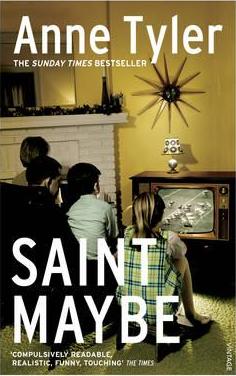
Saint Maybe by Anne Tyler

Anne Tyler pic
American writer, Anne Tyler.

Read Anne Tyler.

Have you read any Tyler yet?

You should read Anne Tyler.

These, and other inferences, came from a fellow book worm and one whose opinions as a reader I trust. So, finally, I read Anne Tyler.

Saint Maybe (1991) is typical of her work: family relationships. There seems two kinds of families in the American novel: the apple pie variety and the gun variety. Tyler’s are the former but, of course, coping with a threat, a dilemma.

Ian Bedloe, the son in an apple pie family in Baltimore did something he believes was very bad and caused two deaths. Only he knows what he did, what he said; the only other person, his older brother, who was there when he said it, and to whom he said it, is dead. He is desperate to be allowed to atone for his ‘sin’ and is drawn into a local Christian denomination called The Church of the Second Chance. After what he’s done, he so wants to be good. And forgiven.

What interested me in Saint Maybe is the subject of religion. I was brought up in a religious family but the Christianity taught by my Christian denomination (Lutheranism) always seemed to be more like an insurance policy than a belief system. My mother read the bible like a novel. I have come to understand that religion is a very important element in human existence: each group, tribe, and civilisation since the year dot has had a belief system; mainly to answer the big questions (How did we get here? What are we doing here? What’s that big ball of fire in the sky? and There’s got to be something better, doesn’t there?) so we can get on with the everyday necessities: digging for yams, inventing machines, filling in a tax return. What I object to, and what I see as a blight on humanity, is the administration, and interpretation, of these belief systems: the temple, the synagogue, the mosque, the church.

I believe in the Holy Spirit; the holy Christian Church, the communion of saints …”. So begins the last line of the Apostle’s Creed I learnt as a child, yet all three, the holy spirit, church, and saints are inventions of the (all male) administrators of Christianity over millennia.

The Church of the Second Chance is exactly one of these ‘administrations’; it teachers not so much what Jesus Christ said but what its leader, Reverend Emmett, says and Ian, so looking for a path to redemption and his second chance for what he has done, joins Emmett and his small flock, waiting, as the Reverend Emmett says, for a sign that he has been forgiven.

The Bedloes aren’t religious but Ian’s commitment to The Church of the Second Chance slowly pulls them in; ritual and routine can do that to people’s lives. The family conforms to the Church more out of respect for Ian than for a commitment to its beliefs.

Stream-of-consciousness is a novelistic technique (thank you James Joyce) that recently has had a revival: Anna Burn’s The Milkman won the 2018 Booker Prize and Lucy Ellman’s Ducks, Newburyport was shortlisted for the 2019 Booker. It usually is associated with internal thoughts,  the ordinary, the minutiae of people’s lives. Here, Tyler uses the more common third-person narrator to tell the very plain story of Ian Bedloe.

Above her work-desk is the following quote.

As a queen sits down, knowing that a chair will be there,

Or a general raises his hand and is given the field glasses,

Step off assuredly into the blank of your mind.

Something will come to you.

…from Walking to Sleep by Richard Wilbur.

“I see those words as about getting an idea and making a  book,” says Tyler. “I don’t get anxious. It will come to you, let it come in.”

She works in long hand, rewrites in long hand, and only when she is satisfied will she then type it onto a computer; print it out and work on another draft in long hand. And so it goes. Her style, if she has one – she says she has no style at all – is “unmistakably hers: transparent and alert to all the nuances of the seemingly ordinary,” wrote Charles McGrath in a 2018 profile in The New York Times.

It’s true that the appearance of truth in fiction is achieved through detail which is why her writing is so believable: her work is full of detail, to the brim with detail: the weather, the light on window glass, a tone of voice, a look, the type of cut and grain of wood, what people know and don’t know; but she also deliberately omits detail, for the reader to work out. This also, ironically, adds veracity to the work; creates an investment for the reader in the story and its meaning. She is a joy to read.

Saint Maybe was filmed for television in 1998 starring Blythe Danner and Tom McCarthy, directed by Michael Pressman from a teleplay by Robert W. Lenski.

You can buy the book in various formats here.


That Other Eveline

  • a short story

That Other Eveline pic

I went into that place to pass some time but I really know that I went into that place to see if a man will look at me in that kind of way. You know the way I mean. I know I’m pretty and people keep saying it so I know but when I look in the mirror I see someone completely different. That doesn’t bother me because I’ve heard my own voice out of a recording machine and I didn’t sound like me either but people say that’s you Eveline so I know it’s me at the same time that I don’t know, but I do, that it’s my voice, my reflection. That’s how I’ve learnt to distrust what I see and hear. It isn’t rocket science. Anyway in I go and I’m aware that my hips are doing this kind of sway-y sexy thing that I don’t remember telling them to do but they are doing it alright and so I add a smile and a shoulder thing to boot. Then as I’m easing my arse onto a bar-stool like I’m turning over a plump apple cheek in a pan of frothy butter I think where did I learn to do this, but I’m not doing it for somebody! No. It’s just me walking and sitting. Yeah, right. I’m doing it for everybody, you stupid dipstick. Yet I’m just sitting here minding my own business but I’m aware that there are a lot of eyes on me, heads full of eyes, but I’m not doing anything, I’m not saying anything, I’m not given anyone the look. I say this to myself and at the same time I know it’s the truth; I also know it’s a lie but nobody knows that because nobody’s a mindreader; but then again it’s that other Eveline I have to mind. That voice of hers so soft and butter-wouldn’t-melt that I usually slip and thoughts and words like all-sorts fall out. 

I usually order a G&T because that’s what I like to drink but tonight I order a margarita. I like them too but they’re too expensive for me but at the same time as I’m saying to myself let’s have a margarita that other voice is also saying to myself you just hope some nice man will pay for it come the adding up time. 

And speaking of nice, it isn’t long before I can feel a dislocation in the air all around and I’m aware there’s a man sitting next to me. I don’t look up in case they see something that isn’t there but I can feel him folding his arms on the bar and resting his head with his eyes to the side looking at me like a boy does when he wants something he’s not allowed, something from his mum. He says something and so I have to look and I have to smile, it’s what I’ve been taught, and I know then, as clear as I know I’m sitting on it; I know what’s going to happen this night. He has a nice face, what I can see of it. He looks like a nice man. 

Now there’s a phrase, a nice man. I truly believe that they exist but something happens to nice men when they think that your look says something you don’t want it to say, when you know damn well they’re right but there’s that no-mindreader evidence again and so I sit there and sip my drink with my arms held in tight so my tits bulge like water wings. I’m just sitting having a drink. 

He asks me about my work and I tell him I’m a lab assistant in a research station, which is true. He says I don’t look like a lab assistant and I say of course I don’t, I’m not wearing my lab coat. Nice doesn’t necessarily mean smart.

You can tell by the look in their eyes, they’re looking at your face as if that’s the cause of it all, but it’s not really it’s what’s under my clothes and between my legs that they’re thinking about. What are they thinking about exactly? Are they picturing it in their mind’s eye? Funny isn’t it: it’s not what they see but what they can’t see that sends the blood racing into the dead-end making them touch their crotch or are they egging it on? So it’s all up to what they think is there. Then I suppose one vagina is very much like another, yeah, but it’s always the baubles and the arrangement of the icing on top that marks the difference between a cake and a tart. 

Like him his room is nice. Comfortable. Warm light, lots of books with a neatly made bed through an innocent-looking doorway. He offers me a drink. I agree to a G&T this time. Perhaps it will settle that feeling in the pit of my stomach, like a flapping fish gasping for air, like a hunger, like an ache. Of course, he puts on some soft music. I want to laugh, he’s seen too many set-up videos and I think how did I get here like a helicopter dropping rations to starving refugees. I was somewhere else and now I’m here. The other one tells me to relax, enjoy it. It’s nice. Nice.

We don’t make it to the neatly made bed. I wonder sometimes which voice is really me. It’s confusing. I sometimes hear myself saying stuff that I’d swear was coming from someone else. I didn’t say anything when he said he was only thinking of me. He refused a condom and so turned me over. What could I say to a nice man’s consideration? At least the pain stopped that fish flapping in my guts.

I don’t know how I got to the hospital and thought of the helicopter again but that’s when I met Rhonda. She told me she was a police officer. I said she didn’t look like a police officer. She said she was off duty and held my hand and tried to get me to remember what happened. I didn’t want to tell her because well because I wasn’t sure which voice to use or more accurately which voice would come out. She asked a lot of questions but I wasn’t very helpful. I didn’t know his name the other one said I couldn’t remember I never asked. I didn’t know where he took me although I did remember the time, two minutes to two. She asked if I meant 1:58 and I said yes, but her question made the other one laugh and I lost Rhonda for a moment. She didn’t ask any more questions. While they were stitching me up I remembered that it wasn’t the time it was the room number 222. Did I remember it because it was the time as well? I don’t know. Eveline thought it didn’t matter but I thought it might be helpful.

When Rhonda showed me into the interview room there was another woman there. She was called Valerie and was very adamant that I didn’t call her Val. I admire that. I decided to tell my mum never to call me Veeny it was Eveline or nothing. The other one snorted with disbelief but more like contempt. She was right of course.

Rhonda and Valerie talked a lot as if I wasn’t there which I found comforting and annoying at the same time. It was then that the other one got the better of me or really, I let my guard down a bit. I said that I really wanted some company that night and that…

Rhonda cut me off, almost shouted. She said Eveline! Eveline! and I thought for a moment that she knew which one of me was speaking. Eveline! Stop! I could see that Valerie agreed with her. Rhonda leaned forward and took my hand as if she was going to tell me something that would change my life. It did.

She said in a voice like a new mum that I wasn’t to think like that. I wasn’t to talk like that. I said quietly as if I really had spilt the milk that I thought I was supposed to tell the truth. Rhonda leaned back and she and Valerie shared a look that said shouted is she ready to be told? We have no choice came back the look. Rhonda shifted in her chair and a loud noise filled the room like drilling teeth.

She said look Eveline and I knew this was going to be good. She said that women had to be very careful about which truth in which context. Valerie shook her head the tiniest bit and interrupted as if she felt a translation was needed and told me that what was true was only true to those who believed it to be true. I asked if what she said meant that there was more than one truth. Yes, she said. Many said Rhonda. I could understand this since really there were two fish flopping in my guts but since I never really trust what I hear or see I knew I had to adopt just one truth. I had come to my senses and push the other one back a bit and so I told them that I was just sitting at the bar minding my own business and I met a man who seemed nice and I went to his room because he seemed good. It seemed like a date. But then he had anally raped me when I insisted he wear a condom and he refused. Wasn’t that considerate? interrupted the other one. Don’t say that said Valerie and I knew I had to be stronger.

The fish flopped but only a little bit. I had never been in a courtroom before. It was nothing like on TV. It looked like a church meeting room. The man was there looking like a little boy and the other one felt sorry for him but I was stronger today and I pushed her pushed her right down and refused to listen. The man didn’t speak but a tall thin woman spoke for him. She described my clothes and made them seem like nothing, holding in nothing and they were exactly the clothes that I wore but she described them as the clothes the other Eveline was wearing. Everything she said was true but it was the other Eveline’s truth. I knew that. Rhonda knew that. Valerie knew that and the tall thin woman must have known that too but she was stronger. She made me realise I too had to be stronger. I had to choose the one truth that was the only truth that would help me.

When I spoke, I did exactly what Valerie and Rhonda had told me to say. How to say it. What to think about when I said it. How to look when I said it. I chose. I told the truth.

The tall thin woman and the man talked together for a long time and the judge got a bit angry. The man then spoke and I knew that he had not seen me. He had not talked to me. He had not raped me. He had raped Eveline but not me; and I knew that he was really a nice man but he had seen the wrong one and I felt a little sorry for him but I know now that this is wrong of me to think this.

There are still two flopping fish in my stomach but one is much bigger than the other and I know now that this is right. My name is Eveline and I know what it true.

Neither Here nor There by Bill Bryson

or   How to write a ‘Hugely Funny’ Travel Book.

Bill Bryson
Anglo-American non-fiction writer, Bill Bryson: born 1951.

Step one: Choose a common phrase like, There and Back to See How Far it is, Head you Off at the Pass, It’s a Long Way to ……, you get the idea, and make it your title.

Step two: Collect anecdotes of your coming of age (COA).

Step thee: rack your brain for your pubescent sexual fantasies (PSF).

Step four: make a list of your own foibles (SD = self-deprecation).

Step five: have handy anecdotes from other trips to the same places  (SP).

Step six: if you’re an American living in Britain, collect phrase and stories that put down the Yanks or the Brits. (OPD = own put downs).

Step seven: collect puts downs of a nerd that gets put down a lot by your targeted audience, like the Irish, the Mormons, the Kiwis, etc. (NPD = nerd put downs)

Step eight: you’ll also need some RPD’s – racial put downs.

So, let’s begin.

Chapter One. Of course, you start with a journey. However, if the journey is a little boring you can always rely on a PSF:

I fanaticised about “…finding myself seated next to a panting young beauty being sent by her father against her wishes to the Lausanne Institute for Nymphomaniacal Disorders, who would turn to me somewhere over the mid-Atlantic and say, ‘Forgive me, but would it be alright if I sat on your face for a while?”

and you can then tack on an NPD which has OPD overtones:

“In the event my seatmate turned out to be an acned string-bean with Buddy Holly glasses and a line-up of ball-point pens clipped into a protective plastic case in his shirt pocket.”

But if you find yourself on an inspirational roll you can continue this novel scenario:

“I spied a coin under the seat in front of me, and with protracted difficulty leaned forward and snagged it. When I sat up, I saw my seatmate was at last looking at me with that ominous glow.

‘Have you found Jesus?’ he said suddenly.

‘Uh, no, it’s a quarter,’ I answered and quickly settled down and pretended for the next six hours to be asleep, ignoring his whispered entreaties to let Christ build a bunkhouse in my heart.”

It’s important to understand that such ‘stories’ don’t necessarily need to come from the trip you are now writing about, nor do they necessarily need to have happened at all. Let’s call it comedic license.

And of course, when in Germany, it’s likely that funny incidents are few and far between but there’s always a good PSF to come to your aid:

“I had only signed up for German [as a boy] because it was taught by a walking wet dream named Miss Webster, who had the most magnificent breasts and buttocks that adhered to her skirt like melons in shrink-wrap.”

Or, as in his few pages on Cologne, he begins with an RPD about the woman running the statin café who ignored him because he ignored her:

“This is the worst characteristic of the Germans. Well, actually a predilection for starting land wars in Europe is their worst characteristic, but this is up there with it.”

He then segues into an SP about a previous visit to Cologne when he stayed in a cheap hotel and read soft-porn magazines that other guests had left behind. He then contemplates the massive cathedral and comments on its size with a little OPD:

“You can understand why it took 700 years to build – and that was with German workers. In Britain they would still be digging the foundations.”

Without any nicer things to say about Cologne Bryson indulges in a reminiscence about flying on a 747, and regaling the reader with the lack of American know-how of audio electronics – a bit of ODP – and praising the Japanese “for filling my life with convenient items like a wristwatch that can store telephone numbers, calculate my overdraft and time my morning egg” – a sort of reverse RDP. He then cuts short his Cologne stay when he spies a non-stop porno cinema in the train station, which one would’ve thought would’ve given Mr Bryson an extra beat of his heart but it instead caused him to high-tail it out of Cologne and head for, ironically, Amsterdam.

His stay in Hamburg is similar: he complains about the ugliness of the prostitutes, the smallness and expense of his carpet-less hotel room, the sex-shops – “nothing compared to those in Amsterdam” – although he does praise their ingenuity when it comes to manufacturing and promoting sex dolls. He indulges in a little RDP, ODP, SP and then tops it off with a lengthy analysis of why beautiful and stylish German women don’t shave their armpits; like “a Brillo pad hanging there. I know some people think it’s earthy, but so are turnips …”

Oh, and he also hates dogs.

It seems that Mr Bryson understands well his potential readership: the kind of travellers that other travellers try to avoid.

However, after reading the dense prose of our human stains in the stories by Tsiolkas, a house-brick sized Moorhouse about mores, political and sexual, in Canberra in the 1950’s, and the ethereal beginnings of literary modernism in Joyce, I thought I needed something light.

Neither Here nor There (1992) is entertaining-ish, undemanding, diverting, and completely forgettable, but don’t let it inform you about Europe.

Access to all 46 formats and editions you can find here.