Bad Blood: a walk along the Irish border by Colm Tóibín


toibincolm_-young
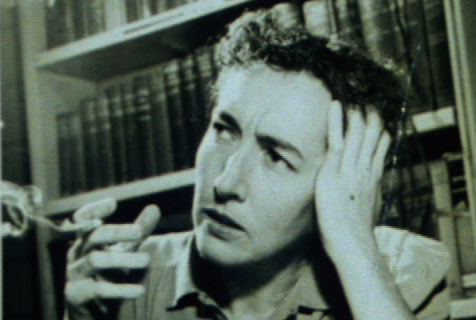
Young Colm Tóibín

In a pub in the little cross-road town of Cullaville, just two fields north of the border between the United Kingdom and the Republic of Ireland, the bar has two till-drawers: one for Euros (Irish currency) and one for the British pound. More than 200 formal and informal roads (tractor and foot paths) cross the border and it isn’t often clear for travellers which country they are in; sometimes it may only be the change of the speed-limit that may give them a clue, sometimes nothing at all.

Alastair McDonnell, an MP from Belfast has been flooded with queries, following the Brexit vote, from his constituents about what will happen if the border becomes ‘hard’ again. It’s possible that come the reality of Brexit (2019 says British PM, Therese May) little border towns like Cullaville will potentially become the EU’s back door to Britain.

Anne Devlin, a resident of the North who buys her petrol in the South where it’s cheaper, said, “Brexit got everyone talking, that’s for sure. It reminds everyone who is who, where is where, north or south, the Troubles, all of that.” It’s been only 18 years since the last bomb exploded during the religious-based conflict that claimed more than 3,500 lives.

With the signing of the Anglo-Irish Agreement in 1985 between the UK and the Irish Republic the path was finally set for peace but which didn’t come for another 13 years with the signing of the Good Friday Agreement in 1998. In the summer of 1986 Colm Tóibín walked the border in preparation for his account of the feat published the following year: Bad Blood: a walk along the Irish border. Actually it was more like a ‘drink’ along the Irish border: Colm likes his ale.

For a border that may now need to be re-fortified, given the European refugee problem that doesn’t look like slowing down – certainly not within the next two years, its ‘hardness’ may have many other repercussions. Sometimes it runs through the middle of someone’s field; in South Armagh (the North) there is a shop whose “doorway itself was the border, the outside of the shop being in the North, every entry and exit involved smuggling”; and not only that, where the border separates County Fermanagh (the North) from County Caven (the South) there is a house where “the border went right through like a slicer through a block of cheese.

The house was a small, modest, old-fashioned cottage. When I knocked on the door a man in his sixties came out. His name was Felix Murray, I discovered, and the border ran through his house in which he and his two brothers lived. These days, he said, all three slept in the North, but there was a time when one of them had slept in the South. ‘Only an odd time now,’ he said, ‘we sleep in the State’. There was a sofa in the kitchen, he pointed out through the window. Where you could sit and let the border run through you.”

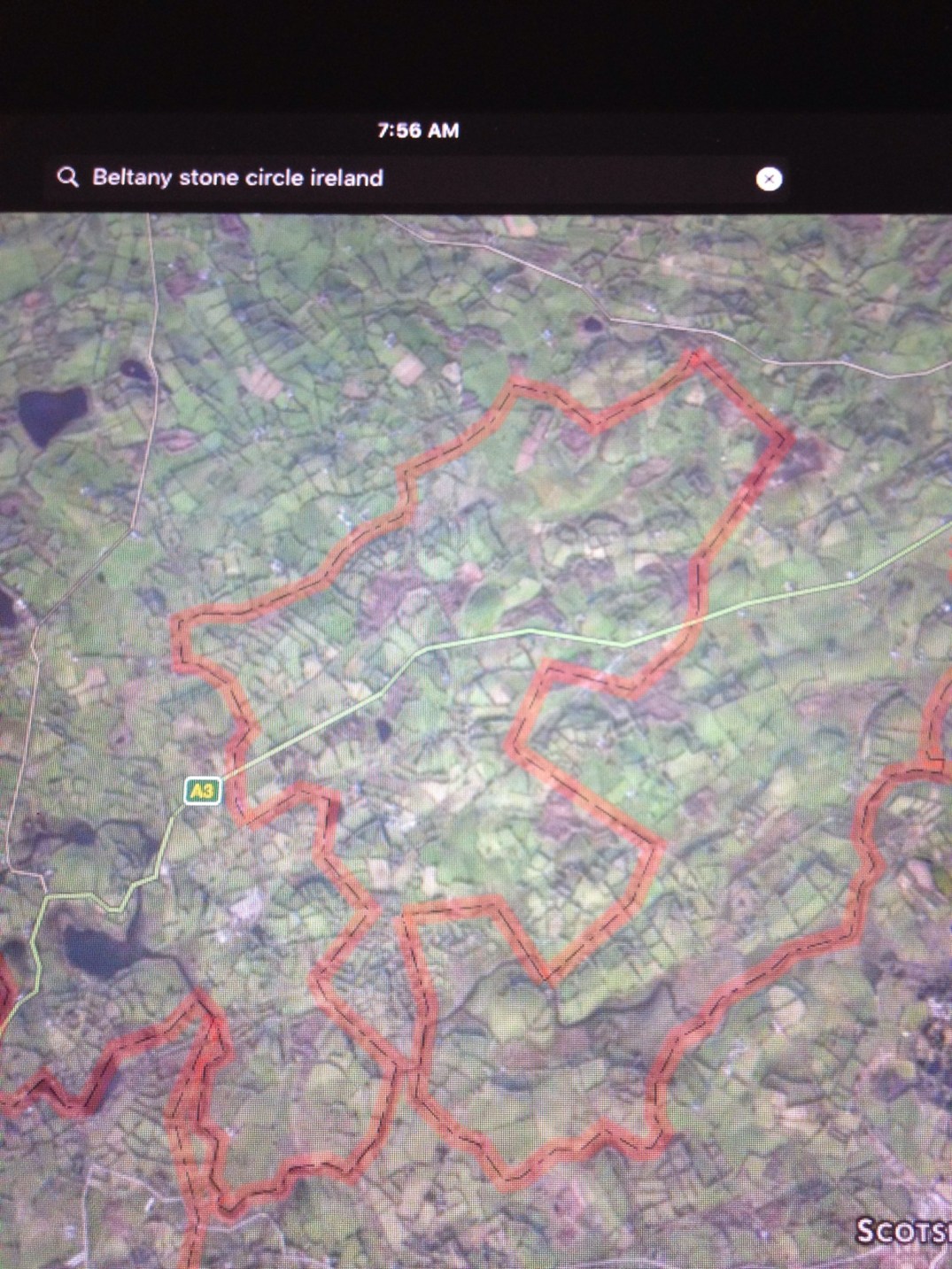
This was 20 years ago and things may be a different now but as you can see from the image below, the border to this day, seems a long way from logical.

irish-border-pic

His early non-fiction shows the development of Tóibín’s style later employed, to some extent, in his novels; his first novel, The South, was published in the following year, 1990. His fiction shows his debt to journalism with his plain unadorned prose, seen here in Bad Blood.

“I told him I was writing a book. He invited us in. He didn’t say anything. The front room of the house was small and comfortable. There was a fire lit. A television and a video machine stood in the corner.”

Compare this is a passage from his second novel, The Heather Blazing (1992),

“His grandmother was in the kitchen with his Aunt Margaret and his Aunt Molly who was married to his Uncle Patrick. Two of his cousins were in his the back room in cowboy suits. They all stood round as Eamon distributed the presents. Stephen sat by the fire, huddled in against the wall with his legs crossed. He opened his parcel slowly and smiled when he saw the book.”  Short, bald, unadorned sentences.

Tóibín trusts his readers to do most of the descriptive work and gives them great responsibility to fill in the detail, so much so that in his latest novel, Nora Webster (2014) no place or person is described: every reader has a hometown, its feel and smells, and every reader knows a nosy neighbour or a favourite aunt and Tóibín relies on this reader-experience. In this way Toibin’s work, for readers, becomes very personal. A reader from Melbourne, Australia, on finishing reading The South, slept with it under her pillow for two weeks.

In 1989, even though the border may have been on the map it wasn’t, in a lot of places, on the land (large white crosses had to be painted on roads to make the border visible to British helicopter pilots), but it was in people’s hearts. Back then it was all about tension in the air but a stiff upper British lip, this is in the North, was still the way people behaved.

At dinner in a hospitable family house in the North the first course served was beetroot soup. Toibin, from the South, innocently commented that it was called borscht, and it was a great favourite of the Pope’s. That word hung in the air like a fart. Everyone stopped listening and became immensely interested in their soup and the care it took to not let it spill on the white tablecloth. No-one spoke.

Religion was not at the heart of it but at the bottom of it.

“Yes, one of them said, the older people maintained that the accidents were a sort of revenge for what was done to the Grahams. God, you know, did I understand? It was God. It seemed like a large number of young people from the same area, I said, to be killed in accidents. They nodded grimly. I said I didn’t think it was God. No, they agreed, they didn’t either. It was just something which was said.”

Since Brexit the talk now is again about Irish re-unification: Gerry Adams, leader of Sinn Fein (once a terrorist organisation, now a major political player), said that since the vote by the North against Brexit (56%) a referendum over unification was necessary, Michael Martin leader of the main opposition party in Ireland agrees; Arlene Foster, first minister of the North, thinks such a move would be ‘a folly’.

When Tóibín walked the border the air was still tense. Now a lot of golf is being played and it’s a nice place to be a cow. In people’s lives now the border is a shadow: it’s crossed for shopping, for school, for selling. No-one wants it to become a frontier again. What everyone wants is for the leaders in London, Brussels, Dublin and Belfast to manage Brexit while preserving the peace and allowing the economy to flourish. They’ve got 2 years.

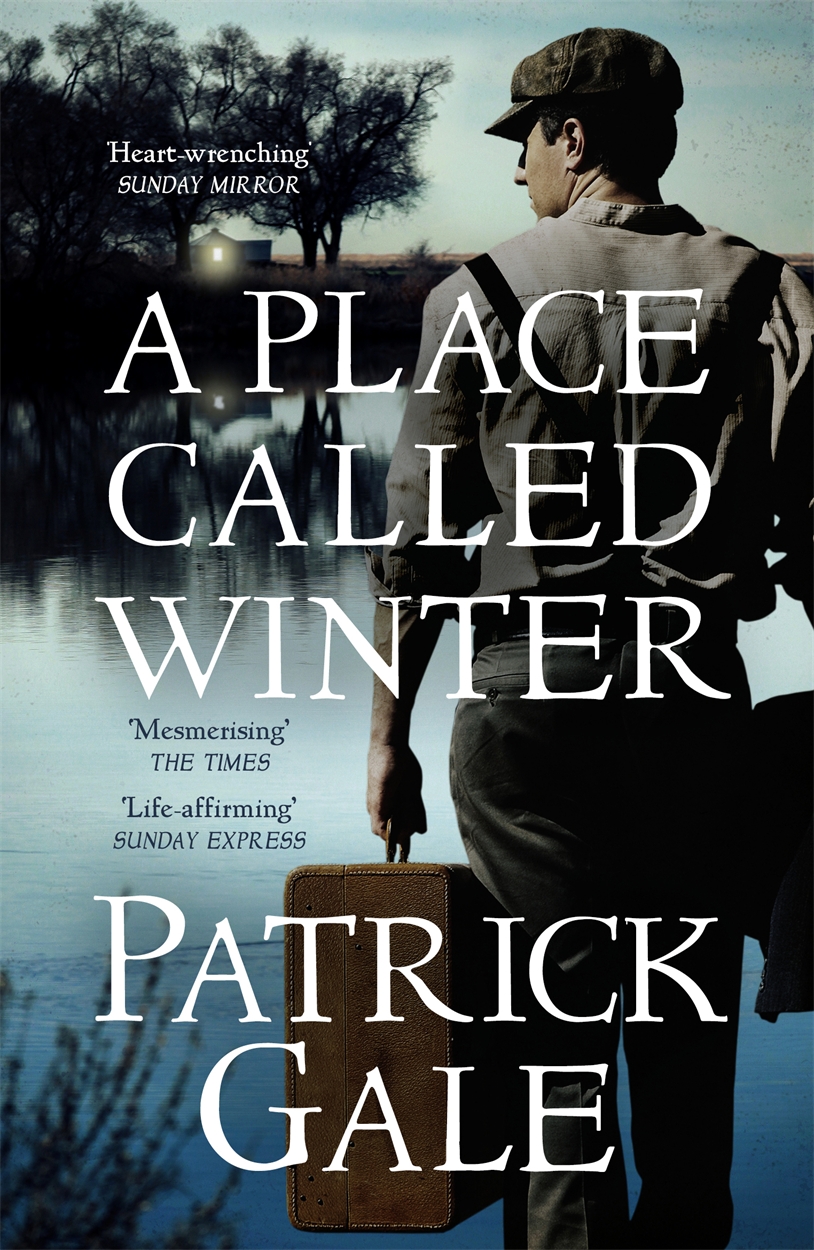
A Place Called Winter by Patrick Gale

patrick_gale_pic2
British writer, Patrick Gale

This is a very different book, Gale’s latest, from his other work which have usually been an insular look at a group of people in a localised area, usually a small Cornish community. A Place Called Winter is epic in its geography, historic in its time and language, and romantic in its tone. If you had to write a précis of this book it would read something like a historical romance, complete with abandonment of wife and family, a journey across the ocean to a strange and inhospitable land, the finding of love in the most unlikely place, a world war, murder, insanity, tragedy, and a villain of truly despicable proportions, but Gale avoids all the possible clichés that would otherwise render such a story fit only for the sensational shelves of suburban bookshops patronised by retired ladies.

“I didn’t decide, ‘Now for an historical novel!’ Rather I found myself more and more possessed by the material suggested by the fragments of my great-grandfather’s story,” and Gale has been reported many times as saying that for the purposes of fiction, and to account for surprising decisions from his ancestor’s known but sketchy life, he ‘turned’ his great-grandfather gay. This is not surprising for Gale readers, as Gale, an out gay man, writes often and well about sexuality. However “The great challenge in this novel was to write about sexuality while inhabiting the head of a man who realistically would not have had anything like the psycho-sexual vocabulary we take for granted now.” Indeed, in his first homosexual experience, which he, Harry Cane, subconsciously seeks out under the guise of a remedy for his stuttering from a handsome, but opportunistic actor and speech therapist, says, when it is obvious what is going to happen and without any stutter at all, “I have absolutely no idea what to do.”

Once his affair is discovered by a kind but firm brother he is forced to avoid a family scandal and possible imprisonment, and flees to the wild cold west of Canada where he is befriended, then abused, but finally set up by a land agent next to a shy and reclusive brother and sister pair, there for their own reasons of displacement. It is here, near a place called Winter, that he discovers what life, love, sacrifice and family really mean. Plot points of self-realization, murder and reunion are described in unsentimental terms and even the climatic act of …. No; no spoilers here.

For all of Gale’s extolling his attention “on the psychology and emotional life” of his characters I found A Place Called Winter, although enjoyable and sustaining, not as rewarding as his other works that focused on a domestic band of rural characters dealing with each other, and more importantly, themselves. The Cornish landscape, both emotional and geographic, he knows well and writes about it with, insight, force and understanding, while such considerations in A Place Called Winter are a little overshadowed by the grandeur of the plot. However, there is a lot to gain from this book; it’s probably the most commercial of his works and one that will gain him a new and, hopefully, loyal readership. He’s prolific: this is his 17th work and I eagerly look forward to what next he has to offer.

The Blue Touch Paper by David Hare

davidhare-pic
British screenwriter and playwright, David Hare

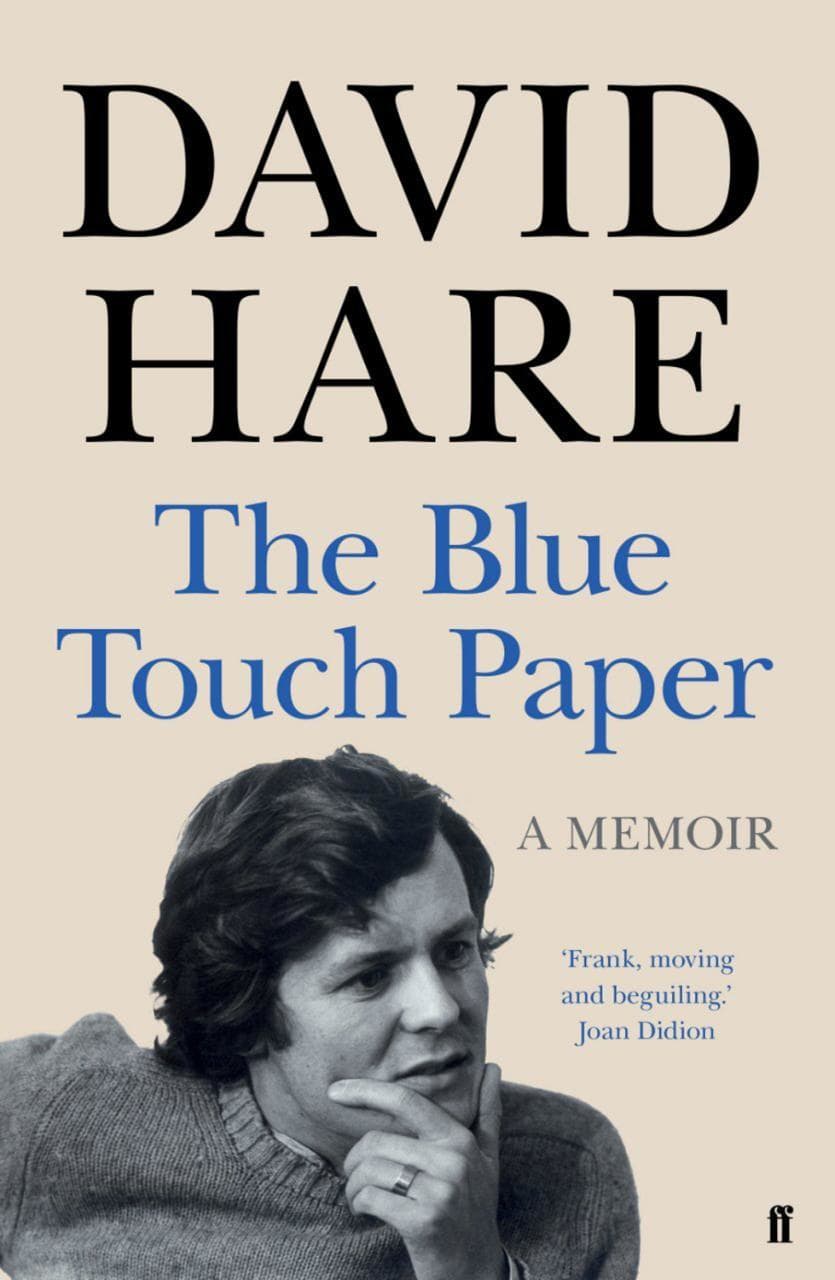
Any child who has stumbled through childhood surrounded by unanswered questions, where adults were too occupied with their own demons to take notice; where one parent was largely absent in body and/or interest, and the other so shackled to society’s norms and buffeted uncomplainingly by the stings and shallows of the life they thought they had to lead, will relate to David Hare’s childhood in this, his 2015 memoir. David Hare’s father, Clifford Hare, a merchant sailor, was absent most of the time, while his mother, Agnes, conformed to the norms of the town of Bexhill, “a parody of suburbia”, between Eastbourne and Hastings on the Channel coast; a town described by James Agate as ‘bleak and purse-proud’ and used by the director Alfonso Cuarón as the location for those surviving Armageddon in his film Children of Men.

“Childhood is like going into the jungle without knowing what animals you will meet there.”

Saved from a fate he so easily saw on his horizon by cinema, the local theatre repertory companies, and his natural intelligence he weathered his upbringing and won a scholarship to Cambridge. Hare writes in a self-deprecating tone, which is endearing, but at the same time there is a feeling that he has done this to hide a sense of self-importance, as if his success and intellectual rise was inevitable. He wants to be liked. And steps in his making did seem to come easily and letter writing was one of his most successful modes of advancement: a holiday job in Los Angeles, a visit by Alfred Hitchcock, and a meeting with Peter Hall which had formidable repercussions.

It was at Cambridge in the 1960, ‘all wasps and no honey’ so said Kenneth Tynan, in a “self-deluded Britain” that Hare began his theatre-making, as both performer, director, and then as playwright.

“The very over-sensitivity which equips you to be a writer also makes being a writer agony.”

In 1969 while leading his Portable Theatre Company, Hare and co-founder Tony Bicât, had the idea of presenting, in their second season a play based on the history of evil and asked their new friend Howard Brenton, at the time working in the Royal Mint, to take it on. He eschewed the ‘history’ but kept the ‘evil’ in the character of serial killer John Reginald Christie, and set it in a pen made of chicken wire filled with old newspaper. Christie in Love “plays with the controversial notion that when Christie practised necrophilia, assaulting his dead women, he was, in his own eyes, expressing a kind of love.” Hare had only written one short play to fill in a gap in the previous program but Brenton’s “brilliant” play, directed by Hare, set Portable, and Hare, on a path of creating and presenting new plays.

“…my most important discovery about playwriting … Every line on dialogue, every exit and entry, every development of the story, every deliberate change of mood on the stage pleases or displeases the author for reasons they would be at a loss to explain. The mystery of style is exactly that: a mystery. Yes, of course, I could clean the play up. I could redraft. I could, if necessary, make the action more deft. I was perfectly capable of saying. ‘That scene’s working, but that one isn’t. That joke’s working, but that one isn’t.’ But to the basic question ‘Why is the play the way it is?’ I had no answer at all.” No matter what you WANT to write,  “ultimately you are at the mercy of your imagination – what ever that might be”; a bit like Christie.

There are moments in everyone’s life when the wanting of something is far more powerful than the getting of it; and there are many times when our bodies and our imagination are at odds; the latter taking over from the former and causing a positive, or negative, but involuntary, outcome. A man knows when his body betrays his will with an unnecessary erection; a woman once was so attracted to Ted Hughes, she vomited, something she did not want to do; Marcel Proust wrote at the age of 18 that ‘Desire makes all things flourish, possession withers them’; and David Hare separates his wanting to write a play, from his imagination that finally finishes it. In this sense we are all victims of our imagination, which can give our lives succor, as in a creative individual like Hare, or destroy it, as in another individual like Christie.

Theatre “is about people, it is not about types. Shakespeare did not intend Macbeth to be an indictment of Scottish monarchy. Nor is the characterisation of Lady M misogynist.” Recently in the London Review of Books review of The Girl on the Train; the writer, a woman, was horrified that the novelist, a women, seemed to her, to hate women. Yes, the female characters are in turn, liars, drunks, traitors, and lay-abouts, but the story is about these women, not all women. Hare derides this “idiotic language of role models” as a symptom of the late 1988s but it continues today. He says, “…with the rising tide of programmatic wordsoup which would threaten the vigour and authenticity of theatre in the new century, I would have no patience. Work, when fully achieved, seemed to me a more powerful manifesto than manifestos.”

David Hare, now Sir David Hare, is a very British writer for stage and film with an impressive list of work over many decades: they include Knuckle (1974), Fanshen (1975), Teeth ‘n’ Smiles (1975), Plenty (1978), The Blue Room (1998), The Judas Kiss (1998), Stuff Happens (2004), South Downs (2011), The Moderate Soprano (2015). His Skylight (1995) play was presented by the Melbourne Theatre Company earlier this year. He also penned the screenplay for the 2002 film The Hours, among many others.

A Sense of Style: The Thinking Person’s Guide to Writing in the 21st Century by Steven Pinker

Steven Pinker pic
American psychologist and language expert, Steven Pinker

If you are bored rigid by style guides, grammar tomes, and ‘How to write’ books, skip this one. However if you are fascinated by the building blocks of a sentence; how English has changed; and the black, white, and beige of grammar rules then keep reading.

Steven Pinker, the American “Rock Star” psychologist and a Professor in the Department of Psychology at Harvard University conducts research on language and cognition and has penned many popular and accessible books on language, the mind, and thought. His latest book is this one which came out in 2014 and for which he received the International Award of the Plain English Campaign.

Generally commentators on the English language fall into two broad camps: the prescriptivists, those who believe there are rules that define how language should be used, and that mistakes result from breaking those rules; and the descriptivists, those who believe that a language is defined by what people do with it. You may recognise the former as “sticklers, pedants, peevers, snobs, snoots, nit-pickers, traditionalists, language police, usage nannies, grammar Nazis, and the Gotcha! Gang” but Pinker also damns the latter as “hypocrites: they adhere to standards of correct usage in their own writing but discourage the teaching and dissemination of those standards to others, thereby denying the possibility of social advancement to the less privileged.”

Pinker is the chair of the Usage Panel of the famously prescriptive American Heritage Dictionary but he quotes the editor as saying, “We pay attention to the way people use the language”, a clearly descriptive view. Pinker, like most writers and readers, sit on the fence. Their anchor? Clarity and meaning. There are words that we continuously mis-use, such as decimate to mean ‘destroy most of’ instead of ‘destroy a tenth of’. There is no point in using the word in its original meaning if the reader or listener believes it to mean something else. The old prescriptivist rule of ‘never split an infinitive’ only exists because of the early English need to squeeze the language to fit Latin rules. The Latin word for the English verb to go is a single word ire; it’s impossible to split a single word but splitting the English word is of course possible: ‘to boldly go where no man has gone before’ is fine by Steven Pinker, and most people, I suspect.

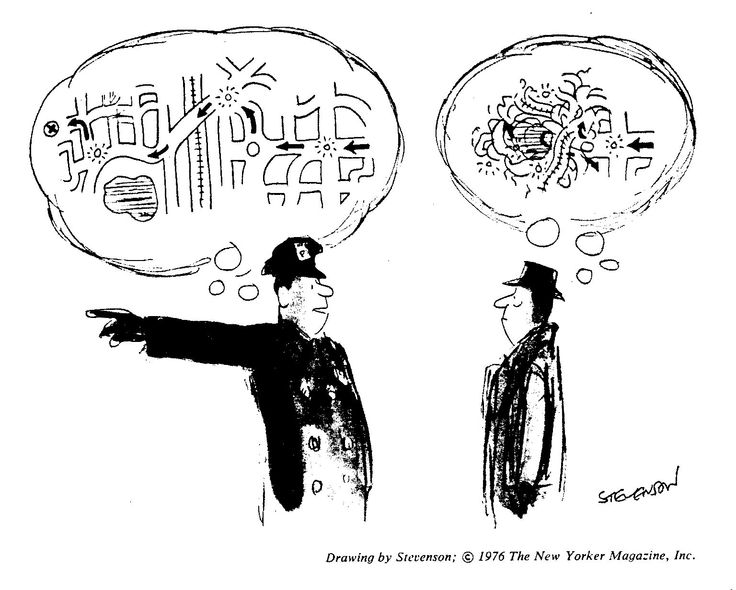
His chapter 3, The Curse of Knowledge, is a delight and has cleared up that old annoyance illustrated in the following cartoon

Giving Directions cartoon TNY

“The curse of knowledge: a difficulty in imagining what it is like for someone else not to know something that you know.” When someone gives you inadequate (to you) directions that they think are obvious (to them) and ends with the phrase ‘you can’t miss it’, you usually will. See! It’s their fault, not yours.

And did you notice I used the plural pronoun they for a singular subject someone? This has been common usage for over a century and solves the English language’s lack of a neutral singular pronoun. Oh, and did you notice I began that sentence with the conjunction, and? This was something that was considered the grammatical sin of sins in the 60s and 70s but has again been used for centuries.

However the last, and longest chapter Telling Right from Wrong will give you a lot of joy, understanding, and the edge in arguments about where to put that comma, when to use lay and lie, and the sometimes acceptable use of an adjective when the grammar police insist on an adverb.

Eggs over easily

P.S. In a student exam paper, recently, there appeared a sentence that confused everyone. “It would be a great idea if we went to the park tomorrow.” This is a sentence about the future but with the modal verb would, and the auxiliary past tense verb went. Using the future form sounds strange: “It will be a great idea if we will go to the park tomorrow.” No, the past tense is correct. This is called factual remoteness as Pinker explains with the example, If you left now, you would get there on time. “The if-clause contains a verb which sets up a hypothetical world; the then-clause explores what will happen in that world, using a modal auxiliary. Both clauses use the past tense to express the meaning ‘factual remoteness’.”

Note the full stop after the quote (not ‘ ….remoteness.’”). You’ll have to read the book now to find out what Pinker says about this (or is it that?).

You can by the kindle edition, and paper editions, here.


Days of Abandonment by Elena Ferrante

Female-silhouette
Elena Ferrante is the pseudonymous name of an Italian writer. Publicity shy, she only accepts interviews by email.
        The abandoned woman has a long tradition in classic poetry and literature with Dido, Queen of Carthage during the Trojan war as the most famous example; a time when virtuous heroes where meant to choose duty over love. Abandonment, and the courage to put up with it, became a romantic womanly duty.
        Not so for Elena Ferrante in her most famous novel, Days of Abandonment, 2002, (courageously translated by Ann Goldstein): her protagonist, Olga, who is told by her husband, Mario, a man of “quiet feelings” that he is leaving her because he was having “terrible moments of weariness, of dissatisfaction, perhaps of cowardice” and “he assumed the blame for everything that was happening and closed the front door carefully behind him” leaving Olga “turned to stone beside the sink.”  At first she thinks it is just a phase, he will be back,  but when she finds out the real reason for his departure she is enraged, she becomes violent, obsessed, deranged but determined.
        Told in the first person, the prose is robust, strong; I can understand why some readers think Ferrante is really a man: it feels masculine and has a rowdy momentum that could sweep away any male equivalent like bulls before a train. But this is its strength. It certainly makes you turn the page. I’ve never read rage like this from a writer of either gender. It’s mesmerizing. And her attempt to redeem herself by adopting a man-ish attempt at seduction is funny, sad, distressing, messy, and humiliating all at once.
        The action culminates in a single hot August day: the kids are on summer holidays; there’s no money to entertain them, besides the lock on the front door is faulty and they are trapped. There is sickness, outrage, potential violence and indifference, an annoying brat, and ants. It is exhausting and exhilarating. Great stuff. But if you hate reading strong language stay away!
        It is a war, an internal war between the woman she was and the woman she’s become. Her senses become distorted: time stretches, her spacial understanding convulses and she no longer knows the usual spaces of her own home; they’ve become “transformed into separate platforms, far away from each other.” She loses her balance and can no longer trust her eyes to tell her what is there, her ears what is said, and her past what is true.
        Convoluted but fascinating discourses on love, her past, the world, and relationships – “what a complex foamy mixture a couple is” – sways her brain away from her responsibilities which she fears will unseat her; she employs her daughter to jab her with a paper-cutter. She is losing it but she knows she is losing it.
        She is also an outsider, from Naples, in Italy’s south but living in the northern city of Turin where a common saying peppers local conversation: North Africa starts at Rome. This would put her origins, in the minds of her neighbours, as somewhere in the southern Sahara, as remote as their imaginations could muster. They already think she is a little mad; maybe she is.
        What you think could happen in a locked apartment during a hot summer’s day doesn’t prepare you for what does. The ending will be for you to discover but Ferrante’s point is unexpected, politically incorrect, but perspicacious, and once you read it, digest it and realise what she means, that last line will stay with you for a very   long    time.
the-days-of-abandonment film pic
Margarita Buy as Olga in the 2005 film directed by Roberto Faenza who co-write the script with six other writers.
        You can buy the ebook at Amazon, Kobo, and Europa Editions and if you haven’t read it you should.

Ease by Patrick Gale

Patrick Gale Pic
British writer, Patrick Gale

I’m not a recipe-bound cook. I like recipe books for ideas not instructions. Generally due to this approach I produce eatable, sometimes interesting, but usually unmemorable dishes. However, sometimes I even amaze myself: my first soufflé was a triumph and I basked in my own pride, and praise from others. Usually, though, when I attempt a former triumph a second time, it is a disaster: my second soufflé was more like a biscuit.

I have seen evidence of this second-time-failure phenomenon in other human endeavours, and not just mine, but Patrick Gale’s second novel of 17, Ease (1985), is not one of them.

His first The Aerodynamics of Pork (1985) was a joy to read but Ease surpasses it: its simpler, clearer, better structured, and philosophically more interesting.

Domina (Dom, Min, Mina) Tey is a successful playwright, who lives with her long-time partner – too long to be a boyfriend, but not legal enough to be a husband – Randolf Herskewitz, (Ran, Rand, Randy – Gale loves to play with names). He’s a writer too, although an academic one, more truth-as-wonder than Domina’s truth-as-reality.

Min writes plays about “menopausal lecturers and novelists” for “the discerning Guardian-reading, professional-oblique-arty masses”, which Des (Desiree), her agent, loves and can sell, but Min is worried she’s getting bored, and therefore boring.

Min leaves Randy and leaves behind the loveliest ‘I’m leaving you/not leaving you’ note you have ever read: “I won’t be in for dinner for a few weeks but the freezer is well stocked,’ it begins. She goes to “visit herself” and “secrecy of whereabouts vital to success of spiritual growth” and she signs “Apologetic affec. Mxxxxxxx.”

She moves to “a top-floor bedsit by Queensway, with no view, in a house full of odd little men and an old-bag downstairs who used to be a mortician.” One of these little men is Thierry, a young, French, gorgeous, promiscuous, and very successful, homosexual who takes her on one of his sauna-searching escapades; another is Quintus, a young, sweet, naïve history student who is trying also to find himself but has just found God, well, not God really, more a church; and not just any church, the Greek Orthodox Church. He captures Min’s curiosity and she captures a few other little things of his as well. I won’t go on; no spoilers here, and there’s quite a lot I could spoil, but no.

No-one knows how this thing we call human life started, if only by a bolt of lightning in a pool of primordial ooze, but start it did, with or without a creative hand. It sounds unlikely but it only had to happen once in a multi-squillion or so years. Anyway, stuff happens and us humans have many diverting, equally unlikely, annoying, and definite views on how we cause or are affected by such stuff and what we then need to feel or do; but if you are of the philosophical bent of our protagonist, Min, (and Mr. Gale, I suspect) you may come away from reading this book with a more peaceful, uncluttered, and sanguine view of us, allowing you to get on with life, like washing the dishes, walking the dog, loving, reading and /or writing books.

Patrick Gale is a British novelist whose ebook editions of his many novels are published in the US by Early Bird Books, and marketed by Open Road Media.

What W. H. Auden Can do for You by Alexander McCall Smith

Auden via Smith

In a primary school in a small country town on the Adelaide Plain in South Australia in 1960-something, poetry was a page of writing, usually with a rhyming pattern of a-a-b-b or, if we were good, a-b-a-b, given to us students at Friday’s last session. The copies were made on that ancient, clumsy, messy, clanky machine: the Gestetna. Each student had a poetry exercise book, blank not lined. We had to carefully smear Clag on the back of the poetry page and stick it nicely, no splodges, onto the right hand side of a double page in our poetry exercise book. On the blank left-hand page we had to draw something inspired by the poem. No matter what the poem was about, spring, the Queen, a train, elephants, I always drew a two dimensional, two-storey house as big as the page would allow; so big in fact that the smoke coming from the chimney – there was always a smoking chimney – had nowhere to go except, unrealistically, down the side of the page towards the ground. The teacher never made a comment about this.

No attempt was ever made to make us think that we could possibly write a poem. I didn’t write one but I learned one: a poem of the “A starling, a silly little darling, such a pretty sight to see” variety. I recited this poem to my parents one day in the car on the way to Adelaide, that little flat city that was the capital of the state and, to me, the centre of the universe. My stepfather said nothing: he was deaf. My mother said something nice to me, which I liked. I liked it very much even though my mother’s praise was usually of the “That’s nice, dear, but don’t get too big for your boots” variety. Somehow I understood that she thought that I had written it. I didn’t know how to tell her that I hadn’t and, besides the warmth of praise, even meagre praise, was something rare and utterly delightful. I let her believe that I had written it and felt guilty for years to come, especially since she made me write it down and submit it to my monthly children’s magazine, and in which it was printed. I thought the police would arrive any day and take me away and do what they did to little boys who told lies, claimed other people’s words as their own, and thought poems were things to be proud about.

I’ve had a love-hate relationship with poetry ever since: I love mine but hate everyone else’s. I thought for a long time that my schoolteachers weren’t telling me something: like a missing bit from an IKEA pack. However then I thought that maybe I was not getting something so I read a lot of poetry and from all those years only three have gained some traction in my satisfaction bank: Robert Browning’s Porphyria’s Lover, a narrative poem of sacrificial love but, as I understood later, extremely misogynistic; William Carlos Williams’ To a Poor Old Woman which is simple-sad but strong and showed me that poetry doesn’t need punctuation if the lines are the right length; and Clive James’ Japanese Maple which is about approaching death which is apt since he’s dying (talk-about write what you know!).

Anyway, imagine my expectation when I saw Alexander McCall Smith What W. H. Auden can do for you (2013) on a friend’s bookshelf. Maybe I’ll find what I’m looking for in this little book.

Mr. McCall Smith (or is it simply Mr. Smith?) obviously loves poetry and has been reading it since he was 15 and he also obviously loves Auden, although he seems eager to point out that his little tome is not a hagiography. Auden has often been criticized for using words simply for effect and without real regard to their meaning; a criticism McCall Smith agrees with. Here is a quote from his Letters from Iceland (1937).

And the traveller hopes; ‘Let me be far from my

Physician’; and the ports have names for the sea;

The citiless, the corroding, the sorrow;

And North means to all: Reject!’

The curious line “and the ports have names for the sea” is actually a misprint: he meant ‘poets’ but ‘ports’ was printed. Auden left it in. He liked the sound of it. The other line of interest is “Let me be far from my physician.” McCall Smith is critical of this word too, but as I read the first line the surprise certainly came with the word ‘physician’. I was expecting ‘mother’ or ‘country’ or ‘crowds’ (as McCall Smith suggests) but with the surprise came understanding. I read it as ‘far from all that is safe and fixable.’ McCall Smith thought it may stand “for all that is overly fussy and cosseting in modern society.” The point here is that, no matter what Auden meant, and what he meant is really irrelevant: meaning is in the mind of the reader. I’m sticking to my ‘safe and fixable.’

McCall Smith makes it clear that Auden’s homosexuality was reflective of his time which was full of perverse contradictions: single sex boarding schools which thrust a single sex together while punishing single sex itself, which is itself reflective in the hypocrisy of calling moneyed schools ‘public’ as if their money was for all, which it wasn’t. Such a system, a bed of oppression and treachery, not surprisingly, also produced spies. And intellectuals who in their declining years re-embraced Christianity, as did Auden. All this is mirrored in his choice of subjects, Freud, limestone, Iceland, Spain, Hitler, Rome, love – sexual and not, dreams, birds, water, fascism, and vales but not mountains.

Knowing something of the poet, and his times, helps in understanding his poetry; even an older Auden disowned the words of his younger self. Thank god he told us. McCall Smith also states that influences of time and place can’t be ignored. He identifies two great influences on artistic endeavour in the twentieth century: war and Freud… Now, hang on! All I’m looking for is an ‘in’ to the appreciation of poetry and here, Auden’s in particular. I, nor anyone, have the time for an academic investigation to eek out meaning to the words I’ve just read.

In the musical theatre characters sing when the emotion, or action, expressed is bigger than the text, when just words are not enough. Similarly it seems with poetry: it’s louder, stronger, more complex, more succinct, and usually more effective than mere words. To write about political decline, as he did in The Fall of Rome, less is more:

The piers are pummelled by the waves;

In a lonely field the rain

Lashes an abandoned train;

Outlaws fill the mountain caves.


Fantastic grow the evening gowns;

Agents of the Fisc pursue

Absconding tax-defaulters through

The sewers of provincial towns.


Private rites of magic send

The temple prostitutes to sleep;

All the literati keep

An imaginary friend. …


Caesar’s double-bed is warm

As an unimportant clerk

Writes I DO NOT LIKE MY WORK

On a pink official form…

The imagery here is singular but powerful: an abandoned train; fantastical evening gowns; tax-defaulters fleeing through sewers; private rites of magic; sleeping leaders; and an unimportant and disillusioned clerk. These are four of the six verses in the poem; Edward Gibbon’s  The History of the Decline and Fall of the Roman Empire stands at 12 massive tomes With Auden you don’t get the history, but you get the idea.

What I take from this book is the affirmation that if a poem doesn’t speak to you, read it again, really listen to what the words, and, more importantly, the words together, conjure, and what you think it means is what it means, but if you still can’t hear anything, put it back and read something else.

W. H. Auden
British poet, Wystan Hugh Auden (1907-1973)

Oh, and in 1940-41 W. H. Auden lived in Brooklyn Heights in a house, that has become known as the February House, with Benjamin Britten, Jane and Paul Bowles, Carson McCullers and Gypsy Rose Lee. What a Sunday-lunch gathering that would be!

For more insight into poetry John Goodman succinctly explains obscurity in poetry, not forgetting that obscurity as a fad in art comes and goes. You can read his article here.

And you can listen to Auden himself reading his As I Walked Out One Evening (1937) here.


The Story of the Night by Colm Tóibín

Colm Toibin image
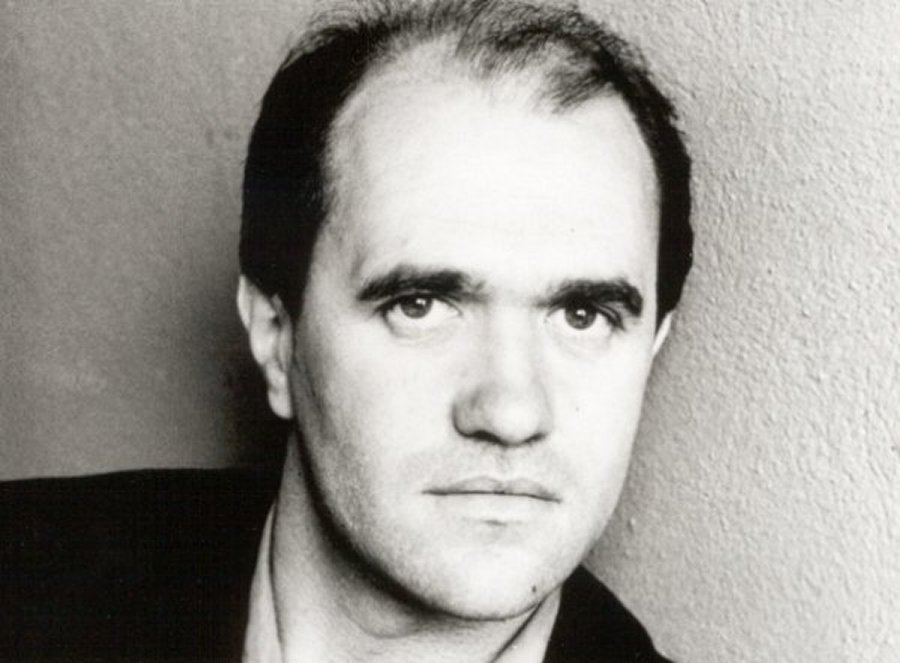
Irish writer Colm Tóibín

Page one can tell you a lot about a book. Here, in  Colm Tóibín’s 1996 novel, The Story of the Night, the first paragraph is in the simple past tense with a first person narrator, Richard Garay, a young Argentinian with an English mother:

“During her last year my mother grew obsessive about the emblems of empire: the Union Jack, the Tower of London, the Queen and Mrs. Thatcher.”

The second paragraph is in the present continuous: now, the time of writing.

“I am living once more in her apartment. I am sleeping in her bed, and I am using, with particular relish, the heavy cotton sheets that she was saving for some special occasion. ”

The third paragraph returns to the past, to the story Tóibín wants to tell; set in the time before, and after, his mother’s death,

“She died a year before the war [The Falkland’s war, 1982] and thus I was spared her mad patriotism and foolishness … The war would have been her shrill revenge on everybody, on my father and his family, and on the life she had been forced to live down here [Buenos Aires] so far away from home.”

What you also get from page one is the tone, generated by a sparse prose peppered with well-chosen adjectives (“her shrill revenge”); simple and often short sentences; a formal style – few contractions; and of course the situation, melancholic and fearful, which has a lot to do with meaning: his mother a widow in a foreign country with an only child who is anxious about his future and his desires.

By the end of page one it is clear that the world of The Story of the Night is dark, devious, and dangerous.

“She was elated by the election of Mrs Thatcher. Here is a woman, she said, who knows what is right and what is wrong. And that is what we need here, she said. She showed me Thatcher’s face in a magazine, pointed to her and said how sorry she was not to be in England now.”

This direct speech without punctuation; more like indirect speech is curious since there are passages of traditionally punctuated direct speech. It may be that this direct/non-direct speech, which is reported by Garay, is his version of what was said which raises the question of his trustworthiness; yet he is our key to the story. He is honest with us about his desires, inexperience, political naïveté, and inaction; or is he?

The creation of verisimilitude is essential to the novelist’s goal: to make the reader believe that what they are reading is true, even if that truth only exists in the universe that the writer has created and in which the story lives. As in the theatre, the audience, the readers, are expected to suspend disbelief and believe what they are experiencing. With a first person narrative a strong and common way to do this is, ironically, for the narrator to admit what he or she does not know:

“I don’t remember how or why I began to talk about this.”

Curiously, such a line makes the narrator more believable; we all forget things, why we said things, how we met someone, how we know something. (This doesn’t work, of course, for a third person narrative who is usually all-seeing, all-knowing, god-like) But this not remembering makes him more like us. Tóibín uses this little technique to also heighten the tension surrounding the narrative which is steeped in the political uncertainty following the war with Britain over the Falklands, the Malvinas as the Argentinians call them. Garay is fearful of his professional future; he has a lowly paid English-teaching job which he hates; he is watchful of others who may be spying on him; he is anxious about others knowing his desires; and doesn’t know who to trust. However he is brave (or foolish) enough to take a gamble and becomes politically involved with the father of one of his regular students who introduces him to an American couple, Donald and Susan Ford, with whom he embarks on a friendship but with hidden motives and where the real story, what he assumes, is possibly false. These layers of acquaintances help to deepen the fear; slipping him deeper into a labyrinth. This mixture of political and sexual intrigue creates a sense of danger that always threatens to manifest itself: it is as if danger is around every corner, under every bed, over every page. Garay is constantly on edge and so are we.

Tóibín has been criticized for getting the history wrong and although the setting is a country we all know exists, Argentina, it doesn’t have to be that Argentina; it is the Argentina of the writer’s imagination and this a reader accepts or doesn’t. This is creative writing and one has to accept that it is all created; just because he writer uses the name of an exiting place the reader should not confuse the associational reference with the place itself; anyway, how many of us know the political climate, atmospheric geography, and bar etiquette of 1983 Buenos Aires? And would you take time out to research such things at such times? I think not. The writer wants us to use our knowledge, albeit skimpy and tabloid-ish, to his advantage: he is creating a world in which it is possible for us to believe that what we are reading is true (even if it isn’t). That is the point of fiction.

The Story of the Night is a love story, a tragedy, but also an affirmation: Tóibín is too much an optimist about love to let it be down-trodden by plot.

Tóibín has written previously about men, The Heather Blazing (1992) and The Master (2004), but not for over a decade; his last three novels have been about women; but of all his long-form work The Story of the Night is the most unusual. It has been reported that he has said that his next novel will be again about a man. We can all look forward to that!

The Aerodynamics of Pork by Patrick Gale

Patrick Gale Pic
British writer, Patrick Gale

To begin a book review in a recent edition of The New Yorker (April 25, 2016), James Woods asserts that if there is such a thing as ‘late style’ in classical music then there must be such a thing in contemporary fiction; and then he describes what it might look like in the late works of Muriel Spark, Philip Roth, Saul Bellow, and Edna O’Brien. He’s right, of course, but then there must be such a thing as ‘early style’; and having read, and blogged about, two later works of Patrick Gale, Notes from an Exhibition (2007) and A Perfectly Good Man (2012) this one, The Aerodynamics of Pork his debut novel from 1985, is a perfect example of such an ‘early style.

There are no exquisite sentences nor the confident rearrangement of narrative time that characterise Gale’s later work. You can sense that Gale is testing the waters with this one; not just testing his own talent but flexing his literary muscles really, paving the way for more complex, more personal, and more adventurous writing.

Gale starts chapters and you find yourself in a maze. This isn’t as disturbing as it may seem; it just ups your trust in the writer a notch or two. (So you think, “This better be worth it”) But, as in a maze, you gradually find youself making sense of where you are, and who people are, their friends and situations and before you know it you find youself out of the maze – it’s only page three and you meet a before-mentioned character, say, from page one – and suddenly you’re into a plot. Gale allows the reader to do some of the work, to test assumptions and make predictions based on the information he gives you without spelling everything out which always halts the flow causing the narrative to plod rather than skip. Gale’s plots always skip.

It remains popular with the reading public even though Gale has somewhat dismissed it as over-written and under edited; I see it more as one of the work’s two narratives working better than the other.

Seth Peake, 15 going on 35, a musical prodigy and an extremely well-adjusted gay school-boy, blossoms artistically and romantically during a summer music festival; and a police inspector, Maude Faithe, a lesbian who’s let her sexuality slip in importance in recent years, discovers it again during her investigation into a bizarre series of burglaries of the homes of astrologists and popular fortune tellers and their soon to be announced prophecy of global importance. Seth is certainly ‘out’ while Mo is definitely ‘in’; as she is about her profession: she’s secretive of her sexuality among her work-collegues, but even more so about her job to potential friends and especially to potential lovers.

Seth’s narrative is more satisfying if only for the characters of his mother and sister; the former a progressive thinker but still a worrier, and the latter, an underachiever who finally understands that her lack of interest in sex is her own affair and her anxiety is solely due to her younger brother’s success at it even if he is underage.

The title is intriguing and there are cute little references to ‘pig’ and ‘piglets’ as euphemisms for members of the constabulary, although more benign than one might expect; and subtle inferences to the adynaton, ‘if pigs could fly.’ It would be a mistake to read too much into this; a memorable title need not be anything but a memorable title; but, of course, it means whatever you think it means.

If you are new to Patrick Gale why not start with this one, just like he did.

This and other Patrick Gale titles are being released in the US as e-editions through Open Road Media and you can find this title here.

http://www.openroadmedia.com/ebook/the-aerodynamics-of-pork

You can also find the book on Open Road Media’s affiliated sites:

Amazon:
https://www.amazon.com/Aerodynamics-Pork-Novel-Patrick-Gale-ebook/dp/B01FRQEVBK?ie=UTF8&SubscriptionId=AKIAIWK3GU7N4Y5GTA6Q&camp=2025&creative=165953&creativeASIN=B01FRQEVBK&linkCode=xm2&tag=httpwwwopen01-20

Barnes & Noble:
http://www.barnesandnoble.com/w/the-aerodynamics-of-pork-patrick-gale/1000208127?ean=9781504037624

Goodreads:
https://www.goodreads.com/book/show/30227509-the-aerodynamics-of-pork

The Woodlanders by Thomas Hardy

Thomas Hardy pic
English writer Thomas Hardy (1840 – 1928)

There once was a time when romance meant novels about gallant itinerant horsemen, stressed long-haired girls, castles in need of a paint-job, and sour land-owners who really only needed a bit of understanding; think, The Mysteries of Udolpho (1794), Ivanhoe (1820), and Lorna Doone, – “Sit doon Lorna, sit doon!” (1869). Today a romance means boy meets girl – boy looses girl (through a silly misunderstanding) – boy gets girl; think almost anything. However there also was a time when the old story of romance was transplanted to the lower, sometimes the very low, echelons of society, which over the eons has transmogrified into modern stories where teenage dreams, parental misunderstandings and happy endings revolve around tainted gossip, what a pretty girl – usually called Kimberley or Kylie – said or didn’t do, and a brave stance taken by a handsome boy – usually called Steve, Lance, or Duke; but it’s in that transference of action to the working class, and lower, that our modern romance stories find their roots. Works like Hardy’s Far From the Madding Crowd and The Woodlanders.

The Woodlanders (1886) has all the trappings of a modern day soap opera. I know that term has a sour taste but the mechanics of the action are the same mechanics that make up the plots of tales in modern day prisons, hospitals, schools, country towns, white houses, and space.
There is a poor girl, Marty South whose long beautiful hair is craved by the gloomy rich lady, Mrs. Charmond, of the gloomy big manor, Hintock House, and the poor girl succumbs to selling it once she learns that the man she loves, Giles, loves another; a mysterious, but handsome, doctor, Mr. Fitzpiers, takes up residence in the house on the hill; a local – but well educated beauty, Grace, – feels obliged by family promises to marry beneath her; and a young but honest youth finds the choice of a wife far more difficult than scratching a living from a village, Little Hintock, in a dent in the woods. The names alone go far in setting the tone, time, and place.


It seems that, ironically given the title, what joins these human stories of a low society, and the actions they choose, revolve around the mortal threat, ownership, and spirit of one particular tree; but the forced fate of which has the opposite effect of that intended. As indeed do other actions of other characters: how soap-opera-ish is the denial of something which causes the want of it? This story set on a beach could be an episode of Home and Away if it were not for the language. Here is Hardy’s description of Mr Fitzpiers, the doctor who “descended, as from the clouds, upon Little Hintock”:

“His face was rather soft than stern, charming than grand, pale than flushed; his nose — if a sketch of his features be de rigueur for a person of his pretensions — was artistically beautiful enough to have been worth doing in marble by any sculptor not over-busy, and was hence devoid of those knotty irregularities which often mean power; while the double-cyma or classical curve of his mouth was not without a looseness in its close. Nevertheless, either from his readily appreciative mien, or his reflective manner, or the instinct towards profound things which was said to possess him, his presence bespoke the philosopher rather than the dandy or macaroni — an effect which was helped by the absence of trinkets or other trivialities from his attire, though this was more finished and up to date than is usually the case among rural practitioners.”

A modern novelist might translate this classic – as modern playwrights feel obliged to do to theirs- like this;

His face was soft, charming and pale; with a nose that a local sculptor, with time on his hands, might feel inspired to chisel, more elegant than powerful; and a mouth that was full and kissable. In short he looked more like a raconteur than a spiv, a look that was helped by him wearing clothes with no decoration which in this town labeled him a medical outsider.

But what an immense amount of pleasure would be lost. Go on! Give it a go! Read Hardy’s version out loud even if it takes two or three goes to get the unfamiliar intonation and punctuation right to reflect the meanings he intended.

Actually if you are a modern novelist of the Colm Tóibín kind you wouldn’t, or rarely, describe people, or places, at all. In Tóibín’s latest novel Nora Webster (2014) the only description of a person occurs on page 2: “May Lacey, wisps of thin grey hair appearing from under her hat…” which is hardly a description, more the flavour of the woman. Such novelists leave the detailed descriptive work up to the readers’ experience which has its compelling justifications; but there is also something to be said for stretching your literary experience, reminding ourselves how the language was – and can be – used, and relishing the way little dark marks on a pale background can paint pictures in your head.

Of course the stories of these people in the woods end as you would expect or as Oscar Wilde has Miss Prism deliciously say in The Importance of Being Ernest, “The Good end(ed) happily, and  the Bad unhappily. That’s what fiction means.” However Hardy wasn’t a popular and lauded novelist in his day for sticking rigidly to the form; he adds a few very intriguing surprises and “OMG” moments that would do very nicely today just before an ad-break.

Hardy is at his most entertaining, and prickly at times, when two people are caught in a room and what they want to say is stymied by custom, clothing, religion, morality, and social class; so what they actually say is layered and fraught with all kinds of meanings. Modern writers can learn a lot from Hardy’s use of dialogue: it propels the action, paints character, exposes hypocrisy, uncovers hidden motives, makes you laugh, and sometimes makes you weep.

A go at the classics now and again sharpens our literary minds to tackle and appreciate more clearly the literature that’s written and read now; it brings depth and experience to what we need when we read a modern novel.

It doesn’t have to be Hardy; it can be Dickens, Franklin, Collins, Hemingway or Twain, Stevenson or Woolf, Richardson or White. You won’t regret it, I promise.