Out in the Open by Jesús Carrasco


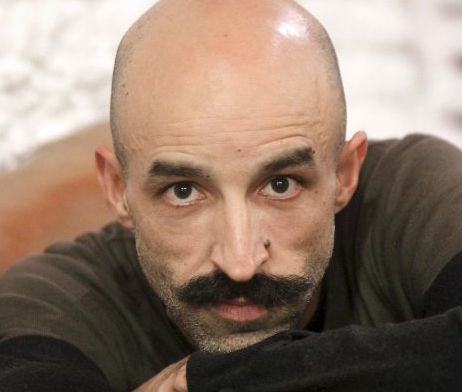
Jesus Carrasco pic
Spanish writer Jesús Carrasco

In the European summer of 1984 my partner and I were driving around Europe. One of our stop overs was the very un-tourist-town of Badajoz, on the Spanish Portuguese border. Western Spain is not dissimilar to the Australian interior, brown, dry and dusty. There were hot summer hazes on the bitumen, the look and dry odour of stubble and the sharp acrid smell of eucalyptus trees; but my childhood memories of the dry mid-north of South Australia in summer were debunked by the odd donkey cart, a stork perching on a power line, and olive groves. We stayed in Badajoz over night and saw our first bullfight in a red-brick Plaza de Toros, with an atmosphere not unlike an Aussie country footy match. There were food stalls, ice cream sellers, souvenir hawkers, and kids running around under the stands. One of those kids could’ve been 12-year-old Jesús Carrasco, born in Badajoz in 1972. Since school he has worked as a grape-picker, a washer-up, a music manager, an exhibition fitter, a graphic designer and an advertising copywriter, and somewhere during that time he achieved a Batchelor’s Degree in Physical Education. He began writing when he moved to Madrid in 1992 and now lives in Seville. Out in the Open (Intemperie in Spain) is his first novel and was a best seller in Spain and then the Netherlands in 2014.  It won the European Union Prize for Literature and also the English PEN Award and has been translated into 14 languages; this English translation for Vintage, UK is by Margaret Jull Costa.

It’s been called a ‘road’ story and a ‘dystopian’ tale, about a frightened boy who takes refuge in a hole in the ground and then escapes into a vast apocalyptic-like desert which has engulfed the land, his world. He is pursued by men of the village for an unknown reason, but the boy is obviously terrified and can do nothing but flee. He meets a lone goat-herd, an old man who lives on goat’s milk, dried meat, rancid almonds and mouldy cheese. A boy beginning his life and a man close to his end. They flee from the pack of men, and then a persistent bailiff and his deputy, and form a strange almost messiah-disciple-like alliance despite their mistrust of spoken words and their respective body odours : there’s not enough water to drink let alone to wash: anyway urine is better for wounds from fists, boots, backs of hands, and whips. Their only bond seems to be their shared branding as the ‘other’. No character has a name.

It’s written in a straight, past tense, third person narrative of plain language;

They crossed the stony ground at such a slow pace that they didn’t even kick up any dust. The landscape they passed through, full of abandoned arable fields and threshing floors, spoke to them of desolation. As did the flattened furrows covered in a crust of baked earth so hard that it only gave beneath the hooves of the heavily laden donkey.

Apart from the vivid writing the thing that urges you on is to find out why is the boy afraid, what terrible thing did he do? You are hungry for clues, your attention is sharpened. They are few but therefore precious. You hang on to them and you must resist letting your mind wonder around superfluous possibilities. The threat of violence is ever present, and when it comes, it is alarmingly real. Don’t be squeamish!

Place and time are unimportant, it is as if the land is devoid of people, hopes, ambitions and work. There is just ruins, rocks, bones, and dust. The boy and man protect each other, the boy certainly not really understanding why. There is a mule, a dog and a few goats: a small band of survivors? Outlaws? Refugees? If only it would rain! It is a story of self-reliance, determination, courage, acceptance, hope, and, and triumph? You will have to read it to find out.

You can purchase the book in various formats here.

Stoner by John Williams

NEWS!

Variety magazine has just announced that Casey Affleck, Best Actor Oscar for Manchester by the Sea will star in a film adaptation of the novel Stoner by John Williams, directed by Joe Wright (Pride and Prejudice, Atonement).

Stoner cover pic

As the sticker on this particular book cover states, yes, this is the greatest novel you’ve ever read. It has a reputation for being loved by all who read it, but unknown by everyone else.

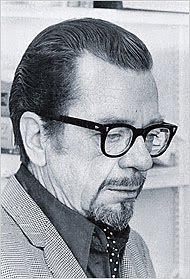
John_Williams_pic
John Edward Williams (1922 – 1994)

John Williams, as his name implies, was an ordinary man, shy; an academic who wrote four very different novels: Stoner is his third.

What you notice when only a few pages in is the plain, unadorned prose that immediately puts you at ease, confirms that you made the right choice to pick up this book, and wraps you in a quilt of confidence that something important will be revealed to you;  and you simply can’t wait to know what it is. Reading Stoner is like watching a movie – the prose is so vivid – which has me excited, and also wary, about the forthcoming movie. But don’t just take my word for it:

The New Yorker from October 2013 wrote this.

Julian Barnes in the Guardian from October 2013 wrote “Stoner the must-read novel of 2013” even though it was published fifty years before.

The New York Times Magazine stated “You Should Seriously Read ‘Stoner’ Right Now” in May 2014.

AND something from Elaine Showalter, a professor emerita of English at Princeton University, who is NOT a Stoner fan. She wrote in the Washington Post in November 2015, “Classic ‘Stoner’? Not so fast“.

And now, as I page through my copy to prepare this post, I can feel the pull of it.

It’s probably going to take a year or more for the movie to be made and released; plenty of time for you to hunt down a copy. Here’s a good place to start.


Suspended Sentences by Patrick Modiano

Patrick Modiano pic
Jean Patrick Modiano, known as Patrick Modiano, is a French novelist.

I had never heard of Patrick Modiano until he was awarded the Nobel Prize for literature in 2014. He is French of Italian descent and not only does he mine his own life for inspiration – usually to do with WWII and the city of Paris, he was born the year the war ended – but his focus is on the reliability, or not, of memory, which is not the same as one’s personal history, or memoir.

Reading Modiano is like walking through a maze: each chapter creates an expectation, but when you turn the corner, it is more of the same, another expectation; and when you get to the end, the centre of the maze, you realise that it’s not the end, just another beginning.

What is this book about? It’s about memory and its fickleness. A writer once said, “Memory is like an oven: you put something in, close the door, wait a while, open the door, and there it is, something else.”

There are three novellas in this short volume, Afterimage, Suspended Sentences, and Flowers of Ruin.

The narrator of the first, Afterimage, almost like the writer, is like someone remembering anecdotes that will eventually lead to a point, but one anecdote only leads to another. The veracity of these episodes is given weight by detail: the colour of a hat, the bullet holes in a wall, a list – Modiano loves lists – a footnote containing a minor thought or an address, the sound of leaves in a breeze. And all to do with the narrator’s memory of Francis Jensen, an enigmatic man who the narrator remembers over a period of 20 years.

The first sentence:

I met Francis Jansen when I was nineteen, in the spring of 1964, and today I want to relate the little I know of him;

which starts comfortably enough, but there is a wobble of uncertainty by the end of it: a book usually tends to contain a lot of information a writer knows about a person, not a ‘little’.

By the end of this short story – only 55 pages – you feel as if the short chapters – some very short – could be in any order. There is no obvious narrative ark. Francis Jansen is ‘revealed’ hazily through what the narrator remembers and the people, friends, lovers, and photographs the narrator discovers and the interplay he remembers having with them, which may have happened, or not. It reads like autobiography, and maybe it is, maybe it is not. This is fiction after all.

Mark Polizzotti, the translator, says “Modiano’s narrators seem fatally drawn to individuals who are uncommonly vague about themselves and their situation” and Modiano himself confirms this, “the more obscure and mysterious things remained, the more interested I became in them. I even looked for mystery where there was none.”

Read his biography in his own words here. In true Modiano-fashion he leaves out a lot of information, creating his own mysteries. He doesn’t say, for example, that the interesting reason that he spent his childhood with his grandparents was that his father was deported during the war and his mother was a touring actor.

The second, and title story, has a narrator of 10 years old: Patoche (a diminutive of Patrick), but here the prose is remembered by the adult Patoche who tries to remember and understand the adult world around the boy, and true to Modiano’s love of mystery there is one here. However, what does a 10-year-old boy know of the world of adults. Why are there policemen scouring his home one day when he gets home from school? And where are all the adults. No spoilers here.

“With each new book, Modiano has refined his memorial mode. He is perhaps the most repetitive novelist in world literature: he uses the novel as a serial form, like a screen print,” wrote Adam Thirlwell in The Guardian.

The third, Flowers of Ruin, is the narrator’s shadowy attempt to solve a double suicide and to uncover the history of an acquaintance: Phillipe de Pacheco, commonly known as simply ‘Pachero’; or his name could’ve been Phillipe de Bellune with a tarnished shadow of nobility.

I sat at a sidewalk table of one of the café’s facing the Charlety stadium. I constructed all the hypotheses concerning Phillippe de Pacheco, whose face I didn’t even know. I took notes. Without fully realising it I began writing my first book. It was neither a vocation nor a particular gift that pushed me to write, but quite simply the enigma posed by the man I had no chance of finding again, and by all those questions that would never have an answer.

Behind me, the jukebox was playing an Italian song. The stench of burned tires filled the air. A girl was walking under the leaves of the trees along Boulevard Jourdan. Her blond bangs, cheekbones, and green dress were the only note of freshness on that early August afternoon. Why bother chasing ghosts and trying to solve insoluble mysteries, when life was there, in all its simplicity, beneath the sun?

This sounds like the ending, doesn’t it? But it isn’t; there’s 33 more pages to go!

Like Virginia Woolf, and other modernists, and post modernists, the pleasure is in the action of reading them, not in following a story or remembering it later. Memory has not been explored like this since that other French writer, Marcel Proust (1871-1922). Modiano’s works are short; read one, and tell me what you think.

You can purchase this book in various formats here.


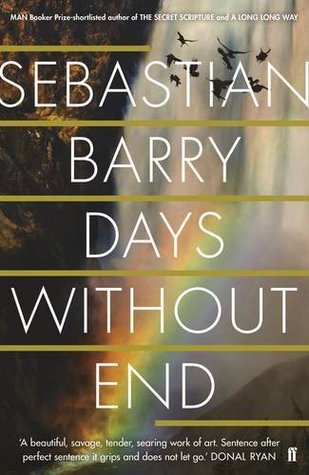
Days Without End by Sebastian Barry

Sebastian Barry pic
Irish writer, Sebastian Barry.

The first thing you know about this work is the person, the narrator. Thomas McNulty is seventeen and has escaped the Irish famine to find himself in the wilds of the American west, not for fame and fortune, just a life. Barry has been mining the lives of the McNulty family for inspiration for many of his works, plays and novels; but what stands out in this book is Barry’s close writing: sometimes more academically called free indirect discourse, the use of language that the character might use when speaking; and he is speaking, speaking directly to the reader in the first person. The words – like ‘knowed’ instead of knew, ‘drear’ instead of dreary, ‘swole’ instead of swollen; the punctuation – nothing fancier than a comma or full stop; and the grammar – double negatives and wrong articles, all help to paint a picture of this boy. Uneducated, naïve, but smart, observant and handsome; no, not handsome, young Thomas is pretty. It is John Cole who is handsome, ‘handsome John Cole’ he is called. They meet in the wilds of Missouri, Thomas seeks shelter from a rain-storm in a hedge and there he is, handsome John Cole.

Their relationship is tender, romantic, sexual, and strong and is at the core of the book. There is hardly any descriptive detail about this partnership, no pink-rosed romance or comfortable sex; it’s just like the scenery, the killing, the survival, it’s just there.

And there is a lot of killing. The two boys get enlisted into the army and take part in the Indian Wars and then the Civil War. There is murder, mayhem, scalpings, scrotums removed to be dried out for bakky pouches, vaginas pinned on hats, children hacked, heads blown off Confederate soldiers not men yet; and all described with the plane observation and simple descriptive language gleaned from Thomas McNulty’s short little life, like he describes the glorious sunsets and the mountains ‘as black as burnt bread’ in the lands that don’t have names yet.

When the boys aren’t killing Indians or gray-boys they are play-acting to earn a dollar. First in a prairie hotel, they don frilly dresses and dance with the miners to offer a bit of pseudo-female company. No hanky-panky mind, just dancin’ and polite conversation including drunken but demure marriage proposals that are gently refused; and later in a grown-up theatre where Thomas sings romantic ballads in makeup and a dress to make grown men cry. Eventually Thomas and John and their adopted ‘daughter’ Winona, an Indian child saved from a bullet by Thomas’s quick thinking, settle down in post-war Tennessee growing tobacco. However, Thomas’s past deeds catch up with him and a happy ending is in doubt. No spoilers here.

But it’s Barry’s writing that is the star. You feel the need to re-read sentences and passages, the joy and innocence of them is captivating. Here is his description of the Major’s new wife:

There’s something sleek about her, like a trout moving through water. Her hair is glossy as pine-needles, pitch black, and she wears a diamond-spangled net over it, like she was ready for business. She carries one of those new Colt guns in her belt. She’s better armed than we are. Guess we think Mrs Neale is top-notch alright. It warms my heart to see how much she is kind to the major. They link arms about the place and she talks like a geyser. Every little thing she says has grammar in it, she sounds like a bishop.

The book is dedicated to his son, Toby:

Years ago, when he was 16 and I was doing the reading for this book, Toby was very unhappy, and when a young man is unhappy we must take note. I was desperately trying to find out what was wrong, but you can’t ask him directly. You have to be a sleuth, a kind of Sherlock Holmes of his unhappiness … Then one morning he came into our bedroom and said, ‘The thing is Dad, I’m gay.’ I can’t describe to you the immense sense of relief and freedom in the very speaking of the words. His unhappiness fell away, my unhappiness fell away, and from that moment on we entered into this extraordinary period where he was instructing me in the magic of gay life … I was very impressed by the subtlety, the delicacy and the intricacy of the love between Toby and his boyfriend. People talk about tolerance, but it’s not really about tolerance. It should also be about emulation and reverence and learning from.”

Barry won the Costa Award, for an unprecedented second time, with Days Without End; it is also long-listed for the current Man-Booker Prize. The winner will be announced in October.

This is an unsentimental work full of violence but anchored by deep love and commitment that is all the more powerful for its simple existence and unwavering certainty.

You can purchase the book in various formats here.
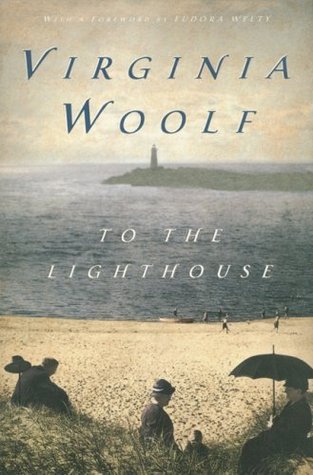
To the Lighthouse by Virginia Woolf

virginia_woolf_pic
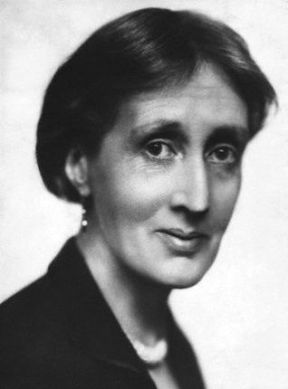
Virginia Woolf

This is not a story, and readers may find it difficult and not worth continuing with, but it takes a little gear change to alter your expectations. However, for readers interested in the life of the novel To the Lighthouse is an interesting read; but before sitting down with it a little research into the times and the literary landscape into which it was written is a good idea. It is considered a pioneering work of literary modernism.

Modernism is hard to define since it’s such a broad term and encompasses other ‘isms’ like expressionism and surrealism to name just two; and modernists did not actively adhere to any philosophy or movement like the visual impressionists did. However, it is generally considered to show a strong feeling for experimentation, and anything that was new, as well as a strong anti-Victorian bent. It is also difficult to pin down a starting date but generally it is agreed that literary modernism began at or near the turn of the 20th Century. While Robert M Kirschen of the English Department at the University of Nevada, opts for the end of Modernism in 1939 (some say 1945) with the publication of Joyce’s Finnegan’s Wake: “the ultimate work of Modernism.  It is truly the pinnacle of this experimentation and novelty. After the Wake, it is no longer possible for a writer to attempt to supersede his or her predecessors in the way Modernists often strove to do.  As such, the Modernist movement had reached its natural teleological* conclusion, and anything which came after must be part of a different part of literary history” i.e. Postmodernism. However, these labels are arbitrary and are the result of literary theorists looking back into the immediate past and recognising similar themes, memes, and ideas across the broad spectrum of literary endeavour. James Joyce, T. S. Eliot, Ezra Proud and Virginia Woolf are all considered pioneers and pillars of modernism.

In To the Lighthouse the drama, like many modernist texts, is not in the action, there is very little. Action did not interest Woolf. The book begins with the announcement of a desire, for the boy’s sake, for James, to go to the lighthouse, and ends, 10 years later, with them actually setting out. The drama is internal, the weave and weft of emotional attachments, of familial love and hate, the gamut between, and even dissertations on life matters. There is also an argument, external to the book, but installed in it’s very creation, about doubt of the creative force; about two guests, two of many, at the house: Charles Tansley, a sycophant, who pronounces that women do not have a creative force, and Lilly Briscoe, a woman who desperately yearns, and attempts, to be an artist, a successful painter, but fails. She is a metaphor for Woolf herself and her own legendary self-doubt (thinks Margaret Atwood); but ironically Woolf not only completes this work, and publishes it, but knows its success.

The man, Mr Ramsey, stands over his wife, while she knits a pair of stockings for the underprivileged boy of the lighthouse keeper, which she hopes to take and give to him, if they ever get there, and he demands sympathy, since he declares himself a failure as a man. While knitting, as the boy, James – loving his mother, hating his father – stands between her knees clutching a book, she assures her husband, “beyond a shadow of a doubt, by her laugh, her poise, her competence” that he is wrong about himself. Look at the undying admiration of Charles Tansley, and his very own fecundity, his own house “full of life” – he has eight children – and in response to his wife’s success in turning his self-doubt into self-admiration- not via the sympathy he sought – but “as a nurse carrying a light across a dark room assures a fractious child” he goes for a walk to watch the children playing cricket. But once he is gone she is exhausted and can hardly lift her needles; can hardly read the fairy tale James so wants to hear, with the demands on her to mend her husband as well as wonder where the fifty pounds will come from to mend the greenhouse roof; and all this laden with the half knowledge that her husband is right about himself, adding lies to the accumulated burden she has to bear.

It is this internal drama, thoughts, treacheries, responsibilities, and admissions that interest Woolf. Then here, while knitting and thinking about why children must grow up; why can’t they stay happy forever, she thinks, “We are in the hands of the Lord?”

What brought her to say that: “We are in the hands of the Lord?” she wondered. The insincerity slipping in among the truths roused her, annoyed her. She returned to her knitting again. How could any Lord have made this world? she asked. With her mind she had always seized the fact that there is no reason, order, justice: but suffering, death, the poor. There was no treachery too base for the world to commit; she knew that. No happiness lasted; she knew that. She knitted with firm composure, slightly pursing her lips and, without being aware of it, so stiffened and composed the lines of her face in a habit of sternness that when her husband passed, though he was chuckling at the thought that Hume, the philosopher, grown enormously fat, had stuck in a bog, he could not help noting, as he passed, the sternness at the heart of her beauty. It saddened him, and her remoteness pained him, and he felt, as he passed, that he could not protect her, and, when he reached the hedge, he was sad. He could do nothing to help her. He must stand by and watch her. Indeed, the infernal truth was, he made things worse for her. He was irritable — he was touchy. He had lost his temper over the Lighthouse. He looked into the hedge, into its intricacy, its darkness.

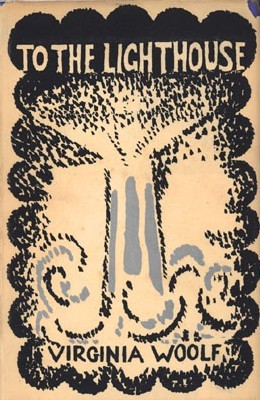
ToThe Lighthouse Original cover
Original cover design by Virginia’s sister Vanessa Bell: 1927

It is this combination, this ‘conversation’ between the narrator, Mrs Ramsey, and Mr, but all in the narrator’s ‘words’, that, among others, mark this text as a work of ‘modernism’; and, indeed, one of the first.

If you think of the third person narrator as an omnipotent genie commenting and assessing each character, every moment, past, present and future, and sitting on the shoulder of the protagonist listening in to their thoughts and desires and explaining, prophesizing, and assessing them for the reader, here it is like that genie is not just rooted to the shoulder of the main character but, flitting to and fro onto the shoulders of many characters. And in the final short sentence of chapter 11 Woolf has all three voices ‘speaking’: the narrator, wife and husband,

For he wished, she knew, to protect her.

James Joyce’s Ulysses was published in English in 1922 and Woolf’s reaction to it was initially uncomplimentary, “puzzled, bored, irritated & disillusioned as by a queasy undergraduate scratching his pimples,” but she later came around to admitting his genius even if she may have not finished reading it. However, it is clear that she was influenced by him, and, no doubt, by the first English translation of Marcel Proust’s À la recherche du temps perdu, translated into English as In Search of Lost Time or Remembrance of Things Past, which also came out in English – it was originally published in France – in 1922. What a year!**.

However, it is important to keep in mind that just as fads flutter through most of our civilised efforts, food, fashion, and politics, so too do fads pepper our literary history; and ‘obscurity’ was a particular literary fad of the early 20th century. Writers thought that every story that could be written had been written so they sought ‘the new’ within the structure of the novel itself, the use of the language, and in the relationship between writer, narrator, and reader.

Woolf did not deliberately seek to be obscure, no writer does, but in order to describe, set down, what interested her she had to find new ways of convincing her readers that they would be interested in it too.

The pleasure of the works of Virginia Woolf is immediate; it is in the reading, not the remembering.

godrevy-lighthouse-pic
Although the story is set on the Isle of Skye, western Scotland, Godrevy Lighthouse, built in 1858–1859 on Godrevy Island in St Ives Bay, Cornwall, was the inspiration for Woolf’s novel.

You can find the ebook, in various formats, for free here, as well as other works by Virginia Woolf including all her novels and a large number of short stories. If you are interested in discovering Woolf try her first novel, The Voyage Out (1915); a good place to start.

-oOo-

* Teleology is the philosophical attempt to describe things in terms of their apparent purpose, directive principle, or goal

** THE WORLD BROKE IN TWO: Virginia Woolf, T.S. Eliot, D.H. Lawrence, E.M. Forster, and the Year That Changed Literature, by Bill Goldstein, comes out in November this year.

House of Names by Colm Tóibín

Colm Toibin image
Irish writer Colm Tóibín

When trying to describe the writing of Colm Tóibín it is easier to point out, not what he does, but what he does not do. He does not use contractions which gives his writing formality, gravitas, and weight; he does not use many adjectives and rarely long and compound sentences making the writing plain, stark, and bold; he does not describe places, people, or the weather unless it is absolutely necessary; and he does not use many adverbs or sentimental phrases to steer the reader into an emotional reaction. It is like watching a movie without a soundtrack (and if you would like an example of such a movie try Maren Ade’s superb comedy/drama Toni Erdmann, 2016 – no soundtrack).

Tóibín asks a lot of his readers; he allows readers to supply the detail: he simply says
‘she walked slowly along the corridor of the palace to her room,’ and leaves it up to us to provide the detail: the decorations, the floor tiles, the guards and their uniforms, drapes, and statues. We all have an idea of the a corridor in a pre-christian palace. Our thoughts may not be accurate, but interior design has nothing to with Tóibín’s story. Our imaginative efforts are all he needs.

All of these elements are in his latest work, House of Names, Tóibín’s retelling of the pagan Greek tragedy of the turbulent family of the House of Atreus, headed by Agamemnon who prepares to besiege the city-state of Troy and return his kidnapped sister-in-law, the beautiful Helen, and return her to her husband, his brother, Menelaus. There is also no sense of good and evil, there is just what must be done to get what you want. Revenge, rape, human sacrifice, incest, matricide, kidnapping, imprisonment, and murder by any means are par for their daily lives as they are for the gods they worship and from whom they seek guidance.

She [Cassandra] had come to us in glory and now, in ignominy, she was running through the palace seeking Agamemnon, having divined that something had happened to him. Aegisthus followed her at a slow pace. When I saw her, I calmly ushered her into the bathroom, where she could see my husband bent over naked, his head in the bloody water. As she howled, I handed Aegisthus the knife I had used on Agamemnon and indicated to him that I would leave him to his task.

Tóibín has used the bones of the story garnered from the Greek playwrights, Sophocles, Euripides, and Aeschylus but has also relied heavily on his own imagination, especially in the Orestes section. The book is divided into parts each focusing on one of the three main characters, Clytemnestra, wife of Agamemnon, Orestes, their son, and Electra, their daughter. The sections labeled Clytemnestra are told in the first person, the others in the third. However, Tóibín uses free indirect discourse (also known as ‘close writing’) where the words used are similar to those the protagonist might use giving the third person narrative a taste of the first; so, whether told in the first or third person this tale is very personal to the murderous trio.

The story opens the day after Clytemnestra has slit the throat of her husband Agamemnon just after he slipped into a warm bath,

I gave orders that the bodies should remain in the open under the sun a day or two, until the sweetness gave way to stench

but quickly takes us back to the reason for this: the death of Iphigenia, Clytemnestra and Agamemnon’s eldest daughter; rather than marrying Achilles, her father’s famed warrior, which she thought was happening that day, she was sacrificed to the gods, with Agamemnon’s approval, to enable fair winds to take him and his fleet to Troy. Clytemnestra plots her revenge which never fades while Agamemnon is away fighting the decade long Trojan War.

This novel, his eleventh work of fiction, is a departure for Tóibín, which may have been his attraction to the idea. Usually his family stories are more about the emotional geography of everyday life of everyday people: the inability of a father to confess love to a lonely son; a recently widowed mother’s attempt to regain her life on her own terms; or how a writer, used to success, copes with failure; rather than the murderous shenanigans of the rich and powerful. However, in the first-person narrative of Clytemnestra, there are similarities with Tóibín 2012 novel, The Testament of Mary. Here too the tone is confessional: a woman, a character from our ancient past, confessing to the reader her inner thoughts, motivations, and decisions.

To facilitate her murderous plans, Clytemnestra has her son, Orestes, still a teenager, kidnapped and sent away along with other young men – to garner silence from their fathers – and guards who might get in her way. Orestes, with two others, the strong and decisive Leander, and the weak and sickly Mitros, escape and in this third-person narrated section there exists, eventually, a taste of domestic happiness, rural contentment, and even romance. But Tóibín only hints at such human pleasures with the same distanced control he uses to describe filial treachery, pride, and murder.

Electra, a sad and rather pathetic character does not have the beauty of her dead sister, Iphigenia, nor the cunning and charisma of her mother, or the courage of her brother, but she hovers over the story biding her time, making plans, until she is able to set up the matricide for her brother to commit.

I enjoyed this tale – it’s a quick read –  but I hanker for Tóibín to get back to what he does best and to the promise he made post Brooklyn (2009), that after three novels about women he would tackle a story about men; his previous, The Heather Blazing (1992), The Story of the Night (1996), and The Master (2004), where a long time ago.

You can obtain this work in various editions here.

Personal by Lee Child

Lee-Child-pic
James D. “Jim” Grant, better known by his pen name Lee Child, is a British writer, who for many years worked at the BBC and Granada and was involved in the production of many popular television drama series. After being retrenched he took up writing: his first Jack Reacher novel appeared in 1997. He now lives in New York City.

It’s not that I’m an ‘author snob’ – although I can understand why that might be true – it’s just that procedural crime, thrillers, page-turners and the like, whether books, films or TV series, usually boor me. I just don’t care enough: who did it, how they did it, why, where, and, well … who cares?  But I decided to give Lee Child a go. Everyone else is. This one, Personal (2014) is #19 of 23 and counting. He produces one bestseller every year.

I haven’t tried Stephen King, either. Yes, I know, I know. I should!

I was nearly put off by the quote, from the Independent, on the cover of this one: “Pulseracing”. See it? It’s not even a word, it’s two words: Pulse racing. It means that it makes your pulse race; not the book’s pulse, whereas … Oh, forget it! See what I mean?

I place a lot of faith in page one. Here is the first paragraph of this page one:

Eight days ago my life was an up and down affair. Some of it good. Some of it not so good. Most of it uneventful. Long slow periods of nothing much, with occasional bursts of something. Like the army itself. Which is how they found me. You can leave the army, but the army doesn’t leave you. Not always. Not completely. 

Chatty. Casual. Matey. Short sentences, even if some of those short sentences aren’t actual sentences (no verb) but are there, nonetheless, courtesy of authorial licence. But it was the line, “Which is how they found me.” that sparked my interest.

The chapters are short – 58 in this one – and each one is like a little scene from the movie (there’s bound to be one) with a chapter-ending waterfall, some no more than an amusement – “So I headed for the sound of her voice, and stepped into a room, and came face to face with myself.” – some a major plot point  – ” …first a tiny pinprick of sudden light in the far distance, and then the snap of flags everywhere as a gust of wind blew by, and then Khenkin’s head blew apart, right next to my shoulder.” Although this is action, the first real action (p116), a death, it’s passive action: Reacher doesn’t do anything, it happens to him. Well, it was supposed to happen to him: that little gust of wind, not an act of god but one by the author, blew the initially accurate bullet off course.

I was getting a little restless.

The next chapter continues with the aftermath: “His shattered head hit me on the way down and left a red and grey slick on the shoulder of my jacket. I remember thinking Damn, that was brand new, …” Such black-humoured, character-layering, Tarantino-esque moments are common in popular culture today. It’s been 23 years since Pulp Fiction – a cliche yet?

I re-arranged myself in my seat.

It took another 78 pages to get to the first piece of thrilling action: Reacher violently and swiftly overpowers 2 thugs masquerading as policemen; kills one, maims the other, but in the description of this, this:

and launched the same elbow at the first guy, who was a big strong man, but clearly not much of a fighter. Maybe he had gotten too comfortable with getting by on appearance and reputation alone. Maybe it was years since he had been involved in an actual scuffle. The only way to deal with a sudden incoming elbow was to twist and drive forward and take it on the meat of the upper arm, which is also painful and sometimes numbing, but generally you stay in your feet. But the guy went the other way. He chose the wrong option. He reared up and back…

Three lengthly sentences of explanation, instruction, and justification in the middle of a description of a frenzied fight. This surprised me. But what surprised me more was that it didn’t matter. I was with him all the way. This book is in the first person, which can be limiting: the hero in a first person narrative only knows what they know, but the first person is IN the action, not outside it, and such thoughts and musings don’t subvert the action; the reader is with the narrator, safely in his (the author’s) hands.

This piece of action went on for three chapters and included this description of a man, a villain obviously, getting out of, and back into, a car:

And then a giant climbed out. He led with a bent head and a bent back, folded at the waist, folded at the knees, and then he straightened up in stages, like a complex mechanism, like a child’s toy that starts out as a squat dump truck and then clicks open, one component after another, to reveal an action figure. He was huge. … The action figure became a dump truck again. He bent his knees, and bent at his waist, and tucked in his elbows, and hunched his shoulders, and ducked his head, and backed butt-first into his seat.  

And this piece of light-hearted description of a “hideous old farm vehicle” gearing up for motion:

The transmission was slower than the postal service. She rattled the selector into reverse, and all the mechanical parts inside called the roll and counted a quorum and set about deciding what to do. Which required a lengthy debate, apparently, because it was whole seconds before the truck lurched backward. She turned the wheel, which looked like hard work, and then she jammed the selector into a forward gear, and first of all the reversing committee wound up its business and approved its minutes and exited the room, and then the forward crew signed on and got comfortable, and a motion was tabled, seconded and discussed. More whole seconds passed, and then the truck slouched forward …

And it reads so well. I read it many times, and each time it made me smile. Great creative passages like these are worth the time and put this thriller writer a little above the rest, in this, my learning opinion.

But, back to the action, the second piece of action. Serious action only 23 pages on. Similar to the first but on a bigger scale. The first was 2 men, dressed like, but not, policemen asking Reacher and partner, Casey Nice, (her name. Nice.) to nicely get into the back of a van. Reacher didn’t oblige. The second was not a van but a one-door-one-window room behind an auto-shop which they, foolishly it turned out, walked into, with not 2 men present but 4 outside. “He closed the door behind him. And locked it.” End of chapter. The next chapter opens with just over 2 pages describing the 6 seconds of deductive thought going through Reacher’s mind after the click of the lock. This for two reasons: 1) it shows you what a smart-arse our hero is, and 2) it sets the time scale, 100-ish words per second. Reacher and Nice have a little chat which ends with them totting up what they have. A chair, a desk, a dirty jumper in a drawer, an arm chair, a window, a locked door. She says, “We’ve got nothing.” He says, “We’ve got what we’ve got.” “What are we going to do?” And the chapter ends with

So I told her what, and we rehearsed it carefully, over and over again, and then we started doing it. 

Note the verb tense. Not the past tense, and then we did it = action completed; but the past continuous tense: and then we started doing it = action not finished yet. (Now, that’s a waterfall!)

Well, you’ve just got to turn the page!

So, man number 1 bursts into the room lured by the noise of the armchair going though the window, and while Nice deals with him with her hand wrapped in the dirty jumper and holding a large slither of glass (“Aim for his eye.” She does), Reacher quickly renders unsuspecting but hurrying man number 2 unconscious with the chair and then confronts men numbers 3 and 4, not in the boxed room but in the auto-workshop, bigger space, more to play with, where he can see both of them at once. He deals with them, expertly of course, telling us how and when and why they made the wrong choices and why he didn’t – he’s a smart-arse remember, taking about 1500 words, which adds up to 15 seconds of screen time, just over 5 pages of book time. So that’s how you write action! The chapter ends with

Then I hustled back to the boxed-off room, to see how Casey Nice was doing.

Would you stop there and start preparing dinner?

However, after this bit of page-turning there was over 100 pages of chat, explanation, assumptions, predictions and justification; a long wait for more thrills. This being a ‘thriller’. In fact in terms of pages, ‘thrills’ take up a very small number indeed. Or have I been seduced by the jacket quotes “Another cracker …” “The best one yet.” “Generates relentless momentum … Child’s dedication to suspense … approaches the Hitchcockian” and Child’s soaring reputation? Yes, the thrills happen expertly but not very often. Relentless momentum? I don’t think so.

Oh, the plot? Some sniper has taken a potshot at the French president. The Russians, French, and the British all have their theories, but the Americans know who it was, and the only man to find him is Reacher. But then we learn that the French president was only a decoy/rehearsal; there’s a G8 summit coming up in London. So who’s the target?However on the way there’s two London gangs who get involved – one led by that giant! And, yes, the climax is in the giant’s house where everything is 50% bigger than a normal house (great design opportunity for the movie-version) but Child throws a naked woman in the final scene. Tacky, but you’ve got to be true to the genre, I suppose.

The first Jack Reacher movie, One Shot, of book No. 9, came out in 2012. Child wasn’t impressed, I hear: Reacher is more the build and temperament of a beefy Arni Schwarzenegger, not a weedy Tom Cruise. So we’ll see if there’s more.

Child’s Reacher #20 is in the 3rd person, which might be an interesting comparison to this one in the 1st. But, maybe I am a snob when it comes to airport genres, after all. No. 20, Make Me (2015) is there on the shelf. I’ll think about it.

You can find Lee Child novels, well,  … everywhere. Read one and tell me what you think.


Merciless Gods by Christos Tsiolkas: a short story collection.

ChristosTsiolkas_pic
Australian writer, Christos Tsiolkas.

These stories are masterful, enlightening, moving, shocking, blasphemous, erotic, breath-taking, and scary: some of the best I’ve ever read. They are so good, they could render a yearning writer silent.

The opening, and title, story sets the bar. A group of young Australian professionals, close friends, at a deliberately over-indulgent dinner party thrown to celebrate an important new editing job in San Francisco for one of their number is destroyed by another: his ego, self-importance, and jealousy – he wanted the job – combine with a silly game to allow him to dominate the room and shatter these long-time university-born relationships forever. The story has a tricky structure: a story-telling within the story, and set-up information is economic enough not to turn you off or lead you to wonder where it’s going, but detailed enough that you understand what’s happening. Tsiolkas also tells the story from a more recent time reminiscing about a lost past, lost friendships, and lost innocence. This creates an expectation that the point is big: it is, even though on the surface it’s a bunch of mates boozing, snorting, talking, and toking at, and after, a dinner party. Thinking back on the story a day later some of the necessary plot-points seem over-stretched but at the time nothing jarred. There is nothing for the reader to do except go along with it. This, I believe, is a sign of a good writer: the reader will believe whatever is thrown at them even if, on reflection, some things are a little bumpy; but in the moment, while reading it, the reader is completely in the thrall of the writer, ready for anything. It’s what a reader – well, this reader – craves.

“The title story of Merciless Gods is stunning and should be read by everyone in the country who cares about fiction. It is worth the price of the book alone.”                   Sydney Morning Herald

Saturn Return is about dying. And grief.

When the door finally opens again, Barney rushes out sobbing and falls on me. I hold him tight. It is not as if he his crying exactly; rather, sorrow is pouring out of him, from every heaving breath, from every lacerating tear. The warm lounge room is suddenly freezing and the only heat comes from where our bodies touch. I strengthen my hold on him. I’m scared that if I let go,not only the room, not only this city, but the whole world will go cold forever.

I cried. Not bad for a story of twelve and a half pages.

Tsiolkas has never shied away from writing about sex, particularly in its extremes. His novels Loaded (1995) and Dead Europe (2005) are testament to that.   There are stories here that may curl your toes; this book may not be a good idea as a Christmas present for Gran.

A reviewer at The Guardian labeled Tsiolkas as “the master of the stain”.

The Slap (2008) was his breakout hit; publication in Europe and around the world set him up as one of Australia’s premier writers. However, he had already established a small group of fans in Australia with challenging works like, Loaded, – adapted for the screen in 1998 as Head On – Dead Europe – which some considered the best book of 2005 – and The Jesus Man (1999). The television series of The Slap (2011) in Australia and the US version (2015) consolidated his reputation and broadened his readership. His 2013 novel, Barracuda, was also adapted for television in 2016.

Read these stories. You won’t forget them.

You can get the kindle edition here.


The Obelisk by E. M. Forster: a short story collection,

image
English writer Edward ‘Morgan’ Forster 1879 – 1970

A lot has been written about Forster, and especially recently about his sexuality. He was a closeted homosexual, which was far from rare for an Edwardian Englishman of his education. His novels, A Passage to India, Where Angels Fear to Tread, A Room with a View, among the best of them, were mostly about the love lives of strong wilful English women usually traveling away from home. His other famous works, Howards End is a more London domestic story and Maurice, his only homosexual love-story, was not published until after his death, as is the case with these stories in this collection.

Sex to Forster was something hidden, and due to the ambiguous and wide-ranging forms of human attachments, physical, emotional and psychological all amorphously gathered together in English under the banner of the single word ‘love’, Forster was able to write about the ‘love’ of young English middle-class women and be applauded for it while experiencing none of that ‘love’ himself, so great is the imagination of the novelistic mind; until, that is, at age 37 on an Egyptian beach when he lost his virginity to a wounded soldier. His last, and greatest novel, A Passage to India, came out seven years later, in 1924, at which time his novel writing stopped. Why? “I should have been a more famous writer if I had written or rather published more, but sex has prevented the latter.”

Wendy Moffet, in her 2010 biography of Forster, E.M. Forster: A New Life asserts that sexual fulfilment (at last!) sapped him of his writer’s imagination and drive. This could possibly be true, given the above quote and that since his awakening on that beach near Alexandria he had several relationships with working class married men including a tram conductor and two policemen. He continued to live with his mother, however, until she died when he was 66.

This collection contains stories that are sexually charged and gently subversive. They are sometimes farcical, funny, satirical, and even, experimental. The comic, and clever, twist of the title story involves a young married couple and a pair of sailors they meet on a holiday to a famous landmark, and sets the tone of the collection. The second story, The Life to Come, is a colonial fable of religious hypocrisy and the plot turns on the many definitions and misleading consequences of the English word ‘love’ and how it is used in the Christian Bible.

Dr Wollacott, a story he told T.E. Lawrence was the ‘best thing he had done’, has been described by some as ‘weird’. It is an experimental tale of an invalid who is infirmed, more so by his amorous thoughts than any bodily ailments and dies because of them; or did the handsome young farm-hand who climbed in through the window (a particularly frequent fantasy in Forster’s work) from the park while looking for mushrooms, novelistically exist?

Arthur Snatchfold, is similar, but written more realistically, about an educated, married, and aristocratic man, Conway, who, while staying at a less-than scintillating country-house with his equally-lacking hosts, sees a milk-boy in the garden, seeks him out early next morning and has sex with him in a wood. Some money languidly changed hands.

“I didn’t do it for that.”

“I know you didn’t.”

“Naow … keep your money.”

“I’d be pleased if you would take it … please yourself.”

“Can you honestly afford it?”

“Honestly.”

“Well … people don’t always behave as nice as you, you know.”

Later, in town he hears that the later stages of their tryst were seen by the local bobby who waylaid the departing boy, arrested him, but the other unidentified man, got away. Conway knows it was himself, and is appalled and amazed that the boy chose not to give him away. “It all had seemed so trivial”, on both sides. He writes down the boy’s name, Arthur Snatchfold, in order never to forget it.

The rest of the stories are less successful; they read like first drafts that the writer lost interest in. Except, the final story, The Other Boat: it involves a ship-board romance that leads to tragedy. Its interest lies in its post-colonial flavour: the attraction of ‘the other’ and the social and emotional consequences of the day.

This volume is part of a handsomely produced series of volumes from Hesperus Press, Modern Voices, of the lesser works of an eclectic list of famous writers: Anthony Burgess, Colette, F. Scott Fitzgerald, Franz Kafka, D.H. Lawrence, Katherine Mansfield, John-Paul Sartre, Bernard Shaw, Leonard and Virginia Woolf, among others.

The South African novelist, Damon Galgut, has fictionalised the adult life of Forster, his private passions and relationships as well as his writing of The Passage to India, in his 2014 novel, Artic Summer; my blog about it you can read here.

A Sweet Obscurity by Patrick Gale

Patrick Gale Pic
British writer Patrick Gale lives in Cornwall with his husband farmer. They raise barley and beef. He plays the cello in a string trio, is chair of the Endellion Summer Music Festival, and loves gardening, dogs and nature.

Finally, on page 47, the complicated filial relationships of the four main characters, are explained. Several readings of the first three chapters doesn’t make them clearer, and the introduction of another family with a similar structure only confused matters even more. (I even cheated at the blurb on the back cover) It’s never clear to readers, and neither should it be, who makes these structural decisions, writer or editor, but waiting ’till page 47 is too long. Many readers would’ve given up; I nearly did, but I’m glad I persevered.

A common, and probably over-used, novelistic structure is a brief introduction followed by a major plot point – a birth, death, a prodigal brother, an earthquake – and then the back stories to fill in the gaps; and finally, the consequences that lead to a climax (another plot point or two) and finale. Gale doesn’t really abandon this structure, he stretches it and the long wait for the first plot point is ameliorated by his interesting characters and relationships.

Dido is a 9-year-old girl going on 25. Her upbringing is shared by her aunt, Eliza, Giles, Eliza’s estranged husband, and Julia, Giles’ girlfriend. All three are involved in music: Giles is an impossibly handsome counter-tenor, Julia works for the agency that handles his career, and Eliza is a musicologist who is struggling to complete her doctorate on the Elizabethan madrigalic composer, Trevescan. Dido’s single mother, Hannah, Eliza’s older sister, a wayward but determined woman died in a mountaineering accident well before the action begins. Dido’s father is unknown. They all have eccentricities of dress, self-regard, expectations, failings, and sexual proclivities; they are all in the beginnings, middles or ends of their warm, messy relationships, or planning, or foreseeing new ones; but are all basically good people trying to get along in the world as best they can. A trip to Cornwall, the discovery of a ‘lost’ madrigal, and a broccoli farmer change everything. As a reader, you want them all to find what they are looking for. They deserve to be happy.

Then finally, Gale drops in the first plot point. It isn’t another character, or an event, or an action; it’s a piece of information, something only some of them know. He could’ve plopped it down near the beginning but he saves it for near the end; and once it has hit you between the eyes – it’s something I can guarantee you would never guess – a few little more bombshells are dropped and the webby entanglements of all their lives re-arrange themselves (probably to begin a new cacophony of bumpy attachments); but Gale leaves these wonderful people at the moment of most contentment, or, at least, the promise of contentment, and the reader closes the book with great satisfaction.

The book doesn’t stop there. There is an interview with Gale, and a little essay by Gale himself about the writing of the book: it’s his only work to date based on a dream.

You can buy the eBook here.