I have always had a rather unstable relationship with poetry. Usually, when asked what I think about it, I reply rather lamely, “Poetry and I have a love/hate relationship; I love mine but hate everyone else’s”.
Below is an attempt to ‘write it out’: to explain, mainly to myself, what it is and how I can make this relationship more productive, and stop worrying about it.
Poetry
In the musical play Carousel, a spruiker called Bill, and Julie, who works in a mill, try to tell each other how they feel. They don’t have the words to be true to such feelings so they sing it to make it real: what “if I loved you?” The scene needs the music to supply the emotion and for the would-be-lovers to be who they are, not for writers to give them words they would never use. Songs in musicals happen when words are not enough. Poetry happens when prose in not enough.
To describe a spectacular tree, you can try to write it realistically as best you can but if it is truly spectacular you will get to a stage where you have to forget what you see and write what you feel; what it reminds you of; what the words are for: sense, surprise, and metaphor.
When Auden wrote “As I walked out one evening, walking down Bristol Street” he described what he did, and then what he saw, but what he saw was so such more and he had no words that did justice to the scenery, “The crowds upon the pavement” so he slipped into poetry, “were fields of harvest wheat.” And this adds meaning and insight; yes, and there’s rhyme and rhythm of course, a tune if you like.
What confuses poetics for the readers of verse is that so often the text is so personal, perverse, and has no meaning, no revelation; but like masturbation, it may satisfy the writer, but does nothing for the reader.
I’m going to read more poetry now and stop flogging myself since it isn’t a test. I’ll treasure those words that light something up, and dismiss those that maybe a gas for the poet, but hot air for the rest of us.
The Paris Review has been conducting interviews with writers since the 1950’s and now with editors, translators and playwrights. For your interest and enjoyment here is the interview with E.M. Forster, writer of A Room With a View, and A Passage to India; and who is the subject of Damon Galgut’s fictionalised account of Forster’s years culminating in the writing of a Passage to India; Galgut called it Arctic Summer, the title of an unfinished novel by Forster. You can find my post about this novel on this site.
I am ashamed to admit that it took an American literary critic, James Wood, in a long, detailed, and inclusive article in The New Yorker dated October 20 2014 to inform me of an Australian writer who is not only still alive, but has always lived in Sydney in a suburb next to a suburb where I lived for twenty-five years. I had never heard of Elizabeth Harrower; and as if to make up for lost time, or as an urging to put things right, I found a book of hers, this book in the Text edition, praised by the New Yorker for re-discovering her, in a second-hand book shop on the little tropical island in Indonesia where I live. But to rub salt into the wound of my ignorance, when I mentioned her to my book-loving sister in the Barossa Valley Sis said, “Oh, yes! I read her years ago.”
Elizabeth Harrower was born in Sydney in 1928, spent her childhood in industrial Newcastle, New South Wales, north of Sydney, but lived in London from 1951 to 1959 where she wrote her first two novels, Down in the City (1957) and this one, The Long Prospect (1958); the latter was highly thought of by Christine Stead, a champion of Harrower’s work. When she returned to Sydney she worked in publishing and wrote three more books, The Catherine Wheel (1960), The Watch Tower (1966), considered her best, and In Certain Circles, which she withdrew from publication, sent it to the National Library and gave up writing. It was finally published in 2014 when Michael Heyward of Text Publishing re-discovered her and ultimately re-issued all her work. In 2015, a collection of stories, A Few Days in the Country: And Other Stories was published.
Her major themes are somewhat repetitive: a naïve woman, or women, trapped in their parochial and/or stifling circumstances come under the spell of a bully, usually a man, but in The Long Prospect, a woman: Mrs Lilian Hulme is particularly unpleasant, manipulative, and selfish, especially to her granddaughter, Emily.
Harrower’s women characters can be adequately summed up by this, said about Paula, Lilian’s daughter and Emily’s neglectful mother: “And there, in the city, as far as one could tell, she had been content in her own quiet humourless way to sit with the resignation of a decoy duck in a fun-fair allowing things – life in this instance – to be thrown at her.”
Men were hated, described as old women or letches, but useful to humiliate. Girls thought they drowned little girls in sacks or pursued them through mulberry bushes, wanted more than they could get, had slippery hands and shiny foreheads, slapped other men on the back for just being men and trying to get what they wanted which was always what they couldn’t have.
“… she hates all men. So do I, so do you, eh, Thea? Still you’ve got to have some around.”
Yet women read magazines of true love stories where heroines, after much trouble, get the men they want, but such men never seem to be anywhere around where such women readers live; and others read real-life murder stories where men are fiends on the prowl just waiting for a young girl to be left alone when they leap through carelessly closed windows and do what everyone knows men do. All this causes little girls to dream that they are orphans or that their mothers are not theirs, especially when those mothers return from partying having left little girls all alone and frightened; those little girls run back up to bed and listen to giggles and someone being sick and it is all normal again and nothing is ever said: bad mothers know nothing of little girl’s fears and if they did, so what, it had happened to them, and they turned out alright, didn’t they?
And on these men and women, lay an attitude of “humourless endurance” which “had been imposed on most by parents like themselves, surroundings of monotonous ugliness, participation in wars the young could not remember, and by a brief education delivered with so little relevance to circumstance and ability as to be incomprehensible.” And where female friendships, at best, are full of nothing but silent, sad contempt interspersed with moments of need disguised as affection.
Lilian – “dyed blonde hair and grey eyes” stated at her friend Billie – “dyed black hair and great cow eyes.” So ageing, they thought.
Such is the social landscape of Harrower’s characters in the late 1950’s Australia. In the muddle of all this Emily Lawrence grows up and one Christmas holidays she turns twelve and “made capable of objectivity. Overnight she had become all-seeing and all wise … which she incredibly, sometimes shockingly, and often to the dismay of her heart, knew what was true and what was not.”
Then Lilian takes in a boarder, Max. He not only looks at Emily, he sees her, “No one ever looked as if they saw her” and what excited her most was not all his books, or the gramophone, although that was indeed exciting, but that she was “conscious of his unconsciousness of her…and felt a small physical reaction on her spine to the suddenly strange, living humanity of the man…” In a world of men who had no control over their vices, tobacco, alcohol, pride, and the pity of women, here was a man who talked to her as if she was a grown-up and “she knew she would always have to be what he expected her to be.” Was it possible that there was such a thing as a good man?
The adults thought he taught Emily “high-falutin’ rubbish,” but “he was deep; he could do all that without looking silly or soft.” Max is indeed a very different kind of man. Can a genuine friendship between a grown man and a twelve-year old girl flourish in an atmosphere of gossip, small-mindedness, and stifling conformity?
Harrower is a master of language sometimes surprises you with her choice of words:
“His physical presence among them was a phenomenon, to which they accustomed themselves with the ease of savages”.
“The mild flowery smell preceded her into Max’s room, beginning another day in which he would be.” But her choice is always apt and enlightening.
There is little free indirect discourse (sometimes called close writing) here: the prose seldom reflects the language that each character would use – Emily sounds much older than she is, more like the narrator; but this was written in the 50s where such techniques were only sparsely used, but are now a common factor in contemporary fiction. However, The Long Prospect is still an effective portrayal of the narrow minded 50s of semi-urban Australia; no wonder most intelligent and ambitious people, like Harrower, left for London where civilisation and creativity dwelt, and a chance to be someone other than the person one was born as.
The Long Prospect is an intriguing read and recommended as an important work from an important ‘re-discovered’ Australian writer.
You can purchase the eBook through iBooks here or the paper book here from Text Publishing.
Extraordinary. This is a word that we use too much. In fact, we use it so much that we have elided its pronunciation from ek-stra-OR-din-ai- ree to ek-STROR-din-ree; four syllables from the original six. English-speakers do this because, fundamentally, English speakers are lazy; and laziness elicits contractions. Therefore, the fact that this word has had two syllables, a third of it, elided from its pronunciation proves that we use this word a lot. I want to use this word, not only in its original six-syllable pronunciation but in its original compound word construction, before it became a word: its beginnings when the prefix ‘extra’, meaning ‘outside’ was joined to the word ‘ordinary’ meaning ‘normal’: outside normal, or not normal.
This is an extra-ordinary novel.
Imagine three novels of personal discovery by characters of varying nationalities, creeds, and circumstances – Polish, Australian, American, Jewish, African American, prisoner, ex-prisoner, displaced person, kidnapped child, holocaust survivor, trapped husband, abandoned wife, ghetto dweller, historian, oven-stoker, psychologist, and soldier – written by a writer who is fundamentally obsessed with what connects one person to another regardless of time, place, and belief; and who advocates that a connection, whether it be via six or thirty six degrees of separation is still a connection; who then knits them together as one. This ‘knitting together’ is not so much a writer’s skill; it’s more an editor’s, but the idea of it, the concept certainly is Perlman’s.
But there’s more to a book that its contents. One of the other things a book is, is its narrator: who tells it? Usually, but not always, a novel’s narrator is a third-person, unnamed, genderless voice that is all-seeing, all-knowing, god-like. In The Street Sweeper Perlman proves this is all undoubtedly true. It takes Adam Zignelik, a major character, 25 pages to wake up. Don’t think this is indulgent or dull: far from it. In the moment this happens in real time we learn, via the Herculean and history-obsessed narrator, about Emmett Till, a fourteen year old black boy from Chicago, who, in 1955, while travelling to visit relatives in Money, Mississippi, is tortured and murdered for sassing a white woman; about what happened at Central High School in Little Rock, Arkansas, in September 1957 to a fifteen year old black girl, Elizabeth Eckford; about the reasons, racism, and inconsistencies of the American Civil War, 1861 -1865; about what happened at the Coloured Orphan Asylum on the corner of 43rd Street and 5th Avenue in New York in the summer of 1863; about who is sleeping next to him as he’s waking, Diana; and even what will happen to her a couple of weeks after Adam wakes crying. Perlman doesn’t allow his narrator to tell you what happened, he shows you what happened; he takes you there. This is fresh history. But history that Adam Zigalick doesn’t know anything about, but could.
History is what excites Perlman and he explodes the idea that history is only a story that you’re not in.
Listen carefully. A young man – a very young man – lived in a house with his elderly father whom he loved very much. His father had grown unwell to the point of being bed-ridden. The young man shared the responsibility of taking care of the ailing father both with his mother and with a long-time and loyal servant of the family. . . He took pleasure in this even though, being a serious student at the time, he might have been forgiven for begrudging time away from studying in furtherance of his own future. It was all the more remarkable given the added stresses on him as a newly married man living upstairs in the family home with his even younger pregnant wife. . . Is any of this true? How can you know? How can you possibly know? I haven’t given you enough information even to ask better, more sensible, more meaningful questions. The better question is “Having heard what I told you about the young man, is it likely to be true?” Let me suggest these categories: true, untrue, likely to be true, unlikely to be true, and, there isn’t enough known to answer likely or unlikely.
His novelistic techniques are simple but effective. To flavour the testimony of a holocaust survivor, a Pole and obviously not a native-English speaker, he does as little as necessary, a little word-choice ‘mistake’:
I fell asleep in their second floor what was not yet finished,’ Mr Mandelbrot continued. ‘The cold come in through the missing windows but I was exhausted and fell asleep very quickly. The next thing what I knew was the SA man standing over me in the dark.
The use of ‘what’ not ‘that’ gives Mr Mandlebrot’s voice all the foreignness it needs.
Perlman has Adam discuss things in his head, not with himself, but with Diane, his partner who loves him but who he forced out of his life through his own inadequacies, fears, and selfishness: dialogue is far more interesting to read than blank prose:
He opened the mirror cupboard and found the comb that Diane had left still entwined with strands of her hair and he wondered how he became the man who held that comb.
‘So that’s it, is it?’ Diane whispered to him in the middle of the night.
‘I looked everywhere I could, did everything I could do . . . everything I could think of.’
‘Check them, Adam.’
‘Will you forgive me . . . for what I’ve done . . . to us?’
‘Sweetheart, check your notes.’
Adam went to his desk as he’d heard her direct him to do and started flicking through the pages.’
These ‘conversations’ not only keep the reader rooting for Diane and Adam’s possible reconciliation (no spoilers here) but also furthers the plot; not usual for thought bubbles.
Sensitive men, she had always felt, were intimidated by her looks, thinking that rejection was so likely that, as rich as the prize might be, they were too flawed, too certain to fail, to do anything but admire from a distance. (And then from the narrator, but in light of what this character had then thought, a little use of free indirect discourse) Men like these pursued women just slightly prettier than plain and then married whichever of them they were next to when suddenly the music stopped to announce that graduate school was over.
Immaculate, complex sentences with unusually expressed insight topped with a little poetry. This is classic Perlman.
Ultimately this book is about history and, more specifically, truth even in the little things:
It was the honey-skinned woman with jet-black straight hair, the student who no longer attended his ‘What is History?’ lectures; the one who had correctly guessed Gandhi. True? It was unlikely to be true but beneath the palm fronds as the past and the present wilted, beneath the candlelight where shadows snuff the sidle of evening, beneath the tropical motifs, thatch-clad walls and thud of the speakers there to help drown out people’s private internal, soon-to-be-publicly-misunderstood celebration of themselves, it was true.
There are no walk-ons in this story: a passing student has a goal, purpose, a history.
Elliot Perlman is a Melbourne barrister but has published three novels, Three Dollars (1998) which won the Age Book of the Year, and was adapted for film in 2005; his second novel Seven Types of Ambiguity (2004) was nominated for the Miles Franklin Award and the television adaptation will screen in Australia in 2017; and his third, The Street Sweeper (2011) was long-listed for the 2012 Miles Franklin Award. His short story collection The Reasons I won’t be Coming came out in 1999; the title story won the Age Short Story Award in 1994.
The Street Sweeper tells the stories, linked web-like through time and place, of a young African American man, Lamont Williams, and Adam Zignelik, a Jewish Australian historian, both living in Chicago and both trying to get their lives back on track: Lamont, after an unjust 6-year stint in prison, and Adam after his personal relationship and career starts to unravel.
Warning! The scenes set in the Nazi death camp of Auschwitz-Birkenau in 1944 are harrowing, detailed, vivid, and extremely disturbing. However, this book is also about memory, testimony, and what should not be forgotten; skipping these scenes is possible but not in the spirit of the work.
And the title? I’ll leave that for you to discover.
This is enlightening, intriguing, sometimes horrifying, but satisfying reading. Highly recommended.
You can get the hardback, paperback, and eBook editions here.
In light of my last post about James Joyce’s “A Portrait of the Artist as a Young Man” here is an interesting article from The Paris Review.
English writer and critic, Herbert George “H. G.” Wells 1866 – 1946.
In honour of H. G. Wells’s sesquicentennial, here’s a letter he wrote to James Joyce in November 1928, brought to light a few years ago by Letters of Note. The note finds Wells reacting, irascibly if not uncharitably, to early passages of Joyce’s Finnegans Wake, which had by then begun to circulate in literary magazines.
I’ve been studying you and thinking over you a lot. The outcome is that I don’t think I can do anything for the propaganda of your work. I have enormous respect for your genius dating from your earliest books and I feel now a great personal liking for you but you and I are set upon absolutely different courses. Your training has been Catholic, Irish, insurrectionary; mine, such as it was, was scientific, constructive and, I suppose, English. The frame of my mind is a world wherein a big unifying and concentrating process is possible (increase of power and range by economy and concentration of effort), a progress not inevitable but interesting and possible. That game attracted and holds me. For it, I want a language and statement as simple and clear as possible. You began Catholic, that is to say you began with a system of values in stark opposition to reality. Your mental existence is obsessed by a monstrous system of contradictions. You may believe in chastity, purity and the personal God and that is why you are always breaking out into cries of cunt, shit and hell. As I don’t believe in these things except as quite personal values my mind has never been shocked to outcries by the existence of water closets and menstrual bandages—and undeserved misfortunes. And while you were brought up under the delusion of political suppression I was brought up under the delusion of political responsibility. It seems a fine thing for you to defy and break up. To me not in the least.
Now with regard to this literary experiment of yours. It’s a considerable thing because you are a very considerable man and you have in your crowded composition a mighty genius for expression which has escaped discipline. But I don’t think it gets anywhere. You have turned your back on common men—on their elementary needs and their restricted time and intelligence, and you have elaborated. What is the result? Vast riddles. Your last two works have been more amusing and exciting to write than they will ever be to read. Take me as a typical common reader. Do I get much pleasure from this work? No. Do I feel I am getting something new and illuminating as I do when I read Anrep’s dreadful translation of Pavlov’s badly written book on Conditioned Reflexes? No. So I ask: Who the hell is this Joyce who demands so many waking hours of the few thousand I have still to live for a proper appreciation of his quirks and fancies and flashes of rendering?
All this from my point of view. Perhaps you are right and I am all wrong. Your work is an extraordinary experiment and I would go out of my way to save it from destructive or restrictive interruption. It has its believers and its following. Let them rejoice in it. To me it is a dead end.
My warmest wishes to you Joyce. I can’t follow your banner any more than you can follow mine. But the world is wide and there is room for both of us to be wrong.
Henry James at his desk, 1900. He was nominated for the Nobel Prize three times.
On a summer’s night in Venice, 1894, the American writer Constance Fenimore Woolson, grand-niece of James Fenimore Cooper, author of the first American blockbuster novel, The Last of the Mohicans, fell – or jumped – from the third storey window of her elegant apartment to her death on the ancient pavement below. She is buried in the Protestant Cemetery in Rome and there is a memorial to her on the island of Mackinac in Michigan, USA, in the vicinity of her birth. She was a writer of poetry and novels of recurring subjects, “that of the female artist —who writes with such undeniable force that even the most successful, if supercilious, man, editing her work, can’t subdue it sufficiently for publication”; and stories which include “Miss Grief, The Street of the Hyacinth, and At the Chateau of Corinne—in which young female writers and artists appeal to chilly older men to evaluate their work… fantasies of judgment and rejection.” One older man, chillier than most, was a friend of Woolson’s, the American expatriate writer, Henry James: a man she had sought to meet and know in the mid 1880s and who eventually returned her friendship – he called her ‘Fenimore’ – but not quite returned in full measure. Woolson respected him, admired him, and some say, was in love with him, and thought his work was far superior to hers.
In 1886 the magazine The Atlantic, commissioned a piece from the more famous James about Woolson, who was a far more successful writer and whose work had graced the pages of the magazine on numerous occasions. James’ motives are unclear but he seemed to shroud his true feelings for her work under layers of polite and tactful criticism.
“She is interested in general in secret histories, in the ‘inner life’ of the weak, the superfluous, the disappointed, the bereaved, the unmarried. She believes in personal renunciation, in its frequency as well as its beauty.”
And then in his 1888 volume, Partial Portraits, he presented a revised version of this article where he said, rather pompously, that her fiction was “characteristic of the feminine, as opposed to the masculine hand.”
Constance Fenimore Woolson (1840 -1894)
He was devastated by her death, some say, because he felt so guilty at not returning her affection as she would have liked, believing that she didn’t fall, but jumped.
In 2004 two novels based on Henry James emerged, Colm Toibin’s The Master and David Lodge’s Author Author. Both fictionalize his life around the turn of the century and focus on his disastrous attempt to conquer the London stage with a play, Guy Domville, in 1895. In relation to Woolson’s death, Toibin recounts the rather pathetic, but telling, almost comic scene where a guilt-ridden James, given the task of cleaning out Woolson’s apartment following her death, tries late at night to ‘drown’ a horde of the woman’s dresses in a Venetian canal; but they do not submit. He attempts to assist them by pocking them with an oar to get them to sink, but they keep bobbing to the surface, sleeves, and petticoats bouncing up full of life despite his growing frustration, horror at his almost murderous antics, and protestations of the fearful gondoliere.
There has been much written about Henry James, his attitude, dealings with, and writings about women, as well as his sexuality. Some say he was asexual; some say he was bisexual; but most agree that he was a closeted homosexual and died a virgin. Sexual conduct and relationships do not exist in his work.
“I don’t think Henry James ever knew how ordinary people behave. His characters have neither bowels nor sexual organs. He wrote a number of stories about men of letters, and it is told that when someone protested that literary men were not like that, he retorted, “So much the worse for them. Presumably, he did not look upon himself as a realist.”
From W. Somerset Maugham, Points of View (1958)
“His work is incomplete as his experience was.” T.S. Elliot
“Making love” to Henry James was all about talking to women, being kind to them, taking them for coffee, and, mainly, feigning interest in what they had to say. However, there was an incident in his youth that could account, not only for his own lack of sexual behaviour, but also for that same lack in his created characters.
In 1861, James was 18 and was enlisted as a volunteer fireman. While trying to extinguish a blaze, he suffered an injury. He writes about this in his 1914 memoir, Notes on A Son and Brother, when he was
“jammed into the acute angle between two high fences, where the rhythmic play of my arms, in tune with that of several other pairs, but at a dire disadvantage of positions, induced a rural, a rusty, a quasi-extemporised old engine to work and saving the stream to flow, I had done myself a horrid even if obscure hurt.”
In true Jamesian fashion he doesn’t say exactly what happened but Michael Wood in his essay “The Mystery of Henry James’ Bicycle” proposes a theory.
“What, after all is the most odious, horrid, intimate, thing that can happen to a man? However much different men might have different answers, in the case of Henry James critics tended to see a relationship between the accident and his celibacy, his apparent avoidance of involvements with women and the absence of overt sexuality in his work. Thus there emerged a ‘theory’ – promptly converted into a rumor – that the novelist suffered a hurt, during those ‘odious twenty minutes’ which amounted to castration”
or at least genital injury.
So, now onto the point of the above in this review, of James’ Venetian novella of 1888, The Aspern Papers. The connections will soon become obvious.
The unnamed first person narrator is a bit of a cad. He is a writer who, along with his publisher, are desperate to get their hands on the papers of the late, and extremely famous, American poet Jeffrey Aspern. These papers, letters, etc are rumoured to be in the care of an aging spinster living in Venice with her middle-aged niece, Miss. Tita. Juliana Bordereau was the young lover of the poet when he came to sit as a model for her father’s art classes. The narrator – easy to assume and delicious to think that he is James – plans a strategy with a Venetian friend, Mrs. Prest to get the papers at whatever cost, even if that means ‘making love’ to the niece.
“Ah,” cried Mrs. Prest, “wait till you see her!”
Having read several of his long and short fiction I was struck by his novelistic skill here to illicit tension, suspense, interest, and to be intriguingly clear (So he can do it!). James’ prose is usually circumlocutory and occasionally frustrating, causing the reader to shout, “Oh, p-lease! Get on with it!” or as Alan Bennett has Her Majesty Queen Elizabeth II say in The Uncommon Reader (2007)
“Am I alone,’ she confides in her notebook, ‘in wanting to give Henry James a good talking-to?”
The narrator does indeed ‘make love’ to the niece, Miss. Tita – called Tina is some later editions: he talks to her, brings her flowers, takes her for coffee, and tries to listen intently to what she has to say. He confesses his motive for being there, and his real name – but curiously not to the reader – and she offers him help. The lodger’s sinister ulterior motive, and that he speaks to the reader, confides in the reader, and surreptitiously elicits the reader’s sympathy is deftly handled by James; the tension is maintained and the reader gets a curious thrill from being on the side of a cad – or ‘bounder’ as the English of the time might say – no matter how much self-deluded justification he indulges in: also well handled. He not only fails (Spoiler alert! Sorry!) – he is caught rifling through the old lady’s drawers and flees in shame – but his wooing of Miss. Tita produces results: the woman proposes to him although in a rather Jamesian unspecified manner; giving him another reason for him to flee but for very different reasons.
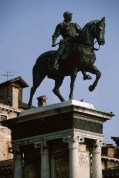
He wanders remorsefully around Venice with his gondoliere; lies distraught on the beach on the Lido, and then wanders the streets finally finding himself staring up at the magnificent equestrian statue of Bartolomeo Colleoni beside the Scuola Grande di San Marco in the Campo SS Giovanni e Paolo, by the Florentine sculptor and painter, Andrea del Verrocchio, a teacher of Leonardo da Vinci. It was his last commission and erected in fulfillment of a request made by the condotierro before his death in 1475.
James was a scholar of Venetian art and history and certainly would’ve known about this famous mercenary soldier and captain-general who defended Venice from neighbouring city-states for over four decades. He also would’ve known about the particular and famous physical attributes of this successful Venetian hero: he was a polyorchid; he had an asymptomatic rare congenital disorder called polyorchidism, or more specifically in his case, triorchidism: he had three testicles. And there on the Colleoni coat of arms emblazoned on the massive pedestal is proof of the fact:
“I found myself staring at the triumphant captain as if he had an oracle on his lips. The western light shines into all his grimness at that hour and makes it wonderfully personal.”
“… it is, indeed, the whole reason for his having chosen this particular landmark as the venue for his narrator’s crisis of confidence. If the statue could speak, his message to the narrator would be: “Sorry, old chap – you just don’t have the balls.”
The narrator finds the courage to visit Miss. Tita again only to find her seemingly physically and emotionally changed. They part coolly never to see each other again. He sends her a letter to say that he has sold the little portrait of Aspern she gave him, along with as much money as he could gather; of course, he hadn’t sold it but kept it hanging above his writing table, not to remind him of Miss. Tita, but
“When I look at it my chagrin at the loss of the letters becomes almost intolerable.”
-oOo-
If you have ever thought you might like to read Henry James but have never tried; or you have, and found him impervious, try this one. You can find the free e-book here.
You can also find a selection of works by Constance Fenimore Woolson, here.
I marmaladed a slice of toast with something of a flourish, and I don’t suppose I have come much closer to saying ‘Tra-la-la’ as I did the lathering, for I was feeling in mid-season form this morning. God, as I once heard Jeeves put it, was in His Heaven and all was right with the world. (He added, I remember, some guff about larks and snails, but that is a side issue and need not delay us.);
a setting of a country pile called Totliegh Towers near the village of Totleigh-in-the-Wold; wold, by the way, apart from being the past participle of ‘will’ which we never use, is, apparently, a piece of open ground in Lincolnshire; and a cast of characters such as Sir Watkyn Basset, his daughter, Madeleine, Roderick Spode, Gussie Fink-Nottle, Emerald Stoker, the Rev. Stinker Pinker, and his fiancée, Stiffy Byng, you know what to expect, and that’s exactly what you get.
The irrepressible, and un-embarrassable Bertie Wooster and his faithful and loyal Man, Jeeves, motor to the said house to mix with the said folk and chaos ensues but it’s chaos of the very English countryside kind: all misunderstandings, gnashing of teeth, rolling of eyes, and spurious and fuzzy relationships where love is something like a decision about which scarf one should wear today, given the unseasonable weather.
Bertie Wooster, always the narrator, who doesn’t have a job – unless a job is having lunch at his club – often refers to himself in the third person, a somewhat English habit not unrelated to the royal ‘we’ and the uppity ‘one’. He has the hide of a hippo and the intelligence of a gnat. He seems to hate everybody except those he likes, and those he hates, hate him back, of which he is totally unaware; and those he likes think he’s a bit of a dill. That’s where Jeeves comes in, and always in the nick if t.; and that is one of Bertie’s little tropes, if ‘tropes’ is the word I want? (Ditto). But if it weren’t for Jeeves, who when he does come in it’s usually with tea on a tray, there’d be no story, no 14 books, and no laughs. Thank god – no, thank Wodehouse – for Jeeves since he knows absolutely everything about everything. Wodehouse, by the w, is pronounced ‘Woodhouse’ contrary to usual English pronunciation; so very Bertie Wooster!
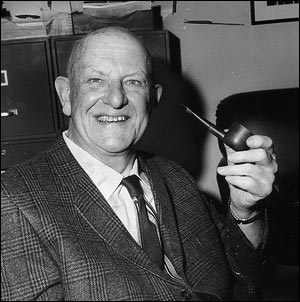
Pelham Grenville Wodehouse (1881 – 1975) was a prolific writer of humour and social commentary: novels, articles, short stories, and lyrics for musical comedies (Anything Goes, 1934), – at one time he had 5 musicals – in which he had a hand – running on Broadway, films (Gentleman of Leisure, 1915, Sally, 1929, The Girl on the Boat, 1961), and the creator of many memorable characters, Bertie Wooster and Jeeves being just two of them. At the age of 93 he received a long-overdue knighthood in 1975, but died on St Valentine’s Day 45 days later.
In his 90’s he was asked, “How about writing?”
Oh, as far as the brain goes, I’m fine. I’ve just finished another novel, in fact. I’ve got a wonderful title for it, Bachelors Anonymous. Don’t you think that’s good? Yes, everybody likes that title. Peter Schwed, my editor at Simon and Schuster, nearly always alters my titles, but he raved over that one. I think the book is so much better than my usual stuff that I don’t know how I can top it. It really is funny. It’s worked out awfully well. I’m rather worried about the next one. It will be a letdown almost. I don’t want to be like Bernard Shaw. He turned out some awfully bad stuff in his nineties. He said he knew the stuff was bad but he couldn’t stop writing.
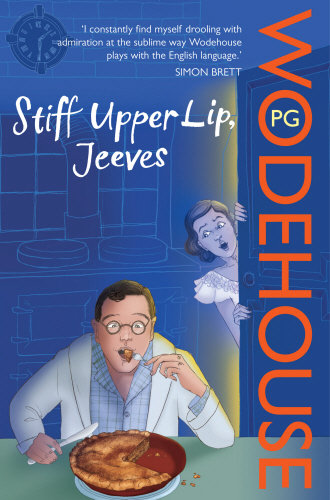
“Stiff Upper Lip, Jeeves” was first published in 1963. The plot? Well, let’s see. It has something to do with an ugly black amber objet b’thingummy which may or may not be stolen; an engagement that may be off, or it may be on; which all has something to do with a steak and kidney pie (see jacket cover). Perhaps I need to explain that the engagement is also threatened by conflicting opinions about sunsets, elves’ bridal veils, and something Dante wrote. Does that help? Oh, and there’s also a bit of fisty-cuffs and the cook elopes with someone’s fiancée which has a devastating effect on the prospect of dinner. Anyway, it’s all very cleverly muddled together to be as light as a … what’s the word I want? Starts with an f. Oh, yes; as light as fluff. And if you’ve ever tried to describe fluff you’ll know what I mean; light fluff is even trickier, but this being so light in fact, it blew away with the breeze before I had a chance to remember it. So, sorry, but entertaining? Very! If you like this sort of English thing; but it can be an effective diversion if read after Frank Morehouse and James Joyce.
-oOo-
You can find all things Wodehouse on his official website: http://www.wodehouse.co.uk
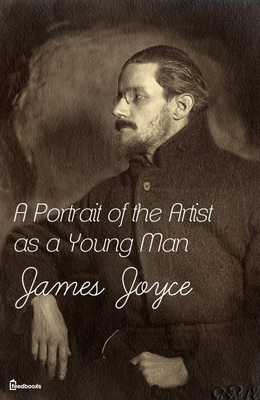
The Irish writer, James Augustine Aloysius Joyce (1882-1841).
The opening of “A Portrait …” is one of literature’s most famous:
Once upon a time and a very good time it was there was a moocow coming down along the road and this moocow that was coming down along the road met a nicens little boy named baby tuckoo.
His father told him that story: his father looked at him through a glass: he had a hairy face.
He was baby tuckoo.
There are several remarkable things about this opening. Firstly, the title has set up the idea that what you are about to read is going to be an autobiography, of the writer, the Artist, Joyce, about himself as a young man. But this is not what we read, this is not an autobiography in seems, since, if it was, the pronoun would be ‘my’ not ‘his’; so, it is not told by the Artist, the author, it is told by a third-person narrator. Secondly, it is written in the past tense, fine, as expected, but the moment you read the word ‘his’ you know that ‘his’ refers to the Artist, James Joyce. We only use a pronoun when it is clear who ‘his’ refers to and the only name prior to this pronoun is the author’s. It is him. This is confirmed by the line “He was baby tuckoo.” Again the pronoun and still only one name, the same name, the author’s, so, he is not the author. Well, yes, he is the author, we just choose to ignore that: we willingly accept what the author has written in order to enjoy the story. We play along. A few pages on this third person narrator, to confirm his existence, gives baby tuckoo a name, Stephen Dedalus. This is a story about a boy called Stephen Dedalus that we understand is the young James Joyce. Why has Joyce chosen to write his own story narrated by a third person god-like narrator? Because it is a much more useful novelistic tool. Writing in the first-person disallows the writer access to the minds, thoughts, tastes, dreams, wishes, and desires of all the other characters in the story. The first-person “I” can only describe what he feels, sees, tastes, dreams, and desires. The third-person god-like narrator has access to everyone and everything, but more importantly, the past, and the future. Also, the ‘baby’ language is the manifestation of yet another novelistic tool, new for 1914 and used here for the first time; so effective and now so widely used: a device that allows the narrator to adopt vocabulary, vocal mannerisms, colour, and tone of the character’s own speaking voice. In literary terms this is called free indirect discourse, or as critic James Wood likes to say, close writing. This is familiar to us now, (Edward St Aubyn’s The Patrick Melrose Novels, 2012, for example, and almost any novel written in the last 100 years) but innovative then. Also, usually for his times, early twentieth century and before, in novels of coming of age (Dicken’s David Copperfield, 1849 for one), biographical, or auto-biographical, the narrator wrote from the perspective of adulthood; there was a distance from the narrator to the subject. But here, as Stephen grows on the path to maturity, so does Joyce’s language. In 1916 Joyce’s text was radical. It’s as if Joyce, with this opening, was writing about Stephen at 6 years old when he, the narrator, was 6 years old. The action and tone are far more immediate, compelling, and authentic, and along with the non-judgemental narrator sets the ground-work for modernism which would be experimented with and adopted, not just by Joyce but by his contemporaries as well.
However, we know from this opening that this is going to be a story about a person called Stephen Dedalus (James Joyce) and that we are starting at the time when he was a very young boy and that his father wore spectacles and a beard. The original title of this book was another name, Stephen Hero, but he changed the title and the hero’s name.
In Greek mythology Daedalus was a skilled inventor and architect who built the labyrinth for King Minos of Crete to house the Minator, a monster, half man, half bull. He was also the father of Icarus. After Theseus killed the Minator, with Daedalus’s help, and fled with Ariadne, the king’s daughter, Minos imprisoned Daedalus and Icarus in the labyrinth but they escaped – after all, Daedalus built it – and flew the island by making themselves wings of feathers and wax.
The Fall of Icarus by Jacob Peter Gowy, 1637
Despite his father’s warning, Icarus, excited by the thrill of flying, flew too close to the sun god Helos as he rode his flaming chariot across the heavens, and the waxed wings melted, and Icarus fell and perished in the sea. Daedalus, after surviving another vengeful plot by Minos, escaped and finally settled in Sardinia where he joined a group led by Iolaus, nephew of Hercules; and as far as we know lived to a ripe old age.
In Romanticism, Icarus came to denote impetuousness, rebellion, and hubris, while Daedalus represented the classic artist, skilled, mature, and successful.
The young Stephen Dedalus is an observer, a listener. Early in the narrative he describes in great conversational detail a heated argument at the family Christmas table; an argument about Parnell, an Anglo-Irish politician, who by shrewd but steadfast political decisions became the figurehead of the Irish nationalistic movement in the nineteenth century; he renounced violent anti-Parliamentary action, but he was a protestant. Colm Tóibín writes that this scene could easily have been refracted around the tables of Irish dinners in the 1970’s and 80’s as family members argued over what was going on in Northern Ireland. And the scene where Stephen is unfairly punished resonated with Irish readers and writers: corporal punishment in Irish Catholic schools continued until the 1980’s. The influence of this book overshadowed generations of Irish long after it was published in 1916.
The young boy is also a thinker:
Was that a sin for Father Arnell to be in a wax or was he allowed to get into a wax when the boys were idle because that made them study better or was he only letting on to be in a wax? It was because he was allowed, because a priest would know what a sin was and would not do it. But if he did it one time by mistake what would he do to go to confession?
He asked the kind of questions Irish Catholic schoolboys have been asking themselves – and no-one else – for decades.
The first chapter ends with Stephan ‘reporting’ to the rector his unjust punishment at the hands of the prefect of studies, Father Dolan. This was a brave thing to do and his classmates hoisted him up, carried him along and shouted “Hurroo!” and threw their caps into the air. A stirring chapter-end of vengeance, courage, just fulfilment, and Joyce’s poetic language, not in a character’s words but from the narrator’s prose.
The fellows were practising long shies and bowling lobs and slow twisters. In the soft gray silence he could hear the bump of the balls: and from here and from there through the quiet air the sound of the cricket bats: pick, pack, pock, puck: like drops of water in a fountain falling softly in the brimming bowl.
Stephan has grown up a lot since moocow and baby tuckoo.
Chapter 2 is a portrait of a disillusioned young man in search of something profound which even he does not know what it is: “He wanted to meet in the real world the unsubstantial image which his soul so constantly beheld.” This “it” became “her” as if they would “make their tryst … in some secret place … and in that moment of supreme tenderness he would be transfigured … Weakness and timidity and inexperience would fall away from him in that magic moment.” This “her” in his mind (his muse?) is mingled with the heroine from Dumas’ novel The Count of Monte Cristo, Mercedes, or maybe its Ellen who, after a family bit of singing and dancing, comes with him on the tram where he is aware of her closeness, her wish for him to catch hold of her, “nobody is looking. I could hold her and kiss her” but he did neither and “stared gloomily at the corrugated footboard.”
This, a constant battle between the developing Artist and the developing Young Man.
And when he finally writes something about the tram, and Ellen and the kiss not made he “thought himself into confidence” over “a new pen, a new bottle of ink and a new emerald exercise” and “there remained no trace of the tram itself nor the tram-men nor of the horses” but only “of the night and the balmy breeze and the maiden lustre of the moon” and the kiss not given became a kiss “given by both.” Finally, the Artist at work; and, so often, his muse, his Art is so confounded with women, with sex. Women “demure and innocent” he sees by day, but by night “her face transfixed by lecherous cunning, her eyes bright with brutish joy” and he is left by morning nothing but a “humiliating sense of transgression.”
At school, he is studious but aware of voices urging him “to be a good gentleman”, “to be a good catholic above all things”, “to be strong and manly and healthy”, “to be true to his country,” “to raise up his father’s fallen state by his labours”, and “to be a decent fellow.” All this bidding by voices all around, “but he was happy only when far from them, beyond their call, alone or in the company of phantasmal comrades.” The battle continues. Even in his own existence. From 1904 he lived with a Dublin chambermaid who had little education nor any understanding of Joyce’s work and felt that he made his life more difficult by writing so strangely. She was vivacious, humerous, loved music, bore him two children, and stuck by him through intense poverty in Zurich and Paris while writing his most famous work, Ulysses. He was a husband and father, a Man, but then inside something else something separate, an Artist.
He is cast in a school play but his part humiliates him, “A remembrance of some of his lines made a sudden flush rise to his painted cheeks” but, surprisingly, the excitement and youth around him “entered into and transformed his moody mistrustfulness.” On stage he was amazed that the play during rehearsals that seemed a “disjointed lifeless thing” had taken on a life of its own and it was a success. He is amazed and confused by this and “his nerves cried out for further adventures” – this is Art and it is Alive! I want more! When he meets his family in the excited crowd outside the theatre he feigns an errand he annoyingly says he has to make and leaves them all before they can say a word. He strides alone through the city, his mind a “tumult of sudden-risen vapours of wounded pride and fallen hope and baffled desire” until he finds himself in a “dark cobbled laneway” where he “breathed slowly the rank heavy air.” Then this …
That is horse piss and rotted straw, he thought. It is a good odour to breathe. It will calm my heart. My heart is quite calm now. I will go back.”
*****
Here the close writing of the third-person narrator (“he thought”) in the past tense gets so close that it slips from the past tense into the first-person (“my heart…”) present tense (“… is calm”) – truly radical for literary 1916 – and suddenly Stephen Dedalus is James Joyce. But only for these three short sentences. After the ***** the third-person narrator and the past tense returns.
Stephen was once again seated beside his father …
There is no linking action between Joyce’s scenes; this stream-of-consciousness would be picked up by his peers and by writers even to the present (Marlon James, The Brief History of Seven Killings, 2015). The dialogue is sparse but realistic, but Stephen’s internal thought patterns are poetic and constantly at battle with the world around him. He feels he is alien from his family, “mythical kinship of fosterage” and burdened with a “savage desire … to defile with patience whatever image had attracted his eyes.” Joyce transformed the narrative into isolated scenes, the paragraph into pictures of feeling, and the sentence into impressionistic bits; like the painters were doing to landscape and interiors in studios and fields all over Europe.
But it is in part 3 that Joyce’s major theme, his Christian faith, is described and exalted in a lengthy sermon as his sinful, lustful, self is set against it and painted as on a slippery but vengeful slope to hell and damnation. The Christian parable is given in a naturalistic and almost movie-like narrative; the glory of heaven rent asunder by the treachery and downfall of the once “shining angel’, Lucifer, who is cast from heaven along with his “rebellious angels” into their fiery haven of Hell; and to fill the gap in Heaven left by these fiends, God created Adam and Eve and gave them a wondrous garden to live in; but Lucifer was jealous of these clay-born creatures and tempted them to disobey God and eat the forbidden apple; so the archangel Michael cast them out into the “world of sickness and striving, of cruelty and disappointment, of labour and hardship to earn their bread in the sweat of their brow;” but God is pitiful and promises a redeemer that will take on all the suffering of the fallen people and give them a way to salvation. It’s a heady and powerful text to the developing mind of a teenage boy who sees nothing but poverty and temptation all around.
He came down the aisle of the chapel, his legs shaking and the scalp of his head trembling as though it had been touched by ghostly fingers. He passed up the staircase and into the corridor along the walls of which the overcoats and waterproofs hung like gibbeted malefactors, headless and dripping and shapeless. And at every step he feared he had already died, that his soul had been wrenched forth of the sheath of his body, that he was plunging headlong through space… Flames burst forth from his skull like a corolla, shrieking like voices: Hell! Hell! Hell! Hell! Hell!”
Alone in the darkness of his room, curled up on his bed, hands covering his face his fear of Hell becomes manifest with images of reeking dung and weeds and “goatish creatures with human faces … trailing their long tails behind them … soft language issued from their spittleless lips … circling closer and closer to enclose;” and so terrified he springs up, vomits, cries, prays and walks the city streets always conscious and fearful of his blackened and sinful self but fearing more the idea of confession: saying aloud what he has done, the seven deadly sins – he lost his virginity at 14 with a whore – he knows them all; the thought of saying it all to a goodly priest; shame fell on him like ash.
There has never been a more vibrant, terrifying description of a young boy’s idea of hell fostered by effective and horrific mind-altering descriptions from a pulpit, feeding the limited but hungry imaginations of those who listen. The Church knows how to do it.
But he does confess and is absolved of all his sins and the chapter ends with Stephen “sitting by the fire in the kitchen, not daring to speak for happiness” and dreaming of a glorious altar with fragrant masses of white flowers as he awaits among other communicants for the body and blood that will soon be his.
Stephen Dedalus, our 16-year-old hero, is now pious and as blameless as any person can be: his intricate piety and self-restraint – he allocates a rigorous discipline to all his senses – even surprised himself but they failed to eradicate “childish and unworthy imperfections” and he felt the “flood of temptation many times” but always eluded them like jumping back from an incoming wave which threatened to engulf him. His piety and dedication grows until the possibility of a priestly life is offered and his contemplation of it is many faceted in poetic language of the mind and the soul and the landscape and the image of an innocent girl standing island-like in the river shallows of the beach. Her skirts and petticoats are hitched up above the waves and “her long slender bare legs were delicate as a crane’s and pure save where an emerald trail of seaweed had fashioned itself as a sign upon the flesh.” He runs from the idea of her and has to eventually admit that his “inherent sinful nature” makes a religious life impossible.
The fifth and final chapter sees him a university student, living at home and still existing on watery tea and fried bread crusts soaked in yellow dripping. He is not a punctual student and misses more classes, English, French, Physics, than he attends. He, instead, seeks out compatible priests and peers and discusses with them his theories and definitions, based on Aristotle and Aquinas, of truth, art, and beauty. Such dissertations are punctuated by scenes of the everyday streetscape: passing students, argumentative men, noisy vehicles and pretty girls, “holding the umbrellas at cunning angles…their skirts demurely”, who were his only distraction. There is always a connection between women, art and sex: each can dislodge the over but it is always art that has the strongest power but which is the most hidden but aches to be exposed; he aspires to “the highest and most spiritual art,” literature.
The penultimate scene is a long conversation with fellow students culminating in a more intimate discussion with his friend, Cranly, about freedom, art, and escape. Finally, the third person gives way to the first, Dedalas is Joyce, in the form of diary entries from March 20 to April 27 1904 where his mother is putting his second-hand books in order and dreading the inevitable: the loss of her son’s love that enables him to learn his own life “away from home and friends what the heart is and what it feels.”
Welcome, O life. I go to encounter for the millionth time the reality of experience and to forge in the smithy of my soul the uncreated conscience of my race.
But it is his oath and his confession to Cranly, a few pages earlier, that rings the loudest and the most true:
I will no longer serve in that which I do not believe, whether it call itself my home, my fatherland, or my church: and I will try to express myself in some mode of life or art as freely as I can and as wholly as I can, using for my defence the only arms I allow myself to use – silence, exile, and cunning.
And that is what he did.
-oOo-
You can find the free ebook here, along with all his other works published by www.ebooks.adelaide.com a wonderful resource of texts out of copyright established and maintained by the University of Adelaide.
Frank Moorhouse and his girlfriend were lying naked in their back garden drinking wine and soaking up sunshine when the writer threw aside the book he’d been reading and exclaimed: ‘My God. Oh my God. Copyright is the key to all understanding. If you understand copyright theory, you understand the whole way the world works. It’s all there.’
It’s just a vignette. But in its composition and tone, it’s also a story which takes us to the heart of Moorhouse and his work. There’s the eye for sensual detail. The juxtaposition of the intimate and the abstract. The continuum between the big picture and the everyday. The intellectual energy at play amidst other pleasures. And, of course, there’s the delicious irony of a man lying next to his naked lover, inflamed with passion by legal prose.
‘Our man at cultural studies cliff face’, by Professor Catharine (2004): in Gleeson, Lumby and Bennett: Frank Moorhouse: a celebration, Canberra: National Library of Australia.
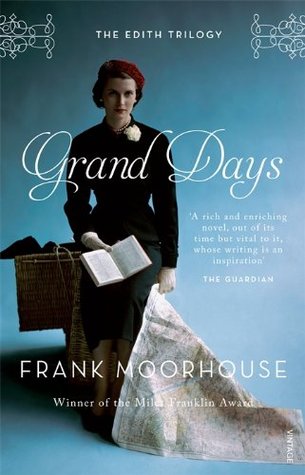
Nowhere is the above more illustrative than in this following scene, from page 198 of Grand Days (Volume 1 of The Edith Trilogy, The Vintage edition, 2011).
The Australian protagonist, Edith Campbell Berry, an administrative assistant with the League of Nations in 1920s Geneva, is in Paris with friends at a jazz club. She is enthralled by the music, especially scat singing which she perceives as a new kind of language with staggering potential; she’s a little drunk. She is also fascinated with one of the black musicians, Jerome in a bowler hat, who comes, invited, to the table and explains about scat singing. A little time later, on her way back from the Lady’s, Edith stumbles across the musician’s room and enters, discovering Jerome, alone. She offers him her hand which he takes and guides her onto his knee. Then this sentence…
Time and movement then become slippery, as she gracefully slid, seeing for the first time his caramel and cream shoes and without thinking too much at all about things, it seemed his warm dark hands were on her exposed and very alive breasts, which she felt she had delivered up to him; all seemed to happen in flowing fixed steps, something like a waltz, except they were not moving from where they were adhered together in this strange way, and without any guidance at all and in no time at all, and with no impediment, with no thought at all, warm, fleshy and flowing, it was finishing, and she took her lips, tongue, and gentle teeth away, opened her eyes and looked across the room to an open instrument case.
Here the mundane, ‘cream and caramel shoes’, ‘no thought at all’, and ‘an open instrument case’, juxtaposed with the sensual, ‘dark hands’, ‘breasts’, and ‘lips, tongue, and gentle teeth’ create something perversely human; although once the penny drops and you realise what she has just done the sensual flavours the mundane and ‘an open instrument case’ takes on a brand-new meaning entirely.
That quote is an apt example of free indirect discourse which has become the characteristic of literary modernism ever since Joyce knowingly used it, and understood it as a style, in his 1916 autobiographical work, The Portrait of the Artist as a Young Man. There are also examples of it in the works of Goethe and Jane Austin but it was Joyce who used it in such an obvious and effective way, as a literary tool, that it was subsequently taken up and experimented with by his contemporaries such as Virginia Woolf (To the Lighthouse, 1927), and now it is so widely used that it’s hardly noticeable anymore. Free indirect discourse, or experienced speech, or, as The New Yorker literary critic and academic, James Woods, calls it, close writing, allows the author two very useful authorial tools. Firstly, it gives the writer freedom to flit from character to character to give their different view of the scene, character, action, etc. A vivid modern example of this is Edward St Aubyn’s The Patrick Melrose novels (2012) where St Aubyn describes the (autobiographical) sexual abuse of his 4-year-old protagonist by his father from the boy’s and the man’s point of view. It’s as if the unnamed, god-like, all-knowing, third-person narrator flits from the mind of one character to the mind of the other. Secondly it allows the writer to use the language and tone of the character, the times, and circumstance to colour the narrative prose itself. Joyce’s opening to “A Portrait …” uses baby language – moocow, little tuckoo – not as dialogue for his baby protagonist, Stephen, but in the prose itself making it very clear, and without the necessity of saying it, that the boy is very young. By the end of the first chapter the narrative language is that of an intelligent, sensitive, and inquisitive school-boy which is what Stephen is at that time in the story.
If you read the Moorhouse sentence again – go on! Re-read it! – remembering that Edith is quite drunk, it is in language and tone (defensive) that she might have used if she was asked to explain what happened; the narrator’s prose is using the language of the circumstance, the situation, and the character.
Pre-Joyce, this rarely happened: the unnamed, god-like, all-knowing, third-person narrator was usually sage-like, mature, and distanced in time and character from the people and all the elements of the story. Dickens is a solid example of this.
Edith Campbell Berry is a sophisticated and complex creation, which was an entirely intuitive process, says Moorhouse, and her genesis began with his mother. Moorhouse has always been interested in social and personal politics, citing the liberation movements, both social and sexual, of the 60s and early 70s as having a transformative effect on him; and literary works such as James Baldwin’s Giovanni’s Room (1956) he found enlightening and greatly affected his understanding of his own sexuality. Edith is aware of her multiple histories, ambiguities, desires and even chaos in her personal life which is separate and guarded from her professional life which she is immensely proud and protective of. She is an idealist and believes “the League had the task of making the manners of the world.” Her personal life in Geneva is founded on her early meeting, on the train from Paris to Geneva as she travelled to take up her post, of Ambrose Westwood, a British diplomat who too works for the League and, with Edith’s knowledge and support, investigates his own predilections for cross-dressing – she loans him her best evening gown forcing her to wear her second-best on their first tryst to The Molly Club – and homosexuality, while remaining Edith’s lover and confidant. Moorhouse admits there is some of him in the character of Ambrose Westwood. Her exploration of her own desires is stimulated by his, but she is constantly aware of, and ruminates at length, on her perceived reputation at the League (Is she a ‘vamp’?) finding it imperative that both her personal and professional lives are kept separate, and rightly so: a consistent theme in Moorhouse’s work. However, while making little effort to curtail her exploits with Ambrose into the secret and steamier side of Geneva’s social life, she is in constant threat of being exposed. This tension propels the narrative where both fictional and real characters and events are mingled to create a fascinating picture of the personal, the political, and the professional in the early years of the League of Nations.
At every turn, Moorhouse suggests, the answer to the question of how to live lies in learning to live with ambiguity and resisting the impulse to bury the contradictions of being human behind reductive, authoritarian codes.
It’s a fascinating read and once you get to know Edith Campbell Berry you are even pleased with the novel’s length – it’s big – as are the two to follow – because you just want more of her, as do many of the characters in the books.
Dark Palace is next, followed by Cold Light. A lot to look forward to.
The ebook edition of Grand Days is available here through ibooks for $US10.99.
McEwan’s first published work, First Love, Last Rites, appeared in 1975; another short story collection, In Between the Sheets, appeared in 1978 then two short novels, The Cement Garden (1978) and TheComfort of Strangers (1981). My then he was known as “Ian Macabre” for the subject matter in his work. An early story is about a love affair between a writer and her pet ape told from the ape’s point of view; another concerns a disgruntled husband who discovers a technique of body manipulation that results in the person disappearing into himself; he tries this on his wife during sex.
His work settled down a little but there is always something dark at the centre of his stories. His three most accomplished works belong to this latter period; Enduring Love (1997) which concerns a science writer being stalked by a disturbed man: both of whom witness a horrendous accident involving a hot-air balloon; one of the most suspenseful and superbly written opening chapters you can ever hope to read, rendered rather ho-hum by the 2004 film starring Daniel Craig; Atonement (2001) in which a young girl witnesses her sister having sex but misconstrues it as an assault and ruins her sister’s and lover’s lives, which the young girl, as a grown-up novelist, atones for by writing about it but with a happy ending. This was superbly adapted as a film in 2007 with Keira Knightly and James McAvoy. And Saturday (2005), a day in the life of a neurosurgeon who is confronted on the street by a man, who, as recognised by the surgeon, has a neurological disorder; the mentally ill man then menacingly invades the surgeon’s home.
He won the Booker Prize for a slim volume called Amsterdam in 1998, about a pact between two male friends who re-connect at the funeral of a shared lover, and he was nominated again for On Chesil Beach (2007) which begins with the wedding night of an extremely sexually naïve couple. I was so embarrassed for them, McEwan’s writing was truly effective, that I shut the book at page 6 and have never opened it since.
His 2014 novel, The Children Act, confronts a modern dilemma involving personal faith and medical intervention. You can read my blog on this here.
Nutshell, is another slim work, – nothing wrong with that – which begins with a superb, but short, opening line – I’ll leave it for you to discover. It is basically about the planning and execution of the murder of a poet, John, by his estranged wife, Trudy, and her lover, his younger brother, Claude. The identity of the narrator of this murderous pact by two unpleasant but intriguing people is the crux here: John and Trudy’s unborn foetus. Generally a reader can accept all of what a writer conjures, and this is the main ask a writer makes; however this foetus prefers a Sancerre, preferably from Chavignol, over a grassy Sauvignon Blanc from New Zealand; loves the radio; tends to use Latin and French in lieu of English when the urge arises; insists on words like ‘youngly’; is intimate with the physics of sound and the work of 20th century composers; clearly au fait with the intricacies of human sexual behaviour and romantic attachment; has a fine understanding of poetics, and has studied the psychological preferences of murderers, all garnered it seems from BBC Radio podcasts favoured by his mother. But if you have made your narrator a foetus then it is de rigueur to make him an intelligent one; no use boring your readers with goo goo and gar gar. Although how much suspension of disbelief is too much?
It feels like a short story s-t-r-e-t-c-h-e-d into a novella: too much about the self-absorbed (and observed) narrator and not enough about the protagonists. But then how is he to know? It’s a dilemma McEwan side-steps. However, if you accept without question what the writer throws at you it’s an entertaining and amusing read.
The title comes from Shakespeare’s Hamlet, and the continued illusion to that work – the main players, the victim, John Cairncross, A.S. Cairncross is famous for a 1936 book entitled The Problem of Hamlet, the mother, Ger(Trudy) and the usurper, (Claude)ius, (get it?) – still doesn’t raise it above a minor work. Let’s hang out for the next one.
You can find all editions, including the ebook, here.









 Michael K Freundt