The World Broke in Two by Bill Goldstein

bill_goldstein_pic
American academic, Bill Goldstein is the founding editor of the books site of The New York Times on the Web, reviews books and interviews authors for NBC’s “Weekend Today in New York.” He is also curator of public programs at Roosevelt House, the public policy institute of New York’s Hunter College.

Virginia Woolf, T. S. Eliot, D. H. Lawrence, E. M. Forster, and the year that changed literature.

In January 1922 Adeline Woolf, everyone called her Virginia, turned 40 and was very sick with influenza that prevented her from writing; T. S. Eliot, everyone called him Tom, 34, had been over worked, unhappy, in therapy, but now quietly confident since he had started writing again but fearful of returning to the Bank that trapped him between the concrete and the sky; E. M. Forster, called Morgan, 43, was sexually and artistically frustrated; and D. H. Lawrence, called Bert, 36, had the threat of his books being banned  (Women in Love, 1921, ” … ugly, repellent, vile”), and a libel suit against him so wanted to know “For where was life to be found” and thought by going to a quiet place by himself he might find it: Ceylon, New Mexico, or New South Wales.

All four had achieved some degree of literary fame: Woolf had published two novels and the third, Jacob’s Room, was waiting for her final revisions, however her illness kept her away from her work. Eliot had published successfully The Lovesong of J. Alfred Prufrock in Poetry magazine in 1915 and had been a regular contributor of reviews and essays, primarily for The Times Literary Supplement right up to December 1921. Forster had achieved great success with a series of novels, usually about the English abroad, beginning with Where Angels Fear to Tread in 1905 but by 1922 nothing had appeared after the very successful Howard’s End in 1910. Lawrence was more infamous than famous and had had Women in Love published in June 1921. It garnered bad reviews, and low sales. This added to the outrage caused by its prequel, The Rainbow, 1915, when it was withdrawn by the publisher after it was banned under the Obscene Publications Act. Lawrence had also characterised in the latter work, an acquaintance, Philip Heseltine, and thought he had disguised him enough, but Heseltine was not fooled and threatened legal action.

virginia_woolf_pic
Adeline Virginia Woolf 1882 – 1941

For all four writers 1922 did not begin well.

Artistic endeavour is always trying to solve the problems of the art form itself. How does a writer write an autobiography and make it interesting without using the boring phrases, “Then I went …. she cried and so I said …., Then I said, and he went ….”? Novelists for centuries have been using description and dialogue to draw a character; but in an autobiography how do you create an image of the narrator? There must be another way. Yes, there is, and one of the first writers to find another way was James Joyce who began his autobiographical novel Portrait of the Artist as a Young Man (1916) like this

Once upon a time and a very good time it was there was a moocow coming down along the road and this moocow that was coming down along the road met a nicens little boy named baby tuckoo.

First of all he writes not in the first person, but in the third (very radical, this is an autobiography, remember) and the above opening is not dialogue, it is prose; it’s not said by the protagonist but by the narrator using the language that the little boy, James, might use to describe what he sees and what he sees is himself! It’s as if the third person narrator is not some all-pervasive, god-like know-it-all but an imp sitting on the shoulder of the little boy seeing the world through his eyes and hearing the thoughts in his head. This literary device has become known as free indirect discourse, or as the literary critic of The New Yorker, James Wood, calls it, ‘close writing’; and it’s as common today in contemporary fiction as Vegemite is for an Australian breakfast. But it can’t be used in the first person. Or can it? Now, there’s a challenge for an adventurous writer!

image
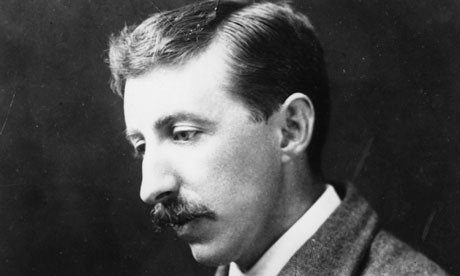
Edward Morgan Forster 1879 – 1970

Painters  sought to bypass the ‘real’ bit in order to paint, say, serenity, by trying to paint serenity with just the paint on the canvas, not trying to be something else, a face, a landscape, to ‘portray’ serenity. In other words, they painted not what they saw but what they felt. Writer’s similarly de-focused the ‘real’ bit and concentrated on, not what the characters did – the plot – but what the characters felt and thought. The plot became internalised.

Before January 1922 was over Eliot and Lawrence had succumbed to the influenza that brought Woolf so low and was rapidly becoming an epidemic to rival the devastating outbreak of 1918-19 that killed more people than the Great War. At least for Eliot the influenza kept him away from the bank and, despite the disease, hard at work on his long poem. His ill wife, also being absent, was yet another and usual worry out of the way.

On his way back to London from the unsuccessful trip to India Forster bought and read Proust’s first volume, Swann’s Way in French. He was “awestruck” and marveled at Proust’s use of memory to drive the narrative. Later in the year as the weather warmed he used Proustian ideas, and a poem by J. R. Ackerley, Ghosts, to impinge on him the truth that there is life after tragedy. His tragedy was the slow death of his unrequited lover in Egypt, whose death he almost wished would be sooner than later, as he was slowly re-reading the abandoned pages of his Indian novel, making notes and yearning for his tragedy to be behind him.

T.S.Eliot - pic
Thomas Stearns Eliot 1888 – 1965

Woolf, with her illness almost past, read Proust too, in the spring while working on an essay about reading and dabbling with a minor character from her first novel, The Voyage Out, Clarissa Dallaway, weaving her into a short story called Mrs Dallaway in Bond Street.  Woolf too was enthralled with Proust’s use of memory to evoke the current state of mind of a character. In the opening scene of the short story, which eventually evolved into the novel Mrs Dallaway, Woolf has Clarissa arrested by the chiming of Big Ben which announces the convergence of the past and present, not only in the character’s mind but also on the page. Very Proustian! Clarissa Dallaway in Woolf’s first novel is described by the narrator but Woolf was determined in this one, this modern one, to have Clarissa think everything the reader needs to know about her. As Woolf wrote later to a friend, she didn’t mind being sick as “Proust’s fat volume comes in very handy.” Woolf, who wrote that she wanted to write like Proust, didn’t of course, but it was because of him that she began to write like herself again.

Joyce, for her, was different. Woolf and Joyce were both British, they were both the same age, and Joyce in 1922 had “a novel out in the world, a massive – expensive – box of a book”, Ulysses, and Woolf had not published a novel in two and a half years. She was jealous. Besides, Ulysses didn’t impress her. She thought it was “underbred” by a “self-taught working man.” What she failed to realise was that Joyce had a degree, she didn’t; it was she, not him, who was self taught.

Lawrence left England in early 1922 for Ceylon, but found it unsatisfactory, then Perth, Western Australia, very unsatisfactory, then Thirroul, south of Sydney, where he transferred his thinking back to what he called his ‘interim’ books, short stories and journalism. Could he write a novel like those, in a month, or less, using nothing but what he had around him, namely Frieda and himself, and what he thought and felt? He decided to give it a go and the novel Kangaroo was born, but this too stalled. It was the third novel in a row that got ‘stuck’. However, without the help of Proust, Lawrence turned to memory, and chapter 12, the longest in the book and the only one not set in Australia, describes the fear he and Frieda experienced at the outbreak of World War I (she was German and had abandoned her first husband and children; he was excluded from service because of his frail body). Lawrence had instilled in his protagonist, Richard Somers, a ‘fear’, exemplified by the vastness of the Australian continent, and it was Lawrence’s explanation of this fear, via his personal experience, his memory, that ‘unstuck’ his progress, and he got the thing finished.

d-h-lawrence-pic
David Herbert Lawrence 1885 – 1930

T. S. Eliot finally saw his long poem, The Waste Land, the poem that had battled with his job, his contemporaries, his wife, his past, and his health, finally published. Goldstein spends a lot of time, too much you may think, on the procrastination, arguments, letters, late replies, betrayals, that stall the publication; and all concerning people, publishers, agents, friends, supporters, who want it published.

For a year that started badly for all of them, 1922 ended like a new dawn: Virginia Woolf had a new novel, Mrs Dallaway; E. M. Forster was well on his way with his Indian novel, the one that had caused him so much anguish, A Passage To India, (1924), and would become his most celebrated; D. H. Lawrence had written a new novel, very different from his previous works, no sex, but had also been vindicated by the courts: The Rainbow and Women in Love were judged not obscene, although some passages were, but the press-obsessed trials led to a resurgence of sales and interest in his work; and T. S. Eliot finally saw his long poem in print, and received the accolades he thought it deserved.

For readers who are interested in literature and its history this book is a must-read. Goldstein has sculptured a surprising and complex narrative, esoteric and detailed, yes, but intriguing, stimulating, and fascinating.

In the year 1922 these four writers, for various reasons, had already been chipping away, with varying intensities, at a ‘crack’ in the English literary world, hoping their artistic challenges and vaguely-inspired experiments would lead them in a new and exciting direction. Then came the thundering blows of Proust’s Remembrance of Things Past and Joyce’s Ulysses which, along with The Waste Land, caused the ‘break’ and English literature did indeed cleave in two and took off in a new direction. However, the ‘piece’ that remained behind kept the majority of readers with it and it was those readers who demanded, and got, a whole array of plot-based genres, the names of which you can see topping a multitude of racks of books in any sizable book shop today; and over there in the corner of the shop topping a not insubstantial, but nevertheless alone, book-stack is another sign: literary fiction.

You can find the book in various formats here.

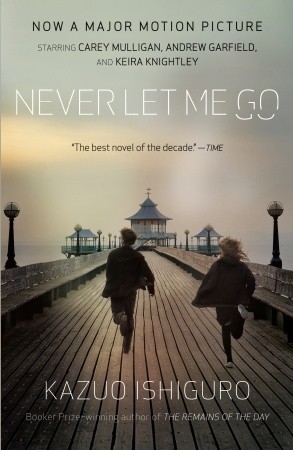
Never Let me Go by Kazuo Ishiguro

Kazuo-Ishiguro-pic
British writer, Kazuo Ishiguro.

I have a mild aversion to literary fantasy. I rarely read fantasy novels; I’ve never had the slightest interest in reading George R. R. Martin’s The Song of Ice and Fire, more commonly known by the TV version, Game of Thrones, although I did try to read Lord of the Rings when I was way too young, but I found myself acknowledging the genre, and roping it in support of my argument when a dinner guest, on hearing that I had written a novel on the sex life of a single mum, said, “So, do you know any single mums?” “I’m not writing a documentary,” I said, “I’m writing fiction.” She looked at me as if I’d said the world was flat. I continued, “Well, I’m glad you weren’t dishing out literary advice to Tolkien or George Martin otherwise we’d be without Lord of the Rings, and Game of Thrones.” Zombies, aliens, vampires, fairy god-mothers, elves, and talking rats and rabbits also sprang to mind, but she moved to the other end of the table before I could bring them in to bat.

When the British writer, Kazuo Ishiguro, won this year’s Nobel Prize for literature I scoured my bookshelf and found Never Let me Go (2005). I didn’t know anything about it, and all that I knew previously about Ishiguro, was that he had won the Man-Booker Prize for Remains of the Day, was born in Japan, and that his family had moved to London when he was a child.

Page one begins, “My name is Kathy H.” I had just read Sebastian Barry’s memorable The Secret Scripture, a male writer writing in the first person as a woman, so my pre-established prejudice against such literary cross-dressing had been severely weakened, to a point of not caring very much. However, halfway down the page there is this:

“My donors have always tended to do much better than expected. Their recovery times have been impressive, and hardly any of them have been classified as ‘agitated’ even before fourth donation.”

The words “donors” and “fourth donation” sent a worry-jolt to my brain and I suspected that the created universe in which this story would unfold was not the one that I live in, but I felt safe from dragons or talking trees, so I continued reading.

It’s important to tell you that I was hooked very quickly but the book also made me think more about why I don’t read novels from the fantasy genre, as I now thought this book belonged to. It’s a general feeling of aversion for the literary ‘cop out’. If the universe of the novel has dragons flying through the air, i.e., the universe of the novel is not your universe, then it seems to me that anything is possible. A plot complication of any magnitude could be sorted out by any deus ex machina the writer deems necessary. This feeling isn’t strong, but with so much to read in the genres I prefer, the urge to delve into others doesn’t really come up. Genres are only important for publishers, booksellers, and readers; I acknowledge them as a reader, but writers, and especially Ishiguro, don’t pay much heed to them. His Remains of the Day, a very English tale of love and painful reticence is in the most English of settings: below stairs in a manor house; while his most recent novel, The Buried Giant is a true fantasy novel set in post-Arthurian Briton.

Kathy H is a thirty-something woman remembering her education at a boarding school, Hailsham, and her friends, Ruth and Tommy. The school is recognisably British but with weird and worrying rules, attitudes, and characters. It becomes clear, through mis-matched memories, remembered inconsistencies, and briefly explained circumstances that the world of the novel is not the world of the reader; and the fate of the students is mapped out, rigid, and dystopian.

The almost lazy diary-style of remembrance, “It was just like the time when…”, “… looking back now…”,”I don’t know about you, but where we were…”, “… and that reminded me of Chrissie, who …”, “…the way I remember it is…”, “It’s funny now recalling the way it was at the beginning…”, “… and that’s when we had that talk I told you about …”, gets a little repetitive, and the incidents and events she remembers has about as much dramatic content as “sharpening a pencil”, as one critic joked; but these remembrances of seemingly minor happenings do create something in the reader similar to the experience of the narrator; no mean feat: a jumble-book of seemingly indistinct and trivial memories flavoured with asides and happenstance of their lives that coalesce eventually into a sprawling picture of unease, and controlled morality and personal destiny. You begin to like these young people; wonder how much and what they know about themselves and their circumstances; and what is this curious feeling of dread you find creeping over you like a blanket?  Yes, the remembrances may be small but the stakes are incredibly high and when Kathy H and her peers discover the true meaning of their existence … no, no spoilers here; you’ll have to read it yourself to understand the frightful truth.

Ishiguro’s chosen narrative style is conversational, prosaic even, how a good friend may write a letter (remember writing letters?) telling you what they did on the weekend. No literary language or erudite psychological musings, just memories of a middle-class woman about her upbringing; oh, and allowing un-spoken assumptions that the reader takes in, by osmosis, that creates, deep-down at first, this creeping disquiet.

It’s not a book you can easily forget. It is one of the most unusual and emotionally disturbing books I have ever read. I admire Ishiguro’s control over what he writes; how his skill is hidden and you only marvel at it when the story is over, and then you understand that what you feel is a direct, and deliberate, result of it.

You can find the book, in various formats, here.

The movie version (2010) stars Carey Mulligan, Andrew Garfield, Keira Knightley, and Charlotte Rampling; adapted by Alex Garland, and directed by Mark Romanek.

Oh, and BTW, here is a piece of advice from Kazuo Ishiguro, Write what you know is the stupidest thing I’ve ever heard”. I wish I’d known about this quote as more ammunition for my brief literary discussion with above dinner guest.

Happy reading!


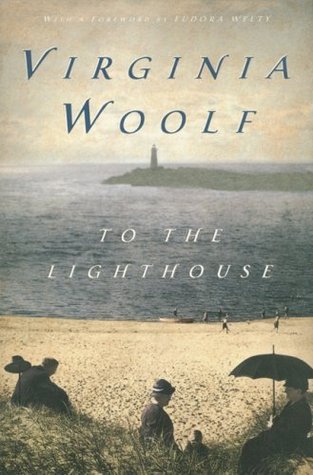
To the Lighthouse by Virginia Woolf

virginia_woolf_pic
Virginia Woolf

This is not a story, and readers may find it difficult and not worth continuing with, but it takes a little gear change to alter your expectations. However, for readers interested in the life of the novel To the Lighthouse is an interesting read; but before sitting down with it a little research into the times and the literary landscape into which it was written is a good idea. It is considered a pioneering work of literary modernism.

Modernism is hard to define since it’s such a broad term and encompasses other ‘isms’ like expressionism and surrealism to name just two; and modernists did not actively adhere to any philosophy or movement like the visual impressionists did. However, it is generally considered to show a strong feeling for experimentation, and anything that was new, as well as a strong anti-Victorian bent. It is also difficult to pin down a starting date but generally it is agreed that literary modernism began at or near the turn of the 20th Century. While Robert M Kirschen of the English Department at the University of Nevada, opts for the end of Modernism in 1939 (some say 1945) with the publication of Joyce’s Finnegan’s Wake: “the ultimate work of Modernism.  It is truly the pinnacle of this experimentation and novelty. After the Wake, it is no longer possible for a writer to attempt to supersede his or her predecessors in the way Modernists often strove to do.  As such, the Modernist movement had reached its natural teleological* conclusion, and anything which came after must be part of a different part of literary history” i.e. Postmodernism. However, these labels are arbitrary and are the result of literary theorists looking back into the immediate past and recognising similar themes, memes, and ideas across the broad spectrum of literary endeavour. James Joyce, T. S. Eliot, Ezra Proud and Virginia Woolf are all considered pioneers and pillars of modernism.

In To the Lighthouse the drama, like many modernist texts, is not in the action, there is very little. Action did not interest Woolf. The book begins with the announcement of a desire, for the boy’s sake, for James, to go to the lighthouse, and ends, 10 years later, with them actually setting out. The drama is internal, the weave and weft of emotional attachments, of familial love and hate, the gamut between, and even dissertations on life matters. There is also an argument, external to the book, but installed in it’s very creation, about doubt of the creative force; about two guests, two of many, at the house: Charles Tansley, a sycophant, who pronounces that women do not have a creative force, and Lilly Briscoe, a woman who desperately yearns, and attempts, to be an artist, a successful painter, but fails. She is a metaphor for Woolf herself and her own legendary self-doubt (thinks Margaret Atwood); but ironically Woolf not only completes this work, and publishes it, but knows its success.

The man, Mr Ramsey, stands over his wife, while she knits a pair of stockings for the underprivileged boy of the lighthouse keeper, which she hopes to take and give to him, if they ever get there, and he demands sympathy, since he declares himself a failure as a man. While knitting, as the boy, James – loving his mother, hating his father – stands between her knees clutching a book, she assures her husband, “beyond a shadow of a doubt, by her laugh, her poise, her competence” that he is wrong about himself. Look at the undying admiration of Charles Tansley, and his very own fecundity, his own house “full of life” – he has eight children – and in response to his wife’s success in turning his self-doubt into self-admiration- not via the sympathy he sought – but “as a nurse carrying a light across a dark room assures a fractious child” he goes for a walk to watch the children playing cricket. But once he is gone she is exhausted and can hardly lift her needles; can hardly read the fairy tale James so wants to hear, with the demands on her to mend her husband as well as wonder where the fifty pounds will come from to mend the greenhouse roof; and all this laden with the half knowledge that her husband is right about himself, adding lies to the accumulated burden she has to bear.

It is this internal drama, thoughts, treacheries, responsibilities, and admissions that interest Woolf. Then here, while knitting and thinking about why children must grow up; why can’t they stay happy forever, she thinks, “We are in the hands of the Lord?”

What brought her to say that: “We are in the hands of the Lord?” she wondered. The insincerity slipping in among the truths roused her, annoyed her. She returned to her knitting again. How could any Lord have made this world? she asked. With her mind she had always seized the fact that there is no reason, order, justice: but suffering, death, the poor. There was no treachery too base for the world to commit; she knew that. No happiness lasted; she knew that. She knitted with firm composure, slightly pursing her lips and, without being aware of it, so stiffened and composed the lines of her face in a habit of sternness that when her husband passed, though he was chuckling at the thought that Hume, the philosopher, grown enormously fat, had stuck in a bog, he could not help noting, as he passed, the sternness at the heart of her beauty. It saddened him, and her remoteness pained him, and he felt, as he passed, that he could not protect her, and, when he reached the hedge, he was sad. He could do nothing to help her. He must stand by and watch her. Indeed, the infernal truth was, he made things worse for her. He was irritable — he was touchy. He had lost his temper over the Lighthouse. He looked into the hedge, into its intricacy, its darkness.

ToThe Lighthouse Original cover
Original cover design by Virginia’s sister Vanessa Bell: 1927

It is this combination, this ‘conversation’ between the narrator, Mrs Ramsey, and Mr, but all in the narrator’s ‘words’, that, among others, mark this text as a work of ‘modernism’; and, indeed, one of the first.

If you think of the third person narrator as an omnipotent genie commenting and assessing each character, every moment, past, present and future, and sitting on the shoulder of the protagonist listening in to their thoughts and desires and explaining, prophesizing, and assessing them for the reader, here it is like that genie is not just rooted to the shoulder of the main character but, flitting to and fro onto the shoulders of many characters. And in the final short sentence of chapter 11 Woolf has all three voices ‘speaking’: the narrator, wife and husband,

For he wished, she knew, to protect her.

James Joyce’s Ulysses was published in English in 1922 and Woolf’s reaction to it was initially uncomplimentary, “puzzled, bored, irritated & disillusioned as by a queasy undergraduate scratching his pimples,” but she later came around to admitting his genius even if she may have not finished reading it. However, it is clear that she was influenced by him, and, no doubt, by the first English translation of Marcel Proust’s À la recherche du temps perdu, translated into English as In Search of Lost Time or Remembrance of Things Past, which also came out in English – it was originally published in France – in 1922. What a year!**.

However, it is important to keep in mind that just as fads flutter through most of our civilised efforts, food, fashion, and politics, so too do fads pepper our literary history; and ‘obscurity’ was a particular literary fad of the early 20th century. Writers thought that every story that could be written had been written so they sought ‘the new’ within the structure of the novel itself, the use of the language, and in the relationship between writer, narrator, and reader.

Woolf did not deliberately seek to be obscure, no writer does, but in order to describe, set down, what interested her she had to find new ways of convincing her readers that they would be interested in it too.

The pleasure of the works of Virginia Woolf is immediate; it is in the reading, not the remembering.

godrevy-lighthouse-pic
Although the story is set on the Isle of Skye, western Scotland, Godrevy Lighthouse, built in 1858–1859 on Godrevy Island in St Ives Bay, Cornwall, was the inspiration for Woolf’s novel.

You can find the ebook, in various formats, for free here, as well as other works by Virginia Woolf including all her novels and a large number of short stories. If you are interested in discovering Woolf try her first novel, The Voyage Out (1915); a good place to start.

-oOo-

* Teleology is the philosophical attempt to describe things in terms of their apparent purpose, directive principle, or goal

** THE WORLD BROKE IN TWO: Virginia Woolf, T.S. Eliot, D.H. Lawrence, E.M. Forster, and the Year That Changed Literature, by Bill Goldstein, comes out in November this year.

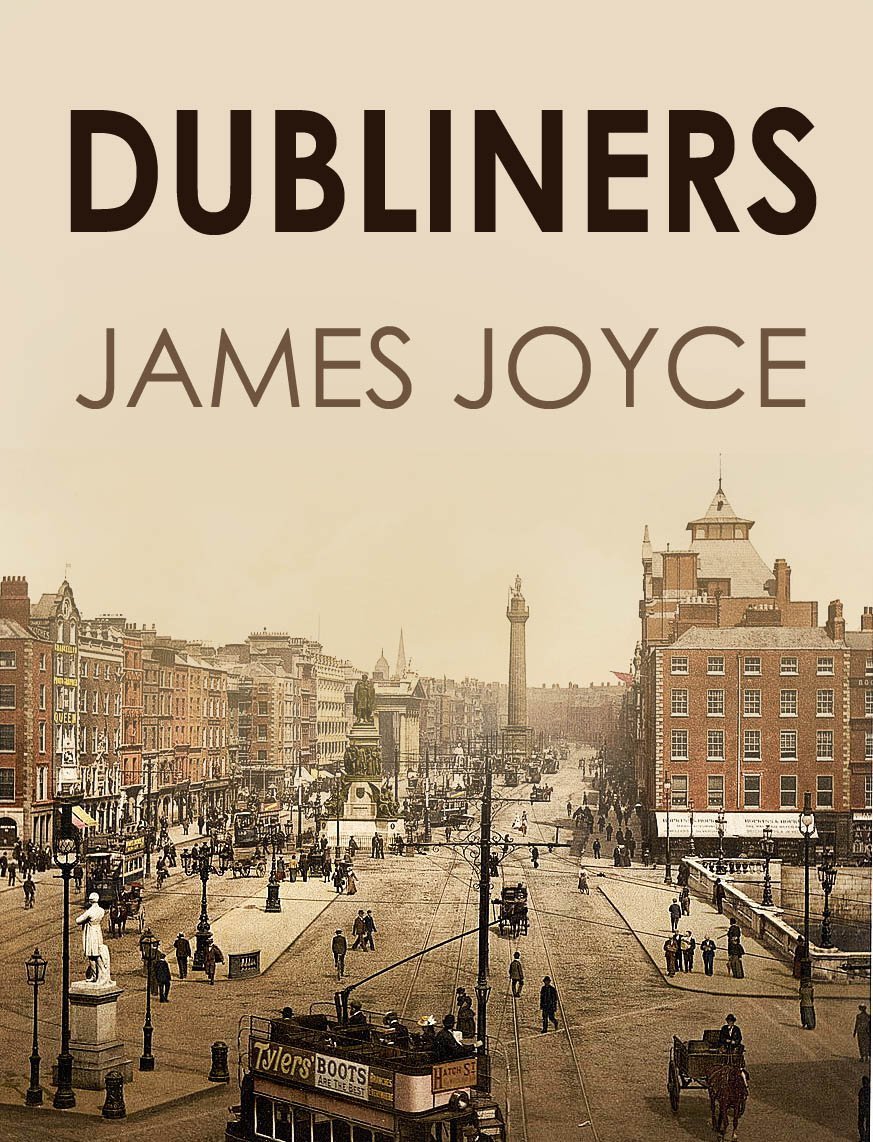
Dubliners by James Joyce

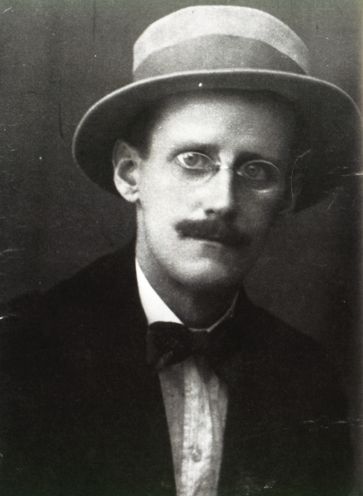
james-joyce pic Intelligent

 Irish writer, James Joyce (1882-1941)

The first-person narrator, a boy, walks past the house of his dying priest night after night, wondering whether he is dead yet, but this night knows it to be true.

“Every night as I gazed up at the window I said softly to myself the word paralysis. It had always sounded strangely in my ears, like the word gnomon in the Euclid and the word simony in the Catechism.”

So begins the first story, The Sisters, in James Joyce’s collection Dubliners (1914) but in it is a clue to the theme of the book itself. Joyce wanted to write about the people of Dublin because to him it was the “city of paralysis” and the shadow of this word permeates the whole collection. For Joyce “paralysis” meant the inability to life meaningfully. Joyce spent most of his life on the continent, far away from Dublin, so strong was his belief that the city was tainted.

Here the “paralysis” is both literal, in the case of a dying priest after his third stroke, and moral: “simony” takes aim at the Catholic church’s corrupting stranglehold on Irish society; “gnomon” is somewhat different, being more about form than content (a gnomon is a parallelogram with a section removed, as well as the shadow-casting part of a sundial). The word is a cryptic warning to the reader that these stories contain many absences, not least traditional plot, character and scene-setting. These absences are part of what Joyce referred to as the style of “scrupulous meanness” with which he wrote Dubliners, meaning the frugality he applies to language, image and emotion.

Freytag’s pyramid, or dramatic arc or structure, suggests that a clear beginning consisting of a proper introduction of the setting and the characters, a middle discussing the conflict that would lead to a climax, and an end that ties the story together with a denouement are indispensable to any written work of fiction.

So was the literary thinking in 1914 – and in some circles it still is today. Joyce ignored it all, which may be why it took him 6 years to get this collection published.

In the story A Little Cloud, a shy and fragile clerk, known as Little Chandler, since “he gave one the idea of being a small man” meets in a bar, after 8 years, his friend Ignatius Gallaher, who once “known under a shabby and necessitous guise had become a brilliant figure on the London Press.” Little Chandler yearns of becoming a famous writer and dreams about the rave notices he would get for his work. He is delighted to see his old friend and Gallaher shouts him several whiskeys and regales the little man with innuendo and suggestions of his racy experiences in London and Paris: no married life for him. Of course, Little Chandler is late getting home to his young wife and child and had not brought the tea and sugar she had urged him not to forget. “She was in a bad humour and gave him short answers” and decides to go out and get the tea and sugar herself. “She put the sleeping child deftly in his arms and said: ‘Here. Don’t waken him’.” Little Gallaher cradles the child and stares at a photograph of his wife wearing an expensive blouse he had bought her. The image of his wife weaves no comparison to the “rich Jewesses” with “dark Oriental eyes” of Gallaher’s salacious plans and stories. Little Chandler feels nothing but entrapment, paralysis, in his mean little cottage with debt-laden furniture and no way of writing the book that “might open the way for him.” He reads some melancholy verse by Byron while nursing the child and wonders where he can find the time to write like that; he has so much to say. The baby wakes and cries and will not stop no matter how hard he tries to sooth him. Everything is useless. He is “a prisoner of life!” He loses his temper with the child and shouts at him which scares the infant and causes him to scream and “sob piteously”. His wife arrives and rescues the babe and glares at her useless husband and he listens to the child’s sobbing grow less and less in the arms of his loving mother. The story ends with Little Chandler just standing there as “tears of remorse started to his eyes.”

The reader is left with a feeling of pity and yearning for this little man who did the right thing, that every man should do, marry, start a family, and work to keep and protect them; while his friend did the other thing: travelled, wrote and became famous and whored around in London and Paris. This is the ending that Freytag’s pyramid espouses but it is a thought, not on the page but in the mind of the reader.

This was radical for 1914, when this collection first appeared. However, is it true today that more and more writers of fiction are leaving aspects of descriptive, consequential, and circumstantial narrative out of the text and up to the reader.  This is so true that it is not the writer’s place any more to answer the question, “And what did you mean by writing that?” After a story is in print – or, for that matter any creative work that is finally in the public domain – the meaning of what the reader reads is all to do with the reader – it means what the reader thinks it means – and has nothing to do any more with the writer and what was meant by the writer in the first place.

Although Dubliners is considered one of the greatest short story collections ever written, it is Anton Chekhov, the Russian playwright, who is generally considered the father of the modern short story. “The revolution that Chekhov set in train – and which reverberates still today – was not to abandon plot” – or Freyberg’s Pyramid – “but to make the plot of his stories like the plot of our lives: random, mysterious, run-of-the-mill, abrupt, chaotic, fiercely cruel, meaningless”. Chekhov’s short stories had been available in English since 1903, but Joyce didn’t get Dubliners published until 1914. He claims not to have read them. Many critics think this a little implausible since Dubliners seems to owe a lot to the work of the Russian. However, Joyce finished the collection by 1907, and with Chekhov’s work having been available in English only for a few years when Joyce was working as a teacher in Europe, it is entirely possible that he did not read it. Although William Boyd, American novelist and short story writer asserts that Chekhov liberated Joyce’s imagination as much as Joyce liberated writers that followed and “that the Chekhovian point of view is to look at life in all its banality and all its tragic comedy and refuse to make a judgment”. The Joycean view seems to look at life from the inside of his characters: to chart his country’s “moral history” in Dublin; and he does this by turning the plot inwards. It’s the landscape of dreams, desires, hopes and disappointments that bind the 15 stories together into a whole, which in itself is unique, creating a form of a novel in fifteen disparate but morally interconnected chapters: the early stories are from childhood, the centre charts the middle years, and the final devastating story, The Dead, his masterpiece, culminates in a mature realisation of man’s insignificance in the universe. In fact, the first image of the first story: a boy looking up at a window behind which lies a dead man, is reflected in the last image of the last story where a man looks out of a window contemplating all the dead that have gone before him and which one day he will join. Images like bookends.

Joyce’s narrator varies from story to story: first person in the first, but usually in the third-person but not of the omniscient kind:

“…as he set himself to fan the fire again, his crouching shadow ascended the opposite wall and his face slowly reemerged into the light. It was an old man’s face, very bony and hairy.” (Ivy Day in the Committee Room). The narrator doesn’t know the face until it is seen as everyone else sees it, including the reader. It’s like the narrator and the reader see and know everything at the same time; as if you and he are watching the scene together.

It is the final story, The Dead, that marks Joyce a masterful writer and it is easy to argue that it is the best short story ever written. It is the quintessential modern story although it’s structure is almost classic. It opens with a scene featuring minor players in the story; a device used by Shakespeare in the opening scenes of many of his plays: it’s a way to introduce the scene and action before the principle players emerge, creating setting, background, and expectation. The bulk of the story is the colouring of the situation: the interconnecting relationships, the characters, the party as life’s metaphor, building tension and expectation, preparing the reader for what will happen.

Lily the house maid is “run off her feet” tending to guests as they arrive for the annual dance party given by the aging Misses Morkan, Kate and Julia, and their niece Mary-Jane, a music teacher to some of the “better-class families on the Kingstown and Dalkey line.” All eyes and ears are attuned to the arrival of Gabriel Conroy, the old ladies’ nephew, and his wife, Gretta, but they are also worried that the local drunk, the course-featured Freddie Mullins, might make a too-soon appearance and spoil the party. All arrive as expected and the party is in full swing; shoes shuffle and skirts swish and sway to the dance music on the polished floor of the upstairs parlor under the chandelier and a piano recital is given by Mary-Jane and songs are sung by the talented tenor, Mr Bartell D’Arcy. The strata of Dublin society are represented: the proud and successful Gabriel and his unhappy wife, Gretta; the Morkans drenched in their good-natured, middle-class hospitality cocooned in their well-established morality; and the likes of Freddie Mullins who prizes a drink over employment, filial duty, and nationalistic pride.

And then there are the galoshes. Gabriel wears them and urges his wife to, but she refuses. They are a symbol of modernity, recently arrived from London and “Gabriel says everyone wears them on the continent”. They are a sign of progress but, of course, the locals don’t wear them, much to Gabriel’s disappointment, thinking that he may have been able to bring the modern world into the lives of his community and family; Aunt Julia isn’t even sure what they are; Gretta thinks they’re funny and “says the word reminds her of the Christy Minstrels”. The social boundaries are clearly drawn.

On the dance floor, Gabriel, preoccupied with his forthcoming speech and worrying that his planed quotes from Browning “would be above the heads of his listeners”, is half-jokingly harassed by his dance partner, Miss Ivors, who “has a crow to pluck” with him. She chastises him for writing book-reviews for an English newspaper; refusing to holiday in his “own land” among his “own people” and to speak his “own language” and therefore labels him a ‘West Briton”.

Gabriel is a dignified man. He is angered by Miss Ivor’s assertions regardless of her light-hearted tone; considers Dublin, like Joyce, a back-water of pseudo-happy and ignorant people; looks to England and Europe for artistic, fruitful, and intellectual sustenance; but, despite all this,  tonight he is excited by the idea of Gretta and he spending the night, without the children, in a local hotel. Their marriage has soured over the past few years into something that he sees as all too common in this society. He is hoping for, maybe even lustful, but at least an intimate night alone with his wife.

After all the singing, dancing, and a minor ruffle between the Catholics and “the other persuasion”, the goose is carved at the head of a fine, happy, and plentiful supper table. Gabriel’s speech is a great success.  The champagne flows freely. The annual party is drawing to a close and Gabriel while putting on his coat asks after his wife. He finds her standing high on the landing in the semi-darkness gazing at nothing in particular but seemingly listening to something. There is a plaintive singing voice “in the old Irish tonality” and distant chords on a piano that seemed to render his wife transfixed. This is the peak of the drama. What is happening to Gretta, what is going on in her mind, will bring down the story’s protagonist. But Joyce stretches the tension. There is the walk with others into the city, then to the hotel, then to their room, and their preparation for the night. Here, he, all expectant and eager, is willed finally to ask why she is so melancholy. Her reply, his reaction, and the devastating realisation because of it, ends the story.

What begins as a classically structured tale of Dublin life, full of Chekhovian realism bolstered by detail, humour, character, emotional connections, and social hierarchy, the epitome of life itself, ends as a modern fable, not based on action, but internal thought. And like all good writers, Joyce ends with an image: a disappointed and humbled man gazing through a window on to a darkened city as snow gently begins to fall all over Ireland.

“His soul swooned slowly as he heard the snow falling faintly through the universe and faintly falling, like the descent of their last end, upon all the living and the dead.”

-oOo-

The works of James Joyce, Dubliners, Portrait of the Artist as a Young Man, Ulysses, and Finnegan’s Wake, are out of copyright and can be downloaded, via various formats, for free here.

Cold Light by Frank Moorhouse

frank-moorhouse-pic
The Australian writer Frank Moorhouse

The most remarkable thing about Cold Light, the last in the Edith Trilogy (Grand Days 1993, Dark Palace 2000, Cold Light 2011), and indeed the trilogy itself, is the woman, Edith Campbell Berry. She is the type of woman who, while working at the League of Nations in Geneva in the 1920s and visiting a Paris nightclub, slips lightly from the lap of a lone black musician and puts his penis in her mouth; falls for and marries a bi-sexual, cross-dressing, English diplomat but only after mis-marrying an American journalist who turns out not to be whom he seems; masturbates a mutilated war veteran as her deed for post-war reconstruction; hates the smell of keys, and who kisses her brother’s girlfriend on the lips. This is Edith Campbell Berry who in 1950 finds herself, aged in her 40s, living in Canberra “…about as far from the centre of the modern world as you can get without being in a desert … a slap-dash country of such unhappy food.”

If this mismatch isn’t mismatched enough Cold Light opens with Edith discovering her long-lost brother, Frederick, who is now a working member of the Communist Party which is about to be banned by the new Prime Minister, Robert Menzies. How’s a girl, with a lavender husband and a red brother supposed to get a job in this town? This is particularly galling for Edith who wants – believing she deserves it –  a status-riddled diplomatic post, which was something then a married woman could not have no matter what colour her husband was.

Because of a few pulled strings, she gets an invitation to dinner at the Lodge, where she airs and wears her Chanel, but diplomatically tells the other wives ‘it’s a copy’, and gets a hand up her dress from the man on her left, something she relishes, and offered a job by the man on her right, something she despises, because it’s only a job of sorts: as ‘special’ assistant to Canberra’s Town Planner. However, despite its low status, really no status as all, she is inspired by the sketches of the Canberra dream made by Marion Mahony Griffin, wife of Walter Burley Griffin, and takes the job but insists on her own office, gets one, but one with no windows, and decorates it with bespoke furniture from Melbourne and a cumquat tree. She drinks Scotch, is a fastidious dresser, wears stockings under slacks, a Tam o’ Shanter, when necessary, and does her husband’s nails and lets him wear her silk nightie to bed.

Edith Campbell Berry is a hotel cat: mistrusted by a few, loved by most, but belonging to no-one. Her wish for a Bloomsbury life leads her to recognise a man for her, and so marries again, but after years that began passionately, her marriage slips into one of normality and routine (wonderfully and insightfully described by Moorhouse) and when confronted by a new Prime Minister, Mr Gough Whitlam, whose lieutenants know nothing of her, her ideas, or what she has to offer, she is then unemployed, discarded, and emotionally alone. However, her past does not desert her, and her experience as an officer of the League of Nations in Geneva (Grand Days), her work in Spain during the civil war and her position on a UN committee (Dark Palace), and her reputation in Canberra, mainly fuelled by incorrect gossip about MI5, ASIO and her truthful but unconventional life, comes to the attention of Whitlam. She is offered a position as an ‘eminent person’ to be a pair of eyes for the new Australian government in areas of international diplomacy and unease. She is delighted. This takes her to the Middle East where the book ends, surprisingly, dramatically, but really, so appropriately. No spoilers here.

Frank Moorhouse is a living Australian writer who deserves to be better known. He has won the Miles Franklin Award (for Dark Palace) and many state and national awards as well. The Edith Trilogy is a major contribution to Australian literature where trilogies are rare: Henry Handle Richardson’s The Fortunes of Richard Mahoney (1917 – 1929) and Ruth Park’s Harp in the South (1948 – 1985) are ones that spring to mind. The books are big, Cold Light, is very big, but where Moorhouse excels is his tone and insight into love and all its shades, romance, sex, politics, human frailty, personal ambitions, and inevitable failures. All three books can be read in isolation but once you taste Edith Campbell Berry you will want to taste her again, so read them all. You won’t regret it and you won’t forget her.

You can buy the eBook here for $10.99, as well as the others in the trilogy.


The Street Sweeper by Elliot Perlman 

Elliot Perlman pic
Australian writer, Elliot Perlman

Extraordinary. This is a word that we use too much. In fact, we use it so much that we have elided its pronunciation from ek-stra-OR-din-ai- ree to ek-STROR-din-ree; four syllables from the original six. English-speakers do this because, fundamentally, English speakers are lazy; and laziness elicits contractions. Therefore, the fact that this word has had two syllables, a third of it, elided from its pronunciation proves that we use this word a lot. I want to use this word, not only in its original six-syllable pronunciation but in its original compound word construction, before it became a word: its beginnings when the prefix ‘extra’, meaning ‘outside’ was joined to the word ‘ordinary’ meaning ‘normal’: outside normal, or not normal.

This is an extra-ordinary novel.

Imagine three novels of personal discovery by characters of varying nationalities, creeds, and circumstances – Polish, Australian, American, Jewish, African American, prisoner, ex-prisoner, displaced person, kidnapped child, holocaust survivor, trapped husband, abandoned wife, ghetto dweller, historian, oven-stoker, psychologist, and soldier  – written by a writer who is fundamentally obsessed with what connects one person to another regardless of time, place, and belief; and who advocates that a connection, whether it be via six or thirty six degrees of separation is still a connection; who then knits them together as one. This ‘knitting together’ is not so much a writer’s skill; it’s more an editor’s, but the idea of it, the concept certainly is Perlman’s.

But there’s more to a book that its contents. One of the other things a book is, is its narrator: who tells it? Usually, but not always, a novel’s narrator is a third-person, unnamed, genderless voice that is all-seeing, all-knowing, god-like. In The Street Sweeper Perlman proves this is all undoubtedly true. It takes Adam Zignelik, a major character, 25 pages to wake up. Don’t think this is indulgent or dull: far from it. In the moment this happens in real time we learn, via the Herculean and history-obsessed narrator, about Emmett Till, a fourteen year old black boy from Chicago, who, in 1955, while travelling to visit relatives in Money, Mississippi, is tortured and murdered for sassing a white woman; about what happened at Central High School in Little Rock, Arkansas, in September 1957 to a fifteen year old black girl, Elizabeth Eckford; about the reasons, racism,  and inconsistencies of the American Civil War, 1861 -1865; about what happened at the Coloured Orphan Asylum on the corner of 43rd Street and 5th Avenue in New York in the summer of 1863; about who is sleeping next to him as he’s waking, Diana; and even what will happen to her a couple of weeks after Adam wakes crying. Perlman doesn’t allow his narrator to tell you what happened, he shows you what happened; he takes you there. This is fresh history. But history that Adam Zigalick doesn’t know anything about, but could.

History is what excites Perlman and he explodes the idea that history is only a story that you’re not in.

            Listen carefully. A young man – a very young man – lived in a house with his elderly father whom he loved very much. His father had grown unwell to the point of being bed-ridden. The young man shared the responsibility of taking care of the ailing father both with his mother and with a long-time and loyal servant of the family. . . He took pleasure in this even though, being a serious student at the time, he might have been forgiven for begrudging time away from studying in furtherance of his own future. It was all the more remarkable given the added stresses on him as a newly married man living upstairs in the family home with his even younger pregnant wife. . . Is any of this true? How can you know? How can you possibly know? I haven’t given you enough information even to ask better, more sensible, more meaningful questions. The better question is “Having heard what I told you about the young man, is it likely to be true?” Let me suggest these categories: true, untrue, likely to be true, unlikely to be true, and, there isn’t enough known to answer likely or unlikely.

His novelistic techniques are simple but effective. To flavour the testimony of a holocaust survivor, a Pole and obviously not a native-English speaker, he does as little as necessary, a little word-choice ‘mistake’:

I fell asleep in their second floor what was not yet finished,’ Mr Mandelbrot continued. ‘The cold come in through the missing windows but I was exhausted and fell asleep very quickly. The next thing what I knew was the SA man standing over me in the dark.

The use of ‘what’ not ‘that’ gives Mr Mandlebrot’s voice all the foreignness it needs.

Perlman has Adam discuss things in his head, not with himself, but with Diane, his partner who loves him but who he forced out of his life through his own inadequacies, fears, and selfishness: dialogue is far more interesting to read than blank prose:

He opened the mirror cupboard and found the comb that Diane had left still entwined with strands of her hair and he wondered how he became the man who held that comb.

            ‘So that’s it, is it?’ Diane whispered to him in the middle of the night.

            ‘I looked everywhere I could, did everything I could do . . . everything I could think of.’

            ‘Check them, Adam.’

            ‘Will you forgive me . . . for what I’ve done  . . . to us?’

            ‘Sweetheart, check your notes.’

            Adam went to his desk as he’d heard her direct him to do and started flicking through the pages.’

These ‘conversations’ not only keep the reader rooting for Diane and Adam’s possible reconciliation (no spoilers here) but also furthers the plot; not usual for thought bubbles.

Sensitive men, she had always felt, were intimidated by her looks, thinking that rejection was so likely that, as rich as the prize might be, they were too flawed, too certain to fail, to do anything but admire from a distance. (And then from the narrator, but in light of what this character had then thought, a little use of free indirect discourse) Men like these pursued women just slightly prettier than plain and then married whichever of them they were next to when suddenly the music stopped to announce that graduate school was over.

            Immaculate, complex sentences with unusually expressed insight topped with a little poetry.  This is classic Perlman.

Ultimately this book is about history and, more specifically, truth even in the little things:

It was the honey-skinned woman with jet-black straight hair, the student who no longer attended his ‘What is History?’ lectures; the one who had correctly guessed Gandhi. True? It was unlikely to be true but beneath the palm fronds as the past and the present wilted, beneath the candlelight where shadows snuff the sidle of evening, beneath the tropical motifs, thatch-clad walls and thud of the speakers there to help drown out people’s private internal, soon-to-be-publicly-misunderstood celebration of themselves, it was true.  

There are no walk-ons in this story: a passing student has a goal, purpose, a history.

Elliot Perlman is a Melbourne barrister but has published three novels, Three Dollars (1998) which won the Age Book of the Year, and was adapted for film in 2005; his second novel Seven Types of Ambiguity (2004) was nominated for the Miles Franklin Award and the television adaptation will screen in Australia in 2017; and his third, The Street Sweeper (2011) was long-listed for the 2012 Miles Franklin Award. His short story collection The Reasons I won’t be Coming came out in 1999; the title story won the Age Short Story Award in 1994.

The Street Sweeper tells the stories, linked web-like through time and place, of a young African American man, Lamont Williams, and Adam Zignelik, a Jewish Australian historian, both living in Chicago and both trying to get their lives back on track: Lamont, after an unjust 6-year stint in prison, and Adam after his personal relationship and career starts to unravel.

Warning! The scenes set in the Nazi death camp of Auschwitz-Birkenau in 1944 are harrowing, detailed, vivid, and extremely disturbing. However, this book is also about memory, testimony, and what should not be forgotten; skipping these scenes is possible but not in the spirit of the work.

And the title? I’ll leave that for you to discover.

This is enlightening, intriguing, sometimes horrifying, but satisfying reading. Highly recommended.

You can get the hardback, paperback, and eBook editions here.


Grand Days by Frank Moorhouse

frank-moorhouse-pic
The Australian writer Frank Moorhouse

Here’s a little anecdote …

Frank Moorhouse and his girlfriend were lying naked in their back garden drinking wine and soaking up sunshine when the writer threw aside the book he’d been reading and exclaimed: ‘My God. Oh my God. Copyright is the key to all understanding. If you understand copyright theory, you understand the whole way the world works. It’s all there.’ 

It’s just a vignette. But in its composition and tone, it’s also a story which takes us to the heart of Moorhouse and his work. There’s the eye for sensual detail. The juxtaposition of the intimate and the abstract. The continuum between the big picture and the everyday. The intellectual energy at play amidst other pleasures. And, of course, there’s the delicious irony of a man lying next to his naked lover, inflamed with passion by legal prose.

         ‘Our man at cultural studies cliff face’, by Professor Catharine (2004): in Gleeson, Lumby and Bennett: Frank Moorhouse: a celebration, Canberra: National Library of Australia.

Nowhere is the above more illustrative than in this following scene, from page 198 of Grand Days (Volume 1 of The Edith Trilogy, The Vintage edition, 2011).

The Australian protagonist, Edith Campbell Berry, an administrative assistant with the League of Nations in 1920s Geneva, is in Paris with friends at a jazz club. She is enthralled by the music, especially scat singing which she perceives as a new kind of language with staggering potential; she’s a little drunk. She is also fascinated with one of the black musicians, Jerome in a bowler hat, who comes, invited, to the table and explains about scat singing. A little time later, on her way back from the Lady’s, Edith stumbles across the musician’s room and enters, discovering Jerome, alone. She offers him her hand which he takes and guides her onto his knee. Then this sentence…

Time and movement then become slippery, as she gracefully slid, seeing for the first time his caramel and cream shoes and without thinking too much at all about things, it seemed his warm dark hands were on her exposed and very alive breasts, which she felt she had delivered up to him; all seemed to happen in flowing fixed steps, something like a waltz, except they were not moving from where they were adhered together in this strange way, and without any guidance at all and in no time at all, and with no impediment, with no thought at all, warm, fleshy and flowing, it was finishing, and she took her lips, tongue, and gentle teeth away, opened her eyes and looked across the room to an open instrument case.

Here the mundane, ‘cream and caramel shoes’, ‘no thought at all’, and ‘an open instrument case’, juxtaposed with the sensual, ‘dark hands’, ‘breasts’, and ‘lips, tongue, and gentle teeth’ create something perversely human; although once the penny drops and you realise what she has just done the sensual flavours the mundane and ‘an open instrument case’ takes on a brand-new meaning entirely.

That quote is an apt example of free indirect discourse which has become the characteristic of literary modernism ever since Joyce knowingly used it, and understood it as a style, in his 1916 autobiographical work, The Portrait of the Artist as a Young Man. There are also examples of it in the works of Goethe and Jane Austin but it was Joyce who used it in such an obvious and effective way, as a literary tool, that it was subsequently taken up and experimented with by his contemporaries such as Virginia Woolf (To the Lighthouse, 1927), and now it is so widely used that it’s hardly noticeable anymore. Free indirect discourse, or experienced speech, or, as The New Yorker literary critic and academic, James Woods, calls it, close writing, allows the author two very useful authorial tools. Firstly, it gives the writer freedom to flit from character to character to give their different view of the scene, character, action, etc. A vivid modern example of this is Edward St Aubyn’s The Patrick Melrose novels (2012) where St Aubyn describes the (autobiographical) sexual abuse of his 4-year-old protagonist by his father from the boy’s and the man’s point of view. It’s as if the unnamed, god-like, all-knowing, third-person narrator flits from the mind of one character to the mind of the other. Secondly it allows the writer to use the language and tone of the character, the times, and circumstance to colour the narrative prose itself. Joyce’s opening to “A Portrait …” uses baby language – moocow, little tuckoo – not as dialogue for his baby protagonist, Stephen, but in the prose itself making it very clear, and without the necessity of saying it, that the boy is very young. By the end of the first chapter the narrative language is that of an intelligent, sensitive, and inquisitive school-boy which is what Stephen is at that time in the story.

If you read the Moorhouse sentence again – go on! Re-read it! – remembering that Edith is quite drunk, it is in language and tone (defensive) that she might have used if she was asked to explain what happened; the narrator’s prose is using the language of the circumstance, the situation, and the character.

Pre-Joyce, this rarely happened: the unnamed, god-like, all-knowing, third-person narrator was usually sage-like, mature, and distanced in time and character from the people and all the elements of the story. Dickens is a solid example of this.

Edith Campbell Berry is a sophisticated and complex creation, which was an entirely intuitive process, says Moorhouse, and her genesis began with his mother. Moorhouse has always been interested in social and personal politics, citing the liberation movements, both social and sexual, of the 60s and early 70s as having a transformative effect on him; and literary works such as James Baldwin’s Giovanni’s Room (1956) he found enlightening and greatly affected his understanding of his own sexuality. Edith is aware of her multiple histories, ambiguities, desires and even chaos in her personal life which is separate and guarded from her professional life which she is immensely proud and protective of. She is an idealist and believes “the League had the task of making the manners of the world.” Her personal life in Geneva is founded on her early meeting, on the train from Paris to Geneva as she travelled to take up her post, of Ambrose Westwood, a British diplomat who too works for the League and, with Edith’s knowledge and support, investigates his own predilections for cross-dressing – she loans him her best evening gown forcing her to wear her second-best on their first tryst to The Molly Club – and homosexuality, while remaining Edith’s lover and confidant. Moorhouse admits there is some of him in the character of Ambrose Westwood. Her exploration of her own desires is stimulated by his, but she is constantly aware of, and ruminates at length, on her perceived reputation at the League (Is she a ‘vamp’?) finding it imperative that both her personal and professional lives are kept separate, and rightly so: a consistent theme in Moorhouse’s work. However, while making little effort to curtail her exploits with Ambrose into the secret and steamier side of Geneva’s social life, she is in constant threat of being exposed. This tension propels the narrative where both fictional and real characters and events are mingled to create a fascinating picture of the personal, the political, and the professional in the early years of the League of Nations.

At every turn, Moorhouse suggests, the answer to the question of how to live lies in learning to live with ambiguity and resisting the impulse to bury the contradictions of being human behind reductive, authoritarian codes.

It’s a fascinating read and once you get to know Edith Campbell Berry you are even pleased with the novel’s length – it’s big – as are the two to follow – because you just want more of her, as do many of the characters in the books.

Dark Palace is next, followed by Cold Light. A lot to look forward to.

The ebook edition of Grand Days is available here through ibooks for $US10.99.


A Place Called Winter by Patrick Gale

patrick_gale_pic2
British writer, Patrick Gale

This is a very different book, Gale’s latest, from his other work which have usually been an insular look at a group of people in a localised area, usually a small Cornish community. A Place Called Winter is epic in its geography, historic in its time and language, and romantic in its tone. If you had to write a précis of this book it would read something like a historical romance, complete with abandonment of wife and family, a journey across the ocean to a strange and inhospitable land, the finding of love in the most unlikely place, a world war, murder, insanity, tragedy, and a villain of truly despicable proportions, but Gale avoids all the possible clichés that would otherwise render such a story fit only for the sensational shelves of suburban bookshops patronised by retired ladies.

“I didn’t decide, ‘Now for an historical novel!’ Rather I found myself more and more possessed by the material suggested by the fragments of my great-grandfather’s story,” and Gale has been reported many times as saying that for the purposes of fiction, and to account for surprising decisions from his ancestor’s known but sketchy life, he ‘turned’ his great-grandfather gay. This is not surprising for Gale readers, as Gale, an out gay man, writes often and well about sexuality. However “The great challenge in this novel was to write about sexuality while inhabiting the head of a man who realistically would not have had anything like the psycho-sexual vocabulary we take for granted now.” Indeed, in his first homosexual experience, which he, Harry Cane, subconsciously seeks out under the guise of a remedy for his stuttering from a handsome, but opportunistic actor and speech therapist, says, when it is obvious what is going to happen and without any stutter at all, “I have absolutely no idea what to do.”

Once his affair is discovered by a kind but firm brother he is forced to avoid a family scandal and possible imprisonment, and flees to the wild cold west of Canada where he is befriended, then abused, but finally set up by a land agent next to a shy and reclusive brother and sister pair, there for their own reasons of displacement. It is here, near a place called Winter, that he discovers what life, love, sacrifice and family really mean. Plot points of self-realization, murder and reunion are described in unsentimental terms and even the climatic act of …. No; no spoilers here.

For all of Gale’s extolling his attention “on the psychology and emotional life” of his characters I found A Place Called Winter, although enjoyable and sustaining, not as rewarding as his other works that focused on a domestic band of rural characters dealing with each other, and more importantly, themselves. The Cornish landscape, both emotional and geographic, he knows well and writes about it with, insight, force and understanding, while such considerations in A Place Called Winter are a little overshadowed by the grandeur of the plot. However, there is a lot to gain from this book; it’s probably the most commercial of his works and one that will gain him a new and, hopefully, loyal readership. He’s prolific: this is his 17th work and I eagerly look forward to what next he has to offer.

Days of Abandonment by Elena Ferrante

Female-silhouette
Elena Ferrante is the pseudonymous name of an Italian writer. Publicity shy, she only accepts interviews by email.
        The abandoned woman has a long tradition in classic poetry and literature with Dido, Queen of Carthage during the Trojan war as the most famous example; a time when virtuous heroes where meant to choose duty over love. Abandonment, and the courage to put up with it, became a romantic womanly duty.
        Not so for Elena Ferrante in her most famous novel, Days of Abandonment, 2002, (courageously translated by Ann Goldstein): her protagonist, Olga, who is told by her husband, Mario, a man of “quiet feelings” that he is leaving her because he was having “terrible moments of weariness, of dissatisfaction, perhaps of cowardice” and “he assumed the blame for everything that was happening and closed the front door carefully behind him” leaving Olga “turned to stone beside the sink.”  At first she thinks it is just a phase, he will be back,  but when she finds out the real reason for his departure she is enraged, she becomes violent, obsessed, deranged but determined.
        Told in the first person, the prose is robust, strong; I can understand why some readers think Ferrante is really a man: it feels masculine and has a rowdy momentum that could sweep away any male equivalent like bulls before a train. But this is its strength. It certainly makes you turn the page. I’ve never read rage like this from a writer of either gender. It’s mesmerizing. And her attempt to redeem herself by adopting a man-ish attempt at seduction is funny, sad, distressing, messy, and humiliating all at once.
        The action culminates in a single hot August day: the kids are on summer holidays; there’s no money to entertain them, besides the lock on the front door is faulty and they are trapped. There is sickness, outrage, potential violence and indifference, an annoying brat, and ants. It is exhausting and exhilarating. Great stuff. But if you hate reading strong language stay away!
        It is a war, an internal war between the woman she was and the woman she’s become. Her senses become distorted: time stretches, her spacial understanding convulses and she no longer knows the usual spaces of her own home; they’ve become “transformed into separate platforms, far away from each other.” She loses her balance and can no longer trust her eyes to tell her what is there, her ears what is said, and her past what is true.
        Convoluted but fascinating discourses on love, her past, the world, and relationships – “what a complex foamy mixture a couple is” – sways her brain away from her responsibilities which she fears will unseat her; she employs her daughter to jab her with a paper-cutter. She is losing it but she knows she is losing it.
        She is also an outsider, from Naples, in Italy’s south but living in the northern city of Turin where a common saying peppers local conversation: North Africa starts at Rome. This would put her origins, in the minds of her neighbours, as somewhere in the southern Sahara, as remote as their imaginations could muster. They already think she is a little mad; maybe she is.
        What you think could happen in a locked apartment during a hot summer’s day doesn’t prepare you for what does. The ending will be for you to discover but Ferrante’s point is unexpected, politically incorrect, but perspicacious, and once you read it, digest it and realise what she means, that last line will stay with you for a very   long    time.
the-days-of-abandonment film pic
Margarita Buy as Olga in the 2005 film directed by Roberto Faenza who co-write the script with six other writers.
        You can buy the ebook at Amazon, Kobo, and Europa Editions and if you haven’t read it you should.

Know Them While You Can

elizabeth_harrower_pic
Australian writer, Elizabeth Harrower

Recently I was alarmed by an article in The New Yorker (October 20 2014) entitled No Time for Lies: rediscovering Elizabeth Harrower by my favourite literary critic, James Woods. It was not the title that alarmed me, it was the opening line of Wood’s article:

“The Australian novelist Elizabeth Harrower, who is eighty-six and lives in Sydney … “

What!? Who!? I had never heard of Elizabeth Harrower, much to my shame, and the fact that she was still alive added, curiously, to the urgency to find out more.

Several of her novels were published in the 1950’s but she withdrew her last novel, In Certain Circles, in 1971 on the death of her mother. She was “frozen” by her loss, besides, as she says, I was “very good at closing doors and ending things. . . . What was going on in my head or my life at the time? Fortunately, whatever it was I’ve forgotten.” How quickly readers forget: by the 1990’s all of her work was out of print.

Then in 2012 Michael Heyward and Penny Hueston of Text Publishing ‘re-discovered’ her and began re-publishing her work, The Watch Tower (1966), considered by some to be her greatest novel; “Down in the City” (1958), her first work; then The Long Prospect (1958), her second; followed by The Catherine Wheel (1960); and then Heyward managed to persuade her to let him have In Certain Circles (1960), completing the re-issue of her entire work. To this collection Text added, in 2015, a small collection of short fiction, A Few Days in the Country and other Stories, which includes the story, Alice, published in The New Yorker in 2015.

“Harrower’s writing is witty, desolate, truth-seeking, and complexly polished,” writes Wood and although he admits her themes are somewhat repetitive (a young girl bends to coercion and cruelty in a stifling and misogynist era) “her sentences, which have an unsettling candor, launch a curling assault on the reader, often twisting in unexpected ways. And … her prose is full of variety.”

“I want to argue that Elizabeth Harrower is on a par with Patrick White and Christina Stead, who would be on anybody’s list of postwar literature giants in Australia.” Michael Heyward, Text Publishing.

The Watch Tower “reminded me of Zola in its unflinching depiction of two sisters entangled with a moody, violent man … It is a brilliant achievement.” Michael Dirda, Washington Post.

“I seized on Elizabeth Harrower’s The Watch Tower, originally published in 1966. What a discovery! Harrower’s voice in this book is disconcerting at first: almost fatigued, as though she knows that everything to come is fated to be so and there’s little to do but tell the story.” Nicole Rudnick, managing editor, The Paris Review.

“The writing is just fantastic. I couldn’t believe I had never heard of her before,” Irish writer Eimear McBride told The Guardian. “Australians have their F Scott Fitzgerald in Elizabeth Harrower.”

Elizabeth Harrower was born in 1928: know her while you can.

Elizabeth Harrower is published by Text Publishing

***

gerald_murnane_pic
Australian writer, Gerald Murnane

I recently set aside prejudices and inaction and knuckled-down and worked out how to use twitter; but, someone said, you’re a bit late, as usual, twitter’s on the way out. Is it? Anyway, I find it very useful. I follow all the literary magazines I can’t afford to subscribe to and whenever I get a tweet that interests me I click on the link and there is the article in full. Magic! This happened recently when I got a tweet from The Paris Review (despite its name it comes out of New York) about Gerald Murnane. I know that name, I thought. Why do I know that name?

He too is a mostly unknown Australian writer (although that is quickly changing) who lives in Goroke, a small Wimmera town in the west of the Australian state of Victoria.

Paul Genoni, Associate Professor, Faculty of Media, Society and Culture at Curtin University, Melbourne said in his 2014 review of Murnane’s The Plains (1982) that the opening could very well be the best in Australian literature:

“Twenty years ago, when I first arrived on the plains, I kept my eyes open. I looked for anything in the landscape that seemed to hint at some elaborate meaning behind appearances.

“My journey to the plains was much less arduous than I afterwards described it. And I cannot even say that at a certain hour I knew I had left Australia. But I recall clearly a succession of days when the flat land around me seemed more and more a place that only I could interpret.”

And here is Gurnane’s opening line from his latest work, Border Districts (2016),

“Two months ago, when I first arrived in this township just short of the border, I resolved to guard my eyes and I could not think of going on with this piece of writing unless I were to explain how I came by that odd expression.”

The first, “I kept my eyes open”; the second, “I resolved to guard my eyes…” Seeing or not-seeing is a recurring theme in Murnane’s work.

“Murnane’s work has always been a world in which what we see never exists in isolation, so that its reality is only fully understood in relation to what the writing tells us we cannot see.” Will Heyward, writer and editor, New York.

 Gerald Murnane won the Patrick White Award in 1999; the Melbourne Prize for Literature, 2009; and the Adelaide Festival 2010 Award for Innovation in Writing. His work has been translated into Swedish and Italian.

“The Australian Gerald Murnane, a genius on the level of Beckett, is known in Australia and Sweden but almost nowhere else.” – Teju Cole, an American writer of Nigerian parentage. He is currently the Distinguished Writer in Residence at Bard College.

“Murnane is a careful stylist and a slyly comic writer with large ideas. I know it’s the antipodes, but it’s hard to fathom why he isn’t a little better known here [the USA].” American critic and scholar, Robyn Creswell who joined the Comparative Literature Department at Yale in 2014.

“If you want the supreme triumph of Murnane’s method read Inland (1988), which he has admitted is the God-given book, a work that dazzles the mind with its grandeur and touches the heart with a great wave of feeling and brings to the point of maximum reality the grave and soulful preoccupations that run through every bit of fiction Murnane has ever written.” Peter Craven, Sydney Morning Herald, June 2014.

There are rumours that Murnane has never been in an airplane; he hasn’t watched a movie in decades; keeps meticulous files on his everyday life; and that Border Districts will be his last work of fiction.

Gerald Murnane was born in 1939: know him while you can.

Gerald Murnane is published by Giramondo Press and Text Publishing .