A Guest at the Feast – Essays, by Colm Tóibín

Christmas Reading I

I’m usually a fiction tragic but anything my Colm Tóibín is worth reading so I was happy to take his new essay collection away with me on my Christmas break.

Most, but not all, of these essays were originally published in the London Review of Books. The book is divided into three parts: the first part is basically memoir ; the second concerns his writings about the Catholic Church and, in particular, the Popes and the Vatican; and the third is about writers – Marilynne Robinson, Francis Stuart, and John McGahern.

The most engaging is the first: Cancer: My Part in its Downfall (LRB 2019) and not just because of the opening line – “It all started with my balls.” He charts, with candour and detail, what led him to see a doctor, his examination, procedures, diagnosis (testicular cancer which had spread to his lungs), more procedures, surgery, chemo therapy, and recovery. He obviously wrote the piece well after it was all over; how else could he have written it with such dry humour, frankness, and detachment. Despite the content it’s a very revealing, educational, and entertaining piece of writing. The namesake piece, A Guest at the Feast, first published by Penguin in 2011, is a memoir of his early recollections about growing up in the small town of Enniscorthy, in County Wexford, south east Ireland in the 1960s. His early life was dominated, like all children in Ireland at the time, by Family and the Catholic Church with very little space between them. A Brush with the Law (The Dublin Review 2007) centres on his years as a journalist and the fight to repeal, or at least amend, the laws governing homosexuality in Ireland.

Part Two concentrates on the Vatican, Karol Józef Wojtyła who became Pope John Paul II and his determination to avoid any change whatsoever in policies concerning morality, women, and child abuse; Among the Flutterers (LRB 2010) the dragging of the Church, kicking and screaming, into the 21st century causing it to begrudgingly admit to the coverup of child abuse by the clergy, and the ongoing fight for apologies and compensation; The Bergoglio Smile: Pope Frances (LRB 2021) focuses on the current Pope and his very vague attitudes and activities during the political upheaval of the 1970 and 80s in his native Argentina, involving kidnappings, murders, and ‘disappearances’; The Ferns Report (LRB 2005), the official Irish government inquiry into the allegations of clerical sexual abuse in the Diocese of Ferns in County Wexford which placed the blame for child abuse firmly in the hands of the Church and the Police.

Part three contains essays on the American writer, Marilynne Robinson, and how her Christianity pervades her work; Francis Stuart, the controversial Iris writer (though born in Townsville, Queensland in 1902) who spent most of WWII in Berlin broadcasting to Ireland. He said he didn’t support Hitler, he supported change. His latter fiction, all inspired by his time in Germany, tries to explain his position and exonerate himself in the eyes of his readers; and John McGahern (1934-2006) arguably one of the most important Irish writers. His work is imbued with darkness, the Catholic Church, abusive fathers, long-suffering sons, and stoic women.

Above all this book is shadowed by the Catholic Church and Tóibín’s response to it. He was raised a Catholic, contemplated the Church as a career to ‘hide’ his homosexuality, now shares a Los Angeles home with his partner, Hedi El Kholti, a writer and editor. He teaches at Columbia University and was appointed Chancellor the University of Liverpool in 1917. He has written numerous books of fiction, non-fiction, poetry and plays and is ‘perhaps Ireland’s greatest living male writer’.I don’t know Tóibín’s current belief, or stance, on Christianity but what I took away from this collection of essays was that the Catholic Church, the Vatican, is going to continue to decline in influence, and may never recover, because of its basic premise, and number one flaw, indeed, it’s paradox: we are born sinful but must live to be good.

You can buy the book in various editions here.

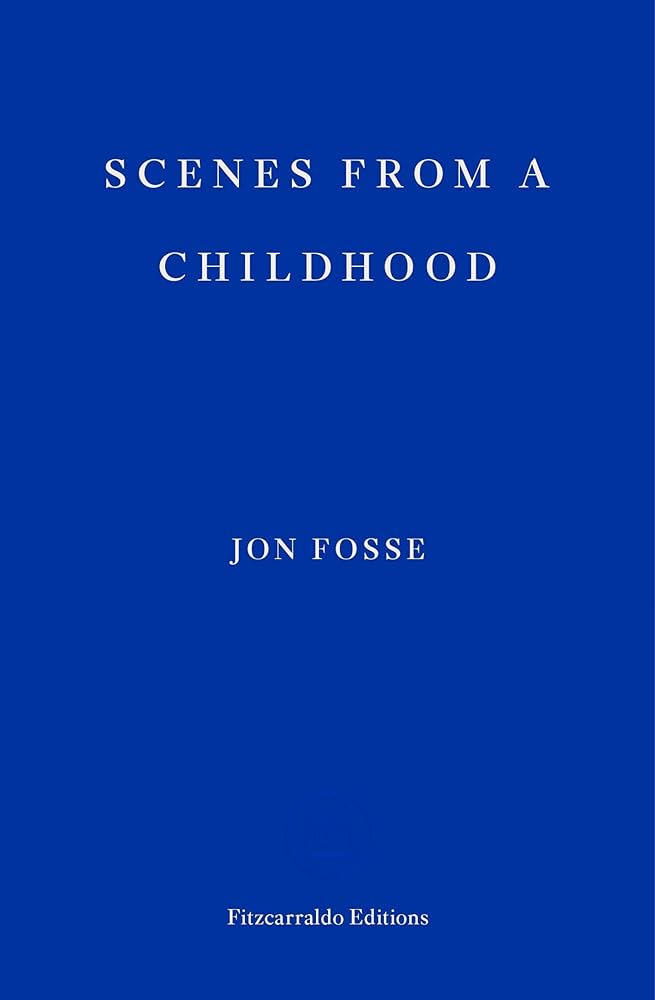
Scenes From a Childhood by Jon Fosse

Norwegian writer, Jon Fosse, winner – finally – of the Nobel Prize for Literature, 2023.

Scenes from a Childhood (1994) by Jon Fosse is a collection of short stories, vaguely connected. He has had works published since 1983, established himself in the theatre as the most -performed living European playwright but after 30 something plays returned to fiction because it gave him more freedom. But has since continued to write for the theatre.

He is known for ‘slow fiction’ characterised by simple language and the minutiae of existence. (An online fiction writing guru argues that if you think your prose is becoming boring, don’t speed up, slow down) Scenes from a Childhood is the title of one of the five sections and its just that. Some are very short, just a line, others are longer, but they give the impression of flicking through a photo album.

The shortest is called The Axe:

One day Father yells at him and he goes out to the woodshed, he gets the biggest axe, he carries it into the living room and puts it down next to his father’s chair and asks his father to kill him. As one night expect, this only makes his father angrier.

And Then My Dog Will Come Back to Me is a much longer story, section four. A man is so incensed that a neighbour of his has shot his dog that he plans a murder. Here the prose, first person, present tense, is made up of short sharp sentences in something close to stream of consciousness that is almost breathless to read. You are forced to read as fast as the man’s thoughts come and go. Punctuation is minimal. Dialogue is incorporated into the prose only delineated by line length. But very clear. This forced rushing has the affect of creating tension, suspense even, as his thinking becomes more and more erratic, confused but determined. Will he go through with it? Does he understand the consequences? Will his plans be thwarted? No spoilers here.

It could’ve been written with no punctuation at all like his novel Septology (2022), considered for the International Booker Prize, is reported to be, all 824 pages of it. Let’s be clear here, no matter how long a sentence is, a paragraph, a page, a chapter, a book, there are of course many sentences in the true meaning of the word, just no full stops. If the writer has left them out, us readers put them in. Don’t be afraid of ‘no punctuation’. When we read prose aloud we don’t ‘read’ the punctuation yet it is clear to the listener when one sentence finishes and another begins. So it can be for the reader.

Fosse is a fascinating man. He writes in Nynorsk, a Norwegian dialect from the west coast around Bergen where he was born in 1959. He lives most of the time in the Grotten, an honorary residence in the grounds of the Norwegian Royal Palace, in recognition of his contribution to the arts and literature. Once an atheist, now a catholic, since 2012, it is implied in a recent article by Chis Power in this week’s The Guardian that Fosse was so bewilded by the fiction writing process, “I wrote and I didn’t understand where it was coming from. How do I manage it? It’s coming from somewhere else,” … maybe it came from God. He tells of a mystical – religious? – experience in his youth and used it as the basis for the latest Fitzcarraldo Edition of the novella The Shining released in October this year.

You can buy the ebook or paperback here.

Here is a short video of Fosse talking about writing prose and here a longer France24 news excerpt when Fosse won the Nobel.

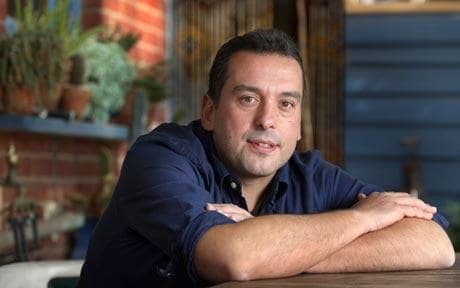
7½ by Christos Tsiolkas

Greek-Australian writer, Christos Tsiolkas.

I have heard several heated discussions about this book. I’m a Tsiolkas fan but my appreciation has waned since his Damascus which was an ambitious work and although there were some evocative sections it was ultimately a disappointment for this reader.
In fact I’ve been reading Tsiolkas since The Jesus Man (1999) – good, then Dead Europe (2005) -fantastic, and then, of course, The Slap (2008) – brilliant, then Barracuda (2013) -good, Merciless Gods (2014) – very good, then Damascus (2019) – not so good.
I found this one in a swap-library at a modest beachfront hotel in Candidasa, Bali, my island home now for 12 years. So, I picked it up and exchanged it for several copies of The Economist.

All of these matters politics, sexuality, race, history, gender, morality, the future – all of them now
bore me.

It’s a novel about a writer going away by himself to write a novel. It’s a mixture of autobiography,
memory, criticism, natural history, angst, and confession.

Most writers are glorified and bewildered by the fiction writing process. The difficulty of squeezing in the writing process into one’s life seems a rich seam of inspiration. And it is! But not, I fear, for readers. What Tsiolkas has tried to do is worthy of trying but there’s a reason that it’s not attempted more often. I’m not really interested in how a stylish but comfortable pair of shoes is made; I just want them to be stylish and comfortable.

Although he tells us there are 3 stories he wants to write we only really get to know one: Sweet Thing.

A young couple, Paul and Jemma, who met as porn movie actors, and their son, Neal. An elderly gentleman offers Paul $US150,000 for 3 nights with him. They need the money. There isn’t a moral dilemma here, the tension is the trip back to the USA, and not the encounter with the desotted man but the attempt to reacquaint himself with friends, family, and country; a trip into, and escape from, his personal idea of hell, with undertones of, and references to, Dante’s Inferno, the first part of 14th Century writer’s epic poem, The Divine Comedy.

The marketing blurbs on the covers put me in mind of a writer who isn’t comfortable with his idea, a
long held idea, he tells us, and so needs to isolate himself with only the idea for company.

truth and imagination are enemies.

I don’t believe that: fiction, via our imagination, can help us see the truth. He says he wants to write about beauty. But what does that mean? Beautiful people? Beautiful actions? Beautiful relationships? He loves the idea of writing about beauty but doesn’t articulate how it may be achieved. What is most vivid in this book are the scenes where beauty is nowhere to be seen.

Every artist, very writer, must have an element of the superstitious to them … we have faith in
alchemy.
Yes.

He gives in to the temptation of writing as therapy, yet doesn’t acknowledge that such self-absorption
sidelines the reader. All writers must know that writing is, as he says, via alchemy; writers want that
alchemy to be understandable, enjoyable, want it to resonate with the reader, and so edit it to make it
more so. I don’t know how a writer can ever ignore the reader.

I am a writer, and I believe in the utility of by accident, its necessity.

There are moments of verbosity that sound forced but can be forgiven since this is not so much a novel as a DIY manual – with examples.

Tsiolkas’s narrative jumps seamlessly, grammatically speaking, from his minute by minute existence at the beach house to the story he’s writing, Sweet Thing, to memories, some long lost, as he paddles around the beach and house while trying to write. The ‘work’ is always present. This may make the reading confusing but it doesn’t. Writers, I’m sure, know this feeling, which causes great annoyance to the people who share their lives: their current project is forever taking the writer away from, and getting in the way of, them and the present.

There are pesky little mistakes that the editors should’ve picked up but didn’t. He describes an eagle
circling the ocean and beach then diving into the sea and emerging with a fish in its beak. Is this an
attempt at writing about beauty? Eagles are raptors and so grab their prey with their feet as they skim
the water. This mistake doesn’t worry me, as it might others, since I no longer assume that the universe
of the book I’m reading is my universe. However, it does grate a little. Maybe it was a cormorant or booby; they do dive for their prey; he just thought it was an eagle, or wanted it to be an eagle. And no bird eats on the wing. But, maybe it was the image, ‘of the profound amorality of nature’ he was after: ‘… drops of blood and flesh [that] fall from the fish it has taken; they fall softly as rain …’ The image is what’s important even if the details are wrong. Anyway, I don’t let it undermine the veracity of the narrative. Some would.

There wasn’t a time when I wanted to stop reading, although I did skim the more purple prose of his
nature writing and his repetitive description of bodily odours. I’m interested in writers and their writing
processes, as some readers are, and would’ve liked more of it. We get the main bits of Sweet Thing but not the continuing, and potentially intriguing, detail. This reinforced my idea that he never quite trusted the idea to stand on its own and so wrote it into a story about the writing of it. It isn’t clear whether the work, Sweet Thing, actually was finished, or written. The end of this book is more about the end of the retreat and getting back to his partner than the end of the novel he was trying to write.

Once I finished reading, I felt like it wasn’t written to be read; it was written to be written. As a reader, I
felt a little sidelined, left out.

There’s no doubt Tsiolkas is a writer of talent, authority, and variety. What this reader wants is for him
to return to the truth-telling of family. He is SO good at that. It is, after all, a bottomless well.

Here is a longish interview, via the Avid Reader Bookshop, with Tsiolkas about 7½.

You can buy the Kindle or Paperback edition here.

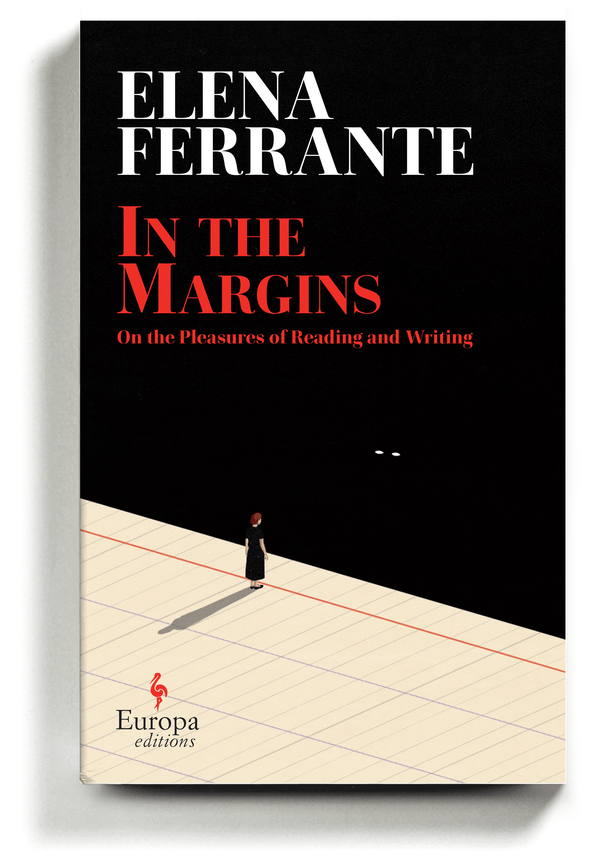
In the Margins: of the pleasures of reading and writing by Elena Ferrante

Elena Ferrante has always said that once a book is written it has no further need for its writer. She has never been seen in public. Some have even suggested that she could be a man, but the general consensus is that ‘Elena Ferrante’ is a pseudonym for an unknown female writer.

This slim volume of essays is a very personal attempt to put into words what happens when a writer writes and a reader reads. No mean task. The first three were presented in November 2021 at the Teatro Arena del Sole in Bologna, Italy as the 2021 instalment of the Eco Lectures produced by Umberto Eco International Center for Humanities. They were read by the actress Manuela Mandracchia ‘in the guise’ of Elena Ferrante. The fourth and last essay, Dante’s Rib, concluded the conference Dante and Other Classics in April 2021 to celebrate the 700th anniversary of Dante’s death. It was read by the scholar Tiziana de Rogatis.

Ferrante vividly reimagines her early school days when she was compelled to write on black lined paper but between two vertical red lines, one positioning the left margin, the other the right. She was diligent to recognise the ease to honour the left margin but recognising “that if your writing didn’t stay between those taut lines you would be punished,” she found the right margin difficult to obey.

I was punished so often that the sense of the boundary became part of me, and when I write by hand I feel the threat of the vertical red line even though I haven’t used paper like that for years.

There is, and always has been, a mysterious element to the creation of fiction. If you as a reader are surprised by what someone does or what someone says in a book, the writer probably was too. Most writers are pantsters: they fly by the seat of their pants. You can begin a scene not knowing where it’s going until you get there.

By mysterious I mean that which makes a writer re-read yesterday’s work and think, ‘Did I write that? Where did that come from?’ When a writer is in the heat of creativity and the keys (or pen) are jumping with energy and excitement, and the little black marks – typos misspellings galore – are coming lickerty-split onto the pale background there isn’t time to think, ‘What did Stephen King say about this situation?’ ‘Passive or active here?’ ‘Maybe I should re-read that Ferrante lecture’ and ‘I’d better ask what’s-his-name? that YouTube guy’. No, there isn’t time. If I stop I’ll lose it. One has to hope-to-god that all that advice, those corrections, mistakes, answers, instructions, and trial & errors have somehow, by osmosis perhaps, made it into my subconscious and are now flowing creatively through my fingertips shoving those little black marks all over that pale background and will coalesce into something worthwhile, giving me a rich and productive resource on which to later manipulate, via several drafts, into a good book. What is that magical force? (muse? imagination? the holy spirit? creative fire?). I don’t think we’ll ever know, because it’s an amorphous product of our imagination that our measly 26 man-made letters – no matter in what order we put them – are just too limited, or too few in number, to give it meaning we can understand.

She quotes Virginia Woolf, from A Writer’s Diary (1953):

“And your novel?

“Oh, I put in my hand and rummage in a bran pie*.”

“That’s what’s so wonderful. And it’s all different”

“Yes, I’m 20 people.”

*a bran pie = a tub full of bran in which treats are hidden: a lucky dip.

Ferrante believes there are two kinds of writing, the first compliant, the second impetuous; the first from the ‘outside’, the second from the imaginary ‘inside’ which is by its nature fleeting.

The thought-vision appears as something in motion – it rises and falls – [it’s not unlike watching TV in your mind] and its task is to make itself evident before disappearing.

And fleeting it certainly is. Many times between being hit by an exciting idea and racing to my nearest device with its Note App – it’s gone! And when I try to retrace my thoughts to whatever it was that sparked the thought train in the first place – the caption on a photo, a news article, a phrase – it’s nowhere to be found. Many writers have expressed this mysterious aspect of fiction writing:

Alexander McCall Smith: (writing fiction is) allowing the sub-conscience to escape.

Wole Soyinka: (writing fiction is) a kind of creative reportage.

John Irving: writing a movie is like swimming in a bath and writing a novel is like swimming in the ocean.

D. H. Lawrence: I am doing a novel which I have never grasped …there I am at page 145 and I’ve no notion what’s it about.

Jonathan Safran Foer: when writing non-fiction I always know in the morning what I’m going to work on; when writing fiction I get up in the morning NOT knowing what I’m going to work on.

Virginia Woolf again: writing is camping out in your brain.

There are quotable quotes in almost all of Ferrante’s paragraphs, ideas that will spark your own thought trains. If you are interested in this stuff please read it and re-read it as re-reading is wonderfully necessary; it will delight, amuse, and amaze you. If you’re not, don’t bother.

You can buy the ebook or hard cover edition here.

Sea of Poppies by Amitav Ghosh

Indian writer Amitav Ghosh

This is what novels can do: take us away from what we know and set us down in other worlds, at other times, to see the universe from another angle and hopefully reassess our choices and privilege. Yet, we still, usually – well, I do – continue to read books about and written by, English-speaking muddle-class whities.

What is most remarkable about Sea of Poppies (2008) is the language:

A quartermaster lured the boy into the ship’s store with a mind to trying a bit of udlee-budlee. But chota as he was, young Benjamin didn’t lack for bawhawdery – set upon the old launderbuzz with a belaying-pin and beat him with such a will that his life-line was all but unrove.

He also assigns formal speech peppered with malapropisms to paint an innocent, although well-meaning, young Caucasian character through her attempt at what she thinks to be  proper conversation.

Also the wonderfully colourful Indian-English of yesteryear full of jangled word-order and inappropriate gerunds “too much not time to be arousing and uprising…’ juggling accents and idiolects from the lowest poverty-stricken rice farmer to a Zamindar, the Rajah of Raskhali who looses everything to indignant hubris.

And it isn’t just his wild, wonderful, and inventive lexicon but it’s also the exotic time and place full of words for staff, house geography, clothes, food, ship-craft, and colloquialisms.

You would think all this verbal unfamiliarity would send you rushing to the dictionary; a tiresome task if all too necessary – although reading it as an eBook allows this to be less so. But no. The overall meaning of a sentence, conversation, or paragraph is always clear even if some individual words are not.

One of the joys of the writing here is it’s inventiveness and possible authenticity. Ghosh acknowledges his debt to several publications, including Thomas Roebuck’s An English And Hindoostanee Naval Dictionary Of Technical Terms And Sea Phrases As Also The Various Words of Command Given In Working A Ship, &C. With Many Sentences of Great Use at Sea; To Which Is Prefixed A Short Grammar Of The Hindoostani Language (1813).

However, whether it is authentic or inventive doesn’t matter, it’s a joy to read, and reading some sections out loud is a very pleasurable thing to do.

The book, and it’s a big one, the first of a trilogy, is set prior to the first Opium War (1839-1842) when the British successfully came to the aid of the opium merchants when the Qing Dynasty of China banned the drug from its shores. It is divided into three sections: Land, River, Sea and centres around a schooner, the Ibis, and the exotic collection of humanity that find themselves on and below its decks as it sails from Calcutta to Mauritius.

The characters are varied, three-dimensional, and extraordinary. There is Deeti, a widowed poppy farmer saved from her husband’s funeral pyre by a handsome ‘untouchable’, Kalua; Zachary Reid, a mixed race American sailor; Serang Ali, the leader of the lascars and colourfully mangles the English language along with various other tongues; Neel Rattan Halder, a Raja convicted of forgery; Ah Fatt, a Parsi-Chinese opium addict; Paulette, a French orphan raised in India; Jodu, her childhood friend; and the extraordinary Nob Kissin Baboo, a would-be priest. All of these major characters, and many minor ones, have colourful backstories, some comic, some tragic, some heart-thumping, some tear-jerking but by part three of the novel they are all on board the Ibis, bound for Mauritius and their various destinies.

As well as all the above there is Ghosh’s descriptive, rich, and luminescent prose: describing the love in a young girl’s heart along with its negative opposite, not hate but cowardice for saying nothing for fear of rejection; describing the effect of the first lungful of opium smoke in a man’s breast, nulling the gravity in his limbs and creating delusions clean of doubt; to untying a knot on a bowsprit as it plunges a sailor into a mighty wave and out the other side, like threading a needle with courage.

It’s a great read and reinforces what novels do best: carry us away.

Sea of Poppies was shortlisted for the Booker Prize, 2008.

The epic story, The Ibis Trilogy, continues with River of Smoke (2011), and Flood of Fire (2015).

-oOo-

You can buy the book in various formats here.

Here you can watch an interview with Amitav Ghosh as he explains his sentiments behind Sea of Poppies.

And here is a little documentary with Ghosh as he talks about the background to his iconic Ibis Trilogy.

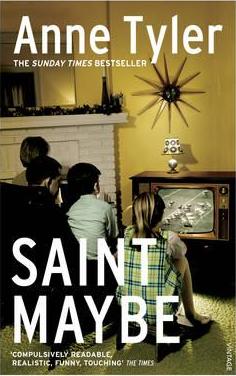
Saint Maybe by Anne Tyler

Anne Tyler pic
American writer, Anne Tyler.

Read Anne Tyler.

Have you read any Tyler yet?

You should read Anne Tyler.

These, and other inferences, came from a fellow book worm and one whose opinions as a reader I trust. So, finally, I read Anne Tyler.

Saint Maybe (1991) is typical of her work: family relationships. There seems two kinds of families in the American novel: the apple pie variety and the gun variety. Tyler’s are the former but, of course, coping with a threat, a dilemma.

Ian Bedloe, the son in an apple pie family in Baltimore did something he believes was very bad and caused two deaths. Only he knows what he did, what he said; the only other person, his older brother, who was there when he said it, and to whom he said it, is dead. He is desperate to be allowed to atone for his ‘sin’ and is drawn into a local Christian denomination called The Church of the Second Chance. After what he’s done, he so wants to be good. And forgiven.

What interested me in Saint Maybe is the subject of religion. I was brought up in a religious family but the Christianity taught by my Christian denomination (Lutheranism) always seemed to be more like an insurance policy than a belief system. My mother read the bible like a novel. I have come to understand that religion is a very important element in human existence: each group, tribe, and civilisation since the year dot has had a belief system; mainly to answer the big questions (How did we get here? What are we doing here? What’s that big ball of fire in the sky? and There’s got to be something better, doesn’t there?) so we can get on with the everyday necessities: digging for yams, inventing machines, filling in a tax return. What I object to, and what I see as a blight on humanity, is the administration, and interpretation, of these belief systems: the temple, the synagogue, the mosque, the church.

I believe in the Holy Spirit; the holy Christian Church, the communion of saints …”. So begins the last line of the Apostle’s Creed I learnt as a child, yet all three, the holy spirit, church, and saints are inventions of the (all male) administrators of Christianity over millennia.

The Church of the Second Chance is exactly one of these ‘administrations’; it teachers not so much what Jesus Christ said but what its leader, Reverend Emmett, says and Ian, so looking for a path to redemption and his second chance for what he has done, joins Emmett and his small flock, waiting, as the Reverend Emmett says, for a sign that he has been forgiven.

The Bedloes aren’t religious but Ian’s commitment to The Church of the Second Chance slowly pulls them in; ritual and routine can do that to people’s lives. The family conforms to the Church more out of respect for Ian than for a commitment to its beliefs.

Stream-of-consciousness is a novelistic technique (thank you James Joyce) that recently has had a revival: Anna Burn’s The Milkman won the 2018 Booker Prize and Lucy Ellman’s Ducks, Newburyport was shortlisted for the 2019 Booker. It usually is associated with internal thoughts,  the ordinary, the minutiae of people’s lives. Here, Tyler uses the more common third-person narrator to tell the very plain story of Ian Bedloe.

Above her work-desk is the following quote.

As a queen sits down, knowing that a chair will be there,

Or a general raises his hand and is given the field glasses,

Step off assuredly into the blank of your mind.

Something will come to you.

…from Walking to Sleep by Richard Wilbur.

“I see those words as about getting an idea and making a  book,” says Tyler. “I don’t get anxious. It will come to you, let it come in.”

She works in long hand, rewrites in long hand, and only when she is satisfied will she then type it onto a computer; print it out and work on another draft in long hand. And so it goes. Her style, if she has one – she says she has no style at all – is “unmistakably hers: transparent and alert to all the nuances of the seemingly ordinary,” wrote Charles McGrath in a 2018 profile in The New York Times.

It’s true that the appearance of truth in fiction is achieved through detail which is why her writing is so believable: her work is full of detail, to the brim with detail: the weather, the light on window glass, a tone of voice, a look, the type of cut and grain of wood, what people know and don’t know; but she also deliberately omits detail, for the reader to work out. This also, ironically, adds veracity to the work; creates an investment for the reader in the story and its meaning. She is a joy to read.

Saint Maybe was filmed for television in 1998 starring Blythe Danner and Tom McCarthy, directed by Michael Pressman from a teleplay by Robert W. Lenski.

You can buy the book in various formats here.


Monday in Piss Street

a short story

I live in a shit-hole. Lying here ain’t good. My bed stinks. I fart loudly and crawl through the thug of it and go to the kitchen. I can hear me mum snoring from here. It’s a small place. Yeah, course it is. Cockroaches nyere-nyere me as they scatter away. They feel safe, I reckon. At home. I open the fridge. There’s lots of space in our fridge. Green muck too. Fuck! The milk’s off. I drink from the sink tap. Tastes like Draino. What day is it? Shit! I’ve got to go to the dole office. There’s this fat fag creep there who looks at me like I’m a Macca’s burger with fries on the side, like that chick in that ad on TV. Hope I get the swami girl. She’s got Milo skin and eyes like mud cake. I shower, feel like a dump, take one. The Dettol soap is a nail clipping but it still strips every bit if moisture out of my skin. Me mum believes in squeaky clean. That and smack. Yeah, I know.

I can hear Scotty scratchin’ at the back door. I let him in and find a rusty can of four-bean mix in the cupboard, behind the tea bags she steals from the motel down on Cowper Road. A job she’s got, three days a week. It used to be two days but she gave the manager a blowjob and got three. That’s what I reckon. I open the can with a bread knife and Scotty and I share it. I go into me mum’s room and scratch around in her side drawer and – bingo! – find a twenty-dollar bill. Fuckin’ awesome. She’s dead to the world. I cover her up properly after starin’ a bit.

On the floor I find a belt to use as a lead for Scotty. We go to the shitty local con store; mum keeps telling me I need to think about the future. I’ve got to get some dog food. The chink sits behind mesh wire the thickness of pencils. I slide two cans of Chow, a Snickers bar, and a half litre of milk at him. He doesn’t look at me. I was 5 cents short on a packet of bbq chips once and he wouldn’t let me have them. I broke his nose, the slanty-eyed prick! Now there’s this fuckin’ pencil mesh everywhere. He gives me $1.50 change and I feel like punching him again. He knows it too. Fuckin’ reffos. Robbing us blind! Scotty craps on the footpath. I don’t have a placky bag with me, never do, so I shove it into the gutter and get dogshit on my stubs. Bloody hell! I find a patch of grass inside a car tyre, push it aside, and try to wipe me toes clean with it; fuckin’ jeez, I must look like a spazo dancing or somethin’. Scotty barks. Shut up ya dick! I see a couple of white haired geros up ahead. They stop talking and cross the street. “What are ya lookin’ at, ya coupla cunts! You’ll be dead before me. I’m just walkin’ me dog! Sa free country!” They scurry on a bit, as fast as their skinny little bandy legs can carry them. Ha! Makes me want to vommi. The pricks!

Charlie finishes serving a chick with her skirt up her crack. “Morning, Bo. What can I do for you”. He looks at me. I look at him. He knows what I’m goin’ to say. “Me mum’s still sleepin’ it off and there’s no food in the joint. I gotta go to the dole office. Can I have a burger?” “What about your mum?” he says. “Yeah,” I say. “Can ya make it two?” He looks at me like his shit don’t stink but he bailed me out once so mum says I can’t give him no lip. I gotta swallow it. Feels like nails. He goes to make the burgers. I stand and wait. I look out through the big window onto the street and see that pansy from the pub on the corner; the pub where they do prissy shows watched by chicks in merks and blokes with haircuts. I looked through the window one night at a couple of guys in frocks telling jokes about god and the prime minister. The crowd was lapin’ it up. Some sort of code, I reckon, like commi shit or somethin’.  The sissy-boy’s with his dicky little benji-dog. He bends down and picks the stupid mut up as good ol’ Scotty yaps fit to split and goes for his ankles. Rip him to sheds, Scotty! Little Scotty won’t leave him alone and his fluffy mut yaps in his arms. I’d laugh if I had the energy. Charlie gives me the burgers and I say “Thanks” like me mum said I had to. Scotty keeps barkin’ and jumpin and the sissy-boy…”Hey!” The cunt’s tryin to kick my dog. “Hey! Shit face! What the fuck do ya think ya doin’?” I run right up to him and stand right up to the prick with my chest in his face. He looks like he’s goin’ to shit himself. “You tryin to kick my dog? Hey!? Hey!? Ya fuckin’ cunt! Kick my dog and I’ll smash ya fuckin’ face in!” The fag tries to speak, “Well I’m not going to push a dog away with my hands, am I?” “What’s that supposed to mean,” I scream at him. “You tryin to be some kind of smart arse? Hey!? Hey!? Are ya!? Hey!?” and the cunt turns and walks away. “I’m askin’ ya a question, dum-fuck. What’s a poofta like you tryin’ to kick me dog? Hey!? Fuckin’ nancy-boy, take-it-up-the-arse, shit-pusher! Go on, answer me fuck-face. Poofta!” I yell and it feels real good. He’s shakin’ and can hardly walk straight. And then he stops and turns his lilly-white pansy-boy-face, white as froth, and says to me somethin’ like if I wanna insult im or somethin’ I’ll have to find somethin’ diff’rent than what’s true. What?! “What did you say!?” I scream. I don’t know what he’s tryin’ to say. “What the fuck!” I yell spit on his nose. “Ha!” I scream but the feel-good stuff’s oozin’ away and I hate it, but he’s still shakin’ huggin’ his stupid dog. I can taste his fear and it tastes good, salty-sweet. I’m runnin’ out of words. He walks away. “Ya fuckin’ cunt!!” I scream. My face is burnin’ and the heat in my body and lumps in my throat choke me, and I so fuckin’ hate it – “I fuckin’ hate it!” I scream at the sky; when smartarse pricks throw words at ya that don’t make sense. “Aaah!!” And I hear a few doors open and close. “What the fuck are you lookin’ at” I bellow at whoever can hear. But, I scared him shitless didn’t I? Yeah, the prick. Scotty is pullin’ on my belt, with his tail down and pullin’ away from me. “Come here! Ya my fuckin’ dog! Mine! Come here, ya prick.” And I can’t yell anymore and I walk away draggin’ Scotty like a pyjama bag I saw a kid with once on TV.

I sit under the concrete steps that go up to the freeway and try to stop the drummin’ in my ears. I eat my burger. It helps. Scotty looks at me like he doesn’t know nothin’. I give him a piece of bun. He eats it. I still feel hot but it’s goin’ away. I walk up the stairs to the freeway, and along the footpath to the park and let Scotty off the lead. He doesn’t know what to do. “Run, ya prick,” I say. I walk over to a tree and lean against it listenin’ to that drummin’ again. It’s getting fainter I think. A poxy bloke in a suit comes up to me and says, “Hey, pretty boy! Want to make a bit of money?” “Fuck off,” I say but it sounds weak. It comes out like I’ve got a cold, or somethin’. “What do you say to twenty bucks for a blowjob?” he says with just a slit on his shiny face, like we’ve done this before. “Fuck off,” I say again. More like a whisper this time. But I think about the money and how I can get the bus to the dole office, and maybe, some food for tonight. I gotta think of the future, like me mum says. “Fifty,” I say. “No blow, just a hand.” “OK, twenty though,” he says. “Fifty or nothin’” I say and make it like I don’t care.

His little dick is hot is my hand but it doesn’t take long, thank kryst, and no way did I let the faggot touch me. No way. He messed his expensive shirt which made me smile which gave him the wrong idea. I wiped my hands on the grass and took off with my bus money. Needle-dick loser. I took Scotty home. Me mum was still dead to the world. I put her burger in the fridge. I took the bus to the dole office.

I sat on the bus next to a chick with really big knockers, a green t-shirt and cut-off jeans. I said, “G’day.” She looked up from her phone. Nothin’. What is it with chicks who won’t even say g’day. Stuck-up bitch. I gotta get myself a phone. Yeah. The fat creep isn’t on duty today. Yeah, but the swami girl is. I wait and let some nuf-nufs go before me so I can get swami-girl. I sit at her desk. She’s really pretty and has a purple scarf-thing over her black hair.

“Hi, Bo. How you been going?”

“OK.”

“Just, OK?”

“Yeah.” I hand her my form.

“You’ve been to see all this people; all these jobs?”

“Yeah, course.”

“If I rang some of these people, they’d remember you?”

“S’pose not.” I ain’t stupid.  “They see heaps of fuckers.”

“How’s your mum?”

“OK.”

“Still working her two days a week?”

“She’s not working. Hasn’t worked in months”

“I thought she was at the motel two days a week.”

“Nah, when it came to pay day the prick wouldn’t pay her. Sack’d her.” Can’t tell swami-girl the truth, mum said.

“I see.” She goes down the list of interviews I’ve done, well, done some of ‘em. She looks at me like she likes me. I like her too. She’s wearin’ lots of flowing clothes so I can’t get the jist of her body, but I bet it’s alright. I start imaginin’ her black swami bush between her legs and I get a hard-on. I wanna touch her. I look at her hands and she’s wearin’ a few rings. She’s not supposed to wear stuff like that at work. Ya can get smashed fingers from some prick who’d cut your hand off as soon as look at ya. They’d fetch a bit, I reckon. She looks at me. I look at her. The kind of too-long look you see sometimes in movies. I reckon she likes me for a fact. “Nice rings,” I say. She looks at her rings and takes them off. Fuck! Why she do that for? “I was just lookin’.” “Sure,” she says but you can see she’s scared a bit. Stupid bitch! She looks at me again and there’s somethin’ she wants to say.

“It’s fuckin’ OK, alright?” I say.

“Is it Bo?”

“Ye-ah!?” What’s she getting’ at?

“You’ve got to think about the future, Bo.”

“Yeah well I am! Me mum says that shit all the time. I wanna get a phone.” I think about that loser in the park. I gotta get a phone. She’s lookin’ at me. Now, I don’t know if she likes me or not. This is what I don’t get. Chicks look at ya and ya know what they want, and then they look at ya again and it’s different. Or they look at ya and ya know what they want, so you do it, and then they scream at ya, call you names, and piss you right off.

But she signs my form and I say, “Thanks.”

“Say Hi to your mum,” she says. “Next!” she yells.

I go into the city to make me feel normal. When you’re in the city ya can be anyone walkin’ around. I look at them and they look at me and see what I see, just pricks walkin’ around being normal. I breath normal. I break the fifty at Maccas but know I have to get some food for tonight. I like this feeing, this doing stuff for me mum. I walk past a posh supermarket and think, I can go in here, and so I walk in. I look at security and he looks at me. Shit! There’s so much light, so much stuff. I look at all the packets on the shelves and don’t know half of them. There’s a whole room full vegetables. It’s like a farm or somethin’. Don’t know half of them either. What are ya supposed to do with ‘em? I look for the can section and pick up two cans of spaghetti. Me mum loves spaghetti on toast. I see all the bread on a huge table. What is all this shit? Bread’s bread. I take one that looks like real bread, a square one, and the skinny guy at the check-out looks at me as if I’ve forgotten somethin. “What are ya lookin’ at?” I say. He looks away and then back at me and says, “Nothing at all, mate. Nothing at all.” And it’s like I hear the words he’s sayin’ but it’s not what he’s sayin’ and I can feel my ears burnin’ and that thumpin’ again. “How ya goin’?” It’s the security guy with a weak little smile on his puss. And more words but it’s not what he’s sayin’. What the fuck is he sayin’? And I want to scream so fuckin’ loud and punch his fuckin’ prissy face, cut his cock off, and shove it up his arse, but there’s so much fuckin’ light in here. I can feel it like sunshine and I say “Fine, thanks,” and it comes out like it isn’t me and I suddenly don’t know where I am. This skinny guy is handin’ me some money. “Here’s your change.” I look at it. I take it. “Don’t forget your stuff.” What? I take the bag and head for the street. I can feel security followin’ me. What did I do? What did I say? The world’s a mess and I have to side-step a man with a broom. “Fuck off!” I yell at him.

I get home and walk inside. Nothin’ but stink. And mess. No sound. I put the grocery bag on the table. It takes me five goes to find the toaster. I want to do this for me mum. I plug it in. I’m gonna make me mum some spaghetti on toast.  I can’t find a pot so I use a fryin’ pan. It’s got stuff stuck to it but there’s no washing stuff so, fuck it. I ring-pull the spaghetti and tip the sloppy stuff in the pan. I turn on the gas. I put two slices of bread in the toaster and push the level. Bang! There’s a flash, sparks, and I nearly shit myself. Fuck! Is that supposed to happen? I push the lever again. Nothin’. Again. Nothin’. Again. Nothin’. My jaw aches. Again. Nothin’! I yank the toaster from its socket and throw it into the lounge room. It hits the floor and a shower of crumbs flies up like a bomb’s gone off. I have to keep doin’ somethin’ or I’ll explode. A cup of tea. I’ll make me mum a cup of tea. Yeah. I search through the cupboards. Nothing but shit and stuff. Stuff and shit. Where’s the fuckin’ tea bags? I smell smoke or somethin’ and I turn to see the spaghetti burning in the pan. I grab it and throw the whole fuckin’ lot in the sink with all the other shit. I stand there with my mouth shut tight, tryin’ to steady my breathing. The thump-thump-thumping is deafening. I want to scream but me mum’s still asleep.

And then I remember. And the thought is like sunshine, like a birthday present. It could be happiness, even. The thumping stops and I suddenly want to laugh. The burger! I’ve got a burger in the fridge. Me mum’s burger. It’s there. Just there in the fridge. Me mum was right. I thought about the future, I’ve got this burger and now everything’s OK. This new feeling is strange, but kryst, it feels good. I’ll take her a nice burger. I get it out, un-wrap it, and find a clean plate, well sort of. I put the burger on the plate and take it into me mum. She’s still asleep. I get a little closer and I reach down to wake her like I always do. There’s vomit on her check and I can smell a different stink. What is that? I touch her shoulder and it’s like touching the toaster. Is this dead? I stand there. Me mum’s dead. I hear myself saying it. Me mum’s dead. I don’t know what to do. It’s like she’s been turned off, or something. What am I supposed to do? Dunno. I eat her burger.

Serendipity

Serendipity pic

– a short story by Michael K Freundt

Pollution saved my life. Air pollution gives us glorious sunsets but it was the watery kind that prolonged my life: as I breathed the water in – and that is what I knew I had to do – it was not easy, and it tasted vile so I spat it out again – Mah! – and immediately clambered out of the sewer-like river thinking of guns and poison. What a hideous mess! I should have chosen the pristine waters of a rural river, like Virginia Woolf, rather than the urban drain I had decided on. That primary stupid decision finally convinced me that perhaps I had not given the whole thing quite enough thought: I had reacted illogically to what had happened back at home. Now, however, my primary decision was about my ruined clothes – Look at me! Mah! – and how I was going to get to whatever destination I would soon have to choose. The fact still remained that if I was not going to kill myself I would have to face the fact that I had just killed my wife, but maybe, just maybe, it could be possible that the authorities will conclude that it was an accident; but probably not. I am not a very good liar. However, it is truly curious that the brain, in circumstances like this, prioritises decisions so effectively that once I was standing, dripping, and during the hours that followed, I was in no doubt what it was I should do next. If you have never witnessed a death, or attempted to cause your own, you may understand – but whether you believe me or not is of no concern to me, but as I stood on the dark river bank, in the overgrown grass strewn with more urban rubbish and vainly attempting to brush myself down, to regain a little of my lost dignity that complete saturation destroys, I was suddenly aware of what I must do: go home. It became incredibly important to me to get into clean, dry clothes, despite what such a decision may bring. 

What interested me as I finished writing the above paragraph was the tone. It was a line early in Dan Simmons’ The Fifth Element; you know, I’ve scanned those pages and still can’t find what sparked the thought train that led to the above; but it was the voice, the tone that got me writing. I love it when reading can do that, even if the book didn’t grab me – I didn’t finish it – sometimes a line, an image can get the juices flowing. My narrator, not yet named, sounds like a self-opinionated, stylish homosexual, arch, wilful, and from the Inner-Eastern suburbs of Sydney. Note the use of the word ‘vile’ in the first paragraph: very queer. I like the tone, but I need to be careful: he is straight – self-awareness and a rich vocabulary are not the sole domain of the homosexual – but giving him ‘gay’ and knowing characteristics creates a unique individualism. Let’s see how it goes.

I must have looked a sight as I walked up the few tiled steps to the verandah of my inner-suburban terraced house and the look on the police officer’s face confirmed it. My wife’s body had obviously been found. The night was cool and calm so very little evaporation had occurred and my feet still squelched in my shoes: they were my favourite pair and now completely ruined. Mah! The exertion of walking all the way from the river to my house had obviously kept me relatively warm but the longer I stood still, forced to do so while the police officer talked to someone on his phone, his superior I assumed – I had told the young man who I was – I could feel the cold creep over me like a sinister blanket. 

In a very short while a tall attractive uniformed woman came out of my well-lit house to confront me. I told her who I was. 

It’s important that he finds her attractive: it could be useful later. You see, I’m not sure where this is going but I hope you’re as interested as I am.

“I’m afraid sir,” she said in the usual formal dry tone, “that I have to inform you that your wife has been found … deceased.”

“Yes, I know,” I said. Did she first think of saying ‘murdered’?

Despite her experience in such matters she hesitated, but then said, “And how do you know that, sir?”

“Because I … found her.”

“And was it you who called triple zero?”

“Yes, it was.”

If my unusual appearance had not impinged on her before it did so now, probably brought about by the fact that I had started to shiver violently.

“And why sir do you seem to be completely saturated?”

Now that my primary decision to go home had been fulfilled a new primary decision had automatically taken its place: it was absolutely clear to me what I had to say.

“Because I tried to kill myself.”

“And why did you try to do that, sir?”

It may give you some insight into my personality when I tell you that my immediate feeling now was of annoyance that every one of her questions had begun with a conjunction.

“I thought you would think I did it.” I did do it but not the way you think.

I thought I should amend that line to “I did do it but not the way you may think”. The use of the second person – referring to the reader – in prose fiction, by the way, is rare now. It used to be common – the opening to Elliot Perelman’s Seven Types of Ambiguity – great title – is an unusual modern example that springs to mind – I must read that again one day; but I like using the second person. It adds a personal touch, a writer-reader sense of confidentiality. It’s the word ‘may’ that I am concerned about. I cannot be certain what a reader might think but it is this note of uncertainty I do not like. I am very aware of words like ‘maybe’ or ‘perhaps’ or ‘could’ because they always weaken a phrase – except in dialogue, of course, where such words can be character-building – but ‘may’ sounds like one of them. No! I will leave it out.

I expected another, and obvious, conjunction-led question but my shivering had become so intense that she said, “I think you had better come inside and get out of those wet clothes.”

I was not allowed upstairs into our bedroom, now a crime scene or something – I wondered what they would find and what they would think it means –  and so a young underling was sent to get me a complete change of clothes. His choice was completely unsatisfactory – why would anyone match royal blue with that brown? 

That last phrase gives great insight into his character, don’t you think? I spent quite some time agonising over what colours to choose. Fashion today, to always embrace the new, has accepted anything with anything. I’m old enough to remember when paisley was in, and then when it was definitely out. Now I’ve seen paisley matched with floral. Mah! My narrator would only have block colours, I’m sure; maybe a stripe or check for summer; never floral, and never paisley. Brown and blue can at times go well together but his hatred of the match with that particular brown and that particular blue reinforces his opinionated sense of fashion. He so knows his own mind.

The young officer appeased his appalling fashion sense by bringing me a towel, but then my assessment of him plummeted again when he did not leave while I changed. I decided to ignore him. I undressed completely, towelled myself dry, resisted the urge to look up at him to see what he was looking at, and redressed as quickly as I could and refused to look in the living room mirror as I already knew I looked a fright.

Is the use of the word ‘fright’ too arch; too queer, do you think?

“Please take a seat, sir,” he said politely and when he did not leave the room I supposed he had been ordered not to leave me alone. I have always found it difficult not to talk to people when I find myself in close proximity to them but he was just standing there looking at nothing in particular so the urge to talk was weakened. I tried to attract his attention to the pile of wet clothes on the floor making it clear, I thought, that I expected him to do something about them: they were dampening the rug, but he paid no heed. I got up – he became alarmed a little at that – and removed them to a wooden chair. I resumed my seat on the couch and he relaxed. I remained as silent as he did.

It would be correct to use the word ‘him’ here: “… I remained as silent as him” – ‘he’ for the subject, ‘him’ for the object – but it sounds wrong, or, at least, clumsy; so, ‘as he did’ it is; to stop any reader with a fluffy grammar fixation getting annoyed. “Oh, thanks, Darling!” My partner, Tommy, just bought me a cup of coffee. He’s forgotten he’s brought me one already, poor man. It’s getting worse.

Eventually the pretty female officer entered without an iPad but with a note book and pen. How old fashioned! I needed to stay calm, but not too calm. She looked good in a uniform.

“Can I have your full name please? she said.

“Patrick Osman,” I said.

I chose a ‘foreign’ name and you will soon see why: a particular beef of mine.


“Turkish?”

“Australian”

“I beg your pardon.”

“It’s Australian,” I said more pointedly.

“Sounds foreign.”

“It is.”

She looked at me quizzically like I was a cheeky schoolboy with a bad record.

“All white Australians come from somewhere else,” I said. “Even you.”

“I was born here.”

“So was I.”

“And your point is?” she said as neutrally as she could, which was not very.

“An authentic Australian surname would be something like Yunupingu, Gulpilil, Noonuccal,” I said, pedant that I am.

“I see,” she said with exasperation but also, eventually, understanding: annoyed understanding. She took a breath with intent as if to challenge me further with, I expected, European names for indigenous people, but she obviously thought better of it. ‘Smartarse!’ she probably thought instead. 

“Mr. Osman, tell me what happened tonight.”

“My wife has – had – symptoms of early-stage dementia, one of which was a faulty sense of balance. She had just showered, then fell, and hit her head on the corner of the glass coffee table and died instantly.”

The attractive police officer was obviously flummoxed by the brief and precise description. She stared at me without writing anything down.

You see, I know where this is going now. Creative moments like this often cause younger, brasher writers to cry, “Oh, the writing process went so well; it wrote itself, actually.” No, it didn’t, darling, you did! Just like I am; but sometimes creative momentum can take over and you have to know when to let it, or reign it in. So, do you know where this is going? I hope not. Not yet.

“Could you please elaborate?” she asked.

“You’ve been in the bedroom. The sofa in the bay window, the coffee table, the wet feet, the wet floor, the body, the blood; doesn’t it look like that’s what happened?”

“Or made to look like that’s what happened.”

I chuckled. I could not help it. “I see. You think I picked up that large, extremely heavy and cluttered coffee table, hit her with it and then made it look like she fell on it?”

“Mr. Osman, your flippant tone isn’t helping you.”

“Do I need helping?”

“Without credibility, yes.”

I was disciplined enough to understand what she meant and so remained silent. It was then that she started to write something down. I waited.

“You said before that you were afraid that we might think you had done it.”

“Yes.”

“Why?”

“I am on the public record, a television interview two weeks ago, as a supporter of euthanasia.”

“What was the name of the program, date, and time?” I told her. She wrote that down. Eventually she added, “So how would you describe what happened tonight?”

Serendipitous.” 

“I beg your pardon.”

I resisted a comment reflecting her possible ignorance of the word and forced myself to assume she was surprised by my supposed flippancy. “She died unexpectedly, accidentally, quickly, as opposed to gradually, sinking into confusion, a withering brain, organ dysfunction, pain, senility, a coma, then death. She loathed that scenario. Who wouldn’t?”

“Did your wife share your views on euthanasia?”

“Of course.”

“Did she also take part in that television interview?”

“No.” She wrote that down too.

“I’m afraid I’m going to have to take you into custody based on what you have told me.”

I’m resisting here to get bogged down in police procedural matters. My knowledge of the medical aspects of this story I have acquired from personal experience. However, when it comes to research for the sake of pedantic accuracy I find it unnecessary as it is safe to assume most readers are familiar with television police dramas from a wide spectrum of sub-genres, and possible procedures; and readers are willing to suspend disbelief for the sake of the story – up to a point, of course. Absolute reality is not necessary if procedural information decided on by the writer for the purposes of the story falls within the realm of possibility; besides, what is important here is the dialogue between these two characters and the development of plot and intrigue. I am talking here about what is more important: I don’t need to study aerodynamics to jump a puddle.

“You’re arresting me?”

“No, but you’re the only witness.”

“Are you going to charge me?”

“We’d like you to assist us with our enquiries.”

Oh, look! Tommy is sitting in my reading chair reading McEwan’s Amsterdam. He will not remember a thing he has read, of course. He’s read it before, when he was well. Maybe it is muscle memory at play. He used to read for hours every day. I don’t even think reading is possible for him anymore. If I had time I would watch to see if he turns the page. His balance is getting worse, too. And that is not all. However, the idea of making it look like he is doing something normal, requiring working brain function, is proof that something is still operational in that brain of his. Meanwhile I am worrying about continuing this interrogation here or back at the station. The stakes would be higher at the police station. OK. And there needs to be a developing expert who has been rabbiting around the scene, collecting information while Patrick has been questioned by the cute officer.

As I was led out of my house a dozen or so people, all clad in white plastic looking like workers in a nuclear power plant, passed me and invaded my house like ants. And yes, the police officer, the same one who saw me naked, did place his hand on my head, pushing it lower, protecting it from damage, as he directed me into the back seat of the police car. The ride to the station was uneventful: no one spoke. I was later led politely into an interview room and offered a cup of coffee. I asked for tea, English Breakfast, and the young man stared at me for a moment, either in ignorance or distain, but then went away to get it, maybe not English Breakfast, but he went away. I sat and waited. There wasn’t a vast mirror on the wall; you know, a two-way mirror for investigators to sit behind and watch proceedings, making clever but snide remarks, but there was a CCTV camera in the corner of the ceiling. At least some modernisation is occurring in our police force. And, lo and behold, a little red light went on as I was watching it. A few moments later she arrived.

She turned on the recording device on the table between us, stated the date and time, my name, and her name, “Detective Constable Lena Marinos.” She asked me the same questions she asked me at my house and I gave the same answers, minus some of my attitude: I thought it only fitting. I was curious what line of questioning she would take but she did not continue. Instead another person entered the room.   

He was a large man in a cheap suit. He had pages in his hand. Paper. This station is so behind the times. 

“Joined now by Chief Inspector Mullen,” said Detective Constable Lena Marinos for the sake of the recording but who did not see fit to introduce him to me.

“Mr. Osman,” said the new arrival referring to his bits of paper, “you said your wife had just showered and had walked into the bedroom drying herself presumably.” He spoke like a rugby player, all mumble, few consonants,

I won’t bore you with writing his dialogue phonetically; you get the idea.

“but the floor and her feet were dry.”

“Shouldn’t a lawyer be sitting quietly next to me?” I asked in the politest tone I could muster.

“We haven’t charged you with anything,” said Marinos. “You’re just …”

“Yes, I know,” I interrupted, “just helping you with your enquiries. It probably evaporated.”

“What?” said Mullen.

“The water,” I said helpfully. “It probably evaporated.”

“What work did your wife do?” he asked, ignoring my comment.

“We run a business together: an employment service specialising in relief staff for the medical industry.”

“Did she understand medical …” he waved his hands as he sought for the word, I expected him to say ‘stuff’, “… procedures?”

“She was a trained nurse with many years’ first-hand experience,” I said.

“Was she up with, ya know, trauma cases?”

“Most of her career was in the emergency department.”

“So she knew about trauma injuries.”

“That’s what usually happens in an emergency department; yes.”

“Did you see her fall?”

“No. I was about to sit but looking for a space on the cluttered coffee table to put my gin and tonic; she was walking from the en-suite drying herself.”

“She was naked?”

“She was drying herself with a towel, so, yes and no.”

“And talking at the same time.”

“Yes. She could do that.” I instantly regretted that line. Marinos looked at her hands.

“What was she saying?” Mullen asked.

I did not hesitate. I thought little about what I should say, but I was aware that an instant reply was necessary, otherwise they may think I was working something out; weighing my options for a better answer. “Her condition was constantly on her mind, what to do about it, be in control of it, avoiding the medical and legal outcomes. I don’t remember exactly what she said but she always spoke about that, ever since she was diagnosed.”

I want you to believe him. Do you?

“I think I was thinking about all the coffee table clutter: where did it come from, what could be tossed. I don’t remember exactly.”

“Are you aware that aiding and abetting a suicide is a criminal offence?”

I chucked incredulously, “Yes.” I could sense a goal he was steering the questions towards. A goal he so desperately wanted.

“Do you remember when you realised something was wrong?”

“I hadn’t sat yet, or had I?” I thought about it. What did I remember? Oh, yes. “No, I hadn’t sat down yet. I heard a sound. A surprised sound. Like an ‘oops’ but it was soft, sharp but soft. Not alarming until I looked up.” I sighed deeply, closed my eyes, and flopped my head back.

“What did you see?”

I was trying to recollect the sequence of events, their order, their connections. Did I remember the sequence or did my brain fill in the gaps with invented logic? “It was just before she hit the floor.”

“The floor or the coffee table?”

I could feel their logic. “The floor. She was in the air, facing up.” I could see her as if caught in a photograph, suspended in the air. “Her backside hit the floor first, and then her head was thrown back sharply, whipped against the corner of the coffee table. The sound was like a bottle breaking on concrete.”

I worried about the words ‘arse’ or ‘backside’. He’s a man who would say ‘arse’, never ‘bum’; but given the circumstances, would he choose ‘backside’ as more polite when referring to his now dead wife? Backside, I think. Oh, dear! Here comes Tommy with another cup of coffee. Oh, now he’s staring at the used, empty cup on my desk. If only I could know what he is thinking at times like this. Now he has turned back to the kitchen with the fresh cup, confused no doubt. Poor man. Mah! Poor me!

“How did she come to rest?” asked Marinos. “On her front or on her back?”

“On her back,” I said. Yes, I can see her lying on her back.

“Where was the towel?” asked Mullen

“I don’t know.”

“Was she wearing it?” Marinos asked.

“Yes. No! I put it over her after I called triple O.”

“Mr. Osman,” said Mullen in a winning tone, “your wife was found lying on her stomach with her towel wrapped around her and tucked in above her breasts, like women do.” 

“But the wound was to the back of her head,” I said aware of the flutter in my voice.

“Yes. So, you moved her?”

“I remember closing her eyes.” Did I?

“Mr. Osman, I put it to you that you colluded with your wife to end her life. She knew exactly where a blow would have an instantaneous effect. She talked to you about this. You planned how it should look. The shower, the water on the floor, the cluttered coffee table, everything. An accident. She needed you to aim her head at the exact spot. That’s why you remember her eyes. You were holding her head aiming at the correct spot and with great force you jabbed her head onto the corner of the coffee table and achieved your shared goal. Putting her out of her misery. A noble deed, Mr. Osman, but an illegal one.”

“So you believe me,” I said quietly. “You said there was no water, so you believe me about the water. Hah? You believe me! You just ……” I could not help myself. “Chief Inspector Mullen!” I wanted to say ‘Mullet’! I shouted vehemently. “Do you understand how ludicrous that sounds? That is the most ridiculous story I have ever heard and that any courtroom has ever heard, or may still hear, no doubt. Why didn’t she just put a bullet in her head? Why didn’t she just jump off the roof? Why didn’t she take a handful of pills and slit her wrists in a hot bath like any sensible person? Why go to all this ridiculous trouble?”

“Because she loved you Mr. Osman,” said Marinos sweetly. “And you loved her. She wanted you to be her last image. There you were face to face. A kiss perhaps? Your face was the last thing she saw: you, then nothing. Her face was the last thing you saw: her, then she was gone. Over. Finished. Saved.” 

I stared at her feeling moisture in my eyes and then said to stop it, “You’ve been watching too much Swedish crime drama.”

I never did get my cup of tea.

There was a trial. A short trial. The police’s story sounded just as ludicrous in the courtroom as it did in the station. I was acquitted. There was such a lot of truth and fiction thrown around in that courtroom; so mixed up, no-one was ever sure which was which. One thing I do know though; I’m not such a bad liar after all.

Oh, Tommy! What – are – we – going – to – do – with – you?

-oOo-

Falconer by John Cheever

John-Cheever-pic
American short story writer and novelist (1912 – 1982), the ‘Chekov of the suburbs.’

John  Cheever was not a very nice man; or, to be kinder, a very complicated man. His wife. Mary,  hardly spoke to him – she had good season, he disliked homosexuals but was one himself – one lover, a student, lived with the family for a while; but he also had a short affair with Hope Lange, and he was an alcoholic until 1973; his daughter describing him as a father said, “he was a nightmare”. He was a snob and feared shame; and while terrified of his sexuality he wrote “if I could express myself erotically I would come alive.” He and his wife certainly hurt each other but they didn’t see that as a reason to break up a family. He craved the safety of domestic life but it made him ‘blissfully unhappy’.

In Colm Tóibín’s essay collection New Ways to Kill Your Mother: Writers and Their Families (2012) his chapter on Cheever is entitled, New Ways to Make Your Family’s Life  a Misery. That chapter was well-thumbed while writing this post.

He loved fame. If you are a famous musician, you can play something; if you’re a movie star, you can give them an autograph; but if you’re a writer, as Cheever’s son Federico put it, “Well, you get to say pompous things. You get to talk about aesthetics and things like that. That’s the goodies you get.”

“I would like to live in a world,” Cheever wrote, “where there are no homosexuals but I suppose Paradise is thronged with them.”

Before he died he wrote to his son “What I wanted to tell you is that your father has had his cock sucked by quite a few disreputable characters. I thought I’d tell you that, because sooner or later somebody’s going to tell you and I’d just as soon it came from me.” “I don’t mind Daddy, if you don’t mind.” In 1991 the New Yorker and Knopf paid 1.2 million dollars for the rights to publish the journals. Mary Cheever did not read them.

Cheever’s most famous story is The Swimmer (1964): a man ‘swims’ home via all the swimming pools from where he had been lounging beside one, to his. He is well regarded by his neighbours along the way but as he ‘swims’ closer to home the mood gets darker and the context more surreal. Is this really happening? When he gets there his house is empty. It was made into a film in 1968 starring Burt Lancaster. It was unsuccessful, but since has garnered a cult status. It was also the acting debut of comedienne Joan Rivers and the compositional debut of composer Marvin Hamlisch.

*

Many years ago my partner (now husband) and I had a boat: an old wooden cruiser. We took two friends motoring on Broken Bay one weekend and had a meal at Cottage Point Inn. We moored the boat rather grandly right in front of the restaurant; had a wonderful long lunch; too many bottles of wine; and returned to the boat only to find that it wouldn’t start. One of our guests, Julian, a vet, pulled up the floor hatch, climbed into the engine cavity and with a small implement borrowed from a neighbouring boat (far more grand, far more impressive) and a teaspoon from our cutlery drawer, got the engine going. What impressed me most, and has stayed with me all this time, was the feeling of Julian’s self-confidence, ease, and complete understanding of what he was doing. That same feeling returned while reading this book.

Falconer got Cheever on the cover of Newsweek with the title, A Great American Novel in 1977. It was on the New York Times best-seller list for three weeks. Cheever won the Pulitzer Prize in 1979 for his next published work, his collected Stories.

Falconer, on the surface is a crime/punishment/redemption story: Ezekiel Farragut, an academic and drug addict kills his brother, although he admits hitting him with a fire iron, he says his brother was drunk and he fell and hit his head on the hearth; he has a “profound”  love affair with a fellow inmate and then escapes, posing as a corpse, and understands he’s a better man.

The third-person narrator self-references once …

but at the time at which I’m writing, leg irons were still used …

This is rare, as if the narrator is a character, Cheever we suspect, but it need not be. If a third-person narrator self-references too much, he becomes a first-person narrator.

His wife, Marcia, visits him in prison

Farragut stepped into this no man’s land and came on hard, as if he had been catapulted into the visit by mere circumstance. ‘Hello darling’ he exclaimed as he had exclaimed ‘Hello darling’ at trains, boats, airports, the foot of the highway, journey’s end; but in the past he would have worked out a timetable, aimed at the soonest possible sexual consummation.

and as they talk,

Out the window he could see some underwear and fatigues hung out to dry. They moved in the breeze as if this movement – like the movements of ants, bees, and geese – had some polar ordination.

The narrator relates Farragut’s anecdotes about his relationship with his wife: their back story …

… he thought that perhaps a bag of fox grapes may do the trick. He was scrupulous about the sexual magic of tools.

He means ‘tools’ in the sense of ‘gifts’, but uses the word ‘tools’; it darkly colours the image with cynicism and says more about Cheever than about Farragut.

Contradictions are scattered through the text like peppercorns in a stew; light and shade, good and bad, right and wrong, innocence and guilt, ‘superficial and fortuitous’, masculine and feminine …

He had been called a bitch by a woman he deeply loved and he had always kept this possibility in mind. 

Most of the text is a stream of consciousness, a re-emerging writing style, as noted in the Booker Prize 2018 winner, Milkman by Anna Burns;  but I’ll leave the last word to Tóibín.

“If you ignore the upbeat, cheesy ending, Falconer is the best Russian novel in the English language.”                                                                                                                         Colm Tóibín.

You can read Joan Didion’s review of Falconer in the New York Times, March 6, 1977, here.

You can buy the Kindle edition here.