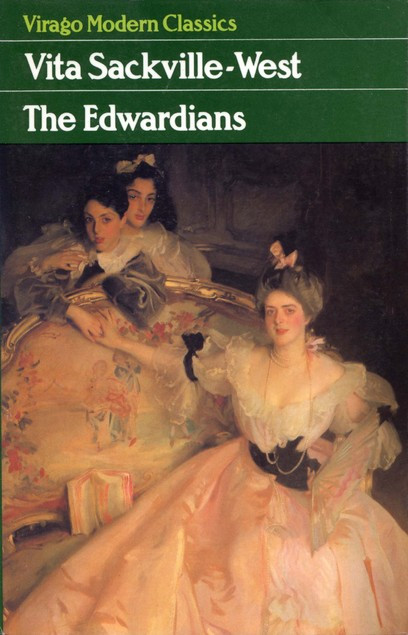
The Edwardians by Vita Sackville-West

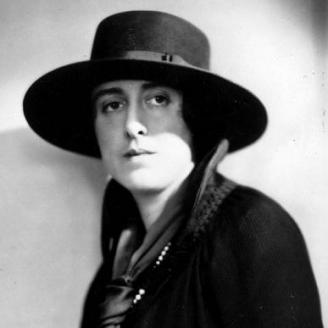
Vita pic
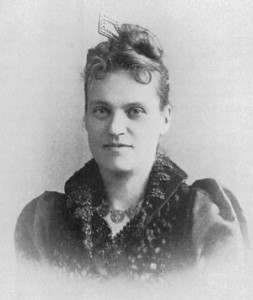
Vita Sackville-West (1892 -1962) British poet, novelist, gardener, free spirit. “I worshipped dead men for their strength, forgetting I was strong.”

Book’s narrators – who are they? where are they? why are they telling me this? why do they care? – always interests me. It can often be a character in the story; it can sometimes be the protagonist themselves; but it is usually some nameless god-like know-all. There are many ways to tell a story so why did the writer pick this particular way to tell it? This interest makes the first page of a novel so informative. Sackville-West makes it very clear in the opening of The Edwardians that it is no-one but her, the writer,  who is telling me this story. This is rare.  She begins:

Among the many problems which beset the novelist, not the least weighty is the choice of the moment at which to begin his novel.

And ends the first paragraph with:

The arbitrariness of choice has already been made sufficiently evident, and no further justification is necessary to explain why we irrupt into the life of our hero (for so, I suppose, he must be called) at the age of nineteen, and meet him upon the roof a little after midday on Sunday, July the 23rd, nineteen hundred and five.

As you can ‘hear’ by the language it is written English from another time, but not so far away. Sackville-West had The Edwardians published in 1930, less than a hundred years ago.

The story is set at Chevron, a country house of the aristocracy lorded over by the widowed Dowager Duchess of Chevron but owned by her son, Sebastian, the current Duke, but who ‘hasn’t yet attained his majority’, hence his mother’s stewardship until he comes of age. Summer weekends at Chevron are weekends as they always have been: house parties, where the landed rich, and some hangers-on who may not be wealthy but have other necessary attributes, lavishly dine, drink, play bridge, and have affairs. Sebastian, soon to be initiated into a sex life by his mother’s best friend, Lady Roehampton, and his sister Viola, overlooked but who surprises everyone, try to follow their hearts and their belief in the inevitable; but tradition is strong and exerts itself the most on dutiful sons soon to be heirs of age and pensive daughters branded for an appropriate marriage. However, an interesting ‘adventurer and sailor’, Leonard Anquetil, not of anyone’s set, but one who went to Siberia in search of mammoths and who had lived in a hut near the South Pole was deemed amusing enough to be invited to the Chevron’s house party. His intrusion ultimately leads the two children to see their own paths, and possible destinies, independent of their social standing. Just what they needed .

Dialogue has always been an efficient painter of character, and Sackville-West is a master of  it but with children and maids hovering around the Duchess as she dresses for dinner it’s a monologue that paints her character so precisely:

Now, Button, haven’t you nearly finished? Don’t drag my hair like that, woman. Give me the tail comb. Don’t you see, it wants more fullness at the side. Really, Button, I thought you were supposed to be an expert hair-dresser. You may think yourself lucky, Sebastian, that you were born a boy. This eternal hair, these eternal clothes! They wear a woman out before her time. Oh there you are  Miss Wace. This plan is all wrong. You must alter it. Do it here, as quick as you can. Sebastian will help you. And Viola. Come in, Viola; don’t look so scared, child. I can’t bear people who look scared. No, I don’t want you now, Button; you get on my nerves. I will call you when I want you. Get my dress ready. Children, help Miss Wace – yes you too Viola; it’s high time you took a little trouble to help your poor mother – and do, all three of you, try to show a little intelligence.

This book was incredibly successful in 1930 at the beginning of the depression. The reading public, when austerity was beginning to bite, craved this story of extravagance, selfishness, and a doomed social order. It is set in 1905 at the beginning of the WW1 when an earlier social order was under threat. It was Vita Sackville-West who saw in the young an understanding of the transition that both her readers and characters were going through, but the older generation could not see it; they saw nothing but what had never changed and so could not believe that it ever would. The book was so successful that she and her husband, the diarist and diplomat, Harold Nicholson, bought Sissinghurst, an estate that resembled a pile of rocks at the time, for just over twelve thousand pounds and turned it into the most famous garden estate in the land, and certainly Kent.

Sissinghurst-Overall
Sissinghurst Castle. Her later home and famous garden

Here, her description of one particular Edwardian set:

Their solidarity was terrific. They had a way of speaking of one another which reduced everybody else to a mere petitioner on the doorstep. Too well-bred to be arrogant, too uninspired to sneer, they were simply so well convinced of their unassailability that the conviction required no voicing, but betrayed itself quietly in glances, in topics, in the set of shoulders, the folding of hands, and in the serene assumption of certain standards and particular values as common to all. They moved all together, a large square block in the heart of English society, massive, majestic, and dull.

You have to re-read some of her sentences just for the joy of them; she criticises everyone but with wit, style, and a masterful use of biting words. The scenes in her story are always there for more than one reason. Like the boisterous Christmas party for the tenant’s children presided over by Sebastian, his sister Viola, and Sebastian’s guest, Teresa, Mrs Spedding, the doctor’s wife. The innocent parlour games they play with the children are full of adult manipulation and intrigue: Sebastian, against his better judgement, to ensnare, tantalise, and seduce the innocent and fragile Teresa; she in knots of fear and delight at his attention; and Viola who sees and understands everything, but cannot save her, nor stop him.

Sackville-West was a fascinating woman. A peer’s daughter married to a knight of the realm, Vita was a pillar of the Establishment but, like her husband, had affairs with her own sex; but she bore him two children, and became a best-selling author, poet and gardener. Eleven years after her death her son Nigel Nicholson had a book published about his parent’s relationship under the title of Portrait of a Marriage. In it he chronicled his mother’s tempestuous sexual relationship with the author and socialite, Violet Keppel (1894 – 1972). Vita also, famously, had an affair with Virginia Woolf who used her as inspiration for her novel Orlando,: the adventures of a man who lives for three centuries but who changes, mid-life, into a woman.

In The Edwardians, apart from the extravagant world of ‘above stairs’ – emeralds, gowns, white-tie, champagne, Canard à l’orange, port, and gossip; there is also the greyer, but equally fascinating, world of ‘below stairs’ – hatpins, aprons, bracers, beer, shepherd’s pie, sherry, and gossip. Such stories in such settings have recently become popular again: Robert Altman’s 2001 film Gosford Park, set in 1930, and the many series of ITV’s Downton Abbey (2010 – 2015), set a little earlier, but both written by Julian Fellowes and both sharing cast members. If you liked Downton Abbey you’ll find The Edwardians equally as entertaining but with a sting in its tail.

And what better climactic scene to highlight all that Sebastian loathes about his prisoned live than a coronation: that of George V, in 1910. The ending comes a little quickly but it’s unexpectedness is novelistic and provides an out for poor privileged Sebastian (and for independent Viola). A great read!
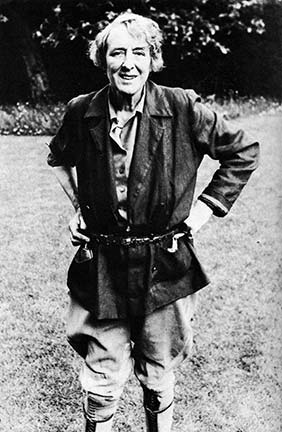
vita1955
Vita Sackville-West 1955 – straight from the garden

You can find the ebook of The Edwardians here.

Two short stories, A Tale of Mr Peter Brown and Chelsea Justice in the one volume, plus some poetry can be found for free here from Gutenberg Press.
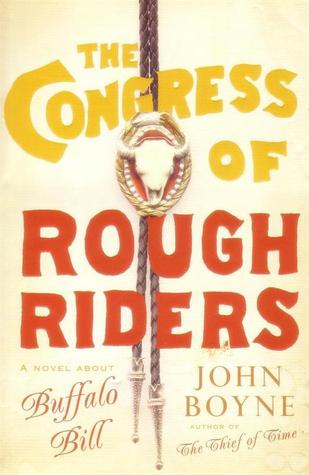
The Congress of Rough Riders by John Boyne

John Boyne pic
Irish writer, John Boyne, writer of the wildly successful, The Boy in the Striped Pyjamas (2006).

John Boyne, among many things, is an adventurous writer, and by that I don’t mean he writes adventure stories – despite the title of this one; he is adventurous in what he choses to write and how he writes. His books have included historical figures and events, stretching time, multi-narratives, contemporary issues, varying sexualities, hysterically funny scenes, teary climaxes, novels for adults as well as young readers. The Congress of Rough Riders (2001) is a double narrative; one concerns the latter life of William Cody, aka Buffalo Bill, the other concerns his great-grand son, also William Cody, but born in England and who forever is trying to separate his contemporary life from his famous ancestor’s.

However, it is his second published novel, and it feels like it. It is a sweeping saga that sweeps lightly over its subjects. I was engaged and entertained, but not deeply involved. I’ve read his last two works, The Heart’s Invisible Furies (2017), his best (so far), and A Ladder to the Sky (2018); I was deeply involved in both of them – in fact I sank so far into them, especially the former, that I didn’t want them to end. Riders, however, felt like a novel of a writer that was nurturing his talent, gaining confidence, and honing his skills, destined for greater things, which I can confidently tell you, he  has.

He also has the enviable skill of looking at a historical event or character from an unusual angle, and if the historical truth doesn’t allow such an angle, well, he alters things a bit so it can. This I feel is the way of a true novelist. His literary palette is boundless, as it should be. He is fearless.

With 17 books in 18 years he is no slouch and having just, this year, discovered him there’s a wealth of writing to uncover.

A poster for Buffalo Bill's Wild West, Congress of Rough Riders, 1899

Watch and listen to John Boyne talk at the Wimbledon Book Festival in 2013 where he is talking to mainly aspiring young novelists in the audience.

For all things John Boyne-ish check out his website.

You can buy the ebook of The Congress of Rough Riders here.

The New Novel

The New Novel
There’s a story there somewhere.

On my dining room table. Each post-it note is a chapter and/or plot point. Over the last 4 years I’ve been spewing out scenes onto my screen in some, but generally no particular order. Today was an attempt to find the narrative arc. Initially it looked a mess – well, it still is a mess, but it’s now a mess with a little more order. It also gave me some idea where the holes are. There are many.

Here’s the Prelude to give you an idea of what it’s about.

PRELUDE

If you ask a family member – of any family – if they are happy, they would invariably pause, not wanting to simply say “yes”, and try to think of a word, or words, that would accurately describe their … but they would all so quickly realise that they have no idea how to describe how they feel so they say, “Yes,” usually adding, “of course.” You know this is a lie, but politeness and fear forces you to acquiesce and you smile and say something limp in acknowledgment, like “Good.” This is an example of two lies being better than none. You can both now get on with whatever you were doing; conditioning your hair, mowing the lawn, doing your tax, without upsetting the balance of the universe, happy in the nameless knowledge that you have successfully bypassed the slippery dip to yelling, tears, and/or the breakdown of your world as you know it. This is the bedrock of why families survive; sometimes, even when they shouldn’t.

If you realise at any time that you have somehow been perplexingly born into the wrong family, or if circumstances render your family suddenly, or slowly, unacceptable to you, you need to – or may be forced to – do something about it.

This is a story of a boy who did just that.

I needed an idea of what this boy might look like and I found this photo on the web and immediately I knew it was him:

Robert Gulliver?
I don’t know whose face this is, but to me it’s now Robert Gulliver’s.

He’s a fifteen year old boy who was hit by puberty ridiculously early and hard.


He’s a very naughty boy but affectionate, intelligent, and often annoying

… and he’s still at school.

A boy in a man’s body.


Potential titles: Knitting with Fog, Gulliver’s Travels, or just Gulliver.


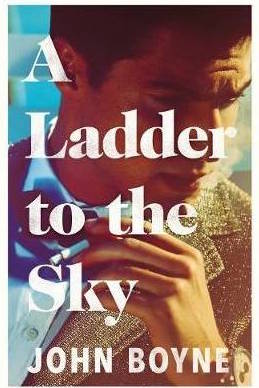
A Ladder to the Sky by John Boyne

John Boyne pic
Irish writer, John Boyne.

This is a masterful work as well as a bloody good story. Boyne uses several narrators, first person, third person, even second person to tell the blackening ambitious story of Maurice Swift, handsome, clever, manipulative, ruthless, and fiercely driven to be a writer. The only problem is his talent is limited, very limited; but this doesn’t stop him, although at great cost to those around him. At each section you wonder, ‘where is Boyne taking me now?’ It’s exhilarating to let yourself go, to totally trust the writer to never let you down; to give you insights into his literary world, and into the mechanisms of novel writing itself.

John Boyne is an Irish writer of some experience. He writes for young readers and for adults. His greatest success was his young-adult novel The Boy in the Striped Pyjamas (2006). I discovered him via his previous novel for adults, The Heart’s Invisible Furies (2017 ) another accomplished work of tragedy, love, and humour. He’s great with the comic, laugh-out-loud stuff. Check out my blog post on this remarkable book here.

Every book, by anyone, has its own universe. Most of the time the universe of the book is exactly the universe of the reader: our universe. However, this is not always the case. In ….Pyjamas, the central relationship is between the son of a Nazi Concentration Camp Commandant, and a prisoner-boy on the other side of the fence, the boy in the striped pyjamas. Some critics have accused Boyne of inaccuracies: in German death camps during WWII inmates would never come into contact with the families of the staff, as Boyne describes, even given a fence. This may be so in our universe, but in the universe as created by Boyne it is what happens. It is a universe of a different internal and external geography. Similarly the same criticism could be dished out to Boyne here, in Ladder … , but Boyne makes it easy to trust him. In the heady atmosphere of reading fiction there is an element of suspension of disbelief, exactly in the same way as it works in the theatre; as readers we need to let ourselves be beguiled. One of the signs of bad writing is when the writer does not do this. Good writing will always set you up effortlessly to allow you to boldly go where you have never been before; where you accept what may be unacceptable, or unknown, in your own universe.

And with so many narrators the reader is rewarded when the narrator becomes Maurice himself, but … beware! … you almost start to like him!

You won’t forget Maurice Swift for a very long time, but don’t get him confused with Highsmith’s Ripley; it could be easily done.

You can read a Q&A with John Boyne about this new book here.

It was released in many countries, including Australia, in August, 2018.

You can buy the ebook here.

I am keen to read whatever Boyne has written, and will write. I need to make some room on my shelves.

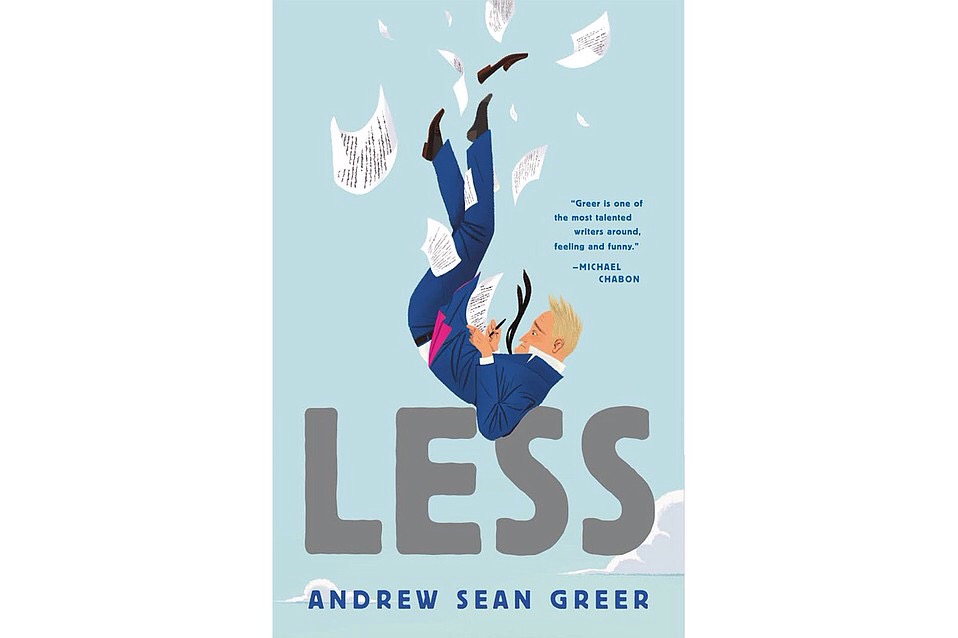
Less by Andrew Sean Greer

img_0765
American writer, Andrew Sean Greer.

There is, I think, in everyone’s circle of friends one person, although a friend, and you behave friendly to each other when you are together, but who you speak dismissively, jokingly, unkindly of, when they are not around; usually to another friend in the same position, so, maybe, there are two such people in every circle of friends. Yes, you like them but not as much as others in the circle, and the list of things you don’t like is longer than most; and it would take the slightest of slights for you to dissuade the relationship feeling justified as you stride to the moral higher ground feeling that, at last, you were being honest. That person is the type of person Greer has chosen as the un-named narrator in his Pulitzer Prize winning novel. Arthur Less is a writer, but not a great one, and everyone seems to know it. The narrator knows him from way-back, moves in his circle, but understands and satirises his many faults. Less has a nemesis, Carlos Pelu, who he describes as “one of my oldest friends” and vise-versa, but neither can stand each other. Carlos Pelu would be, I’m sure, a confidant, an intimate friend of this arch, and sometimes, a little bitchy, un-named narrator.

The narrator slips into the first person, at times, initially as a twelve year old boy who meets Arthur Less in the kitchen at a party, thinking him a confidant, and then surprised to find he is a man, a twenty-seven year old man, despite his looks. Giving flesh and opinions to a third person narrator is rare, and I wonder if us readers will actually ‘meet’ this man. However, with this little anecdote he has now become part of the story, and more than you first realise; but, no spoilers here.

Here is where the humour is; in the truthful, but cutting, and campy comments he makes about the hero, who is vane, lonely, unhappy with his lot, losing his good looks, terrified of growing old, and finally realising the limits of his talent. He is also the reality that most writers are terrified of.

To avoid the humiliation of attending his ex-lover’s wedding, Arthur Less, ex lover of a famous poet, and now published, but ignored – even by his agent – accepts several second rate invitations to second-rate literary events, last-minute-because-they-couldn’t-get-anyone-else requests, and embarks on a world circuit dreading every one more than the next. However, he’s almost 50 and used to answering questions like, “Sorry, who are you again?” and dealing with cheerless guides who say things like, “But you could visit our world-famous museum, but not today, it’s closed.”


The subway ride back to the hotel is made half as charming by being filled with twice as many people, and the heat of the afternoon has made Less self-conscious that he smells of fish and peanuts.


It seems Arthur Less is fulfilling the promise of his name. Every sentence, like the above, is soaked in second-best-ness; Less is heading for a hiding and I felt an increasing feeling of dread, despite – or because of – the comedy, and a growing respect for Greer.

I began this blog, as I usually do, with my first impressions. Unusually, those impressions changed as I realised that Greer was playing with me a little, and it all had something to do with that bitchy narrator.

Surprisingly, this novel is also a love story, a most surprising love story that sneaks up on you and hits you in the guts when you least expect it. Highly recommended.

You can buy the book is multiple formats here.


3 Minor Crime Writers of the 20th Century.

Arthur Gask pic
British born, Australian crime writer, Arthur Gask

Arthur Cecil Gask (1869 – 1951)

https://ebooks.adelaide.edu.au/g/gask/arthur/

Arthur Gask was a British dentist and agnostic. He divorced his wife in 1909 and later that year, married his children’s nanny, and emigrated to Adelaide, South Australia in 1920 with his two children from his second wife, and one from his first. There’s a story there. He practiced on North Terrace and was one of the first to use gas on his patients. While waiting for them to arrive he started writing stories and paid for his first novel, The  Secret of the Sandhills (1921) to be published. It was an instant success.

Thirty of his thirty four novels feature the detective Gilbert Larose. From his first success he, on average, published a book a year until his death; the last one, Crime Upon Crime, came out in 1952, the year after he died. His works were successful in the UK and Europe and many were serialised in newspapers, including the Adelaide Advertiser.

He was  greatly admired by Bertrand Russell and H. G. Wells, who thought The Vengeance of Larose (1939) as his “best piece of story-telling…It kept me up till half-past one.”

All the clues and information are expressed throughout the story in the time-line of when they happen; none of this denouement in a drawing-room when the hero explains everything – Agatha Christie-like – to an assembled crowd every one of which could be the murderer. There is a murder plot, drug smuggling, stolen submarine-plans, corrupt diplomats, fiendish villains, and, of course, an exemplary, multitalented, detective, a master of languages, disguises, and deduction. There are few women either mistresses or wives, and all the men are either a knights, aristocrats, or have a house in the country. The style is full of coincidences and some quite unbelievable: in order to hatch a plan with his Japanese co-accused the undercover detective says – within ear-shot of their captors, “You understand Italian? Ah, I thought you would.”

If you have a habit of waking up in the middle of the night with an overactive brain and find it hard to get back to sleep, these novels are the perfect solution.

anna-katharine-green-pic
American poet an novelist, Anna Katherine Green

Anna Katherine Green (1846 – 1935)

https://ebooks.adelaide.edu.au/g/green/anna_katharine/

Anna Katharine Green  was an American poet and novelist. She was one of the first writers of detective fiction in America and distinguished herself by writing well plotted, legally accurate stories. Born in Brooklyn, New York, her early ambition was to write romantic verse, but she was unsuccessful. She is credited with shaping detective fiction into its classic form, and developing the series detective. Her main character was detective Ebenezer Gryce of the New York Metropolitan Police Force, but in three novels he is assisted by the nosy society spinster Amelia Butterworth, the prototype for Miss Marple and other creations. She also invented the ‘girl detective’: in the character of Violet Strange, a debutante with a secret life as a sleuth.

I am not an inquisitive woman, but when, in the middle of a certain warm night in September, I heard a carriage draw up at the adjoining house and stop, I could not resist the temptation of leaving my bed and taking a peep through the curtains of my window.

So begins Green’s first Amelia Butterworth mystery, That Affair Next Door (1897), and because of the narrator’s insistence on her incuriousness you know immediately what kind of woman she is.

This work is a delight. An intriguing story and a delicious character. Another perfect read for that long holiday flight.

G.K. Chesterton pic
G. K. Chesterton, English writer.

Gilbert Keith Chesterton (1874 – 1936)

https://ebooks.adelaide.edu.au/c/chesterton/gk/

English writer, poet, philosopher, dramatist, journalist, orator, lay theologian, biographer, and literary and art critic. But the most successful association of fiction with social judgment is in Chesterton’s series on the priest-sleuth Father BrownThe Innocence of Father Brown (1911), followed by The Wisdom… (1914), The Incredulity… (1926), The Secret… (1927), and The Scandal of Father Brown (1935). In spite of his literary accomplishments, he considered himself primarily a journalist. He wrote over 4000 newspaper essays, including 30 years worth of weekly columns for the Illustrated London News, and 13 years of weekly columns for the Daily News. He also edited his own newspaper, G.K.’s Weekly. Chesterton was equally at ease with literary and social criticism, history, politics, economics, philosophy, and theology.

Father Brown is introduced to crime fiction in a short story called the The Blue Cross, which became the leading story in the first Father Brown collection:The Innocence of Father Brown (1911). The main character in this story, and the second, The Secret Garden, is a French instinctive detective, Aristide Valentin, head of the Paris Police, possibly the inspiration for Christie’s Hercule Poirot, who first appeared in 1920. The master villian, M. Hercule Flambeau, similar to Sherlock Holmes nemesis, James Moriarty, is also introduced and appears in 48 Father Brown Stories. Father Brown is a minor character in both these stories but takes the main role in the third and subsequent works because … because … well, I won’t tell you why in case you read it; no spoilers here.

The crime is usually seemingly unsolvable: a corpse with a severed head found in a walled, inaccessible garden while the dinner guests mingle and smoke cigars. The victim is a stranger. How did it get there? Who is he? How was his head severed so neatly? How did the murderer get into and out of the garden. The solution rests on a single piece of information the reader isn’t initially told but one that mild-mannered Father Brown deduces.

Fun and good, if flowery writing – typical of the period, and curious as these stories contain many elements of crime fiction that we now take for granted.

All the works of these three writers can be obtained for free from ebooks.adelaide.edu.au

This archive contains a dizzying collection of a wide variety of genres, styles, and writers, all of which are now in the public domain. I highly recommend this addition to your library.


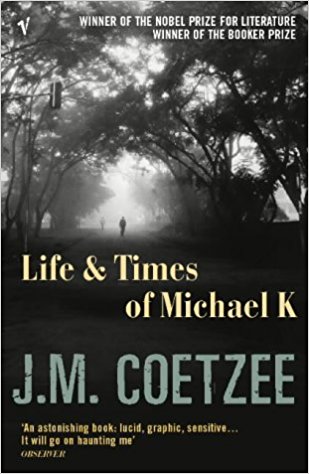
Life & Times of Michael K by J M Coetzee

Coetzee pic
South African born writer, John Maxwell Coetzee, relocated to Adelaide, South Australia in 2002 and became an Australian citizen in 2006. 

J. M. Coetzee won the Booker Prize twice: for Life & Times of Michael K in 1983, and for Disgrace in 1999. He won the Nobel Prize for Literature in 2003.

Life & Times of Michael K is a short novel in three untitled chapters: a long one, a short one, and an even shorter one. It is literary, not in the writing, which is simple, stark, and unadorned, but in its ideas.

The first long chapter begins with a very short description of Michael K’s undistinguished birth and the subsequent disappointment of his mother because her baby has a cleft lip. It is told in the third person by an unnamed and omnipotent narrator. Michael K’s early life is uneventful and he works in a mediocre job as a gardener. It is clear that the novel is set in a very violent and war-torn South Africa with curfews, gangs, and uncertainty. It seems to be always raining. His mother is desperate to leave Cape-town and return to her hometown of Prince Albert many hundreds of miles to the north. Without money, or the necessary papers – unattainable for Kafkaesque reasons – he attempts to push his mother in a homemade pram all the way north to Prince Albert. His mother dies on the way but Michael K finally manages to arrive at what he believes to be the farm, now deserted, where his mother was born. He tries to live off the land; for his own security he learns to sleep in a hole during the day and to work in his garden at night. He grows pumpkins. He is discovered and abused, escapes to the mountains where he tries to live without leaving a trace. He is hijacked to work for a road-gang, is interned in a work-camp, escapes and is taken to a hospital where he sparks the interest of a doctor.

The second chapter is told in the first person by this unnamed doctor and we see how Michael K, now identified as CM (coloured male ?) but referred to as Michaels, is seen by others. He is an enigma. He refuses to eat, talk, or co-operate. The doctor is tormented with the urge to help him but to no avail. The doctor comes to think that Michaels may have the real answer to living in this particular country at this particular time: living in order not to exist. The doctor is eventually thwarted in his kindly efforts as Michael K escapes.

The last, and shortest chapter, is a return to the third person narrator. Michael K eventually returns to the building in the city where he and his mother used to live. He is befriended by a group of nomads; one of the women has sex with him and he thinks he might even like her, but he continues to reflect on his time in the wilderness; all he would need in the wilderness was his garden, a shaft in the ground, and a teaspoon and string with which he could gather water. Then, “he would say, one can live.”

A happy and fulfilled life need only be concerned with what it is you need to survive, and nothing else. Life isn’t so bad if all you are doing is marking time.

This book is bleak, fascinating, frustrating, but ultimately rewarding – if you stay with it   – but a very different book to the mainstream literary works of today.

Coetzee,” says the writer Rian Malan, “is a man of almost monkish self-discipline and dedication. He does not drink, smoke or eat meat. He cycles vast distances to keep fit and spends at least an hour at his writing-desk each morning, seven days a week. A colleague who has worked with him for more than a decade claims to have seen him laugh just once. An acquaintance has attended several dinner parties where Coetzee has uttered not a single word.”

J.M. Coetzee’s latest novel, The Schooldays of Jesus and Late Essays: 2006-2016 are now available from Viking.

A new short story …

A work in progress …

I was curious about writing in the second person. The first person (“I went to ….”) and the third person (“She went to …”) are common, but the second person (“You went to …”) is not. It is hard to maintain since the narrator is either talking to the reader or to another character, and in either case eventually the narrative takes over. Elliot Perelman begins his excellent novel Seven Types of Ambiguity with the second person and it has a disquieting effect. I thought I’d give it a go.

I’m sure there must be somewhere in your past, a person, a place, that screwed out a little knot of fear in your little child’s mind. You know what I mean; where a young child’s untamed immigration is let loose by an overheard adult conversation in hushed tones with shaking heads. Remember that fear and let it mingle with another memory I’m sure you have; of an adult that was introduced, innocently enough, into your family but that you wondered what the hell they were doing there.

I added the word anyway, “Anyway, remember that fear …” to make the tone more friendly, more intimate, more conversational.

However, if there is anything I’ve learnt from reading it’s that writers want their readers to believe that what is being written is true. Such truth, created truth: verisimilitude, is achieved with the use of detail, among other things; so let’s do this again:

I’m sure there must be somewhere in your past, a person, a place, that screwed out a little knot of fear in your little child’s mind: the old man with the cleft-lip who lived in an old bus, spoke to no one, and ate nettles on toast – so the story went; the falling-down shop-front, boarded-up and silent since a little girl had her throat cut by a mentally deranged greengrocer all those years ago. It was in all the papers. You know what I mean; where a young child’s untamed immigration is let loose by an overheard adult conversation in hushed tones with shaking heads. Anyway, remember that fear and let it mingle with another memory I’m sure you have; of an adult that was introduced, innocently enough, into your family but that you wondered: who is this person? What are they doing there.

I wasn’t sure where this was going but I kept on

So, now that you have these two mingled memories you may understand how I felt when …

I needed to tie it all up and have it lead to something, someone; so I found myself writing …

 … Mum brought home a bag-lady one day and told me I had to call her Auntie Marge.

Now I have a possible title: Auntie Marge. One of my father’s sisters was called Marge, and I called her Auntie Marge. She wasn’t scary but it was the first name that sprang to mind. I hardly ever spoke to her. Maybe I was scared of her. But now I have a character that I need to flesh out a bit.

I don’t know why I thought of her as a bag-lady, she didn’t have any bags with her …

This is another ‘trick’ I’ve learnt from reading: the admission by the narrator that they don’t know something or don’t remember something. It adds verisimilitude.

… but it was the first time I had ever seen a woman with uncombed hair so I thought that’s what she was. I got a slap around the legs for using the term so I only said it once but that’s how I always thought of Auntie Marge; a bag lady.

I first of all had Kathy Bates (from Misery) in mind.

Kathy Bates Auntie Marge


I googled “scary aunt” and found this,

Scary Aunt Marge.


I think this is Geraldine Page. The hair is too neat, but the look is perfect. So with a mixture of these two images, but with messier hair, I had my look: Auntie Marge.

When she first looked at me she smiled down, unclasped her fingers and held out her hand and when I hesitated just for the briefest moment her face changed ever-so slightly like she suddenly knew exactly what I was thinking and I saw hatred in her pinched little eyes. I took her hand – I held my breath, I distinctly remember holding my breath – and she shook my hand and gave it a squeeze.

I thought my narrator should say something innocuous here, like “Nice to meet you” to which Auntie Marge could say, or say with a look of “Oh really?” However, my narrator is locked into only speaking when spoken to – and they were not alone, so I was left with a description of, of, her hand:

It was dry and scaly.

Now, I wanted to describe an event and an event when they were alone: something that upped the scary tone a bit. I’ve never written anything like this before.

I kept out of her way, which wasn’t difficult as I had been taught to keep out of everyone’s way. Adults didn’t like children hanging around; but one day when I was sitting at the big dining table, I had just installed a little electric engine into my lego windmill and I was trying to fix a jam-jar rubber around a little pulley so the silly thing would at least go round and round. I heard the door into the kitchen close behind me. This door was never closed, except in winter when there was a fire in the living room fire-place. This was summer and all the living-room curtains were drawn to keep out the heat so the room was gloomy but I had my desk-lamp plugged in and I was working in its light. I heard the door close and then nothing. I knew it was her. I knew she was there looking at me with her hands clasped together like she always did. I also became aware that there was no other sound in the house. My Dad was always out doing farm stuff but there were no other noises. Mum was out too. We were alone, Auntie Marge and me. In the house. Just us. And then she spoke:

“You don’t like me very much.”

That’s what she said, nothing else.

I didn’t know what to say. I had been taught to only speak when spoken to, and to never lie, of course, but this wasn’t a question. What was I meant to say? I didn’t know. Besides, I didn’t know what to say to something that was true, I didn’t like her. So I said nothing. Then she said, still just standing there, she said, “Are you sure you’re allowed to have a light on in the middle of the day?” Now, this was a question and a question deserves an answer, I knew that, and I did know Mum didn’t like lights on in the daytime but my lego town was too big for my desk in my room and it was too hot to play outside so I had to play with my lego town on the dining table in the living room and yes the curtains were drawn to keep the house cool so I had to have a light on. Again I didn’t know what to … and then she added quickly, “I could tell on you.” That’s what she said, just like fatty Raelene does when I pick my nose in class. I thought of turning off my desk lamp but then I’d be in the dark, all alone with Auntie Marge in the dark! And then she said it again  “I could tell on you,” adding “and I think I might.”

I’m not sure what happens next. Yet.

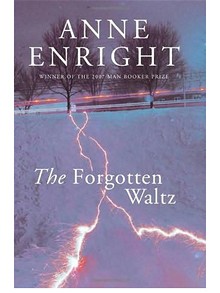
The Forgotten Waltz by Anne Enright

AnneEnrightAuthor pic 2
Irish Writer, Anne Enright. The Forgotten Waltz was the first book after her Booker prize: it doesn’t disappoint, although she goes on a  bit; but, I suppose you can do whatever you like after a Booker win.

Like The Gathering (2007), Enright establishes her story, this story, as having happened in the past but tells it in the present; or at least that seems to be the case as I finish page 1. I have a thing about page 1.

It is some years ago now. The house is new and this is my sister’s housewarming party …

Many readers I know have an aversion to narratives in the present tense but it gives the impression that the writer is telling you right now about a past event, but by telling it as if it is happening now gives the narrative the immediacy of gossip – and we all like gossip. It gives the reader a sense of it not having been written for you but of it being told to you, and only you, at this moment; even if the prose slips into the past at times.

They have mini-marshmallows on top. She goes to pop one in her mouth, then pulls back in surprise. 

‘Ooh, pink!’ she says.

I don’t know what I was waiting for. 

Not “I didn’t know what I was waiting for” (both verbs in the past) nor “I don’t know what I am waiting for” (both verbs in the present) but the first (do) in the present and the second (was) in the past.

It feels like there are two narratives going on here: the story itself (in the past) and the telling of it (in the present). But this is what I think we all do when we tell someone now about something that happened then, and by using this double-tense Enright is being conversational, conspiratorial, and so making us feel comfortable and special: a real friend. Readers love this.

I don’t think Enright is conscious of this nor does she sit down meticulously studying the verbs and deciding which tense they should be to get the effect she is after. My mentioning it is, however, a serious attempt to describe how a writer gets this conspiratorial, gossipy, tone into their writing. In order to get this particular tone the writer needn’t manipulate it- in fact, shouldn’t manipulate it –  but needs to be thinking in this particular tone so the tone in the head becomes the tone on the page.

Or you may think I’m being a wanker and why don’t I get on with it and just read the bloody thing? OK, I will.

On page one, line one, we are given the nut of it.

I met him in my sister’s garden in Enniskerry.

This is the first person account of a woman, Gina Moynihan, and her sexual obsession for a man, Sean Vallely, who like her, is married to someone else.

Enright writes Gina’s monologue as if she’s explaining, justifying at a crackling pace, to a … a … psychologist. She’s keen, this Gina, to tell us everything, but also to leave us guessing:

We managed to linger after everyone had gone, and the details of what corner we found and what we did; how we managed it, and who put what where, are nobody’s business but our own. 

and, of course, by NOT telling us the details our minds race frantically with all sorts of images of ‘doing it’ and ‘putting what where’ and in ‘whose corner’ and ‘managing it where?’ that we’re all in a lather anyway.

Her prose has a momentum that belies the action. There is action everywhere whereby reading it makes you feel exhausted; there’s a breathless tone to the reading, like a theatrical monologue some aspiring, or reviving, actor does of The Gospel According to Matthew. The Gospel According to Gina; where a simple static description is busy with verbs:

Lines of black posts marched down to the shoreline, small and smaller, overtaken, each in their turn by the shifting sand.” 

There’s ‘marching’ and ‘overtaking’ and ‘shifting’; so much happening, so many doing words, but it’s just the view of a bloody empty beach! The empty beach seems as busy as the sex in the corner.

Gina is self-possessed, or maybe just blind, but she has no thought that just as she has a keen sense of perspicacity other people might have a similar talent. She can see through everyone but she is certain no one can see through her. She thinks her secret is safe. This is the tension.

She’s not very likeable – in fact, I’d be very wary of having her at my lunch table, but you’re flattered that she’s confiding in you so much of what she’s thinking and feeling; it’s all so intimate, that you would have to admit your friendship with her even if only to bolster your own standing. Like admitting to a friendship with a Weinstein simply because he’s famous and he talked to you once.

There was a time when “Prefaces” or “Introductions” were mis-understood and not seen as part of the story – we couldn’t wait to get to Chapter 1, for the story to begin – which I think now has, thank god, changed, but Enright starts the book with a “Preface” that you MUST read as it pre-empts the story: Sean’s little troubled girl, Evie, sees Gina and he kissing and it is seen as the “first official occasion” of their love. Enright has used this devise – a child witnessing something very ‘adult’ – before, in The Gathering, and admits in an interview that after writing this preface scene says to herself,* “Oh God! I’ve done it again.”  But the pivotal scene is the pivotal scene and once it’s there, it must remain.

It’s not giving anything away to say that the book is about an affair; it’s not the affair, nor even its aftermath that interests Enright, what interests her is how Gina sees it, manipulates it, how a woman sees herself, loses herself, against a background of an Ireland where such a thing, not so long ago, would’ve been the end of her; the end of everything for her. It’s hard to think of the Ireland then, and the Ireland now with it’s same-sex marriage legislation, its abortion referendum (May 25, 2018), and it’s out, gay, Prime Minister of Indian parentage.

The affair is exciting, propelling, and with a momentum all of its own, because it isn’t, has nothing to do with, the domestic. The two adulterers – such a loaded term – know little about each other, hardly speak:

“All this. Have you done it before?”

“Well, you know,” he said.

Their affair progresses on “in its Friday pace,” and it’s this that Gina loves. It’s just about fucking every Friday. The ‘falling in love’ bit could ruin it all! But they do; or, at least. she does. The ‘wife’, Sean’s wife, Aileen, isn’t Gina’s nemesis, as one would expect, that role falls to Evie, Sean’s little ‘mistake’ of daughter. She’s enigmatic, chubby, but plain, and not at all healthy, but it’s the daughter that, if any atonement is to be got for Gina and her wild imagination – and all of it could just be that – then it will come via Evie; it’s Evie she also needs to woo.

This is the third Enright I’ve read in a row: an Enright-fest. She has rocketed to the top, well, near the top, of my favourite-writer list: Colm Tóibín still holds my #1 place although Enright, John Boyne, Patrick Gale, and Sebastian Barry are barking at his heels. She says she doesn’t know what she will write next; she’ll find out, I’m sure, and do it. Soon, I hope.

You can purchase the book, in various formats, here.

* The presenter and interviewer are a little boring, fast forward through them to get to the good bits: Enright, herself.


The Gathering by Anne Enright


Anne Enright pic
“None of the Irish writers I know are afraid of the pleasure of the sentence.”

If you read the blurb on the back cover you’d get the idea that this is a book about a family gathering for a funeral;  and, like me, you’d think you know what it’s about – it seems such a cliched reason for a book – but the actual ‘gathering’ doesn’t happen until Chap 30 (out of 39) and a lot of fabulous stuff happens before chap 30. This book has been unread on my shelf for four years because I thought I knew what it would be like. I was wrong.

Enright has employed this same idea recently in The Green Road, although in that book the event is a house-sale;  but still a family gathers. Anne Enright is big on families.

And this is Anne Enright on big Irish families:

There is always a drunk. There is always someone who has been interfered with, as a child. There is always a colossal success, with several houses in various countries to which no one is over invited. There is a mysterious sister. These are just trends of course, and, like trends, they shift . Because our families contain everything and, late at night, everything makes sense. We pity our mothers, what they had to put up with in bed or in the kitchen, and we hate them or we worship them, but we always cry for them – at least I do. The imponderable pain of my mother, against which I have hardened my heart. Just one glass over the odds and I will thump the table, like the rest of them, and howl for her too.

Both these books, The Green Road and The Gathering are similar in structure. She places an event at the nut of her tale and weaves around it threads of people, their plights and joys, pasts and presents until you have something like a doily of a story. A weave of narratives around a perfect whole. In one masterful chapter two of her characters, Ada Merriman, the narrator’s grandmother, and the man, Lambert Nugent, who has always loved her, and who she should’ve loved, but didn’t, touch. She a hand on his shoulder, he a hand on her hip; and the narrator, a writer, the granddaughter, Veronica, who admits to writing all this down, describes what might have happened had both their hands moved a little further, a little more truthfully until they were on the floor with him inside her. The reader certainly wants this to happen and Enright, having us in mind, gives it to us. It’s satisfying. It didn’t happen in the story, only on the page, but satisfying nonetheless.

Hovering above for most of the book, like a drone, is the little mystery Enright, (Veronica?) tells us in the very first line: something happened in Ada’s house when Veronica was eight and her brother, Liam, the corpse at the centre of this doily, was nine. Something happened that little Veronica shockingly saw.

The Hegertys are a big clan: the nine surviving children, there were more births than survivors, gather for the funeral of one of their own and Veronica needs to bare witness to an uncertain event. She remembers it but as something so improbable – she was very young -way outside her, then, experience that now, as an adult, it’s entirely possible, she thinks, that it might not have happened at all.

the Gathering Booker pic
Pleased as punch; and rightly so.
The Hegertys were “dragged-up”. They were entirely “free range”. But this is all pre-80s, pre-parenting, pre-how-to books, pre-child murders, pre-4-wheel-drives to school; pre-dry cleaning plastic as death-bags: pre-fear, when us baby-boomers were all “free-range”, and all “dragged up.” If you are over 50 you probably know what this is like. 
Anne Enright writes sentences chock-full of meaning, or insight, or revelation; and even her linking sentences between chock-full sentences are chock-full. But then she throws in a little doosey: It is like Christmas in Hades, and I laugh and think she is going to suck the universe dry of all the good lines leaving us in her wake scrabbling for left-overs.
She uses dialogue to re-assure us that these people are complicated, but real:
‘Thanks,’ he says.
‘What?’
‘Thanks for staying with me.’
‘Oh, for God’s sake.’
‘No. Really.’
‘I’ll be back in a minute.’
and prose for more meaningful and ‘under-the-surface’ revelations:
I thought about this, as I sat in the Shelbourne bar – that I was living my life in inverted commas. I could pick up my keys and go ‘home’ where I could ‘have sex’ with my ‘husband’ just like lots of other people did. This is what I had been doing for years. And I didn’t seem to mind the inverted commas, or even notice that I was living in them, until my brother died.
The doily book, The Green Road, was written in 2014, and it’s a book Enright calls “more of a proper book” insinuating that the other doily book, this one, The Gathering, written in 2006, is not. I know what she means. The Green Road is tighter, neater, more confident, and adventurous, the pattern more stable; this one is loose, equally compelling and recognisable, but free-range and at the same time narrow in its world; but for lovers of contemporary literary fiction, so rewarding.
So, yes, a lot happens to Veronica, the narrator, before the point of it all; and near the end the mystery is revealed; then the gathering itself; but Enright keeps a little ‘gasp’ to send you off into the last little chapters when, by the end, you realise it was all, not about a family, but about a woman, coming to turns with hers:
God, I hate my family, these people I never chose to love but love all the some.   
I’ve never read another author’s work back to back before. I have another Anne Enright book on my shelf: The Forgotten Waltz (2011); that might be next. It’s turning into a little Anne Enright Reading Frenzy. Read her yourself and see why.
You can find The Gathering in various formats, including audible and audio CD, here.