Us by David Nicholls

David Nicholls pic
British novelist and screenwriter, David Nicholls.

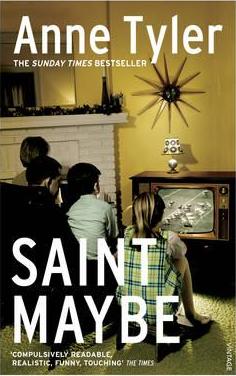
I love this book. It’s rare to find a laugh-out-loud read these days, but this is one of them. It’s a first person narrative of Douglas Petersen, a bio-chemist, and a man who always just seems to miss out on being, cool, mainly because he just doesn’t know what cool is; he doesn’t get most things. That’s certainly what his son, Albie, would say although he probably wouldn’t be so kind. The third component of Us (2014) is Douglas’s wife Connie. She’s an artist and an ex-hippie and is definitely cool. She wakes him up one morning and tells him that she might want to leave him. They embark on a (possible) remedy: a Grand Tour of Europe, and drag a reluctant Albie along with them. This is the Us. This trio. However there is another narrative interspersed with the Grand Tour: how Douglas and Connie got together in the first place; and many more incidents of their life together. You get to know these three very well. It’s really a portrait of a marriage.

It’s divided into many small chapters, 180 in all, which in itself, propels the reading along; ‘I’ll just read the next chapter before I walk the dog’; ‘I’ll read this short one before I start dinner’; ‘Just one more, it’s short, before my afternoon jog.’ And why do you want to do this? Because you love Douglas. He’s a gem and he talks to you as if you’ve known him since kindergarten. Us became my very early morning read when a trip to the loo erased all efforts to go back to sleep. But, so I didn’t wake the sleeping one, I tried to curtail my laugh-out-loud to something like, laugh-in-loud, but stifling a laugh-out-loud made my body behave like a trampoline-in-use and the mattress was forced, of course, to follow suit, so allowing the sleeping one to sleep didn’t work. I was banned from reading Us in bed. But that’s OK; you can get through a short chapter while waiting for the jug to boil, during a TV channel promo, even while stirring the custard.

The key to the humour is Douglas himself. He doesn’t quite know what to say when staring at a painting (I like that blue bit.); he feels inadequate to say what he likes about a piece of music (It’s loud, isn’t it?); and contemporary dance (Do they have to throw themselves against a wall?); and books (Erotic realism? Isn’t that a contradiction in terms?); and food (flaccid courgettes in a green-grey water sauce made from water.).

David Nicholls also has several screenwriting credits including Tess of the D’Urbervilles‘ for the BBC in 2008,  Far from the Madding Crowd in 2015, and he wrote Patrick Melrose (2018), the television series based on the novels by Edward St Aubyn. He has penned several movies including the adaptations of his novels, Starter for Ten, and One Day. He also trained as an actor at the Royal Central School of Speech and Drama but never quite made it in that field because, as he admitted, he wasn’t very good at the basic stuff, like standing still and moving from A to B. However he must have picked up some performance skills since his appearance at the recent North Cornwall Writer’s Festival had the audience in stitches as he read from his latest book, Sweet Sorrow, a passage devoted to the pitfalls of first-time kissing.

Us is currently being filmed in various location in Europe for the BBC. It stars Tom Hollander and Saskia Reeves with a script by Nicholls. However, a release date has yet to bee announced.

He’s a busy man and novel writing has to be squeezed in between big budget movies and television drams; he’s written five novels, so, for me, four to go.

You can watch an interview with David Nicholls about this book, Us, here.

You can buy the ebook, or other formats, here where you can also ‘look inside’ before you buy.

Rough Music by Patrick Gale

Patrick Gale Pic
British writer Patrick Gale lives in Cornwall and plays the cello, modern and baroque.

I first read this book decades ago and then in 2016 I discovered Patrick Gale again with Notes from an Exhibition (2007) and have remained a fan.

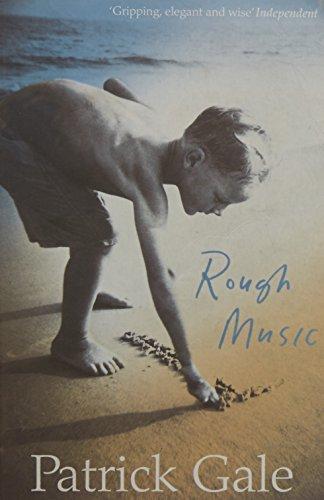
Rough Music (2000), like several of Gale’s novels, has a double narrative, same characters, same location, different times.

Julian a small boy, son of simple parents John and Frances, is taken on an idyllic beachside holiday in Cornwall with those parents, John and Francis. The widower, Bill, a writer, and child, Skip, of John’s sister arrive from America and cause passions and the status quo to collide.

Decades later, Julian is a grown man, a successful bookshop owner, and he returns to Cornwall for a holiday with his now ageing parents; his mother with early onset dementia, to the same beach and even, possibly, to the same house. The catalyst of drama and entertainment is that he has been having an affaire with his brother-in-law, Sandy, which began on the evening of Sandy’s buck’s party and has continued through Sandy’s years of happy marriage and the birth of his two sons to Julian’s sister, Poppy, and right up to the action of the story. No one, not Poppy or his parents, know about this. While on this holiday he meets Roly, an artist and drop-out, and he can see a possible exit from this family deception if only he can orchestrate it in time.

Some of the names of these characters change between narratives so don’t be put off by this. All will be revealed.

Each story is told in alternating chapters rendering the climax of both in close proximity to each other. A double whammy for the reader.

Gale is at his best with family relationships and spends time painting them in all their complex layers of expectation, disappointment, and flowering moments of joy. He is a wise writer, or perhaps just acutely observant.

Family life:

The only real difference was children. He had never appreciated until now how much emotional clamour, interference almost, the presence of children set up, saving a relationship from listening to itself.

How children can get in the way:

‘Ma.’ ‘What?’ ‘Leave the door open this time.’ The open door was sobering, like having a dressing-gowned child bearing mutely indignant witness from the room’s corner.

Ageing:

It was as though the only acceptable way to face old age was in a spirit of glassy contemplation and composure, to become a fund of quaint old stories (so long as one did not repeat them too often), a calm old lap on which babies might be placed and an undemanding extra presence at a dining table.

Self awareness:

Perhaps John had been right and her surliness was simply muffled sorrow.

…flirting was a kind of knife sharpening for marriage.

And humour:

Tell me what you’re thinking. Trust me. I’m a novelist.

Sometimes while reading one can feel a ‘little jump’: when you read something that can chip ever so slightly at your suspension of disbelief but for the sake of the story, and your own enjoyment, you accept it, go with it. I think we readers do this a lot. It’s only after you put the book down, days or weeks later or when you’re telling someone about the book, that you may realise that, yes, that something doesn’t quite gel, some plot point or character trait doesn’t quite fit with what has been set up for us to accept. Don’t let this colour your view of the work or the writer adversely. It is caused, I believe, by us readers assuming that the universe of the book is exactly the universe of the reader; but this may not be the case. Of course, some books are written in a universe completely alien to the reader, Harry Potter, Lord of the Rings for example, but most books we assume are written in our own universe. As readers we will give ourselves far more enjoyment and commitment if we let the story be what it is and not what we might want it to be, even down to the small details of the narrative and characters.

If you know and like Gale’s work you have probably read this, if not then this, along with A Perfectly Good Man (2012), two of his best, are a good way to begin your Gale adventure.

I continue my quest to read and write about all of Gale’s work and having surmised that it is only during the winter that he writes, in the spring and summer he is far too busy (festivals, garden, cello, cooking …) these seasons give me time to catch up. He is so prolific: two books every three years on average. His last Take Nothing With You came out in 2018; I’m expecting a new one next year. No pressure Patrick!

You can buy the book in various formats here.


Drive Your Plow over the Bones of the Dead by Olga Tokarczuk

Translated from the Polish by Antonia Lloyd Jones, co-funded by the Creative Europe Programme of the European Union

Olga_Tokarczuk_pic
Polish writer and activist Olga Tokarczuk (t’ KAR chook) won the Nobel Prize for Literature 2018 and the 2018 Booker International Prize for her novel Flights

Drive Your Plow over the Bones of the Dead (2009) was finally published in English in 2019.

It is about an old woman, Janina Duszejko – she doesn’t like her first name and prefers to be addressed as Mrs. Duszejko – who lives alone on a high wind-swept plateau in the south-west of Poland, close to the border with the Czech Republic.

In her youth she was an engineer, built bridges in Syria, had an affaire with a Protestant, but shared her bed with a Catholic, and now teachers English one day a week to 12 year olds. She believes in astrology; that Animals have reasoning and seek Vengeance ; and writes essays to magazines about the fascinating connection between Astrology and TV programming. But she has Ailments, a vivid imagination and raw emotions just below the surface where the pain of her Ailments live – simple nouns like Ailments and Folly are capitalised, like in the works of William Blake, from where the title comes. She has Theories, including why people find other people attractive, but some not, about almost everything; why magpies need lots of bathes, why foxes run in straight lines, and why Evolution is not about adaptation but about Beauty. And buys clothes too big for her, she likes the freedom. A vivid Dreamer of her dead family – her Mother and Grandmother appear to her in her boiler room dressed and ready for church – and a believer in a planet crossing an invisible point that causes two red fruits to fall from a wild rose bush. She cries easily.

She tends to the houses abandoned by their owners in the winter and wants to write her autobiography. She calls people, not by their given names but by what they suggest: Oddball, Dizzy, Dig Foot, Good News, and Black Coat. She finds words like ‘priority’, ‘cadaver’, and ‘cohabitee’ ugly and hideous.

The story opens with a death, a strange death, and is followed by three others; all victims are hunters and Mrs. Duszejko is certain the deaths are deliberately caused by Animals, deer, foxes, and boars, in retribution for the regular slaughter of their relatives by these criminals. And she sets out to prove it.

Her neighbours call her that crazy old woman.

The story is told in the first person, from the mouth of this crazy old woman. This allows for Tokarczuk’s theme, society’s disdain for the marginalised, their fear of the other but never is this message didactic; it is told with humour, irony, and a lightness of touch. The writing is adventurous, unexpected, insightful, (“Are you religious?” “Yes.” “What?” “An atheist.”), and a joy to read, and, in the end, it is about how there is really nothing called evil, it doesn’t exist; there is just need, sometimes misguided, overwrought, and out of all proportion, but need nonetheless.

The Stars and the Planets are Right about everything, except us humans sometimes get in the way and always for selfish reasons. As Mrs. Duszejko says, “The fact that we don’t know what’s going to happen in the future is a terrible mistake in the programming of the world. It should be fixed at the first opportunity.”

Here is a telephone interview with Olga Tokarczuk about her Nobel Prize win. She took the call while driving in a car in Germany.

You can listen to Tocarczuk talk about writing and Poland (with English Sub-titles) here.

You can buy the Kindle, and other editions here. Also on this Australian Amazon site you can ‘look inside’ and sample some of the text before you buy.

That Other Eveline

  • a short story

That Other Eveline pic

I went into that place to pass some time but I really know that I went into that place to see if a man will look at me in that kind of way. You know the way I mean. I know I’m pretty and people keep saying it so I know but when I look in the mirror I see someone completely different. That doesn’t bother me because I’ve heard my own voice out of a recording machine and I didn’t sound like me either but people say that’s you Eveline so I know it’s me at the same time that I don’t know, but I do, that it’s my voice, my reflection. That’s how I’ve learnt to distrust what I see and hear. It isn’t rocket science. Anyway in I go and I’m aware that my hips are doing this kind of sway-y sexy thing that I don’t remember telling them to do but they are doing it alright and so I add a smile and a shoulder thing to boot. Then as I’m easing my arse onto a bar-stool like I’m turning over a plump apple cheek in a pan of frothy butter I think where did I learn to do this, but I’m not doing it for somebody! No. It’s just me walking and sitting. Yeah, right. I’m doing it for everybody, you stupid dipstick. Yet I’m just sitting here minding my own business but I’m aware that there are a lot of eyes on me, heads full of eyes, but I’m not doing anything, I’m not saying anything, I’m not given anyone the look. I say this to myself and at the same time I know it’s the truth; I also know it’s a lie but nobody knows that because nobody’s a mindreader; but then again it’s that other Eveline I have to mind. That voice of hers so soft and butter-wouldn’t-melt that I usually slip and thoughts and words like all-sorts fall out. 

I usually order a G&T because that’s what I like to drink but tonight I order a margarita. I like them too but they’re too expensive for me but at the same time as I’m saying to myself let’s have a margarita that other voice is also saying to myself you just hope some nice man will pay for it come the adding up time. 

And speaking of nice, it isn’t long before I can feel a dislocation in the air all around and I’m aware there’s a man sitting next to me. I don’t look up in case they see something that isn’t there but I can feel him folding his arms on the bar and resting his head with his eyes to the side looking at me like a boy does when he wants something he’s not allowed, something from his mum. He says something and so I have to look and I have to smile, it’s what I’ve been taught, and I know then, as clear as I know I’m sitting on it; I know what’s going to happen this night. He has a nice face, what I can see of it. He looks like a nice man. 

Now there’s a phrase, a nice man. I truly believe that they exist but something happens to nice men when they think that your look says something you don’t want it to say, when you know damn well they’re right but there’s that no-mindreader evidence again and so I sit there and sip my drink with my arms held in tight so my tits bulge like water wings. I’m just sitting having a drink. 

He asks me about my work and I tell him I’m a lab assistant in a research station, which is true. He says I don’t look like a lab assistant and I say of course I don’t, I’m not wearing my lab coat. Nice doesn’t necessarily mean smart.

You can tell by the look in their eyes, they’re looking at your face as if that’s the cause of it all, but it’s not really it’s what’s under my clothes and between my legs that they’re thinking about. What are they thinking about exactly? Are they picturing it in their mind’s eye? Funny isn’t it: it’s not what they see but what they can’t see that sends the blood racing into the dead-end making them touch their crotch or are they egging it on? So it’s all up to what they think is there. Then I suppose one vagina is very much like another, yeah, but it’s always the baubles and the arrangement of the icing on top that marks the difference between a cake and a tart. 

Like him his room is nice. Comfortable. Warm light, lots of books with a neatly made bed through an innocent-looking doorway. He offers me a drink. I agree to a G&T this time. Perhaps it will settle that feeling in the pit of my stomach, like a flapping fish gasping for air, like a hunger, like an ache. Of course, he puts on some soft music. I want to laugh, he’s seen too many set-up videos and I think how did I get here like a helicopter dropping rations to starving refugees. I was somewhere else and now I’m here. The other one tells me to relax, enjoy it. It’s nice. Nice.

We don’t make it to the neatly made bed. I wonder sometimes which voice is really me. It’s confusing. I sometimes hear myself saying stuff that I’d swear was coming from someone else. I didn’t say anything when he said he was only thinking of me. He refused a condom and so turned me over. What could I say to a nice man’s consideration? At least the pain stopped that fish flapping in my guts.

I don’t know how I got to the hospital and thought of the helicopter again but that’s when I met Rhonda. She told me she was a police officer. I said she didn’t look like a police officer. She said she was off duty and held my hand and tried to get me to remember what happened. I didn’t want to tell her because well because I wasn’t sure which voice to use or more accurately which voice would come out. She asked a lot of questions but I wasn’t very helpful. I didn’t know his name the other one said I couldn’t remember I never asked. I didn’t know where he took me although I did remember the time, two minutes to two. She asked if I meant 1:58 and I said yes, but her question made the other one laugh and I lost Rhonda for a moment. She didn’t ask any more questions. While they were stitching me up I remembered that it wasn’t the time it was the room number 222. Did I remember it because it was the time as well? I don’t know. Eveline thought it didn’t matter but I thought it might be helpful.

When Rhonda showed me into the interview room there was another woman there. She was called Valerie and was very adamant that I didn’t call her Val. I admire that. I decided to tell my mum never to call me Veeny it was Eveline or nothing. The other one snorted with disbelief but more like contempt. She was right of course.

Rhonda and Valerie talked a lot as if I wasn’t there which I found comforting and annoying at the same time. It was then that the other one got the better of me or really, I let my guard down a bit. I said that I really wanted some company that night and that…

Rhonda cut me off, almost shouted. She said Eveline! Eveline! and I thought for a moment that she knew which one of me was speaking. Eveline! Stop! I could see that Valerie agreed with her. Rhonda leaned forward and took my hand as if she was going to tell me something that would change my life. It did.

She said in a voice like a new mum that I wasn’t to think like that. I wasn’t to talk like that. I said quietly as if I really had spilt the milk that I thought I was supposed to tell the truth. Rhonda leaned back and she and Valerie shared a look that said shouted is she ready to be told? We have no choice came back the look. Rhonda shifted in her chair and a loud noise filled the room like drilling teeth.

She said look Eveline and I knew this was going to be good. She said that women had to be very careful about which truth in which context. Valerie shook her head the tiniest bit and interrupted as if she felt a translation was needed and told me that what was true was only true to those who believed it to be true. I asked if what she said meant that there was more than one truth. Yes, she said. Many said Rhonda. I could understand this since really there were two fish flopping in my guts but since I never really trust what I hear or see I knew I had to adopt just one truth. I had come to my senses and push the other one back a bit and so I told them that I was just sitting at the bar minding my own business and I met a man who seemed nice and I went to his room because he seemed good. It seemed like a date. But then he had anally raped me when I insisted he wear a condom and he refused. Wasn’t that considerate? interrupted the other one. Don’t say that said Valerie and I knew I had to be stronger.

The fish flopped but only a little bit. I had never been in a courtroom before. It was nothing like on TV. It looked like a church meeting room. The man was there looking like a little boy and the other one felt sorry for him but I was stronger today and I pushed her pushed her right down and refused to listen. The man didn’t speak but a tall thin woman spoke for him. She described my clothes and made them seem like nothing, holding in nothing and they were exactly the clothes that I wore but she described them as the clothes the other Eveline was wearing. Everything she said was true but it was the other Eveline’s truth. I knew that. Rhonda knew that. Valerie knew that and the tall thin woman must have known that too but she was stronger. She made me realise I too had to be stronger. I had to choose the one truth that was the only truth that would help me.

When I spoke, I did exactly what Valerie and Rhonda had told me to say. How to say it. What to think about when I said it. How to look when I said it. I chose. I told the truth.

The tall thin woman and the man talked together for a long time and the judge got a bit angry. The man then spoke and I knew that he had not seen me. He had not talked to me. He had not raped me. He had raped Eveline but not me; and I knew that he was really a nice man but he had seen the wrong one and I felt a little sorry for him but I know now that this is wrong of me to think this.

There are still two flopping fish in my stomach but one is much bigger than the other and I know now that this is right. My name is Eveline and I know what it true.

Night Boat to Tangier by Kevin Barry

Kevin Barry pic
Irish writer, Kevin Barry

Get up, groan, write a bit, moan, eat breakfast, write some more, cycle my bike through the Sligo hills, make up country songs as I pedal along, sing them, have lunch, have a nap, groan, moan, write a small bit more, cook dinner, feed wifey, open a bottle, or several, slump, sleep.

I don’t quite operate within the realist mode. I kind of push the stories out towards the cusp of believability – that’s the area of interest for me.
♠♠♠
The style of Kevin Barry’s Night Train to Tangier (2019) feels like a play because it was originally conceived as one; but that was not what gave me pause when I read about him and this, his new book; it was the (many times) mention of Samuel Beckett and his play Waiting for Godot, and I thought, “Uh oh!” Vladimir and Estragon sit and wait under a dead tree for Godot who never comes. Maurice Hearn and Charles Redmond sit and wait in a ferry terminal for Dilly, Maurice’s missing daughter who never comes, maybe, maybe not.
These two guys are Irish drug dealers who made a shit load of money when they were younger, loved the same woman – since deceased, and now quite can’t get their old mojo back, although they try by intimidating and threatening strangers. You wouldn’t want to meet them in a back alley. It maybe that Dilly doesn’t want to be found. No spoilers here.

The conversation is sometimes repetitive, but the language is glorious, lyrical, and adventurous:


Charlie Redmond? The face somehow has an antique look, like a court player’s, medieval, a man who’d strum his lute for you. In some meadowsweet lair. Hot, adulterous eyes and again a shabby suit, but dapper shoes in a rusted-orange tone, a pair of suede-finish creepers that whisper of brothels, also a handsome green corduroy neck-tie. Also stomach trouble, bags like graves beneath the eyes, and soul trouble.


The pages are formatted with large gaps of white between sentences. One reviewer wrote, “The blank spaces that Barry inserts between paragraphs, the empty gaps in the text, seem to signify accumulated pain.” That’s kind. I’m of a more cynical bent; they seem to me to be the editor’s doing: if you’ve decided to print it between hard covers, you need more pages.

Almost all of the reviews for this book have been glowing, and it’s been long listed for the this year’s Booker Prize. However, I was disappointed. There are three elements of novel writing: description, dialogue, and narrative. Barry’s descriptions are poetic, imaginative, and surprising. He’s at his best with description (like the quote above). Dialogue? Well, firstly, his dialogue isn’t punctuated. That’s OK: dialogue usually sounds like dialogue, but sometimes it doesn’t and I don’t appreciate having to go back and check. Narrative? I found it shallow and, again, I had to go back a page or two and take another run at it to find out exactly where we were. Contemporary readers have to do more work, I know, but I don’t appreciate feeling left behind; it stops the reader being enthralled, and enthralled is where all readers want to be; and by enthralled I mean forgetting that your reading.

For this reader, Night Boat to Tangier is about parents and parenting, and how we usually get it wrong, or this from Dilly’s mother,

The fear of turning into our parents, she said, is what turns us into our fucking parents. 

I have to admit that it did grow on me a little but not enough to send me racing for his previous works, City of Bohane (2011) and Beatlebone (2015), both lauded and prize-studded.

You can buy the ebook, and other formats, here, and you can ‘look inside’ before you buy, or hear what sounds like Kevin Barry reading from the text.


The End of Loneliness by Benedict Wells

benedict_wells_pic
Swiss-German writer Benedict Wells; real name, Benedict von Schirach

Marcel Proust’s monumental – 7 volume – novel, certainly the longest, and arguably the best novel ever written,  À la Recherche du temps perdu, sometimes translated as In Search of Lost Time or Remembrance of Things Past was the first to use memory as a novelistic tool. It appeared in English in 1922, the year of Proust’s death, and helped to change the way literary novels were written; its stream of consciousness technique was revolutionary at the time but still remains today as an author’s story-telling option: the Northern Ireland writer Anna Burn used it for novel Milkman, her 2018 Booker Prize winner.

Benedict Wells’  novel, The End of Loneliness (2016) is a contemporary product of how memory can ‘write’ a novel. Jules Moreau, the first person narrator, wakes up in hospital and tries to remember how he got there, but memory isn’t linear, it jumps around like a rabbit in a cage. He even draws it for us:

The End of Loneliness Memory Map

It is the story of three siblings who loose their parents when they are all very young and are sent to boarding school where they slowly drift apart, geographically, emotionally, and intellectually. Their lives seemed pre-ordained but the tragedy sets them adrift leaving them, and the reader, wondering what would their lives have been like if the accident had not happened. It is also a love story that runs parallel to Jules’s memory of the siblings’ separation and their slow and difficult return to each other.

Although an author’s dreams can sow the seeds of fiction, using dreams, real or fictional, as the basis for plot decisions, I believe is a lazy option for a writer. One reviewer warns that this ‘may irk the critical’. However, Wells keeps the writer’s interest with slight, but intriguing, references to some event in the future:

‘… all this had nothing to do with what happened later.’

But the real star of the show is memory. Only twice, before the end, does the narrative return to the present: Jules lying in a hospital bed, where his children are mentioned. Children? There’s been no mention of children. This is another reference to the ‘future’ which pricks the writer’s curiosity and adds to the page-turning momentum.

In contemporary literary fiction relationships and character are far more important than plot; but the set up – an injured man with plenty of hospital time remembering his past to understand who he is and why he is there – is credible and neat, and although the prose is straight-forward the emotional pull is strong which has a lot to do with Well’s talent. The word ‘tear-jerker’ has been used, too much I think, in many reviews of this book.

Although it is his fourth novel it’s a book that Wells had to write; it was stuck in his head for seven years but then, following its publication and success, his head was free to write the novels he wants to write. I look forward to those.

Wells changed his name to remain free from his famous family and chose ‘Wells’ from his writing mentor, John Irving’s hero Homer Wells in his novel Cider House Rules (1985).

Here is an interview, in German with English sub-titles, with Wells when he won the European Prize for Literature in 2016 for The End of Loneliness; and you can watch another interview with Wells, in English, when the book was translated into French, here.

Serendipity

Serendipity pic

– a short story by Michael K Freundt

Pollution saved my life. Air pollution gives us glorious sunsets but it was the watery kind that prolonged my life: as I breathed the water in – and that is what I knew I had to do – it was not easy, and it tasted vile so I spat it out again – Mah! – and immediately clambered out of the sewer-like river thinking of guns and poison. What a hideous mess! I should have chosen the pristine waters of a rural river, like Virginia Woolf, rather than the urban drain I had decided on. That primary stupid decision finally convinced me that perhaps I had not given the whole thing quite enough thought: I had reacted illogically to what had happened back at home. Now, however, my primary decision was about my ruined clothes – Look at me! Mah! – and how I was going to get to whatever destination I would soon have to choose. The fact still remained that if I was not going to kill myself I would have to face the fact that I had just killed my wife, but maybe, just maybe, it could be possible that the authorities will conclude that it was an accident; but probably not. I am not a very good liar. However, it is truly curious that the brain, in circumstances like this, prioritises decisions so effectively that once I was standing, dripping, and during the hours that followed, I was in no doubt what it was I should do next. If you have never witnessed a death, or attempted to cause your own, you may understand – but whether you believe me or not is of no concern to me, but as I stood on the dark river bank, in the overgrown grass strewn with more urban rubbish and vainly attempting to brush myself down, to regain a little of my lost dignity that complete saturation destroys, I was suddenly aware of what I must do: go home. It became incredibly important to me to get into clean, dry clothes, despite what such a decision may bring. 

What interested me as I finished writing the above paragraph was the tone. It was a line early in Dan Simmons’ The Fifth Element; you know, I’ve scanned those pages and still can’t find what sparked the thought train that led to the above; but it was the voice, the tone that got me writing. I love it when reading can do that, even if the book didn’t grab me – I didn’t finish it – sometimes a line, an image can get the juices flowing. My narrator, not yet named, sounds like a self-opinionated, stylish homosexual, arch, wilful, and from the Inner-Eastern suburbs of Sydney. Note the use of the word ‘vile’ in the first paragraph: very queer. I like the tone, but I need to be careful: he is straight – self-awareness and a rich vocabulary are not the sole domain of the homosexual – but giving him ‘gay’ and knowing characteristics creates a unique individualism. Let’s see how it goes.

I must have looked a sight as I walked up the few tiled steps to the verandah of my inner-suburban terraced house and the look on the police officer’s face confirmed it. My wife’s body had obviously been found. The night was cool and calm so very little evaporation had occurred and my feet still squelched in my shoes: they were my favourite pair and now completely ruined. Mah! The exertion of walking all the way from the river to my house had obviously kept me relatively warm but the longer I stood still, forced to do so while the police officer talked to someone on his phone, his superior I assumed – I had told the young man who I was – I could feel the cold creep over me like a sinister blanket. 

In a very short while a tall attractive uniformed woman came out of my well-lit house to confront me. I told her who I was. 

It’s important that he finds her attractive: it could be useful later. You see, I’m not sure where this is going but I hope you’re as interested as I am.

“I’m afraid sir,” she said in the usual formal dry tone, “that I have to inform you that your wife has been found … deceased.”

“Yes, I know,” I said. Did she first think of saying ‘murdered’?

Despite her experience in such matters she hesitated, but then said, “And how do you know that, sir?”

“Because I … found her.”

“And was it you who called triple zero?”

“Yes, it was.”

If my unusual appearance had not impinged on her before it did so now, probably brought about by the fact that I had started to shiver violently.

“And why sir do you seem to be completely saturated?”

Now that my primary decision to go home had been fulfilled a new primary decision had automatically taken its place: it was absolutely clear to me what I had to say.

“Because I tried to kill myself.”

“And why did you try to do that, sir?”

It may give you some insight into my personality when I tell you that my immediate feeling now was of annoyance that every one of her questions had begun with a conjunction.

“I thought you would think I did it.” I did do it but not the way you think.

I thought I should amend that line to “I did do it but not the way you may think”. The use of the second person – referring to the reader – in prose fiction, by the way, is rare now. It used to be common – the opening to Elliot Perelman’s Seven Types of Ambiguity – great title – is an unusual modern example that springs to mind – I must read that again one day; but I like using the second person. It adds a personal touch, a writer-reader sense of confidentiality. It’s the word ‘may’ that I am concerned about. I cannot be certain what a reader might think but it is this note of uncertainty I do not like. I am very aware of words like ‘maybe’ or ‘perhaps’ or ‘could’ because they always weaken a phrase – except in dialogue, of course, where such words can be character-building – but ‘may’ sounds like one of them. No! I will leave it out.

I expected another, and obvious, conjunction-led question but my shivering had become so intense that she said, “I think you had better come inside and get out of those wet clothes.”

I was not allowed upstairs into our bedroom, now a crime scene or something – I wondered what they would find and what they would think it means –  and so a young underling was sent to get me a complete change of clothes. His choice was completely unsatisfactory – why would anyone match royal blue with that brown? 

That last phrase gives great insight into his character, don’t you think? I spent quite some time agonising over what colours to choose. Fashion today, to always embrace the new, has accepted anything with anything. I’m old enough to remember when paisley was in, and then when it was definitely out. Now I’ve seen paisley matched with floral. Mah! My narrator would only have block colours, I’m sure; maybe a stripe or check for summer; never floral, and never paisley. Brown and blue can at times go well together but his hatred of the match with that particular brown and that particular blue reinforces his opinionated sense of fashion. He so knows his own mind.

The young officer appeased his appalling fashion sense by bringing me a towel, but then my assessment of him plummeted again when he did not leave while I changed. I decided to ignore him. I undressed completely, towelled myself dry, resisted the urge to look up at him to see what he was looking at, and redressed as quickly as I could and refused to look in the living room mirror as I already knew I looked a fright.

Is the use of the word ‘fright’ too arch; too queer, do you think?

“Please take a seat, sir,” he said politely and when he did not leave the room I supposed he had been ordered not to leave me alone. I have always found it difficult not to talk to people when I find myself in close proximity to them but he was just standing there looking at nothing in particular so the urge to talk was weakened. I tried to attract his attention to the pile of wet clothes on the floor making it clear, I thought, that I expected him to do something about them: they were dampening the rug, but he paid no heed. I got up – he became alarmed a little at that – and removed them to a wooden chair. I resumed my seat on the couch and he relaxed. I remained as silent as he did.

It would be correct to use the word ‘him’ here: “… I remained as silent as him” – ‘he’ for the subject, ‘him’ for the object – but it sounds wrong, or, at least, clumsy; so, ‘as he did’ it is; to stop any reader with a fluffy grammar fixation getting annoyed. “Oh, thanks, Darling!” My partner, Tommy, just bought me a cup of coffee. He’s forgotten he’s brought me one already, poor man. It’s getting worse.

Eventually the pretty female officer entered without an iPad but with a note book and pen. How old fashioned! I needed to stay calm, but not too calm. She looked good in a uniform.

“Can I have your full name please? she said.

“Patrick Osman,” I said.

I chose a ‘foreign’ name and you will soon see why: a particular beef of mine.


“Turkish?”

“Australian”

“I beg your pardon.”

“It’s Australian,” I said more pointedly.

“Sounds foreign.”

“It is.”

She looked at me quizzically like I was a cheeky schoolboy with a bad record.

“All white Australians come from somewhere else,” I said. “Even you.”

“I was born here.”

“So was I.”

“And your point is?” she said as neutrally as she could, which was not very.

“An authentic Australian surname would be something like Yunupingu, Gulpilil, Noonuccal,” I said, pedant that I am.

“I see,” she said with exasperation but also, eventually, understanding: annoyed understanding. She took a breath with intent as if to challenge me further with, I expected, European names for indigenous people, but she obviously thought better of it. ‘Smartarse!’ she probably thought instead. 

“Mr. Osman, tell me what happened tonight.”

“My wife has – had – symptoms of early-stage dementia, one of which was a faulty sense of balance. She had just showered, then fell, and hit her head on the corner of the glass coffee table and died instantly.”

The attractive police officer was obviously flummoxed by the brief and precise description. She stared at me without writing anything down.

You see, I know where this is going now. Creative moments like this often cause younger, brasher writers to cry, “Oh, the writing process went so well; it wrote itself, actually.” No, it didn’t, darling, you did! Just like I am; but sometimes creative momentum can take over and you have to know when to let it, or reign it in. So, do you know where this is going? I hope not. Not yet.

“Could you please elaborate?” she asked.

“You’ve been in the bedroom. The sofa in the bay window, the coffee table, the wet feet, the wet floor, the body, the blood; doesn’t it look like that’s what happened?”

“Or made to look like that’s what happened.”

I chuckled. I could not help it. “I see. You think I picked up that large, extremely heavy and cluttered coffee table, hit her with it and then made it look like she fell on it?”

“Mr. Osman, your flippant tone isn’t helping you.”

“Do I need helping?”

“Without credibility, yes.”

I was disciplined enough to understand what she meant and so remained silent. It was then that she started to write something down. I waited.

“You said before that you were afraid that we might think you had done it.”

“Yes.”

“Why?”

“I am on the public record, a television interview two weeks ago, as a supporter of euthanasia.”

“What was the name of the program, date, and time?” I told her. She wrote that down. Eventually she added, “So how would you describe what happened tonight?”

Serendipitous.” 

“I beg your pardon.”

I resisted a comment reflecting her possible ignorance of the word and forced myself to assume she was surprised by my supposed flippancy. “She died unexpectedly, accidentally, quickly, as opposed to gradually, sinking into confusion, a withering brain, organ dysfunction, pain, senility, a coma, then death. She loathed that scenario. Who wouldn’t?”

“Did your wife share your views on euthanasia?”

“Of course.”

“Did she also take part in that television interview?”

“No.” She wrote that down too.

“I’m afraid I’m going to have to take you into custody based on what you have told me.”

I’m resisting here to get bogged down in police procedural matters. My knowledge of the medical aspects of this story I have acquired from personal experience. However, when it comes to research for the sake of pedantic accuracy I find it unnecessary as it is safe to assume most readers are familiar with television police dramas from a wide spectrum of sub-genres, and possible procedures; and readers are willing to suspend disbelief for the sake of the story – up to a point, of course. Absolute reality is not necessary if procedural information decided on by the writer for the purposes of the story falls within the realm of possibility; besides, what is important here is the dialogue between these two characters and the development of plot and intrigue. I am talking here about what is more important: I don’t need to study aerodynamics to jump a puddle.

“You’re arresting me?”

“No, but you’re the only witness.”

“Are you going to charge me?”

“We’d like you to assist us with our enquiries.”

Oh, look! Tommy is sitting in my reading chair reading McEwan’s Amsterdam. He will not remember a thing he has read, of course. He’s read it before, when he was well. Maybe it is muscle memory at play. He used to read for hours every day. I don’t even think reading is possible for him anymore. If I had time I would watch to see if he turns the page. His balance is getting worse, too. And that is not all. However, the idea of making it look like he is doing something normal, requiring working brain function, is proof that something is still operational in that brain of his. Meanwhile I am worrying about continuing this interrogation here or back at the station. The stakes would be higher at the police station. OK. And there needs to be a developing expert who has been rabbiting around the scene, collecting information while Patrick has been questioned by the cute officer.

As I was led out of my house a dozen or so people, all clad in white plastic looking like workers in a nuclear power plant, passed me and invaded my house like ants. And yes, the police officer, the same one who saw me naked, did place his hand on my head, pushing it lower, protecting it from damage, as he directed me into the back seat of the police car. The ride to the station was uneventful: no one spoke. I was later led politely into an interview room and offered a cup of coffee. I asked for tea, English Breakfast, and the young man stared at me for a moment, either in ignorance or distain, but then went away to get it, maybe not English Breakfast, but he went away. I sat and waited. There wasn’t a vast mirror on the wall; you know, a two-way mirror for investigators to sit behind and watch proceedings, making clever but snide remarks, but there was a CCTV camera in the corner of the ceiling. At least some modernisation is occurring in our police force. And, lo and behold, a little red light went on as I was watching it. A few moments later she arrived.

She turned on the recording device on the table between us, stated the date and time, my name, and her name, “Detective Constable Lena Marinos.” She asked me the same questions she asked me at my house and I gave the same answers, minus some of my attitude: I thought it only fitting. I was curious what line of questioning she would take but she did not continue. Instead another person entered the room.   

He was a large man in a cheap suit. He had pages in his hand. Paper. This station is so behind the times. 

“Joined now by Chief Inspector Mullen,” said Detective Constable Lena Marinos for the sake of the recording but who did not see fit to introduce him to me.

“Mr. Osman,” said the new arrival referring to his bits of paper, “you said your wife had just showered and had walked into the bedroom drying herself presumably.” He spoke like a rugby player, all mumble, few consonants,

I won’t bore you with writing his dialogue phonetically; you get the idea.

“but the floor and her feet were dry.”

“Shouldn’t a lawyer be sitting quietly next to me?” I asked in the politest tone I could muster.

“We haven’t charged you with anything,” said Marinos. “You’re just …”

“Yes, I know,” I interrupted, “just helping you with your enquiries. It probably evaporated.”

“What?” said Mullen.

“The water,” I said helpfully. “It probably evaporated.”

“What work did your wife do?” he asked, ignoring my comment.

“We run a business together: an employment service specialising in relief staff for the medical industry.”

“Did she understand medical …” he waved his hands as he sought for the word, I expected him to say ‘stuff’, “… procedures?”

“She was a trained nurse with many years’ first-hand experience,” I said.

“Was she up with, ya know, trauma cases?”

“Most of her career was in the emergency department.”

“So she knew about trauma injuries.”

“That’s what usually happens in an emergency department; yes.”

“Did you see her fall?”

“No. I was about to sit but looking for a space on the cluttered coffee table to put my gin and tonic; she was walking from the en-suite drying herself.”

“She was naked?”

“She was drying herself with a towel, so, yes and no.”

“And talking at the same time.”

“Yes. She could do that.” I instantly regretted that line. Marinos looked at her hands.

“What was she saying?” Mullen asked.

I did not hesitate. I thought little about what I should say, but I was aware that an instant reply was necessary, otherwise they may think I was working something out; weighing my options for a better answer. “Her condition was constantly on her mind, what to do about it, be in control of it, avoiding the medical and legal outcomes. I don’t remember exactly what she said but she always spoke about that, ever since she was diagnosed.”

I want you to believe him. Do you?

“I think I was thinking about all the coffee table clutter: where did it come from, what could be tossed. I don’t remember exactly.”

“Are you aware that aiding and abetting a suicide is a criminal offence?”

I chucked incredulously, “Yes.” I could sense a goal he was steering the questions towards. A goal he so desperately wanted.

“Do you remember when you realised something was wrong?”

“I hadn’t sat yet, or had I?” I thought about it. What did I remember? Oh, yes. “No, I hadn’t sat down yet. I heard a sound. A surprised sound. Like an ‘oops’ but it was soft, sharp but soft. Not alarming until I looked up.” I sighed deeply, closed my eyes, and flopped my head back.

“What did you see?”

I was trying to recollect the sequence of events, their order, their connections. Did I remember the sequence or did my brain fill in the gaps with invented logic? “It was just before she hit the floor.”

“The floor or the coffee table?”

I could feel their logic. “The floor. She was in the air, facing up.” I could see her as if caught in a photograph, suspended in the air. “Her backside hit the floor first, and then her head was thrown back sharply, whipped against the corner of the coffee table. The sound was like a bottle breaking on concrete.”

I worried about the words ‘arse’ or ‘backside’. He’s a man who would say ‘arse’, never ‘bum’; but given the circumstances, would he choose ‘backside’ as more polite when referring to his now dead wife? Backside, I think. Oh, dear! Here comes Tommy with another cup of coffee. Oh, now he’s staring at the used, empty cup on my desk. If only I could know what he is thinking at times like this. Now he has turned back to the kitchen with the fresh cup, confused no doubt. Poor man. Mah! Poor me!

“How did she come to rest?” asked Marinos. “On her front or on her back?”

“On her back,” I said. Yes, I can see her lying on her back.

“Where was the towel?” asked Mullen

“I don’t know.”

“Was she wearing it?” Marinos asked.

“Yes. No! I put it over her after I called triple O.”

“Mr. Osman,” said Mullen in a winning tone, “your wife was found lying on her stomach with her towel wrapped around her and tucked in above her breasts, like women do.” 

“But the wound was to the back of her head,” I said aware of the flutter in my voice.

“Yes. So, you moved her?”

“I remember closing her eyes.” Did I?

“Mr. Osman, I put it to you that you colluded with your wife to end her life. She knew exactly where a blow would have an instantaneous effect. She talked to you about this. You planned how it should look. The shower, the water on the floor, the cluttered coffee table, everything. An accident. She needed you to aim her head at the exact spot. That’s why you remember her eyes. You were holding her head aiming at the correct spot and with great force you jabbed her head onto the corner of the coffee table and achieved your shared goal. Putting her out of her misery. A noble deed, Mr. Osman, but an illegal one.”

“So you believe me,” I said quietly. “You said there was no water, so you believe me about the water. Hah? You believe me! You just ……” I could not help myself. “Chief Inspector Mullen!” I wanted to say ‘Mullet’! I shouted vehemently. “Do you understand how ludicrous that sounds? That is the most ridiculous story I have ever heard and that any courtroom has ever heard, or may still hear, no doubt. Why didn’t she just put a bullet in her head? Why didn’t she just jump off the roof? Why didn’t she take a handful of pills and slit her wrists in a hot bath like any sensible person? Why go to all this ridiculous trouble?”

“Because she loved you Mr. Osman,” said Marinos sweetly. “And you loved her. She wanted you to be her last image. There you were face to face. A kiss perhaps? Your face was the last thing she saw: you, then nothing. Her face was the last thing you saw: her, then she was gone. Over. Finished. Saved.” 

I stared at her feeling moisture in my eyes and then said to stop it, “You’ve been watching too much Swedish crime drama.”

I never did get my cup of tea.

There was a trial. A short trial. The police’s story sounded just as ludicrous in the courtroom as it did in the station. I was acquitted. There was such a lot of truth and fiction thrown around in that courtroom; so mixed up, no-one was ever sure which was which. One thing I do know though; I’m not such a bad liar after all.

Oh, Tommy! What – are – we – going – to – do – with – you?

-oOo-

The Infatuations by Javier Marías

JavierMarias2
Javier Marías, Spanish writer, whose work has been translated into 42 languages. He is, like me, 67.

A woman sits at her regular table in a café and has noticed for many mornings a couple at their regular table. She has become fascinated by them; her day isn’t complete, or even ruined, if, because of work or some other reason, she has to miss her morning coffee and doesn’t get her daily dose of them. The husband is suddenly and brutally killed, murdered unnecessarily, possibly even mistakenly, and the woman goes up to the wife and offers her condolences and is invited into the life of the widow.

I’m not given anything away by telling you that: this all happens just before the novel begins.

This is the starting point, the seed, that allows Marías to write many conversations, some even imaginary; to explore the subject of death, or more specifically, the effects of death on those who remain.

Now, don’t get scared but I’m going to use a word that scares most readers: philosophical. It’s like a philosophical exploration of the effects of death on people, but the use of dialogue between characters, instead of long passages of prose, makes the ideas, the philosophy, so accessible. We’ve all thought about it (Haven’t you?). In conversations, as short sometimes as Marías’s, I’ve often used the sentence, ‘We cease to exist after we die in exactly the same way as we don’t exist before we are born’. This is the very subject of one of the conversations in the novel and one of the reasons I found the book so interesting, particularly because one of the characters refutes that statement. Another reason is that the writer is a man but the first person narrator is a woman. This is unusual. If the protagonist and author are of different genders the author usually chooses to use the third person.

(But there is also mystery. I started writing this blog when I was a third of the way through – I often start my blog well before I’ve finished the book, even finishing the blog-writing before I finish the novel-reading – when I had a sneaking suspicion that the circumstances surrounding the murder may not be true. I haven’t worked out how Marías triggered this thought, if it’s a red herring, or novelistic supposition. I shall see.)

Curiously, and comically, Marías gives the protagonist, the lonely woman in the cafe, Maria Dolz, a job at a publishing house. She has a very low opinion of writers; they continuously annoy, frustrate, and make unwanted demands on her. She is a passive woman, and knows it, but seems to enjoy subverting her writer’s wishes and gaining the upper hand if only to prove to herself that she isn’t as passive as she believes herself to be.

And now that she has been introduced into the life of the sudden widow, Luisa Desverne, and met her friends, she falls hopelessly in love with one of them, Javier Diaz-Varela, the one that she imagines would’ve been chosen by the murdered husband to console, care for, and eventually marry his wife had he had forewarning of his own demise; believing that Diaz-Varela is indeed biding his time with her, toying with her, waiting for Luisa to notice and accept him. Maria has a vivid and self-deprecating imagination.

‘If anything bad were to happen to me and I was no longer here,’ Desverne might have said one day, ‘I’m counting on you to take care of Luisa and the kids.’

‘What do you mean? What are you talking about? Why do you say that? You’re not ill are you?’ Diaz-Varela would have replied, anxious and taken aback.

(Ah, yes, a mystery!)

Marías is continually praised for his sentences, and his sentences are indeed dense, elegant, and rewarding; even very long, but don’t be fooled by a page long sentence; it’s usually a page of many sentences but only one full stop.

When someone is in love, or, more precisely, when a woman is in love and in the early stages of an affair, when it still has all the allure of the new and surprising, she is usually capable of taking an interest in anything that the object of her love is interested in or speaks about. She’s not just pretending as a way of pleasing him or winning him over or establishing a fragile stronghold, although there is an element of that, she really does pay attention and allow herself to be generally caught up in what he feels and transmits, be in enthusiasm, aversion, sympathy, fear, anxiety, or even obsession.

The book slowly takes on the form of a murder novel, but not one that could easily be turned into a movie as it all happens in the mind of Maria. She imagines a lot of things, conversations, desires, intentions, but does she imagine everything?

(I’m two thirds of the way through now … )

There is certainly a taste of fear for Maria’s well being, and a growing sense of excitement that borders on compulsive page-turning. I found myself reading the first paragraph of a new (short, un-numbered, un-titled) chapter to get the sense of the continuing story, but then find myself at the next chapter. There is also a recurring image of the dead returning which is always accompanied with a feeling of dread, even though the deceased has been greatly mourned.

… surely not!

You can buy the paperback, ebook, audio book, and/or read a free sample here.

Listen to Marías reading from one of his novels and talking about writing here.

Neither Here nor There by Bill Bryson

or   How to write a ‘Hugely Funny’ Travel Book.

Bill Bryson
Anglo-American non-fiction writer, Bill Bryson: born 1951.

Step one: Choose a common phrase like, There and Back to See How Far it is, Head you Off at the Pass, It’s a Long Way to ……, you get the idea, and make it your title.

Step two: Collect anecdotes of your coming of age (COA).

Step thee: rack your brain for your pubescent sexual fantasies (PSF).

Step four: make a list of your own foibles (SD = self-deprecation).

Step five: have handy anecdotes from other trips to the same places  (SP).

Step six: if you’re an American living in Britain, collect phrase and stories that put down the Yanks or the Brits. (OPD = own put downs).

Step seven: collect puts downs of a nerd that gets put down a lot by your targeted audience, like the Irish, the Mormons, the Kiwis, etc. (NPD = nerd put downs)

Step eight: you’ll also need some RPD’s – racial put downs.

So, let’s begin.

Chapter One. Of course, you start with a journey. However, if the journey is a little boring you can always rely on a PSF:

I fanaticised about “…finding myself seated next to a panting young beauty being sent by her father against her wishes to the Lausanne Institute for Nymphomaniacal Disorders, who would turn to me somewhere over the mid-Atlantic and say, ‘Forgive me, but would it be alright if I sat on your face for a while?”

and you can then tack on an NPD which has OPD overtones:

“In the event my seatmate turned out to be an acned string-bean with Buddy Holly glasses and a line-up of ball-point pens clipped into a protective plastic case in his shirt pocket.”

But if you find yourself on an inspirational roll you can continue this novel scenario:

“I spied a coin under the seat in front of me, and with protracted difficulty leaned forward and snagged it. When I sat up, I saw my seatmate was at last looking at me with that ominous glow.

‘Have you found Jesus?’ he said suddenly.

‘Uh, no, it’s a quarter,’ I answered and quickly settled down and pretended for the next six hours to be asleep, ignoring his whispered entreaties to let Christ build a bunkhouse in my heart.”

It’s important to understand that such ‘stories’ don’t necessarily need to come from the trip you are now writing about, nor do they necessarily need to have happened at all. Let’s call it comedic license.

And of course, when in Germany, it’s likely that funny incidents are few and far between but there’s always a good PSF to come to your aid:

“I had only signed up for German [as a boy] because it was taught by a walking wet dream named Miss Webster, who had the most magnificent breasts and buttocks that adhered to her skirt like melons in shrink-wrap.”

Or, as in his few pages on Cologne, he begins with an RPD about the woman running the statin café who ignored him because he ignored her:

“This is the worst characteristic of the Germans. Well, actually a predilection for starting land wars in Europe is their worst characteristic, but this is up there with it.”

He then segues into an SP about a previous visit to Cologne when he stayed in a cheap hotel and read soft-porn magazines that other guests had left behind. He then contemplates the massive cathedral and comments on its size with a little OPD:

“You can understand why it took 700 years to build – and that was with German workers. In Britain they would still be digging the foundations.”

Without any nicer things to say about Cologne Bryson indulges in a reminiscence about flying on a 747, and regaling the reader with the lack of American know-how of audio electronics – a bit of ODP – and praising the Japanese “for filling my life with convenient items like a wristwatch that can store telephone numbers, calculate my overdraft and time my morning egg” – a sort of reverse RDP. He then cuts short his Cologne stay when he spies a non-stop porno cinema in the train station, which one would’ve thought would’ve given Mr Bryson an extra beat of his heart but it instead caused him to high-tail it out of Cologne and head for, ironically, Amsterdam.

His stay in Hamburg is similar: he complains about the ugliness of the prostitutes, the smallness and expense of his carpet-less hotel room, the sex-shops – “nothing compared to those in Amsterdam” – although he does praise their ingenuity when it comes to manufacturing and promoting sex dolls. He indulges in a little RDP, ODP, SP and then tops it off with a lengthy analysis of why beautiful and stylish German women don’t shave their armpits; like “a Brillo pad hanging there. I know some people think it’s earthy, but so are turnips …”

Oh, and he also hates dogs.

It seems that Mr Bryson understands well his potential readership: the kind of travellers that other travellers try to avoid.

However, after reading the dense prose of our human stains in the stories by Tsiolkas, a house-brick sized Moorhouse about mores, political and sexual, in Canberra in the 1950’s, and the ethereal beginnings of literary modernism in Joyce, I thought I needed something light.

Neither Here nor There (1992) is entertaining-ish, undemanding, diverting, and completely forgettable, but don’t let it inform you about Europe.

Access to all 46 formats and editions you can find here.

Memory

A short story.memory pic

1.

Police officers Jill Malby, with Dan Obeid driving, are patrolling in their car late at night.

“If you think you shouldn’t say something,” says Malby, “something sexist or racist, then you’re not sexist or racist.”

“Yes, but you think it, therefore you must be.”

“No. Society teaches us adults to override inappropriate learned responses from our childhood. This is what functioning adults do.”

“Bullshit! If a shock jock or politician starts mouthing sexist shit your so-called functioning adults will instantly jump on the band wagon, line up on talk-back radio or vote for the bastard.”

Before Malby can defend herself, area command comes on line and directs them to the southern approach to the Bridge. Someone has reported a body.

As they turn on to the Bridge they see a man standing bent next to, what looks like, a person lying on the walkway.

As the car pulls over, Obeid says, “I’ll stake-out the bollards, you talk to the guy.”

Both officers get out of the car, Obeid gets four orange bollards from the boot and places them around the police car with all lights still on and flashing. He completely ignores the noisy traffic zooming past. Malby gets out her ID and approaches the standing man. He’s wearing a crumpled suit but no tie.

“Excuse me sir, Officer Jill Malby,” she says proffering her badge. “Please step back, sir.” She crouches beside the body on the walkway, scrounges inside the clothing feeling for a neck; pauses, turns to Obeid and shakes her head. Obeid immediately gets out his phone and calls an ambulance as Malby stands up.

The standing man looks at her intently. “Do you know me?” he says.

“No, sir. I don’t.”

The man just stares at her.

“Can I have your name please?” she says.

“I don’t know.”

“Excuse me?”

The man just stares at her.

“Do you have any ID on you?”

“I don’t know.”

“Would you mind checking your pockets, please?”

As Malby taps away on her tablet the man pats himself down. He feels something, stops, looks surprised, and takes a wallet out of his coat’s inside breast pocket. He stares at it as if he’s never seen it before and hands it quickly to Malby, as if he knows nothing about it. She opens it and shows the man a driver’s licence with photo ID behind clear plastic. “Is that me?” he asks.

She checks the photo and his face and says, “It looks like you. Is your name Timothy John Reichmann?”

“I suppose so,” he says with a frown.

Malby stares at the worried looking man and says, “Sir, how are you feeling at the moment?”

He thinks about the question, his brow deepens, and then he says, “Lonely.”

Malby indicates the body lying at their feet. “Do you know this man?”

“I don’t know. Maybe I’m responsible.”

“What do you know, sir?”

The man just stares at her.  “I don’t remember.”

Malby rephrases her question, “What’s the last thing you do remember?”

The man thinks and then says, “Not being able to turn on the television.”

2.

Chief Inspector Sasha Lim, over-worked and undermined, sits at her desk turning her mobile phone over and over in her right hand. She stares into the nearest distance in a pose that dares anyone from the busy corridor outside her office to disturb her. Her mobile rings. It startles her. She drops it. The back-panel comes away and the ringing stops.

“Shit!” she says softly. She checks that no one is looking. She picks up the pieces, re-assembles them and turns the phone back on. She sees “Missed Call” and reads the name of her partner, Sal. She says, “Shit” again. She calls him back.

After two rings, he answers but doesn’t say anything.

“Sorry, I dropped the phone,” she says.

“I was hoping you would call me,” he says calmly.

“I would’ve if I had anything more to say; except I’m so so sorry.”

“Yes. You said that before, too.”

“I know. I don’t have an explanation.”

“Keep thinking about it. Something’s bound to occur to you.” He hangs up. What distresses her most is his sarcastic tone; as if he thinks she’s deliberately keeping something from him. Why would she do such a thing? What must he think of her?

Earlier that day, getting ready for her ninth night shift in a row, as she was in the bathroom her mobile rang and Sal answered it. When she emerged minutes later he was standing there leaning against the kitchen bench. It looked like he had been waiting for her. He was still holding her mobile phone.

The look on his face made her say, “What?”

“You just got a call.”

“Who was it?”

“A man named Samuel Moxey.”

“I don’t know any Samuel Moxey.”

“He knows you.”

“What did he want?”

“He was returning your call.”

“Impossible. Wrong number.”

“He referred to you as Sasha.”

“Samuel Moxey.” She shook her head. “No. Not for me.”

He stared at her disbelievingly.

She was getting annoyed now. “What?!”

“He said he has a buyer for the apartment.”

“I don’t know any Samuel Moxey. It was a wrong number.”

“He said he was returning your call. He said he had a buyer……” He shouted now.  “Have you put the apartment on the market? First I’ve heard of it.”

“First I’ve heard of it,” she shouted back.

The argument raged without any new revelations. Sasha Lim swore she knew no Samuel Moxey; that she had not put their home on the market; that it was a wrong number; that Moxey’s client’s name was Sasha was just a coincidence. Sal obviously did not believe her. His rage and sense of hurt shocked her. He seemed to be accusing her of disloyalty, no, stronger, he seemed to think she was being a traitor, undermining him, owning an agenda that did not include him. She felt as if her feet would not support her or that the floor was giving way beneath her. With his prolonged fervour and anger she found herself saying that she did not do any of the things he was accusing her of and then as some sort of attempt to placate him, heard herself say, “I don’t remember.” It gave his accusations credence. It made her sound guilty. No. No. The argument was unresolved and left her shaken and unsure of anything her senses were telling her. Did she speak to a man called Samuel Moxey? Did she put the apartment on the market? Sal believed she did. Did she? And just forgot? It was as if she had stepped into another reality, a hideous new reality where she was sure of nothing. She went to work.

3.

This scenario plays over again in her mind as she sits at her desk. How could he doubt her so much? How could he think she was lying? She loves him? He was behaving as if he didn’t love, as if he didn’t ….. He was behaving like a stranger. What has she done?! She is aware of a shadow in her doorway. She looks up. It’s an officer, Roméo, from the front desk. Roméo, isn’t it? is that his name?

“Ye-s?” she says as the word stumbles in her throat and comes out harshly, impatiently.

“Interview room 3,” is all he says as he hands her a single sheet of paper: a report of some kind. And he is gone like a scared rabbit.

She turns to one of the monitors on her desk, clicks it open, chooses ‘Interview Room 3’ from the pop-up menu and scans the report in her hand as the screen slowly comes to life. The screen shows Officer Jill Malby sitting across a table from the man in a very small and dreary room. Malby is looking straight at Sasha, at the camera up in the corner of the ceiling; confident now that the camera is on – there’s a little red light – she turns to face the man. Sasha watches and listens. What is she watching? What is she listening to? What is this?

Malby states her name, the date and the time; then his name, Timothy John Reichmann, and his address.

“Mr. Reichmann, did you call the emergency line earlier this evening?”

“I don’t know.”

“Do you know the man you were found standing over on the Bridge?”

“I don’t think so. It’s possible. I don’t know.”

“This wallet,” she says as she opens a plastic bag and takes out a wallet and displays its contents onto the table, “and these credit cards, receipts, and business, membership cards, all with Timothy Reichmann. Is that you?”

“I assume it must be. I don’t remember.”

Sasha Lim, with the report in her hand, hurries from her office, down corridors to Interview Room 3. She knocks and enters. She excuses and introduces herself as she takes a chair by a wall and sits next to Malby at the table, making it clear she is taking over.

“Mr. Reichmann,” she begins, “you were found standing over a dead man on the walkway of the southern approach to the Bridge this evening at about 11.30. Do you remember how you got there?”

“No.”

“Excuse me, Ma’am, Mr. Reichmann told me that the last thing he remembers is not being able to turn on the television.”

“Did I say that?” asks the man earnestly.

“Yes sir,” confirms Malby.

“Mr. Reichmann,” says Sacha, “do you want a lawyer?”

“Do I need a lawyer? I want to cooperate. I’m as curious as you are.”

“You remember nothing of tonight before Officers Roméo and…” she consults the report in front of her, “…Obeid were called to you on the Bridge?”

“Excuse me, Ma’am,” says Malby politely, “it was me that was with Officer Obeid tonight.”

“Yes. And your point?”

“I’m Officer Jill Malby.”

“Yes. Of course!” says Sacha as she checks the report again. “Of course,” and she looks at Malby as if the girl is deliberately being perverse. “So, Mr. Reichmann you remember nothing of tonight before you were picked up on the Bridge.”

“I don’t remember.”

Sasha remembers those where her own words to Sal her partner, her stranger, earlier this evening in their apartment that wasn’t, or was, for sale. Is it? “But you remember something about an apartment?”

“I beg your pardon?”

Sasha repeats her question, “You remember something about a television?”

“No. I don’t know about that.”

“What’s the last thing you remember now?”

“Waking up.”

“Where did you wake up?”

“There. On the Bridge. Standing with a man lying at my feet.”

“Did you know that man?”

“No.”

“A stranger?”

“Yes.”

Sacha is aware of a wave of anxiety surging up from her loins and threatening to engulf her. She feels an affinity with this man, this man who does or does not remember who he is, is found with a dead stranger. She asks, “What do you feel right at this moment, Mr. Reichmann?”

Malby looks with surprise at her superior.

He says, “I feel as if something black is about to happen to me, that I’m going to be overcome by something sinister and un-named. I can feel neurons in my brain missing each other, searching endlessly, frustratingly for a connection but finding nothing. Nothing. It’s just blank. Nothing.”

Malby pushes a plastic card towards Sasha. She looks at it. It is a membership card for the Australian and New Zealand Association of Neurologists. Sasha turns the card around and pushes it slowly towards the man who may, or may not be, Mr. Reichmann.

“Oh dear,” he says.

“What does that say to you?”

“It says a little bit of joy to me that what I’m feeling has something to do with my past, my reality, with who I am, and what’s happening to me, but also… also …I don’t know … it’s as if …if …” and there appears a catch in his voice as emotion shudders him a little and his eyes glisten as tears threaten to overflow “…also a little bit of dread that .. that …  if I knew who I am and what I do, my work, my life, and what I’ve forgotten, I would know exactly what is happening to me; I would know the dread is real and what is happening to me is a new reality and one that I would understand and therefore fear. Maybe I’m a neurologist who’s losing his mind. I don’t want that new reality, I … I … want the old reality … and …”

And Malby hears a sob escape the man’s lips but is then aware that the sob, followed quickly by another, does not come from the man, but from Chief Inspector Sasha Lim. She looks at her superior who is sitting rigid with a curved back in her chair, head down, trying desperately to hold on, to hold on to something.

“Ma’am? Are you alright?” asks Malby not sure what to do next. Malby hears something and leans closer.

“Room 4,” she finally discerns her superior saying through clenched teeth.

As Officer Jill Malby hurriedly leads a teary and even more confused Mr. Reichmann out of Interview Room 3 Chief Inspector Sasha Lim begins to shake uncontrollably and then vomits semi-digested food, coffee, and white and blue pills all over the table and onto the floor.

4.

One hour and thirty-five minutes later Officer Jill Malby, having found someone with the authority and willingness to sedate Chief Inspector Sasha Lim, hurries out to the car park to join Officer Dan Obeid as they continue their rostered patrol.

“So where were we up to?” she asks.

“What do you mean?” he says innocently.

“Our conversation.”

“Don’t remember.”

-oOo-