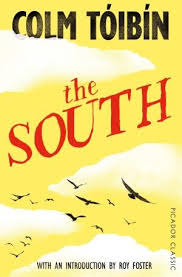
The South by Colm Tóibín


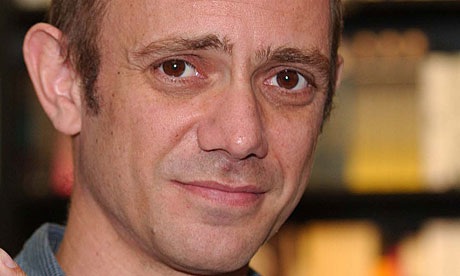
Colm Toibin 1987
A young Colm Tóibín 1987

For a woman who, at any given moment, doesn’t quite know what to do, Kathleen Proctor, the protagonist in Colm Tóibín’s The South, has accumulated a raft of major decisions by the time she hits forty: she has abandoned her husband (just like her mother had done), son, and country; moved almost penniless to Barcelona, said yes to her mother’s financial support; taken up painting, taken a lover for his looks and attention; moved with him to the top of an isolated mountain in the eastern Spanish Pyrenees; and had a daughter. She just can’t decide if she should stay or go.

Tóibín’s attitude to, or fascination with, motherhood is a flavoursome ingredient in a lot of his work: it’s foremost in his first Booker Prize nominated novel, The Blackwater Lightship (1999) – about three diffident mothers; it underpins the decisions of the protagonist in Brooklyn (2009), she runs away from hers; The Story of the Night (1996) opens with a dying one; it is pivotal to his latest novel Nora Webster (2014) when a mother finds herself a widow and reclaims her life as ‘hers’, not ‘theirs’; & Jesus! how mother-obsessed can you get when you write a lengthy, grumpy, but redemptive speech for the mother of God, The Testament of Mary (2012). Here in his first published long-form fiction it is something that the protagonist, Kathleen Proctor, is ambivalent and confused about: children get in the way, children make a mother out of a woman and if it’s a woman you are trying to be, being a mother seems like a second choice, and she lets it happen, twice!

 I went to live in Barcelona in 1975, when I was twenty. Even before I went there, I knew more about the Spanish Civil War than I did about the Irish Civil War. I liked Barcelona, and then I grew to like a place in the Catalan Pyrenees called the [Farrera de] Pallars, especially an area between the village of Llavorsi and the high mountains around it. Until the late nineteen-fifties, the eight or nine villages in the area were cut off from the outside world, with only a footbridge connecting them to Llavorsi; there were some mountain passes, but no roads into France. I loved how enclosed it all was. For the past twenty years, I have spent a part of every year there.”

Colm Tóibín The New Yorker, February 24, 2013.

 Tóibín worked as a journalist in Barcelona and wrote many short stories, including explicit autobiographical tales; a journalistic book about the city itself, Homage to Barcelona came out in 2002, and also this, his first novel, published in 1990.

It establishes Tóibín’s style; stark, formal, where the language is simple but clear – you never have to rush to the dictionary:

Isona was playing on her own in the garden. Katherine picked her up and took her into the house. Miguel was in the kitchen. Katherine put Isona down. There was hot water on the gas; she washed out the jug and poured in the milk from the bucket.                                                                                                               The South, p 141.

 Like frames from a film where the reader supplies the action between each one; the movement between frames. The action seems mundane but the drama is in what the characters may be thinking or feeling but not saying.

He also spends short introductory paragraphs describing the weather, the place; something he no longer does.

Surprisingly the book opens with a first person narrative, by Katherine, of her first few disorientating days in Barcelona, alone and poor, after her abandonment of Ireland and her family. I’ve always been disquieted by works where the gender of the story-teller is different from that of the author (a publisher who turned it down thought it was written by a woman) but Tóibín’s honest prose appeased my initial objection via a detailed description of a potential molestation, in the dark, on a train, and I forgot all about gender; more about this later.

The South is a story of wish fulfilment even though Katherine doesn’t know quite what the wish is. However she takes up painting because she moves in painterly circles and it becomes her wish: to be a painter. Her development as an artist, and growing confidence, is reflected in the size of her canvases: small bits of paper at first but eventually to formats so big that they have to be left outside covered in plastic. She disappoints her husband and child by leaving them but picks up with two disappointed men in Spain; one she sleeps with, the Catalonian, the other, the Irishman, she doesn’t. Her life in Spain is about passion, sexual and artistic, the former she learns to do without, the latter she concentrates on but success is not what interests her. She doesn’t care, she is doing what she wants. Even tragedy becomes part of the passion: a rich and full life, albeit a penniless one.

As the book begins with a departure, it ends with a return; she faces the consequences of her youthful, and selfish determination, and learns to live with the forgiveness, of sorts, that is offered to her.

Although Tóibín’s featured characters are usually women, their gender isn’t what interests him. If a man had squeased two children out of his own body, born of love, necessity, acceptance, resignation or simple lust, and was then expected to care for them even if he didn’t want to; even if doing so made him feel less of a man; this is what interests him. This is what feeds his novelistic brain: human beings coming to terms with, not coming to terms with, fooling themselves, berating themselves, celebrating, manipulating, cursing, damning their own biology.

There are hardly any women at all in The Master (2004), arguably his masterpiece, but that’s exactly what it’s about too.

Oh, and by the way, The South doesn’t appear on Tóibín’s website; there’s not a mention of it. However in the new edition I have just read (Picador Classic Series) – my first copy was lost with my entire library in 2010 – there is a charming Afterward by the author where he talks of it with some affection and also surprise that he managed to finish it.

One day, when I had no idea how to proceed, when no new images came, when I felt I was blocked with the book, I remembered what Barrie Cooke had said. I made a mark. I decided that I would write the first thing that came into my head and then make it stick. What came was: ‘The Sea. A grey shine on the sea.’ I was surprised by this and began to work with it.

Colm Tóibín’s,  Afterward, 2015.

Colm Toibin 2015
Colm Tóibín 2015

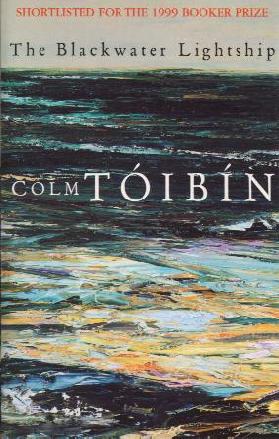
The Blackwater Lightship by Colm Tóibín

Colm Toibin
Colm Toibin

In 2009 in the US state of Illinois two siblings, Steven and Kathryn Miner, began a lawsuit against their mother, Kimberly Garrity, for ‘bad-mothering’, suing her for $50,000 for ’emotional distress’: the mother had sent her son an ‘inappropriate birthday card’ that did not contain any money; called her daughter to come home early from a ‘homecoming’ event; and threatened her 7 year-old son with the police if he did not put his seat belt on. Two years and two courts later the case was thrown out. The fact that one of the sibling’s lawyers was their father, Garrity’s ex-husband, only adds fuel to the farce. What is bad mothering? What is good mothering? How do mothers learn to be mothers? Today there is a wealth of information on the internet, as well as publications and TV shows but for baby-boomers, people born in the decades after World War II, there was no such help; mothering was assumed to be innate.

Colm Toibin’s fourth novel, The Blackwater Lightship (1999), which earned him his first appearance (the first of three) on the Man-Booker Prize short list, is about just that: mothering. It is a story of Helen, a young mother of two boys, her mother, Lily, and Lily’s mother Dora. All mothers. These three women are thrown into a crisis when a man called Paul, the best friend of Declan, Helen’s much-adored brother, visits her with awful news. Declan is in hospital. He has AIDS and he has had it, unknown to his family, for a long time. He is dying and he wants to be taken to his grandmother’s house near the sea, and he wants Helen to break the news to their mother, Lily. The husbands of these mothers are either dead or away: Helen’s husband has taken their two boys to visit his family in the west.

All this is most difficult for Helen, who has been estranged from her mother, and grandmother, for more than ten years: over-mothering is what Helen would describe as the reason. However Helen does as she is bid. She re-arranges her busy life as an education administrator, breaks the news to her mother in her mother’s new and expensive house, a house Helen has never seen before and they take an emaciated and very sick young man to his grandmother’s house on the coast where he remembers boyhood summer visits with affection; but two of Declan’s friends come as well: Paul, of course, and another gay man called Larry.

The three men sit in Declan’s bedroom with the door shut, talking and giggling, while the three women sit around the kitchen table trying to think of something to say to each other; what they have in common is only the past, and the past is thwart with danger.

Transience is everywhere. Grandma’s house is falling down and in a few decades it will probably fall down the cliff and into the sea, just like the house down the road where only a back wall remains: the coast is moving inland, time is winning. Declan can remember the lighthouse from his childhood, the Blackwater Lightship, but it is no longer there, replaced by a modern electric one, its moving beam washing over the house and everyone in it

Three diffident mothers and two confident and self-assured men haggle over mothering rights. The men win because the men know what to do. All Declan wants from these women in his life is for them to love him. Unconditional love is something all three women know very little about.

This was the book that introduced me to the work of Colm Toibin. His formal and authorial prose (no contractions) clearly defines the boundaries between these people and his deft handling of the back-stories and the changes and smudges that develop over these boundaries brings a smile to your lips (Larry tells a bemused Grandma about his first sexual experience) and a tear to your eye (Declan’s stark, angry but silent confrontation with his future as he sits by the fire staring into it; the women set the table and chat about the weather not knowing what else to say).

It is a confrontation between the past and the present; a clash of generations; a stark reminder of how far the world has changed in a single lifetime; it highlights the difference between mothering and caring, and it is a wonderful affirmation of the power of literature.

If you don’t know the work of Toibin, and you should, this is a great place to start.


Burial Rites by Hannah Kent

Hannah Kent lic

Hannah Kent

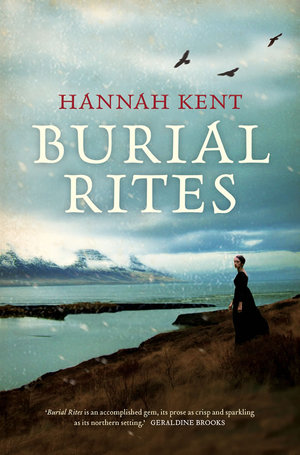
On January 12, 1830 in a poor rural community in northern Iceland, Agnes Magnúsdóttir, 34 years old, a farmhand, and Friðrik Sigurðsson, a farmer’s son were beheaded for the murder of two men almost two years earlier. For the months leading up to her execution Agnes was forced to live with a farming family who were extremely reluctant hosts but forced to do so by the farmer’s local administrative responsibilities. The executions were the last in Iceland, for in 1869 executions were outlawed in Iceland under Danish law.

In 2002 Hannah Kent was 17 years old and on a student exchange program, living and studying, in the north of Iceland. She arrived in January when the place was dominated by snow and darkness (for 20 hours a day). She was lonely, socially isolated on the edge of the world, and cold. On a trip around the region, obviously in a gap in the weather, she asked about local places of significance and she was directed to three small hills, white against white, where, her host parents said, a woman called Agnes was beheaded: the last execution in Iceland.

“I was immediately intrigued. What had she done? What had happened? … Retrospectively, I can only speculate that the strange, isolated place of Agnes’s death made me think of my own feelings of loneliness; that I thought of Agnes as a fellow outsider in a remote Icelandic community, and I identified with her in some small way.”

In January 2011 Hannah Kent had to face the task of writing an historical novel as the creative component of a PhD and her discovery of Agnes’s story nine years earlier sprang to mind.

Burial Rites is the result.

The thought of reading an Australian writer’s work with no gum trees (no tress at all actually), no kangaroos and no barbeques was too tantalising to resist. Kent uses two narrative frames: an uninvolved narration in the third person and a more poetic one in the first, as Agnes and so giving her a voice. The landscape, social and familial structures are revealed, not in dense descriptive paragraphs but as a background to the action. The arrival of Agnes at the lonely farm, her ostracisation, her predicament and demeanour are all skilfully drawn as is the family members of her reluctant jailers; and part of the charm of the situation is the slow growing understanding between the doomed woman and her hosts.

Of course the force that drives the plot is ‘did she or didn’t she’ and as the months of summer give way to the always harsh winter Agnes’s position improves and one thinks that the details of her background and crime will emerge in her religious counselling from a very young trainee clergyman, Toti (a rather wasted character). However this does not happen, instead Kent peppers the text with the story of Agnes and the eventual crime of which she is accused, through more poetic monologues from Agnes, part of the first-person narrative, and through dialogues by the fire with the mistress of the house, Margrit. This is a mistake on Kent’s part as she already has an impartial third person narrator that could faithfully serve as a means to dramatise the events rather than through a static duologue of two women sitting down before a fire in the dead of an Icelandic winter. Agnes’s first person narrative is intriguing and personalises the historical figure, which is exactly what a first-person narrative should do; but in the latter stages of the story, when we discover the romantic relationship between Agnes and one of the dead men, Kent’s re-imagining of this relationship descends into soap-opera of the ‘love him-hate him-love him’ kind. Such personal ruminations may be the musings of a lovelorn teenager but Agnes is mature, intelligent, and self-aware so notions of ‘if only I could talk to him I could change his mind,’ do not ring true.

These weaknesses in the text damage Kent’s novelistic authority but in relation to the work itself they are minor. Burial Rites is an imaginative, a mostly well-crafted debut with a wonderful evocation of period and life well within the Arctic Circle, and I look forward to her next work, which I believe will also be set in Iceland.

Burial Rites has won, among others, the Victorian Premier’s Literary Award People’s Choice Award, and for Kent she was named the 2014 Sydney Morning Herald Best Young Australian Novelist.

Kent co-founded and served as deputy editor of the Australian literary journal Kill Your Darlings. Burial Rites was released in Australia, the USA and the UK in 2013 and translation rights have been sold to 15 countries. In October this year she toured Canada as a guest of the Calgary’s Wordfest, the Vancouver Writer’s Festival and the International Festival of Authors in Toronto.

It was reported in 2013 two months after the book’s release that Jennifer Lawrence is scheduled to star, as Agnes, in the movie version of Burial Rites, directed by her Hunger Games director, Gary Ross.

How Novels Work by John Mullan

John Mullen pic

English writer and academic, John Mullan

-oOo-

Works like this are gleaned from what novels become not how they are made. A more accurate title, if accurateness is what a title should contain, is How Novels Are.

If you are interested in such things, Mullan gives you a detailed description of the building blocks that he describes from a considerable collection of novels. Don’t worry if you haven’t read them all; one of the beauties of this book is that it whets your appetite for some of the books you had no intention of reading, such as Underworld by Don DeLillo, which is a novel that sets out to describe the second half of the 20th century via the ownership of a single object: in this case, a baseball. Mullan’s descriptions of novelistic tools also throw some intellectual light on those books you may have recently read that left you feeling a little underwhelmed: in my case Adam and Eve and Pinch Me, a ghost story by Ruth Rendell.

However don’t be fooled into thinking that these tools sit in the novelist’s brain like paint on an artist’s pallet waiting to be chosen. This is not true.  No novelist thinks “Today I’ll begin a romantic mystery via a split-narrative, with a parenthetically obsessed first narrator, in an attempt to personalise her skaz, who cleverly murders the plain speaking (no contractions) second narrator where the clue to the crime rests on an ekphrasis, in the first chapter, that is proven to be false in the last causing the revelation of a huge, but oh-so-clever, coincidence that will have critics falling over themselves to categorise the bloody thing”… maybe I’ve gone too far but I think you know what I mean.

Novelists tend to write what interests them, and, more importantly, what interests them the most is how to write, describe, conjure, and explore something that up until that point they had no idea how even to begin; and there’s the crux of it all: who was the artist that, when asked how do you start a picture? said, “you start with a mark on a white canvas”. Ditto for writing a novel.

John Mullan has been Professor of English at University College, London, since 2005 and is currently head of the English Department. He was General Editor of the Pickering & Chatto series Lives of the Great Romantics by Their Contemporaries, and Associate Editor for the Oxford Dictionary of National Biography.  He is also a regular TV and radio broadcaster and a literary journalist; he writes on contemporary fiction for the Guardian and was a judge for the 2009 Man Booker Prize. Since How Fiction Works was published in 2006 two other volumes have hit the stands: Anonymity. A Secret History of English Literature (Faber and Faber, 2007) and What Matters in Jane Austen? (Bloomsbury 2012). He is host of the excellent Guardian book club.

“Symbolism in a novel is risky because it presses meaning on the reader.” This is one of the rare references to the reader and quite an important one. Unfortunately he spends little time discussing the role of the reader; or maybe such investigation has only risen in importance since 2006. There is now a strong literary theory called readers response theory …

“which gained prominence in the late 1960s, that focuses on the reader or audience reaction to a particular text, perhaps more than the text itself. Reader-response criticism can be connected to post-structuralism’s emphasis on the role of the reader in actively constructing texts rather than passively consuming them … reader-response criticism argues that a text has no meaning before a reader experiences—reads—it. (www.poetryfoundation.org)

That landscape of Uncle Harry gathering cobwebs behind the broom cupboard or the script in your bottom drawer doesn’t mean a thing until someone has a reaction to it, be it small (it’s alright) or big (Wow! How wonderful!): art isn’t art until someone consumes it.

This idea that there is an active role for the reader in literature is demonstrated by Colm Toibin’s latest novel Nora Webster (Penguin 2014). It’s a moving tale of a recently widowed middle-aged woman, mother of four, in 1960’s Ireland who finds her way back into her own life; one without her husband. No place or person is described. When Nora’s neighbour, an inquisitive old biddy from down the road, comes calling to look about a bit the reader is left to provide his or her own image of an ‘inquisitive old biddy from down the road’. This isn’t hard to do as most of us know of such a character from our past (or present). A grocery store where a bell rings when a customer enters is all that is needed to conjure up in the mind of the reader exactly what Toibin wants; it isn’t important that your ‘grocery store where a bell rings when a customer enters’ may not be geographically like the one in Toibin’s memory, but it’s the idea, the atmosphere, the tone, the times, that Toibin is after; and that the reader can provide.

Of course there are wonderful novelists who describe people and location in great detail but there is something nourishing for a reader when all that is needed is a key (“a belly held in by straining buttons”) that unlocks a memory for a reader and provides everything that is needed for the character (location) to come to life.

I found this book fascinating, despite its neglect of the role of the reader. It almost doubled my ‘to read’ list.

Although Mullan is an academic the prose of How Novels Work is leveled at the general reader but if you are more academically minded try How Fiction Works by literary critic James Wood (Jonathan Cape 2008) who attacks the information, fundamentally the same as in Mullan’s book, but from a completely different angle.


The Girl on the Train by Paula Hawkins

Paula Hawkins pic

English first time novelist: Paula Hawkins

-oOo-

When a friend gave me this book to read he said, “This is the best book I’ve read in ages.” I know what he means.

However Jacqueline Rose in The London Review of Books September 10, 2015 wasn’t keen to read it, having just read Gillian Flynn’s Gone Girl “… but I read on anyway, wanting to know more or less from page one why such hatred of women would be so popular.” I know what she means.

The Girl on The Train is about three women, Rachel (the girl on the train), Anna, the new wife of Rachel’s ex-husband, and Megan, a neighbour. All, one or two of them, are self-delusional, unemployed, unemployable, fat, barren, alcoholic, promiscuous, neglectful, possessive, lazy, a bad liar, vain, unwashed, treacherous, adulterous, stupid, flirtatious, misguided, bored, interfering, paranoid, insane, obsessive and one of them becomes a corpse. Collectively they exhibit the above attributes in the never-ending pursuit, entrapment of, and submission to men with the oft-stated, but never achieved, goal of happiness. Even Cathy, sane Cathy, Rachel’s long-suffering flat-mate has been dating her goal, Damien, for over two years without once being invited to meet his mother. We never meet Damien but the other men, real men, the ones these women are fixated on aren’t much better: Tom, Anna’s husband and Rachel’s ex; Scott, Megan’s husband; and Kamal Abdic, a ex-refugee and therapist. Their common attributes are handsome, sexy, successful and only one of them is a liar. If you only like reading books about nice people don’t read this book.

However I find Jacqueline Rose’s profiling of women, based on these characters, going way too far. These characters say more about the writer, Paula Hawkins, than about women in general; and anyway profiling is so unPC. If a woman wants to write about dysfunctional women searching for salvation amidst functional men she can.

But, hey! It’s a thriller, a fiction, an entertainment (it’s soon to be a movie) and a great way to spend a hot lazy humid weekend by the pool or under a fan.

What is interesting about this story is the way Hawkins tells it. She uses three first person narratives usually, but not always, in the present tense to tell the story, like diary entries. They are immediate, engaging and at times enthralling. Each section is headed with a woman’s name (Rachel, Megan or Anna), the time, day, date, and year. Keep track of these: note them.  This confessional flavour is attractive in a personal gossipy sense that we all, let’s face it, enjoy. Hawkin’s characters don’t hold back: we hear all about their dreams, fears, desires, failures, fantasies, bad decisions, flights of delusion, lies, and bad bodily maintenance practices. If you are deluded by what they tell you they are deluding themselves as well. Keep this in mind.

Occasionally towards the end you can sense the plot-cogs turning: an authorial problem, and there’s a little soapy taste about the love-hate-love machinations in the minds of the women but it’s a great summer read.

Collecting Stories by Michael Freundt

My writing desk
My writing desk

Collecting Stories, my first short story collection, goes live online on Monday August 3rd.

You can find it here

The stories have been written over the last 25 years; the latest, A Marriage of Convenience, was written last month. Inspiration comes from some unlikely sources: a bus ride from Balmain, a conversation in a foyer, something a friend said, and among others, an opening paragraph from a magazine article which I read again and again, after returning from my laptop where I recorded the thought, but darned if I could find what it was among those few printed words that sparked the thought in the first place. Apparently the history of my sparking synapses leaves no footprint; or is that just another sign of my age?

I have not included every story from my collection; a few now seemed trite, uneven, and dull so I left them where they are.

And friends, if you think that I have used you for literary purposes you’re right and if you object, then let’s talk about it.

More often than not, the stories are of the What If? kind. Nothing more needs to be said because I will always steer away from expaining to an inquisative reader what I meant by a story, a line, or an idea for two reasons: usually I don’t remember what I meant in the first place, my synapses being what they are, but more importantly I believe that what the reader thinks it means is what it means.

Sometimes stories tumble out like washing from a dryer; at other times they are few and very far between. I’m in the middle of one now which augers well for volume 2.

I hope you enjoy volume 1 and if you do, and even if you don’t, tell me about it.

Go Set a Watchman by Harper Lee

Harper Lee
Harper Lee

In 1993 Joanne Woodward was the narrator in Sorcese’s film of Edit Wharton’s The Age of Innocence. Her voice was measured and melifuous, full of American cadences of the time; a formal English suggesting refinement, wisdom, and good behaviour.

I was just over two pages into Go Set a Watchman, Harper Lee’s new/old novel (and if you’re a reader and haven’t heard of it you’ve probably been living on Mars), when I realised the voice in my head I was reading with was that of Woodward’s with the same measurement and melifuousness perfect for phrases like “a family example not Iikely to be discountenanced” and “Love whom you will but marry your own kind was a dictum amounting to instinct within her.”

The mood of life in Maycomb is set by annacdotes of the people in it. Tales of loyalty, family pride, and self reliance pepper the opening pages so by the time I met the aged Atticus Finch I was already steeped in small-town life and flavour. I expected, hoped for, a slow reveal of Atticus Finch but Go Set a Watchman was written before To Kill a Mockingbird and how could the author know what an indelable image her creation would leave on the minds of her readers; not to forget the looks and fatherly masculinity of Gregory Peck, from the 1962 film, that couloured it. Over a million copies have been sold in July: the month of it’s release, on the 14th. It’s been ringing tills all over the world and some critics have sharpened their knives and honed their sarcasm to firmly put it back in the bottom drawer.

It certainly isn’t as good as To Kill a Mockingbird but then no-one really thought it would be as part of the marketing campaign was to explain that the original publisher remarked to a young Harper Lee that the most interesting parts of the book were the flashbacks to Scout’s early years and being a novice, Lee took his advice and went back to her desk and, as we know, wrote Mockingbird, which has become a modern classic loved the world over. What is interesting in this book is its role as the precursor to that iconic text. You feel a sense of privilege to discover the germs of scenes that grew into those we know so well: the courtroom scene, for instance, that forms the climax of Mockingbird is a simple reminiscence Jean Louise (Scout) has when she visits the same courthouse.
However what is a surprise is that her father, Atticus Finch, is not the same man as the Mockingbird hero. In Go Set a Watchman ( from Isaiah: 21, 6) Atticus is a respected member of the Maycomb community but his attitude to race relations is totally different to those of the younger Atticus who Lee portrayed as a hero of tolerance and rational thinking; here he tries to justify racist attitudes as necessary to deal with, and live peacefully within, his chosen home. These ideas confound and horrify Scout, and us. However the climax, the confrontation between father and daughter, is very shallow and under-written with an outcome that has more to do with blood than sincere argument; the threat is weak and the ending is therefore disappointing.
It is remarkable to realise that not only was race still a devisive issue 20 years after the story of Mockingbird but today, in 2015, it is still an open wound on the face of American society: still as raw as a fresh cigarette burn.

As the mature woman Scout realises that her upbringing rendered her colour blind; but how can that be now that the model of her raising has turned against her? or was he always like he is now? If she is to stay in this world she needs a guide, a Watchman, to lead her through this place where she doubts she belongs or understands.
The writing is not as sharp and reliable as in Mockingbird but there are flashes of brilliance that set up images that stay with you; and most of them to do with the flashes back to Scout’s teenage years and before. The third person narrative is of the ‘close writing’ kind that sometimes gets so close to Scout that it often slips into the first person, a device that effectively creates the feeling of personal truth.
Go Set a Watchman as a companion piece to To Kill a Mockingbird is its strongest attribute; it may be thin and embryonic but to those who value artistic endeavour and its evolution it’s a valuable text.

The Moons of Jupiter by Alice Munro

Canadian writer, Alice Munro, Nobel Laureate for Literature, 2013.

How’s this for a scenario; an artistic projectory: shy student marries as soon as she graduates, scared that she is old-maid material; wants to write novels but has children instead; still wants to write novels but time is limited so writes short stories while the babies are napping; when they reach school age has more time to write but has to stop writing mid-afternoon to do housewife and mother duties before family gets home; keeps writing short stories until she’s 82; wins Nobel Prize for Literature.

When told of her win, “It just seems impossible,” she said.

She is the 13th woman to win the Literature Prize and the second Canadian (after Saul Bellow), and therefore the first Canadian woman.

She writes about the internal drama of relationships usually from the female point of view; about simple country people, but also academics. She is often called ‘the modern Chekhov’ which is not entirely true: Chekhov is more interested in behaviour, Munro in the thoughts behind behaviour.

This collection, The Moons of Jupiter, came out in 1982. It contains eleven stories. One of them, Barton Bus, written in the first person describes a brief love affair in Australia but all the other scenes, like scenes from a bus window that pass you by, describe what it might be like if she, the narrator, bumps into the once brief lover. What will she say? What will she do? She doesn’t use his name only a letter;

“I call him X, as if he were a character in an old fashioned novel, that pretends to be true. X is a letter in his name, but I chose it also because it seems to suit him. The letter X seems to me expansive and secretive.”

In the brief final scene a female friend, Kay, describes to the narrator a man who is a friend of her husband’s and after dinner he sighed and laid his head in Kay’s lap. She thought it was a ‘nice simple’ thing to do. She mentions his name. I gasped! It was him! and the narrator does not say a word.

I’ve probably spoiled this story for you but when you read it, it will undoubtedly mean something different to you as meaning is always in the mind of the reader.

In Visitors a couple welcome the husband’s brother, his wife, and her sister to stay in their house which is so small that no room can accommodate them all at once. If the fifth person enters someone has to stand in the doorway. Sleeping arrangements are a bit like camping. They go for a drive – they can all fit in the car … just. They talk, they drive, they look for the site of the birth-house of one of them. It’s no longer there, but they imagine it. The talk is simple, personal, clichéd like small-talk. The three visitors finally go back home, a very long way away. The couple are back in their own small bed and Mildred realises Wilfred is crying: he will never see his brother again. They could visit. Will they? Probably not but she says ‘maybe’ and he says ‘not next week’.

I was left with a feeling of regret, mixed with helplessness wound around with sorrow leaving these two people in their cramped space forced to cling to each other as some sort of protection from the miseries of the world.

“When I write about something happening in this setting, I don’t think that I’m choosing to be confined. Quite the opposite. I don’t think I’m writing just about this life. I hope to be writing about and through it.”

All her stories are set in the country to the east of Lake Huron, Canada because she loves it; she understands the people, she likes its climate, its falling down barns, its “occasional farms that have swimming pools and airplanes.” She speaks the language.

Alice Munro, who doesn’t write any more (there are many published collections), reads and sometimes she doesn’t start to read a story from the beginning. She starts anywhere and reads forward a bit and sometimes goes back a bit. To her a story

“is not like a road to follow, it’s more like a house. You go inside and stay there for a while, wandering back and forth and settling where you like and discovering how the rooms and corridors relate to each other, how the world outside is altered by being viewed from these windows … and you can go back again and again, and the house, the story, always contains more than you saw last time.”

Having a volume of Alice Munro short stories by your bed is comforting as well as enlightening and entertaining no matter how many times you read one.

The Illuminations by Andrew O’Hagan

The Scottich writer Andrew O'Hagan
The Scottich writer Andrew O’Hagan
“There’s an art to telling the truth.”

My first instinct was to say that The Illuminations, O’Hagan’s latest novel, is about the past; but then every novel is about the past, even one written in the present since the actual present is only on the page you’re on. It is more accurate to say that The Illuminations is about the little lies of the past that make the present bearable.

The two main characters are Anne, a grandmother sinking slowly into dementia, but once a well known pioneeing documentary photographer with an inner artistic life that her family only vaguely acknowledges, and her grandson Luke, a Captain with the Royal Western Fusiliers fighting the dirty war in Afghanistan. He witnesses a horror that he could’ve prevented if it were not for his weak, and tormented commander. On his return to Britain he takes Anne on a trip to Blackpool to see the famous light show at the end of summer, the Illuminations, hoping she will remember more about the romance she had there with Luke’s grandfather, the photographs she took, and the reason that his family is like it is. He craves enlightenment to make sense of the past which he can only vaguely see: the facts that don’t add up; the questions unanswered.

I first discovered O’Hagan via his 2006 novel Be Near Me which turns on a moral mistake of the protagonist, a Catholic priest, Father Anderton. When he is finally brought to account for his ‘sin’ by his religious  superiors, the answer to the question he is asked only explains half the sin; and he is faced with a truely moral dilemma: should he simply answer the question knowing that the answer will satisfy his superiors and that will be the end of it, or should he, given the vows to his God, confess to ‘all’ the sin, and therefore end his vocation? The ‘action’ of the book is in the mind of Father Anderton, small compared to most novelistic plots, but I remember the feeling of the monumental challenge the man is asked to face; this is a ‘big’ story, or O’Hagan made it seem so.

The Illuminations isn’t quite as successful although the awkward scenes of a family get-together where the past and the present, old ideas and new, clash and bump are handled with insight and cringing recognition. O’Hagan is a master of the minutiae of the undercurrents and whirlpools that swirl beneath a family’s, and any personal, exterior. He also successfully describes that ellusive but sometimes debilitating feeling parents have of loving the family to visit but joyous when they leave.

O’Hagan is a well respected writer and his early novel, Our Fathers (1999) won the Winifred Holtby Memorial Prize and it was shortlisted for the International IMPAC Dublin Literary Award (2001) as well as the Man-Booker Prize for Fiction (1999).

However his most intriguing work is a lengthy article in the London Review of Books, Ghosting Julian Assange in March 2014 which tells the fascinating story of the time he spent shadowing the Wikileaks founder with the contracted intention of ghosting an ‘autobiography’ of the man. I should explain that the book, not yet written, had already been bought by Canongate for £600,000 and sold-on to a range of big publishing houses including Knopf of New York. The book never happened but a lot of legal battles did; the article explains why, and at the same time gives a detailed picture of Assange, his behaviour: paranoid and, to some degree, his motivation: selfish. You can find the article at http://www.lrb.co.uk/v36/n05/andrew-ohagan/ghosting which also includes an audio file of O’Hagan speaking about Assange. 

He is also a playwright and his latest work for the stage is a doco/drama, Enquirer, staged by the National Theatre of Scotland in 2012 that deals with the machinations of the British press.

O’Hagan is a wonderful writer and there is a lot to enjoy in The Illuminations. I recommend it and Be Near Me as well.

Veronica Spreads it Around by Michael K Freundt

Veronica, again, combines business with sex. She finds lovers but she also finds enemies, but in the most unlikely places. She embarks on a new career in hospitality although her previous career as a sex consultant proves hard to close down. However her biggest challenge erupts over her choices as a lover and as a friend. These combine to be life threatening but Veronica is a remarkable woman.

You can find this new Veronica story, Veronica Spreads it Around, on smashwords.com. Make sure to un-block ‘Adult Content’ otherwise you won’t find it. Simply type in the title into the ‘search’ box. I hope you enjoy it, and I’d love you to write me a review on the smashords site. Cheers!