Neither Here nor There by Bill Bryson

or   How to write a ‘Hugely Funny’ Travel Book.

Bill Bryson
Anglo-American non-fiction writer, Bill Bryson: born 1951.

Step one: Choose a common phrase like, There and Back to See How Far it is, Head you Off at the Pass, It’s a Long Way to ……, you get the idea, and make it your title.

Step two: Collect anecdotes of your coming of age (COA).

Step thee: rack your brain for your pubescent sexual fantasies (PSF).

Step four: make a list of your own foibles (SD = self-deprecation).

Step five: have handy anecdotes from other trips to the same places  (SP).

Step six: if you’re an American living in Britain, collect phrase and stories that put down the Yanks or the Brits. (OPD = own put downs).

Step seven: collect puts downs of a nerd that gets put down a lot by your targeted audience, like the Irish, the Mormons, the Kiwis, etc. (NPD = nerd put downs)

Step eight: you’ll also need some RPD’s – racial put downs.

So, let’s begin.

Chapter One. Of course, you start with a journey. However, if the journey is a little boring you can always rely on a PSF:

I fanaticised about “…finding myself seated next to a panting young beauty being sent by her father against her wishes to the Lausanne Institute for Nymphomaniacal Disorders, who would turn to me somewhere over the mid-Atlantic and say, ‘Forgive me, but would it be alright if I sat on your face for a while?”

and you can then tack on an NPD which has OPD overtones:

“In the event my seatmate turned out to be an acned string-bean with Buddy Holly glasses and a line-up of ball-point pens clipped into a protective plastic case in his shirt pocket.”

But if you find yourself on an inspirational roll you can continue this novel scenario:

“I spied a coin under the seat in front of me, and with protracted difficulty leaned forward and snagged it. When I sat up, I saw my seatmate was at last looking at me with that ominous glow.

‘Have you found Jesus?’ he said suddenly.

‘Uh, no, it’s a quarter,’ I answered and quickly settled down and pretended for the next six hours to be asleep, ignoring his whispered entreaties to let Christ build a bunkhouse in my heart.”

It’s important to understand that such ‘stories’ don’t necessarily need to come from the trip you are now writing about, nor do they necessarily need to have happened at all. Let’s call it comedic license.

And of course, when in Germany, it’s likely that funny incidents are few and far between but there’s always a good PSF to come to your aid:

“I had only signed up for German [as a boy] because it was taught by a walking wet dream named Miss Webster, who had the most magnificent breasts and buttocks that adhered to her skirt like melons in shrink-wrap.”

Or, as in his few pages on Cologne, he begins with an RPD about the woman running the statin café who ignored him because he ignored her:

“This is the worst characteristic of the Germans. Well, actually a predilection for starting land wars in Europe is their worst characteristic, but this is up there with it.”

He then segues into an SP about a previous visit to Cologne when he stayed in a cheap hotel and read soft-porn magazines that other guests had left behind. He then contemplates the massive cathedral and comments on its size with a little OPD:

“You can understand why it took 700 years to build – and that was with German workers. In Britain they would still be digging the foundations.”

Without any nicer things to say about Cologne Bryson indulges in a reminiscence about flying on a 747, and regaling the reader with the lack of American know-how of audio electronics – a bit of ODP – and praising the Japanese “for filling my life with convenient items like a wristwatch that can store telephone numbers, calculate my overdraft and time my morning egg” – a sort of reverse RDP. He then cuts short his Cologne stay when he spies a non-stop porno cinema in the train station, which one would’ve thought would’ve given Mr Bryson an extra beat of his heart but it instead caused him to high-tail it out of Cologne and head for, ironically, Amsterdam.

His stay in Hamburg is similar: he complains about the ugliness of the prostitutes, the smallness and expense of his carpet-less hotel room, the sex-shops – “nothing compared to those in Amsterdam” – although he does praise their ingenuity when it comes to manufacturing and promoting sex dolls. He indulges in a little RDP, ODP, SP and then tops it off with a lengthy analysis of why beautiful and stylish German women don’t shave their armpits; like “a Brillo pad hanging there. I know some people think it’s earthy, but so are turnips …”

Oh, and he also hates dogs.

It seems that Mr Bryson understands well his potential readership: the kind of travellers that other travellers try to avoid.

However, after reading the dense prose of our human stains in the stories by Tsiolkas, a house-brick sized Moorhouse about mores, political and sexual, in Canberra in the 1950’s, and the ethereal beginnings of literary modernism in Joyce, I thought I needed something light.

Neither Here nor There (1992) is entertaining-ish, undemanding, diverting, and completely forgettable, but don’t let it inform you about Europe.

Access to all 46 formats and editions you can find here.
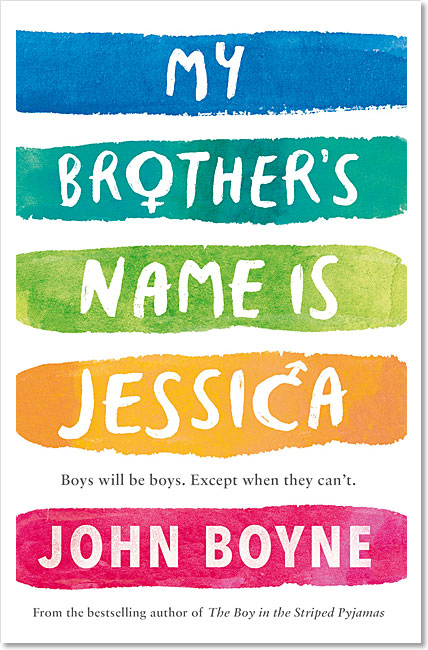
My Brother’s Name is Jessica by John Boyne

John Boyne pic
Irish writer, John Boyne.

Earlier this year John  Boyne found himself in the middle of a media storm about his new book, My Brother’s Name is Jessica. The transgender community, especially on twitter, went for him fiercely: the title itself was considered offensive.

Mya Nunnaly, a poet, wrote an open letter to Boyne which includes,

You {John} write that “however, a friend of mine, born a boy, came out as transgender in his early 20s and over the last few years has been both struggling with and embracing his new identity.” HER new identity, John. HER early 20s.

As I understand it, the moment a boy (say) reveals that he believes he is a girl it is incumbent of everyone to treat her with respect and use her name and the appropriate pronoun. In fact I should’ve written ‘the moment a boy (say) reveals that she believes she is a girl…’

It may have caused less offence had the title been, My Sister’s Name was Jason.

The other issue was the use of the word cis. The word originally was, and is, used in molecular science but has been adopted by the transgender community as the opposite of trans. I am a cis man because I live as the gender of my birth. Most people are of cis-gender. Transgender are people who don’t live as the gender of their birth. Boyne inflamed the debate even further by publicly writing in the Irish Times on April 13, 2019, a piece entitled, Why I support trans rights but reject the word ‘cis. However, a word, when given an opposite, is strengthened. If our language only had the word ‘tall’ and its opposite was simply ‘not tall’ anyone who was ‘not tall’ would, I believe, feel left out, thought about in the negative, disrespected; but having their own word, ‘short’ gives both words equal standing, equal weight, and therefore gives equal respect.

I often feel that if the word ‘black’ in American society was able to be used as the equal opposite of the word ‘white’, which is the correct use, and not as ‘less than’ the word ‘white’ race relations in the US would be a lot healthier.

I see the word ‘cis’ as just another adjective to describe me. If I was in a group discussion about international politics with people of different nationalities it would be appropriate to begin my opinion with, ‘Well, as an Australian caucasian man I think ……’; similarly, if I was in a group discussion about diet with people who were either vegans, pescatarians, or omnivores it would be appropriate to begin my opinion with ‘Well, as a meat-eater I think …; and if I was in a group discussion about gender with a group that included trans people it would be appropriate to begin my opinion with ‘Well, as a cis man I think…’ It is just another adjective to use appropriately when necessary.

However, the focus is not on Jason/Jessica but on her younger brother, Sam, who represents Boyne’s chosen audience:  young cis readers. This is his sixth book for young readers, the most successful being The Boy in the Striped Pyjamas (2006). Sam tells it as he sees it: Boyne has chosen Sam as the first-person narrator. The language is clear and simple and a lot of what goes on around him he doesn’t fully understand. This background is heightened by his parent’s work: his mother is a cabinet minister, Secretary of State, eye-ing off the Prime Ministership, with his father as her Chief of Staff. The stakes are high and the media are always lurking in the bushes. 

The title is clear and  basically foretells the story. It is actually a quote from the text; a text narrated by a cis boy who like other cis people don’t understand trans people and sometimes get it wrong, particularly with language. As one trans journo put it in Boyne’s defence … he’s on our side; he’s waving our flag, he just got it upside down.  

“In writing My Brother’s Name is Jessica my hope is that children and young adults—particularly ones who are perhaps not already familiar with transgender issues—will come to this book and start to understand that anyone struggling with these issues needs support and compassion, not judgment. I have tried to write the best novel that I can. I might have succeeded or I might have failed, but I stand by it. I welcome debate and am interested in people’s views on this subject. I do not believe that the trans community bears any relationship to, or any responsibility for the abuse I have received online. I stand 100% behind all trans people, I respect them as brave pioneers, I applaud their determination to live authentic lives despite the abuse they also receive, and I will always do so.”                                                                                                                    John Boyne


Boy Swallows Universe by Trent Dalton

Trent Dalton pic
Australian journalist turned novelist, Trent Dalton

This is a rollicking good read. Entertaining, insightful, rich in characters, with a heavy dose of autobiography, and only marred a little by the ending; more about that later.

Eli Bell is 12 years old and the younger son of dysfunctional but estranged parents, Frances and Robert, and they all bump along day to day on the outer hazardous rings of petty criminality in Brisbane in the 1980s. Rugby, television, drugs, poverty, junk food, cigarettes, XXXX beer, and a surprising amount of love for each other get them through every day. Well, almost. Eli’s ‘family’ is extended to include his mum’s boyfriend, Lyle, the first man he ever loved – it takes him time to feel that for his dad; Slim Halliday, his babysitter, mentor, and possible murderer, but certainly notorious escapee from Boggo Road Goal; and his older brother, August, who has decided not to talk since he and Eli were possible victims of attempted filicide. He communicates only with Eli who has learnt to decipher his brother’s air writing. They are inseparable.

The story is told in the first person and Eli’s colourful language, obvious intelligence, unwavering loyalty, and passion for words make him an unforgettable character. There’s a love story, or love fantasy, woven into the second half that is centred on a Courier-Mail crime reporter, Caitlyn Spies, eight years his senior. Eli hankers after, not only her lips and other parts of her body, but also a job like hers: he aches to be a crime-busting journalist. But does he make it? No spoilers here.

There is a lot of back-story to get through before the narrative really starts, so the opening is a bit slow but once Dalton gets in his stride you are grateful for the time taken; he also weaves in a flavour of surrealism that doesn’t quite work, for this reader, but it’s easy to go along with it and to allow yourself to be ‘taken for the ride.’

And what a ride!

It has all the flavour and action of a television crime story right down to the satisfying climax and the just-desserts handed out to the bad-guys.  But there is a climactic tag, a chase sequence that is contrived, too long, and unnecessary. It’s like this sequence has been lifted from another genre and medium; it sits uncomfortably, and ‘tacked-on’, at the end of such a well-written story. But this is a minor criticism.

Yes, it would be perfect for a television, and an adaptation is in the pipeline, produced by Joel Edgerton, but, surprisingly, it is the theatre that has snaffled the goods first. The stage version is scheduled for the 2020 season of the Queensland Theatre Company for the Brisbane Festival in September of that year. Sam Strong, QTC’s artistic director will direct the adaptation written by Tim McGarry.

You can watch a promotional video here, where Dalton gives away a few secrets of inspiration for this, his debut novel with the books that helped him write it.

You can buy the ebook, and other formats, here.

The Novel Game.

The Novel Game - Aussie Rules pic
Australian Rules Football

After I finished my 4th novel, well, the 3rd draft of it, who knows what needs to be done to it and at what time it needs to be done, I sent it off to my ‘agent’. He’s not really my agent as we don’t have a writer/agent relationship, he doesn’t have a relationship with me but with a book of mine, my 3rd novel, Johnny William & the Cameraman. However, what’s a writer to do after finishing number 4 but send it on to someone and an agent who has a relationship with number 3 is as good as any. He said he was looking forward to reading it. He said he liked it. With number 4 out of my hair, I felt like my pet budgie had flown away, a little lost. I scanned two abandoned pieces of prose, both over 20,000 words, one set in a declining rural town that seeks its survival only to have that thwarted by the media; and a story of a group of people who witness a tragedy on Sydney Harbour. Neither re-tickled my novelistic fancy.

But then, I found an old note on my Notepad App called The Owls of Kensingtown. The idea was to chart the reactions and romances of a small group of queer-minded people after the sentencing of Oscar Wilde in 1895. I changed the name to Arcadia Lane, but the title is still up for grabs. Actually Up for Grabs isn’t such a bad title itself. The Owls are metaphorical (“Who is that?  Who? Look at them, Who is that one? Who? The one in the hat. Who are you? Who? Who? Who? ….” a chorus like a parliament of Owls. Oh, and A Parliament of Owls isn’t a bad title, either).
As I read through my very brief sketch a scene occurred to me, a scene that has become the opening of this new work, a scene that also sets up a need, which in turn will become the narrative. I have no idea, yet, where the story is going; I only have a direction, not an outcome.
Because of the first scene one of my characters, I’ve called him Henry, leaves his employment. I have no idea where he’s going, but a quick look at Google maps of rural England leads me to a village of Cockley Cley in the east – very obscure, very small – so Cockley Cley becomes his destination, where his peasant parents live.
Along the way he helps a farmer fix a broken down dray and gets a lift from him (This scene isn’t written yet, just mentioned, but as I write this I’m beginning to understand that it needs to be fleshed out. Later). They spend the night at a hogsman’s barn. I don’t know if there was such an occupation as hogsman, but a quick ask of Ms Google tells me that it’s a family name, so an occupation it could’ve been; anyway, I like the sound of it, so hogsman it is.
I don’t believe that a potential reader will stop and Google ‘hogsman’ and then complain that it’s an occupation that doesn’t exist, and has never existed. The sound of it alone fits the times (late 1800s)  and it’s also self-explanatory. It is within the realm of possibility and so I believe a reader will accept it.
With the intention of Henry continuing his journey in the morning, I open the next scene early in the morning
with him pissing behind the barn. As he is returning a small girl comes running around the corner and almost knocks him over. I did not plan this. It was as if I was watching this scene, like an audience, and then the little girl appeared. She is strange, precocious, and manic. She is followed by the hogsman, a character I had not intended to draw. The relationship between the hogsman and the girl is ambiguous, and even a little sinister. The hogsman attempts to get the child back into the house with the help of Henry but the child bites Henry on the arm and screams, “He’s a prince!”. This also wasn’t planned. But, serendipitously, (and serendipity plays a very great role in novel-making) a reason for her outburst occurs to me. Henry, a gentleman’s valet, has left his employment because he was having a sexual affair with his gentleman employer, a very satisfying and loving relationship, but the morning paper’s reporting of Oscar Wilde’s sentence of two years hard labor scares the young man and he leaves, leaving the gentleman bereft and without anyone to cook his breakfast. Henry is therefore dressed and groomed very well, courtesy of his employer/lover and his appearance, especially to the little manic girl, seems that of a wealthy man, maybe even a prince!
I continue to ‘watch’ the scene and write down what I ‘see’. The hogsman invites Henry into his house to tend to the wound, shoving the girl into a room where the voices of other young girls can be heard. As the hogsman tends to Henry’s wound the young man looks around the house and notices its two fires, one in the sitting room, one in the kitchen, its heavy wooden and polished furniture, and its decorations, rugs, and paintings. This is not the house of a lowly pig farmer, unless my unnamed hogsman has a very lucrative side business.
The hogsman tangentially suggests a deal: he is willing to pay the young gentleman a tidy sum for his silence about the presence of the little girl/girls in his house. He knows his guest doesn’t look like he needs it, but a deal is a deal and an exchange of money between men who can afford it is as good a deal as most. Henry remains silent, a little character trait I just happened to give him earlier when he saw the wisdom of remaining silent when the truth, which is his usual trope, might do more harm than good (serendipity again). Henry takes the £5 silently, money he, now unemployed, sorely needs.
Understand that this scene may not make it into the final cut.
What has occurred to me since beginning this novel, if that’s what it is, is the similarities between writing prose and playing football. Writers take courses and listen to experts and go on writers’ retreats – players listen to coaches and go on training camps; writers read other writers – players watch other games; writers hone their skills, trying out ideas, different voices – players go to training, honing their skills; writers are disciplined – players are disciplined; writers know and understand grammar – players know and understand the rules of the game; but when it comes to doing the work, writing the thing, playing the game, there is no time to think about rules, advice, examples, and should I write this, should I tackle that; you just write it, play it, and hope to kryst that all the rules, advice, examples, and shoulds have oozed into your intuition, become your default mechanism, and what comes out is eventually a readable novel, a win. 
 
I’m not yet convinced about the veracity of this work but I keep ‘seeing’ scenes, and as long as the scenes keep coming I’ll keep writing. Wish me luck. 

What I have Learnt about Writing a Novel by Writing a Novel.

  1. To write novels you have to read novels, a LOT of novels.
  2. The best way to write a novel is to start.
  3. Don’t be waylaid by family, friends, and lunch invitations. You’re the writer. Write.
  4. Know how the language works. If you hate grammar take up knitting. 
  5. Genre is something that agents, publishers, booksellers, and readers think about; write what interests you. Let them work it out.
  6. Don’t try to be too clever with your narrator.
  7. Spew the whole story onto the screen, or page. This is the first draft: 90,000 words +
  8. Be disciplined. Give yourself a daily goal, i.e., 2000 words. If necessary write anything. Any writing (except the shopping list) counts.
  9. You don’t necessarily need to write what you know. How many witches, snakes, and house-elves did J.K. Rowling interview before she wrote Harry Potter?
  10. You don’t need to know the ending when you start; in fact, it’s best if you don’t.
  11. The three elements of a novel are narration, description, and dialogue.
  12. Narration is what your narrator says.
  13. Description doesn’t need to be exhaustive. A few apt words can paint hundreds more. Let the reader fill in the gaps.
  14. Dialogue is the best way to create believable and distinguishable characters.
  15. Verisimilitude (creating truth) is the writer’s goal; you do that with detail.
  16. Don’t think about your muse. They take the focus off you.
  17. A cure for writer’s block: put two clear but different characters in an adversarial situation and make them talk to each other. You will be amazed what happens.
  18. Somewhere towards the end of the 1st draft you need to know what it is about. What is the point of it? What does it all mean. This will lead you to the ending.
  19. Not every idea you have while writing this novel is right for this novel; it may be better for the next novel.
  20. After you’ve finished the 1st draft put it away for a few weeks and write some other stuff.
  21. The best person to tell you the real truth about the 1st draft is (almost always) the person who shares your bed. This is true and a whole lot cheaper.
  22. The second draft is cleaning up and consolidating the timeline, characters, relationships, lose ends, and getting rid of your (the writer’s) voice. 
  23. You should lose about 10% of the 1st draft. You can add or cut, but it’s mainly cut. Be brutal. If you don’t know about “Murder Your Darlings!” Sir Arthur Quiller-Couch said it first, find out.
  24. The 3rd draft should be printed out. Read it on paper. You’ll be surprised what ‘other’ stuff you see and that may need to go too.
  25. Once it’s ‘out there’ it’s no longer yours. It belongs to the reader and it means what the reader thinks it means. You’re irrelevant.
  26. Start the next one.

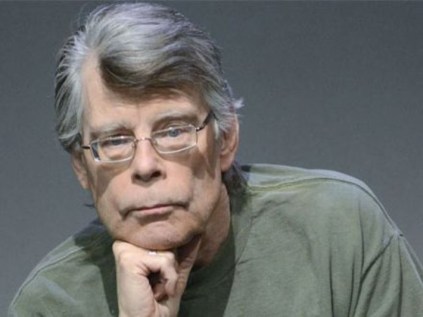
On Writing. A memoir of the craft by Stephen King

Stephan King pic
American writer Stephan King. “Nothing can live up to the memory of a good scare.”

Outside the Palazzo Vecchio in the Piazza della Signoria in the centre of old Florence is the statue of David by Michelangelo. Actually it’s a statue of David by someone else. It’s a copy. The original is in the Galleria dell’Accademia not far away. Michelangelo’s David is truely remarkable but what is more revealing are the accompanying statues of slaves; unfinished statues. The figures seem to be emerging out of the stone; or to put it another way, they were always in the stone; Michelangelo just had to remove the marble from around them to reveal them in all their glory. Music is like that. The Clarinet Concerto always existed; Mozart just wrote it down so now it’s called Mozart’s Clarinet Concerto. Stories are like that too.

I want you to understand that my basic belief about the making of stories is that they pretty much make themselves … Stories are relics, part of an undiscovered existing world. The writer’s job is to use the tools in his or her toolbox to get as much of each one out of the ground intact as possible.

or, in other words; stories have always existed, writers just have to write them down as accurately as they can.

If you hear a writer say “…Oh, it just wrote itself, really,” this is what they are talking about without really understanding anything about it.

Plotting is way down on King’s list of what’s important. For him it’s narration – to move the story along; description – to create a sensory reality; and dialogue – to bring characters to life.

I’ve never plotted any more than I ‘d try to convince you that I’ve never told a lie, but I do both as infrequently as possible …. plotting and the spontaneity of real creation aren’t compatible … It’s clumsy, mechanical, anticreative. Plot is, I think, the good writer’s last resort and the dullard’s first choice. The story which results from it is apt to feel artificial and labored. 

I’ve heard, and read, many times that Stephan King is a writer’s writer. It’s a good line, although I’m not sure what it means. I took it to mean that I should read him. I’ve been planning to but as his work is not my preferred type (hate the word ‘genre’) other books kept preempting my plan. And then this one came along: a Christmas gift from my sister.

King calls it a memoir, and it certainly is. His chapter on his early struggles – menial jobs – many rejections, a family to support – is particularly honest and heart-warming. Yet, his chapter on being an alcoholic is electric. Talk about ‘being honest.’ It’s an insider’s view, the view of an alcoholic looking out with all the denials, justifications, and excuses that are virtually the ‘brand’ of all alcoholics but while he’s being one, seem particularly applicable to him and him alone.

But the life story doesn’t take long and soon he’s into the advice: the reason for reading it. I was heartened to read that his first piece of wisdom is, if you want to write, you must read. Phew! Good. I do that. His next piece of advice was to wage war on adverbs, especially attributive adverbs in dialogue: he said dismissively, she blithely said. His argument against adverbs like these was particularly convincing. I got up and opened my computer to the writing I had done that day and erased all my attributive adverbs, well, most of them. I had to make a few other adjustments to follow his advice: it should be perfectly clear how a line of dialogue should be said from the words themselves and, of course, the accumulated tension, tone, and information. Don’t be scared of oft repeating, he said, she said.

All I ask is that you do as well as you can, and remember that, while to write adverbs is human, to write he said or she said is divine.

And vocabulary? “As the whore said to the bashful sailor, ‘It ain’t how much you’ve got it’s how you use it.” And if you have to run to the thesaurus to find the right word, it’s probably not the right word. He quotes Earnest Hemingway to seal the point.

“He came to the river. The river was there.”

He’s equally honest and up-front about narrative, description, dialogue and a myriad of other implements from his literary toolbox. I am very happy to now know that I share his belief in dialogue as one of the best ways to built character. There are some writers who avoid dialogue. What a missed opportunity!

However, I was, at times, at a disadvantage reading this book because he often makes his point by referring, in detail, to his own work and decisions he had to make, and why. I have never read anything by King so I found these passages redundant. Not his fault, but mine.

For a new writer like me (I can’t use the adjective ‘young’ any more), who’s grappling with the second draft of a major work that at the moment is a broad, messy, and a wooly thing, reading King’s On Writing now is the most serendipitous and useful coincidence.

All writers, especially new ones, and most readers would get a lot out of his insights into the writing process, the hazards and joys of writing for a living, and the more profound elements of imagination, fiction making, and self-fulfilment.  Highly recommended.

-oOo-

I have a gripe with Mr King. He’s down on adverbs, but he’s also down on pronouns. And so he should be; he uses them so clumsily (Yes, I now its an adverb but its necessary here.)

Move too fast and you risk leaving the reader behind. either by confusing or wearing him/her out.

The phrase ‘him or her’ is bad enough, but ‘him/her’? Unforgivable! He uses ‘he and she’ and even ‘he/she’ – but thank god, not ‘s/he’!

This is one of the English language’s greatest failings: there is no gender-neutral singular pronoun. For centuries it has been common practice to use the masculine ‘he, him, and his’ to refer to both genders. Today, this is not acceptable. But, there is a solution. What’s wrong with using the gender-neutral plural pronoun? Nothing. This has been around for a few hundred years, from the 16th century in fact* (It’s also been a solution for Jane Austin, Bernard Shaw, and Barak Obama). Yes, it’s breaking a fundamental rule of subject-pronoun agreement which maybe a small problem for some but it fixes a much bigger problem. Hence King could’ve and should’ve written,

Move too fast and you risk leaving the reader behind. either by confusing or wearing them out.

Much simpler, easier, cleaner, and no confusion, despite the broken rule.

He neuer forsaketh any creature vnlesse they before haue forsaken them selues.

– J Fisher Wayes to Perfect Religion (before 1535)

You can find the Kindle edition, as well as other formats, here.

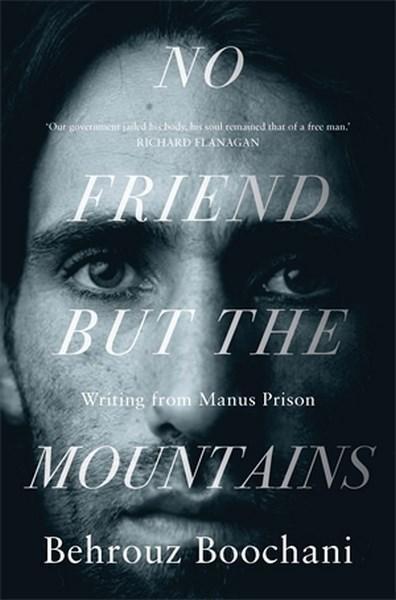
No Friend but the Mountains: Writing from Manus Prison by Behrouz Boochani

Translated by Omid Tofighian

Omid Tofighian pic

Omid Tofighian is Lecturer in Rhetoric and Composition in the School of Literature, Art, and Media and Honorary Research Associate in the School of Philosophical and Historical Inquiry at the University of Sydney.

Although Tofighian is the translator, he acknowledges over a dozen people involved in getting Boochani’s original text smuggled from Manus via WhatsApp and Facebook into his hands.

One aspect I was always conscious of was that Behrouz was writing in Farsi, not Kurdish. He was writing in the language of his oppressors, even though he is a fervent advocate of Kurdish culture, language and politics. And the book was being translated into the language of his torturers.

I saw this translation opportunity as a chance to contribute to history by documenting and somehow supporting the persecution of forgotten people; translation for me, like writing for Behrouz, is a duty to history and a strategy for positioning the issue of indefinite detention of refugees deep within Australia’s collective memory.

Janet Galbraith lic

The book is dedicated to Janet Galbraith who coordinates and facilitates the writing group Writing Through Fences, an organisation that collaborates with incarcerated refugees (or previously detained refugees) and amplifies and supports their writing and art.


____________________________________

Behrouz Boochani pic
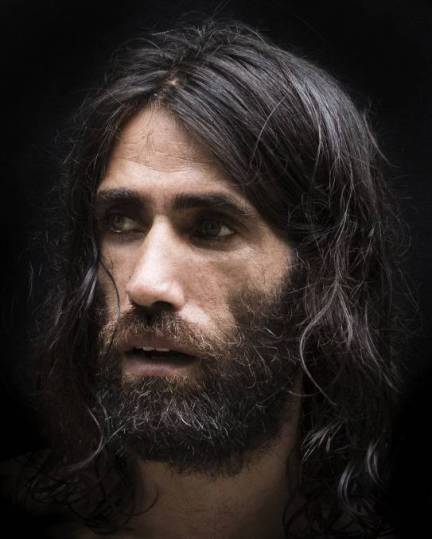
Kurdish-Australian writer and asylum seeker, Behrouz Boochani. Winner of the Non-Fiction Prize and the Victorian Prize for Literature at the Victorian Premier’s Literary Awards, 2019. 

“In 2013, Kurdish journalist Behrouz Boochani was illegally detained on Manus Island.

He has been there ever since.”

Australian law would object strongly to the word ‘illegally’, international law may not.

On a truck bumping through the dense Javanese jungle on a dark and bumpy track heading to the beach, even asylum seekers aren’t immune to the hazards of public transport,

A loud, obnoxious and completely inconsiderate Kurdish guy forces everyone to breathe his cigarette smoke throughout the trip. He is accompanied by a gaunt wife, adult son, and another son, a little bastard. This kid has his mother’s physical features and his father’s character. He is so loud he torments the whole truck, treating everything as a joke, and annoying everyone with his impatient and disruptive manner. He even gets on the nerves of the smuggler, who yells at him.

Finally after much shouting, rudeness, and disrespect as the over-wrought passengers jostle for space, the rotting boat heads out to sea

like a heavily pregnant mare cantering carefully across a dark prairie of water,

where there isn’t enough room for everyone to sit or lie but those who can, sleep.

Even the normal physical boundaries between families has fallen apart. Men lie in the arms of another’s wife, children lie on the chests and bellies of strangers…the young Sri Lankan family, whose bond is maybe the strongest of all on board, has fallen apart. The husband is in the arms of the man next to him, the wife has her head on the bicep of another man, and their child has ended up across the thighs of a different woman.

Those who aren’t sleeping are vomiting as the waves get bigger and pound the leaking boat … then the bilge pump fails …

This whole mess / In the darkness of midnight / Looks like death / Smells like death / Embodies death / The cries / The screams / The swearing / The knocking about / The sounds of the small children / The heart-wrenching and painful sounds of the little children / These sounds transform the chaotic boat into hell.

Why don’t the people, who just hours earlier were in danger of death from the waves but now on the deck of the Australian ship listening to those same waves lick and lap harmlessly against the hull; why don’t they yell and laugh with happiness at their salvation? They sit quietly and still. Even Boochani doesn’t know why. To the Australians they must seem like, like, cargo, soundless cargo, salvaged from the sea.

Boochani has known death and fear; as a young man he wanted to fight for the liberation of his homeland, but he chose the pen over the gun. Was he a coward? Afraid of death? Then on the ocean he faced both fear and death. Saw fear in the faces of others and felt it in his guts, tasted it on his tongue; the ocean provided him with the most intimate relationship with fear and death. Now he is judged and locked up by people who know neither of these two things. Maybe he should’ve been a soldier, at least he would be shot at by people who, like him, knew about fear and death. It would be an equal fight. Just, even.

Boochani tried twice to get to Australia. He encountered fear and death on both attempts. As he scrambled onto another ill-prepared boat for his second attempt he had to admit that such an action wouldn’t be possible but for courage and foolishness. Returning to Iran, unthinkable! He was aware of his fellow travellers not really knowing any of these four demons: fear, foolishness, courage, and death. They soon would.

I’m stopping! I write this post as I read – as I usually do when reviewing a book, but it’s hard to know what not to cut and paste to show you, let you see what it sounds like because everything is worthy of quoting; every line is full of something, something worth passing on. I want to show you all of it. So, do it; just read it.

Writing allows us to “come to understand another’s point of view in the most profound way possible.” (Erica Wagner, writer, critic, and a Man-Booker Prize judge, twice)

I will continue to read this book, not out of a need for entertainment, but for enlightenment, understanding. I’ve only ever seen asylum seekers on the news, voiceless bodies behind wire. The Australian Government has not wanted us to hear what they have to say: journalists are banned on Manus and Nauru. This is the first time I have the opportunity to hear what the Australian Government does not want me to hear. That is why I will read it to the end; as I hope you will too.

You can buy the eBook ($14.99) from Pan-Macmillan here.

You can buy the Kindle version ($US11.99) here.

Arnold Zable, an Australian writer is also part of this story. You can read his SMH article and watch a short trailer for the video Chauka, please tell me the time, here

Watch Behrouz’s videoed acceptance speech, here. He was not allowed to attend the Award’s Presentation.

Unfettered and Alive: a memoir by Anne Summers

anne summers pic
Anne Summers: journalist, feminist, and writer. “If we constantly rewrite history to fit how we see things now, we forget how things used to be and, equally important to future scholars, how we used to see them.”

Anne Summers and her publishers have produced a handsome book, and it begins, unusually, with a letter to her thirty-year-old self: Dear Anne, and so, consequently, it’s written in the second person; and it sets the beginning as at that time, when she was thirty, and summarises what went before which was told in her first autobiographical work, Ducks on the Pond 1945-1976 (1999).  So this, a re-cap, is a neat and imaginative way to catch you up, especially if you haven’t read the earlier work; which is, by the way, now only available on Amazon US at $115.64 for the second-hand hardcover, which is cheaper than the $191.89 for a second hand paperback! However, if you can’t find a copy anywhere else, here’s the link.

For someone who, from an early age, felt profoundly at odds with what the Adelaide world of her Catholic childhood promised her: an identity based on a man and the success, or otherwise, of their children and a future slowly fading into cranky old age and invisibility, she has stubbornly and courageously shunned all of that and forged her own path that has turned out to be something like an open-ended roller-coaster. It’s a crackling tale: ecstatic highs and scary lows; and all along the way the reader gets an insight into the characters she engaged with and the history we all lived through, all in a chatty and self-effacing tone that has you barracking for her as she strides around yet another corner into the unknown, including South Africa, the badlands of western Pakistan – without a hijab, and later as Chair of Greenpeace International which took her, well, everywhere.

anne summers 1980
Anne Summers at the National Press Club during the 1980 CHOGM meeting in Australia directing a question at British Prime Minister Margaret Thatcher. photo: Allan & Unwin

The personal is also covered. Her uneasy relationship with her parents, especially her father; the painful rediscovery of her paternal grandfather; there’s treachery and betrayal from colleagues and friends; a health scare; and finally meeting the love of her life, and that started in the photo-copy room! He’d been around all along!

The political years of this chronicle cover Fraser, Hawke, Keating, Howard, and Rudd/Gillard/Rudd: a turbulent, often frustrating – for us, I mean – but never a boring time in Australian politics. Of special note is her calling out the appalling misogyny Prime Minister Gillard received at the hands of the shock jocks, political opponents, and a particular, but faded, cartoonist. Her insights and insider status make fascinating reading as seen from her media perspective (her attitude to Keating changed; her attitude to Howard didn’t); and then in the middle of all that her successful empire building (and spectacular fall!) at the top of the media tree in New York “…if I can make it there, I’ll make it …..” you know how it goes! Well, she did and then, almost immediately, she didn’t!

But when down, or idle – something she hates – an opportunity passes her window or, more usually, she creates one, and so grabs it with both hands and she’s off again!

Running through all of this, is her strong advocacy for the rights of women; their professional fulfilment, all their wishes, needs, and ideas taken seriously, and the universal understanding that they make mistakes but deserve to, and be allowed to, try again. What a rich, informative, and fulfilling read this is.

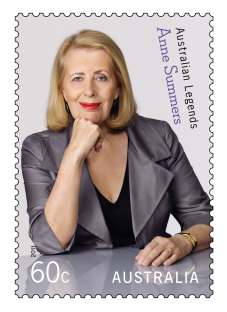
anne summers stamp
2011 Australia Day postage stamp featuring Dr Anne Summers AO.

I’ve known Anne for a few decades usually meeting with mutual friends over a sumptuous meal and a bottle of good red wine or three but I wasn’t prepared for the breadth and depth of her worldly participation nor her personal honesty.

I find scheduling reading time a sign of a good book; but you’ll also need to schedule a breather now and then. Don’t read this in bed. You’ll never get to sleep.

You can find the book here, and the kindle version here. For Indonesian readers you can find the book here.

Be very careful when Googling Anne; you’ll undoubtedly get the English Ann Summers (Ann, no ‘e’) who is a designer and marketer of raunchy women’s underwear.


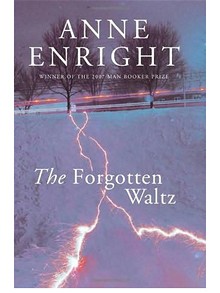
The Forgotten Waltz by Anne Enright

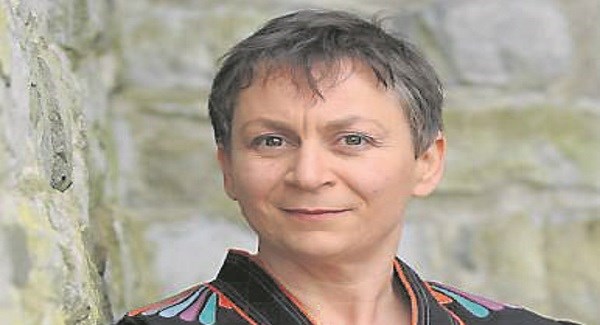
AnneEnrightAuthor pic 2
Irish Writer, Anne Enright. The Forgotten Waltz was the first book after her Booker prize: it doesn’t disappoint, although she goes on a  bit; but, I suppose you can do whatever you like after a Booker win.

Like The Gathering (2007), Enright establishes her story, this story, as having happened in the past but tells it in the present; or at least that seems to be the case as I finish page 1. I have a thing about page 1.

It is some years ago now. The house is new and this is my sister’s housewarming party …

Many readers I know have an aversion to narratives in the present tense but it gives the impression that the writer is telling you right now about a past event, but by telling it as if it is happening now gives the narrative the immediacy of gossip – and we all like gossip. It gives the reader a sense of it not having been written for you but of it being told to you, and only you, at this moment; even if the prose slips into the past at times.

They have mini-marshmallows on top. She goes to pop one in her mouth, then pulls back in surprise. 

‘Ooh, pink!’ she says.

I don’t know what I was waiting for. 

Not “I didn’t know what I was waiting for” (both verbs in the past) nor “I don’t know what I am waiting for” (both verbs in the present) but the first (do) in the present and the second (was) in the past.

It feels like there are two narratives going on here: the story itself (in the past) and the telling of it (in the present). But this is what I think we all do when we tell someone now about something that happened then, and by using this double-tense Enright is being conversational, conspiratorial, and so making us feel comfortable and special: a real friend. Readers love this.

I don’t think Enright is conscious of this nor does she sit down meticulously studying the verbs and deciding which tense they should be to get the effect she is after. My mentioning it is, however, a serious attempt to describe how a writer gets this conspiratorial, gossipy, tone into their writing. In order to get this particular tone the writer needn’t manipulate it- in fact, shouldn’t manipulate it –  but needs to be thinking in this particular tone so the tone in the head becomes the tone on the page.

Or you may think I’m being a wanker and why don’t I get on with it and just read the bloody thing? OK, I will.

On page one, line one, we are given the nut of it.

I met him in my sister’s garden in Enniskerry.

This is the first person account of a woman, Gina Moynihan, and her sexual obsession for a man, Sean Vallely, who like her, is married to someone else.

Enright writes Gina’s monologue as if she’s explaining, justifying at a crackling pace, to a … a … psychologist. She’s keen, this Gina, to tell us everything, but also to leave us guessing:

We managed to linger after everyone had gone, and the details of what corner we found and what we did; how we managed it, and who put what where, are nobody’s business but our own. 

and, of course, by NOT telling us the details our minds race frantically with all sorts of images of ‘doing it’ and ‘putting what where’ and in ‘whose corner’ and ‘managing it where?’ that we’re all in a lather anyway.

Her prose has a momentum that belies the action. There is action everywhere whereby reading it makes you feel exhausted; there’s a breathless tone to the reading, like a theatrical monologue some aspiring, or reviving, actor does of The Gospel According to Matthew. The Gospel According to Gina; where a simple static description is busy with verbs:

Lines of black posts marched down to the shoreline, small and smaller, overtaken, each in their turn by the shifting sand.” 

There’s ‘marching’ and ‘overtaking’ and ‘shifting’; so much happening, so many doing words, but it’s just the view of a bloody empty beach! The empty beach seems as busy as the sex in the corner.

Gina is self-possessed, or maybe just blind, but she has no thought that just as she has a keen sense of perspicacity other people might have a similar talent. She can see through everyone but she is certain no one can see through her. She thinks her secret is safe. This is the tension.

She’s not very likeable – in fact, I’d be very wary of having her at my lunch table, but you’re flattered that she’s confiding in you so much of what she’s thinking and feeling; it’s all so intimate, that you would have to admit your friendship with her even if only to bolster your own standing. Like admitting to a friendship with a Weinstein simply because he’s famous and he talked to you once.

There was a time when “Prefaces” or “Introductions” were mis-understood and not seen as part of the story – we couldn’t wait to get to Chapter 1, for the story to begin – which I think now has, thank god, changed, but Enright starts the book with a “Preface” that you MUST read as it pre-empts the story: Sean’s little troubled girl, Evie, sees Gina and he kissing and it is seen as the “first official occasion” of their love. Enright has used this devise – a child witnessing something very ‘adult’ – before, in The Gathering, and admits in an interview that after writing this preface scene says to herself,* “Oh God! I’ve done it again.”  But the pivotal scene is the pivotal scene and once it’s there, it must remain.

It’s not giving anything away to say that the book is about an affair; it’s not the affair, nor even its aftermath that interests Enright, what interests her is how Gina sees it, manipulates it, how a woman sees herself, loses herself, against a background of an Ireland where such a thing, not so long ago, would’ve been the end of her; the end of everything for her. It’s hard to think of the Ireland then, and the Ireland now with it’s same-sex marriage legislation, its abortion referendum (May 25, 2018), and it’s out, gay, Prime Minister of Indian parentage.

The affair is exciting, propelling, and with a momentum all of its own, because it isn’t, has nothing to do with, the domestic. The two adulterers – such a loaded term – know little about each other, hardly speak:

“All this. Have you done it before?”

“Well, you know,” he said.

Their affair progresses on “in its Friday pace,” and it’s this that Gina loves. It’s just about fucking every Friday. The ‘falling in love’ bit could ruin it all! But they do; or, at least. she does. The ‘wife’, Sean’s wife, Aileen, isn’t Gina’s nemesis, as one would expect, that role falls to Evie, Sean’s little ‘mistake’ of daughter. She’s enigmatic, chubby, but plain, and not at all healthy, but it’s the daughter that, if any atonement is to be got for Gina and her wild imagination – and all of it could just be that – then it will come via Evie; it’s Evie she also needs to woo.

This is the third Enright I’ve read in a row: an Enright-fest. She has rocketed to the top, well, near the top, of my favourite-writer list: Colm Tóibín still holds my #1 place although Enright, John Boyne, Patrick Gale, and Sebastian Barry are barking at his heels. She says she doesn’t know what she will write next; she’ll find out, I’m sure, and do it. Soon, I hope.

You can purchase the book, in various formats, here.

* The presenter and interviewer are a little boring, fast forward through them to get to the good bits: Enright, herself.


How I write.

A story starts with a jump.

When something makes me jump, a line in a book, a caption in a magazine, a phrase overheard, a tone of voice, a dream; a beginning. Short form stories are more personal than long form. I write most days but it can be on my notes page on my phone when I wake up at 3.46 am; on my iPad as I’m watching the news with a G&T at 6; on my desktop after staring at the screen for god-knows how long. Sometimes I’ll experiment. One of my current projects, a short story, I’m writing as a woman. I’ve tried this a few times but this time the woman is very unlikable, in fact she’s awful; the challenge is to make sure the reader understands that she’s awful. The reader has not to be on her side, yet is, in a way. That’s tricky, and more so as it’s in the first person. I test myself like this sometimes. Sometimes it works, sometimes it doesn’t.

At a New Year’s Eve party a friend told me a little anecdote about his piano lessons as a boy. I now don’t remember exactly what he told me because I turned it into a story and now, in my head, that story, Prelude, has become the reality of the anecdote. It’s no longer John’s anecdote, it’s Michael’s story.

I’m writing when my partner catches me talking to myself. I’m writing when I don’t answer him because I don’t hear him because I’m wondering what Robert will say when he sees his dead mother. “What? Sorry.” is a common phrase of mine at home.

I spew it onto the screen. I try not to worry about where does this fit or what can I do with this or how do I spell …, I just let it out. I usually write chronologically, but not always.

I’m always aware that I have to trust myself, my imagination, my ideas, my abilities. It’s no good second guessing; I’d get nowhere. What comes pouring out in the white heart of creation I have to trust that it’s right, correct, apt, necessary, true. It’s later when the white-heat is down to warm, in the cool light of next morning that decisions have to be made.

I write on an online publishing platform (Tablo); while the piece is labeled ‘draft’ no-one can read it. I have four or five projects going at once; two novels, three short stories, I think. One of them is dormant until I come across a really fail-safe murder plan. Once it’s finished I ‘publish’ it on Tablo and anyone can read it. I also have the option of posting it to iBooks where it is for sale. Regularly I email my notes, from my phone or iPad, to myself and cut and paste them onto the respective Tablo page. I have an iMac and don’t have Word; Tablo has all the editing tools I need.

When I’m trying to go to sleep at night it’s important to think about only one thing, not 247 things. That’s why counting sheep works. It’s one thing. I also concentrate on one thing: what Robert might do when he sees his dead mother, or any other character or snippet. These stories, half in my head, half on my screen, over time develop their own reality and they always get to a point where it’s imperative that I write them down; I have to write them down because they are the closest thing to the truth I know. If I don’t write them down they just sit there taking up space. Getting in the way. Writing them down is like getting rid of them.

But writing them down has its own responsibilities. I must think of the reader. I must get the process right. The process: my story, my descriptions, my ideas, my images being transported accurately, truthfully from my imagination to the reader’s imagination via little dark marks on a pale background, with no loss of information.

Once it’s in the imagination of the reader, it isn’t mine any more, and it means whatever the reader thinks it means. I have no say in it once it’s there, in your head. If you read the short story linked above, what was John’s anecdote, became my story, becomes your reading experience; and if you seek me out and ask me what did I mean by something, I won’t answer. It’s not my place to answer: it’s not mine, it’s yours now. It’s now you that has to trust your abilities.