Girl, Woman, Other by Bernardine Evaristo

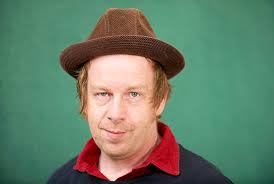
Bernardine Evaristo pic
British writer, Bernardine Evaristo MBE won the 2019 Booker Prize for Girl, Woman, Other.

Even before I started reading, I saw – there were no capital letters, no fullstops and the lines were of different lengths – and my prejudices jumped up and I thought, ‘Oh, poetry.’

But then I started reading – each new sentence, no capital letter, begins on a new line and there is no full stop, just a new line; and the unconventional format didn’t hamper the understanding.  It was clear. There is punctuation within each sentence, just not to begin or end them.

Evaristo calls it ‘an experimental novel’ which could refer to its unconventional format on the page or its structure as a book: there is no through-narrative although the lives of some of the characters intersect. In a sense the narrative is Britain itself but not a novelistic narrative that starts on the first page and finishes on the last.

Girl, Woman, Other, as the title implies is about women: Amma, Yazz, Dominique, Bummi, LaTisha, Winsome, along with Carole, Shirley, Penelope, Megan, Hattie and Grace: all British women, mainly black and so all are a consequence of Britain’s colonial past and the book is therefore an example of post-colonial literature which, in a nutshell, is writing that reacts to, usually against, the discourse of colonialism that was seen to perpetuate cultural imperialism.

Primary works in this field were writing against, or back to, colonial texts: Jean Rys’s Wide Sargasso Sea (1966) is a post-colonial take on Bronte’s Jane Eyre; J. M. Coetzee’s Foe (1986) to Danial DeFoe’s  Robinson Crusoe; Patrick White’s Fringe of Leaves (1976) to the popular myth of Eliza Fraser; Peter Carey’s Jack Maggs (1997) to Charles Dickens’ Great Expectations; Chinua Achebe’s Things Fall Apart (1958) to the colonial notion of the black man notoriously portrayed in Joyce Carey’s Mr. Johnson. In all of these post-colonial rewrites, the native character – the other – is given power denied them in the original colonial text. For example, the protagonist in Jean Rys’s Wide Sargasso Sea is Antoinette, a creole, and deals with her early life in Jamaica where she is forced into an arranged marriage to an Englishman; Antoinette is the heroine, she has the voice and the power (although not enough, she is a woman), unlike her literary dopplegänger, the un-named mad women in the attic in Bronte’s Jane Eyre – the first wife of Mr. Rochester of Thornfield Hall. Rys gives the mad-woman – a creole – a past, a name, and therefore authority.

Post-colonial writers today are not usually writing back to an existing colonial text*, but Evaristo, and her British contemporaries, Zadie Smith, Andre Levy, et al, are writing back (against) to a cliché-ed perception of what a British person is. They are also writing back to a perception of what a British woman is.

The writing is uncluttered, contemporary, conversational, and unintellectual. However, it has the flavour of journalism. Each woman’s story (and most are interconnected) feels like it was written for an article in a weekend magazine. Prose, and the characters that inhabit it, come to life when they react with each other. There is dialogue here within the prose, unannounced by punctuation but clear, but not much. Fiction works when all three elements, description, narrative and dialogue, are given their full force. This is really my only criticism. Dialogue is the most powerful descriptor of character, but here it is used sparingly, and so I felt some characters are not fully realised. There are some portraits that include intimate detailed scenes and these are the most powerful.

What impressed me was the authorial authority and bravery of writing without the usual writerly conventions: capital letters, full stops. The third person narrative slips easily into the first; the past tense seamlessly into the present without any loss of understandability. The prose has a playful freedom that is refreshing and new. I just would’ve liked to hear the characters talk more.

Evaristo is a self-confessed feminist and has been an anti-racist activist for all of her adult life.

Being the Booker-winning black woman writer in 2019 means that my black British feminist perspective is amplified around the world, and for the first time I am starting to feel heard beyond my community.

However, despite her win and her positive attitude to her win her feminist and anti-racist struggles continue. In early December 2019 over 190,000 people watched a lazy BBC announcer say ” … the Booker Prize was shared between Margaret Atwood and another author…”; he didn’t even bother to use her name and Evaristo tweeted ‘…How quickly & casually they have removed my name from history – the first black woman to win it. This is what we’ve always been up against, folks’ and started a twitter storm causing the BBC to publicly apologise to Evaristo. The Guardian newspaper also caused a furore over a headline referring to Girl, Woman, Other, Evaristo’s eighth, as ‘obscure.’ The headline was quickly re-written. It might seem trivial to some but it is the day-to-day small moments that perpetuate black people as the ‘other’; like the waitress who assumed Evaristo’s white dining companion would be the one to pick up the bill.

Girl, Woman, Other is a deserving winner of the Booker; it’s co-winner Margaret Atwood’s The Testaments, less so. You can read what I thought of that book, here.

You can browse and/or buy Girl, Woman, Other and Evaristo’s other novels here.

*However, in 2015 Algerian author, Kamel Daoud, had published The Meursault Investigation, a post-colonial take on Camus’s iconic The Stranger (1942) where the real stranger was refocused as the unnamed Arab that Camus’s protagonist shoots five times on a beach.
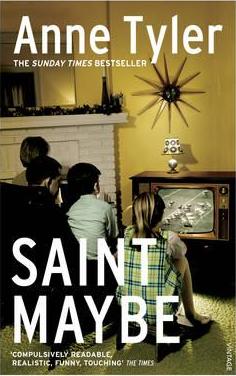
 

Saint Maybe by Anne Tyler

Anne Tyler pic
American writer, Anne Tyler.

Read Anne Tyler.

Have you read any Tyler yet?

You should read Anne Tyler.

These, and other inferences, came from a fellow book worm and one whose opinions as a reader I trust. So, finally, I read Anne Tyler.

Saint Maybe (1991) is typical of her work: family relationships. There seems two kinds of families in the American novel: the apple pie variety and the gun variety. Tyler’s are the former but, of course, coping with a threat, a dilemma.

Ian Bedloe, the son in an apple pie family in Baltimore did something he believes was very bad and caused two deaths. Only he knows what he did, what he said; the only other person, his older brother, who was there when he said it, and to whom he said it, is dead. He is desperate to be allowed to atone for his ‘sin’ and is drawn into a local Christian denomination called The Church of the Second Chance. After what he’s done, he so wants to be good. And forgiven.

What interested me in Saint Maybe is the subject of religion. I was brought up in a religious family but the Christianity taught by my Christian denomination (Lutheranism) always seemed to be more like an insurance policy than a belief system. My mother read the bible like a novel. I have come to understand that religion is a very important element in human existence: each group, tribe, and civilisation since the year dot has had a belief system; mainly to answer the big questions (How did we get here? What are we doing here? What’s that big ball of fire in the sky? and There’s got to be something better, doesn’t there?) so we can get on with the everyday necessities: digging for yams, inventing machines, filling in a tax return. What I object to, and what I see as a blight on humanity, is the administration, and interpretation, of these belief systems: the temple, the synagogue, the mosque, the church.

I believe in the Holy Spirit; the holy Christian Church, the communion of saints …”. So begins the last line of the Apostle’s Creed I learnt as a child, yet all three, the holy spirit, church, and saints are inventions of the (all male) administrators of Christianity over millennia.

The Church of the Second Chance is exactly one of these ‘administrations’; it teachers not so much what Jesus Christ said but what its leader, Reverend Emmett, says and Ian, so looking for a path to redemption and his second chance for what he has done, joins Emmett and his small flock, waiting, as the Reverend Emmett says, for a sign that he has been forgiven.

The Bedloes aren’t religious but Ian’s commitment to The Church of the Second Chance slowly pulls them in; ritual and routine can do that to people’s lives. The family conforms to the Church more out of respect for Ian than for a commitment to its beliefs.

Stream-of-consciousness is a novelistic technique (thank you James Joyce) that recently has had a revival: Anna Burn’s The Milkman won the 2018 Booker Prize and Lucy Ellman’s Ducks, Newburyport was shortlisted for the 2019 Booker. It usually is associated with internal thoughts,  the ordinary, the minutiae of people’s lives. Here, Tyler uses the more common third-person narrator to tell the very plain story of Ian Bedloe.

Above her work-desk is the following quote.

As a queen sits down, knowing that a chair will be there,

Or a general raises his hand and is given the field glasses,

Step off assuredly into the blank of your mind.

Something will come to you.

…from Walking to Sleep by Richard Wilbur.

“I see those words as about getting an idea and making a  book,” says Tyler. “I don’t get anxious. It will come to you, let it come in.”

She works in long hand, rewrites in long hand, and only when she is satisfied will she then type it onto a computer; print it out and work on another draft in long hand. And so it goes. Her style, if she has one – she says she has no style at all – is “unmistakably hers: transparent and alert to all the nuances of the seemingly ordinary,” wrote Charles McGrath in a 2018 profile in The New York Times.

It’s true that the appearance of truth in fiction is achieved through detail which is why her writing is so believable: her work is full of detail, to the brim with detail: the weather, the light on window glass, a tone of voice, a look, the type of cut and grain of wood, what people know and don’t know; but she also deliberately omits detail, for the reader to work out. This also, ironically, adds veracity to the work; creates an investment for the reader in the story and its meaning. She is a joy to read.

Saint Maybe was filmed for television in 1998 starring Blythe Danner and Tom McCarthy, directed by Michael Pressman from a teleplay by Robert W. Lenski.

You can buy the book in various formats here.


The Silent Patient by Alex Michaelides

Alex Michaelides pic
Screenwriter and novelist, Alex Michaelides

So, thrillers go like this.

The first plot points give intensely conflicting actions, like a wife expressing deep love for her husband, then a day later she is discovered with a gun in her hand and her husband tied to a chair with five shots into his face, his blood mixed with hers as it drips from her slashed wrists, but she stands comatosed, but alive, and refuses to speak.

Then the first person narrator, an authoritative figure like a lawyer, doctor, or detective tries to get the woman to speak and is determined to solve the seemingly unsolvable mystery. There are no witnesses and the case seems cut and dried. He, and increasingly she these days, talks to people involved with the woman, and/or her journal, or long lost sister / lover / colleague, is discovered and details emerge about her history, her marriage, her family, her work colleagues which intermingle simultaneously with details of the narrator’s history, marriage, family, and work colleagues until a complicated web of possible motives, secrets, jealousies, and, of course, red herrings swim around your brain leading you to think, at various moments, ‘Oh, I know who did it!’ and then you are encouraged more in your beliefs and then suddenly they are dashed, or seemingly dashed, onto the rocks of evidence, only to emerge later as indeed a possibility, but maybe not.

Sometimes you are right and you’re left with a scraggy feeling of disappointment causing you to discard the book after ‘the end’, if you get that far, and to search for a different thriller writer.

Sometimes you are wrong and rarely, very rarely, you are hit over the head with the truth at the very moment of reading it, and you gasp.

The Silent Patient is one of those.

Alex Michaelides is a screenwriter of Greek-Cypriot/English extraction and lives in London. This is his first novel.

Adding to this mix of intrigue, and as a source of clues, are photo-realistic paintings – the woman, Alicia Berenson, is an artist; a Greek tragedy of love and resurrection by Euripides, Alcestis – the name of a Berenson self-portrait; and a secure psychiatric facility, The Grove, where our first-person narrator, Theo Faber, works and where Alicia is incarcerated.

At times the writing feels formulaic but it is, after all, a ‘No.1 New York Times Bestseller’ so you are warned. The film rights have been snapped up by Plan B, Brad Pitt’s production company, as part of its next three year plan and is currently listed as ‘in development’.

I rarely read thrillers – generally, I don’t care who did it – but this one kept me reading and what I love about this book is that the very way it’s written is a clue to, not who did it, but what caused it to be done, and that it is not a simple first-person narrative: when you’ve read it you realise that what you’ve read is only possible because you’ve read it. Enough said. No spoilers here.

The language is simple and direct and the pages are very easily turned. I read this in two afternoons. It’s the perfect airport novel, great escapism, entertaining, and Mr. Michaelides is grinning all the way to the good life. Smart Alex!

You can buy this book in various formats here.

The Testaments by Margaret Atwood

Margaret Atwood pic
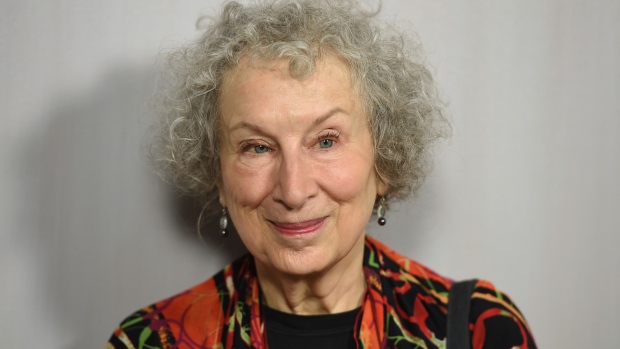
Canadian Writer, Margaret Atwood

Yes, this is a sequel to The HandMaid’s Tale (1985) but it is not a continuation of the story. The Testaments starts fifteen years after the story of Offred, the handmaid, and is a trio of narratives, the three (written) testaments: a young girl raised in Canada, a young girl raised in Gilead, and Aunt Lydia, the villainous trainer ‘Aunt’ in the original story; she is the only continuing character.

There was a 1990 movie of Atwood’s The Handmaid’s Tale starring Natasha Richardson, Faye Dunaway, Robert Duvall and Elizabeth McGovern, directed by Volker Schlöndorff and penned by Harold Pinter which was not a success (it only made 5 million back on its 13 million budget) but the television (streaming) version of the book which first aired in 2017 was a runaway success. Timing is everything, coming as it did in the wake of the #metoo movement.

I suspect it was the success of the television version that sparked Atwood, and/or her publishers, to embark on a ‘sequel’.

In a 2018 ad for Masterclass – an online teaching platform that Atwood signed up to teach creative writing – she says that all the bad things in The Handmaid’s Tale happened “in real life somewhere at some time … I didn’t make them up.” She also says that “as a writer, your goal is to keep your reader believing in your story even though both of you know it’s fiction.” I always knew The Testaments was fiction; I didn’t believe a word  of it.

There are three reasons why I think this is not a good book and the Booker Prize judges made a very big mistake.

  1. Fiction is made up of three components: narrative, description, and dialogue. The Testaments is all narrative. This happened, then that happened, then this happened, with dialogue peppered through the narrative like herbs sprinkled on a salad. You don’t learn much from the dialogue. There is very little description. I suspect Atwood believed the images, the ‘look’ of the story and characters from The Handmaid’s Tale, the TV version, would satisfy the reader’s need to ‘see’ it.
  2. So much of the detail of the times and life in Gilead are justified in the same sentence in which the detail is introduced. This is often necessary but it is a necessity that should only be used sparingly. Too much of it and it sounds lazy and clunky. We are told too much, when we should be shown. As a reader I had to ‘do’ virtually nothing. I fell asleep a lot.
  3. And what I believe to be the greatest sin: when the story is one of survival and escape from an evil or severe danger, which it is, we do not see the villains, the bad-guys – Commander Judd et al – get their comeuppance. It is a very unsatisfying read.

The Booker judges decided on a winner for 2019, Bernardine Evaristo’s Girl, Woman, Other and why, of why, did they also announce Atwood’s book as a co-winner – it’s against the Booker rules, btw – when it is such an obviously commercial enterprise capitalising, not on the success of the 24-year-old original book but, on the 2017 TV version of that book? Maybe they thought the Booker needed the publicity. Atwood didn’t need a Booker; she already had one (for her 10th novel, The Blind Assassin, in 2000) where as Evaristo did, but then had it diminished by having to share it.  Both author’s were kind and sanguine about their joint prize as one would expect.

If you enjoyed all or either of the versions of The Handmaid’s Tale, book, film, or TV series, leave this one alone: it adds nothing.

However, you can buy various editions of The Testaments here.


Us by David Nicholls

David Nicholls pic
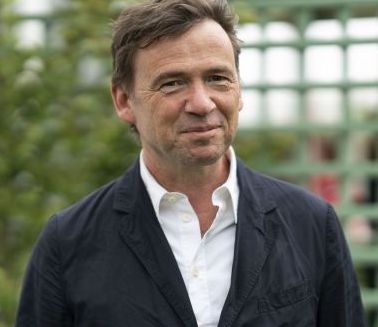
British novelist and screenwriter, David Nicholls.

I love this book. It’s rare to find a laugh-out-loud read these days, but this is one of them. It’s a first person narrative of Douglas Petersen, a bio-chemist, and a man who always just seems to miss out on being, cool, mainly because he just doesn’t know what cool is; he doesn’t get most things. That’s certainly what his son, Albie, would say although he probably wouldn’t be so kind. The third component of Us (2014) is Douglas’s wife Connie. She’s an artist and an ex-hippie and is definitely cool. She wakes him up one morning and tells him that she might want to leave him. They embark on a (possible) remedy: a Grand Tour of Europe, and drag a reluctant Albie along with them. This is the Us. This trio. However there is another narrative interspersed with the Grand Tour: how Douglas and Connie got together in the first place; and many more incidents of their life together. You get to know these three very well. It’s really a portrait of a marriage.

It’s divided into many small chapters, 180 in all, which in itself, propels the reading along; ‘I’ll just read the next chapter before I walk the dog’; ‘I’ll read this short one before I start dinner’; ‘Just one more, it’s short, before my afternoon jog.’ And why do you want to do this? Because you love Douglas. He’s a gem and he talks to you as if you’ve known him since kindergarten. Us became my very early morning read when a trip to the loo erased all efforts to go back to sleep. But, so I didn’t wake the sleeping one, I tried to curtail my laugh-out-loud to something like, laugh-in-loud, but stifling a laugh-out-loud made my body behave like a trampoline-in-use and the mattress was forced, of course, to follow suit, so allowing the sleeping one to sleep didn’t work. I was banned from reading Us in bed. But that’s OK; you can get through a short chapter while waiting for the jug to boil, during a TV channel promo, even while stirring the custard.

The key to the humour is Douglas himself. He doesn’t quite know what to say when staring at a painting (I like that blue bit.); he feels inadequate to say what he likes about a piece of music (It’s loud, isn’t it?); and contemporary dance (Do they have to throw themselves against a wall?); and books (Erotic realism? Isn’t that a contradiction in terms?); and food (flaccid courgettes in a green-grey water sauce made from water.).

David Nicholls also has several screenwriting credits including Tess of the D’Urbervilles‘ for the BBC in 2008,  Far from the Madding Crowd in 2015, and he wrote Patrick Melrose (2018), the television series based on the novels by Edward St Aubyn. He has penned several movies including the adaptations of his novels, Starter for Ten, and One Day. He also trained as an actor at the Royal Central School of Speech and Drama but never quite made it in that field because, as he admitted, he wasn’t very good at the basic stuff, like standing still and moving from A to B. However he must have picked up some performance skills since his appearance at the recent North Cornwall Writer’s Festival had the audience in stitches as he read from his latest book, Sweet Sorrow, a passage devoted to the pitfalls of first-time kissing.

Us is currently being filmed in various location in Europe for the BBC. It stars Tom Hollander and Saskia Reeves with a script by Nicholls. However, a release date has yet to bee announced.

He’s a busy man and novel writing has to be squeezed in between big budget movies and television drams; he’s written five novels, so, for me, four to go.

You can watch an interview with David Nicholls about this book, Us, here.

You can buy the ebook, or other formats, here where you can also ‘look inside’ before you buy.

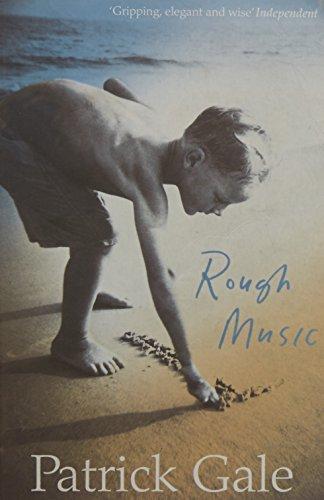
Rough Music by Patrick Gale

Patrick Gale Pic
British writer Patrick Gale lives in Cornwall and plays the cello, modern and baroque.

I first read this book decades ago and then in 2016 I discovered Patrick Gale again with Notes from an Exhibition (2007) and have remained a fan.

Rough Music (2000), like several of Gale’s novels, has a double narrative, same characters, same location, different times.

Julian a small boy, son of simple parents John and Frances, is taken on an idyllic beachside holiday in Cornwall with those parents, John and Francis. The widower, Bill, a writer, and child, Skip, of John’s sister arrive from America and cause passions and the status quo to collide.

Decades later, Julian is a grown man, a successful bookshop owner, and he returns to Cornwall for a holiday with his now ageing parents; his mother with early onset dementia, to the same beach and even, possibly, to the same house. The catalyst of drama and entertainment is that he has been having an affaire with his brother-in-law, Sandy, which began on the evening of Sandy’s buck’s party and has continued through Sandy’s years of happy marriage and the birth of his two sons to Julian’s sister, Poppy, and right up to the action of the story. No one, not Poppy or his parents, know about this. While on this holiday he meets Roly, an artist and drop-out, and he can see a possible exit from this family deception if only he can orchestrate it in time.

Some of the names of these characters change between narratives so don’t be put off by this. All will be revealed.

Each story is told in alternating chapters rendering the climax of both in close proximity to each other. A double whammy for the reader.

Gale is at his best with family relationships and spends time painting them in all their complex layers of expectation, disappointment, and flowering moments of joy. He is a wise writer, or perhaps just acutely observant.

Family life:

The only real difference was children. He had never appreciated until now how much emotional clamour, interference almost, the presence of children set up, saving a relationship from listening to itself.

How children can get in the way:

‘Ma.’ ‘What?’ ‘Leave the door open this time.’ The open door was sobering, like having a dressing-gowned child bearing mutely indignant witness from the room’s corner.

Ageing:

It was as though the only acceptable way to face old age was in a spirit of glassy contemplation and composure, to become a fund of quaint old stories (so long as one did not repeat them too often), a calm old lap on which babies might be placed and an undemanding extra presence at a dining table.

Self awareness:

Perhaps John had been right and her surliness was simply muffled sorrow.

…flirting was a kind of knife sharpening for marriage.

And humour:

Tell me what you’re thinking. Trust me. I’m a novelist.

Sometimes while reading one can feel a ‘little jump’: when you read something that can chip ever so slightly at your suspension of disbelief but for the sake of the story, and your own enjoyment, you accept it, go with it. I think we readers do this a lot. It’s only after you put the book down, days or weeks later or when you’re telling someone about the book, that you may realise that, yes, that something doesn’t quite gel, some plot point or character trait doesn’t quite fit with what has been set up for us to accept. Don’t let this colour your view of the work or the writer adversely. It is caused, I believe, by us readers assuming that the universe of the book is exactly the universe of the reader; but this may not be the case. Of course, some books are written in a universe completely alien to the reader, Harry Potter, Lord of the Rings for example, but most books we assume are written in our own universe. As readers we will give ourselves far more enjoyment and commitment if we let the story be what it is and not what we might want it to be, even down to the small details of the narrative and characters.

If you know and like Gale’s work you have probably read this, if not then this, along with A Perfectly Good Man (2012), two of his best, are a good way to begin your Gale adventure.

I continue my quest to read and write about all of Gale’s work and having surmised that it is only during the winter that he writes, in the spring and summer he is far too busy (festivals, garden, cello, cooking …) these seasons give me time to catch up. He is so prolific: two books every three years on average. His last Take Nothing With You came out in 2018; I’m expecting a new one next year. No pressure Patrick!

You can buy the book in various formats here.


Drive Your Plow over the Bones of the Dead by Olga Tokarczuk

Translated from the Polish by Antonia Lloyd Jones, co-funded by the Creative Europe Programme of the European Union

Olga_Tokarczuk_pic
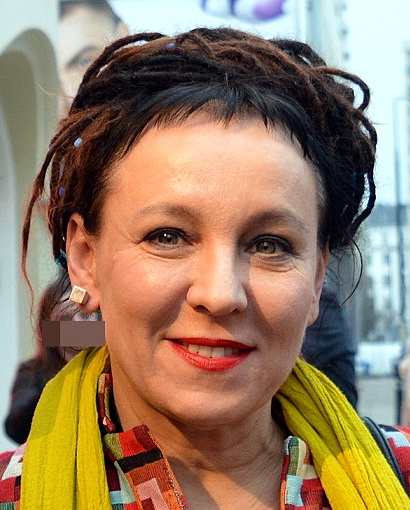
Polish writer and activist Olga Tokarczuk (t’ KAR chook) won the Nobel Prize for Literature 2018 and the 2018 Booker International Prize for her novel Flights

Drive Your Plow over the Bones of the Dead (2009) was finally published in English in 2019.

It is about an old woman, Janina Duszejko – she doesn’t like her first name and prefers to be addressed as Mrs. Duszejko – who lives alone on a high wind-swept plateau in the south-west of Poland, close to the border with the Czech Republic.

In her youth she was an engineer, built bridges in Syria, had an affaire with a Protestant, but shared her bed with a Catholic, and now teachers English one day a week to 12 year olds. She believes in astrology; that Animals have reasoning and seek Vengeance ; and writes essays to magazines about the fascinating connection between Astrology and TV programming. But she has Ailments, a vivid imagination and raw emotions just below the surface where the pain of her Ailments live – simple nouns like Ailments and Folly are capitalised, like in the works of William Blake, from where the title comes. She has Theories, including why people find other people attractive, but some not, about almost everything; why magpies need lots of bathes, why foxes run in straight lines, and why Evolution is not about adaptation but about Beauty. And buys clothes too big for her, she likes the freedom. A vivid Dreamer of her dead family – her Mother and Grandmother appear to her in her boiler room dressed and ready for church – and a believer in a planet crossing an invisible point that causes two red fruits to fall from a wild rose bush. She cries easily.

She tends to the houses abandoned by their owners in the winter and wants to write her autobiography. She calls people, not by their given names but by what they suggest: Oddball, Dizzy, Dig Foot, Good News, and Black Coat. She finds words like ‘priority’, ‘cadaver’, and ‘cohabitee’ ugly and hideous.

The story opens with a death, a strange death, and is followed by three others; all victims are hunters and Mrs. Duszejko is certain the deaths are deliberately caused by Animals, deer, foxes, and boars, in retribution for the regular slaughter of their relatives by these criminals. And she sets out to prove it.

Her neighbours call her that crazy old woman.

The story is told in the first person, from the mouth of this crazy old woman. This allows for Tokarczuk’s theme, society’s disdain for the marginalised, their fear of the other but never is this message didactic; it is told with humour, irony, and a lightness of touch. The writing is adventurous, unexpected, insightful, (“Are you religious?” “Yes.” “What?” “An atheist.”), and a joy to read, and, in the end, it is about how there is really nothing called evil, it doesn’t exist; there is just need, sometimes misguided, overwrought, and out of all proportion, but need nonetheless.

The Stars and the Planets are Right about everything, except us humans sometimes get in the way and always for selfish reasons. As Mrs. Duszejko says, “The fact that we don’t know what’s going to happen in the future is a terrible mistake in the programming of the world. It should be fixed at the first opportunity.”

Here is a telephone interview with Olga Tokarczuk about her Nobel Prize win. She took the call while driving in a car in Germany.

You can listen to Tocarczuk talk about writing and Poland (with English Sub-titles) here.

You can buy the Kindle, and other editions here. Also on this Australian Amazon site you can ‘look inside’ and sample some of the text before you buy.

Night Boat to Tangier by Kevin Barry

Kevin Barry pic
Irish writer, Kevin Barry

Get up, groan, write a bit, moan, eat breakfast, write some more, cycle my bike through the Sligo hills, make up country songs as I pedal along, sing them, have lunch, have a nap, groan, moan, write a small bit more, cook dinner, feed wifey, open a bottle, or several, slump, sleep.

I don’t quite operate within the realist mode. I kind of push the stories out towards the cusp of believability – that’s the area of interest for me.
♠♠♠
The style of Kevin Barry’s Night Train to Tangier (2019) feels like a play because it was originally conceived as one; but that was not what gave me pause when I read about him and this, his new book; it was the (many times) mention of Samuel Beckett and his play Waiting for Godot, and I thought, “Uh oh!” Vladimir and Estragon sit and wait under a dead tree for Godot who never comes. Maurice Hearn and Charles Redmond sit and wait in a ferry terminal for Dilly, Maurice’s missing daughter who never comes, maybe, maybe not.
These two guys are Irish drug dealers who made a shit load of money when they were younger, loved the same woman – since deceased, and now quite can’t get their old mojo back, although they try by intimidating and threatening strangers. You wouldn’t want to meet them in a back alley. It maybe that Dilly doesn’t want to be found. No spoilers here.

The conversation is sometimes repetitive, but the language is glorious, lyrical, and adventurous:


Charlie Redmond? The face somehow has an antique look, like a court player’s, medieval, a man who’d strum his lute for you. In some meadowsweet lair. Hot, adulterous eyes and again a shabby suit, but dapper shoes in a rusted-orange tone, a pair of suede-finish creepers that whisper of brothels, also a handsome green corduroy neck-tie. Also stomach trouble, bags like graves beneath the eyes, and soul trouble.


The pages are formatted with large gaps of white between sentences. One reviewer wrote, “The blank spaces that Barry inserts between paragraphs, the empty gaps in the text, seem to signify accumulated pain.” That’s kind. I’m of a more cynical bent; they seem to me to be the editor’s doing: if you’ve decided to print it between hard covers, you need more pages.

Almost all of the reviews for this book have been glowing, and it’s been long listed for the this year’s Booker Prize. However, I was disappointed. There are three elements of novel writing: description, dialogue, and narrative. Barry’s descriptions are poetic, imaginative, and surprising. He’s at his best with description (like the quote above). Dialogue? Well, firstly, his dialogue isn’t punctuated. That’s OK: dialogue usually sounds like dialogue, but sometimes it doesn’t and I don’t appreciate having to go back and check. Narrative? I found it shallow and, again, I had to go back a page or two and take another run at it to find out exactly where we were. Contemporary readers have to do more work, I know, but I don’t appreciate feeling left behind; it stops the reader being enthralled, and enthralled is where all readers want to be; and by enthralled I mean forgetting that your reading.

For this reader, Night Boat to Tangier is about parents and parenting, and how we usually get it wrong, or this from Dilly’s mother,

The fear of turning into our parents, she said, is what turns us into our fucking parents. 

I have to admit that it did grow on me a little but not enough to send me racing for his previous works, City of Bohane (2011) and Beatlebone (2015), both lauded and prize-studded.

You can buy the ebook, and other formats, here, and you can ‘look inside’ before you buy, or hear what sounds like Kevin Barry reading from the text.


The End of Loneliness by Benedict Wells

benedict_wells_pic
Swiss-German writer Benedict Wells; real name, Benedict von Schirach

Marcel Proust’s monumental – 7 volume – novel, certainly the longest, and arguably the best novel ever written,  À la Recherche du temps perdu, sometimes translated as In Search of Lost Time or Remembrance of Things Past was the first to use memory as a novelistic tool. It appeared in English in 1922, the year of Proust’s death, and helped to change the way literary novels were written; its stream of consciousness technique was revolutionary at the time but still remains today as an author’s story-telling option: the Northern Ireland writer Anna Burn used it for novel Milkman, her 2018 Booker Prize winner.

Benedict Wells’  novel, The End of Loneliness (2016) is a contemporary product of how memory can ‘write’ a novel. Jules Moreau, the first person narrator, wakes up in hospital and tries to remember how he got there, but memory isn’t linear, it jumps around like a rabbit in a cage. He even draws it for us:

The End of Loneliness Memory Map

It is the story of three siblings who loose their parents when they are all very young and are sent to boarding school where they slowly drift apart, geographically, emotionally, and intellectually. Their lives seemed pre-ordained but the tragedy sets them adrift leaving them, and the reader, wondering what would their lives have been like if the accident had not happened. It is also a love story that runs parallel to Jules’s memory of the siblings’ separation and their slow and difficult return to each other.

Although an author’s dreams can sow the seeds of fiction, using dreams, real or fictional, as the basis for plot decisions, I believe is a lazy option for a writer. One reviewer warns that this ‘may irk the critical’. However, Wells keeps the writer’s interest with slight, but intriguing, references to some event in the future:

‘… all this had nothing to do with what happened later.’

But the real star of the show is memory. Only twice, before the end, does the narrative return to the present: Jules lying in a hospital bed, where his children are mentioned. Children? There’s been no mention of children. This is another reference to the ‘future’ which pricks the writer’s curiosity and adds to the page-turning momentum.

In contemporary literary fiction relationships and character are far more important than plot; but the set up – an injured man with plenty of hospital time remembering his past to understand who he is and why he is there – is credible and neat, and although the prose is straight-forward the emotional pull is strong which has a lot to do with Well’s talent. The word ‘tear-jerker’ has been used, too much I think, in many reviews of this book.

Although it is his fourth novel it’s a book that Wells had to write; it was stuck in his head for seven years but then, following its publication and success, his head was free to write the novels he wants to write. I look forward to those.

Wells changed his name to remain free from his famous family and chose ‘Wells’ from his writing mentor, John Irving’s hero Homer Wells in his novel Cider House Rules (1985).

Here is an interview, in German with English sub-titles, with Wells when he won the European Prize for Literature in 2016 for The End of Loneliness; and you can watch another interview with Wells, in English, when the book was translated into French, here.

The Infatuations by Javier Marías

JavierMarias2
Javier Marías, Spanish writer, whose work has been translated into 42 languages. He is, like me, 67.

A woman sits at her regular table in a café and has noticed for many mornings a couple at their regular table. She has become fascinated by them; her day isn’t complete, or even ruined, if, because of work or some other reason, she has to miss her morning coffee and doesn’t get her daily dose of them. The husband is suddenly and brutally killed, murdered unnecessarily, possibly even mistakenly, and the woman goes up to the wife and offers her condolences and is invited into the life of the widow.

I’m not given anything away by telling you that: this all happens just before the novel begins.

This is the starting point, the seed, that allows Marías to write many conversations, some even imaginary; to explore the subject of death, or more specifically, the effects of death on those who remain.

Now, don’t get scared but I’m going to use a word that scares most readers: philosophical. It’s like a philosophical exploration of the effects of death on people, but the use of dialogue between characters, instead of long passages of prose, makes the ideas, the philosophy, so accessible. We’ve all thought about it (Haven’t you?). In conversations, as short sometimes as Marías’s, I’ve often used the sentence, ‘We cease to exist after we die in exactly the same way as we don’t exist before we are born’. This is the very subject of one of the conversations in the novel and one of the reasons I found the book so interesting, particularly because one of the characters refutes that statement. Another reason is that the writer is a man but the first person narrator is a woman. This is unusual. If the protagonist and author are of different genders the author usually chooses to use the third person.

(But there is also mystery. I started writing this blog when I was a third of the way through – I often start my blog well before I’ve finished the book, even finishing the blog-writing before I finish the novel-reading – when I had a sneaking suspicion that the circumstances surrounding the murder may not be true. I haven’t worked out how Marías triggered this thought, if it’s a red herring, or novelistic supposition. I shall see.)

Curiously, and comically, Marías gives the protagonist, the lonely woman in the cafe, Maria Dolz, a job at a publishing house. She has a very low opinion of writers; they continuously annoy, frustrate, and make unwanted demands on her. She is a passive woman, and knows it, but seems to enjoy subverting her writer’s wishes and gaining the upper hand if only to prove to herself that she isn’t as passive as she believes herself to be.

And now that she has been introduced into the life of the sudden widow, Luisa Desverne, and met her friends, she falls hopelessly in love with one of them, Javier Diaz-Varela, the one that she imagines would’ve been chosen by the murdered husband to console, care for, and eventually marry his wife had he had forewarning of his own demise; believing that Diaz-Varela is indeed biding his time with her, toying with her, waiting for Luisa to notice and accept him. Maria has a vivid and self-deprecating imagination.

‘If anything bad were to happen to me and I was no longer here,’ Desverne might have said one day, ‘I’m counting on you to take care of Luisa and the kids.’

‘What do you mean? What are you talking about? Why do you say that? You’re not ill are you?’ Diaz-Varela would have replied, anxious and taken aback.

(Ah, yes, a mystery!)

Marías is continually praised for his sentences, and his sentences are indeed dense, elegant, and rewarding; even very long, but don’t be fooled by a page long sentence; it’s usually a page of many sentences but only one full stop.

When someone is in love, or, more precisely, when a woman is in love and in the early stages of an affair, when it still has all the allure of the new and surprising, she is usually capable of taking an interest in anything that the object of her love is interested in or speaks about. She’s not just pretending as a way of pleasing him or winning him over or establishing a fragile stronghold, although there is an element of that, she really does pay attention and allow herself to be generally caught up in what he feels and transmits, be in enthusiasm, aversion, sympathy, fear, anxiety, or even obsession.

The book slowly takes on the form of a murder novel, but not one that could easily be turned into a movie as it all happens in the mind of Maria. She imagines a lot of things, conversations, desires, intentions, but does she imagine everything?

(I’m two thirds of the way through now … )

There is certainly a taste of fear for Maria’s well being, and a growing sense of excitement that borders on compulsive page-turning. I found myself reading the first paragraph of a new (short, un-numbered, un-titled) chapter to get the sense of the continuing story, but then find myself at the next chapter. There is also a recurring image of the dead returning which is always accompanied with a feeling of dread, even though the deceased has been greatly mourned.

… surely not!

You can buy the paperback, ebook, audio book, and/or read a free sample here.

Listen to Marías reading from one of his novels and talking about writing here.